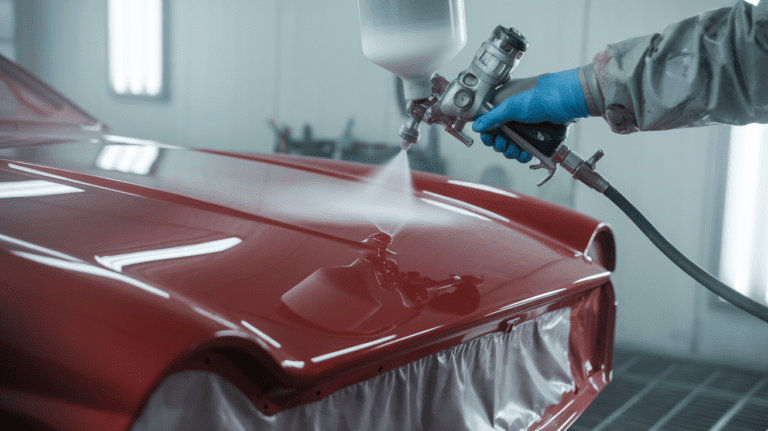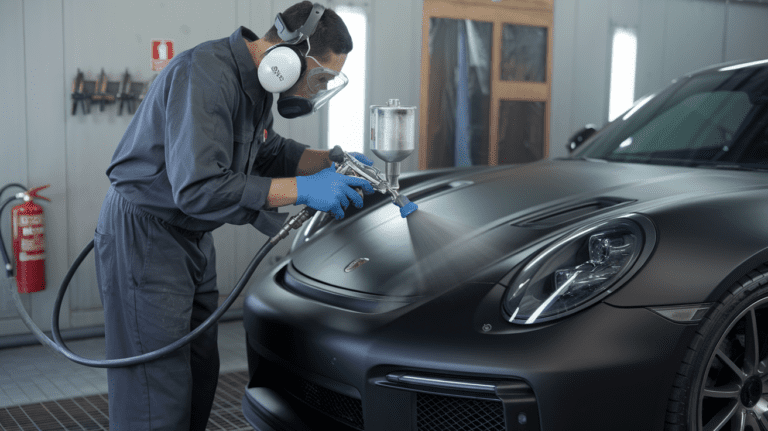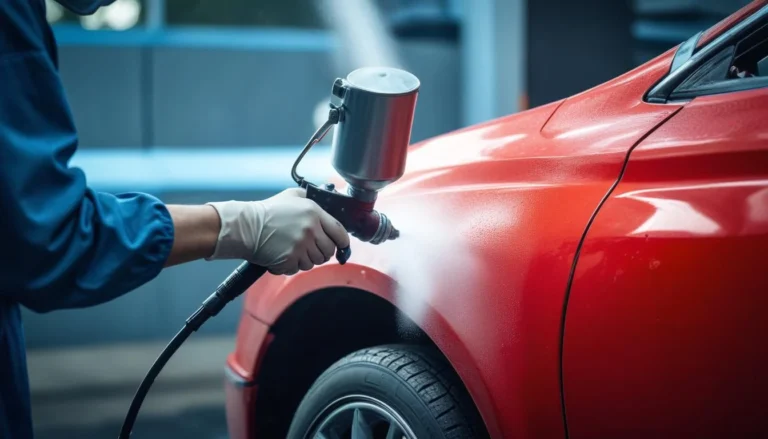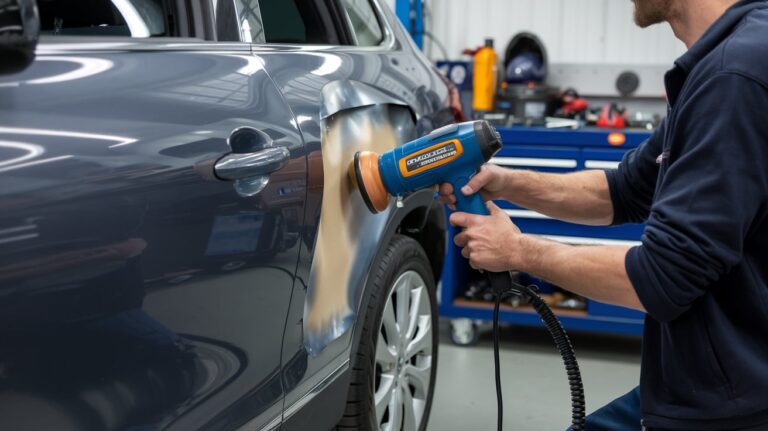
- Choose based on your paint type, spray pattern, and job frequency.
- Treat your gun like a scalpel, not a hammer.
Right gun. Right results. Every time.
Understanding Auto Paint Gun Mechanisms | What Powers the Perfect Finish?
In the controlled chaos of Dubai’s top-tier bodyshops, what makes one technician’s finish look wet and seamless, while another’s look chalky and uneven? It all boils down to the heart of the system: the auto paint gun mechanism. Let’s break it down.
HVLP vs LVLP Spray Guns
- HVLP spray gun (High Volume Low Pressure): Delivers more paint with less overspray. Ideal for controlled environments with proper ventilation.
- LVLP system (Low Volume Low Pressure): Uses less air, perfect for touch-ups or jobs with limited compressor capacity.
- HVLP provides better transfer efficiency, and LVLP gives finer atomization with reduced paint bounce.
Tip: HVLP shines in full-body refinishing. LVLP wins in edge detailing or spot repairs.
Feed Type Fundamentals
- Gravity feed: Paint cup on top; uses gravity and air pressure. Offers better balance and clear visibility.
- Siphon feed: Paint cup below; relies on air suction. Slightly heavier but useful for thick primers or industrial coatings.
Gravity feed setups dominate Dubai’s high-end shops. Easier to clean, faster to switch paints, and better control during vertical or angled sprays.
What This Means for Your Finish
- Nozzle control + air pressure impact how finely paint gets atomized.
- Atomization affects flow, texture, and final gloss quality.
- The wrong gun throws off everything, layering, drying time, and even adhesion strength.
Fact: Even the right paint can fail if your spray gun setup mismatches viscosity or air delivery rate.
Matching Your Auto Paint Gun to the Paint Type | No More Guesswork in Dubai’s Luxury Workshops
Most technicians overlook this, but the wrong gun-paint combo leads to orange peel, fisheyes, and rework. In Dubai’s high-end refinishing scene, where humidity and luxury paint chemistry collide, your auto paint gun must be chosen based on paint type. Here’s how to do it right:
Basecoat Application
This is where finish quality starts, or fails. Your basecoat lays the foundation, and it needs atomization that feels like mist, not mud.
Choosing the right auto paint gun means dialing in consistency before clearcoat even touches the surface.
- Requires precision and smooth atomization.
- Use a dedicated auto paint gun with a 1.3–1.4mm nozzle size.
- Ideal pressure: 26–30 psi.
- Works best with HVLP spray gun setups for wide, even coverage.
Tip: Over-compressing air creates splatter and burns through metallics.
Clearcoat Compatibility
Clearcoat is unforgiving. It magnifies every flaw left by a rushed base layer and reacts poorly to bad airflow. This stage demands finesse, clarity, and a gun calibrated for silk, not sandpaper.
- Clearcoat is thicker and more sensitive to air turbulence.
- Go with 1.4–1.5mm nozzle size, slightly higher psi (30–35).
- Needs strong atomization for glass-like finishes.
- Stick to the HVLP spray gun, but with refined trigger control. Exploring the best professional paint guns helps technicians pick models that maintain clarity and gloss consistency in challenging Dubai conditions.
Fact: Using your basecoat gun for clearcoat reduces gloss consistency by 18–20%.
Primer Spray Gun Setup
Primer is the workhorse of paint prep; it hides sins, seals surfaces, and builds adhesion. But it’s thick, stubborn, and needs brute power behind the spray.
Using a mismatched gun will clog, sputter, or layer unevenly.
- Primers are dense, need robust flow.
- Use a 1.7–2.0mm nozzle and LVLP system if you’re in a low-air setup.
- Siphon feed is optional for heavy-duty coatings, but gravity feed simplifies vertical sprays.
Idea: Label your primer guns red. Visually minimizes cross-contamination errors.
Don’t Mix Paint Chemistries
Here’s where people mess up. They treat solvent and waterborne paints like twins. They’re not.
Different flow rates, cure times, and sensitivity make shared guns a recipe for finish failure.
Solvent-Based Paint
- Forgiveness under high pressure.
- Ideal for bulk spray and old-school setups.
Waterborne Paint
- Sensitive to airflow.
- Requires fine atomization and moisture control.
Mixing guns between the two leads to:
- Fisheyes.
- Delamination.
- Inconsistent finish depth.
“One gun per layer. One layer per gun. Mixing is for cocktails, not clearcoats.”
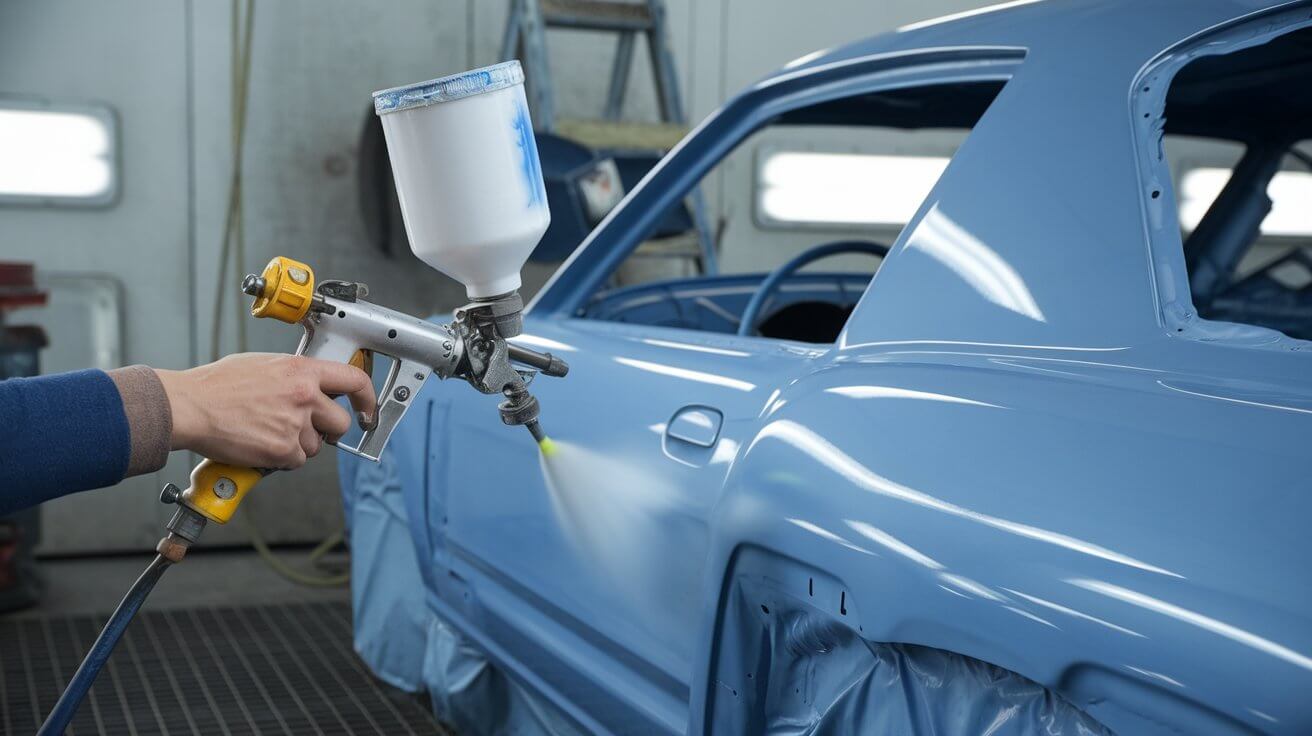
Nozzle Size & Spray Pattern Control Where Technique Meets Material Efficiency
Every panel you spray is different, doors demand elegance, bumpers demand patience, and full sides punish lazy pressure. Getting both nozzle size and spray pattern right isn’t optional; it’s what separates a rookie finish from a flawless one in Dubai’s high-end auto paint space.
Nozzle Size Matters
Not all auto paint guns are born equal. The tip size directly controls how thick or fine your paint lies on the surface.
- 1.3mm nozzle: Best for basecoat application. Delivers fine atomization for smooth coverage.
- 1.7mm nozzle: Suited for primer layers. Pushes thicker materials without clogging or spitting.
- Match nozzle size to paint viscosity and panel type, use a smaller size for doors, a larger size for bumpers, and broader zones.
Fact: A mismatched nozzle increases material waste by up to 15% due to overbuild and correction passes.
Spray Pattern Control
Fan width isn’t decoration; it determines pattern consistency, especially on curved panels or tight contours.
- Wider spray patterns suit flat, large panels (bonnets, doors).
- Narrow fans work best for bumpers, edge zones, and layered coats.
- Adjust trigger speed and air pressure for atomization control and uniform finish.
Tip: Always test fan width on scrap before hitting final panels. Dubai’s heat can thin paint faster than expected, altering atomization.
Final Pass
Perfect flow equals minimal wastage and crisp edgework. The auto paint gun, when tuned properly, reduces spray time, material consumption, and costly touch-ups. “Spray tight. Spray right. Your nozzle is not just metal, it’s your finish’s signature.”
Air Pressure & Volume Control | Your Gun’s Lifeline Is in the Compressor
Spray perfection is not just about the gun; it starts at the compressor. In Dubai’s humid, high-speed bodyshops, your auto paint gun is only as good as the air feeding it. A pneumatic spray gun lives or dies by pressure and volume alignment.
Match the Gun to the Compressor Output
Your gun might be dialed in technically, but if your air compressor can’t keep up, expect poor atomization, sputter, and uneven coverage.
- Most HVLP guns need a 10–14 CFM rating at 28–35 PSI settings.
- Primer guns with larger tips push that closer to 15+ CFM.
- Smaller LVLP systems can run on 4–6 CFM, but risk underperformance on full panel sprays.
Tip: Always match compressor specs to your most demanding gun, not the smallest one in the shop.
Watch for Underpowered Setups
Low CFM leads to partial atomization and patchy coverage.
Overpressured systems burn through paint and distort fan width.
- Use a pressure regulator near the gun, not just at the compressor outlet.
- Keep pressure consistent; fluctuations of even 3–5 PSI alter finish depth.
Fact: Inconsistent PSI settings create up to 22% variation in gloss level across a panel.
Final Calibration
Before any paint job, bleed your compressor line, confirm CFM output, and run a test fan spray.
Atomization isn’t luck, it’s airflow science. Consistent airflow is also essential for accurate color depth, especially when applying automotive paint matching techniques on luxury panels. “Perfect paint comes from air discipline, not just fancy guns.”
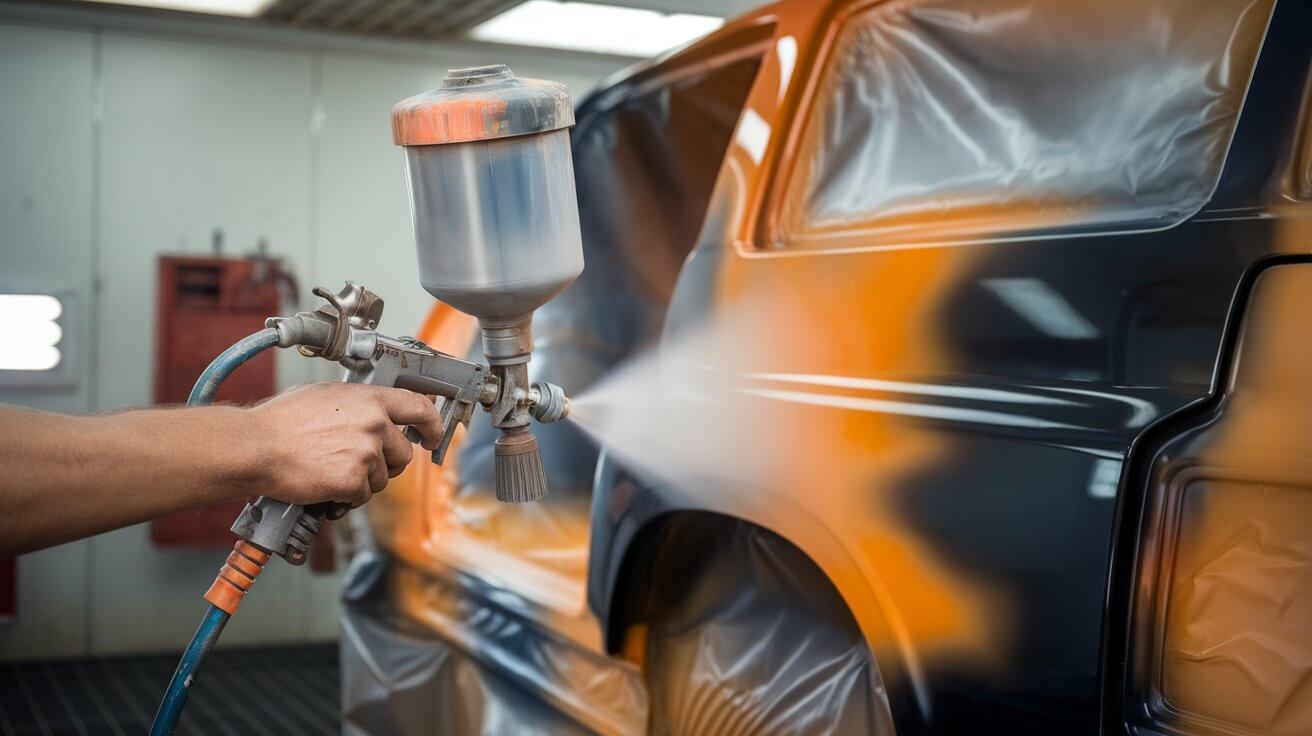
Ergonomics & Workflow Efficiency | The Human Side of Auto Paint Guns
Let’s step away from nozzle specs and psi readings for a moment. Because even the most technically perfect auto paint gun means nothing if your painter’s wrist gives out halfway through a Range Rover repaint.
Too many Dubai workshops chase output without watching how gear affects the body. Over time, bad spray gun handling leads to fatigue, sloppy trigger pulls, and shortcuts that show up in the finish. And yes, that ruins reputation, not just panels. Working with Dubai auto body repair specialists ensures the tools, workflow, and ergonomic setups match the pace of high-volume refinishing. Here’s what matters:
- Weight distribution: A well-balanced gun reduces strain during long vertical passes. Grip comfort: Molded handles and textured grips keep control steady, even under sweaty, humid conditions.
- Trigger control: Light, responsive triggers improve feathering and reduce finger fatigue. You’ll see it in your blends.
Idea: Let painters choose their gun for grip feel, not just specs. Productivity jumps when ergonomics match muscle memory. In Dubai’s high-volume bodyshops, it’s not just about speed. It’s about repeatability, with finish consistency staying strong from the first panel to the last. Ergonomic design cuts down on retouch sessions and lets technicians focus on finesse over fighting with gear.
Maintenance & Cleaning Protocols Keep the Gun Flowing or Pay the Price
Here’s what nobody admits in shop meetings: most finish issues start with dirty gear. Your auto paint gun is a precision tool; it’s not a shovel. Dubai’s climate adds extra punishment with dust, flash-dry paint, and moisture sneaking into the nozzle. Skip maintenance, and you’re not just risking splatter… you’re burning labor hours.
Spray Gun Cleaning After Every Job
Paint cures inside the nozzle faster than you’d think, especially under UV-heavy conditions common in Dubai workshops.
Disassembly and solvent flush routines aren’t just habits; they’re your quality control checklist.
- Disassemble the gun immediately after the spray session.
- Flush with approved solvent based on paint chemistry, never mix types.
- Use soft bristle brushes for nozzle care and air cap cleaning.
- Dry components fully to prevent rust inside air channels.
Tip: Set a 10-minute timer after each spray job. If cleaning doesn’t start before it buzzes, expect buildup later.
Preventing Buildup & Blockage
Residual paint is brutal; it settles deep inside the fluid needle and restricts flow next time around.
Routine care minimizes clog prevention disasters and keeps your spray pattern consistent.
- Check the fan nozzle and air passage before reassembly.
- Inspect for dried flecks or texture inconsistencies under light.
- Run a test spray into a sample panel before calling the gun “ready.”
Fact: Nearly 27% of spray irregularities in Dubai bodyshops trace back to ignored cleaning protocols.
Maintenance Schedule & Long-Term Care
You don’t need lab-level precision. Just consistent discipline.
Set a rotating weekly check for:
- Seal inspection and gasket replacement
- Needle alignment and trigger calibration
- Cup threads and connector leaks
“Auto paint guns die two ways: misuse or neglect. The first is human error. The second is pure laziness.”
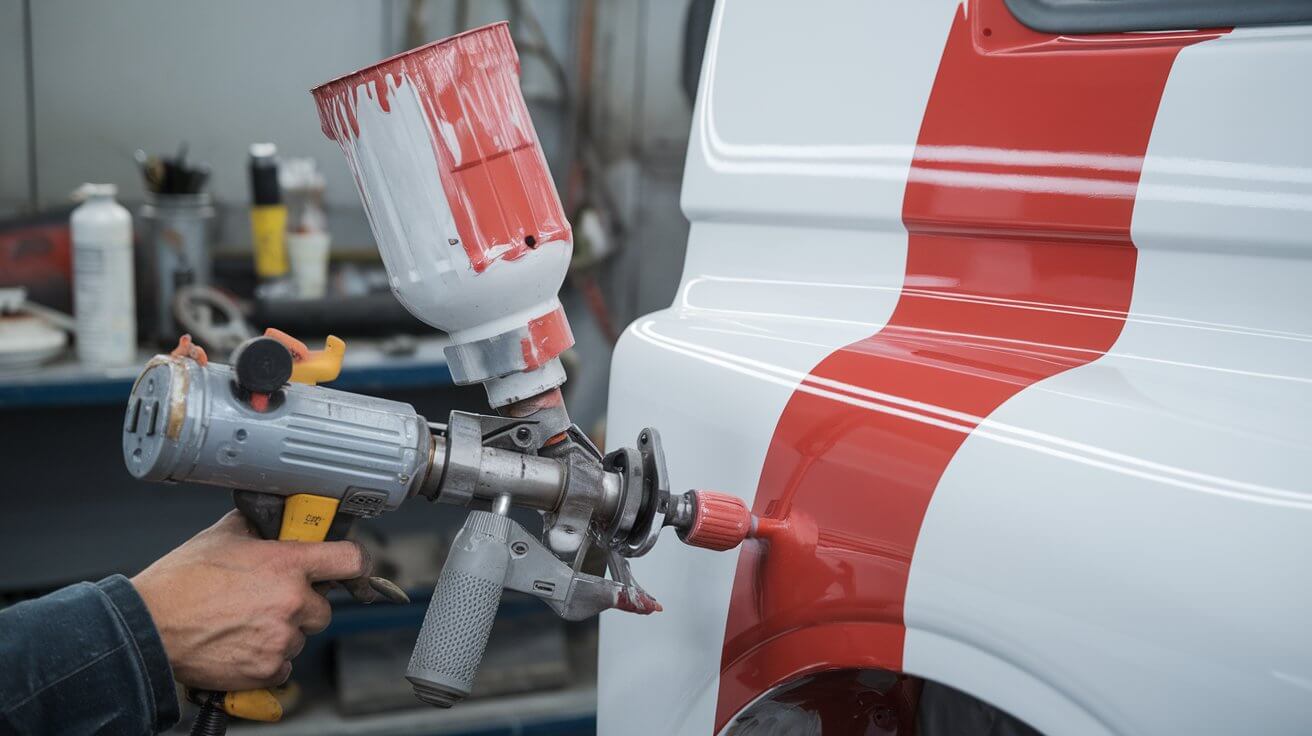
Auto Paint Gun Selection by Job Type | Match the Gun to the Game Plan
Choosing the right auto paint gun for the job isn’t just about coverage; it’s about control, efficiency, and finish integrity. Whether it’s a full-body respray or quick panel spraying, your setup needs to shift accordingly. Full-Body Respray vs. Spot Repair
- For full-body respray, go for a high-efficiency HVLP with wide fan patterns and large surface coverage capability.
- For spot repair, a precision touch-up gun minimizes overspray while preserving the surrounding clear.
Tip: Spray area should guide nozzle size,1.4mm for general use, 0.8–1.0mm for localized work.
Multi-Gun Strategy for Primer to Clear
Optimize efficiency in multi-stage paint jobs by switching guns:
- Primer: Larger tip (1.8–2.0mm), thicker flow
- Basecoat: Medium tip, fine atomization for color evenness
- Clearcoat: Smaller fan width, reduced pressure for glass-like finish
Bonus: Label guns by stage, saves confusion, boosts workflow during rush jobs.
Safety & Compliance Auto Paint Gun Protocols That Pass Inspection and Protect Lives
A quality finish is nothing without a safe setup. In high-stakes environments like Dubai’s workshops, spray booth safety isn’t optional; it’s enforced. Compliance goes beyond visible PPE; it’s about selecting the right auto paint gun and integrating every feature that controls exposure.
Compliance Starts at the Gun
Modern auto paint guns feature low-VOC atomization and smart fan control to limit overspray.
- HVLP guns offer fine control with reduced PSI, minimizing airborne particulates.
- Look for guns with internal air regulators, less spatter, and more compliance.
- Choose models certified for VOC-limited operations under ISO or EPA standards.
Guns with micro-adjustable nozzles help balance transfer efficiency and environmental safety.
Safety Gear Integration
Your PPE isn’t a sidekick, it’s mission-critical.
Ensure full alignment between spray gear and protective systems:
- Respirator masks rated for solvent filtration (organic vapor cartridges).
- Gloves and goggles are designed for splash zones and chemical exposure.
- Anti-static coveralls to prevent flammable vapor ignition.
Fact: Booth incidents often stem from mismatched gear—correct fit matters as much as rating.
Filtration & Airflow Compliance
Inside the booth, filtration systems do the real heavy lifting.
- Downdraft ventilation with HEPA-grade filters = clean air, low fire risk.
- Maintain airflow audits monthly to ensure regulatory alignment.
- Install VOC sensors for real-time monitoring in high-volume shops.
Rule of thumb: If you smell the paint after 3 minutes, your filtration’s failing.
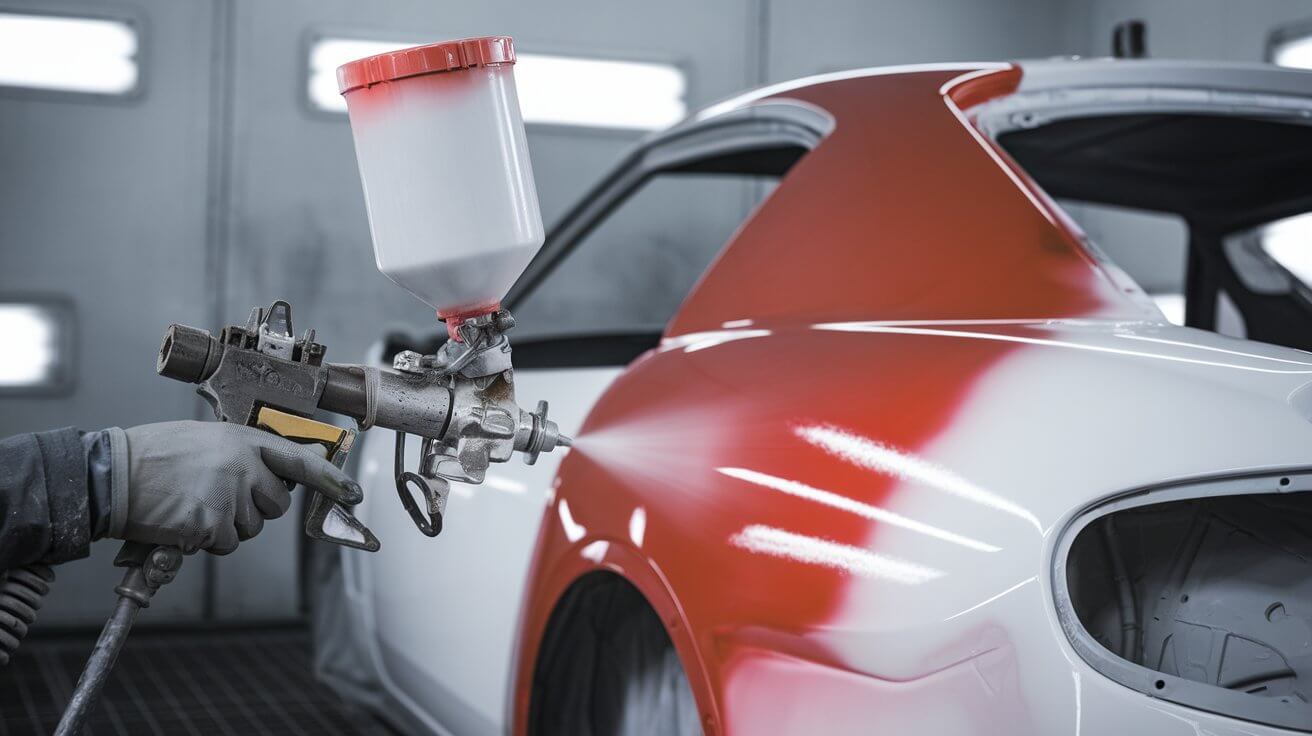
Spray Gun Selection Final Checklist: Buy Smart, Spray Sharper
Before pulling the trigger, literally, on your next auto paint gun purchase, walk through this streamlined spray gun checklist built for real-world workflows and outcomes, especially in high-performance Dubai shop settings.
Core Feature Prioritization
- Atomization control: Precision over power
- Nozzle variety: Support for basecoat, primer, and clearcoat
- Transfer efficiency: Low overspray, high paint savings
- Adjustable fan width and pressure regulation
- Compatibility with common booth air systems
Shop Workflow Match-Up
- Job types: Panel spraying, full-body respray, touch-up readiness
- Spray frequency: Daily multi-stage vs. occasional refinishing
- Climate demands: Handles high heat and VOC management
- Technician comfort: Balanced weight, ergonomic trigger
Mistake Avoidance Guide
- Don’t default to brand hype, inspect spec sheets line by line
- Avoid guns with fixed nozzle systems; you’ll outgrow them fast
- Match gun material to solvents used; some react badly over time
- Skimping on adjustability = spray pattern nightmares later
Auto Paint Gun Wrap-Up | Invest Once, Perform Always
When choosing a bodyshop spray gun, the difference between a good finish and a costly redo comes down to smart, specs-first decisions. From atomization control to nozzle versatility, every feature should serve the end goal: finish quality and operational efficiency.
Service-Level Recommendations
- Prioritize auto paint gun models that match your job flow, not just your budget.
- Invest in adaptable systems with replaceable nozzles and pressure controls.
- For high-volume professional use, choose guns built for long-haul durability with VOC compliance.
“In Dubai’s elite workshops, the paint gun isn’t just a tool, it’s a reputation.”