
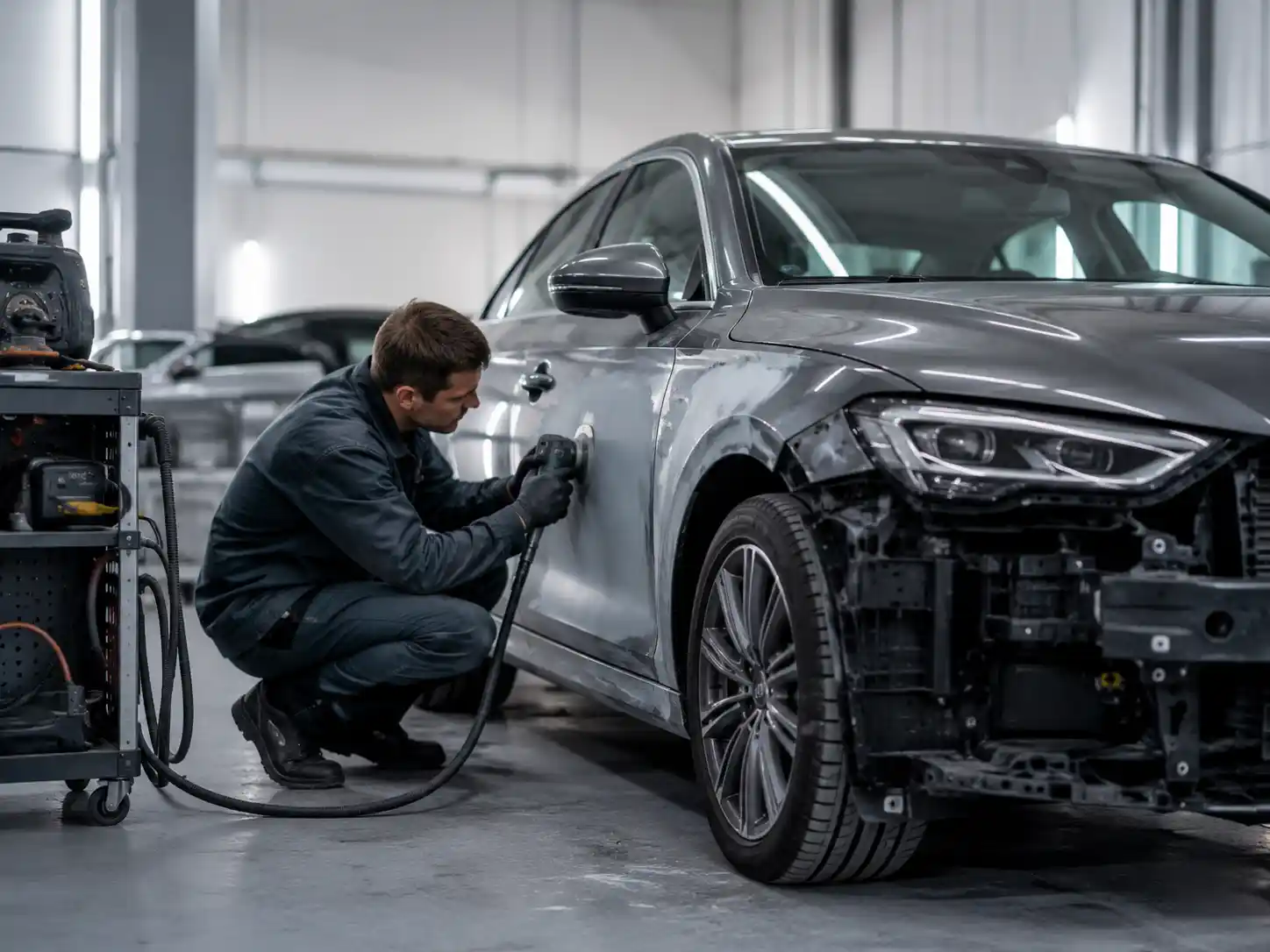
Accident repair in Al Quoz 4 Dubai
Accident Repair Dubai
After a collision, the visible dent or bumper damage is only the starting point. We inspect panel fit, hidden mounting areas, chassis and suspension clues, warning systems and paint requirements before defining the repair scope.
BodyShop.AE supports accident repair, structural assessment, insurance documentation and body refinishing with a clear inspection-first process.
Before repair begins
What we check after an accident
Accidents can affect more than the bumper, door or headlamp that first catches the eye. The initial inspection looks for relationships between the visible impact and the parts behind it.
- Panel gaps and body alignment: bonnet, doors, fenders, boot lid and bumper relationships are compared for movement.
- Brackets and mounting points: bumper clips, lamp brackets, supports and inner mounts are checked for damage.
- Sensors, wiring and warning lights: fitted electronics and visible wiring concerns are recorded before bodywork.
- Suspension and wheel position: wheel angle, tyre clearance and impact-adjacent suspension clues are reviewed.
- Paint condition: existing colour, previous repair and blending requirements are assessed before refinishing.

Repair scope
Specialized accident repair services
Bumper repair and replacement
Scuffs, cracks, deformation and damaged bumper fittings are assessed for repairability or replacement.
Fender and door repair
Dents, creases, scratches and alignment changes are corrected with fit and finish checked together.
Bonnet and roof damage
Panel distortion is assessed for shape, edge condition, mounting points and suitable refinishing.
Glass and exterior fittings
Damaged glass, trims and related exterior components are identified as part of the wider accident scope.
Paintless dent repair
Suitable minor dents may be restored without repainting when access, metal condition and original finish allow.
Chassis and frame assessment
When the impact may have reached structure, measurement and a vehicle-specific repair route are considered before correction.
Airbag and interior concerns
Deployment or restraint warnings are treated as a separate safety-system scope requiring appropriate diagnosis and parts.
Suspension and alignment checks
Wheel position and steering or suspension changes after impact are identified for suitable mechanical assessment.
Paint matching and refinishing
Colour, texture, gloss and repaired edges are reviewed on the assembled vehicle after geometry is correct.
Structural repair pathway
How chassis repair is approached after an accident
A bent or displaced structure should be measured before repair decisions are made. The exact process changes with vehicle construction, material and damage location.
Digital measurement
Relevant reference points are compared with suitable vehicle data to identify displacement.
Controlled straightening
Repairable distortion is corrected only where the material and supported procedure allow it.
Structural joining
Approved welding, bonding, riveting or replacement methods follow the actual component and vehicle information.
Mounting-point review
Suspension, subframe, steering and other connected mounting areas are checked where the impact path reaches them.
Alignment and scan
Relevant geometry, wheel alignment and diagnostic status are rechecked after structural work.
Repair documentation
Measurements, replaced parts and supporting accident or insurance documents are kept with the repair record.
Technology used in the workshop
Advanced tools and technology used in accident repair
The tools below support different parts of the repair. They do not replace inspection, material identification or vehicle-specific procedures.
3D structural measurement
Laser or electronic measurement can compare key chassis and body references before, during and after correction.
- Reference-point comparison
- Geometry tracking
- Before-and-after evidence
Dent and panel restoration equipment
Controlled pulling, reshaping and paintless dent tools are selected according to panel material, access and damage.
- Panel straightening tools
- PDR equipment
- Controlled pulling systems
Digital paint matching
Colour information, spray-out comparison and controlled application support a closer relationship with the existing vehicle finish.
- Colour-code and formula review
- Spray-out verification
- Texture and gloss checks
Diagnostics and electronic checks
Relevant warning systems, sensors and modules may require scanning or specialist checks depending on the collision and vehicle specification.
- Fault-code review
- Sensor and warning documentation
- Post-repair verification planning
Structural joining equipment
Welding and other joining methods are chosen according to the approved repair route, material and component construction.
- MIG/MAG or other specified welding
- Bonding and mechanical fastening where required
- Corrosion-protection restoration
Paint application equipment
Controlled spray equipment and booth conditions support even application, curing and final finish inspection.
- Primer and colour application
- Clear-coat control
- Final polishing and inspection
Insurance and police report support
Accident documentation should stay connected to the repair scope
Before claim-related work proceeds, the available incident report, vehicle registration details, insurer correspondence and approval status should be kept with the repair file. The exact documents depend on the accident and insurer.
Photographs from intake establish the visible impact. If controlled dismantling later reveals hidden damage, supplementary photos and a revised estimate can explain why the scope changed.
We can prepare body-repair documentation and estimates, while insurer coverage, excess, liability and settlement remain subject to the policy and insurer.
Step-by-step repair
A clear accident repair process reduces surprises
Damage intake
Record impact direction, visible damage, drivability concerns, warnings and claim details.
Inspection
Check panels, gaps, mounting areas, wheels, lower surfaces and hidden-risk zones.
Estimate
Separate confirmed bodywork, paint, parts and provisional findings before approval.
Repair and fit
Complete approved panel, structural or replacement work with trial fitting where needed.
Paint and assembly
Refinish after geometry is established, then reassemble trims, lamps and exterior fittings.
Final verification
Review visible fit, finish, relevant operations and the documented repair scope before handover.
Common accident damage
Different impact zones need different checks
Front-end damage
Bumper, bonnet, grille, lamp, fender and cooling-area concerns may be connected. See our front-end collision repair guide.
Rear-end damage
Rear bumper, tail-lamp, boot or tailgate fit and rear structural areas can be affected by a meaningful impact.
Side-impact damage
Doors, sills, pillars, glass, wheel areas and side restraint systems may require coordinated inspection.
Roof and underbody damage
Roof deformation, lower-floor contact, shields, suspension zones and EV battery protection need damage-specific assessment.
Indicative repair costs
Accident repair cost depends on how deep the damage travels
These are broad planning figures from the existing page, not fixed package prices. Vehicle type, material, parts, hidden damage, paint, labour and approval status can change the final quote.
For suitable localized body and finish damage.
Depends on cover condition, brackets, trims, fitted equipment and paint.
Shape, material, alignment and refinishing affect the total.
Exact glass type, fittings and vehicle specification matter.
Measurement, repairability, joining and connected systems determine scope.
Multiple panels, structural work, parts and refinishing can move beyond this band.
Why choose BodyShop.AE
Clear inspection, repair scope and finish control
Experienced repair team
Accident damage is assessed as a connected repair rather than a single cosmetic mark.
Documented repair planning
Confirmed, provisional and externally referred items remain clearly separated.
Manufacturer-aware methods
Material, construction and current repair information guide structural and joining decisions.
Transparent estimates
Visible damage, parts, labour, paint and hidden-risk items are explained before added work is authorised.
Paint and panel verification
Fit, colour, texture, gloss and repaired edges are reviewed after final assembly.
Insurance documentation support
Repair evidence can be organised for claim-related communication and supplementary approval.
Common questions
Accident repair FAQs
How long does car accident repair take?
Timing depends on damage severity, parts availability, structural work, insurance approval, paintwork, curing and hidden findings. Minor repairs may take a few days; larger collision work can take longer.
Will my car look the same after accident repairs?
The objective is to restore stable panel fit and a close finish relationship using suitable repair, replacement and paint processes. Final results depend on damage, material, previous repairs and colour condition.
Can I drive with minor-looking accident damage?
Do not assume visible damage is minor. If steering, braking, wheel position, fluids, airbags, warning lights or high-voltage areas may be affected, arrange suitable inspection or recovery.
What should I bring for an insurance accident repair?
Bring the available police or incident report, claim reference, vehicle registration details and insurer correspondence. Exact requirements depend on the accident and insurer.
Will repair affect my vehicle warranty?
Warranty implications depend on the vehicle, repair, parts and applicable policy terms. Ask the vehicle manufacturer or warranty provider about any specific concern before repair.
Can accident damage be estimated from photos?
Photos are useful for preparation and initial triage, but physical inspection is needed to confirm hidden mounts, structure, suspension relationships and the final repair scope.
Start with the impact evidence
Arrange an accident repair assessment in Dubai
Send wide and close photographs with the impact direction, any warning messages and whether the vehicle drives normally. We will use them to prepare for inspection and define the next repair step.