
Closure fit, dent repair and paintwork in Dubai
Boot Lid Repair Dubai
A boot lid is more than a painted outer panel. It must sit evenly between the rear quarters, close cleanly onto the latch, compress the seal correctly and preserve the visual line across the rear of the car.
We inspect the visible damage and the complete closure relationship before recommending repair, paintwork, adjustment or replacement. That wider view matters after a parking dent, a heavy closing incident, water entry or a rear impact.
- Saloon boot-lid assessment
- Repair or replace reasoning
- Gap, latch and seal checks
Start with the right closure
A boot lid is not the same as a tailgate or hatch
This page concerns the separate boot lid used on a saloon or sedan, where the rear glass remains fixed to the body and the lid opens only the luggage compartment. A hatchback or SUV tailgate is a larger closure that usually includes the rear glass and may carry different hinges, trim, wiring and operating systems. If your vehicle has a tailgate, we can still inspect the damage, but the repair scope and parts assessment must reflect that different construction. The Audi Q7 body repair guide provides a model-specific example involving the tailgate, rear opening and boot-floor relationship.
On a saloon, a small dent in the outer skin may be a local cosmetic concern. The same visible mark after a rear collision may be only one part of a larger relationship involving the hinges, latch, striker, seal channel, rear lamps, bumper, rear quarters and boot opening. The correct starting point is to identify what moved and whether the lid itself is the cause of the uneven fit.
Send one photograph from directly behind the vehicle, one from each rear corner, one close view of the damage and, if safe, a photograph of the opening with the lid raised. Tell us whether the lid has become heavy, difficult to release, hard to close, noisy on the road or associated with recent water entry. Photos help us prepare, but an in-person inspection is needed when alignment, hidden mountings or impact transfer are uncertain.
The closure geometry map
Inspection follows five connected points
The outer dent is only the first station. We follow the closing path from the lid skin to the hardware and the body opening that receives it.
Outer skin
Dent depth, crease direction, paint condition, edge proximity and previous repairs influence whether paintless dent repair or conventional bodywork is sensible.
Inner frame
The inner structure supports the skin and carries key mountings. Distortion here can affect the shape even when the outer mark appears modest.
Hinges
Hinge position, fasteners, movement and surrounding mounting areas help explain whether the lid rises, twists or sits high on one side.
Latch and striker
The latch must meet the striker without being dragged sideways. Adjustment should follow shape and hinge checks, not hide a distorted closure.
Seal and aperture
The weather seal needs even compression around a suitable opening. A wet boot can relate to alignment, seal seating, drains or another entry path.
What the symptom may be telling you
Three starting problems, three different questions
Dent or crease
A shallow open dent with intact paint and workable rear access may be considered for paintless dent repair. A sharp crease, damage close to a folded edge, stretched metal, cracked paint or earlier filler may require conventional reshaping and refinishing.
The reflection across a boot lid is broad and easy to read in daylight. A repair must restore the complete surface, not simply push out the deepest point.
Poor closing or uneven gaps
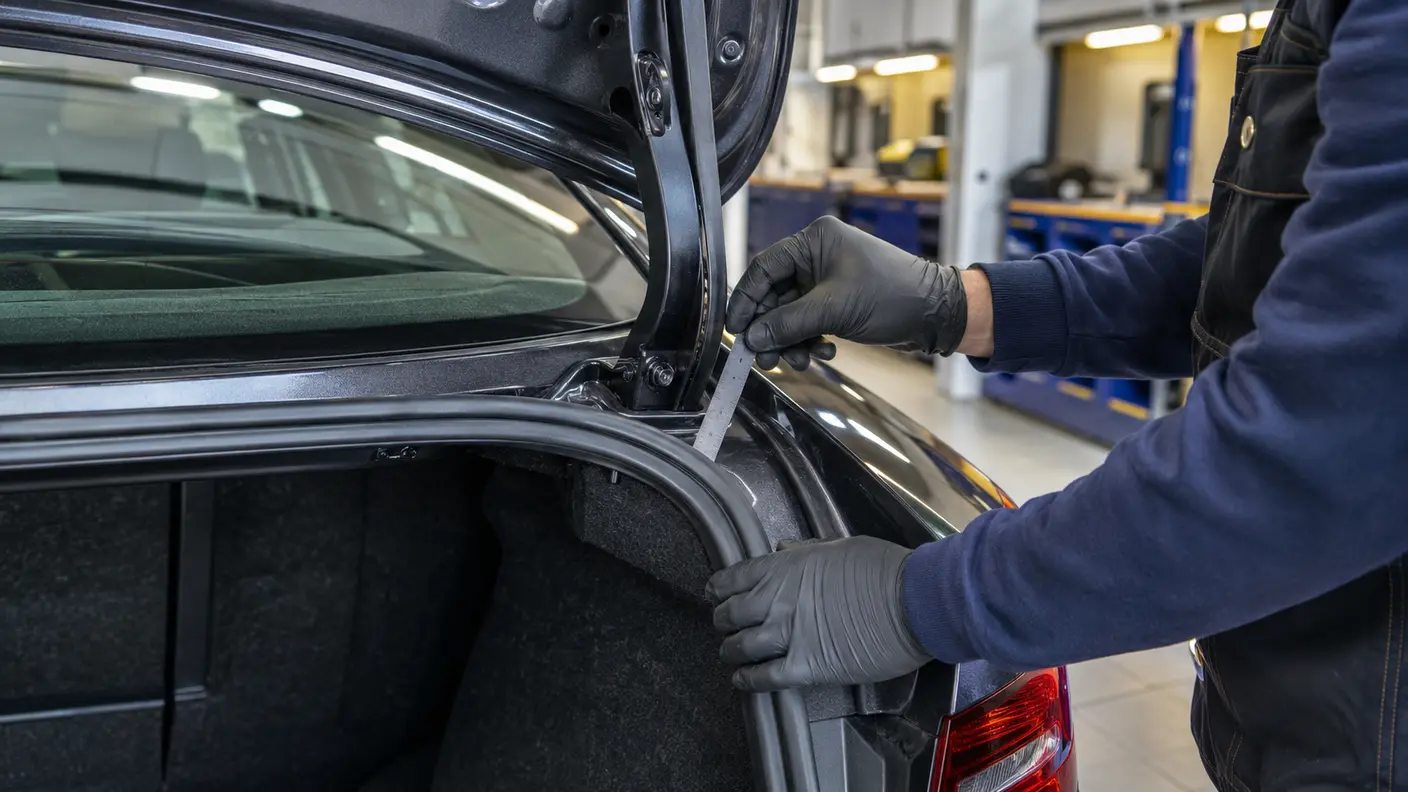
A lid that has become difficult to close can involve adjustment, but it can also indicate a displaced hinge, latch, striker, inner frame or boot opening. We compare both side gaps, rear edge height and the contact path before deciding what should be moved.
Adjustment is useful only when the underlying parts remain suitable. Moving the striker to catch a distorted lid can create a misleading temporary result.
Water inside the boot
Water entry needs evidence. We look for seal condition, dirt tracks, damp trim, lamp-adjacent areas, body seams, drains and signs that the closure no longer compresses evenly.
A new seal is not automatically the answer. The source may sit above, beside or below the wet area, and water can travel before it becomes visible inside.
Rear-impact relationships
The boot lid should be read with the body around it
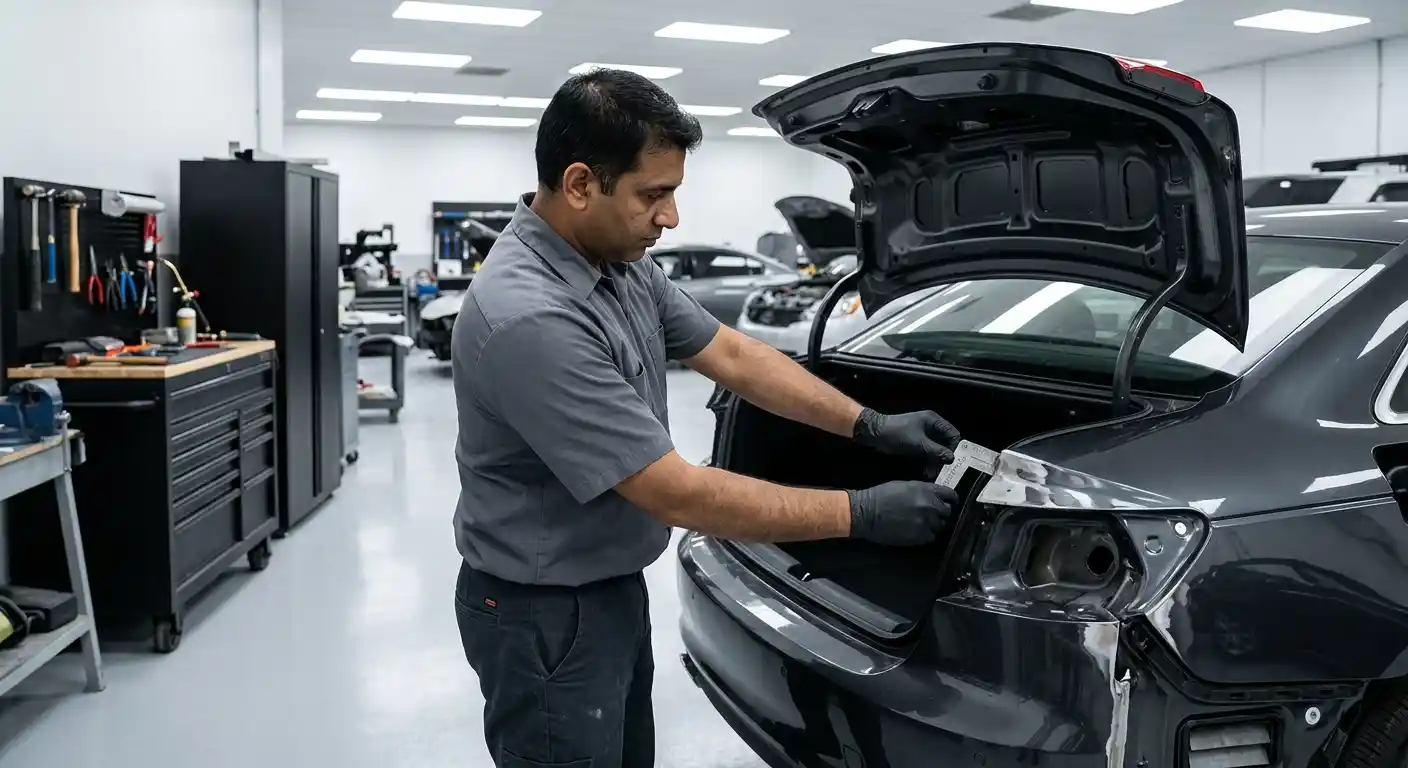
After a rear impact, the bumper cover may rebound towards its original position while mountings or panels behind it remain displaced. The boot lid may show only a small mark yet close differently because the striker support, rear panel, hinges or aperture relationship changed. That is why a rear-impact assessment should not isolate the lid from the bumper and surrounding body.
A wider accident repair assessment may be appropriate when there is a changed gap, a buckled boot floor, movement around the lamps, damaged bumper guides, a noisy closure or evidence that impact energy travelled beyond the outer panel.
Rear-quarter gaps: compare the lid edge with both quarters from top to bottom.
Rear edge height: check whether the lid sits proud or low against the panel and lamps.
Lamp and trim fit: look for shifted edges, broken fittings or new contact marks.
Bumper junction: inspect the cover, side guides and the relationship below the closing edge.
Boot floor and opening: confirm whether the damage remains local or calls for broader measurement.
Repair, paint or replacement
The decision depends on shape, access and closure function
A repair should leave the lid suitable as both a painted surface and a working closure. The lowest visible price is not useful if the panel still twists, contacts the body or carries an obvious wave.
Repair may be appropriate when
- The dent can be reshaped without leaving unacceptable stretch or a weak edge.
- The inner frame, hinge and latch mounting areas remain suitable.
- Paintless access is practical, or conventional repair can restore the surface predictably.
- Corrosion and previous filler do not undermine the proposed method.
- The lid can be trial fitted and aligned before final refinishing.
Replacement may deserve consideration when
- The skin or inner structure is sharply folded, torn or severely stretched.
- Damage sits through a critical edge or hardware mounting area.
- Earlier heavy repair creates uncertainty in the new repair zone.
- The lid cannot be returned to a dependable fit without excessive intervention.
- Parts availability, labour and refinishing make replacement the more reasonable route.
Paintless dent repair is not chosen only because the paint appears unbroken. Access, brace position, metal movement, dent sharpness and edge location all matter. Our dent removal service explains how paintless and conventional methods differ.
Paint and rear-panel reflection
Colour match is only one part of a convincing finish
A boot lid presents a wide painted surface under direct Dubai sunlight. Metallic and pearl colours can change with viewing angle, while deep solid colours reveal sanding waves, texture changes and polishing marks. We consider colour identification, the present condition of the surrounding paint and how the repaired area meets the rear quarters or adjacent panels.
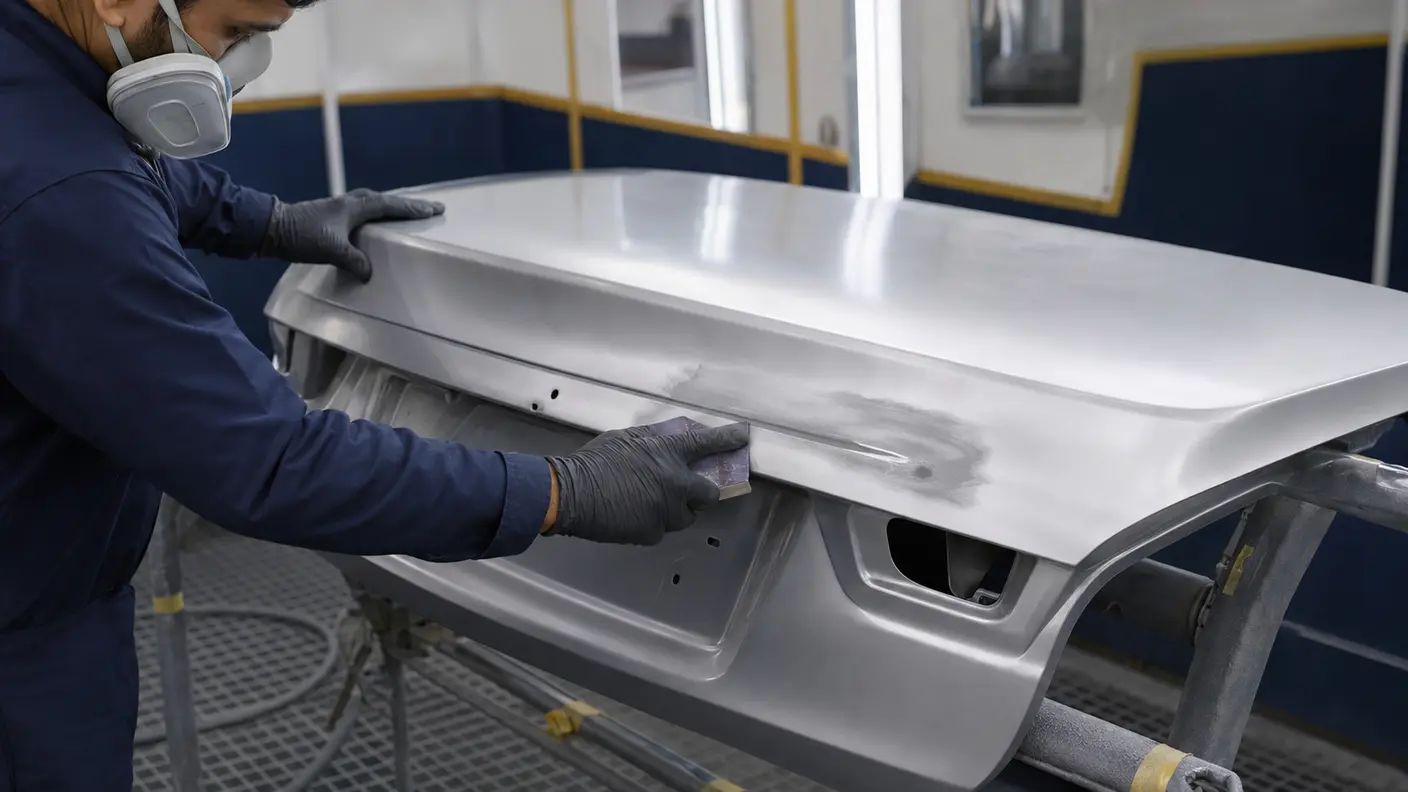
Preparation begins with the repair shape. Feather edges, primer finish and guide-coat checks help prevent the old damage or repair boundary from showing through. Test spray-outs may be useful for colours that travel strongly with angle. Blending is considered when it supports a less visible transition, not applied as an automatic addition to every job.
Before reassembly, the finish should be checked for colour, texture, gloss and contamination. After the hardware and trim are refitted, the lid needs another alignment and closing check. A polished surface does not compensate for a poor gap or latch relationship. More detail about refinishing is available on our car painting service page.
Badges, trim, lamps, a release switch or a camera may sit on or near the closure depending on the model. The estimate should identify the items that need safe removal, protection or replacement. If a camera or electrical concern exists, its model-specific requirements must be confirmed. This page does not promise calibration or electronic repair capability.
A cost board without a made-up boot-lid price
Use the visible method to understand the starting range
There is no responsible single price for every boot lid. A shallow open dent with original paint, a creased edge, a distorted inner frame and a rear-impact closure problem are different jobs. The figures below are site-supported Dubai planning bands for relevant methods. They are not a guaranteed boot-lid quote.
Small PDR
A small dent may fall in this band when paint remains intact, metal movement is manageable and suitable access exists behind the outer skin.
AED 150 to 350Medium PDR
A broader or more involved dent may fit this range if paintless repair remains technically suitable. Brace position and edge proximity can change the method.
AED 350 to 700Conventional dent and paint
Where paint is broken, metal is sharply creased or the surface needs filler and refinishing, a conventional repair may begin within this broader range.
AED 700 to 1,200+Panel painting
Panel painting starts from this figure. Preparation, colour behaviour, blending, trim removal and the condition of previous paint influence the final scope.
From AED 450A rear impact may also include bumper work. Light rear-bumper polishing starts from AED 150. Plastic repair plus paint is generally AED 500 to AED 1,200, a bumper repaint is AED 600 to AED 1,500, and replacement can be AED 1,200 to AED 6,000 or more. Those figures apply only when the bumper is part of the confirmed damage, not automatically because the boot lid is being repaired.
Inspection and current-market caveat: the final estimate depends on model, lid material and construction, dent position, inner-frame condition, paint system, hardware, trim, parts availability, insurer scope and hidden damage. Parts and outside services must be priced at the current market rate. No boot-lid replacement price is stated here because it cannot be supported without identifying the vehicle and required parts.
From assessment to handover
Four stages keep the closure and finish in the same repair plan
Inspect and record
We record the dent, gaps, closing feel, hardware, seal area, paint condition and relevant rear-impact relationships before deciding what needs access.
Confirm the route
The plan identifies paintless repair, conventional repair, adjustment or replacement, plus dismantling, parts and paint operations. Unknowns are stated clearly.
Trial fit and refinish
Shape and closure geometry are established before final paint. Where parts are needed, availability and fit can affect the sequence and timing.
Reassemble and verify
The final check covers gaps, opening, closing, latch engagement, seal seating, trim, surface reflection and the functions within the agreed repair area.
Timing cannot be predicted from the dent size alone. A simple paintless repair may be relatively direct, while conventional reshaping requires preparation and curing. Replacement can depend on part supply, transfer of trim and hardware, trial fit and paint. Rear-impact work may pause for insurer approval or a supplement if hidden damage appears after authorised dismantling. A useful schedule begins after the inspection and known parts requirements are confirmed.
Insurance-related boot damage
Visible damage and the approved scope must stay connected
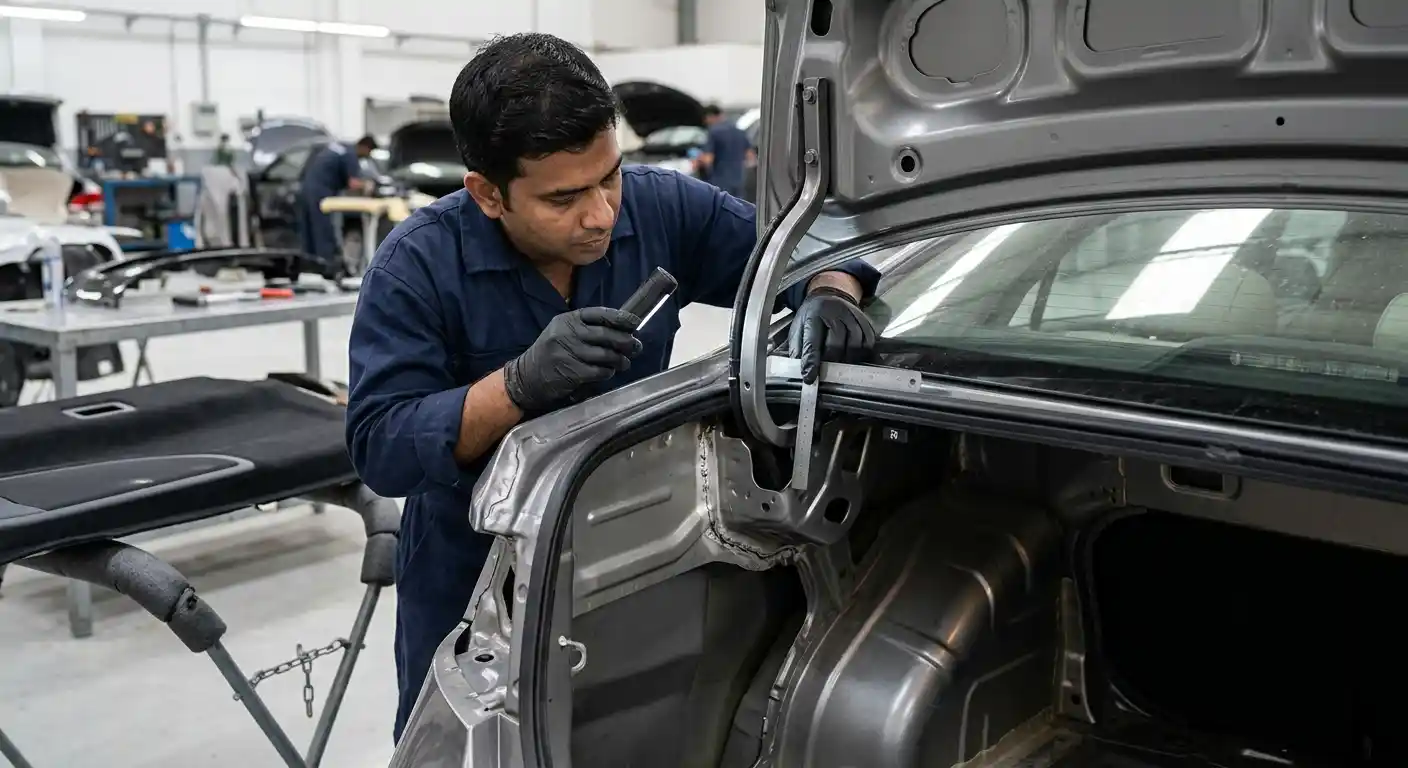
For a claim, keep accident photographs, the police report or claim reference and relevant insurer correspondence. The first estimate may reflect what is visible before access. If the bumper, trim or lid is removed with approval and additional damage becomes visible, the finding may require photographs, notes and a supplementary estimate.
The insurer determines coverage, excess, parts basis and approval. The workshop documents physical findings and explains the repair requirement. Ask which lid operations, paint panels, hardware, trims and bumper items are included. Pre-existing dents or paint damage should be separated from the accident scope so the handover is clear.
Do not assume that a replacement lid includes every attached item. Hinges, latch, trim, badges, lamps, release components or a camera area can be priced or supplied differently by model. The estimate should state what is included, what is reusable, what is provisional and which items await current-market confirmation.
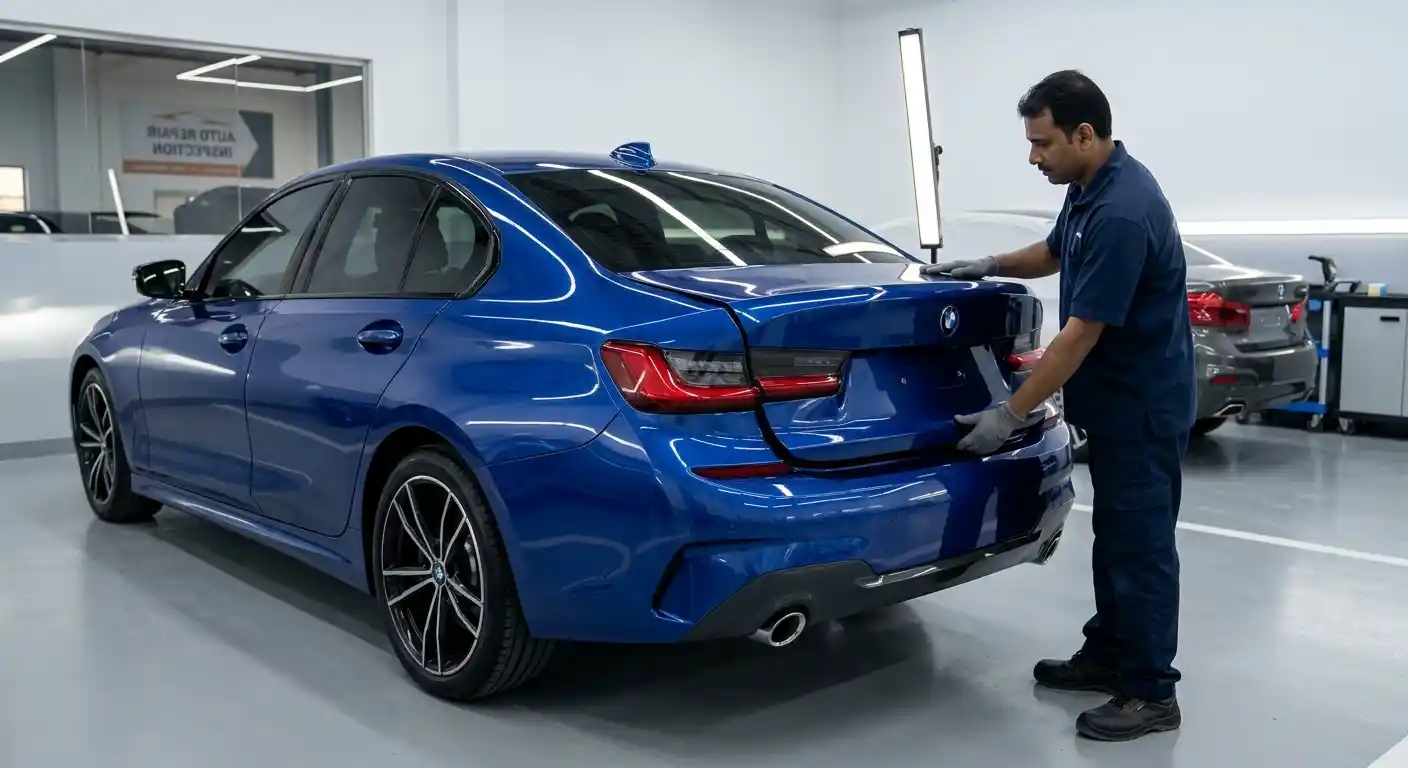
Collection check
Review the repaired boot lid as a complete closure
Walk around the rear of the vehicle before leaving. View the paint and operate the lid rather than judging the repair from one standing position.
Compare the left and right gaps from the hinges down to the rear edge.
Look across the panel in bright light for waves, lows or an interrupted reflection.
Open and close the lid several times without slamming or lifting it sideways.
Confirm the latch releases and engages cleanly without dragging across the striker.
Check the seal is seated and that interior trim and clips are secure.
View metallic or pearl colour directly and from both rear corners.
Confirm relevant lamps, release controls or other agreed functions in the repair area.
Ask what was repaired, adjusted or replaced and follow the stated paint aftercare.
If water entry was part of the complaint, ask what evidence identified the source and how the result was checked. A dry surface at handover is not by itself proof of a resolved leak. The diagnosis should connect the symptom to the corrected seal, alignment, seam, drain or other confirmed entry path.
Frequently asked questions
Boot lid repair questions in Dubai
Can a dented boot lid be repaired without paint?
Possibly. Paintless dent repair depends on intact paint, dent shape, metal movement, edge distance and access behind the outer skin. A sharp crease, stretched area, damaged edge or previous paint can make conventional repair more suitable.
Why does my boot lid need to be slammed after an accident?
The lid, hinge, latch, striker or surrounding opening may have moved. Repeatedly moving the striker without checking the complete geometry can hide the cause, so the gaps and closing path should be inspected first.
Can you repair water entry around the boot lid?
We can inspect alignment, seal seating and visible entry clues. Water can also travel from lamp areas, seams or drains, so the source should be confirmed rather than assuming the rubber seal needs replacement.
Is a saloon boot lid different from an SUV tailgate?
Yes. A saloon boot lid normally opens the luggage compartment while the rear glass remains fixed. A hatch or tailgate commonly includes the glass and may have different hinges, trim, wiring and operating systems, so it needs a different scope.
Should a damaged boot lid be repaired or replaced?
The decision depends on skin and inner-frame distortion, edge and mounting damage, previous repair, corrosion, parts availability and whether a dependable fit and finish can be restored. Inspection is required before choosing.
How much does boot lid dent repair cost in Dubai?
Site-supported planning bands are AED 150 to AED 350 for a small suitable PDR dent, AED 350 to AED 700 for a medium suitable PDR dent, and AED 700 to AED 1,200 or more for conventional dent repair with paint. Inspection determines whether any band applies.
How much does it cost to paint a boot lid?
Panel painting starts from AED 450, but preparation, dent repair, previous paint, colour behaviour, blending, trim removal and the condition of the complete lid can change the final estimate.
Can you estimate boot lid damage from photos?
Photos can support a preliminary discussion. Include direct rear, both corner, close damage and open-lid views. Final pricing may require an in-person check of the inner frame, hinges, latch, aperture, previous repair and hidden impact relationships.
How long does boot lid repair take?
Timing depends on repair method, paint and curing, dismantling, trial fit, parts availability and insurer approval. A useful schedule can be provided after the physical scope and known parts needs are confirmed.
Does a rear bumper impact affect the boot lid?
It can. A bumper cover may rebound while guides, the rear panel, boot opening or nearby mountings remain displaced. Changed gaps, difficult closing, boot-floor distortion or lamp movement justify a wider rear-impact assessment.
What should I check when collecting the vehicle?
Compare both gaps, inspect reflection and colour from several angles, operate the lid, confirm latch engagement and inspect seal and trim seating. Also verify the functions included in the agreed repair scope.
Arrange a closure inspection
Show us the dent, gaps and the full rear of the car
Send several clear photographs or arrange an inspection in Al Quoz 4. We will separate the visible surface repair from any alignment, seal, latch or rear-impact concern that still needs confirmation.