
Coverage belongs in the job paperwork
Auto Body Repair Warranty Dubai
An auto body repair warranty should identify the exact repaired area, eligible workmanship, duration, exclusions, claim process and supporting documents. A website promise cannot replace the quotation and invoice for your vehicle.
Bodyshop.ae confirms warranty support for eligible work according to the paint type, repair area, parts and service condition. The written job terms control what is covered.
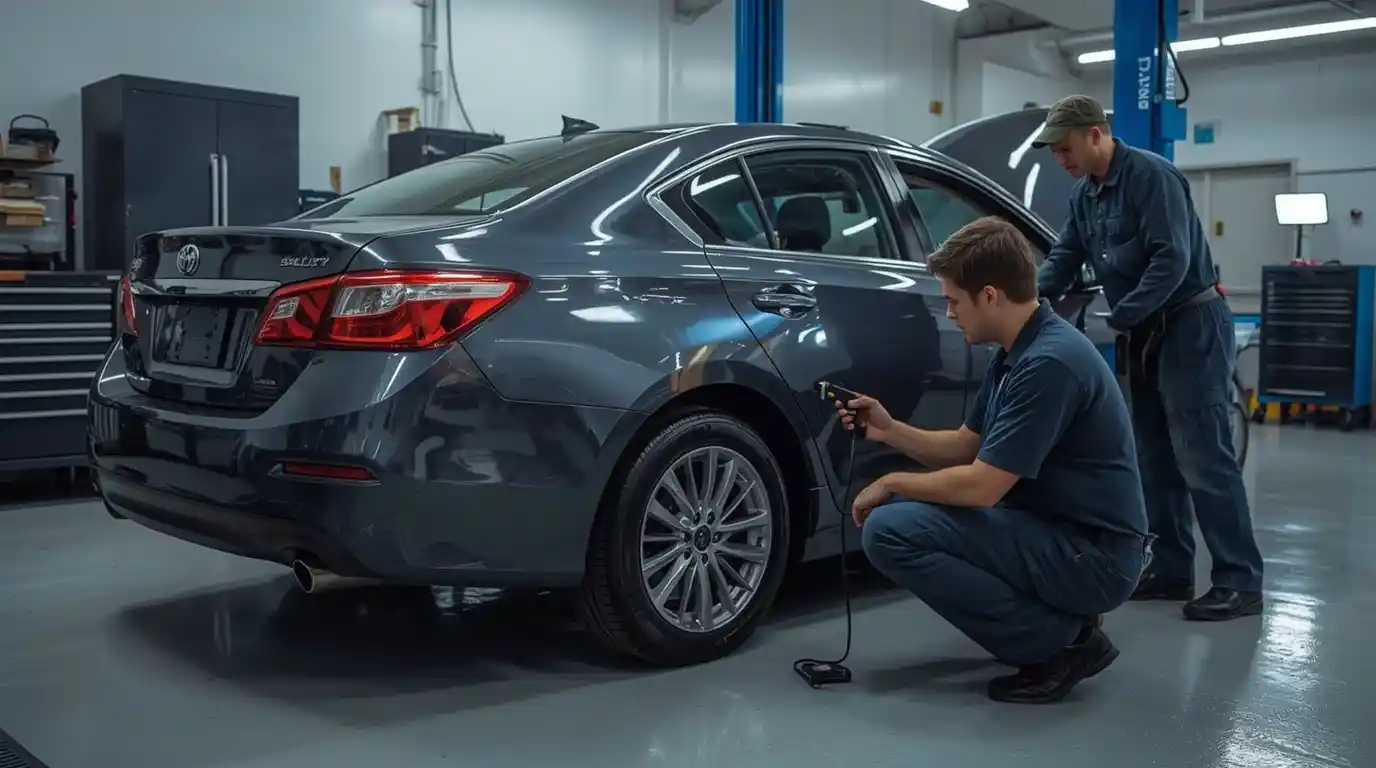
Read the warranty by category
Workmanship, paint and parts do not share one cause
Separating categories makes a future concern easier to diagnose and prevents a new impact from being confused with a repair defect.
| Category | What eligible coverage may address | What must be checked |
|---|---|---|
| Body workmanship | Repair-related shape, attachment or fit issue within the written scope | Starting damage, repaired area, hidden findings and any later impact |
| Paint workmanship | Eligible peeling, clear-coat failure or visible defect caused by the documented refinishing process | Repair boundary, coating failure pattern, contamination, care and external damage |
| Plastic repair | Failure of an eligible repaired plastic area under the stated service conditions | Crack route, tab or edge involvement, substrate, impact and heat exposure |
| Installed parts | The applicable supplier or manufacturer process for a listed replacement part | Part identity, installation, separate warranty terms and the failure itself |
| Electronics or calibration | Only the operation and responsibility specifically written into the job scope | Diagnostic result, component fault, calibration record and events after delivery |
| Insurance repair | The repairer’s eligible work under its written terms | Insurer approval does not automatically create or replace a workshop warranty |
No universal duration is stated here. The period and exact coverage for eligible work must appear in the vehicle’s written quotation, work order or invoice.
The written scope sets the boundary
A warranty cannot cover work that was never authorised
A auto body repair service estimate should name the panel, bumper, attachment, paint boundary, replacement part and any conditional work. If a scratch was repaired on one door, the warranty does not silently extend to unrelated paint failure on the bonnet or a new dent on the opposite side.
The same principle applies to accident repair service. An insurance estimate may authorise selected visible operations while hidden damage, unrelated wear or declined work remains outside the repair. Variations discovered after dismantling should be recorded and approved so the final warranty boundary stays clear.
For car painting service, the job record should distinguish local paint repair, panel refinish, blended panel and full repaint. Colour relationship, clear-coat failure, stone chips, scratches, chemical damage and external impact have different causes. The invoice should make those distinctions visible.
Verbal statements are difficult to test later. Ask for the warranty duration, start date, repaired area, eligible defect types, exclusions, inspection process and remedy in writing before authorisation. Keep the approved estimate, invoice, payment record, photographs and any aftercare instructions together.
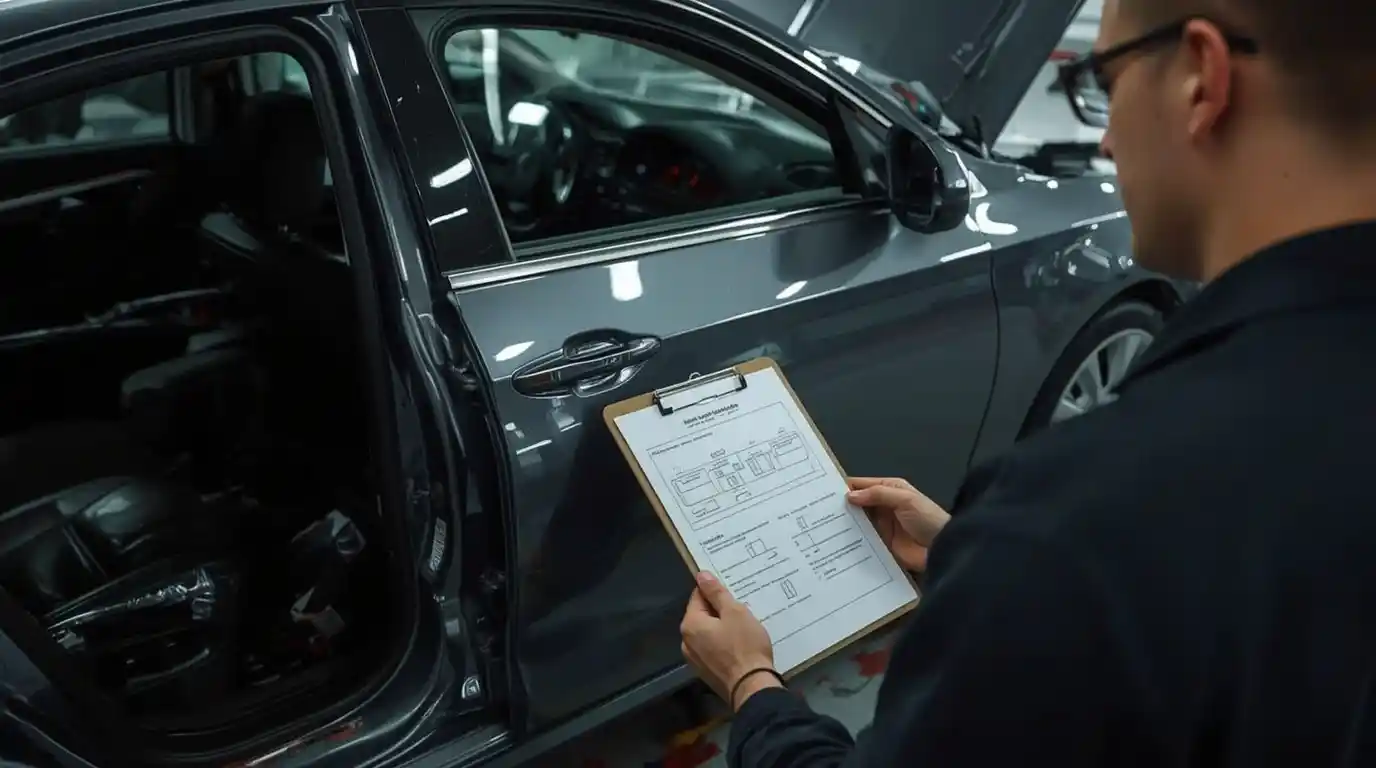
Common exclusions need a reason
New damage and external causes remain separate
Accidents, parking contact and stone chips
A later impact can crack paint, move a bumper or distort an earlier repair. Photograph the new event before assuming the original work failed.
Abrasive washing and unsuitable chemicals
Harsh cleaner, aggressive polishing, automatic brushes or contaminated cloths can create damage unrelated to the refinishing process, especially on matte paint.
Bird contamination, industrial fallout and heat exposure
External contamination and delayed cleaning can etch or stain coatings. The failure pattern and care history must be inspected.
Old paint, corrosion and prior repair
The written estimate should identify unstable surrounding coatings or corrosion that was not included. New work cannot warrant an excluded substrate indefinitely.
Later wrapping, polishing, drilling or repair
Another workshop or accessory installer can alter the repaired area, remove evidence or introduce a new cause. Obtain approval before third-party correction.
Normal wear and supplier limitations
Clips, trims, sensors, lamps and mechanical items can have separate terms. Part failure and installation workmanship are investigated separately.
Warranty claim pathway
Preserve the condition before anyone corrects it
A prompt, documented inspection gives both owner and workshop the fairest evidence.
-
Stage 01
Stop changing the area
Do not polish, sand, glue, heat, repaint or ask another workshop to repair the suspected defect before it is documented.
-
Stage 02
Record the concern
Photograph the complete panel, close defect, surrounding gaps and several light angles. Note when it appeared and whether an impact or chemical event occurred.
-
Stage 03
Gather the job documents
Find the estimate, work order, invoice, payment record, handover photographs, warranty wording and aftercare instructions.
-
Stage 04
Notify the workshop
Describe the symptom and repaired area without deciding the cause. Request inspection under the written claim process.
-
Stage 05
Allow diagnosis
The workshop compares the starting record, repair scope, failure pattern, coating or part condition and events after delivery. Access or testing may be needed.
-
Stage 06
Receive the decision in writing
The response should state whether the concern is eligible, excluded, unrelated or uncertain, with the proposed remedy or next evidence step.
-
Stage 07
Approve rectification
If eligible, confirm the correction boundary, parts, timing and any effect on the remaining warranty before work begins.
Coverage interpretation
Diagnose the concern before deciding whether it is covered
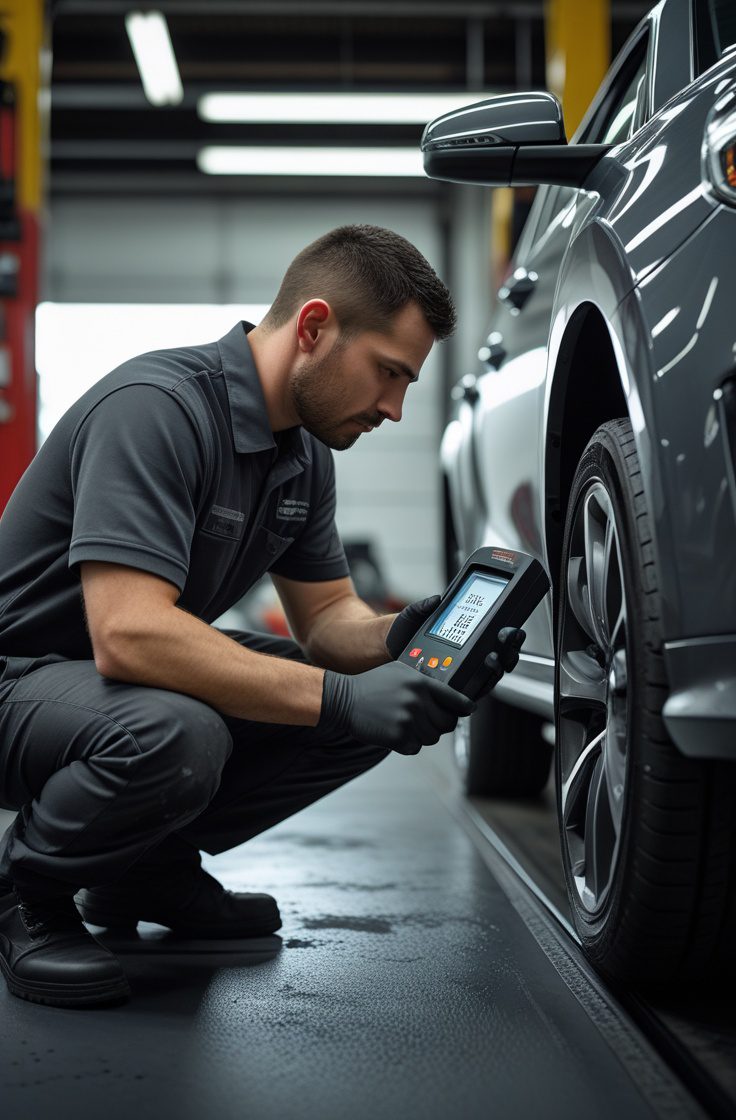
A warranty review starts by identifying the repaired area and the symptom. Paint peeling from a prepared repair edge, a new stone chip, corrosion from an excluded area and a colour difference visible since collection do not share one cause. The workshop compares the invoice, starting photographs, approved scope, handover record and current condition before deciding whether the concern relates to eligible workmanship.
Workmanship coverage can apply differently to metal repair, plastic repair, joining, refinish preparation, paint application and reassembly. Parts can carry manufacturer, supplier or workshop-administered terms that are separate from labour. Used, customer-supplied, repaired and new parts need clear identification because their condition and coverage cannot be assumed to be identical.
Paint concerns are also layer specific. Adhesion loss, solvent reaction, sinking repair edges, gloss change, colour relationship, contamination and impact damage require different diagnosis. Normal stone chips, scratches, collision damage, harsh chemicals, pressure-washing misuse or later polishing can fall outside workmanship coverage. The written terms for the actual job remain authoritative; this page does not create a universal duration or promise.
A customer should report the concern promptly with the invoice number, vehicle details, repaired area, date first noticed and clear photographs. Avoid sanding, polishing, repainting or dismantling the area before inspection because later work can remove evidence. If driving could worsen structural, steering, suspension, cooling, restraint or high-voltage damage, arrange recovery rather than treating a warranty enquiry as confirmation that the vehicle is safe.
The workshop inspection should produce a recorded outcome. The concern may be accepted for rectification, rejected with a reason, referred to a parts supplier or another specialist, or held pending further access or testing. When responsibility is shared, the customer should know who coordinates the next action and what evidence is still required. A verbal promise is weaker than a dated written decision.
After rectification, the repair file should state what was corrected, what remained unchanged and whether the original or revised warranty terms continue. Maintenance and aftercare instructions should be repeated where they affect the result. Keeping photographs and documents together helps both sides distinguish recurrence from a new incident.
Warranty duration should be written as a clear start date and end condition when management approves the terms. Coverage may begin at invoice, payment, collection or completion depending on the agreement, so the paperwork must remove doubt. Geographic limits, inspection access, transfer to another owner and responsibility for transport should also be stated if they apply. None should be inferred from general website wording.
A useful warranty does not promise that nothing will ever happen. It explains what happens when an eligible repair concern appears.
The remedy can depend on defect type and repairability. Inspection may support correction, repainting, part replacement or another defined action.
The owner should know who authorises the remedy, where inspection occurs and whether transport or third-party work needs prior approval.
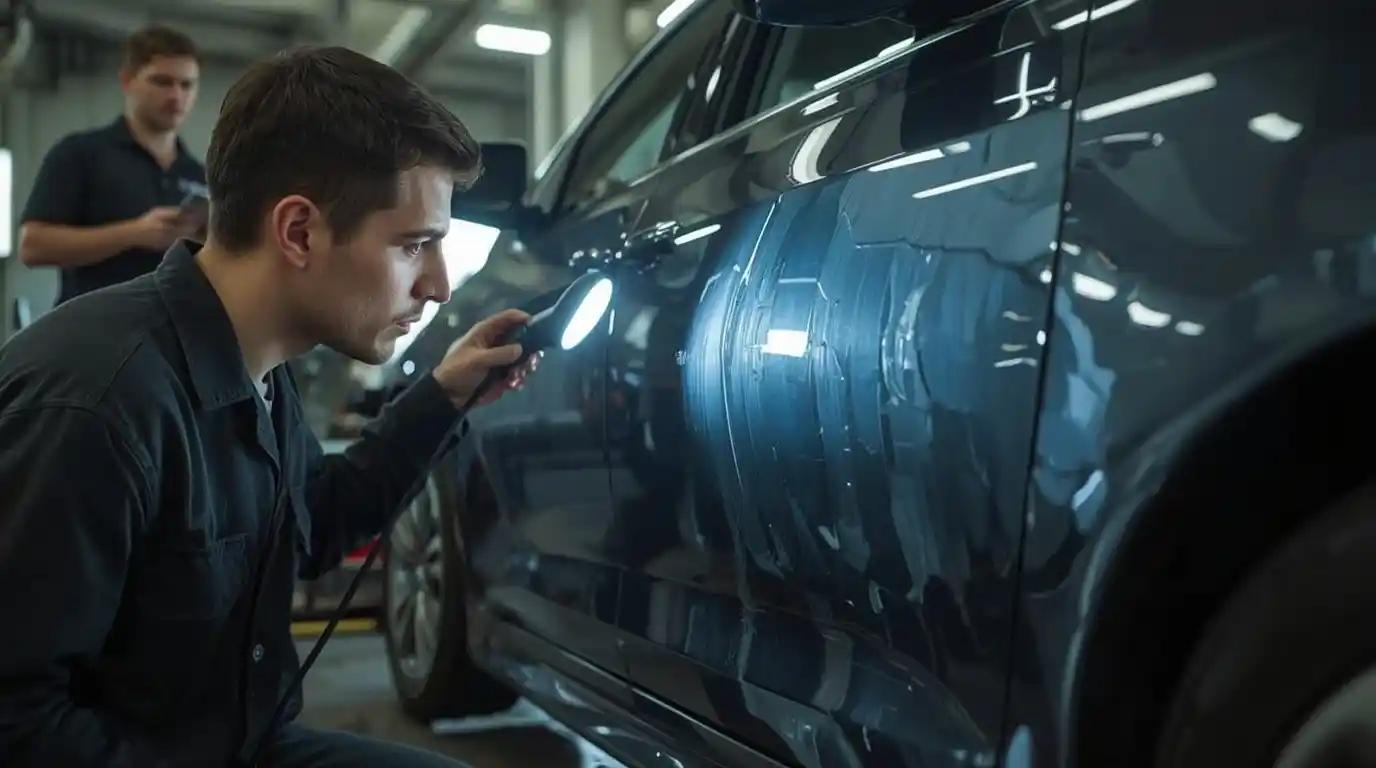
Failure-pattern evidence
Paint concerns are diagnosed by where and how they appear
Workmanship-related peeling often follows a preparation edge, substrate, repair boundary or adhesion layer. A new stone chip begins at a concentrated impact point. Chemical etching follows splash, drip or contamination patterns. The visible pattern does not decide eligibility alone, but it helps separate plausible causes.
Clear-coat dullness can result from application, curing, polishing, washing contact or environmental exposure. The inspector compares the repaired panel with surrounding paint, reviews the coating record and asks when the change first appeared. Repeated machine polishing before inspection can remove that evidence.
Colour mismatch present from handover is different from gradual fading or a later adjacent-panel repair. Photograph colour in clean, dry conditions under several lights. Metallic, pearl and matte finishes also need oblique angles because effect or sheen can change while the face colour remains close.
A crack returning through a repaired bumper needs inspection from both sides when access is justified. A new impact, failed attachment, stressed edge, contaminated substrate and repair-method failure leave different clues. Do not glue the crack before the warranty review.
The claim decision should connect the observed pattern to the written repair scope and exclusion. A short eligible or not eligible answer without that connection does not help the owner understand the result.
Before signing the estimate
Ask these warranty questions while the scope is still clear
Coverage
- Which panels, parts and operations are eligible?
- What defect types are included?
- When does coverage start?
- What written duration applies?
Exclusions
- How are stone chips and new impacts treated?
- What care products or polishing are restricted?
- How is pre-existing paint or corrosion recorded?
- Do modifications affect eligibility?
Claim process
- Who should be contacted?
- How quickly should a concern be reported?
- Must the vehicle return before third-party work?
- What evidence should the owner keep?
Remedy and responsibility
- What remedy is available for an eligible defect?
- Are parts covered by separate supplier terms?
- Is calibration or electronic work included?
- Is transfer to a later owner addressed in writing?
Warranty questions
Auto body repair warranty questions
How long is an auto body repair warranty in Dubai?
There is no single period that safely applies to every repair. The duration depends on the eligible work and written job terms. Ask for the exact period before authorisation.
Does a paint warranty cover new scratches and stone chips?
New external damage is normally assessed separately from paint workmanship. The failure pattern and event history must be inspected under the written terms.
Can another workshop repair the area before a warranty inspection?
Doing so can remove evidence and affect eligibility. Notify the original repairer and follow the written claim process before authorising third-party correction, unless an emergency requires immediate action.
Are replacement parts covered by the body shop warranty?
Part and installation responsibilities can differ. The invoice should identify the part, source, applicable supplier terms and the workshop’s workmanship coverage.
Does an insurance approval guarantee the repair?
No. The insurer’s approval or payment is separate from the workshop’s written workmanship and part terms. Review both documents.
What photographs help a warranty claim?
Provide the complete repaired panel, close defect, several light angles, nearby gaps and any new impact point. Keep the original intake and handover photographs for comparison.
Confirm before work starts
Request the warranty wording for your repair
Send the vehicle, damage area and proposed work. Ask for the eligible repair boundary, duration, exclusions and claim process to be included with the written estimate.
Keep the evidence
Store the final scope with the handover record
The most useful warranty file contains the approved estimate, authorised variations, invoice, replaced-part list, repair photographs, measurements or scans where relevant, aftercare and the exact warranty wording.
If a concern appears, start with that record and the current condition. It gives the inspection a factual baseline and prevents unrelated damage from being mixed into the original repair.