
Audi Q7 Body Repair Dubai
Audi Q7 body repair Dubai often starts with a rear contact that can move more than the bumper cover. Tailgate alignment, lamp mounts, rear-quarter edges, parking hardware, boot-floor relationships and towing equipment may all sit in the force path. We trace the impact from the outside inward, then build a repair plan that restores the large closure, body geometry, paint and fitted systems together.
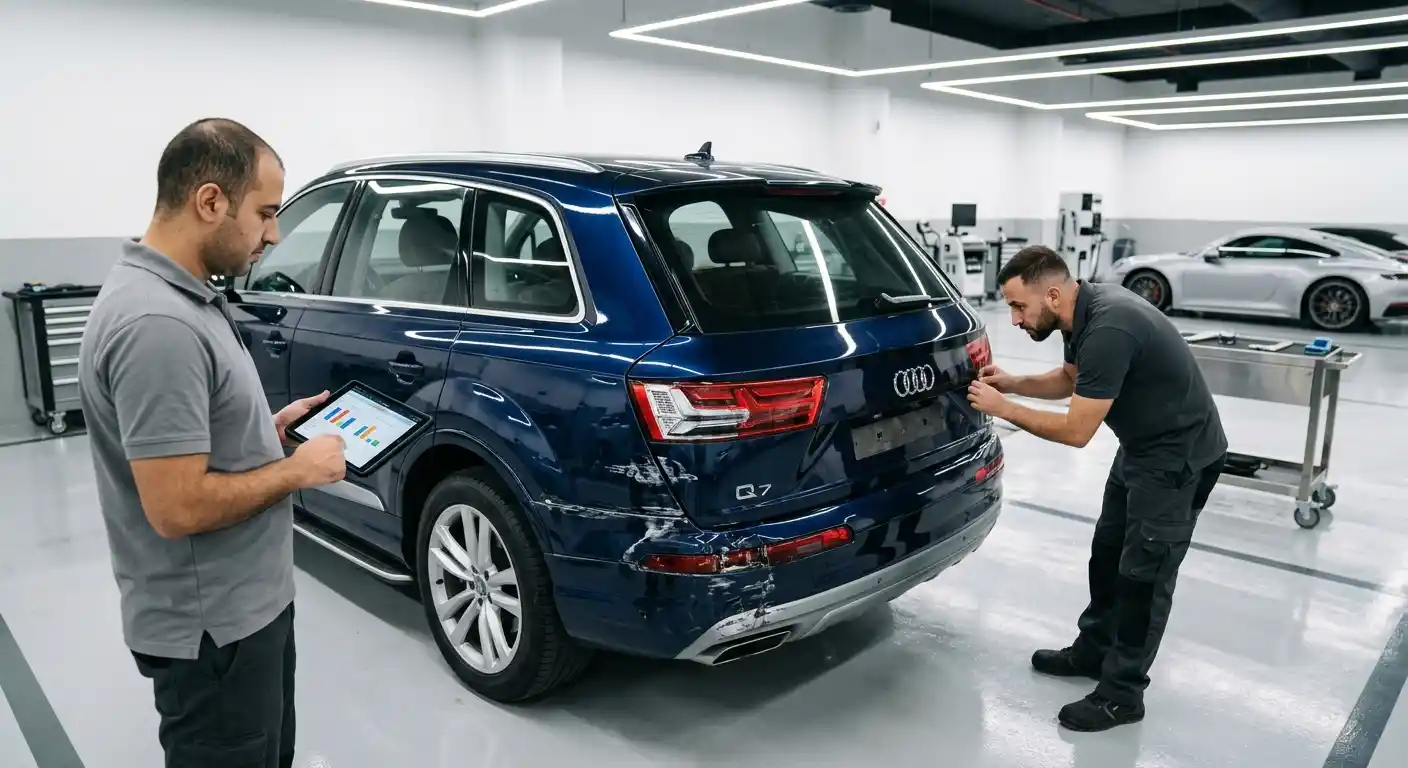
Audi Q7 Body Repair Dubai Starts With the Rear Damage Map
Outer bumper
Cover, paint, guides, sensors, lower trim, reflectors and towing-area pieces.
Closure
Tailgate skin, hinges, latch, powered operation, seals, glass and camera view.
Side structure
Quarter-panel edge, lamp pocket, wheel arch, inner side panel and floor relationship.
Hidden load path
Absorber, reinforcement, mounts, rear body panel and boot floor condition.
A tailgate that closes with extra force, a widened lamp gap, a changed camera view or a bumper corner that repeatedly releases can reveal hidden displacement. These changes are recorded before dismantling.
The Q7 repair journey follows the force inward and back out
Record
Map contact, gaps and warnings.
Open
Inspect mounts and inner panels.
Measure
Check floor, opening and wheel relations.
Restore
Repair structure and components.
Refinish
Match colour and texture.
Validate
Close fit and system evidence.
Where steering, suspension, restraint, cooling or structural concerns exist, the vehicle is not presumed driveable. Recovery can be safer than moving a large SUV whose wheel or body relationship changed after impact.
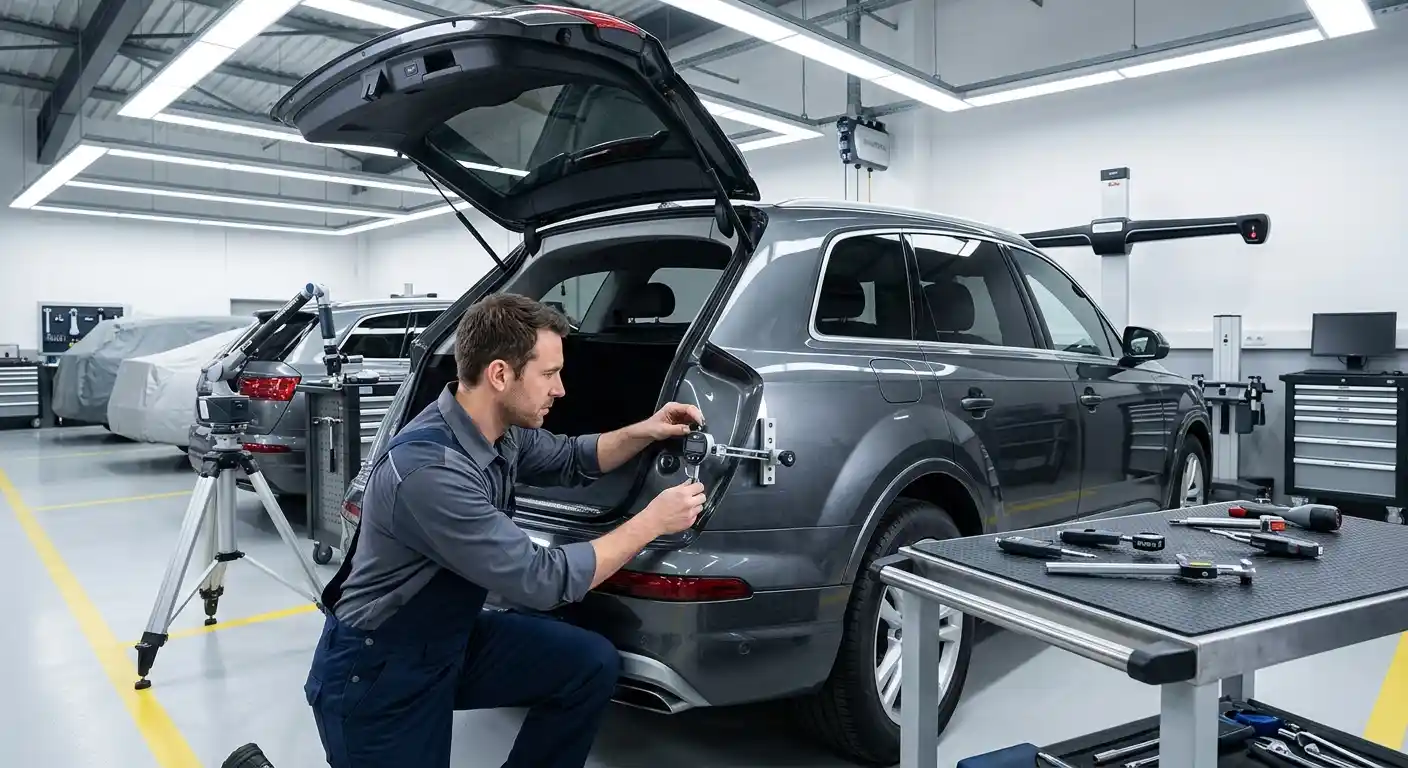
Large tailgate geometry must be restored before cosmetic alignment
We compare left and right gaps, flushness, hinge position, latch engagement and seal compression. Powered opening and soft-close behaviour are tested only after mechanical alignment is correct. Lamps and trim are not forced to bridge an uneven opening.
If the inner rear body or boot floor is affected, measurement and approved repair information guide pulling, sectioning or replacement. Outer paint work waits until the supporting geometry is stable.
Bumper repair depends on supports and sensor apertures
A Q7 cover can hide broken side guides, crushed absorber, displaced reinforcement brackets or towing-related attachments. Controlled removal exposes those items. Plastic welding is considered only where material, crack position, remaining thickness and mounting integrity support a reliable result.
Parking sensors, cameras and radar-related hardware require correct apertures and brackets. A sensor can communicate while misaligned. Filler and paint build are restricted where the applicable component information requires it.
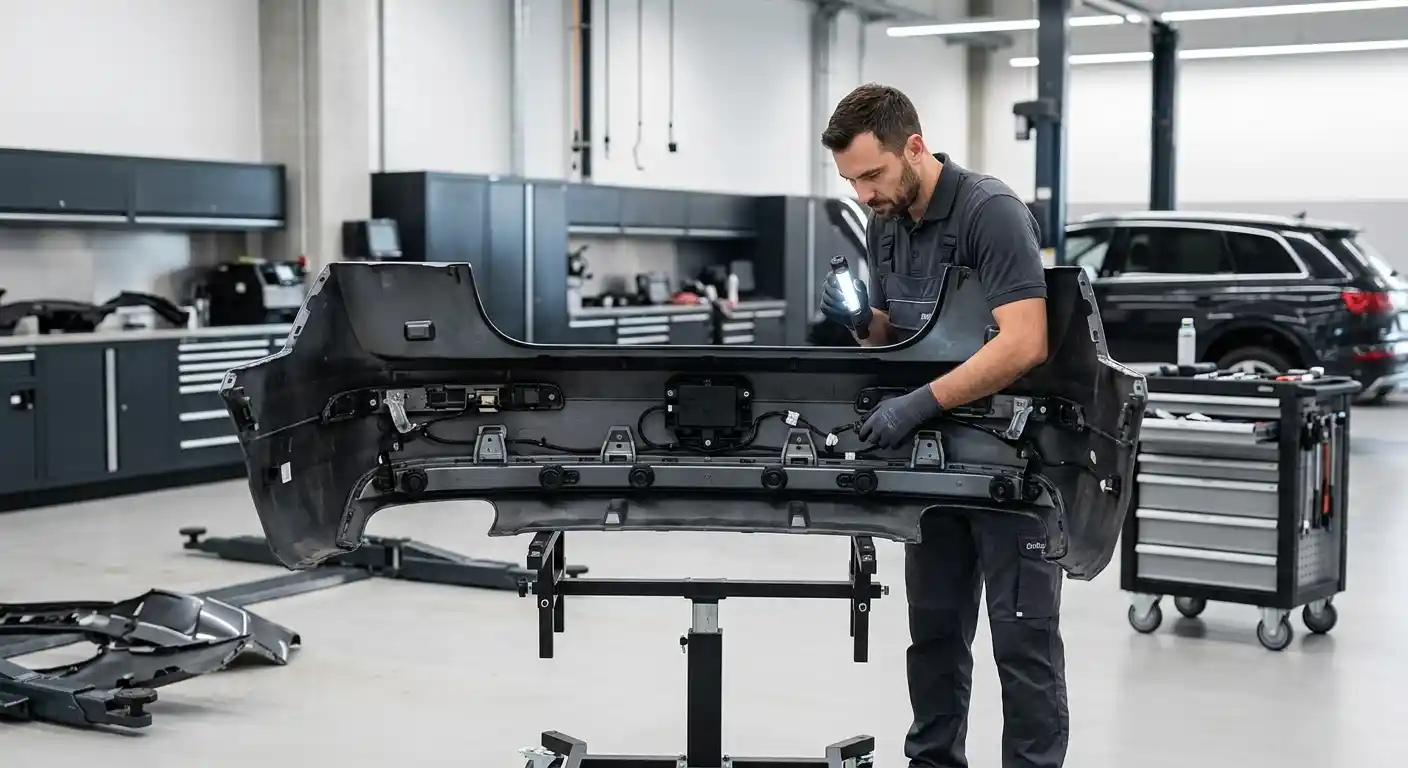
Material and joint identity set the repair limit
Q7 generations use a mix of steels, high-strength components, aluminium add-on parts and plastics. The exact component is verified by VIN and repair information. Aluminium work needs separation from steel contamination; high-strength structural parts can prohibit casual heating or straightening.
Repair
Consider when sound material, accessible geometry and approved correction can restore shape and fit.
Replace
Consider when tearing, severe stretch, damaged joint, restricted structure or unstable mount prevents a durable outcome.
Refer
Use specialist input when capability, high-voltage context or procedure places the work outside the body scope.
Driver-assistance validation follows the repaired zone
Audi Q7 equipment can include rear-view and surround cameras, parking assistance, radar-based functions and other package-dependent systems. We identify what is fitted and what the impact or dismantling disturbed.
The applicable process may require scanning, aiming, wheel alignment, static targets, dynamic calibration or a combination. Camera stitch and parking response are checked where relevant, but dashboard appearance alone is not accepted as full proof.
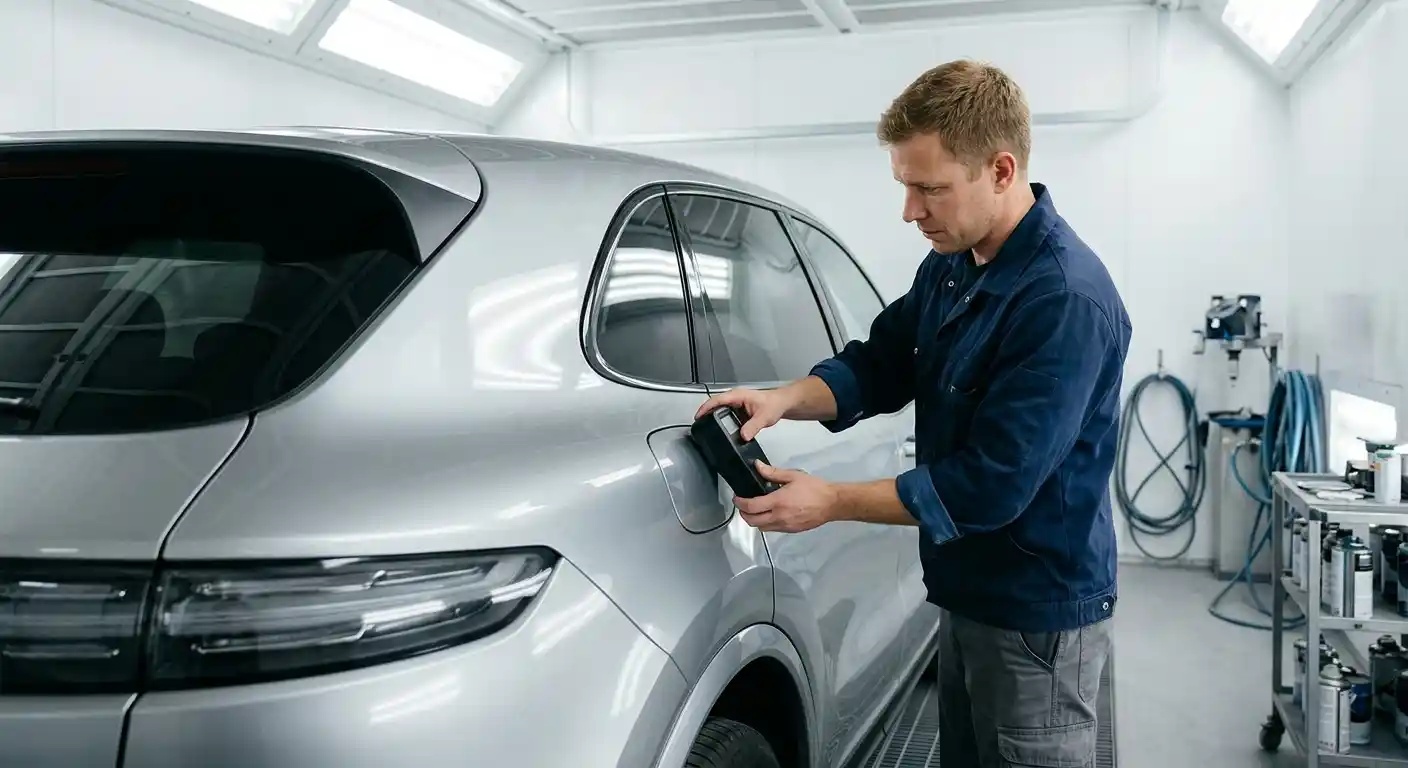
Paint matching across a tall rear quarter needs several viewing heights
Metallic and pearl effects can shift between the near-vertical tailgate, curved quarter and horizontal bumper ledges. Paint code, electronic measurement and a spray-out beside the Q7 establish the variant. Existing fade and previous repair are recorded.
Body contour is blocked before colour. Final review covers face and side tone, metallic orientation, gloss, orange peel, edge coverage and the transition beside black or bright exterior trim.
The estimate separates visible impact from boot-area uncertainty
Outer damage, known parts and confirmed paint operations form the opening scope. Hidden reinforcement, brackets, wiring, rear body or floor findings remain conditional until access. Photographs and explanation support a revised approval.
Cost and time vary with Q7 generation, damage depth, structural measurement, parts, paint, electronics, towing equipment and calibration. Parts supply is confirmed before a completion date becomes reliable.
This page strengthens our Audi body shop service and may connect to accident repair or the wider body repair process.
Handover tests the vehicle as a large closure system
Review tailgate gaps and operation, lamp position, seal seating, bumper corners, wheel-arch clearance, camera image, parking response and every diagnostic, alignment or calibration operation included in the approved job.
Paint aftercare is explained separately from system verification. Pre-existing marks, unrelated warnings and deferred parts remain visible in the record.
Front-end Q7 damage can affect cooling, lamps and suspension context
Although rear impact is a strong Q7 use case, the front deserves a separate inspection path. The large bumper and grille can conceal air guides, shutters on equipped vehicles, radiator supports, lamp brackets, reinforcement mounts and sensor hardware. A diagonal impact can also reach the wheel, arch liner and suspension while the painted cover springs back.
Centre strike
Inspect grille, sensing hardware, reinforcement relationship, cooling pack and bonnet latch area.
Corner strike
Inspect lamp tabs, wing, wheel clearance, bumper guide, liner and lower shield.
Low strike
Inspect splitter or trim, undertray, ducts, mounts and underbody contact.
Cooling loss, steering change, tyre rubbing or a warning after front impact means the vehicle should not be assumed driveable. The mechanical and body findings are connected before paint work begins.
Three-row body size increases closure and interior-access labour
Accessing rear-quarter, tailgate or roof-side structure on a Q7 may require careful removal of interior trim, load-area fittings, seats or restraint-adjacent pieces. The work plan protects wiring, airbags, acoustic materials and clips. Interior parts are stored cleanly and their pre-existing condition is recorded, especially on light or delicate finishes.
Large tailgate assemblies can contain glass, lamps, cameras, powered struts, latches, trim and comfort-access hardware. A replacement shell may arrive without many of these items. Transfer labour, seals, fasteners and configuration are included in the scope rather than assumed to be part of the painted panel price.
Before dismantling, record gap, opening height, powered behaviour, latch sound, seal contact and camera view. After assembly, repeat those observations so adjustment is based on evidence rather than memory.
Towing equipment changes the rear-impact boundary
Where a Q7 is fitted with a towbar or electrically deployable towing system, a rear contact can load mounts or adjacent structure even when the ball was not the obvious contact point. The workshop identifies the equipment, inspects relevant mounting areas and checks wiring or deployment status. A cosmetic bumper repair does not clear a towing concern.
Any towing-system inspection or replacement follows the component and vehicle information. Welding, heating or straightening of a towbar is not improvised. If the equipment’s integrity cannot be demonstrated, it is not approved for use simply because it retracts or the trailer socket powers up.
The estimate separates towing-related operations and any required specialist check from ordinary rear body and paint work. This prevents an insurer or owner from assuming that the bumper line covered every consequence of the collision.
Q7 structural repair needs measurement before pulling
Deep boot-floor, rear-body, sill, pillar or rail damage can involve high-strength materials and multiple load paths. The body is supported at approved points and measured against the correct data. Pulling direction and sequence are chosen to relieve the structure without transferring distortion into sound openings.
Heat is not used as a universal aid. Hot-formed and ultra-high-strength areas can lose intended properties if heated or straightened outside their limits. Aluminium components need material-specific tools and contamination control. Cast or extruded pieces can have replacement rules that differ from sheet panels.
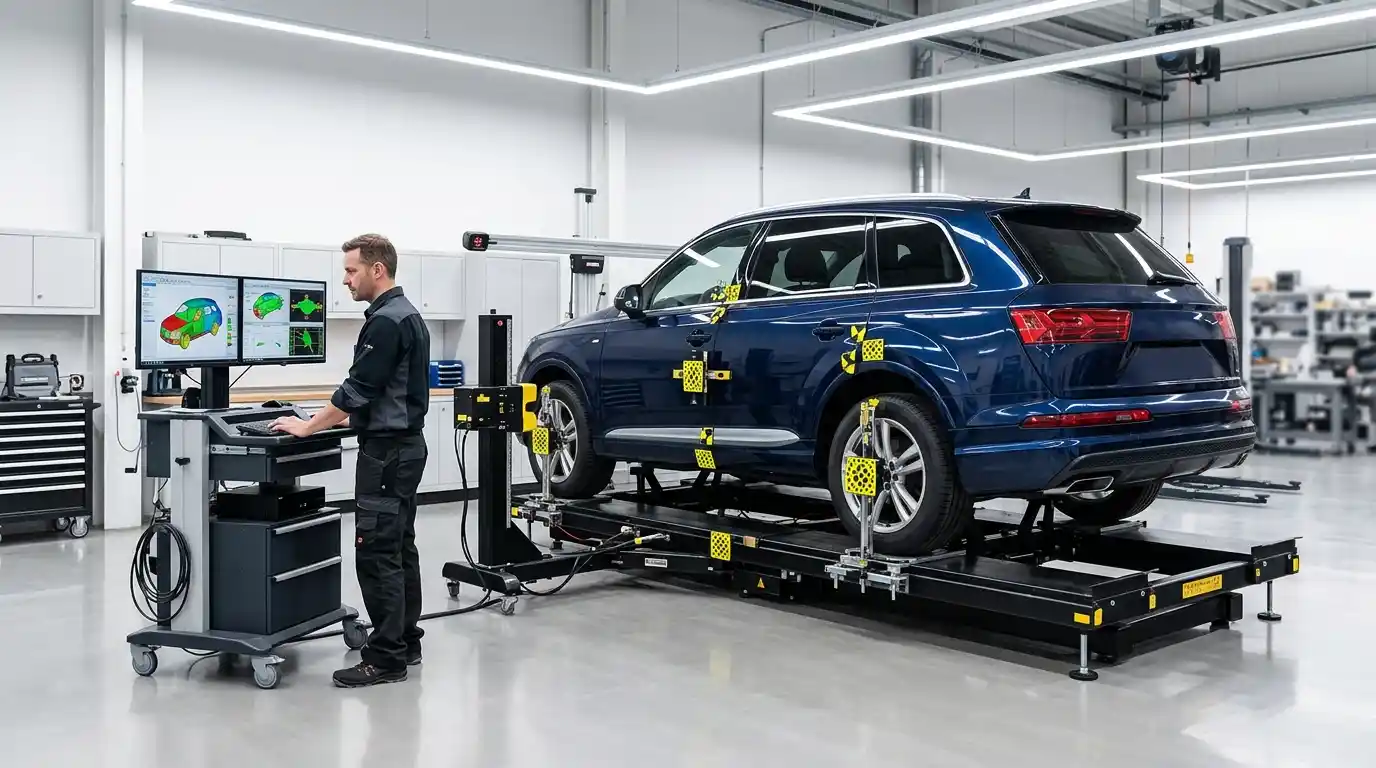
Measure before
Document the damaged references, opening shape and wheel relationships.
Measure during
Track movement so correction does not overshoot or distort a neighbouring zone.
Protect after
Restore joints, primers, seam sealer and cavity treatment.
Verify final
Close dimensions, gaps, closures and alignment evidence.
Parts identity and supply control the realistic timeline
Q7 bumpers, lamps, grilles, cameras, tailgates and trim vary with generation, S line or other exterior package, lighting option and assistance equipment. VIN and the removed component are matched to the replacement before paint. Connector layout, apertures, mounting tabs and finish are checked on arrival.
A long lead item can pause the job, but the owner should know whether the vehicle is safely stored, protected and insured during the wait. If reassembly is proposed, every safety and water-sealing requirement remains in force. A missing sensor, insecure lamp or exposed opening cannot be described as a harmless temporary state.
Completion time is revised when supply facts change, not repeatedly promised from an optimistic order date. This protects the repair from rushed fitting or an incompatible substitute.
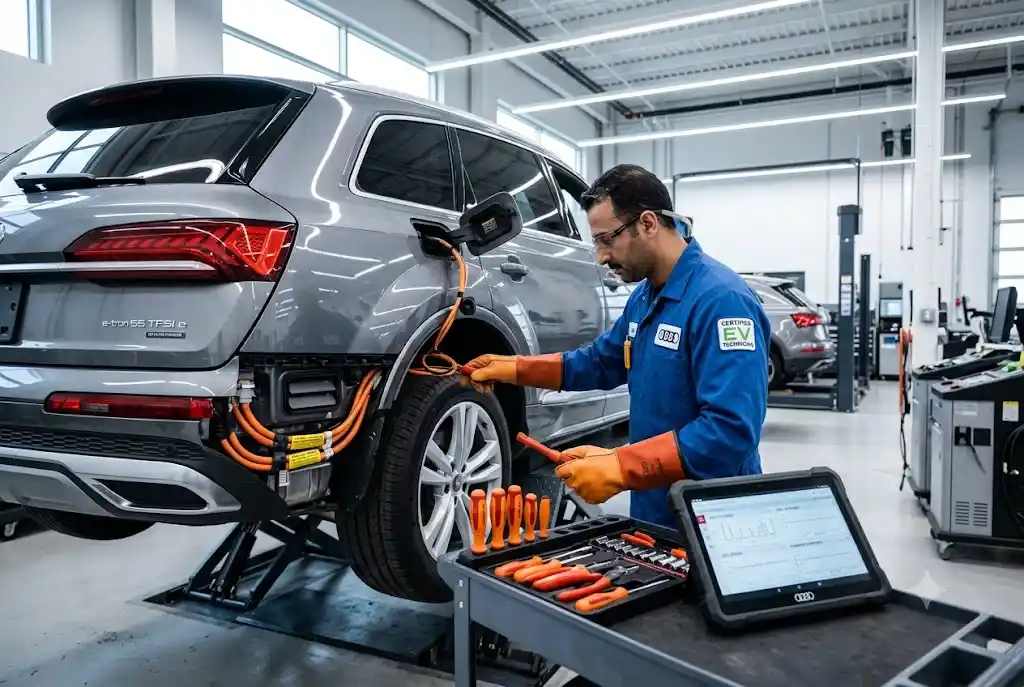
Q7 plug-in hybrid damage adds high-voltage and charging-side controls
A Q7 TFSI e or other electrified derivative requires identification before underbody, sill or rear-quarter work. Charging-area contact, battery or electrical warnings, coolant loss, unusual heat, restraint deployment and floor damage are recorded. Safe isolation, lifting points and restrictions around pulling, cutting, welding and curing are confirmed for the exact vehicle.
Protective covers, exhaust or fuel-related components, high-voltage equipment and body structure can share a crowded underbody. The technician distinguishes them rather than treating every scrape as battery damage or assuming the battery is clear because the cover looks smooth. Specialist assessment is obtained where the procedure or capability requires it.
The estimate names high-voltage safety and any specialist dependency separately. A completed outer quarter or bumper is not presented as proof that every electrified system is intact.
Roof and pillar events require restraint and opening evidence
A low overhead strike, falling object or rollover-related event can involve roof rails, panoramic glass, upper pillars, curtain airbags and large door openings. Cosmetic dent repair is considered only after structural and sealing concerns are excluded. Headliner access is planned around wiring, airbags and delicate trim.
Where glass or a roof opening is disturbed, bonding, drains and water management are restored and tested appropriately. Door and tailgate gaps are compared before and after because upper-body movement can affect more than the visible roof skin.
Q7-specific claims stay tied to the fitted vehicle, current repair information and documented workshop findings. Any case example must use genuine evidence and protect customer identity.
Large wheels and air suspension can change the body baseline
Q7 wheel and tyre packages vary, and equipped vehicles may use adjustable air suspension. A collision check records wheel specification, tyre condition, selected height and whether one corner sits differently. Body gaps and sensor calibration should not be judged while the vehicle is in an unsuitable lift mode or with a damaged wheel altering its stance.
Where suspension or alignment work is needed, the mechanical condition is resolved before final panel and assistance measurements. The workshop distinguishes cosmetic wheel damage, bent suspension, body mounting movement and ride-height system faults instead of using one alignment adjustment to cover several causes.
At collection, tyre clearance is checked through relevant steering movement and the vehicle is returned in the normal operating condition specified for handover.
Because the Q7 carries many loose load-area items, the intake notes parcel covers, floor panels, towing pieces, wheel-lock key and charging cable where applicable. Everything removed for access is reconciled before vehicle release.
The final load-area inspection confirms trim, floor panels and repaired closures remain secure, clean and ready for normal use.
Send the tailgate gap with the wider rear view
Photograph the whole rear, both tailgate gaps, the close damage, bumper corners and any warning or camera change. Add Q7 year, vehicle location and whether the tailgate, wheel, steering or towing equipment behaved differently after impact.