
Dubai accident repair cost guide
Car Accident Repair Cost in Dubai
A practical guide to minor dents, bumpers, panels, airbags and structural repairs, including the hidden damage that can change your final quotation.
What accident repair can cost in Dubai
Car accident repair costs in Dubai can range from a few hundred dirhams for a small dent or paint scuff to several thousand dirhams when the impact affects panels, sensors, airbags, suspension points or the vehicle structure.
This is a cost and decision guide, not a duplicate of the main service page. For workshop details, insurance accident repair support and booking information, see our accident repair services in Dubai.
Car accident repair price guide
Minor dent or scratch
AED 299 to 1,000
Dent depth, paint condition and panel access decide whether local repair or refinishing is suitable.
Bumper repair
AED 500 to 2,500
Cracks, clips, grilles, parking sensors, cameras and paint can change the scope quickly.
Door or fender
AED 1,000 to 3,000
Panel material, crease position, trim removal and adjacent-panel blending influence the estimate.
Combined corner impact
AED 2,000 to 6,000+
Bumper, lamp, brackets, several panels, alignment and diagnostics may all be involved.
| Repair type | Indicative cost | Main price variables |
|---|---|---|
| Minor dent or scratch | AED 299 to 1,000 | Dent depth, paint condition and panel access |
| Bumper repair or replacement | AED 500 to 2,500 | Cracks, clips, grille, sensors and paint |
| Door or fender repair | AED 1,000 to 3,000 | Panel material, crease location and blending |
| Windshield or body glass | AED 500 to 2,000 | Glass type, cameras, rain sensors and calibration |
| Structural or chassis repair | AED 2,000 to 5,000+ | Measurement, alignment, approved joining and mounting points |
| Full body and paint restoration | AED 3,000 to 10,000+ | Panel count, strip-down, parts and paint system |
| Airbag replacement | AED 1,500 to 4,500+ | Airbags, belts, dashboard, modules and coding |
Typical accident-repair scenarios in Dubai
The same repair category can cover very different jobs. These examples show how damage combinations change the likely scope before parts availability, vehicle class and dismantling are considered.
| Typical scenario | Likely work | Indicative range | Typical workshop time |
|---|---|---|---|
| Parking dent with intact paint | Paintless dent removal where access and dent shape allow | AED 299 to 800 | Same day to 1 working day |
| Bumper scuff or light crack | Plastic repair, preparation and paint | AED 500 to 1,200 | 1 to 3 working days |
| Door dent with broken paint | Panel repair, primer, colour matching and blending | AED 900 to 2,000 | 2 to 4 working days |
| Front-corner impact | Bumper, fender, lamp, brackets, scan and alignment checks | AED 2,000 to 6,000+ | 3 to 10+ working days |
| Airbag deployment or wheel displacement | Safety-system parts, structural measurement, suspension checks and coding | Inspection required | Depends on parts and approvals |
Turnaround means workshop time after approval and parts availability. It does not include insurer authorisation or special-order parts delays.
Common accident patterns in Dubai and where the cost usually spreads
Impact direction matters as much as the size of the visible mark. These are common workshop scenarios, not fixed packages: the same-looking accident can stay cosmetic on one car and reach structure or electronics on another.
Parking pillar or wall scrape
A corner scuff may need cleaning, polishing or paint. Cost rises when the bumper is displaced, a guide or tab breaks, the plastic stretches, or a sensor mount sits behind the damaged area.
Low-speed rear-end contact
The outer bumper can look mild while the absorber, reinforcement, sensor mounts, rear panel or boot-floor edge takes the load. Changed tailgate gaps, latch feel or sealing make a bumper-only quote provisional.
Front-corner impact
Bumper, fender, lamp, grille, brackets, cooling parts, wheel alignment and ADAS hardware can share the same corner. Wheel movement, steering change, leaks or warnings move the job beyond paint and panel work.
Side swipe or door impact
A harder side hit can disturb hinges, latches, intrusion structure, sill or rocker areas, wheel-arch geometry and side-airbag systems. Long panels may also require careful shaping and colour blending.
Kerb, wheel or suspension strike
The body mark may be small while the tyre, rim, hub, arm, steering part or subframe carries the cost. Alignment is evidence; the workshop still has to identify the bent component or moved mounting point.
Heavier collision with airbags
Airbags, pretensioners, sensors, modules, structural measurement, suspension checks, diagnostics and calibration become separate cost layers. A major collision should be scoped before any headline total is treated as final.
Cost by damaged part
Use the body-part map below to compare the visible panel with the fittings, structure and systems that can sit behind it.
| Body part or zone | Useful planning figure | What often sits outside the simple panel price |
|---|---|---|
| Front or rear bumper repair cost | AED 500 to 2,500+ for common repair scopes; replacement can run much higher | Retainers, grilles, absorbers, reinforcement, parking sensors, cameras, radar mounts and calibration |
| Fender / front wing | Often around AED 800 to 1,500+ when repair and paint are combined | Wheel-arch liner, lamp junction, aluminium construction, blending and wheel/suspension checks after a corner impact |
| Door | Often around AED 900 to 3,000+ depending on dent, paint and hardware | Hinges, latch, glass, regulator, handle, side-impact structure, trim, seals and adjacent-panel blending |
| Quarter panel | Common repair scopes can start around AED 1,500; complex work needs inspection | Wheel opening, inner structure, welded construction, boot opening, lamp pocket, corrosion protection and blending |
| Bonnet | AED 700 to 1,200 is a useful paint-only band; dent or replacement work is additional | Large-area straightness, latch alignment, double-skin damage, insulation, hinges and aluminium on some vehicles |
| Roof | AED 800 to 1,500 is a useful paint-only band; collision damage is vehicle-specific | Headlining access, roof rails, glass edges, antennas, pillars, roof structure and difficult colour or clear-coat failure |
| Boot lid or tailgate | Inspection required for a reliable total | Powered mechanisms, glass, lamps, latch, hinges, seals, rear camera, spoiler and whether the rear opening has moved |
| Sill / rocker / pillar area | Cosmetic outer damage and structural involvement must be separated | High-strength material, door opening geometry, floor, seat or belt mounts, sectioning limits and corrosion protection |
| Glass, lamps and sensors | Glass can fall around AED 500 to 2,000 in common cases; lamps and electronic units are strongly part-dependent | Cameras, rain sensors, matrix or LED lamps, brackets, wiring, coding and calibration |
| Wheel, suspension or subframe | Part-dependent; quote after geometry and component checks | Tyre, rim, hub, arms, strut, steering, subframe, alignment and possible movement at body mounting points |
For focused repair options, see our guides to paintless dent removal, dent removal and car scratch and paint repair.
Accident repair cost by repair method
Damage location alone does not determine price. The method changes the labour, materials, dismantling and verification included in the job. These are current BodyShop.AE planning ranges used to compare methods before a vehicle-specific inspection.
| Repair method or operation | Indicative planning range | What usually moves the price |
|---|---|---|
| Small paintless dent repair | AED 150 to 350 | Access, body line, panel edge, material and previous paint |
| Medium dent repair | AED 350 to 700 | Dent depth, contour control, dismantling and whether paint remains intact |
| Conventional dent and paint repair | AED 700 to 1,200+ | Shaping, primer, panel painting, blending and trim removal |
| Bumper paint-transfer correction | AED 150 to 300 | Whether the mark is transfer only or the original coating is damaged |
| Bumper crack, dent or plastic repair with paint | AED 500 to 1,500 | Crack length, deformation, tabs, reinforcement and refinishing |
| Complete bumper repaint | AED 600 to 1,500 | Preparation, bumper size, previous repairs and finish type |
| Door or fender painting | AED 450 to 800 | Dent repair, aluminium, dismantling and adjacent-panel blending |
| Bonnet painting | AED 700 to 1,200 | Stone chips, panel size, pearl layers, corrosion and underside work |
| Roof painting | AED 800 to 1,500 | Roof hardware, access, clear-coat failure and finish control |
| Full sedan repaint | From AED 2,000 | Body correction, old paint, dismantling, jambs and premium finish |
| Full SUV repaint | From AED 3,500 | Larger panel area, accessories, body repair and paint system |
| Diagnostic scan | AED 150 to 400 | Vehicle systems, fault investigation and scan depth |
| Radar or ADAS calibration | AED 500 to 1,800+ | Sensor type, disturbed bracket, vehicle procedure and calibration setup |
| Structural or chassis repair | AED 2,000 to 5,000+ | Measurement, correction, joins, parts, suspension points and verification |
| Airbag and restraint repair | AED 1,500 to 4,500+ | Airbags, belts, sensors, modules, dashboard parts and coding |
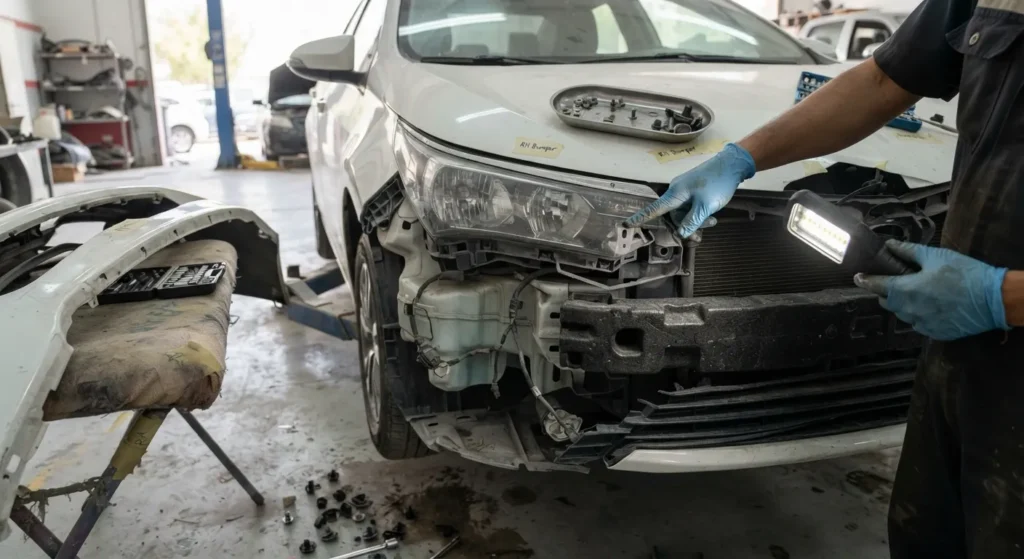
Similar-looking damage can produce very different quotes
Visible damage
- Dent size and depth
- Scratched or cracked paint
- Broken lamps, grilles or trim
- Uneven panel gaps
Possible hidden damage
- Broken brackets or reinforcement bars
- Parking sensors and wiring
- Suspension or steering mounting points
- Body structure and crumple zones
Seven factors that change the final repair bill
Repair or replacement
Replacement becomes more likely when material is torn, stretched or damaged around a mounting point.
Paint and blending
A small damaged area may require wider preparation and blending for a consistent finish.
Sensors and calibration
Bumpers, mirrors and windscreens may contain radar, cameras or sensors that require checks after repair.
Vehicle construction
Aluminium, high-strength steel and composites require different tools, joining methods and repair limits.
Structural involvement
Steering pull, wheel displacement or shifted panel gaps may require measurement and alignment.
Airbags and restraints
Deployed airbags can also involve belts, crash sensors, modules, dashboard parts and coding.
Parts availability
Prices and delivery times vary by make, model, trim level and UAE supplier stock.
What the final accident repair invoice is actually made of
A useful total is built from separate cost layers. A quotation that shows only one lump sum makes it difficult to compare two workshops or understand a supplement later.
Body and repair labour
Denting, plastic repair, panel correction, structural setup, removal, refitting and technician time needed to restore the physical damage.
Replacement parts and hardware
Panels, bumpers, lamps, brackets, grilles, clips, retainers, fasteners, seals and one-time-use hardware should be identified separately.
Paint and materials
Primer, colour, clear coat, blending, seam sealer, corrosion protection, adhesives and specialist finish allowances all affect the finished cost.
Access and reassembly
Door trim, liners, lamps, glass, handles, interior trim or bumper removal may be needed before hidden damage can be inspected or repaired correctly.
Diagnostics and calibration
Scanning, sensor checks, camera or radar calibration and functional verification should be visible when collision work disturbs electronic systems.
Mechanical and structural verification
Wheel alignment, suspension checks, body measurement, final scans and post-repair verification can be separate operations from cosmetic body and paint work.
Common extras that can turn a cheap first quote into a larger final bill
The first visible estimate often covers the obvious panel or bumper. The following items are common reasons a total changes after access or dismantling.
Often AED 100 to 500 each when a bumper or trim edge will not sit correctly.
Often AED 150 to 600 when the electronic unit survives but its mounting or wiring does not.
Often AED 200 to 900 each depending on the vehicle and sensor.
Often AED 150 to 2,500+ because these pieces may be separate from the bumper cover.
Often AED 300 to 1,500 when foam or plastic energy-absorbing material is compressed.
Often AED 700 to 4,000+ when the impact bar behind the bumper is bent or damaged.
Often adds AED 150 to 600 where extra stages or more difficult colour and sheen control are required.
These should be quoted for the actual vehicle and impact because the required access, equipment and damaged components vary widely.
Repair or replace?
Repair is more likely when
- The original shape can be restored predictably
- Mounting points are intact
- The material is not torn or heavily stretched
- The panel can remain safe, stable and refinishable
Replacement is more likely when
- The panel is split, crushed or sharply folded
- Critical brackets or edges are distorted
- Repair labour approaches the cost of a replacement part
- Correct fit or safety cannot be restored confidently
Minor, moderate or major damage?
Minor
Small dent, isolated paint scuff or light bumper mark. No warning lights, leaks or change in driving behaviour.
Moderate
Damaged panel, lamp, bumper, door or several painted areas. Parts may need replacement and hidden attachments may need inspection.
Major
Airbag deployment, wheel displacement, fluid leak, severe panel shift or suspected structural damage.
What happens during a professional damage assessment?
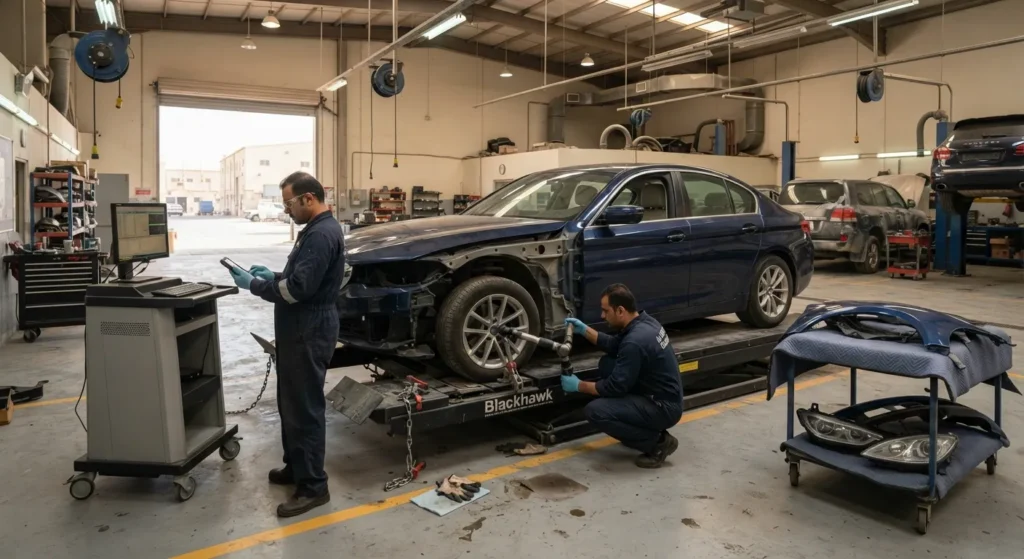
What a proper repair quotation should show
Parts
Each replacement item and whether clips, brackets, trims and fasteners are included.
Labour
Denting, removal and refitting, structural work, glass work and diagnostics.
Paint
Number of panels, preparation, colour matching, blending, materials and finishing.
Additional checks
Alignment, calibration, scanning, road testing and provisional work after dismantling.
Costs outside the body-shop repair line that still affect what you pay
Workshop and transport extras
- Recovery or towing when the vehicle is not safe to drive
- Collection or delivery where it is not included
- Storage where a vehicle waits for approval or parts under chargeable terms
- Replacement transport or rental while the vehicle is off the road
- VAT: the UAE standard VAT rate is 5%; confirm whether the written workshop total is inclusive or exclusive. See the Federal Tax Authority VAT guidance.
Insurance and claim-side costs
- Policy excess or deductible, which is specific to the policy and claim
- Items the insurer does not authorise or cover
- Differences between approved part type and an owner-requested upgrade
- Accident-report documentation: current UAE traffic law requires an accident to be reported to police or an approved traffic authority within 3 hours unless an acceptable excuse applies. Keep the official report available for the claim and repair file. See the UAE traffic regulation.
- Waiting time caused by claim approval or special-order parts, even when it is not workshop labour
Starting price, provisional estimate and final quotation are different
Starting price
A useful entry figure for a clearly defined basic operation, such as eligible PDR or panel painting. It does not imply every damaged vehicle fits that scope.
Provisional estimate
A figure based on visible evidence before hidden mounts, reinforcement, wiring, structure or internal trim have been fully inspected.
Final written quotation
The confirmed scope after required inspection and access, showing parts, labour, paint, diagnostics, calibration, provisional items and the approval rule for further supplements.
OEM, aftermarket, used or repaired parts?
| Option | Potential advantage | What to check |
|---|---|---|
| OEM new | Original specification and predictable fit | Price, availability and whether coding or calibration is included |
| Aftermarket new | May reduce cost and waiting time | Brand, material quality, fit, warranty and suitability for safety-critical areas |
| Used original | Original part at a lower price in some cases | Previous repairs, hidden cracks, corrosion, part number and return terms |
| Repair existing part | Keeps the original panel and may reduce total cost | Whether shape, strength, fit and finish can be restored without compromising safety |
Insurance claim or private repair?
The right choice depends on the repair total, policy excess, liability, claim conditions, approved-workshop rules and the value of maintaining an insurance record.
Private repair may suit
- Minor cosmetic damage
- A repair total close to or below your excess
- No third-party dispute
- You want direct control over method and timing
Insurance may suit
- Several expensive parts are damaged
- Airbags or structural areas are involved
- Another party may be liable
- The vehicle cannot be driven safely
For the full workshop process and insurance-support details, visit our accident repair service page or review our wider car body repair services.
How to judge repair quality before collecting the car
- Panel gaps: doors, bonnet, boot and bumper edges should sit evenly relative to adjacent panels.
- Colour match: inspect repaired panels in daylight as well as workshop lighting, especially metallic or pearl paint.
- Surface finish: look across the panel for sanding marks, ripples, dust nibs, overspray or an abrupt blend edge.
- Functions: test lamps, parking sensors, cameras, windows, locks, mirrors and systems disturbed during repair.
- Warning lights: confirm no new airbag, ADAS, tyre-pressure or stability-control warning remains.
- Driving behaviour: steering should remain centred and the car should not pull, vibrate or produce new noises.
- Paperwork: collect the final itemised invoice, warranty terms and details of parts fitted.
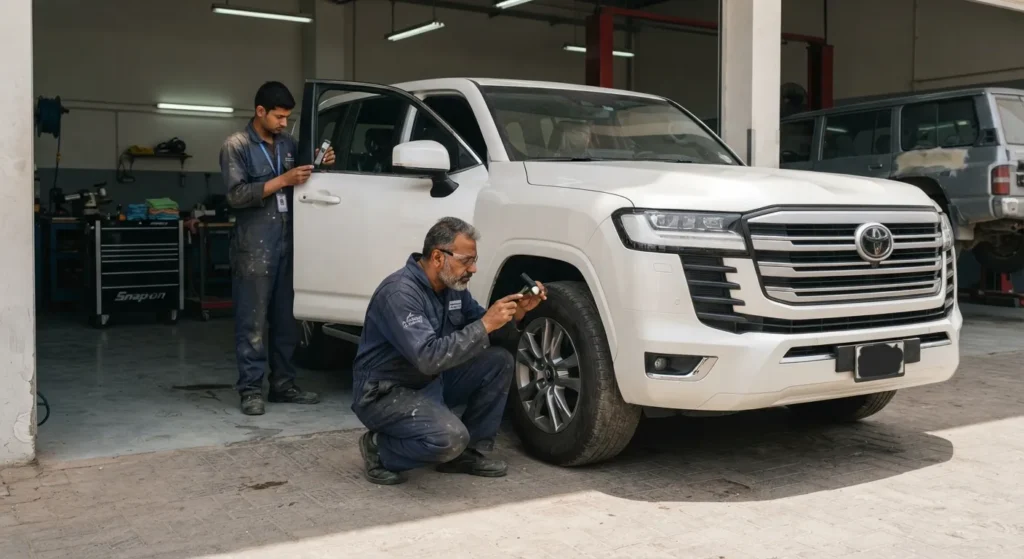
Which vehicles usually cost more to repair?
Vehicle price alone does not determine the bill. Aluminium or composites, complex lamps, cameras and radar, specialist paint, large panels and limited parts availability are the real cost drivers. For make-specific context, see our Tesla, BMW, Toyota and Nissan body repair pages.
Frequently asked questions
Can a repair quote be accurate from photos?
Photos can support an initial estimate for visible cosmetic damage. The price may change if dismantling reveals broken mounts, reinforcement damage, wiring issues or structural movement.
Is it cheaper to repair or replace a bumper?
Repair is often cheaper for scuffs, dents and repairable cracks. Replacement can be better when the bumper is distorted, torn around mounting points or expensive to restore properly.
Why does metallic or pearl paint cost more?
These finishes may require more careful colour matching, additional layers and wider blending to avoid a visible shade difference.
Can a small accident damage the chassis?
Most small parking impacts do not cause major structural damage, but impact direction matters. Uneven gaps, steering changes, wheel displacement or creasing around structural areas justify measurement.
Should I ask for OEM parts?
Ask the workshop to state clearly which parts are OEM, aftermarket, used or repaired. The best option depends on safety, fit, availability, vehicle value and budget.
Does an accident repair quote include VAT?
Do not assume it does. Ask whether the written total is inclusive or exclusive of VAT and whether paint materials, clips, diagnostics, calibration, removal and refitting are already included.
How much can diagnostics or ADAS calibration add?
A diagnostic scan is commonly planned around AED 150 to 400. Radar or ADAS calibration can be around AED 500 to 1,800 or more when the fitted system and repair procedure require it. The estimate should state why calibration is required.
Why can the final accident repair cost be higher than the photo estimate?
Photos cannot show every absorber, bracket, reinforcement, wire, mounting point or structural reference behind fitted panels. When authorised dismantling exposes related damage, the workshop should document the finding and obtain approval for the added cost before continuing.
Need an exact accident repair estimate?
Get the vehicle inspected before choosing a repair method. BodyShop.AE can assess visible and likely hidden damage and prepare a written quotation.