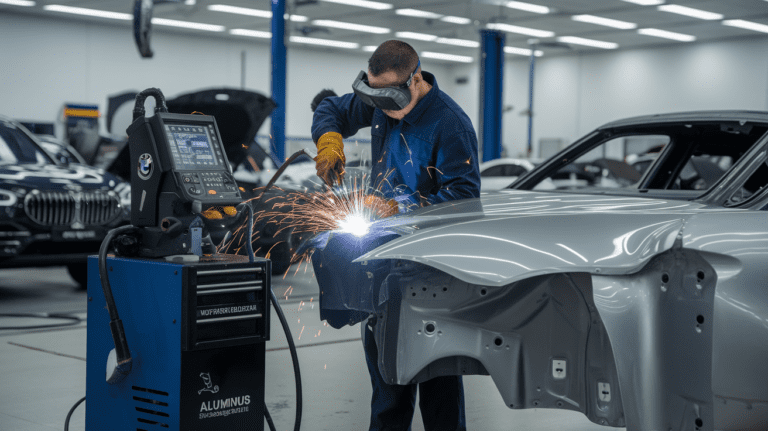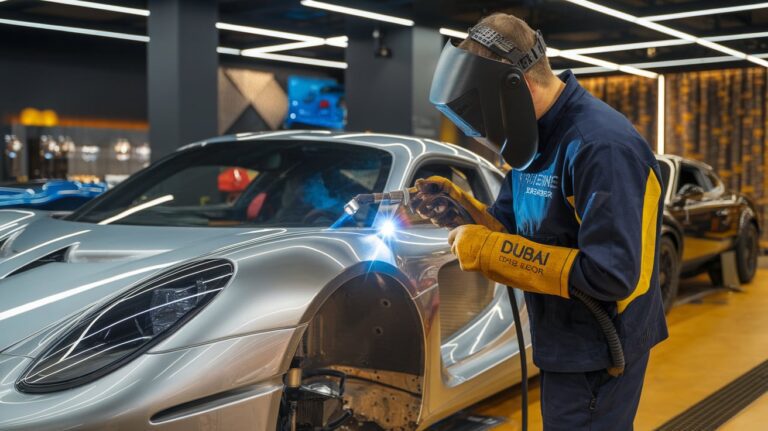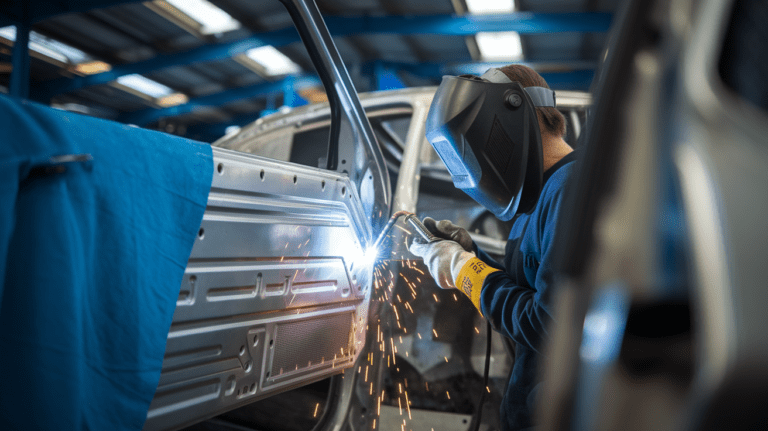
Struggling with thin panels and wondering if aluminum can be welded cleanly for car body repairs in Dubai? This is where mastering the right aluminium welding techniques becomes critical. Aluminum melts at around 660°C, conducts heat nearly 4× faster than steel and most car body panels are just 0.8 to 1.2 mm thick, making heat distortion a real threat. The best methods? TIG welding or MIG welding using 99.99% argon gas and filler rods like 4043 or 5356, paired with pulsed welding settings and a gentle push angle to control bead shape.
Prep isn’t optional, clean with acetone, brush away the oxide layer and preheat smartly to 80–120°C to avoid weld failure. This blog walks you through the exact aluminium welding techniques professionals use in Dubai’s heat to deliver clean, strong, distortion-free welds, panel after panel.
Why Aluminum Is Different From Steel
Think aluminium welding is just a hotter, shinier version of steelwork? That mistake could cost you more than a panel, it could compromise the entire auto body repair. The truth is, aluminum behaves completely differently than steel, and that matters whether you’re fixing a fender or reshaping a crushed quarter panel. Let’s break it down with real facts:
Thermal Conductivity of Aluminum:
Aluminum spreads heat 4 to 5 times faster than mild steel. That’s great for dissipating engine heat but awful for auto body panel welding, the heat escapes fast, melts edges unevenly, and distorts surrounding sections before you’re halfway through the weld.
Lower Melting Point = Less Margin for Error:
Steel melts around 1370°C, while aluminum melts at just 660°C. That smaller gap means aluminum goes from solid to liquid in seconds and it does so without changing color. No visual warning. You either know your torch control or you blow through.
Oxidation Layer on Aluminum:
Aluminum builds a hard oxide layer on the surface the second it touches air. Here’s the twist: that layer melts at ~2000°C, much higher than the base metal underneath. So unless you scrub it off properly with a dedicated stainless steel brush, your weld will trap contaminants and form porous, weak beads.
Greater Expansion and Contraction Rates:
During welding, aluminum expands nearly twice as much as steel and contracts just as aggressively when cooled. That constant movement leads to warping, cracking, or weld fatigue if the wrong aluminium welding techniques are used.
Structural Behavior Is Softer, But Unforgiving:
It might be flexible, but aluminum’s softness means it absorbs heat faster and deforms under less pressure. Combined with its non-magnetic properties and light weight, it requires a precise welding process, especially in car body repairs where panel thickness often ranges between 0.8–1.2 mm.
So, when you’re working on an aluminium car panel in Dubai’s heat, it’s not just the welding machine that needs adjusting, it’s your entire approach. From heat control and cleaning routines to wire selection and travel speed, applying the right aluminium welding techniques is what separates a patch job from a professional finish. Mastering aluminium vs steel welding with these methods ensures you protect the panel, maintain strength, and achieve a flawless result without wrecking your patience.
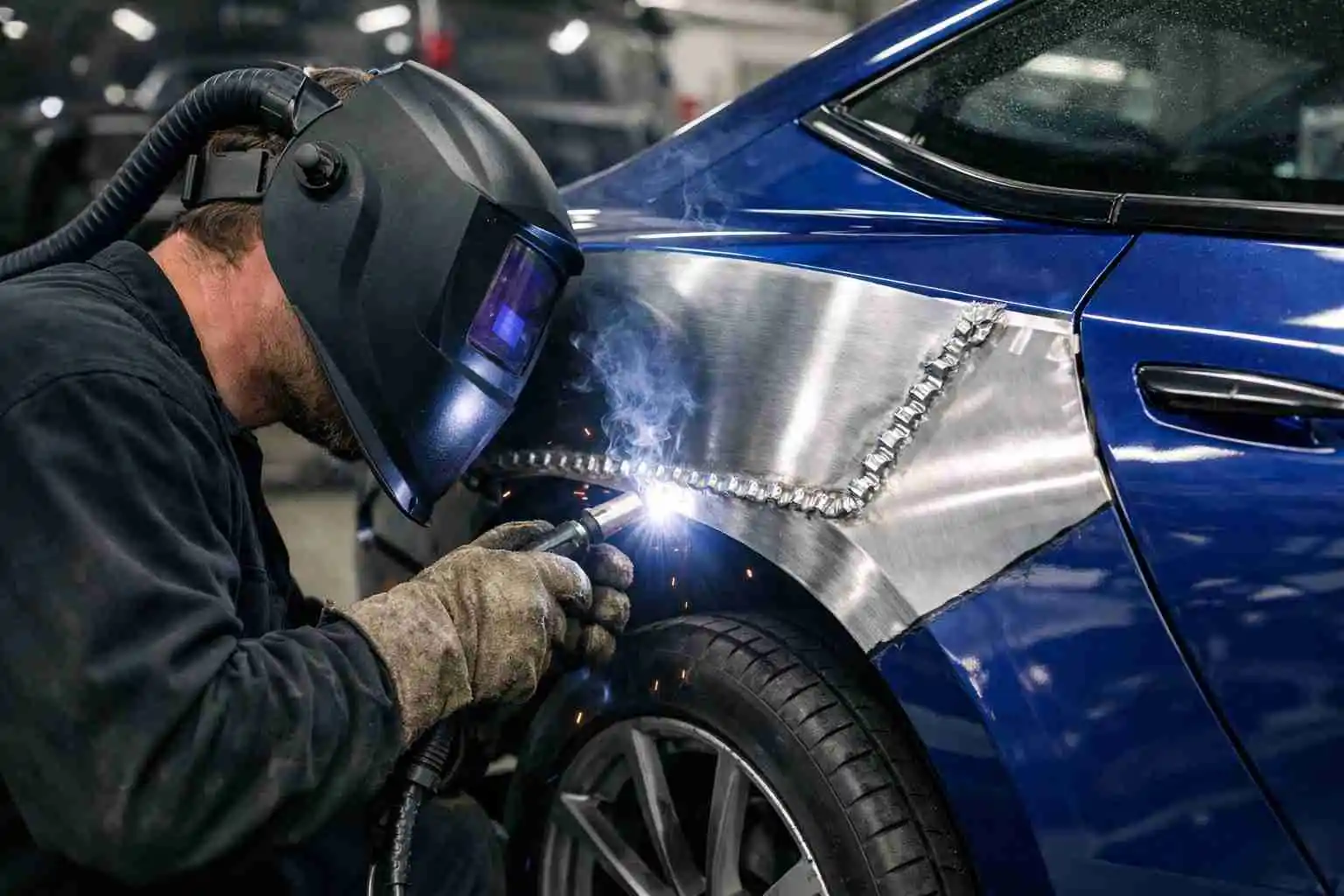
How Aluminum Welding Works | Processes & Equipment
Welding aluminium is not guesswork; it’s a calculated process where the wrong machine settings or filler choice can easily ruin a panel that could have been repaired. In auto body repairs, where panel thickness is often less than 1.2 mm, the margin for error is razor-thin. To get it right, you need to master the proper aluminium welding techniques along with the processes and equipment that make aluminium repair precise, clean, and durable. Let’s break it down:
1. Choose the Right Process | MIG vs TIG for Aluminum
- MIG Welding (Gas Metal Arc Welding)
Ideal for faster, structural repairs like car door skins, wheel arches, and chassis components. Use it with a spool gun or push-pull system to feed the soft aluminum wire smoothly.- Best for: thicker panels (1.5 mm+), structural components
- Gas: 100% argon
- Wires: ER4043 (good fluidity) or ER5356 (stronger, stiffer)
- Tip: Use pulsed MIG settings to reduce heat input and avoid burn-through
- TIG Welding (Gas Tungsten Arc Welding)
Known for clean, precise welds. Best for thin aluminum panels and visible repair areas that require minimal distortion.- Best for: cosmetic panel repairs, edges, and trims
- Gas: Pure argon or argon-helium mix (for deeper penetration)
- Electrodes: 2% thoriated or lanthanated tungsten, sharpened for better arc control
- Tip: Use foot pedal control to manage arc heat for better weld consistency
2. Must-Have Equipment for Aluminum Welding
- Welding Machine with AC Capability
Aluminum requires an alternating current (AC) output to break through the oxide layer and weld the base metal effectively. DC won’t cut it. - Spool Gun or Push-Pull Torch
Aluminum wire is soft, it kinks, tangles, and bird-nests easily. A spool gun keeps wire feeding smooth by holding the spool right at the torch, while a push-pull torch balances feed tension and distance. - Wire Feed Speed Controller
Aluminum wire melts fast. You’ll need to fine-tune feed speed, usually higher than for steel, to avoid inconsistent bead formation or sputtering. - Shielding Gas Setup
- 100% Argon for most car panels
- Argon-Helium mix (25–75%) if deeper penetration or faster weld travel is needed
- Use a gas lens for TIG torches to improve coverage and arc stability
- Cleaning Tools
- Acetone: Removes grease, oils, and contaminants
- Stainless steel wire brush: Dedicated for aluminum only—never mix with steel
- Scotch-Brite pads: Ideal for surface prep on cosmetic panels
3. Pre-Weld Settings That Matter
- Preheat (optional but helpful):
Especially useful in Dubai’s winter, preheating aluminum to 80–120°C can reduce thermal shock and improve weld penetration. - Amperage Range:
- MIG: 90–150A depending on panel thickness
- TIG: 50–120A with foot pedal control for thin edges
- Travel Speed:
Move fast, steady, and always push the weld, never pull, to help clean the oxide layer while welding.
Getting aluminum welding right is not about brute force, it’s about finesse. With the right aluminium welding techniques, machine setup, and equipment, you can restore even badly dented or torn panels to factory-like integrity. car body repair services Choosing the right process and setup is crucial. Our ensure these techniques are applied with precision to restore structural strength and finish.
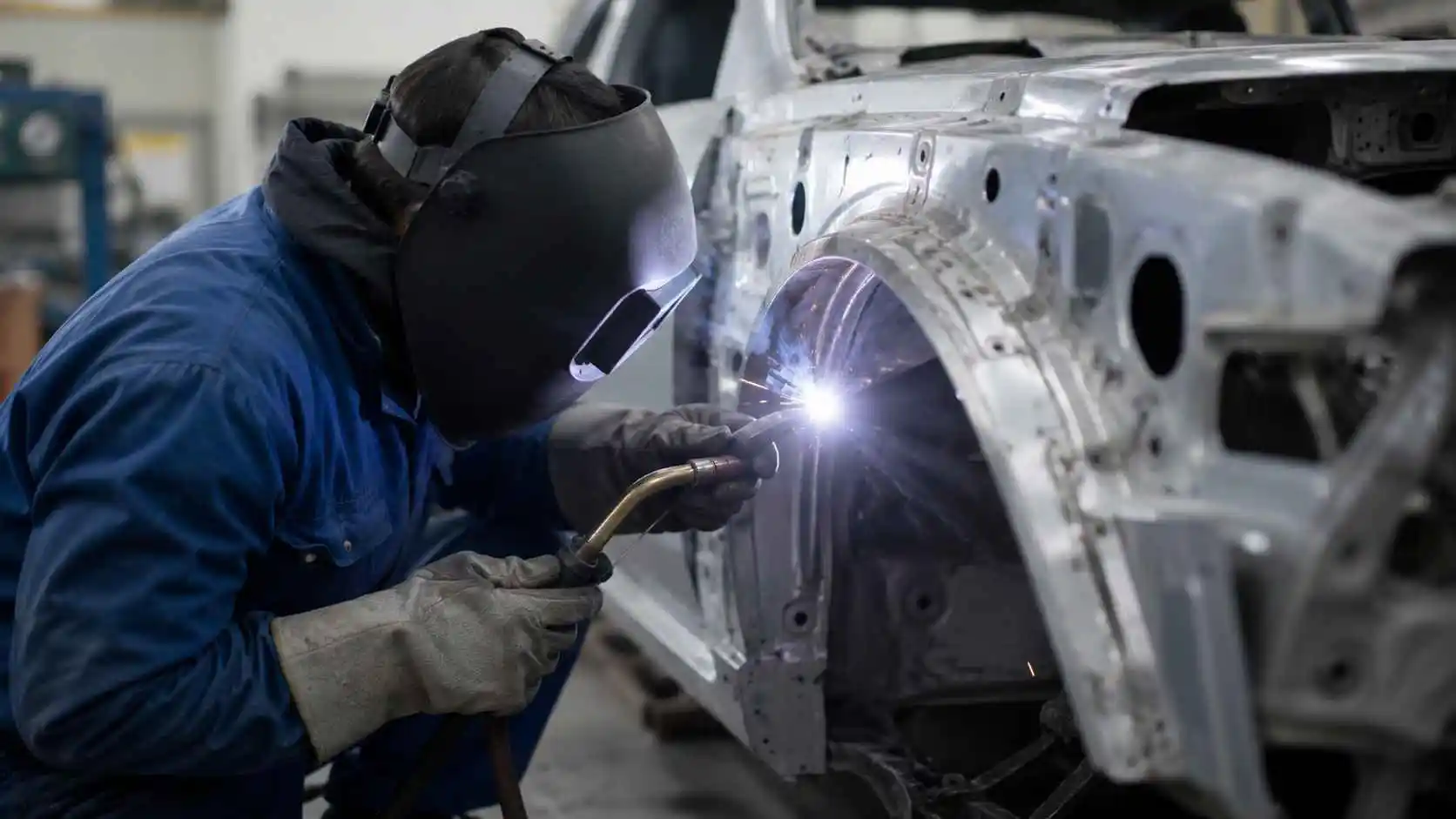
Common Pitfalls & How to Avoid Them in Aluminium Welding for Car Body Repairs
Aluminium might seem smooth and easy to work with, but underneath that silvery surface it’s loaded with challenges. In car body repairs, especially in Dubai’s high-heat conditions, these challenges often turn into warped panels, cracked seams, weakened joints, or welds that fail within weeks. That’s why mastering the right aluminium welding techniques is essential. From heat management and filler choice to joint preparation and travel speed, these methods help avoid the real-world mistakes that even experienced welders make and ensure every repair is done with precision and durability.
Skipping Surface Cleaning
Aluminum forms a stubborn oxide layer that melts at 2000°C, triple the base metal.
→ Always clean with acetone and scrub the weld area using a dedicated stainless steel wire brush before striking an arc.Using the Wrong Filler Wire
Not all aluminum fillers are equal. Mismatched wire can lead to corrosion and stress cracking.
→ For general bodywork, go with ER4043 for better flow or ER5356 when strength and ductility matter most.Overheating the Panel
Aluminum spreads heat fast. One second too long, and the panel distorts or burns through.
→ Use pulsed MIG settings, limit amperage, and for TIG, maintain a stable foot pedal rhythm. Keep preheating around 80–120°C max.Poor Gas Shielding
Porosity and weak welds often come from invisible gas problems.
→ Stick with 100% argon (or argon-helium blend if deeper penetration is needed), and maintain a 10–15 mm torch distance. Block any AC air drafts in your bay.Bad Wire Feeding Technique
Bird-nesting, burn-back, and uneven welds are signs your wire feed is failing.
→ Use a spool gun or push-pull setup, store wire spools with moisture control, and replace worn liners often.Not Adapting to Dubai’s Conditions
High humidity, heat, and airborne sand can compromise prep and arc quality.
→ Wipe the panel if it’s been sitting out for over 30 minutes, weld in a dust-controlled space, and allow cooling time between passes.
Even the best gear cannot save a weld if you overlook these core issues. In Dubai, where temperature and air quality change quickly, mastering aluminium welding techniques means controlling every detail, from prep to post-cooling. Stay sharp, stay clean, and treat every weld like it has no backup. Because most times, it does not.
hese same issues often appear during dent repair and PDR in Dubai, where precision is key. That’s why related techniques like spot denting (covered in our Spot Denting blog) share the same focus on finesse, not brute force.”
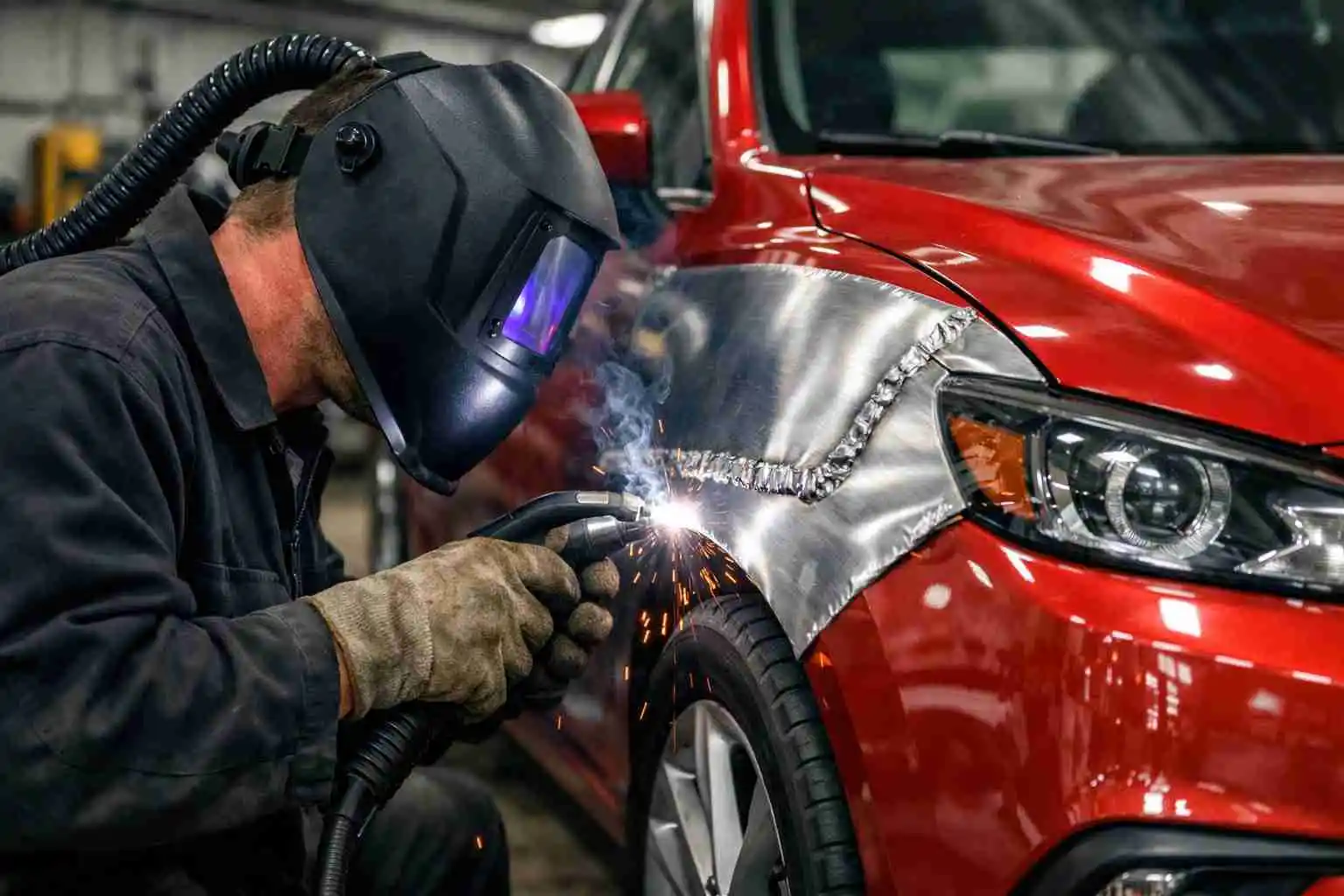
Aluminum Welding for Car Body Repairs | Done Right & Built to Last
Welding aluminium is not like working with steel, it requires careful preparation, the right tools, and proven aluminium welding techniques. From cleaning the surface properly and selecting the correct filler wire, to deciding between TIG or MIG welding, every step directly impacts the final result. In Dubai’s extreme heat, even a small mistake can create weak welds or warped panels that compromise the repair.
If your car has aluminium body damage, our auto body welding experts in Dubai can help. We use advanced aluminium welding techniques along with professional bonding methods to deliver strong, precise, and durable repairs. Whether it’s a small panel issue or a major structural job, we’ll recommend the best repair method — welding, bonding, or a combination of both, to restore strength and appearance. Book your consultation today and get factory-level results that last.
Alternatives & Hybrid Methods to Aluminium Welding
When aluminium welding techniques aren’t always the safest or cleanest option for car body repairs, particularly on ultra-thin panels (≤ 1 mm), several proven alternatives can achieve the same durability and precision with far less heat risk than traditional welding. These advanced methods are supported by industry data and validated through real-world automotive applications, making them a reliable choice when welding alone may compromise panel integrity.
Cold Metal Transfer (CMT) Welding
• CMT can reduce heat input by up to 60% compared to standard MIG, cutting distortion significantly when working on thin aluminum sheets under 1 mm.
• It delivers 90% less spatter, meaning cleaner joints without grinding or residue.
• Ideal for body panels around 0.8–1.2 mm where warping risk is high.
• Used in automotive assembly lines for visible or structural seams where finish matters.Weld-Bonding (Hybrid Spot Welding + Adhesive)
• Observed in automotive production, combining resistance spot welding with structural adhesives to seal and strengthen joints.
• Most effective when welding aluminum to aluminum or dissimilar materials, while the weld provides mechanical clamping, adhesive prevents corrosion and improves fatigue life.Structural Adhesive Bonding (No Heat)
• Many modern OEMs report strength equal to welding, without heat zone distortion or oxide concerns.
• Widely used in BMW i-series, Audi multi-material frames, and Jaguar aluminum chassis.
• Ideal for bonded joints between aluminum–steel or aluminum–composite where welding is impractical.Self-Piercing Rivets (SPR)
• Mechanically fasten panels without pre-drilling, heat, or adhesives.
• Common in layered seams or trims, especially in EV body structures with aluminum-to-aluminum and aluminum-to-steel joins.
• Delivers consistent clamp load—durability in high-vibration areas. (Industry use common, though quantitative stats vary by OEM.)Friction Stir Welding (FSW) & Laser Hybrid Welding
• Research shows exceptional fatigue resistance and minimal distortion in aluminum alloy joints for automotive applications.
• Hybrid CMT-laser systems reduce porosity by ~60% and deliver higher penetration with low heat input.
Each method has a place:
- CMT excels for thin, visible panels needing weld strength with clean finish.
- Adhesive bonding works where heat must be avoided entirely.
- SPR fits layered or joint designs with limited access.
- Hybrid options like CMT-laser or FSW are growing in high-end vehicle manufacturing.
In Dubai’s heat-sensitive environment, choosing the right joining method is as crucial as skill. Master welding? Sure. But knowing when to bond, rivet, or hybrid-join can save time, reduce distortion, and give superior results. These hybrid solutions often work hand-in-hand with refinishing jobs. Learn more in our Auto Paint Gun guide, where we explain how spray equipment affects paint finish after structural repairs.”
Frequently Asked Questions About Aluminium Welding Techniques
Can you actually weld aluminium car panels with TIG or MIG?
Yes, but only with the right aluminium welding techniques such as AC TIG or pulsed MIG using proper settings. Aluminium’s low melting point (~660 °C) and high thermal conductivity mean that standard DC or straight MIG can easily cause burn-through or warping. Professionals rely on machines with 220 V AC capability and pulse mode to achieve clean, controlled panel repairs.
What filler wire should I choose for automotive aluminium?
For body panel repairs, correct aluminium welding techniques require using the right filler wire:
ER4043 – offers smoother flow and reduced crack risk
ER5356 – provides higher strength, ideal for structural areas
Wire diameter usually ranges from 0.9 mm–1.2 mm, depending on panel thickness and repair type.
Why does aluminium often weld porous or weak compared to steel?
Aluminium instantly forms an oxide layer when exposed to air. This oxide melts at around 2000 °C — far higher than aluminium’s 660 °C melting point — trapping gases and causing porosity if not removed properly. In addition, aluminium transfers heat 4–5× faster than steel, so incorrect aluminium welding techniques increase the risks of rapid cooling, gas entrapment, and weak welds.
What amperage is needed for thicker aluminium sections?
Amperage depends on thickness and process:
Around 250 A for 6 mm (¼-inch) aluminium
Around 350 A for 12 mm (½-inch) aluminium
For thin car panels (<1.2 mm), precise aluminium welding techniques call for much lower amperage (50–150 A) with foot-pedal control when using TIG.
Can aluminium be stick welded or flux-cored like steel?
Technically yes, but not recommended. Stick, flux-cored, or submerged arc welding often cause severe porosity and weak joints in aluminium. Proper aluminium welding techniques rely on MIG (GMAW) or TIG (GTAW) with inert shielding gas to achieve strong, clean, and durable welds.
How do I avoid distortion or warping during aluminium welding?
Key practices include:
- Using pulsed MIG or AC TIG to control heat input
- Limiting interpass heat buildup
- Preheating lightly (80–120 °C max) in cooler environments
- Using short, controlled passes or multi-pass beads instead of long weld runs
By applying these aluminium welding techniques, you reduce the risks of distortion, warping, and premature failure, especially in Dubai’s high-heat conditions.