

2026 PDR and paint repair price guide
Car Dent Repair Cost Dubai
One dent can be a simple paintless repair, a conventional body-and-paint job, or a panel replacement. The price follows the repair method, not just the size you can see from the front.
The method sets the price
Why two dents of the same size can cost very different amounts
A shallow door ding with stable factory paint can sometimes be restored with paintless dent repair. A dent of similar width can cost much more when it crosses a body line, sits close to an edge, hides behind reinforcement or has cracked paint.
The technician is reading depth, sharpness, crowns, panel tension, coating condition, rear access and material. The visible diameter is only one part of the estimate.
For straightforward dent work, our Dent Removal service is the main service page. This guide focuses on the cost decision and explains why PDR, paint repair and replacement should not be compared as if they are the same product.
Indicative Dubai planning bands
Car dent repair prices in Dubai for 2026
These figures help with early budgeting. A final quotation should follow inspection because method, access and finish determine the real scope.
| Dent or repair scope | Typical planning range | Likely method | What moves the price |
|---|---|---|---|
| Small shallow door ding | AED 150–350 | PDR when paint and access allow | Body line, edge position, blocked access, previous paint |
| Medium dent | AED 350–700 | PDR or mixed shaping | Depth, crowns, dismantling, material and paint stress |
| Large dent with damaged paint | AED 700–1,200+ | Conventional repair and refinishing | Filler, primer, colour matching, blending and reassembly |
| Multiple dents | AED 1,200–3,500 | Panel-by-panel PDR or mixed repair | Dent count, roof access, paint damage and affected panels |
| High-end or complex dent work | AED 1,500–4,000+ | Specialist repair or mixed scope | Aluminium, PPF, powered trim, difficult access and finish |
| Panel replacement | Part and vehicle dependent | Replace, fit and paint | Part price, delivery, fitting, corrosion protection and blending |
Important: prices are indicative. Ask whether dismantling, clips, paint materials, blending, PPF removal, VAT, diagnostics and final refitting are included before comparing totals.
Panel and parking context
Dent repair cost changes with panel location, not just dent size
A shallow dent on an open door skin is not the same job as a similar mark beside a wheel opening, on a roof, near a tailgate edge or across a reinforced body line. The panel decides access, dismantling, material behaviour and whether paint blending may be needed.
| Common dent location | Typical cost direction | Why the scope changes |
|---|---|---|
| Door ding or trolley dent | Often starts in the small PDR band when paint is intact | Access may require door-trim removal; side-impact beams and window hardware can block tools |
| Front or rear fender dent | Can remain in a PDR band, but edges and wheel openings increase difficulty | Wheel liners, sharp styling lines and flange areas can reduce access |
| Quarter-panel dent | Often moves upward when the dent is close to an edge, crease or joined area | Large visible surface, limited rear access and blending can increase finished cost |
| Bonnet dent | Small isolated dents may suit PDR; aluminium or double-skin areas cost more to control | Bracing, insulation and panel material affect access and movement |
| Roof dent | Single dents can be straightforward; multiple or hail dents require a panel map | Headlining, roof hardware, airbags and electrical components can add dismantling |
| Tailgate or boot-lid dent | Method depends heavily on inner structure, trim and paint condition | Trim, lamps, cameras, wiring and double-skin construction may restrict access |
If paint is intact and the low is broad, PDR may be possible. A sharp corner impact with a scrape usually moves the job toward shaping plus paint.
These often fit the lower PDR bands when the dent is shallow and away from an edge. Several dings on one panel should be priced as a group, not one by one without context.
A narrow crease near a hem, flange or wheel opening can require more labour than a wider shallow dent because shape, tension and access all become harder.
PDR vs paint repair
The paint condition creates the biggest cost split
PDR preserves the original finish
When paint is stable and the panel can be accessed and controlled, PDR avoids filler, primer, basecoat and clear coat. That can reduce materials and paint-stage time.
Paint damage changes the job
Cracked, chipped or lifted coating means the panel may need shaping, sanding, primer, matched colour and clear coat. Some repairs also need adjacent blending.
Severe stretch can make repair poor value
Tears, badly stretched metal, damaged critical edges or uneconomic labour can make replacement the more sensible complete scope.
Do not choose PDR because it sounds cheaper
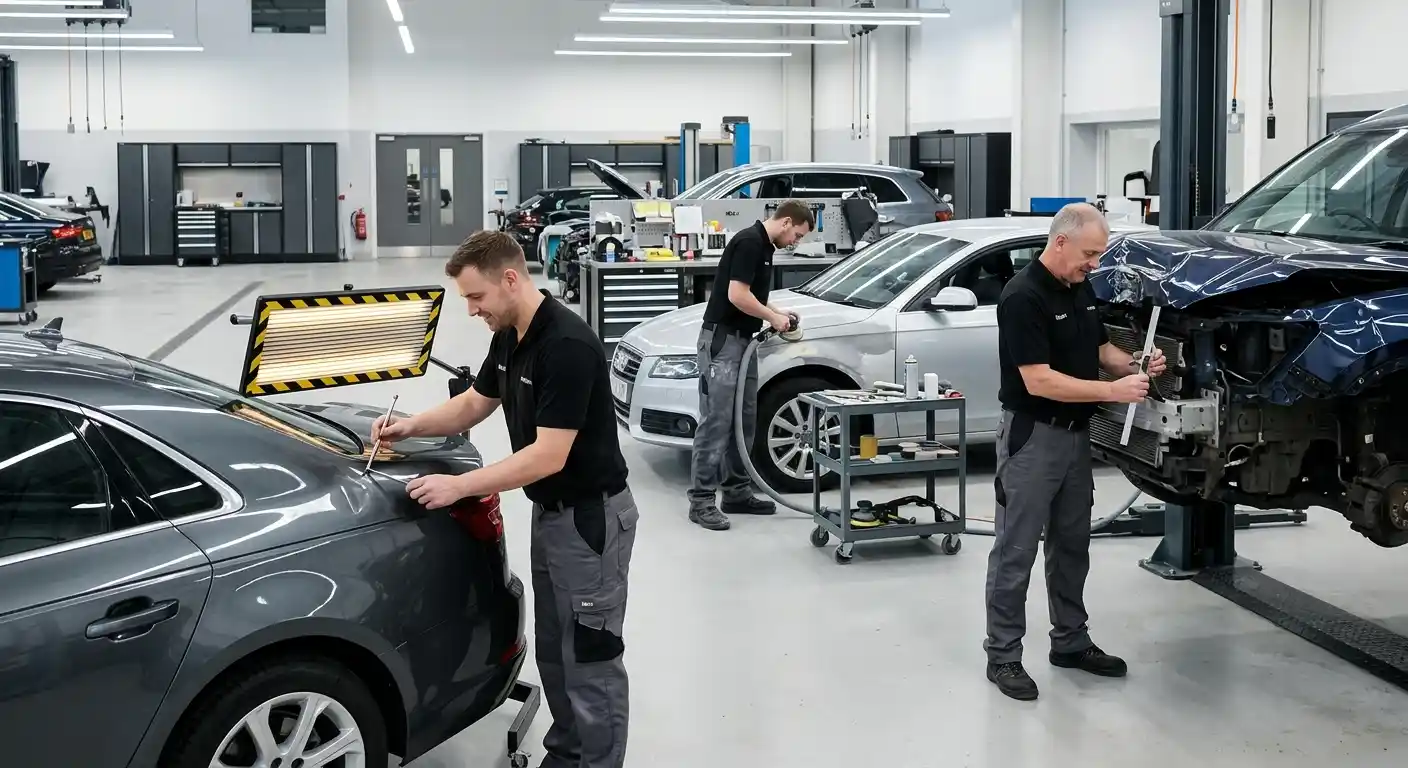
PDR is excellent when the panel and coating support it. It is not the honest route for every dent. A workshop that promises paintless repair before checking the panel can create extra highs, stretched metal or coating damage that turns a simpler repair into a larger one.
Likewise, repainting every dent is unnecessary when the original finish can be preserved. The best value comes from selecting the least invasive method that can restore the contour reliably.
Where the money goes
PDR and paint repair have different cost anatomy
Two quotations can look far apart because they are pricing different finished products. PDR concentrates the bill in specialist labour and access. Conventional repair adds preparation, paint materials and curing. If blending or film replacement is required, the scope expands again.
Specialist labour and access
The main cost is controlled metal movement, reflection-board finishing and any dismantling needed to reach the back of the dent. There is normally no filler, primer, colour or clear coat when the original finish can be preserved.
Shape plus refinishing stages
Once the coating is damaged, the job can include contour repair, filler where appropriate, sanding, primer, colour matching, basecoat, clear coat, curing and reassembly.
Adjacent panels, PPF and wrap
Metallic or pearl colour may require an adjacent blend. PPF or vinyl may need removal and replacement. Those are separate restoration tasks and should appear clearly in the quote.
Paint blending cost: there is no useful universal add-on price because panel size, colour, trim removal and clear-coat strategy vary. The important comparison is whether the blend is included, which adjacent panel is involved and why it is technically necessary.
Shape before size
Dent geometry predicts labour better than width
A wide, shallow low can contain less concentrated stretch than a narrow pointed impact. The technician reads the centre, surrounding crowns, body-line movement and panel tension. A sharp crease may need many small controlled movements even when it fits inside a hand.
Edges and flanges resist movement differently from open panel skin. A dent near a door hem, wheel opening or reinforced styling line can involve construction that is invisible from the front.
A slow video moving a straight reflection across the dent is more useful for initial method selection than a close photograph with no view of the surrounding panel.
Sharp dents cost more for a reason
Creases, body lines and panel edges change the labour band
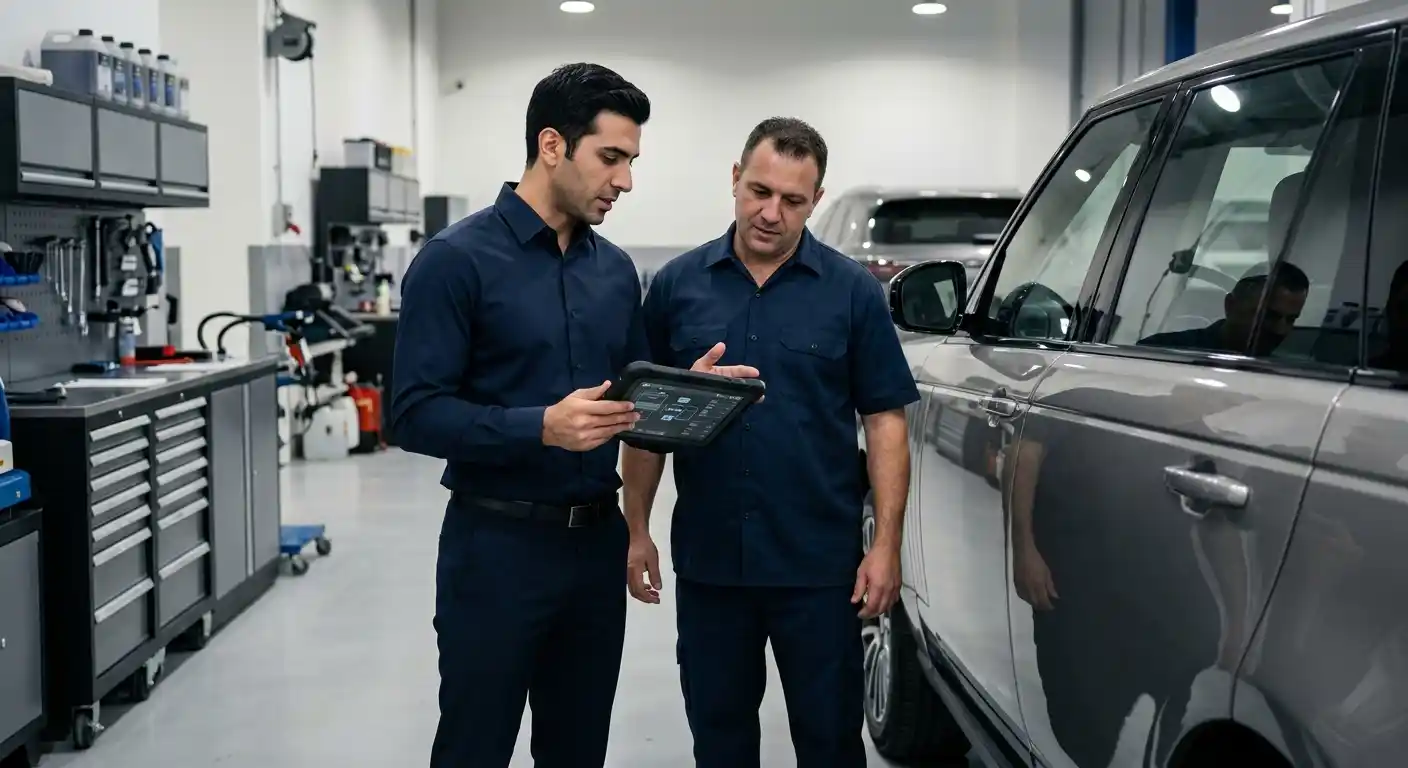
These dents are often smaller in diameter but more demanding to restore. Concentrated stretch, strong styling features and restricted access can move an otherwise modest dent toward the upper end of a PDR band or into conventional repair.
A narrow crease concentrates stretch and usually needs many small controlled movements. If the crease has cracked paint, the cost also includes refinishing.
The technician has to restore both the low area and the styling line. A result that removes the dent but leaves a soft or wavy body line is not a complete repair.
Door hems, wheel openings and panel edges are stiffer and can hide joined or reinforced construction. Access and finish risk can therefore outweigh the visible size of the dent.
Coating history matters
Previous paint changes the risk of glue pulling
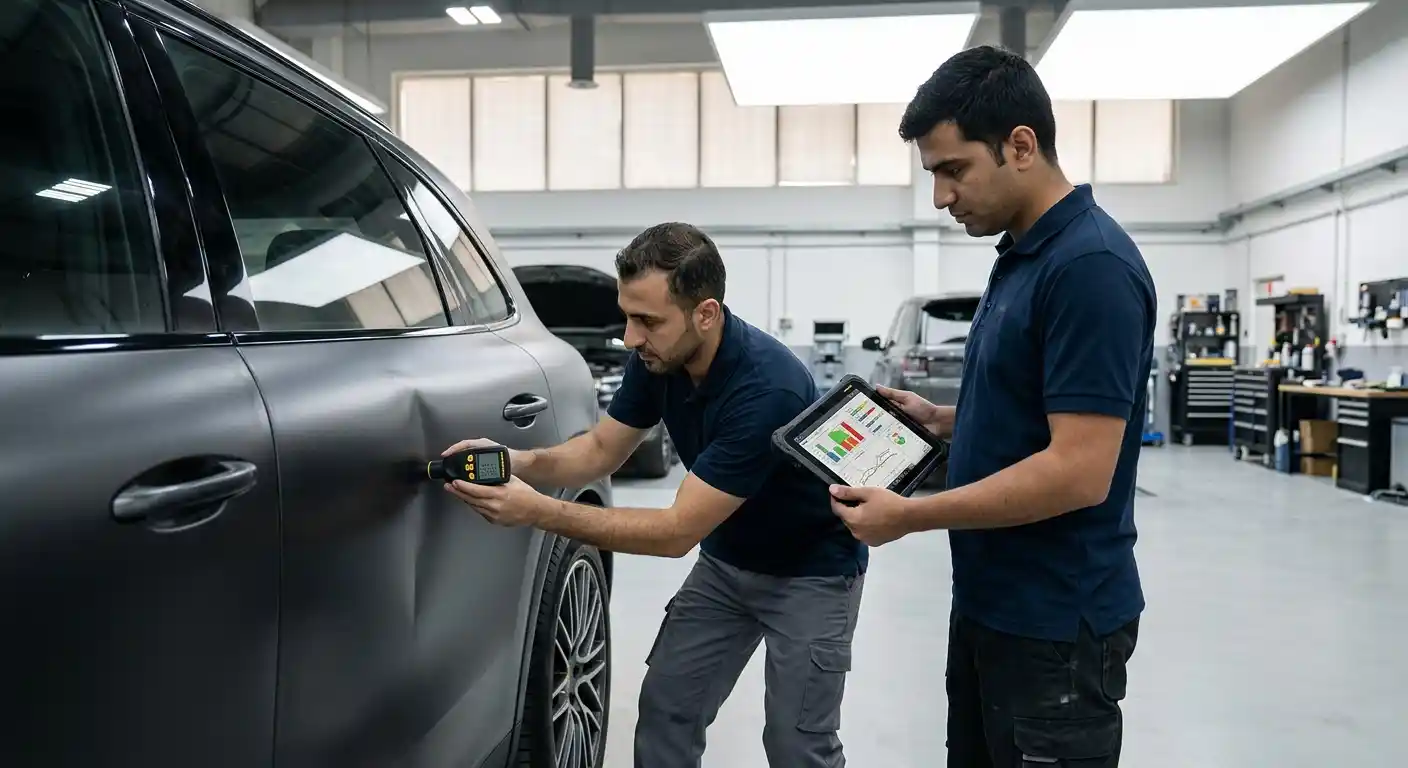
Exterior glue pulling can help when rear access is limited, but the adhesive acts on the coating. Sound factory paint is different from a panel with unknown repaint quality, filler or poor adhesion.
A failed DIY pull can leave a high spot, stretch the centre or lift paint. Uncontrolled heat can also affect clear coat, plastic, adhesives and nearby components. Once the coating is damaged, a PDR-only quotation may no longer be possible.
A small dent should always be cheap.
A small sharp crease on an edge with blocked access can demand more labour than a larger shallow dent on open steel.
Why quotes move
Four variables explain most dent repair price changes
Stable coating supports PDR. Cracks, chips and weak previous paint add refinishing or coating risk.
Depth, sharpness, crowns, body lines, edges and stretch determine the controlled labour.
Trim removal, braces, glass, airbags, wiring and roof access can add time before the first push.
Paint, blending, PPF, parts, electronics and final checks define what the customer is actually buying.

Hail and multiple dents
Hail dent repair cost needs a dent-count and panel map
The existing multiple-dent planning band of AED 1,200–3,500 is only a starting point. Hail pricing changes with dent count, dent depth, affected panels, roof access, paint condition and whether every panel remains suitable for PDR.
A vehicle can legitimately use several methods at once. Doors and bonnet may stay paintless while one badly stretched roof rail or paint-damaged panel needs conventional repair. That mixed plan can preserve more original paint without pretending every dent belongs to one uniform price.
Roof and upper-body hail work can also involve headlining, roof hardware, curtain-airbag areas, wiring, cameras, seals and mouldings. These access items should be stated instead of buried inside a single “hail repair” total.
Vehicle and panel construction
Access, material and protection film can turn one dent into several tasks
Rear access
A door card, wheel-arch liner, lamp, boot trim, bonnet insulation or roof lining may need removal. Side-impact beams, airbags, wiring and bonded braces can block the direct path.
Steel and aluminium
Aluminium responds differently to forming and heat and can require separate tools, contamination control and slower movement. The damaged component matters more than the badge on the bonnet.
PPF and vinyl
The dent may be repairable while the film above it is scratched or stretched. Removal and replacement can become a separate line item even when the metal repair itself remains paintless.
Plastic bumper dents follow a different repair logic from metal panels. If the damage is on the bumper rather than a door, fender or quarter panel, see the Bumper Repair Cost Dubai guide for plastic repair, paint, hidden fittings and sensor costs.
The higher band should be explained by the work, not by the badge. Aluminium closures, difficult double-skin access, powered handles, expensive trim, PPF, multi-stage paint, cameras or sensors, and large high-visibility panels can all increase labour or restoration scope.
A premium vehicle with one simple accessible steel door ding may still be a straightforward PDR job. A less expensive vehicle with a roof crease, aluminium panel or damaged coating can cost more. Inspection should explain the difference.
Four realistic quotation examples
Similar-looking dents can land in different price bands
Shallow door ding with intact factory paint
Away from edges and body lines with workable rear access. This can fit the small PDR band when access, clips and final line-board inspection are included.
Small sharp dent across a styling line
The diameter is similar, but restoring the line and releasing surrounding crowns requires more controlled labour. It may move into a higher PDR band.
Parking dent with a deep scrape
The shape may benefit from PDR techniques, but broken coating requires preparation, colour and clear coat. A paintless-only price no longer represents the finished repair.
Quarter-panel crease near the wheel opening
The impact reaches an edge with limited access and can affect a large visible panel. The estimate must account for liner removal, contour repair and refinishing strategy.
Repair, replacement and payment
Compare complete scopes, not isolated line items
Repair versus replacement
Repair often preserves the original panel and avoids part delay. Replacement can make more sense when the panel is torn, badly stretched, damaged at critical mounts or uneconomic to restore.
- Include removal and fitting
- Include part delivery and trial fitting
- Include corrosion protection where relevant
- Include paint, blending and reassembly
Cash versus insurance
For a minor cosmetic dent, compare the private quotation with your policy excess and the time needed for a claim. Collision, weather or third-party damage may make documentation more important.
- Preserve photographs and reports
- Check approved repair requirements
- Confirm excess and coverage
- Do not let cash payment remove necessary repair steps
If the dent is part of wider accident damage rather than an isolated parking mark, start with our Accident Repair service so panel relationships and hidden impact damage are checked before cosmetic work begins.
Replacement economics
Bolt-on panels and welded panels should not be costed the same way
A repair-versus-replacement decision becomes misleading when only the bare part price is compared with repair labour. Replacement cost includes the installation method and everything needed to return the surrounding finish and protection systems.
Bolt-on fender or closure
A bolt-on fender, bonnet or some tailgates can be removed and trial-fitted without cutting the body shell. The complete cost can still include part preparation, alignment, paint, adjacent blending, clips, trim transfer and calibration or function checks where equipment is attached.
Because installation is more contained, a severely damaged bolt-on panel can sometimes reach replacement value sooner than a welded panel.
Welded quarter panel or structural outer panel
A welded quarter is not simply “buy panel and paint it.” The scope can include cutting, weld preparation, joining, corrosion protection, seam sealing, cavity protection, large-area refinishing and blending into neighbouring surfaces.
That makes repair attractive when a stable contour can be restored safely, while severe tearing or stretch may still justify replacement despite the much larger installation scope.
Get a useful photo estimate
Send evidence that helps select the right method
A close-up alone can make a sharp dent look shallow or hide the surrounding crown. Give the workshop enough context to judge the panel before it gives you a provisional range.
- Vehicle make, model and year
- One wide photograph of the whole panel and neighbouring gaps
- Close photos straight on and from both oblique angles
- A slow video moving a straight reflection across the dent
- Clear views of paint cracks, chips, PPF, wrap and panel edges
- Any known previous repair on the same panel
What the quote should contain
A complete dent repair quotation defines the finished product
Map the damage
Identify every dent and affected panel rather than pricing an undefined area.
Name the method
State PDR, conventional repair, replacement or a mixed method.
List access work
Include trim, interior removal, clips and fasteners needed to reach the panel.
Separate finishing
Show paint, blending, PPF and wrap work as clear additions where required.
Include systems
List parts, electronics, diagnostics and reassembly checks that belong to the job.
Define handover
Record the finish target, limitations, timeline and written warranty terms.
A quotation that says only “dent repair” can hide the work that changes the bill. Compare method and inclusions before comparing totals.
Handover under reflected light
Check shape, finish and everything disturbed during access
For PDR, move a straight reflection across the panel and look for remaining lows, sharp highs, tool marks and disturbed paint. For conventional repair, check contour, colour, texture, overspray, blend quality and reassembly.
Turnaround time belongs in the cost decision too. A simple PDR repair may avoid paint cure stages, while conventional work adds shaping, sanding, primer, colour, clear coat, curing and possible blending.
View from standing height, low angles and both ends of the panel.
Check colour, gloss, texture, edges and any blend area outdoors.
Confirm clips, seals, liners, handles and interior pieces are correctly refitted.
Test windows, lamps, sensors and anything disturbed during access.
Common cost questions
Car dent repair cost FAQs
How much does a small dent cost to repair in Dubai?
A small shallow dent with stable paint can often plan around AED 150–350 when it is suitable for PDR. Sharp dents, body lines, edges or poor access can cost more.
Is PDR always cheaper than paint repair?
Often, but not automatically. Difficult access, aluminium, several dents or a complex body line can require specialist PDR labour. The correct comparison is between complete suitable repair scopes.
When does a dent need paint?
Paint repair becomes more likely when the coating is cracked, chipped, lifted or stressed beyond a safe PDR limit, or when previous repair quality makes exterior pulling risky.
Can a dent on a body line be repaired with PDR?
Sometimes. Body-line dents can be more demanding because the line itself and surrounding crowns need to be restored accurately. Paint condition and access still decide suitability.
Why does previous paint matter?
Glue pulling loads the coating. Unknown repaint quality, filler or weak adhesion can increase the chance of paint lifting and may change the recommended repair method.
Does aluminium dent repair cost more?
It can. Aluminium behaves differently during forming and can require separate tools, more controlled movement and contamination precautions. The actual panel and dent still need inspection.
Can PPF stay on during dent repair?
Sometimes. Other dents need the film removed for accurate paint inspection, safe exterior pulling or conventional refinishing. Damaged film can create a separate removal and replacement cost.
How long does dent repair take?
A straightforward single PDR dent can avoid paint preparation and curing, while conventional repair adds shaping, primer, paint, curing and reassembly. Access, dent count and parts can extend either method.
What photos should I send for an estimate?
Send the whole panel, straight-on and angled close-ups, the panel edges, any paint or film damage, and a slow reflection video if possible. Include make, model and year.
When is panel replacement better than repair?
Replacement becomes stronger when the panel is torn, severely stretched, damaged at critical areas or when repair labour cannot produce a stable contour at sensible total cost.
How much does hail dent repair cost in Dubai?
For multiple dents, the page uses an early planning band of AED 1,200–3,500, but hail needs a panel-by-panel dent map. Dent count, depth, roof access, paint damage and mixed PDR or painted repairs can move the final total substantially.
Does dent repair cost depend on which panel is damaged?
Yes. A door, fender, quarter panel, bonnet, roof and tailgate can have very different access, material, bracing and refinishing requirements even when the visible dent is a similar size.
Are several dents priced by multiplying the single-dent price?
Not necessarily. Multiple dents should be grouped by panel, severity, access and repair method. Several simple PDR dents on one panel may be more efficient than pricing each in isolation, while one paint-damaged dent can create a separate refinishing scope.
Does paint blending add to dent repair cost?
It can when conventional paint repair needs colour transition into an adjacent panel, especially with metallic or pearl finishes. The quotation should identify which panel is blended, why it is needed and whether clear-coat and trim work are included.
Why can luxury-car dent repair cost AED 1,500–4,000 or more?
The higher cost should come from the actual repair conditions: aluminium, difficult access, powered trim, PPF, complex paint, large visible panels, cameras or sensors. The vehicle badge alone should not determine the dent price.
Choose the method before the price
Get a dent repair estimate in Dubai
Send clear photographs and a short reflection video. We can identify the likely repair path, explain what still needs physical inspection and prepare a quotation around the complete finished scope.