
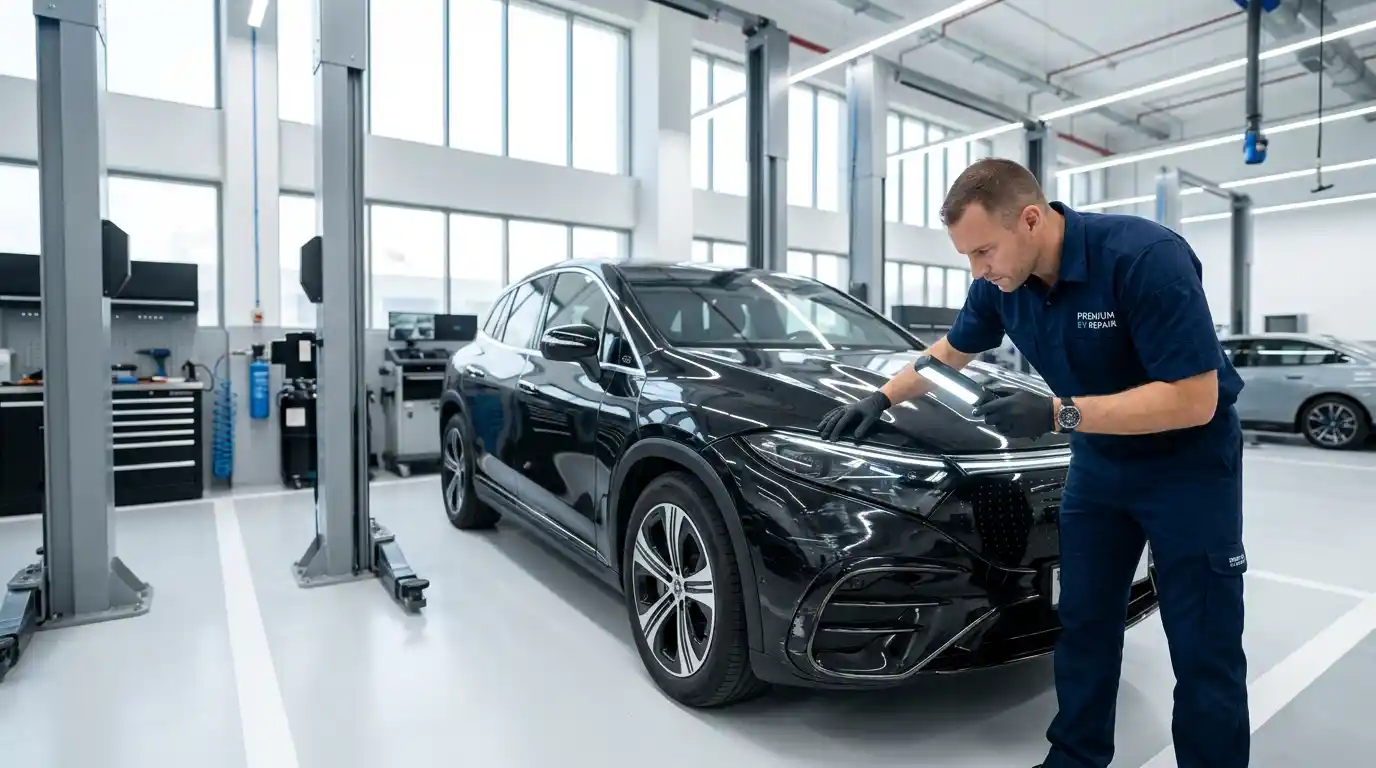
Tesla Model X Body Repair Dubai
Independent collision assessment in Al Quoz 4
Tesla Model X body repair Dubai is not simply a large-SUV version of an ordinary panel job. Its falcon-wing rear doors, broad roof opening, battery beneath the cabin and tightly packaged cameras and parking hardware connect visible damage to geometry that may sit well beyond the first scuff. BodyShop.AE begins with the impact path, the exact model year and the way every affected opening moves before proposing a repair.
We handle bumper damage, door and quarter-panel dents, paint defects and collision repairs for Dubai-owned Model X vehicles. We are an independent body shop, not Tesla or a Tesla-authorised repairer. That distinction matters: our estimate describes what we can inspect and repair, and we recommend Tesla or another appropriately equipped specialist when a manufacturer procedure, high-voltage operation or restricted calibration is outside the agreed scope.
The Model X fingerprint: falcon-wing doors and roof geometry
The Model X has a visual feature that also changes collision diagnosis: each rear falcon-wing door rises through a complex path beside the roof. A mark near a rear door edge can therefore involve more than paint. We inspect the door skin, roof-side region, hinge area, aperture seals, adjacent quarter panel and the clearances visible during a controlled opening cycle. The door should not be forced if it binds, pauses unexpectedly or approaches a damaged roof edge.
Panel gaps are recorded with the vehicle stationary on a level surface. We compare the front and rear door relationships, roof-to-glass transitions, liftgate opening and the symmetry of the rear quarter lines. This creates a baseline before trim is removed. A cosmetic shortcut that makes one stationary gap look neat can still leave a moving closure stressed or poorly aligned.
Tesla publishes separate Model X collision-repair information for different production periods. We identify the VIN and build generation before using a procedure because the original Model X and the later Palladium-era vehicle do not share every construction or repair detail. The official Tesla Model X collision repair manual is a reference point, but the actual vehicle and current service information govern the plan.
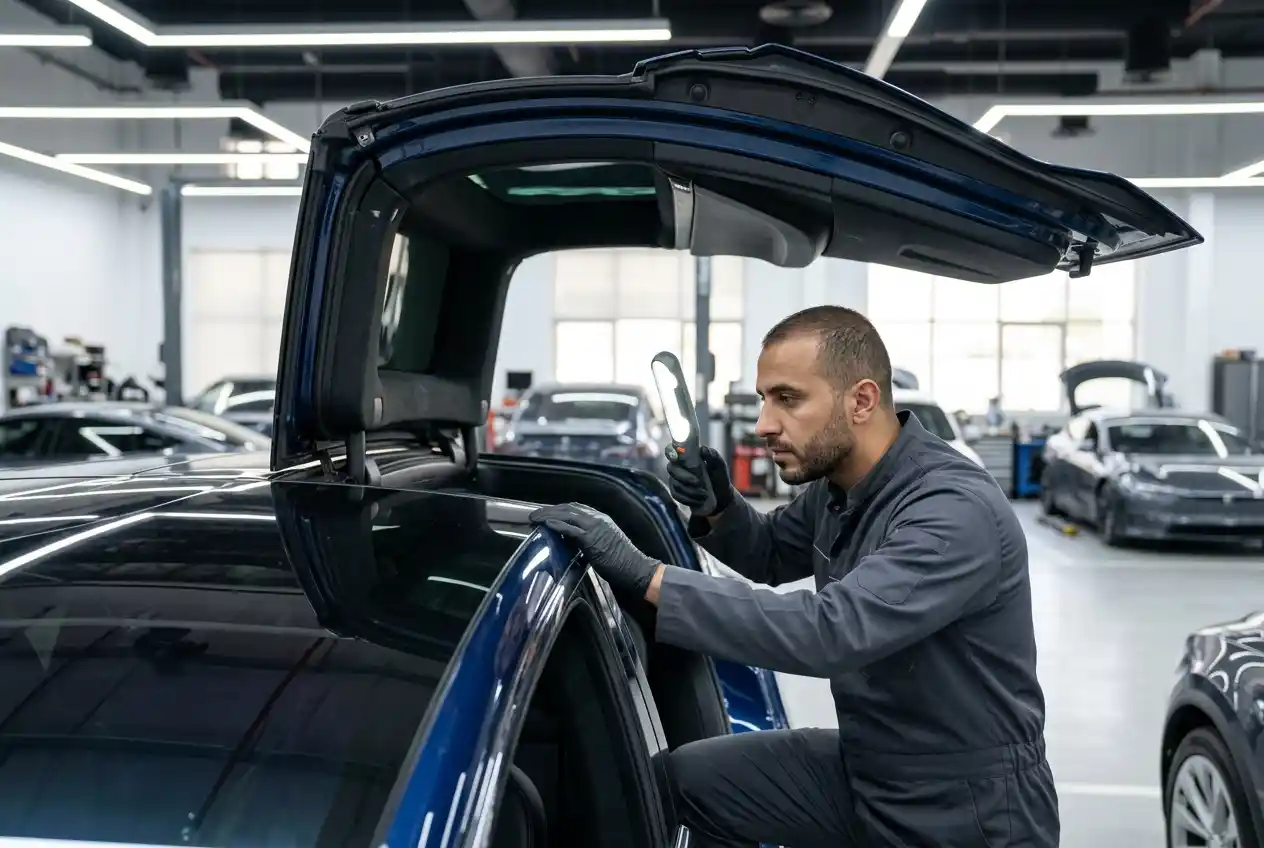
A zone-by-zone inspection after an impact
Front-corner impacts are checked from the bumper cover inward. We examine the painted cover, mounting tabs, lamp relationship, wheel-arch liner, fender edge and any visible cooling or sensor-area disturbance. A cover can recover its shape after a low-speed contact while its retainers remain displaced. Paint-only pricing is premature until those attachment points are visible.
Side contact requires a different map. On the Model X we trace the reflection through the front door, falcon-wing door, lower sill cover and rear quarter rather than pricing isolated dents from a phone image. The lower body deserves special attention because an EV battery enclosure occupies the floor area. Scraping, lifting damage, a hard kerb strike or a collision near the sill can justify a qualified underbody and high-voltage safety assessment before normal metal or paint work proceeds.
Rear impacts are read through the liftgate, lamp pockets, bumper beam area, quarter ends and luggage-opening seals. We test the powered liftgate only when doing so is safe. Water sealing, latch centring and the loaded shape of a large opening matter as much as the visible bumper finish. If trim removal reveals a displaced bracket or cracked absorber, the estimate is revised before refinishing begins.
Falcon-wing door diagnosis before cosmetic work
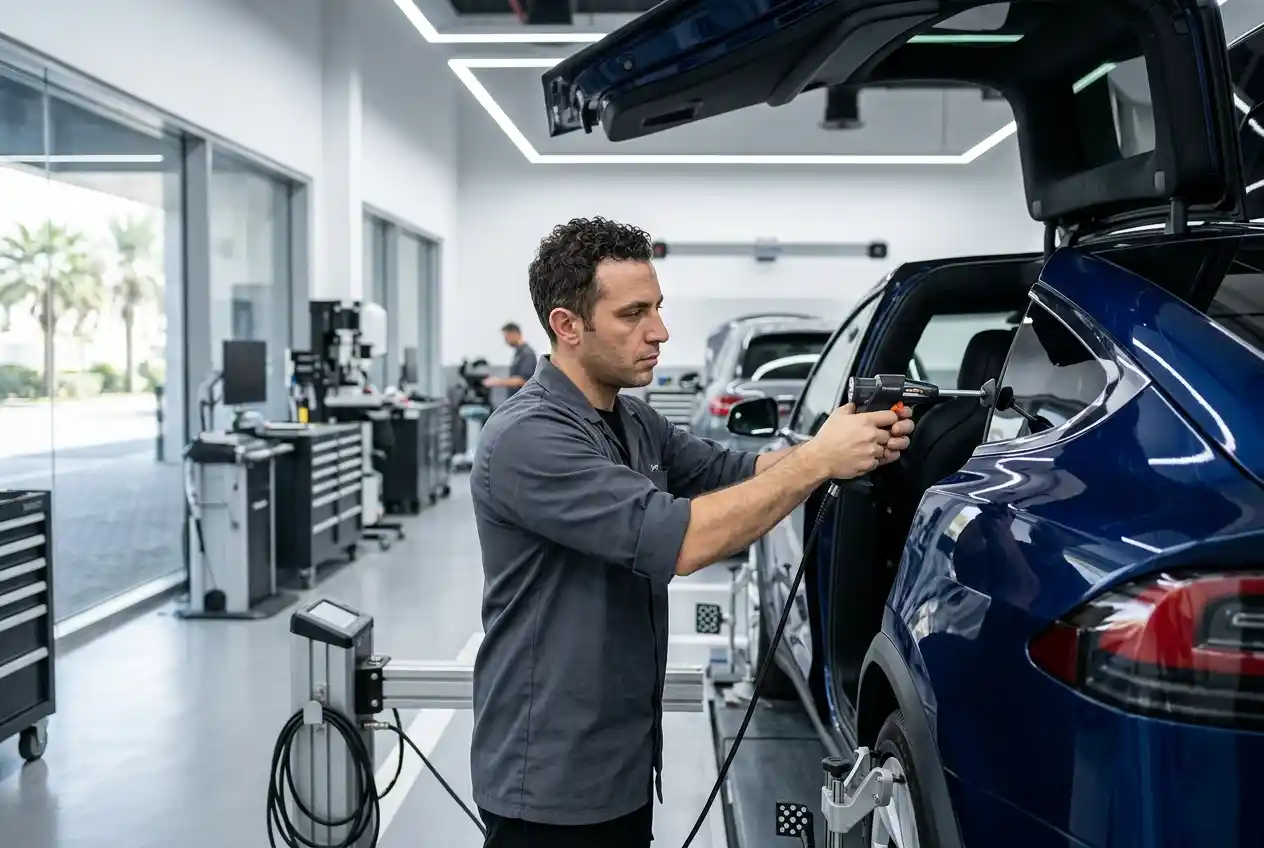
A rear-door concern starts with observation, not adjustment. We note warnings, opening height, the path on both sides and any unusual sound. Roof-mounted sensing and door control features can be affected by trim position, glass work, hinge-area movement or calibration needs. We do not promise that a surface repair alone will resolve an electronic or movement fault.
Where damage is confined to an accessible outer surface and the metal and coating allow it, a controlled dent repair may preserve more original finish. Sharp folds, stretched metal, intrusion-beam areas, edge damage and poor rear access can make conventional repair or panel replacement the more responsible route. The decision depends on location and material, not a generic dent-size rule.
After repair, the rear door must be evaluated through repeated, careful cycles with its seals and trim fitted. We check edge clearances, surface continuity, closing position and relevant alerts. The handover discussion separates body-fit observations from any manufacturer-level diagnostic or calibration work still required.
Battery-floor and high-voltage boundaries
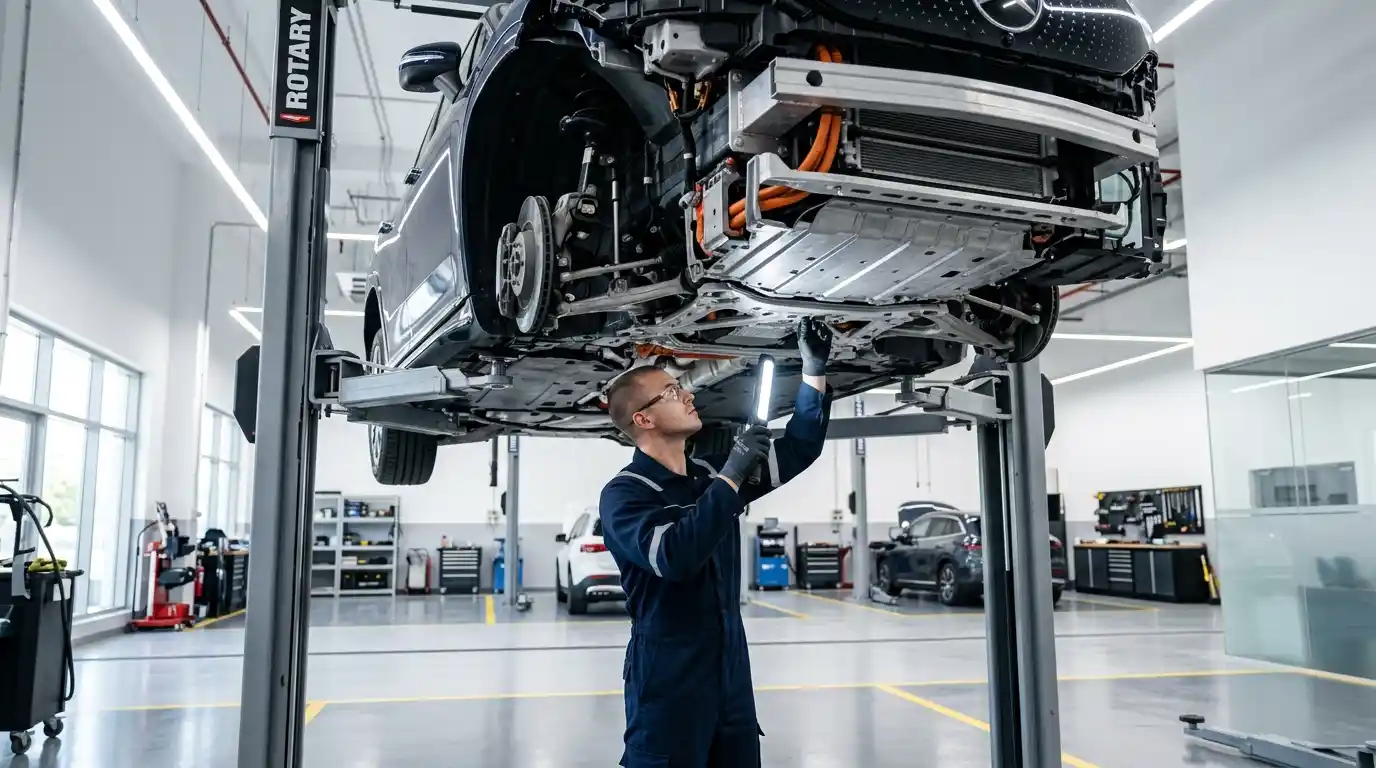
An orange cable, battery enclosure or high-voltage connector is not treated as ordinary body hardware. Before heat, welding, pulling or intrusive work is approved near the floor, the repair route must establish safe isolation requirements and whether the vehicle needs an EV-qualified assessment. We never infer battery condition solely because the car drives or shows no dashboard message.
Evidence that can change the route includes a dent or scrape in the battery enclosure, coolant leakage, unusual odour, warning messages, severe lower-sill deformation or an impact that loaded a wheel into the underbody. The vehicle should not be charged or moved against safety advice while those signs remain unresolved. These boundaries protect the car, technicians and workshop.
Minor upper-body paint repairs may not involve the high-voltage system, but the inspection still records proximity and lifting points. Correct lift placement is part of body-shop discipline on a heavy electric SUV. If the vehicle cannot be raised safely with available information or equipment, we pause rather than improvise.
Sensors, cameras and closure-dependent checks
A bumper or windscreen-area repair can disturb a camera view, ultrasonic device where fitted, radar-related mounting, harness or bracket. We inspect mounts and wiring before paint, keep coating away from functional surfaces and note when a diagnostic scan or calibration is indicated. Repainting a sensor cover is not automatically acceptable; part and procedure information must decide.
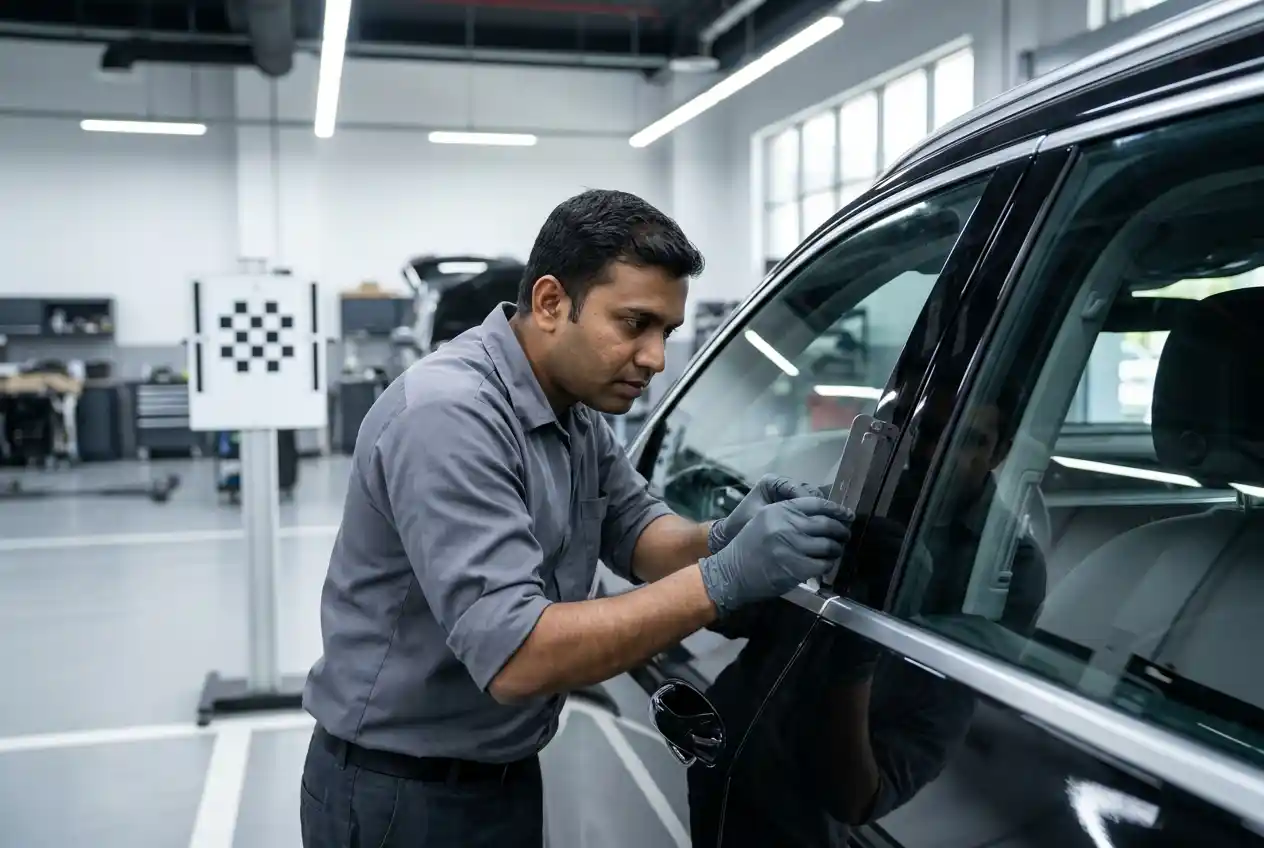
Falcon-wing door operation also depends on installed trim, seals and the space around the vehicle. A clean workshop test cannot reproduce every car-park condition, so we document what was checked and advise the owner to monitor normal operation. A warning that remains after body alignment is not hidden or reset merely to clear the handover.
Wheel alignment is considered after a wheel, suspension corner or lower structure receives impact. A steering wheel that sits off-centre, changed ride height, tyre contact or uneven wheel position can indicate work beyond body refinishing. Air-suspension state and lifting mode, where applicable, are observed before measurements are interpreted.
Paint matching across a large, reflective body
Model X doors and quarter panels present long reflections. The colour may appear correct under one lamp while flop, metallic orientation or texture differs outdoors. We clean the adjacent finish, read the paint code, prepare spray-out cards and compare the face and side tone under more than one light source. Blend decisions are explained before adjacent panels are disturbed.
Black, white, metallic and multi-stage finishes each create different risks. Dust nibs, edge mapping, heavy orange peel and masking lines become obvious across the Model X’s broad surfaces. Preparation extends beyond the visible scratch so the final coating has a stable transition and durable edge.
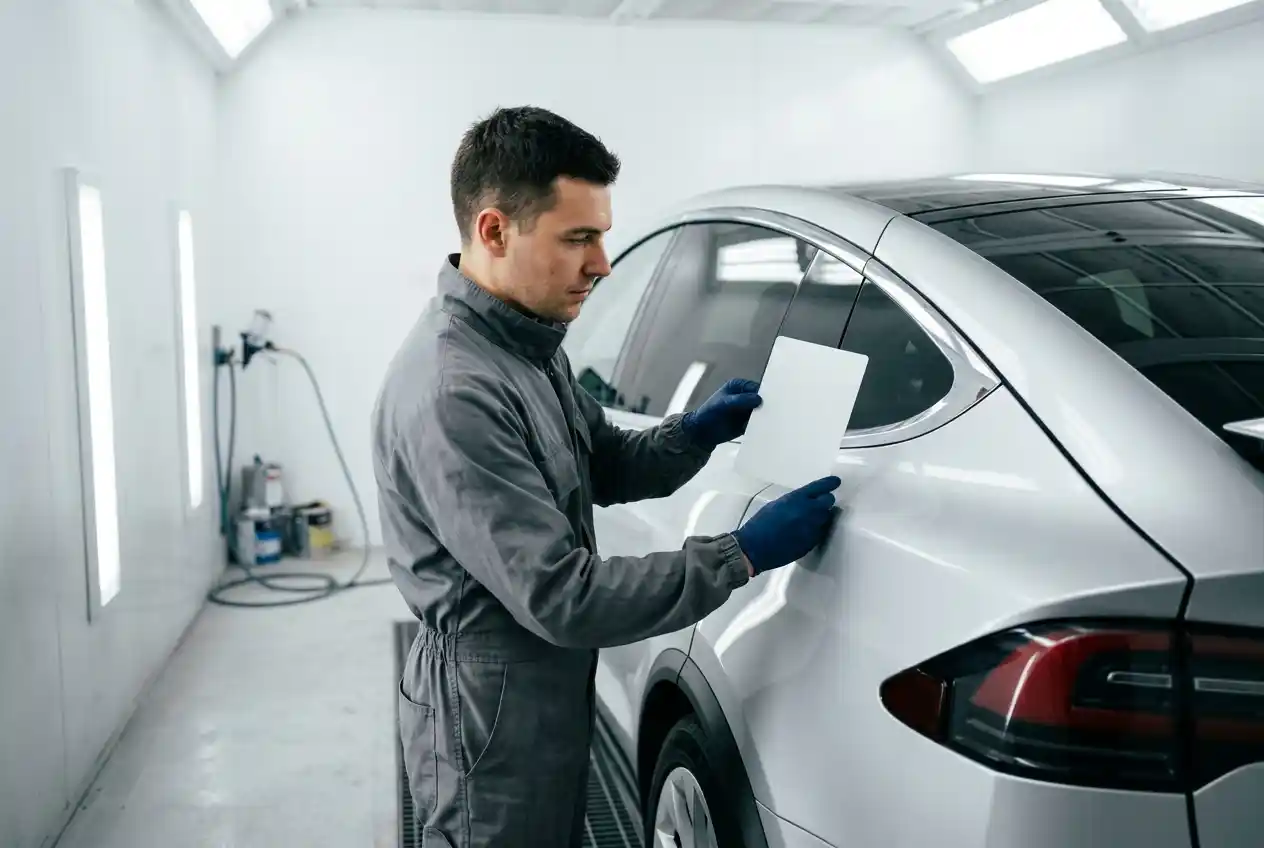
Paint quality control includes colour, gloss, texture, contamination, edge coverage and overspray. We also inspect trim seating and weather seals after refit. The goal is a coherent side profile, not a polished patch surrounded by disturbed mouldings or inconsistent gaps.
Repair, replace or pause for specialist input
Repair is reasonable when the damaged material, access, deformation and manufacturer information support a controlled method. Replacement can be safer or more economical when a panel is torn, sharply kinked, stretched around an edge, damaged at a critical attachment or likely to require excessive heat and filler. We show the owner the deciding evidence.
A pause is the correct action when the repair depends on unresolved battery condition, falcon-wing hinge geometry, safety-system calibration or a procedure we cannot validate. An early pause prevents an attractive cosmetic result from masking an incomplete safety or functional repair.
Parts availability can influence the schedule but should not dictate an unsafe shortcut. Before disassembly, we list likely clips, brackets, seals and one-time-use fasteners. After opening the area, we confirm the list and obtain approval for material changes.
Typical Tesla Model X repair costs in Dubai
The figures below are practical AED planning ranges, not fixed quotations. Model year, paint system, parts, hidden damage, sensor work, glass or door mechanisms and battery-area findings can materially change the total. VAT and outsourced specialist operations are identified in the written estimate.
- Localised bumper scuff preparation and refinishing: commonly AED 900 to 1,800 when the cover and mounts are sound.
- Single-panel dent and paint repair: often AED 1,200 to 2,800 depending on access, contour and finish.
- Door or quarter-panel work involving trim removal and blending: commonly AED 2,500 to 6,500.
- Falcon-wing door alignment or mechanism-related diagnosis: priced after movement, hinge, sensor and scan findings.
- Multi-panel collision repair: frequently AED 7,500 to 25,000 or more when parts, structural work or calibrations are involved.
For a wider Dubai benchmark, see our published accident repair cost guide. A photo can support an initial range, but a lift inspection or dismantling may be necessary before we can commit to the final scope.
Our documented Model X workflow
- Record the VIN, production period, warning messages, impact story and owner concerns.
- Photograph panel gaps, roof-side relationships, falcon-wing door movement and visible damage.
- Inspect lower-body, wheel, bumper, closure, glass, trim and sensor-adjacent zones as relevant.
- Choose repair, replacement or specialist referral using current model-specific information.
- Prepare an itemised estimate with labour, paint, parts, calibration and contingency boundaries.
- Carry out approved body and paint work with page-specific quality checkpoints.
- Refit, test safe closure operation, inspect the finish and document any outstanding specialist task.
Timelines begin only after the scope and parts position are clear. A small paint repair may take several working days; a rear-door, multi-panel or structural case can take longer. We provide updates when dismantling reveals a material change rather than letting the invoice surprise the owner.
What to send for a useful first assessment
Send one full view of the affected side, close views from two angles, the opposite-side comparison, the VIN or model year, dashboard warnings and a short description of how the impact occurred. For a falcon-wing door issue, a brief video of the symptom can help, provided the door can be operated safely without forcing it.
Do not crop out the wheel, sill, roof edge or neighbouring door. Those surrounding references help distinguish a local cosmetic mark from a change in closure or body geometry. Mention prior repairs, wrapping, ceramic coating or paint protection film because removal and reinstatement affect the estimate.
Book an independent Model X body assessment
BodyShop.AE provides independent Tesla Model X body repair assessment and refinishing in Al Quoz 4, Dubai. We focus on measured geometry, safe EV boundaries, honest repair-versus-replace decisions and a finish that reads correctly across the vehicle’s large surfaces.
Use WhatsApp for photographs or call to arrange an inspection. You can also review our broader body shop services before visiting. The vehicle remains a draft estimate until we inspect it; no web page can replace evidence from the actual car.
Falcon-wing refit tolerances after paint
Paint thickness at an edge, a displaced seal or a trim clip that is not fully seated can alter the clearance around a falcon-wing door. For that reason, the movement check is repeated after final assembly, not only during the metal stage. We watch the leading and trailing edges at slow speed, inspect witness marks and confirm that the fresh finish is not being touched.
The same principle applies to the liftgate. Powered movement, latch engagement and seal contact are observed with the trim installed. If electronic behaviour remains abnormal after mechanical fit is correct, the handover records the need for qualified diagnosis rather than implying that repeated adjustment will solve it.