
Skin, shell, edges and closing fit
Car Door Repair Dubai
A damaged door is more than its outer painted surface. We assess the visible dent or scrape together with the door edges, shell, hinges, latch, gaps, window frame, seals, handle, trim and signs that the impact may extend beyond the door before defining a repair route.
The first inspection
A car door is a moving assembly, not one flat panel
A door can have a neat-looking outer dent while its edge, gap or closing action has changed. It can also carry a long scrape that is mainly cosmetic. The inspection separates those very different situations.
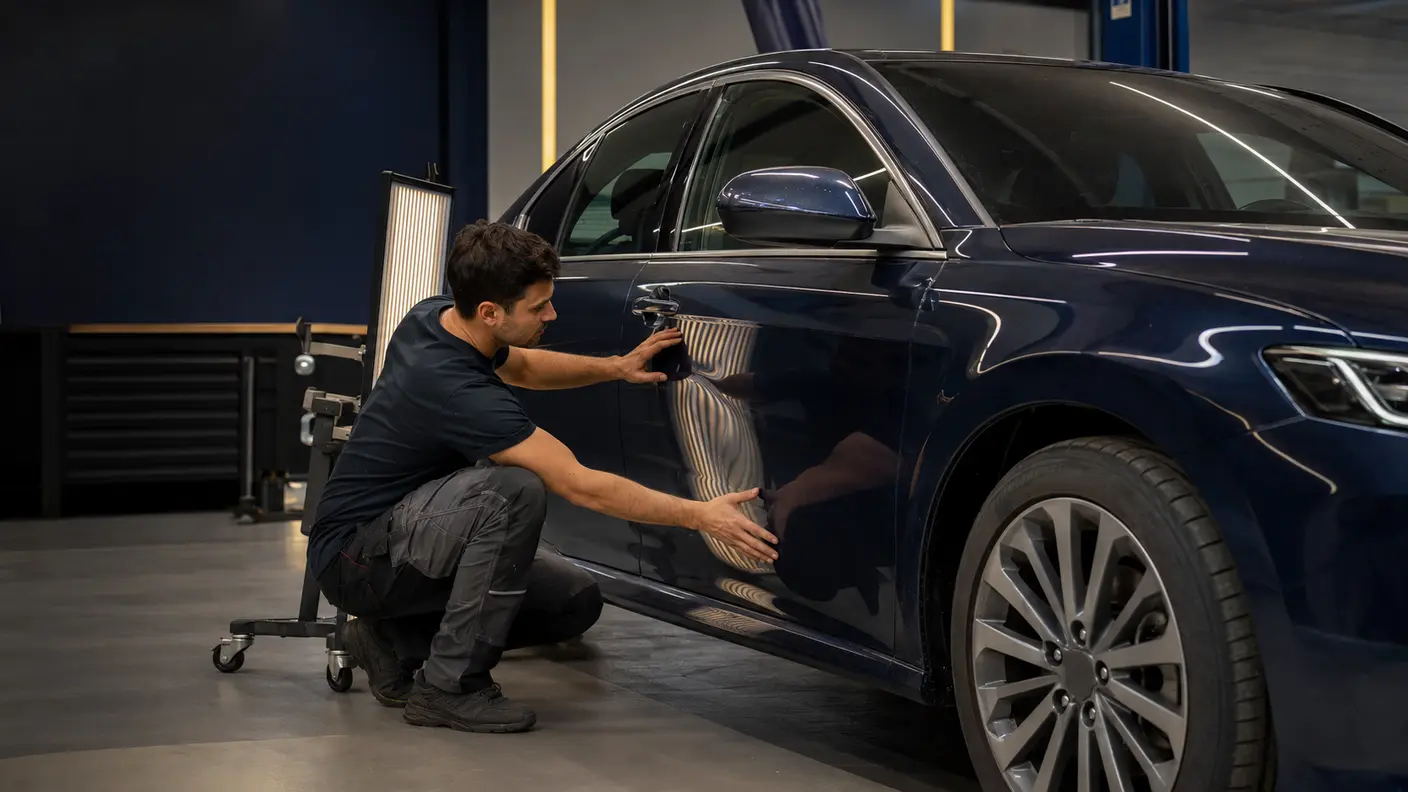
We start with the door closed. A clean, dry surface is viewed under a reflection light from several angles. This makes shallow lows, sharp impact points, raised crowns and softened design lines easier to see. The front, rear and lower gaps are compared with the opposite side where useful, but symmetry is treated as a reference rather than automatic proof of the original position.
The door is then opened carefully if it can be operated without force. The edge, folded hem, latch area, hinges, checks, seals and accessible inner surfaces are examined. We note whether the door drops, rises, rubs, needs unusual effort or produces a new sound. A simple adjustment should not be used to hide deformation that still needs to be understood.
The window frame, glass movement, outer belt moulding, mirror area, handles and trim are included in the visual record where fitted. Frameless-door geometry requires particular attention to glass travel, sealing and closing fit, as explained in our Audi Q8 body repair guide. These items do not make every door repair an electrical or glass job. They identify what may need protection, removal, transfer, replacement or separate specialist attention before a complete quote is sensible.
When to avoid forcing the door
Changed operation after impact deserves wider attention
A webpage cannot determine whether a collision-damaged vehicle is safe to drive. If the door no longer secures, rubs heavily, exposes sharp metal or sits visibly out of position, avoid repeated opening or slamming and arrange appropriate technical advice or recovery.
The door will not latch
A latch that does not hold normally, releases again or requires excessive force should not be treated as a cosmetic inconvenience. The cause may involve the door, striker relationship or surrounding opening.
The opening has changed
New tightness, metal contact, a dropped rear edge or a very uneven gap can indicate that the door or nearby body relationship has moved. Adjustment should follow assessment.
The impact reached farther
Damage involving the sill, pillar area, roof edge, multiple doors or wheel area needs a broader collision review rather than a door-only price based on one photograph.
Some vehicles place wiring, restraint-related parts, sensors or other equipment in and around doors. Their presence and required procedures vary. This page does not claim airbag work, electronic diagnosis, programming, sensor calibration or safety-system validation. Any requirement outside the agreed body and paint scope should be identified separately.
Door anatomy
Six areas can change the repair decision
The outer skin creates the visible finish, but the shell, edges and fitted parts affect whether the repair remains local or becomes a larger bodywork operation.
Outer skin
This is the broad painted surface where dents, creases and scrapes are usually visible. Shape, stretch, paint condition, body lines and tool access influence whether PDR or conventional repair is suitable.
Shell and inner panel
The inner construction supports attachments and creates the door assembly. A changed shell, torn mounting area or significant deformation cannot be judged by polishing the outer mark.
Edges and hems
The skin is commonly folded around edges. Sharp edge impact, torn metal, corrosion or disturbed bonding can reduce repair options and affect how cleanly the contour can be restored.
Hinges and check
Hinges establish position while the door check controls movement on many vehicles. Dropping, binding or a changed opening arc calls for inspection before adjustment is proposed.
Latch and closing fit
The latch, striker relationship, seals and surrounding opening affect closing effort and final fit. Repeated slamming is not a reliable diagnosis and can add damage.
Frame and fitted parts
Glass, guides, regulator, seals, handles, locks, mirror and trim vary by vehicle. Their condition and removal needs affect scope, parts planning and handover checks.
Construction varies: door skins and shells may use different steels, aluminium or mixed construction depending on the vehicle. Internal reinforcement and attachment methods also vary. We identify the actual door and relevant repair information before applying a material-specific method.
Intrusion beams and restraint-related systems: a side impact can involve more than the outer skin. Door intrusion reinforcement, side-impact sensing, seat-mounted or curtain-airbag systems and related wiring vary by vehicle and may sit in the door, pillar, sill or nearby structure. Repairing the visible door does not validate those systems. Any deployment, warning or impact-related concern requires the appropriate vehicle-specific diagnosis outside the cosmetic body-and-paint assumption.
Visible and hidden clues
Common car door damage does not follow one repair formula
Two marks of similar size can need different work because one lies in an open area with intact paint while the other crosses an edge, has stretched metal or follows a side impact.
Shallow parking dents
A smooth dent with intact paint may be suitable for paintless dent repair when the metal is not excessively stretched and safe tool or glue-pull access is available. Reinforcement, sealant, trim and previous paint can change access and risk.
Sharp dents and body-line creases
A focused strike concentrates stretch. A crease that crosses a strong design line, reaches an edge or cracks the coating often needs conventional shaping, surface preparation and refinishing.
Scrapes and paint transfer
Transferred material may partly polish away, but a scratch that cuts clear coat, colour or primer needs a different response. The assessment distinguishes surface contamination from coating loss and metal exposure.
Folded or chipped edges
An opened door can strike a wall or another object. Edge repairs are less open than central skin repairs, and the folded construction, coating break and future corrosion risk must be considered.
Door drop and uneven gaps
A door that sits low may involve hinge wear, hinge position, shell distortion, previous adjustment or surrounding body change. The observation should be measured before one cause is assumed.
Side impact deformation
A pushed door skin can be the visible face of wider damage. Edges, inner construction, opening, sill, pillar and adjacent panels help determine whether the scope is local repair, replacement or a staged collision assessment.
Three views, one decision
Inspection, fit and finish belong in the same repair story
Swipe through the three visual stages. Each image is original, badge-free workshop photography created for this page.
Read the outer skin
A reflection light helps reveal dent depth, crowns, softened body lines and movement beyond the obvious impact point.
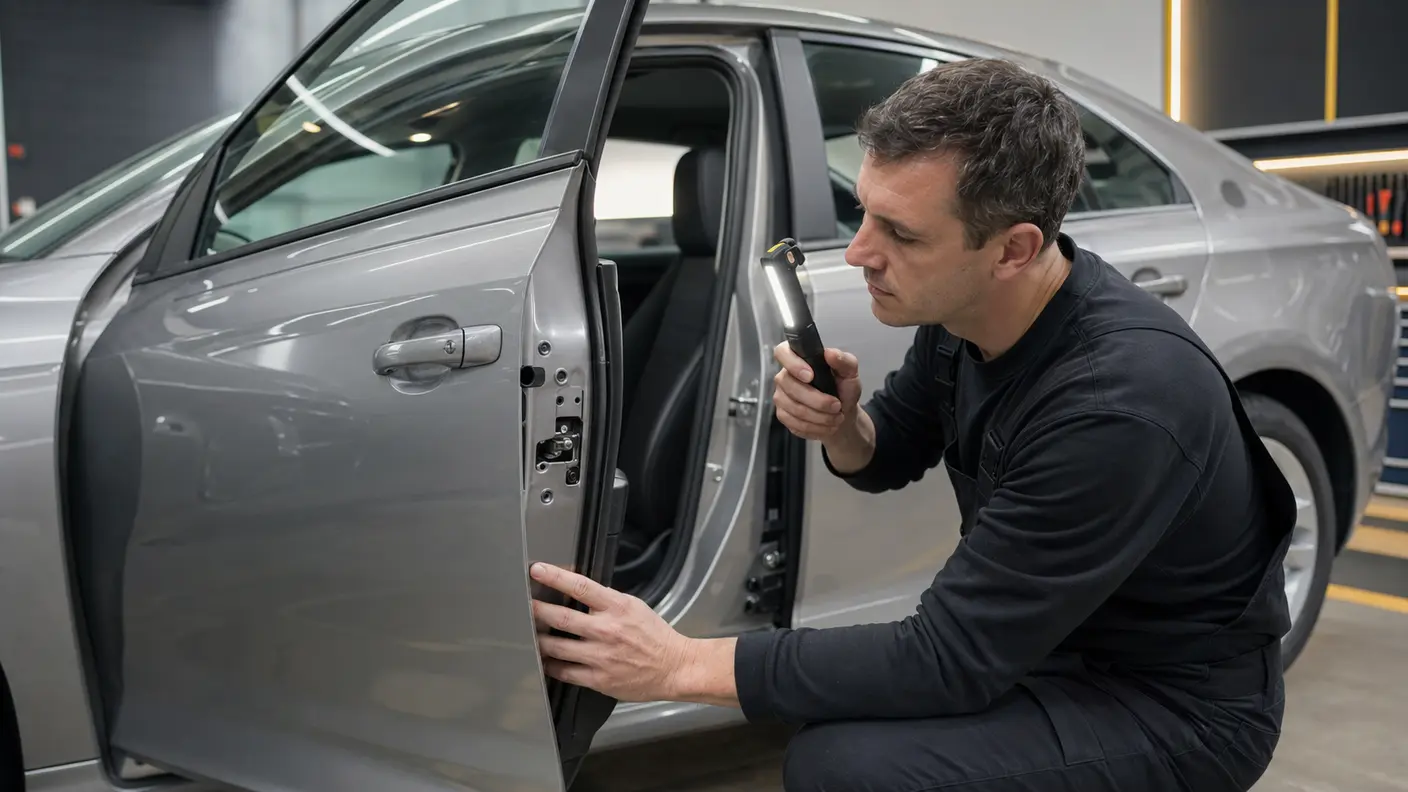
Inspect the working edge
The open-door view exposes the hem, latch area, seals and body opening that cannot be assessed from a closed-door photograph alone.
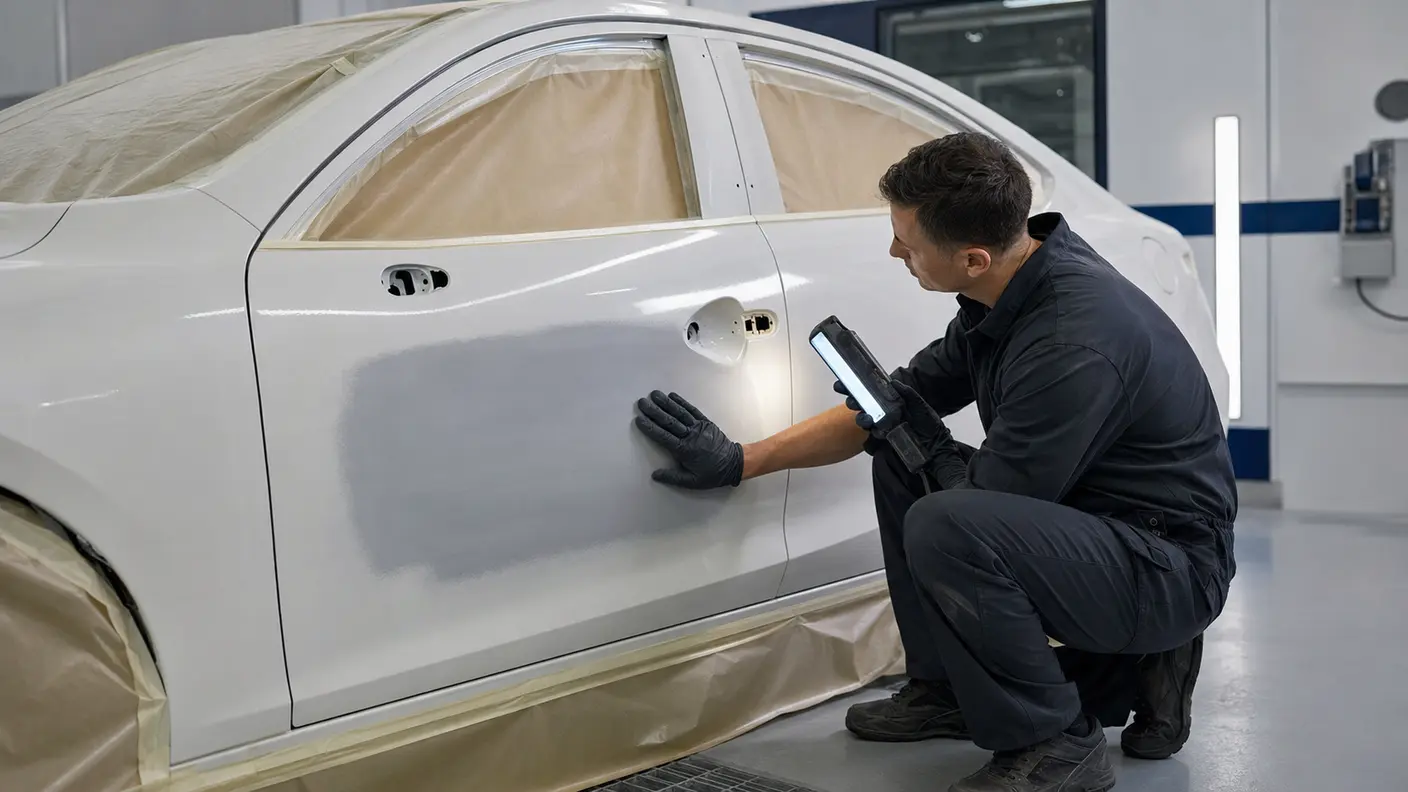
Prepare the complete finish
Surface preparation, masking, edge cleanliness and controlled refinishing matter after the metal shape has been restored.
On touch devices, swipe sideways to view each stage.
Gaps, frame and seals
A door must meet the body opening in several places
Door fit is not judged from one gap. The front edge, rear edge, top frame, sill relationship and flushness with adjacent panels are read together. One even-looking seam can coexist with a raised corner or a frame that presses its seal differently.
Hinges establish the door position, while the latch and striker relationship completes closing. Rubber stops, weather seals, check mechanisms and previous adjustments can influence feel. Moving one item without understanding the others can exchange one symptom for another.
Window frames can change in a side impact or after force at the top of an open door. Clues include new wind noise, water entry, altered glass travel, a seal that no longer contacts evenly or trim that sits differently. Those clues deserve inspection, but they do not prove one failed component by themselves.
Glass, regulator, lock, handle and mirror functions may be checked only within the agreed exterior body repair scope and according to what was disturbed. This is not represented as full electrical, restraint or security-system validation. Any additional specialist requirement should be documented separately.
- Compare leading and trailing vertical gaps.
- Check flushness with fender and quarter panel.
- Review lower relationship with the sill.
- Observe frame and seal contact where accessible.
- Record closing effort and release behaviour.
- Avoid adjustment that masks unresolved deformation.
Repair or replace
The sensible route depends on more than dent size
Repairability considers the whole door assembly, the expected finish and the work needed to return a reasonable fit. The least invasive route is useful only when it is technically appropriate.
Paintless dent repair
PDR may preserve the existing finish when paint is intact, deformation is suitable and controlled access is possible. Door braces, glass, wiring, seals and trim can limit access. A sharp crease, stretched metal, cracked paint or repaired coating may change the decision.
- Best assessed under a reflection light.
- No universal diameter guarantees suitability.
- Edge and body-line work needs closer judgement.
Conventional repair and paint
When the coating is damaged or the shape needs fuller metalwork, the route can include controlled shaping, surface preparation, primer where required, colour application and clear coat. The repair should restore contour before the finish is judged.
- Useful for many creases, scrapes and coating breaks.
- Edges and previous filler affect scope.
- Colour evaluation may influence blending.
Door replacement
Replacement may be considered when damage is too severe, the shell or edge is unsuitable, repair access is unreasonable, corrosion is extensive or the repair would not provide a sensible outcome. Exact part identity and construction must be confirmed.
- New, used and supplied parts need condition checks.
- Trial fit comes before final refinishing where practical.
- Transfer parts and additional procedures vary by vehicle.
If side impact extends into adjacent body areas, our accident repair service can document the wider visible damage and develop a staged scope. This does not turn an uncertain observation into a confirmed structural diagnosis.
Cost planning
Indicative car door repair costs in Dubai
These bands are useful starting points for suitable damage, not a menu that can replace inspection. Door construction, access, edge involvement, paint system, previous repair, opening fit and parts can change both method and price.
Current planning bands shown in AED. Final quotation follows vehicle inspection and current parts or material checks.
For a limited shallow dent with intact paint and workable access. Edge, brace and previous-paint factors may change suitability.
For a larger or more involved dent that remains appropriate for paintless repair after inspection.
For repair requiring shaping, surface preparation and refinishing. Deep creases, edge damage and wider impact can exceed this range.
A starting point for panel refinishing. Colour, preparation, old coating, finish type and blending need affect the quote.
Exact part, shell or complete-door option, availability, condition, transfer parts, trial fit and paint are checked before pricing.
Important: prices are indicative and can change with the vehicle, door material and construction, dent depth, body-line or edge involvement, paint condition, access, hidden findings, adjacent damage, parts, insurer approval and current market supply. A photograph can support triage but cannot lock the final price.
The quote should name the chosen route and show what is included. PDR, conventional repair and replacement should not be priced interchangeably.
Shape before colour
Door painting should preserve contour, edges and colour flow
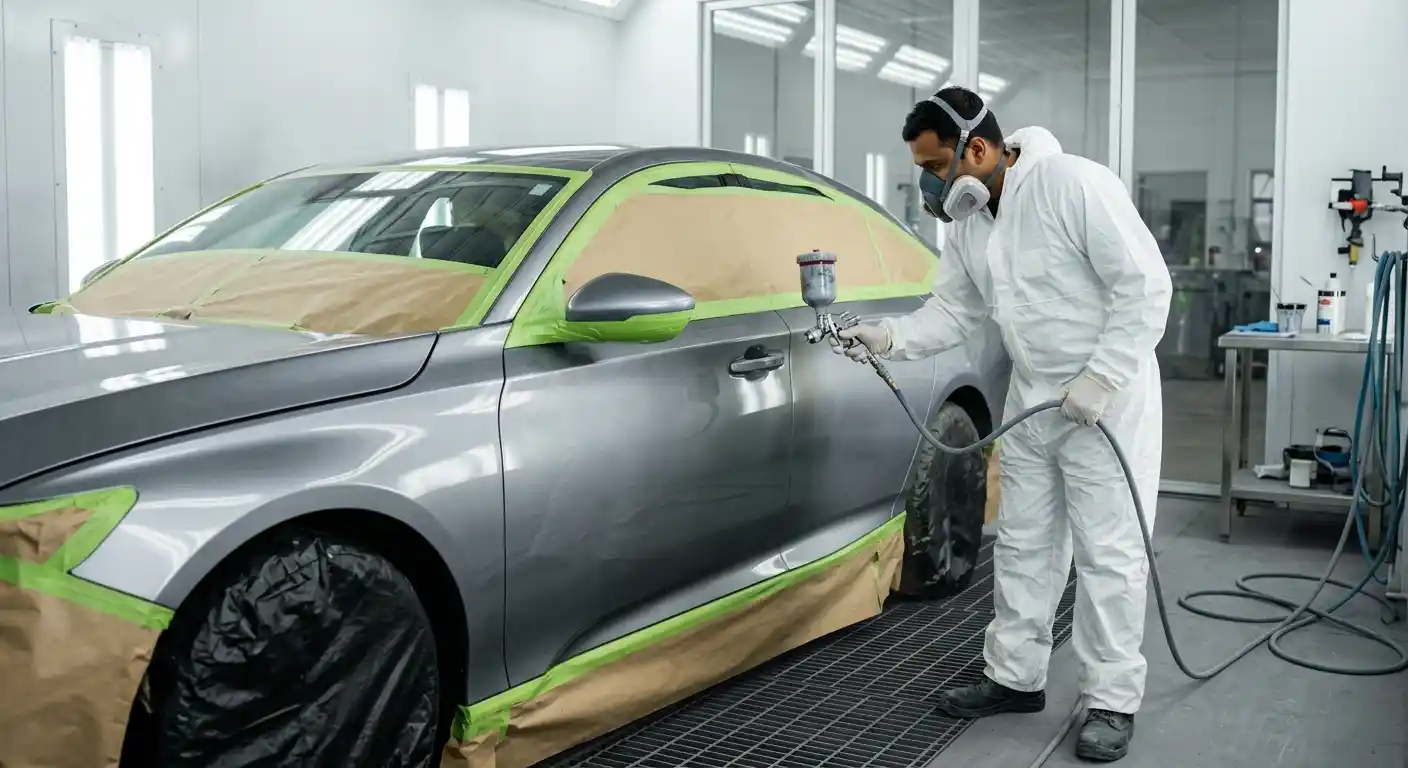
A car door catches long reflections. Even a small wave in a broad surface can remain visible after glossy paint, especially under Dubai sun, parking lights and building reflections. Metal shape and surface preparation must therefore be assessed before colour becomes the focus.
The paint code is a starting reference. Age, exposure, previous refinishing, substrate and application can change how the existing finish appears. Metallic and pearl colours also change with viewing angle and light direction. Colour evaluation, spray-out comparison when used, panel orientation and application control contribute to the match.
Blending into a nearby panel is not automatically necessary and should not be ruled out automatically. The decision depends on colour, panel relationship, repair location and the finish expected. Our car painting service considers colour, metallic orientation, texture, gloss, masking and clean edges as one finish system.
Handles, mouldings, seals and trim can affect masking and edge quality. Their removal or protection depends on the part, condition and planned refinish area. A clean result should not leave obvious hard paint lines, avoidable overspray, loose trim or trapped repair residue.
Final paint inspection uses controlled workshop light and useful natural light. The door is viewed closed so its colour and texture can be compared with neighbouring panels. It is also opened where appropriate to check repaired edges, seals and accessible finish transitions.
From intake to handover
A staged door repair process keeps decisions visible
The exact operations change with the vehicle and damage, but each stage should answer a defined question before the next stage begins.
Record
Photograph the full side, door surface, gaps, edge and related damage. Note opening behaviour, previous paint and the incident account.
Inspect
View the skin under reflection light. Check edges, accessible shell, hinges, latch area, frame, seals and nearby body clues.
Define
Choose PDR, conventional repair, refinishing or replacement. Separate confirmed work from items needing access, parts checks or approval.
Protect
Plan trim, glass, handle, seal and adjacent-panel protection. Record items removed, transferred or separately referred.
Restore
Repair the shape or trial fit the identified replacement. Do not use filler or paint as a substitute for unresolved geometry.
Refinish
Prepare the actual substrate, apply the selected paint system, cure appropriately and finish the surface without neglecting edges.
Reassemble
Refit the agreed trim and attachments. Review gaps, closing fit and accessible functions disturbed by the repair.
Handover
Inspect shape and finish, document repaired or replaced items, explain aftercare and identify any separate recommendation.
Insurance, parts and timing
A clear file separates workshop time from waiting time
For insurance-related door damage, the useful repair file usually starts with the incident documents available to the owner, wide and close photographs, vehicle identification and an estimate that distinguishes confirmed work from conditional findings. The insurer and policy determine coverage, excess, liability, reports and the approved route. A body shop estimate does not decide those matters.
Hidden findings may appear after authorised trim removal or when a damaged door is opened for closer inspection. If the finding is relevant to the incident, it should be photographed and connected to the affected area. Where approval is required, the additional scope can then be submitted rather than silently added to the original estimate.
Door parts can include a skin, shell, complete assembly, hinges, latch, handles, glass, regulator, seals, mouldings and trim. What is supplied under one part number varies. A used door may save lead time in some cases but still needs identity, condition, corrosion, previous-repair and fit checks. A new shell may arrive without many transfer parts. Current availability should be confirmed before a delivery promise is made.
Timing also changes with the repair route. Suitable PDR can avoid paint stages. Conventional work adds disassembly, shaping, preparation, refinishing, curing and reassembly. Replacement adds sourcing and trial fit. Insurance review and parts waiting can extend calendar time even when active workshop time is controlled.
For a local dent with intact paint, our dent removal service provides more detail on PDR suitability and conventional alternatives. The vehicle still needs inspection because door reinforcement and access vary.

Handover
The final check returns to surface, gaps and operation
A glossy panel is not enough. Handover starts by comparing the completed door with the intake record and agreed scope. The skin is viewed along long reflections, the design lines are followed and the colour relationship with adjacent panels is checked under more than one useful light.
The front, rear, upper and lower relationships are reviewed with the door closed. It is then opened and closed where appropriate to observe effort, contact, release and accessible items disturbed by the work. This check should be careful and repeatable rather than a series of hard slams.
Handles, mouldings, seals, trim and glass movement are reviewed where they were included or disturbed. A body repair handover does not validate every electronic, restraint or security system. Any separate testing or referral should remain clearly recorded.
The customer should know which area was repaired, which panels were painted, what was replaced, what parts were transferred and what aftercare applies. Insurance documents, parts notes and conditional findings should be explained in plain language.
- Compare contour and body lines with intake findings.
- Review gaps and flushness around the door.
- Observe opening, closing and release behaviour.
- Check repaired edges and accessible seal contact.
- Inspect colour, texture, gloss and masking lines.
- Confirm agreed trim and handles are secure.
- Check glass movement if disturbed by the work.
- Remove repair residue and inspect natural-light appearance.
- Explain paint aftercare and separate recommendations.
Common questions
Car door repair FAQs
Can a dented car door be repaired without painting?
Sometimes. Paintless dent repair may suit a shallow or moderate dent when the paint is intact, the metal is not excessively stretched and controlled access is available. Sharp creases, cracked paint, edge damage, previous refinishing or difficult reinforcement can make conventional repair and painting more appropriate.
How much does car door dent repair cost in Dubai?
Indicative bands are AED 150 to AED 350 for a suitable small PDR dent, AED 350 to AED 700 for a suitable medium PDR dent, and AED 700 to AED 1,200 or more for conventional dent and paint repair. Inspection is required because access, edges, paint, construction and previous work affect the route.
How much does car door painting cost in Dubai?
Panel painting starts from AED 450 as an indicative planning point. Preparation, colour, finish type, existing coating, repair beneath the paint, trim removal and blending need affect the final quotation.
Can a creased door body line use PDR?
It can be possible, but a body line increases difficulty because the designed contour must be restored accurately. Suitability depends on crease sharpness, paint condition, material, access, reinforcement and metal stretch. The decision follows inspection rather than location alone.
Should a damaged car door be repaired or replaced?
The decision considers outer-skin shape, shell and edge condition, material, corrosion, access, closing fit, previous repair, parts availability and the quality expected. Replacement may be sensible for severe shell or edge damage, but many local dents and scrapes remain repair candidates.
Why is my car door difficult to close after an impact?
Possible contributors include door distortion, hinge position, latch and striker relationship, changed seals, shell damage or movement in the surrounding opening. Difficulty closing is an observation, not proof of one failed part, so adjustment should follow a wider inspection.
Can you quote car door repair from photos?
Photos help with triage when they show the full side, angled reflections, the damage, gaps and door edge. They cannot reliably confirm metal stretch, inner construction, previous repair, all access limits or surrounding-body involvement. A final method and quote require physical inspection.
Can an aluminium car door be repaired?
Some aluminium door damage can be repaired, but the material is not assumed and the method should not be copied from conventional steel work. Construction, stretch, edge damage, access, contamination control and relevant repair information influence the decision.
Will the door handle, glass and trim need removal?
It depends on damage location, repair access, refinishing area and vehicle construction. Some work can protect fitted parts, while other repairs need selected removal for access or clean paint edges. The estimate should identify the planned approach and any conditional items.
Can car door damage be included in an insurance repair?
We can document visible damage and prepare a repair estimate. Coverage, excess, liability, required reports, approval and settlement depend on the insurer and policy. Newly exposed impact-related findings may require supplementary photographs and approval.
How long does car door repair take?
Timing depends on PDR suitability, conventional shaping, paint preparation, curing, trim work, alignment, replacement-part availability, trial fitting, hidden findings and insurance approval. A useful schedule separates active workshop time from parts or decision waiting time.
What should be checked when the repaired door is handed over?
Review surface contour, body lines, colour, texture, surrounding gaps, flushness, opening and closing action, repaired edges, agreed trim and accessible functions disturbed by the work. The handover should also identify painted and replaced items, aftercare and any separate recommendation.
Start with the complete door
Arrange a car door repair assessment in Dubai
Send clear photographs and tell us whether the concern followed a parking dent, scrape, opened-door edge impact or side collision. We will inspect the surface and working relationships, then explain the proposed route and quotation before work begins.