
MODEL Y REAR OPENING, ROOF, SILL AND COLLISION REPAIR
Tesla Model Y Body Repair Dubai
Tesla Model Y body repair in Dubai often looks simple from standing height and becomes more complex when the damage is followed around the vehicle. A rear-corner strike can connect the bumper, lamp, quarter edge, liftgate opening and lower floor. A side impact can involve the door, rocker, wheel arch and battery-adjacent underside. A roof-edge or tailgate event can disturb glass, seals and camera relationships. The assessment follows those connections before paint is authorised.
Start at the opening nearest the impact
The Model Y is a crossover with a large rear liftgate and panoramic glazing. That makes openings useful diagnostic references. At the rear, we compare liftgate gaps at the roof, lamps, quarter panels and lower sill. At the side, we review front and rear door effort, glass and seal contact, rocker alignment and wheel-arch shape. At the front, bonnet, wing, lamp, bumper and wheel position are read together.
This opening-first approach avoids a common error: correcting one visible panel until its local gap looks acceptable while leaving the wider body relationship unresolved. We photograph the undamaged side, record latch effort and check whether a powered closure moves smoothly. A change in wind noise, water entry, cabin creak or tyre contact after the incident is included in the intake because it can point to damage outside the obvious mark.
Rear parking impact
Trace bumper distortion through retainers, lamp pockets, quarter edges, liftgate fit and parking-system mounts.
Side scrape or strike
Separate outer door and rocker-cover damage from hinge, latch, wheel-arch, sill or floor involvement.
Roof or upper-body contact
Inspect roof edge, panoramic glass perimeter, liftgate hinge area, seals and water-management paths.
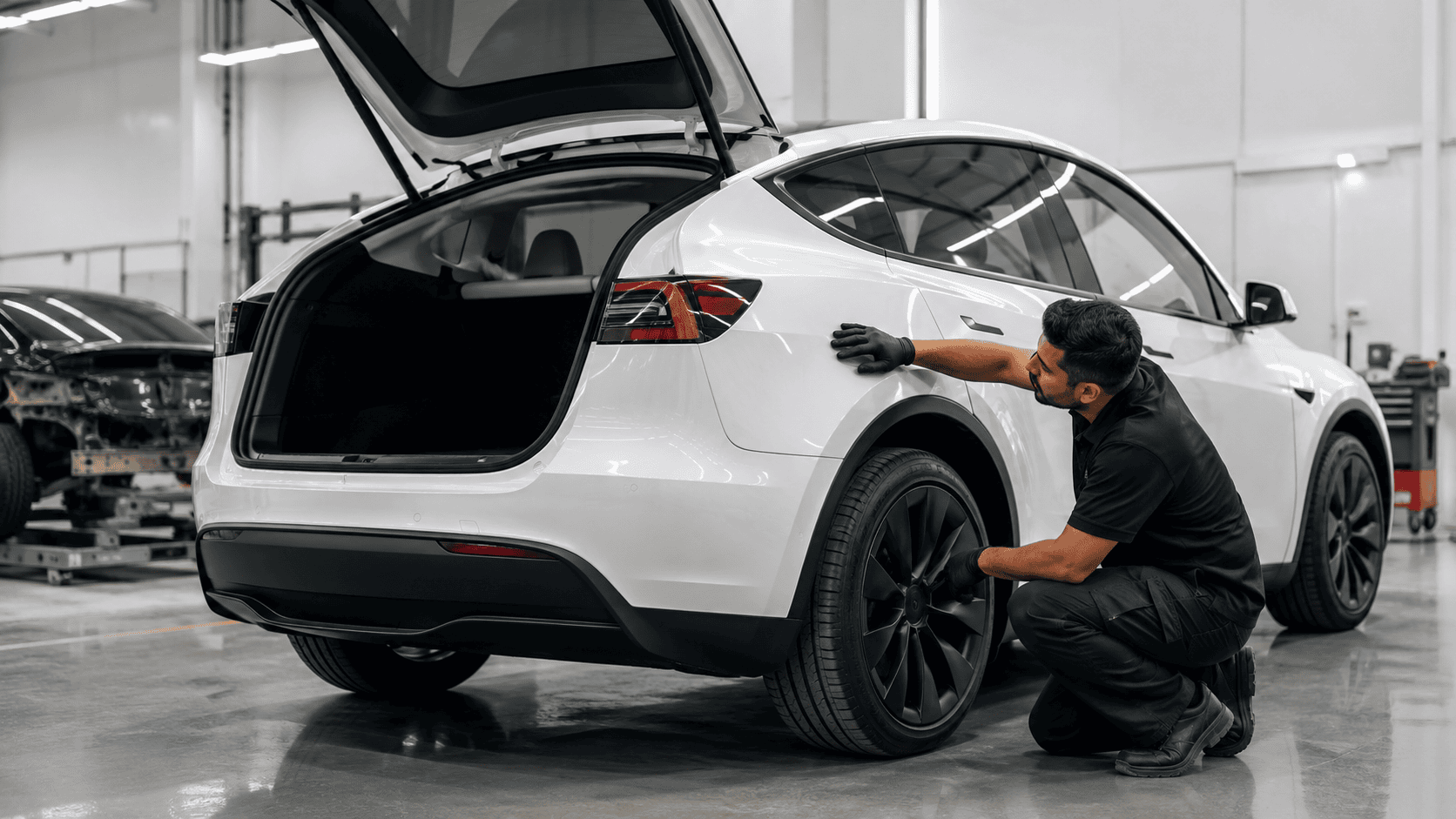
A bumper fascia can return toward its original shape after an impact while a retainer, bracket or absorber remains damaged. The outer surface is assessed for splits, stretched apertures, edge stability and refinish suitability. Behind it, the workshop checks attachment points, lamp supports and any camera or sensor mount in the affected zone. The estimate separates confirmed fascia work from access needed to inspect hidden hardware.
Where the quarter panel or rear opening is involved, measurements are taken across the complete opening. Lamp position, seal land, latch relationship, lower edge and adjacent floor are reviewed. A local quarter dent may be repairable, but a fold through the opening flange or a moved attachment requires a different plan. The liftgate is never forced to prove that it closes.
Rear-opening evidence to record
- Gap width at the roof, lamps, quarter panels and lower corners.
- Liftgate closing effort, powered movement and latch position.
- Lamp seating, bumper height and quarter-panel edge shape.
- Seal compression, drains, grommets and signs of water entry.
- Lower floor, tow or recovery points and underbody contact marks.
- Camera view, parking alerts and any new warning message.

The correct body procedure depends on year and construction
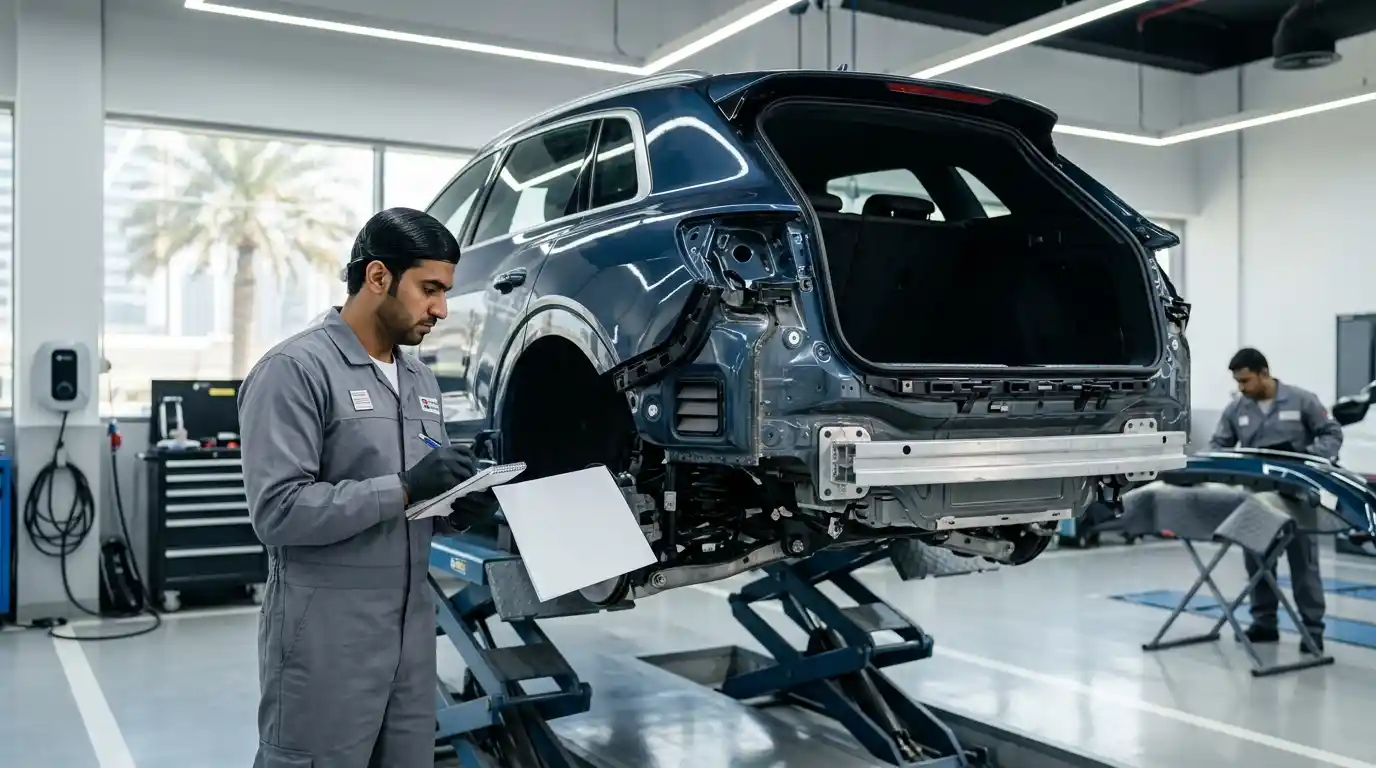
Tesla publishes collision procedures by model and generation. The Model Y manual includes material maps, dimensional information, joining guidance and part-specific repairability. The technician must use the current procedure for the vehicle rather than borrow a Model 3 method because the cars appear related. The official 2020 to 2024 Model Y collision procedures show the level of identification required before structural work.
A vehicle can also contain production changes within a model run. Part numbers, casting configurations, attachments and approved operations are verified by VIN and current information. Outer-panel correction is retained when it can restore shape and finish predictably within the permitted boundary. Damage at a restricted material, casting, joining flange or critical attachment is not heated, pulled or sectioned by habit.
Sill and underbody contact needs a safe-lift decision
The Model Y’s battery pack sits in the lower vehicle area. A rocker-cover scrape, crushed sill edge, impact near a lift point and a broad floor strike are different findings. We document the contact height, length, depth and direction, then look for deformation, displaced seams, warnings, leakage, heat, odour or changed driving behaviour. A superficial mark is not automatically battery damage, but it must be classified before coating or paint hides it.
If lower-body evidence creates a high-voltage or structural concern, normal lifting and dismantling pause. Safe storage, movement, isolation and specialist assessment are defined first. The quotation identifies whether the job can proceed as conventional body repair, requires a separate technical assessment or should be escalated. That boundary protects the customer from paying for cosmetic work that may later need removal.
Door and rocker repairs must preserve a clean side profile
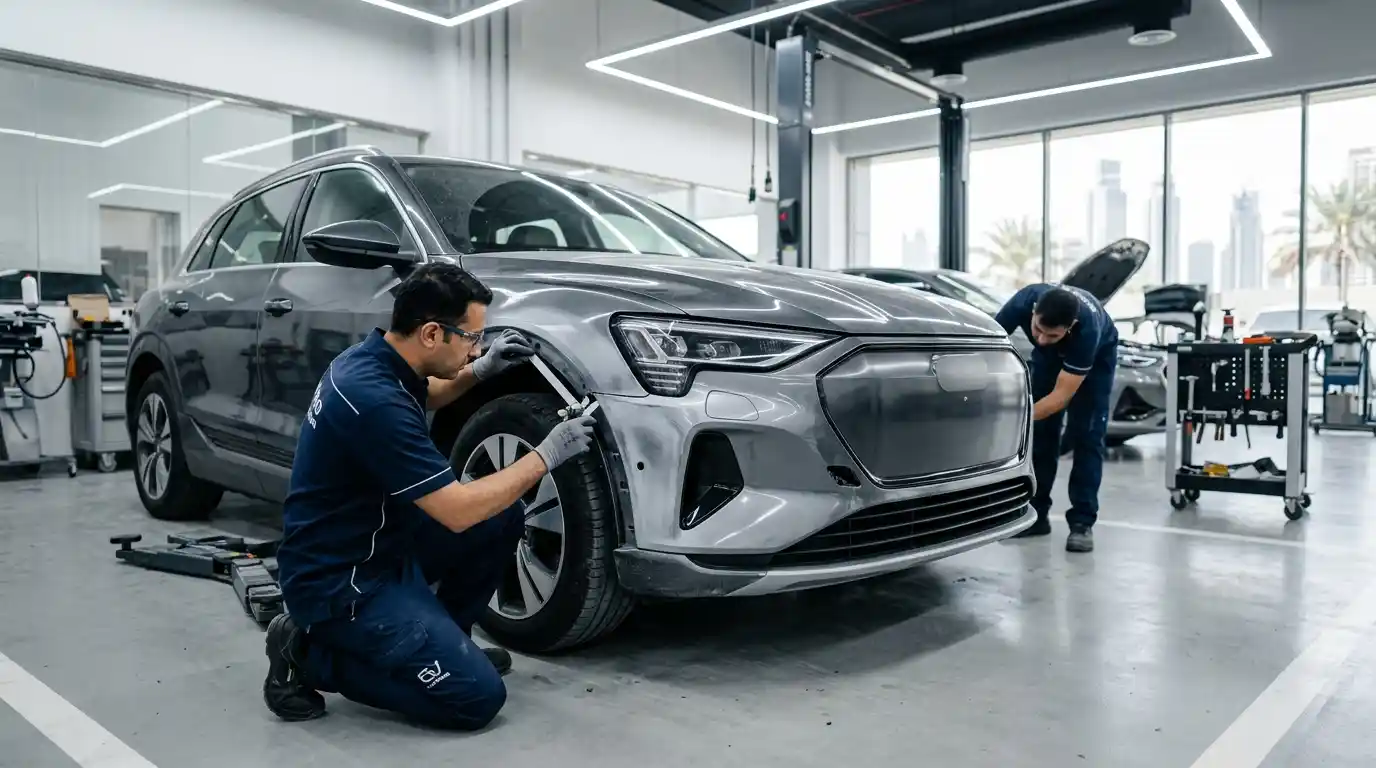
A Model Y side impact is inspected from the mirror through the quarter panel, not only at the deepest dent. We compare door gaps, handle operation, hinge and latch behaviour, rocker line, wheel-arch shape and the reflection across adjacent panels. A shopping-trolley dent in the centre of a door may be a local repair; a crease running into the hem or sill can involve a wider area.
Paintless dent repair is considered where paint is intact, access is safe and the material and reinforcement allow it. Conventional panel repair may be preferable for broken paint or controlled reshaping. Door-shell replacement, sill work or quarter-panel replacement is evaluated with all downstream operations: trim, glass, electronics, joining, corrosion protection, sealing, paint and reassembly.
Panoramic glass and roof edges require perimeter checks
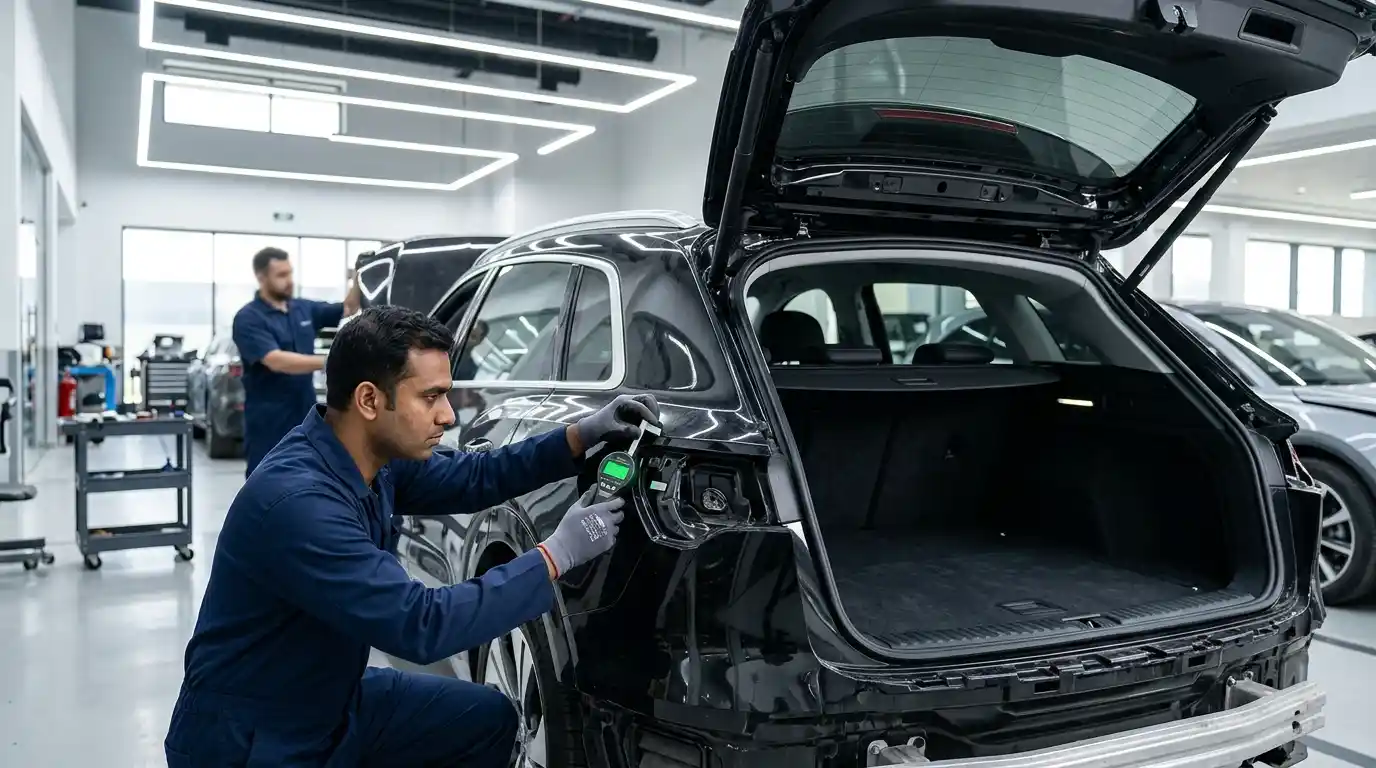
Roof or upper-side damage can change the relationship between metal, fixed glass, seals and liftgate hinges. Before removing glass, the workshop inspects the perimeter, visible chips or cracks, roof ditch, adjacent openings and any leak or wind-noise complaint. The repair plan identifies whether glass removal is needed for safe access or refinishing, and records the correct adhesive and cure process.
After repair, the perimeter is visually checked before water testing. Water-management paths stay open, seals lie continuously and trim does not press unevenly against the glass. A leak test is targeted to the repaired zone and followed by interior inspection. Cosmetic sealer applied over uncertain geometry is not accepted as a lasting closure method.
Cameras and parking functions depend on physical foundation
The Model Y can use several camera views and driver-assistance functions. Body work near bumpers, wings, mirrors, glass or closures can disturb mounting relationships. The panel, bracket, lamp or glass foundation is corrected first. Diagnostics and functional tests follow, with calibration or aiming only where the fitted equipment and current repair information require it.
The handover file states what was disconnected or moved, what physical checks were performed, the diagnostic result and any calibration record. If the workshop cannot verify a required procedure or capability for the actual job, the system closure is escalated. A customer should never receive a car with an unexplained warning simply because the painted surface looks finished.
Paint matching across the Model Y’s broad panels
The high shoulder and broad doors can show colour mismatch from several viewing heights. We identify the finish, check previous paint and sun exposure, then create a controlled spray-out. Metallic or pearl orientation is compared next to the vehicle. Blend boundaries are chosen only after the spray-out, not assumed when the estimate is first written.
Handles, cameras, lamps, glass, textured lower trim, seals and charging components are protected from overspray and sanding residue. The cured finish is reviewed for hue, flop, clear-coat texture, dust, hard edges and blend visibility.
Indicative Model Y body repair costs in Dubai
Costs below are inspection-dependent planning figures, not a Tesla price list. A small dent or scratch may fall around AED 299 to 1,000. Bumper-area work is commonly planned at AED 500 to 2,500. A door or wing repair may fall around AED 1,000 to 3,000. A combined corner involving bumper, lamp, brackets, adjacent panel and diagnostics can reach AED 2,000 to 6,000+.
Sill, floor, roof-glass, structural, suspension or high-voltage findings require a specific estimate. Parts availability, generation, colour, hidden retainers, diagnostics and calibration also affect price and time. These ranges follow the site’s published accident-repair cost guide. A quotation should list confirmed work, provisional access and supplement approval separately.
A Model Y repair timeline is built in gates
- Gate 1, intake: record identity, impact story, warnings, openings, wheels and lower-body evidence.
- Gate 2, safe access: confirm movement, charging, lifting, storage and dismantling controls.
- Gate 3, scope: remove only authorised parts needed to see hidden attachments or structure.
- Gate 4, methods: select current procedures, parts, fasteners, adhesives and corrosion protection.
- Gate 5, body foundation: restore openings, panel geometry and mounting planes.
- Gate 6, finish: verify spray-out, prepare, refinish, cure and inspect colour and texture.
- Gate 7, systems: complete diagnostics, functions and required calibration or escalation.
- Gate 8, release: review body, finish, water management, records and warranty.
Waiting time is separated from active repair time. Approval, specialist review, parts supply and paint curing are shown individually so a promised collection date does not encourage work to cross an unresolved safety gate. If a supplement changes the scope, the customer receives evidence and a revised forecast before work continues.
What to inspect when collecting the Model Y

Stand behind the vehicle and compare liftgate, lamp and bumper relationships before walking along both sides. View repaired panels in reflection from low and high angles. Open the liftgate and every disturbed door, cycle glass and handles, and inspect the panoramic-glass perimeter where relevant. Look at the lower edge without crawling beneath an unsupported car.
Test lamps, camera views, parking functions and warnings affected by the repair. Request records for alignment, calibration, high-voltage assessment or specialist escalation included in the invoice. Parts, paint, supplements and warranty terms should be understandable. The car is ready when connected body and system checks pass, not when one isolated panel looks acceptable.
Cabin evidence can reveal a stronger side impact
A family crossover may arrive with child seats, luggage or interior trim covering useful evidence. The workshop records the impact-side seat-belt state, visible restraint warnings, door-aperture trim, floor covering and any new rattle without dismantling safety components casually. A deployed restraint, damaged anchorage area or fault message moves the job beyond an outer-door estimate and into a documented restraint and structure assessment.
Interior parts removed for access are catalogued and protected. Wiring, clips, moisture barriers and acoustic materials return to their intended positions rather than being hidden behind trim. At handover, the cabin is checked for warning messages, loose panels, wind noise and water entry. The repair file identifies any restraint-related component or diagnostic operation instead of burying it inside general labour.
Tyre noise and wheel-arch contact belong in the intake
After a side or rear-corner strike, new tyre noise, rubbing or vibration can point to a moved liner, wheel, suspension part or body attachment. We inspect the arch with the steering and ride condition safely controlled, then separate a loose liner from mechanical displacement. Replacing clips is appropriate only after the mounting holes and surrounding geometry are confirmed.
Our Tesla body repair in Dubai hub covers shared collision-planning and repair-record questions. This Model Y page keeps the practical focus on rear-corner, liftgate, broad-panel, sill, roof-glass and wheel-arch evidence that can change the correct repair route.
Send a Model Y evidence set that answers the first questions
Include the whole vehicle from the damaged side, the nearest opening, panel reflection, wheels, lower-body contact and dashboard state. We will classify the route before promising a cosmetic repair.