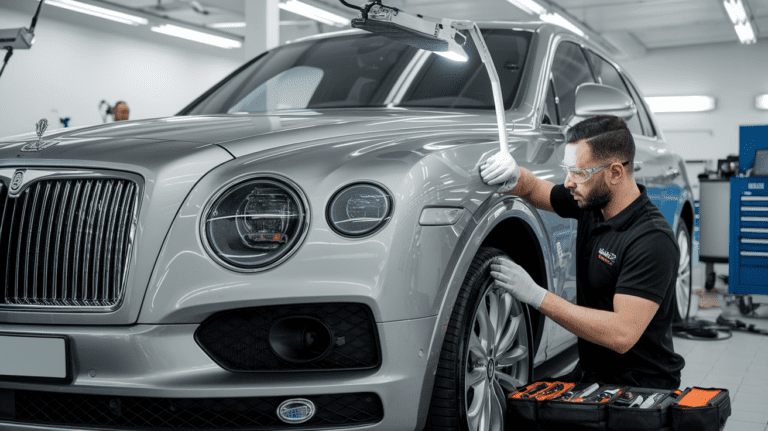
Have you ever stared at a dent on your car and thought, How on earth do they fix that without repainting it? It almost feels like magic, but it isn’t. The trick lies in PDR rods, a set of oddly shaped tools that quietly undo the damage from behind the panel. In Dubai, where door dings and parking lot bumps are all too common, paintless dent repair has become the go-to solution. Let’s take you behind the scenes of how PDR rods work, and why they might just save your car’s original shine.
What Are PDR Rods?
You might picture a rod as just a stick of metal, but PDR rods? They’re more like surgical instruments for your car’s skin. When we talk about paintless dent repair, these rods are the backbone of the method. They’re long, curved, sometimes hooked, and sometimes razor-thin, each one built to slide behind a dented panel and gently push the metal back into place. No filler, no repainting, no shortcuts.
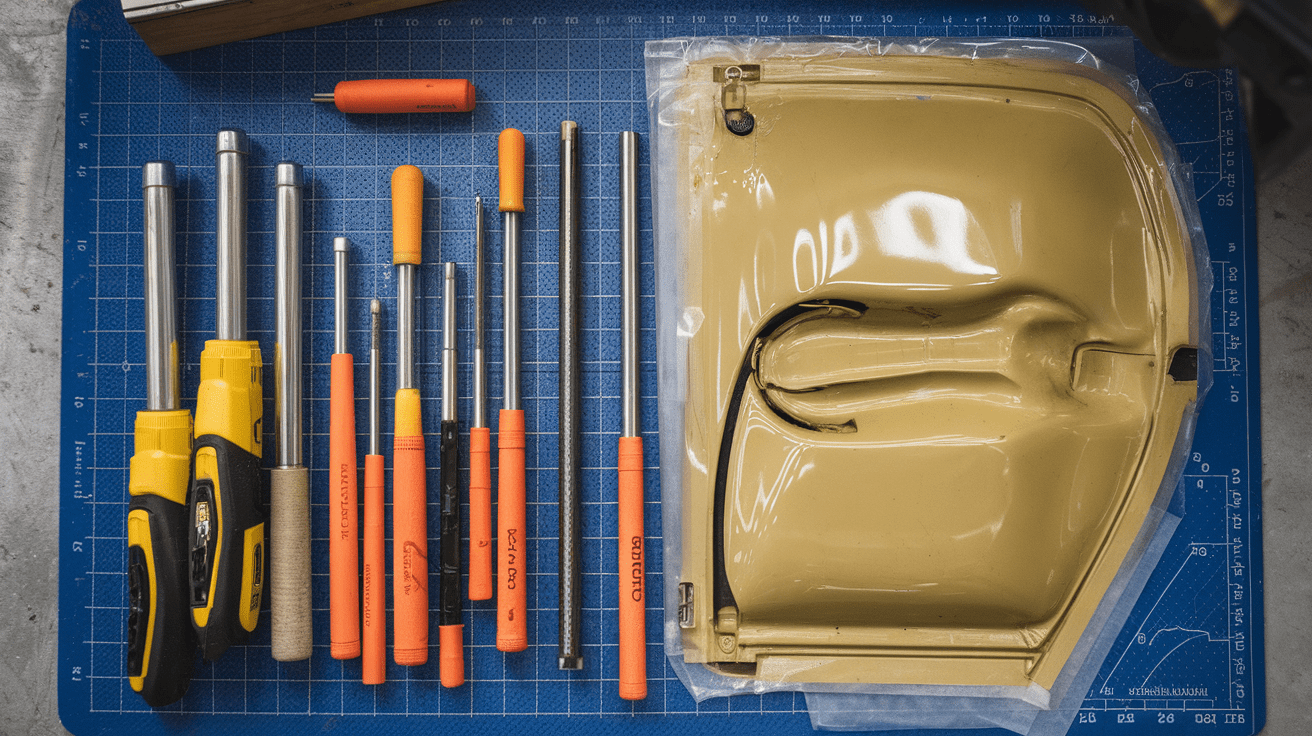
Different dents need different shapes. That’s why a proper PDR setup includes dozens of rods:
- Straight rods: used for flatter panels with easy access
- Curved rods: designed to reach under tricky spots like fenders
- Double-bend rods: essential when working around bracing or tight inner curves
- Soft tip vs. sharp tip: chosen based on metal thickness and dent sharpness
These aren’t just random tools, they’re precision metal shaping tools. Each rod gives the technician controlled leverage from behind the panel without ever disturbing the paint on the outside.
Types of Dents Perfect for PDR Rods
Not every dent deserves the drama of sanding and repainting. Some can be reversed using just a steady hand and a few PDR rods. If the surface paint is untouched, there’s a good chance it qualifies for this smarter fix. Dents that are ideal for paintless dent repair using PDR rods:
- Parking lot door dings
These are the most common, someone opens a door too wide and bam, you’ve got a small inward dent. Easy fix with a PDR rod from behind the panel. Most Dubai drivers see these happen in tight mall parking lots all the time. - Hail damage on roof or hood
Dubai doesn’t get hail often, but when it does, it leaves a mess. Luckily, most hail dents are round, shallow, and perfect candidates for paintless dent repair. Multiple small dents like these can be fixed quickly using flexible PDR rods. - Soft creases on side panels
These happen when something long presses against the car, like a pole or a sharp bumper edge. If the paint isn’t cracked, a PDR rod can bring it right back. The shape may look worse than it is, but the metal memory helps it bounce back. - Dents from runaway shopping carts
A slow-moving cart can leave a harmless-looking dent. But if the metal isn’t stretched, a thin rod can sneak behind and reshape it. These are quick wins when caught early, no repainting required. - Low-speed bumper impressions (metal panels only)
When something nudges your bumper but doesn’t crumple it, just creates a low depression, PDR rods can usually lift it back gently. Plastic bumpers are trickier, but if it’s metal and soft, we’re good to go. - Debris drops (like nuts, small tools)
When something falls on your car from above, it leaves a circular indent. These shallow dents respond well to light pushing techniques. We’ve even fixed toolbox drops during maintenance, without repainting the hood.
The key thing to remember? No cracked paint. No sharp folds. No deep stretches. If it meets those three rules, PDR rods can likely fix it. Trying paintless dent repair before considering repainting is always the smarter first move. For door dings, hail damage, or parking lot bumps, our paintless dent repair service restores panels without sanding or repainting.
How We Reach the Dent from Behind Without Damaging Anything
Getting to the backside of a dent sounds simple, until you try it. For paintless dent repair to work, the real challenge is not pushing the dent… it is getting behind it without harming anything else. That’s where access makes or breaks the job, and it is where most general garages cut corners. Here’s how our technicians safely access dents using PDR rods without touching your car’s paint:
- We start by identifying the cleanest entry point
Before grabbing a tool, we study the dent’s location, depth, and panel type. The goal? Find a hidden pathway that gets a PDR rod in, without removing or cutting anything unnecessarily. - We remove trim or liners, not entire parts
In most cases, we carefully unclip interior trims, plastic covers, or wheel liners. These soft access points allow us to sneak a rod in while keeping the body untouched. - For doors, we use the window slot technique
One of the cleanest tricks in the book. A thin rod slides in between the window and weather stripping. No need to remove the door, just smart access and controlled leverage. - Roof or bonnet dents? We go in through lights or linings
We remove dome lights or interior roof panels to access hail damage or drops. For bonnets, we use factory access holes or remove the insulation clips beneath. If the damage is not suitable for PDR, our Car Bonnet Repair Dubai page explains conventional repair, paint, closure alignment and replacement considerations. - Trunk dents are accessed through tail light gaps or inner linings
We unbolt rear lights and use pre-made openings to slide rods in. Most trunk dents don’t need disassembly, they just need the right bend in the rod. - We protect your car’s finish while we work
All access points are padded or taped. Rods are guided with precision. No tool ever touches visible paint. That’s the beauty of true paintless dent repair.
Access is not just about reaching the dent, it’s about doing it without leaving a trace. That’s why trained hands and the right PDR rod shape matter more than you’d think.
What Happens During a PDR Rod Repair?
It might look like we just “poke out the dent.” That’s what most people think. But the truth? Paintless dent repair with PDR rods is a slow, controlled process that demands precision and patience. If you rush it, you can stretch the metal, or worse, ruin the paint. We don’t do shortcuts here. Here’s how we repair dents using PDR rods, step by step, the way professionals do it:
- Dent evaluation
First, we study the dent under direct lighting. Is it deep? Is the metal stretched? Is the paint intact? If it passes the checklist, we green-light the paintless dent repair process. - Choose the best access point
Based on where the dent is, we decide whether to go through the trim, window slot, wheel liner, or tail light gap. No random panel removal, only what’s needed for clean rod entry. - Light board setup
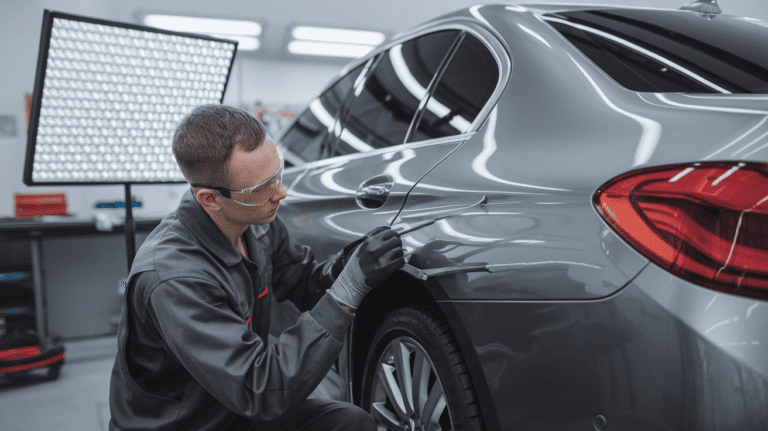
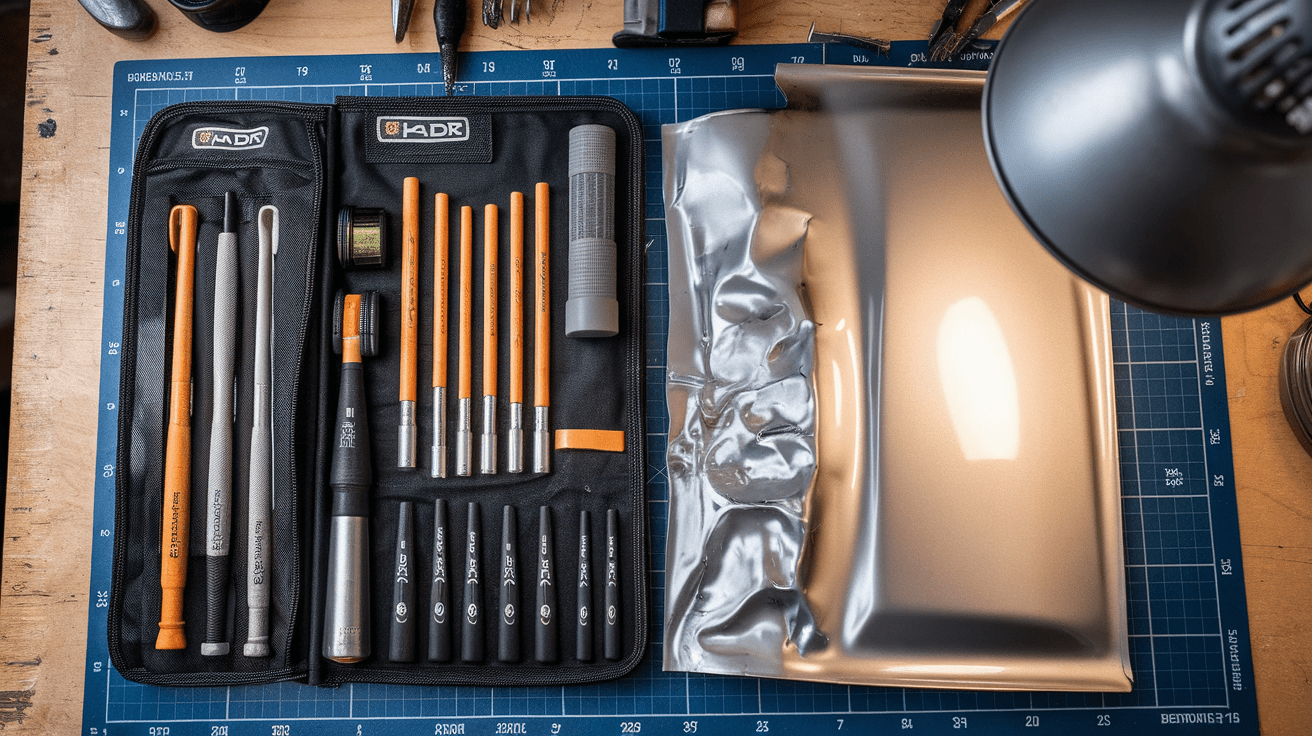
We place a special LED line board across the dent. It shows the panel’s surface reflection in real-time. This tells us exactly where to push and how much pressure to apply. - Rod selection based on dent size and location
Small round dent? We use a thin tip rod. A wide soft crease? We go with a curved or paddle-tip rod. Each PDR rod has a purpose, and choosing wrong can leave tool marks. - Slow and steady metal reshaping
Using the rod, we begin applying tiny pushes from behind, one after another. The metal slowly returns to its original shape, without any filler, primer, or paint. - Blending and final finish
Once the dent is mostly gone, we switch to tap-down tools to level out any micro highs. We compare reflections, feel for irregularities, and keep working until the surface is smooth again.
There are no buzzers or power tools here. No sanding, no grinding, no masking tape either. Just hands, light, and rods, working with the metal, not against it. And when it’s done right, even you won’t be able to tell where the dent used to be.
Want the same level of precision for your car? Visit our car body shop in Dubai and let our team bring back that factory-fresh finish.
PDR Rods vs Traditional Dent Repair | What’s the Real Difference?
Some drivers still think all dent repairs require sanding, filler, and fresh paint. But that is not always true. In fact, if the damage qualifies, PDR rods can offer a cleaner, faster, and much more cost-effective solution.
Let’s break it down clearly, side by side, so you can see the difference for yourself.
| Feature | Paintless Dent Repair (PDR Rods) | Traditional Dent Repair |
| Paintwork Involved | No repainting, original paint stays untouched | Requires sanding, filler, primer, and new paint |
| Time Required | 30 mins to a few hours | 1–3 days depending on panel size and paint cure |
| Cost in Dubai | AED 250–800 (depending on dent and location) | AED 800–2000+ (includes paint and labor) |
| Panel Removal | Minimal (trim or liner only) | Full removal of the affected panel in most cases |
| Material Used | Just metal shaping tools (PDR rods) | Filler, primer, paint, and clear coat |
| Paint Matching Issues | None (paint remains original) | Possible mismatch, especially in older or faded paint |
| Warranty Impact | Maintains original factory paint warranty | May void or alter factory paint warranty |
| Eco Impact | No paint or chemical use | Uses solvents and generates waste |
| Result if Done Right | Undetectable, dent-free, paint stays factory-fresh | Visually repaired, but new paint layer added |
Not every dent qualifies for paintless dent repair, but when it does, the difference is clear. No paint. No filler. Just precision and skill. In a city like Dubai, where paint quality matters and time is valuable, PDR is often the smarter fix.
Other Tools We Use Alongside PDR Rods
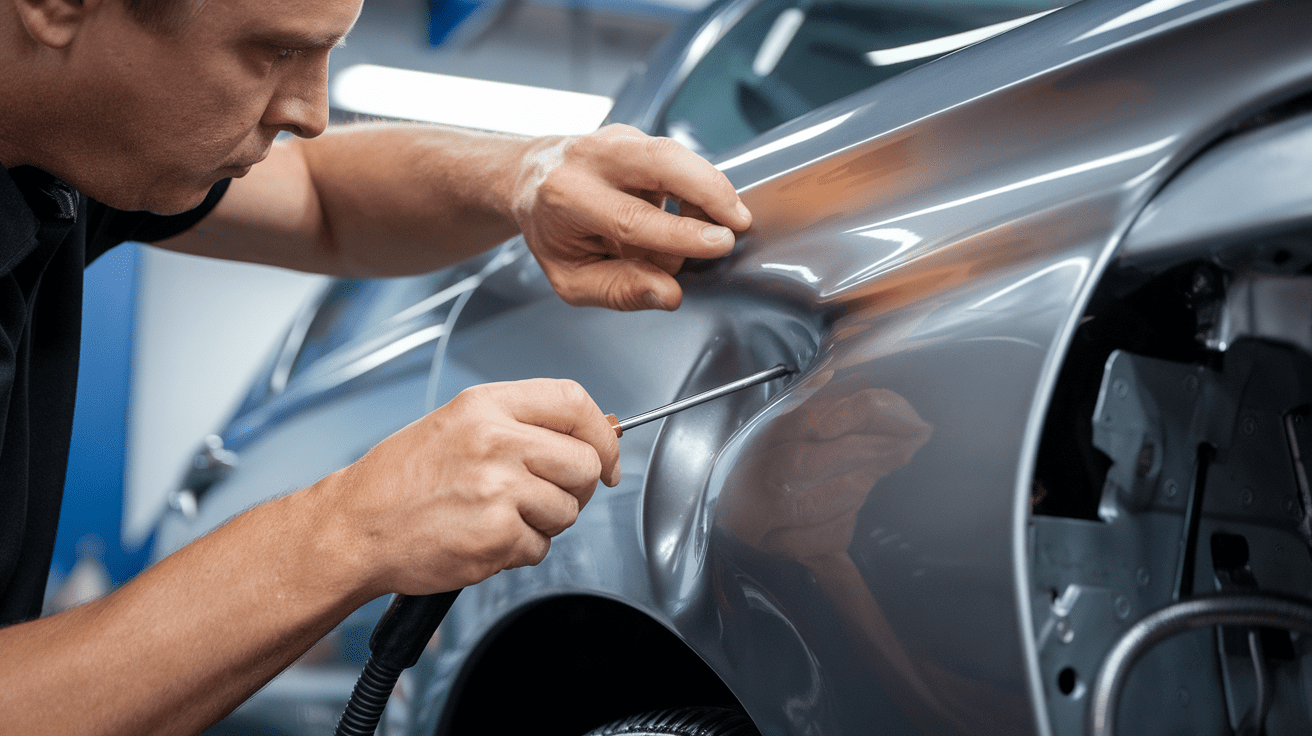
A PDR rod may be the hero of the job, but it doesn’t work alone. Dent repair without paint needs more than just a good push. Behind every perfect result, there’s a mix of smart lighting, tap-downs, and finish tools that help guide every move. This is what makes the difference between a job that’s “okay” and one that’s undetectable. Here are the other tools our Dubai dent repair team uses with PDR rods:
- LED Light Boards
These are our eyes during the repair. They cast lined reflections on the panel, making even the tiniest dent movement visible. Without them, pushing from behind would be like working blind. - Tap-Down Tools
After we’ve pushed the dent out with PDR rods, sometimes small high spots remain. These tools help knock those down with precision, flattening everything to the original surface level. - Glue Pulling System (for no-access zones)
Not every dent allows rod access. For those cases, we use glue tabs and slide hammers to pull the dent outward. It’s not rod-based, but it blends perfectly into the paintless dent repair process. - Knockdowns and Blending Hammers
Used in the final stage, these help us feather the metal and blend the repaired area into surrounding curves. Especially useful for soft creases or near edges. - Heat Guns (for curved or aluminum panels)
When working on high-tension metal like aluminum, we apply controlled heat to soften the panel. This prevents cracks or overstretching while using PDR rods. - Soft Tip Covers & Protective Sleeves
To avoid tool marks, we often cover our rod tips with rubber or plastic ends. This protects delicate metal surfaces and ensures no scratch or “push” signs are left behind.
Each of these tools supports the art of paintless dent repair. But the real key? Knowing when and how to use them. In Dubai’s high-end car scene, technique matters more than tools, and we make sure both are in perfect sync. In cases where rod access isn’t possible, glue pullers and other tools step in. We’ve broken down the difference between glue pulling and hammer techniques in our best dent puller guide.
We’ve seen it a hundred times, a clean car, barely scratched, but with that one dent that ruins the look. And the owner’s first thought? “Is it going to need repainting?” The truth is, most of the time, no, it does not. Not if the dent qualifies and not if it ends up in the right hands. PDR rods let us work from the inside out. No sanding, no guessing paint codes, no messing with the factory finish. It’s slower than you’d think, push by push, millimeter by millimeter. But that’s the point. This kind of repair is not flashy. It’s quiet. Controlled. Focused. And when it’s done right? You forget the dent was ever there.