Collision frame repair is not one universal operation. Depending on the vehicle, material, damage location and published repair limits, the correct plan may involve controlled straightening, replacing a complete structural part, sectioning at an approved location, or replacing a bolt-on structural component. The decision should be made after inspection and measurement, not from exterior photographs alone.
Straighten, section or replace: the practical distinction
Straighten
Controlled force returns a repairable part and its reference points toward specification. Suitability depends on material, deformation, cracking, work hardening and manufacturer limits.
Section
Only part of a component is replaced and joined at an approved location using the specified joint and joining process. Not every structural part permits sectioning.
Replace
A complete component or service part is removed and a new part installed with the specified welds, rivets, adhesive or other approved joining method.
How a repairer should choose the method
| Question | Effect on the plan |
|---|---|
| What is the exact vehicle construction? | Unibody, body-on-frame and mixed-material structures require different setup and procedures. |
| Which material and strength grade is affected? | Material can restrict heat, pulling, cutting and welding. |
| Where is the deformation? | A crush zone, hinge pillar, suspension mounting area or passenger-cell reinforcement may have different limits. |
| Is the part kinked, torn, cracked or stretched? | Severe local deformation can make replacement more appropriate than reshaping. |
| Is sectioning specifically permitted? | The cut location and joint design must come from relevant repair information, not workshop convenience. |
| What systems are attached or nearby? | Wiring, fuel and high-voltage components, restraints, sensors and corrosion protection affect preparation and verification. |
When controlled straightening may be considered
Straightening may be suitable where the material and repair information permit it, the damage is within repairable limits and the part has not suffered unacceptable tearing, thinning, cracking or sharp kinking. The vehicle is anchored or supported correctly, measurements are monitored and force is applied in a planned sequence that considers the impact path.
Heat must never be treated as a generic shortcut. Some steels lose designed properties when heated outside permitted limits. Aluminium also needs material-specific control because it behaves differently from steel and can be difficult to assess by appearance alone. The applicable procedure governs whether heat is allowed and how temperature is controlled.
When sectioning may be appropriate
Sectioning can reduce unnecessary disturbance when a manufacturer provides a sectioning location and joining procedure. The technician must reproduce the required overlap, butt joint, reinforcement, weld pattern, rivet or adhesive process as applicable. Cutting through an unapproved reinforcement or moving a joint to an easier location can change load paths and repair integrity.
The plan should also provide access to treat bare metal and enclosed cavities. After joining, seam sealing, primers, cavity protection and underbody coatings should be restored as required for the repaired area.
When complete replacement is the stronger option
Replacement may be required when a part is outside repair limits, contains an unrepairable kink or tear, is made from a material with restricted straightening, or lacks an approved sectioning method. Availability of a service part and access to factory joint locations also affect the operation.
Replacement is not automatically simpler. It may involve extensive measuring, dismantling, glass or trim removal, controlled weld removal, trial fitting and protection of adjacent systems. A lower-cost plan that omits required access or finishing stages is not equivalent work.
High-strength steel, aluminium and mixed materials
Material identification belongs early in the estimate. Modern bodies can use several steel strength grades plus aluminium castings, extrusions and sheet, with adhesives and mechanical fasteners alongside welding. Repairers need the correct joining equipment, consumables and isolation practices for the specific repair.
Aluminium work also requires contamination control because embedded steel particles can contribute to corrosion and surface defects. Composite and carbon-fibre parts follow different assessment and repair rules again. No single “frame machine” or welding process covers every construction.
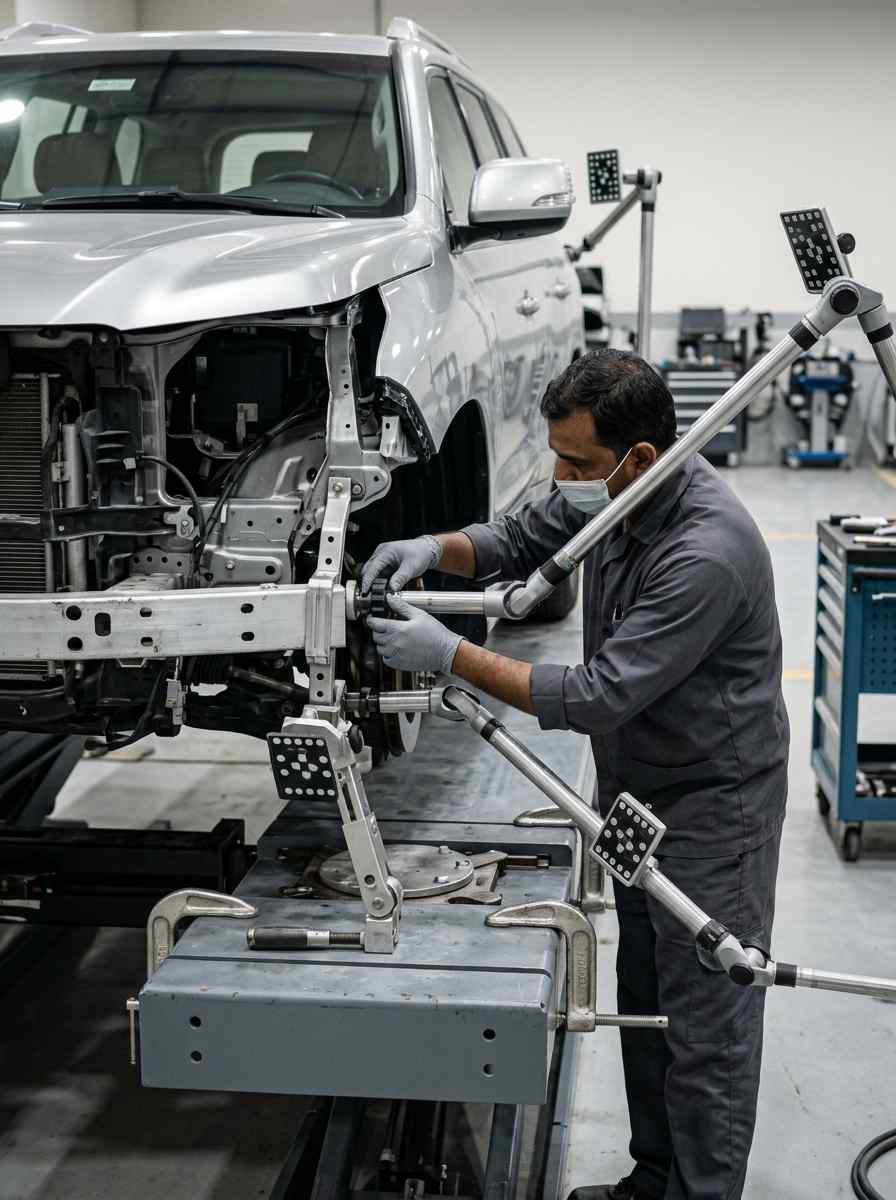
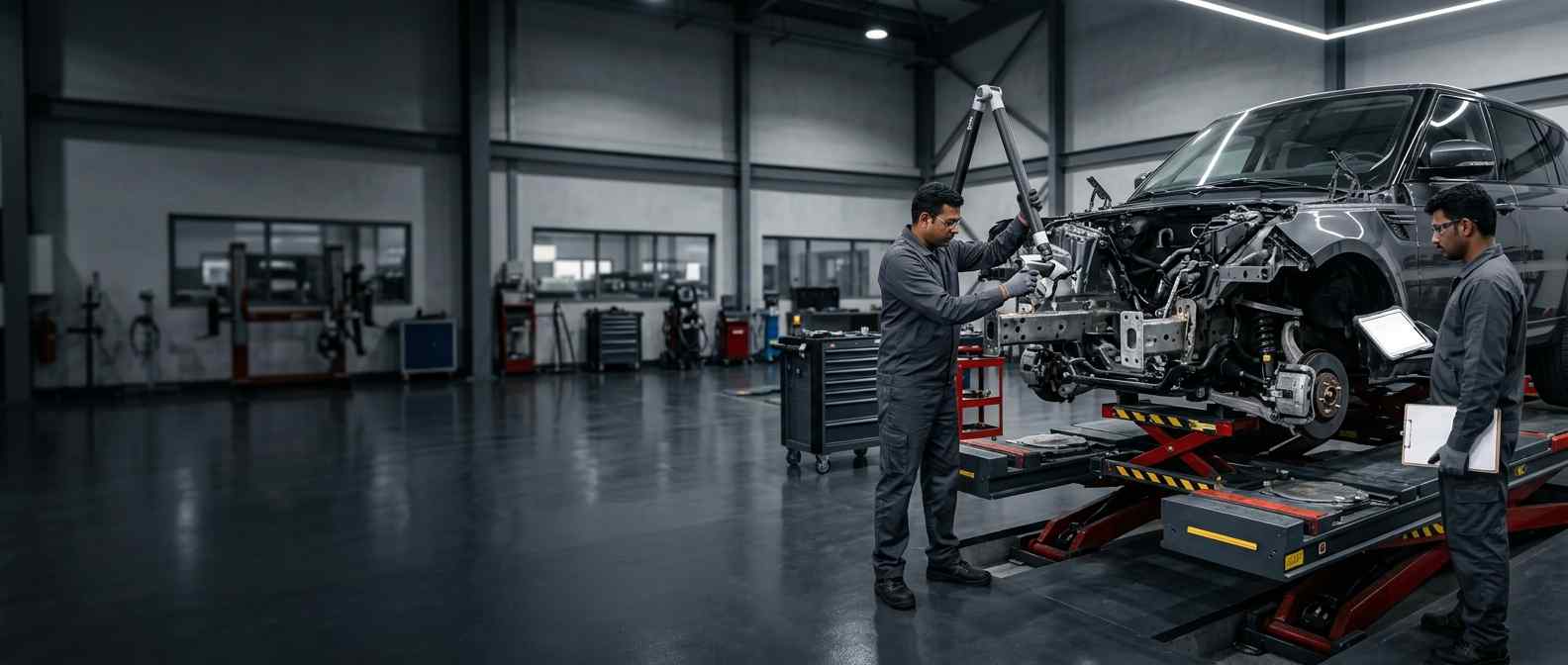
Measurement before, during and after repair
Initial measurements help define the movement and repair sequence. In-process measurements show how the structure responds to pulling or part installation. Final measurements check selected datum points after structural operations. Wheel alignment is a separate but related check and may be required after suspension or structural work.
A useful report identifies the vehicle, reference data, measured points and results. Measurement is not a substitute for inspecting joins, coatings, mechanical components or electronic systems, so the final quality-control plan must cover each affected area.
Electronics, restraints and calibrations
A collision can store faults or affect sensors even when no warning remains visible. Pre-repair and post-repair scanning may be appropriate according to vehicle requirements and repair scope. Removal of bumpers, windscreens, mirrors, suspension parts or structural areas can also create calibration requirements for cameras, radar or other driver-assistance systems.
Calibration should be identified during planning, performed under the specified conditions and documented. It is not evidence that structural measurements or mechanical checks can be skipped.
What affects price and repair time in Dubai
- Extent and direction of structural movement
- Vehicle construction and material mix
- Required dismantling and access
- Part availability and service-part design
- Joining, corrosion-protection and refinishing operations
- Mechanical, restraint and electrical faults
- Measurement, alignment, scans and calibrations
- Insurance approval and supplementary damage found after dismantling
A preliminary estimate can change after the impact area is exposed. A credible workshop should explain supplementary findings with photographs, measurements or the relevant repair requirement.
Post-repair quality checks
| Area | Possible evidence |
|---|---|
| Structure | Final measurement results and inspection of repair joins |
| Body fit | Consistent openings, latching and panel alignment |
| Mechanical | Wheel, tyre, steering, suspension and alignment checks as required |
| Protection | Restored seam sealer, primers, cavity wax and underbody protection where specified |
| Electronics | Scan results and calibration documentation where applicable |
| Road behaviour | Controlled final checks appropriate to the repair and legal roadworthiness |
Questions to ask before authorising structural repair
- Which structural parts are damaged and how was that confirmed?
- Will each part be straightened, sectioned or replaced, and why?
- What vehicle-specific repair information supports the method?
- Which measurements will be recorded before and after repair?
- How will corrosion protection be restored?
- Are scans, wheel alignment or driver-assistance calibrations required?
- What could change after dismantling?
Start with diagnosis, then approve the method
If you are still deciding whether structural damage exists, first read the signs of car chassis damage and diagnostic sequence. For collision assessment and repair planning in Al Quoz, contact Bodyshop.ae with the vehicle identification details, impact photographs and insurer information where relevant.
Frequently asked questions
Is a visibly bent rail always straightened?
No. Material, severity, location and the applicable repair procedure determine whether straightening is allowed or replacement is required.
Is sectioning the same as cutting anywhere convenient?
No. A sound sectioning operation uses an approved location and specified joint design. If no suitable procedure exists, a different repair method may be necessary.
Does replacing a structural part guarantee correct dimensions?
No. The vehicle still needs correct setup, fitting and verification. New parts do not compensate for unmeasured movement elsewhere.
Can a quotation be final before dismantling?
Sometimes the visible scope is sufficient, but collision estimates often require supplements when hidden damage is exposed. The workshop should document why the scope changed.