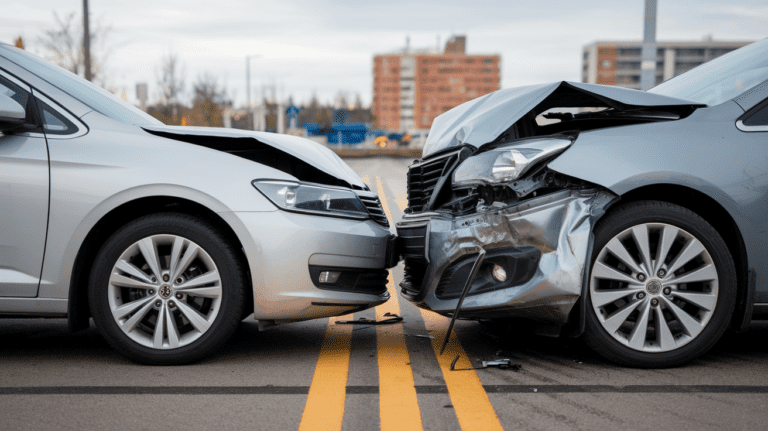
A dent changes the shape of a panel. A scratch damages one or more layers of its finish. When both appear together, a technician has to assess them separately before choosing paintless dent repair, polishing, refinishing or a combination of methods.
Start with two separate questions
1. What happened to the panel?
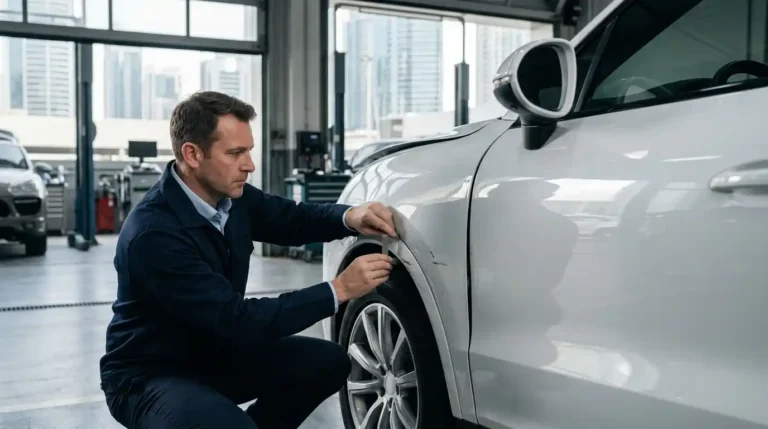
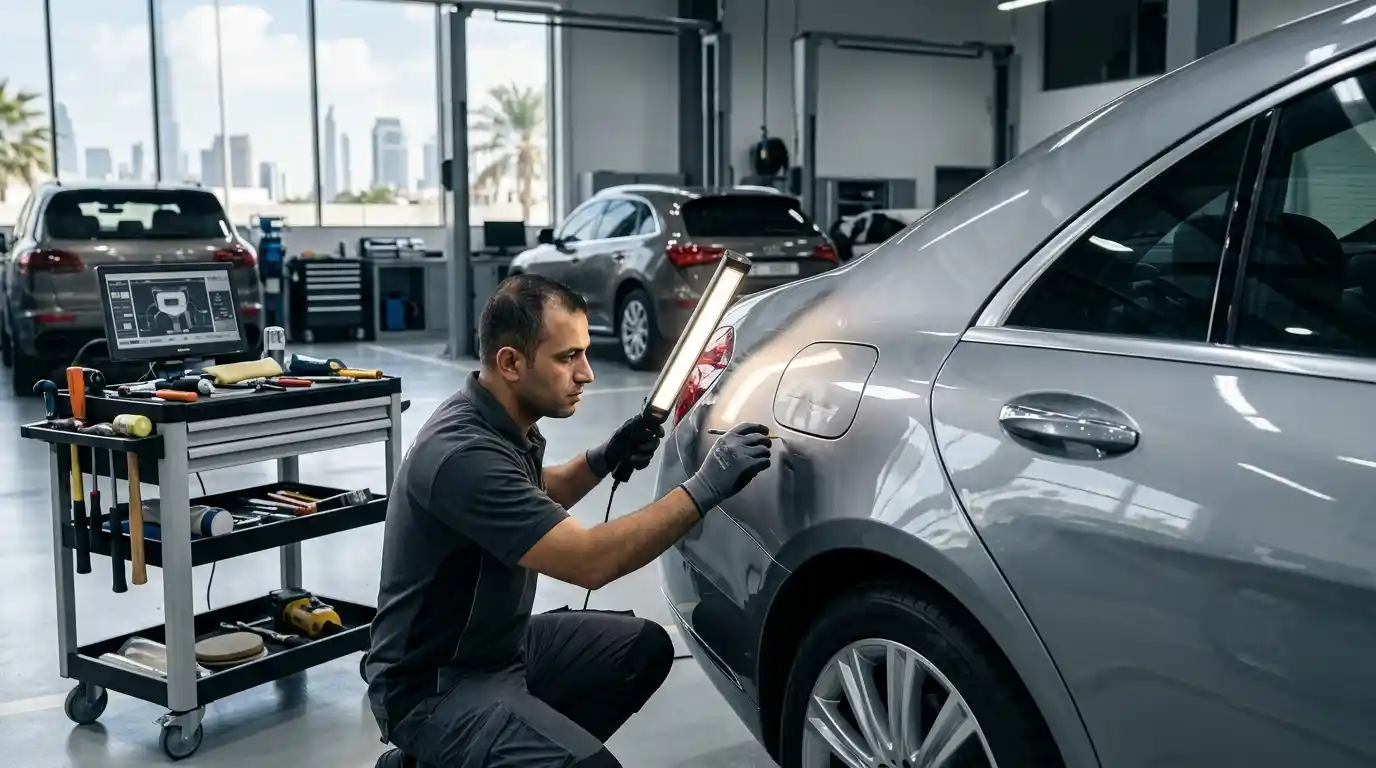
The technician checks the dent’s depth, diameter, edges and location. A shallow door ding is different from a sharp crease across a body line. They also look for stretched metal, a high spot around the impact and restricted access behind the panel.
2. What happened to the finish?
The visible mark may be transferred paint, a clear-coat defect, a cut through the colour coat or damage exposing primer or substrate. The coating must remain stable while the panel is reshaped, otherwise paintwork is likely to be part of the repair.
The common fingernail test is only a clue. A mark that catches a nail is often deeper, but touch alone cannot confirm the remaining clear-coat thickness, the condition of a previous repair or whether the colour coat has been breached.
Which repair method usually fits each type of damage?
| Observed condition | Likely repair direction | Why |
|---|---|---|
| Material transferred onto intact paint | Cleaning and a controlled test correction | Some apparent scratches are deposits sitting above the vehicle finish. |
| Fine mark limited to the clear coat | Measured polishing or paint correction | A technician may refine the surface if enough sound clear coat remains. |
| Colour coat, primer or bare substrate visible | Touch-up, local refinishing or panel refinishing | Polishing cannot replace missing paint layers. |
| Shallow dent with intact, stable paint | Paintless dent removal may be suitable | PDR reshapes the panel without conventional repainting when shape, paint and access allow it. |
| Sharp crease, stretched area or complex body line | Conventional panel reshaping may be required | The metal may not return accurately through PDR alone. |
| Dent with cracked or missing paint | Reshaping followed by refinishing | The contour and the coating both need repair. |
| Torn, severely stretched or restricted component | Repair-versus-replacement assessment | Safety, access, material and total repair scope can make replacement the better option. |
This table is a guide, not a remote diagnosis. Aluminium, high-strength steel and plastic parts respond differently. Edges, reinforcements, bonded sections, trim and sensors can also change the method.
How a professional dent and scratch assessment works
- Clean and record the damage. Dirt, wax and transferred material can hide the true boundary. The shop records the full panel and nearby trim before work starts.
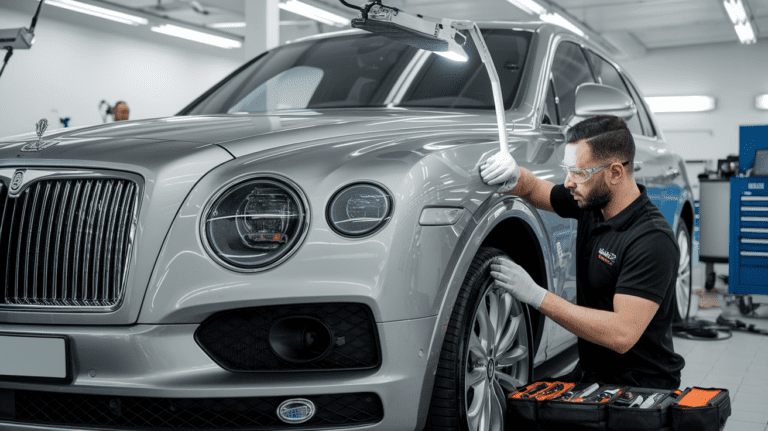
- Read the panel under controlled light. A reflection board or line light reveals low areas, crowns and distortion that are difficult to judge in flat lighting.
- Identify material, location and access. The technician checks whether the part is steel, aluminium or plastic, whether the dent crosses an edge or body line and whether safe access exists behind it.
- Assess paint depth and stability. Visual inspection, magnification, lighting and, where appropriate, coating-thickness readings help identify previous refinishing and the margin available for correction.
- Check nearby systems and prior repairs. Door mechanisms, wiring, cameras, parking sensors, trim and earlier filler or paintwork may affect dismantling and the repair plan.
- Agree the finish target and scope. A small protective touch-up has a different visual goal from an invisible cosmetic repair. The written estimate should state what is being repaired, painted, blended, removed or replaced.
What each repair method can and cannot do
Cleaning and test correction
A technician may first test whether the mark is contamination or paint transfer. Aggressive compounding is not the first step. The smallest practical test area helps avoid unnecessary clear-coat removal.
Polishing a clear-coat scratch
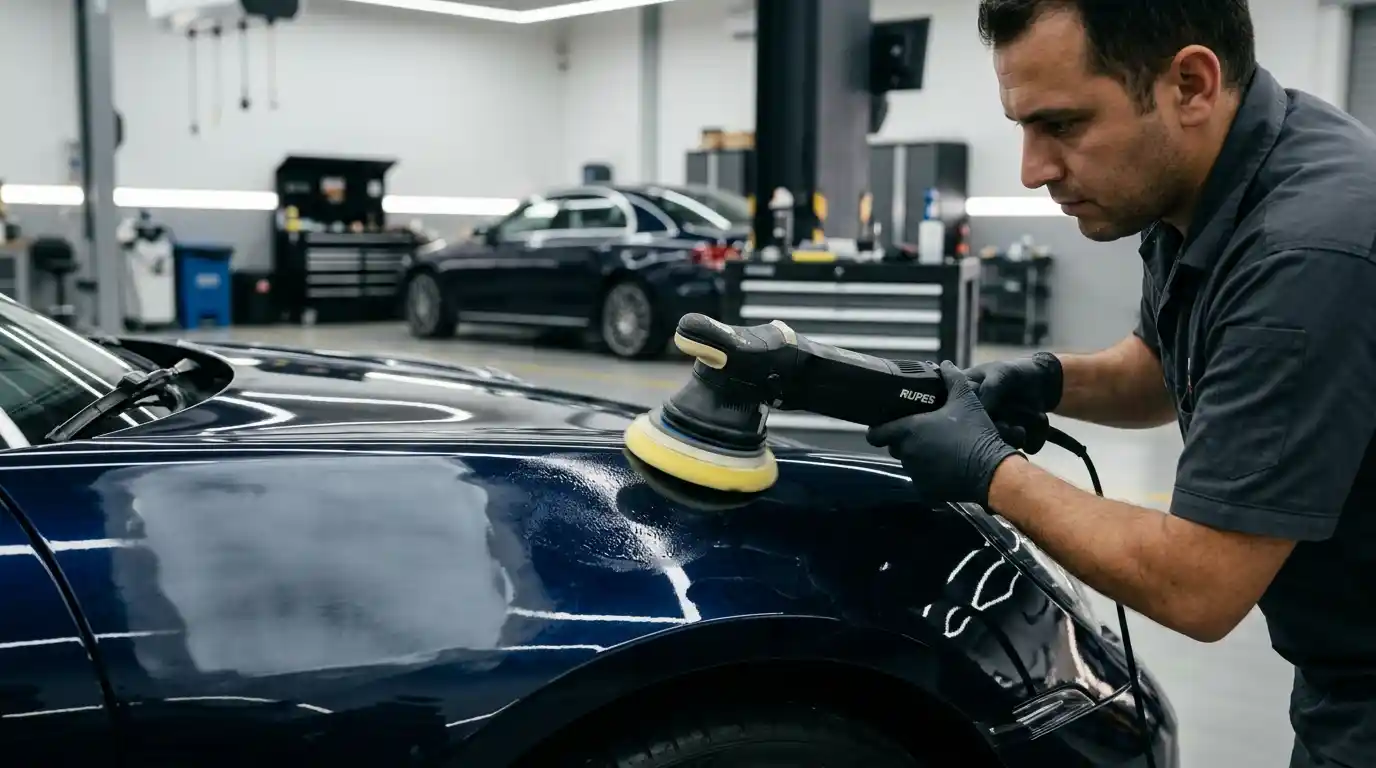
Polishing levels a very small amount of the surrounding clear coat to reduce the appearance of a defect. It cannot rebuild missing colour, primer or clear coat. The safe result depends on defect depth, remaining film thickness, panel history and the finish expected by the customer.
Paintless dent repair
PDR uses controlled pushes or pulls to return the panel toward its original contour while retaining the existing finish. Suitability depends on paint stability, metal stretch, dent geometry, panel material and tool access. A small dent is not automatically a PDR dent. For a deeper comparison, see paintless dent repair versus panel beating.
Conventional reshaping and refinishing
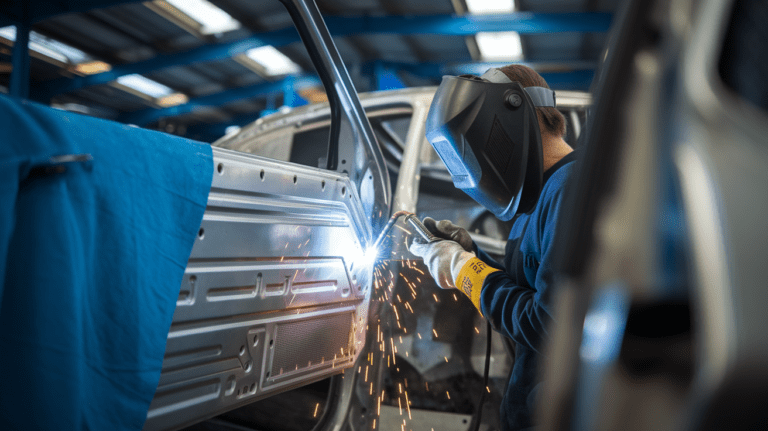
When the impact has stretched the panel, formed a sharp crease or damaged the coating, the repair may involve controlled reshaping, surface preparation and refinishing. The paint stage can include colour matching and blending decisions based on colour, metallic orientation, panel position and the adjacent finish.
Touch-up, local repair or full-panel refinishing
Touch-up can seal a small chip or exposed point, but it may remain visible at close range. A local refinishing method can be appropriate for selected damage, while other cases need the whole panel prepared and cleared to achieve a consistent finish. There is no responsible one-method answer for every scratch.
Repair or replace
A shop may compare repair and replacement when a part is torn, badly stretched, difficult to access or contains features that restrict an acceptable repair. The estimate should consider the part, dismantling, calibration needs, refinishing and the effect on adjacent panels.
When a dent and scratch happen together
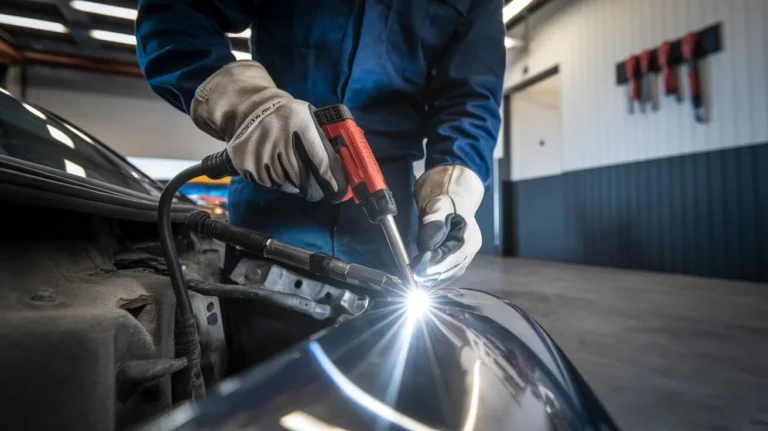
Repair order matters. The panel contour is normally restored before the final cosmetic finish is completed. Trying to polish a scratched dent first may remove coating that later needed protection. Pulling or heating a painted panel without understanding the coating can also crack paint and increase the repair scope.
Can a body shop quote from photos?
Photos are useful for triage. Send one image of the full panel, a close-up, an angled reflection shot and a wider image showing the panel’s location on the car. Include the vehicle model, year and whether the paint is cracked or the panel has been repaired before.
A photo may not reveal metal stretch, coating thickness, backside access, a hidden crack, a previous filler repair or sensor and trim requirements. For that reason, a remote figure should be treated as an initial estimate until the car is inspected.
What changes the cost and repair time?
- Damage size, depth, sharpness and number of affected areas
- Location on an edge, body line, double-skin section or restricted panel
- Steel, aluminium, plastic or composite construction
- Paint condition, colour, finish type and previous repairs
- Need for dismantling, parts, blending or sensor checks
- Chosen finish target, from protective touch-up to high-quality cosmetic restoration
- Material cure times and workshop workload
A light transfer mark and a cracked dent across a door contour should not receive the same price or timing promise. For pricing context, use the dedicated dent repair cost guide or car scratch repair cost guide. The inspection-based estimate remains the reliable figure.
Dubai conditions that affect the result
Dubai vehicles commonly pick up car-park door dings, trolley impacts and bumper scuffs. Dust must be removed before diagnosis because contamination can disguise marks and create additional abrasion during an attempted correction. Strong sunlight also makes colour, gloss, orange peel and panel ripples easier to see, so repaired areas should be checked under more than one lighting condition.
Heat can influence working conditions and material handling, but it should not be used as a shortcut. Paint, adhesives, fillers and clear coats need the manufacturer’s preparation and curing process rather than an improvised heat-gun method.
When to stop a DIY attempt

Stop before sanding, machine polishing, heating or pulling if you cannot identify the damaged layer and panel material. Professional assessment is especially sensible when:
- primer or bare material is visible
- paint is cracked, lifting or flaking around a dent
- the dent crosses an edge, swage line or reinforced area
- the panel is aluminium or has a previous repair
- the damage is near a sensor, camera, lamp, wiring or door mechanism
- the contour is sharply creased, torn or unstable
- you need a consistent cosmetic finish rather than a temporary protective touch-up
Unmeasured sanding can turn a correctable mark into a repaint. Pullers can create high spots or lift paint. Uncontrolled heat can damage coatings, trim and nearby components.
What to check before accepting the repaired car
- Panel contour: inspect reflections from several angles, not only straight on.
- Colour and gloss: view the repair outdoors and under workshop lighting where possible.
- Texture: compare the repaired area with adjacent panels.
- Edges and openings: check door, bonnet or boot gaps and operation if dismantling was required.
- Trim and functions: confirm removed trim is secure and relevant sensors, cameras, lamps and controls work.
- Clean finish: look for overspray, polishing residue, dust inclusions and masking lines.
- Written scope: confirm what was repaired, refinished or replaced and follow the shop’s aftercare guidance.
Frequently asked questions
Can every dent be repaired without painting?
No. PDR is most suitable when the paint is stable and the dent shape, material and access allow controlled reshaping. Cracked paint, sharp creases, severe stretch and restricted construction can require conventional repair and refinishing.
Can every scratch be polished out?
No. Polishing can reduce selected defects within the clear coat. It cannot replace colour, primer or clear coat that has been cut away.
Does a fingernail test prove a scratch needs repainting?
No. It is only an initial clue. Lighting, cleaning, coating condition, thickness and the visible layer provide a more useful assessment.
Is touch-up paint an invisible repair?
Not usually. It can protect a small exposed point and improve its appearance, but texture and colour can remain visible. Ask the shop whether the quoted target is protective, improved or near-invisible.
Should a small scratch be repaired quickly?
If bare steel is exposed, timely protection reduces the opportunity for corrosion. Marks limited to stable clear coat are usually a cosmetic decision, but should still be assessed before aggressive polishing.
How long does dent and scratch repair take?
It depends on the method, access, material, paintwork, dismantling, parts and curing requirements. A shop should confirm timing after inspection instead of applying one duration to every case.
Get the damage assessed before choosing the repair
Send clear photos for an initial review or arrange an inspection. The team can then direct you to the appropriate dent removal, car scratch repair or broader body repair service.