
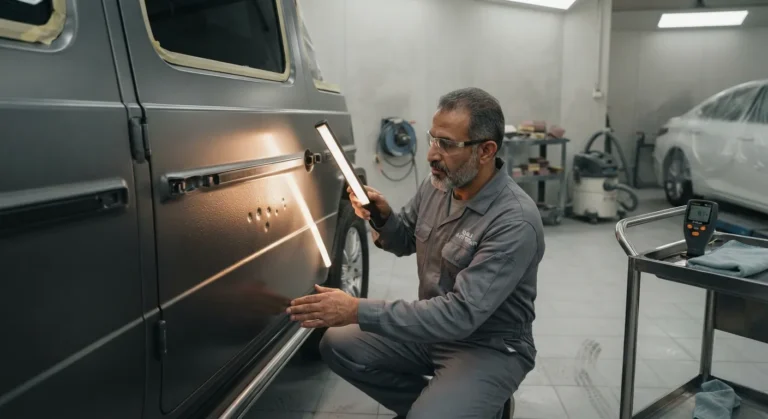
Paint & colour
Fisheyes in Car Paint: Contamination, Causes and Repair
Learn how fisheyes differ from orange peel, what causes each car paint defect and when correction needs polishing, sanding or repainting.
Read guide
Clear answers on dents, paint, accident damage and protecting your car. Explore practical guides to understand the problem, compare repair options and care for the finish.
Showing 1–6 of 6 guides in Paint & colour
Learn how fisheyes differ from orange peel, what causes each car paint defect and when correction needs polishing, sanding or repainting.
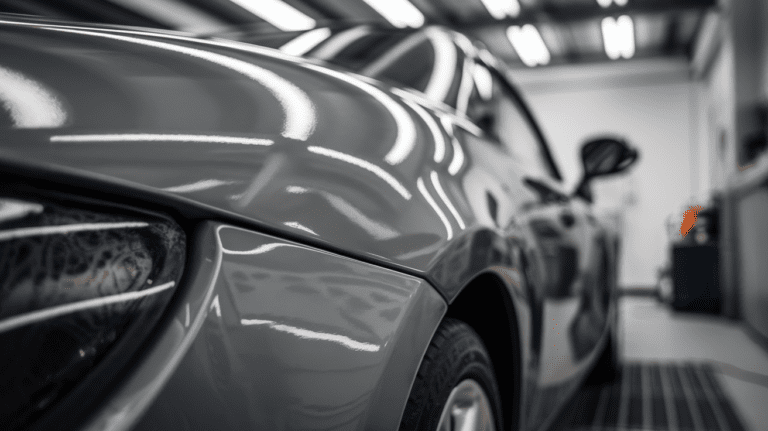
Orange peel, dust nibs, fisheyes, blistering and bleed-through do not share one cause or correction. This guide distinguishes the defects, explains likely process failures and outlines when sanding, polishing or repainting may be required.
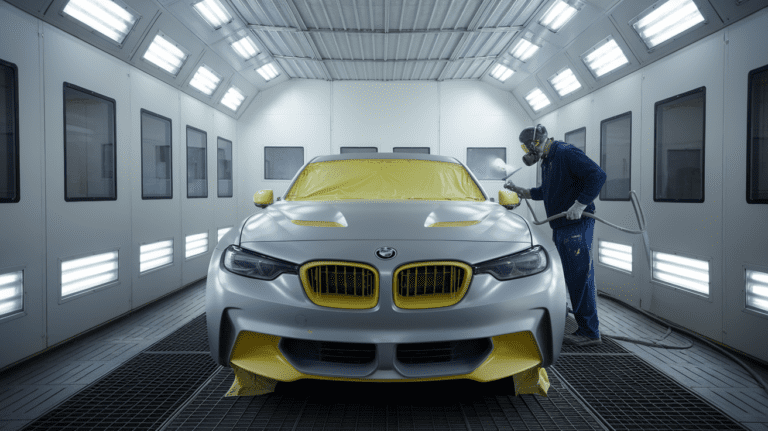
Follow the automotive repainting sequence from cleaning and surface preparation through primer, colour, clear coat, curing and polishing. The guide explains why the final finish depends heavily on the work completed before spraying.
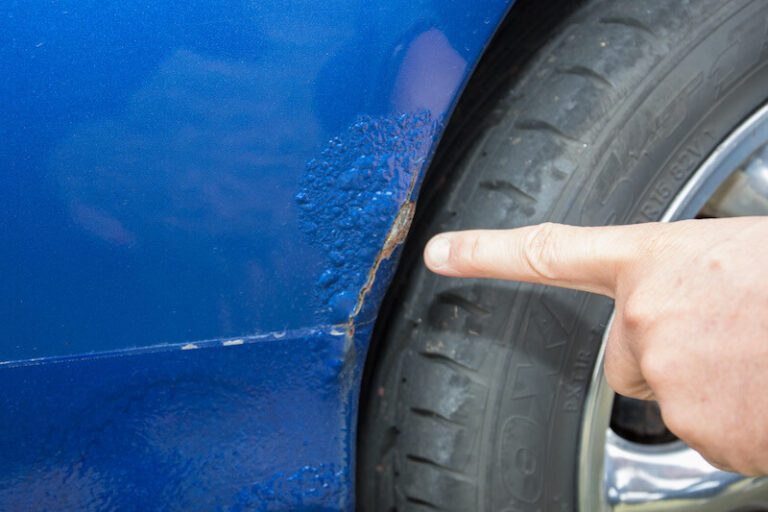
Surface rust, bubbling paint and corrosion beneath a chip require different levels of preparation. Learn how workshops expose the affected area, remove unstable material and decide whether local refinishing or broader metal repair is needed.
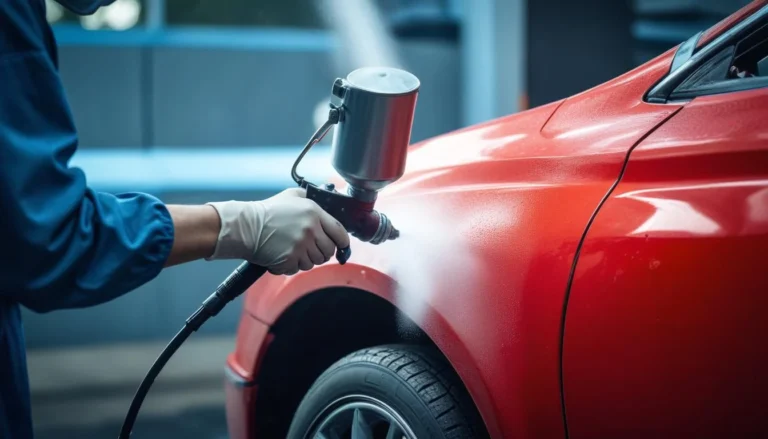
Sound existing paint can sometimes be prepared and refinished, while peeling, cracked, contaminated or unstable layers must be removed first. Learn the checks that determine whether an older finish is a suitable base.
Solid, metallic, pearl and other automotive paint systems create different colour and repair considerations. Compare their appearance, layer structure, matching needs and maintenance before choosing a finish for repainting or colour change.