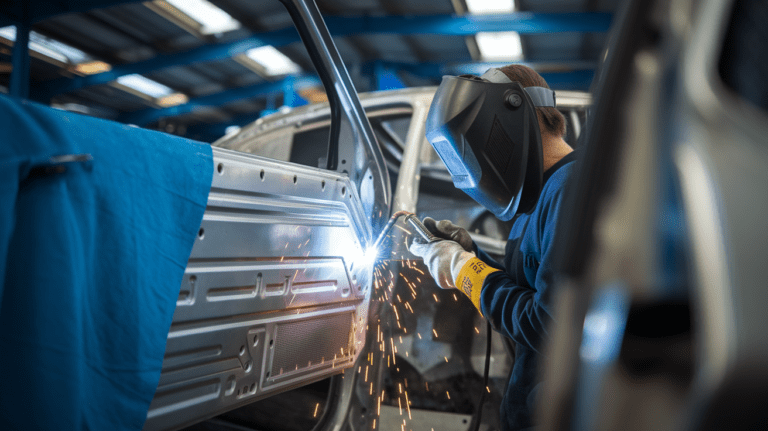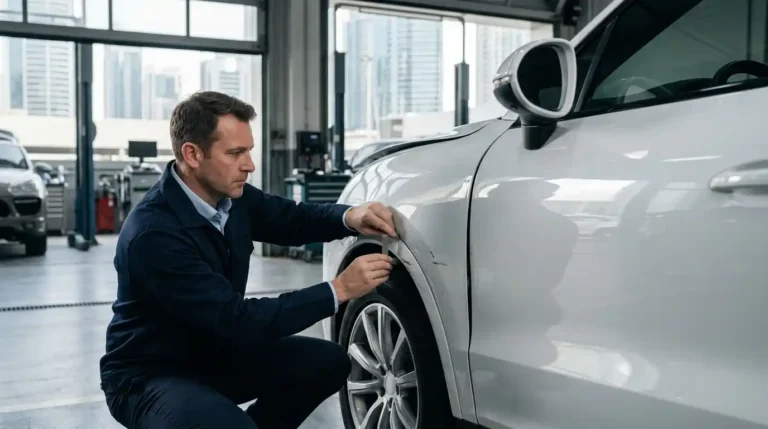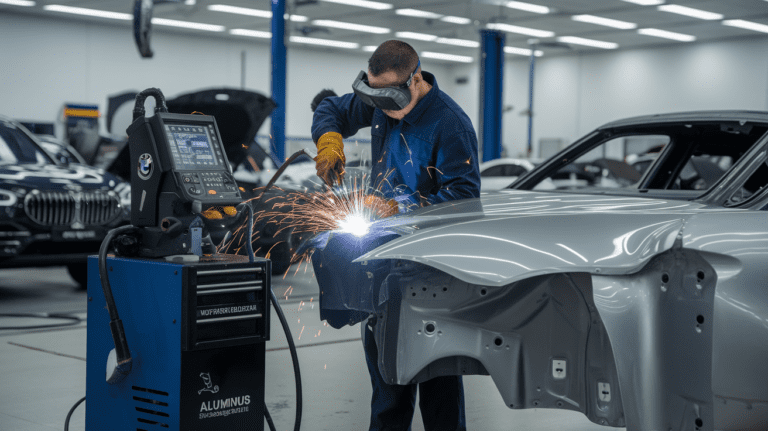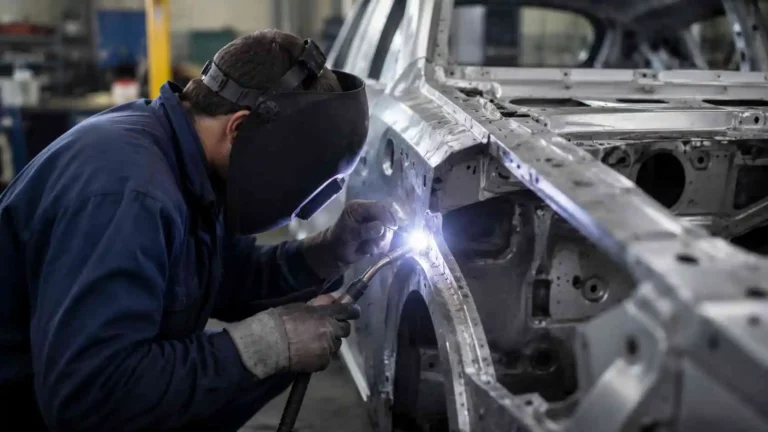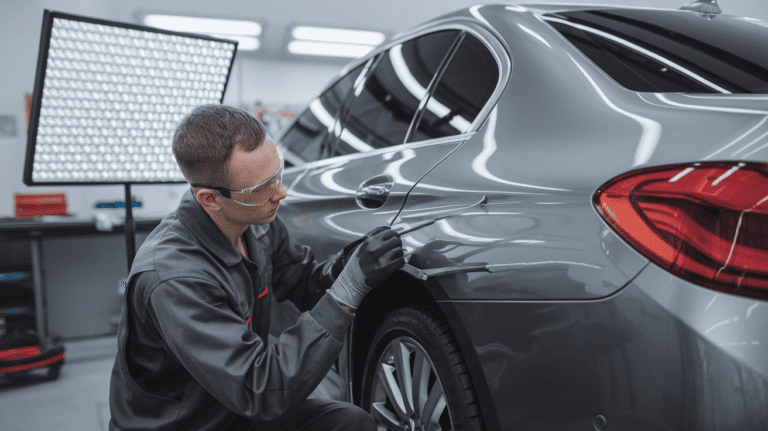
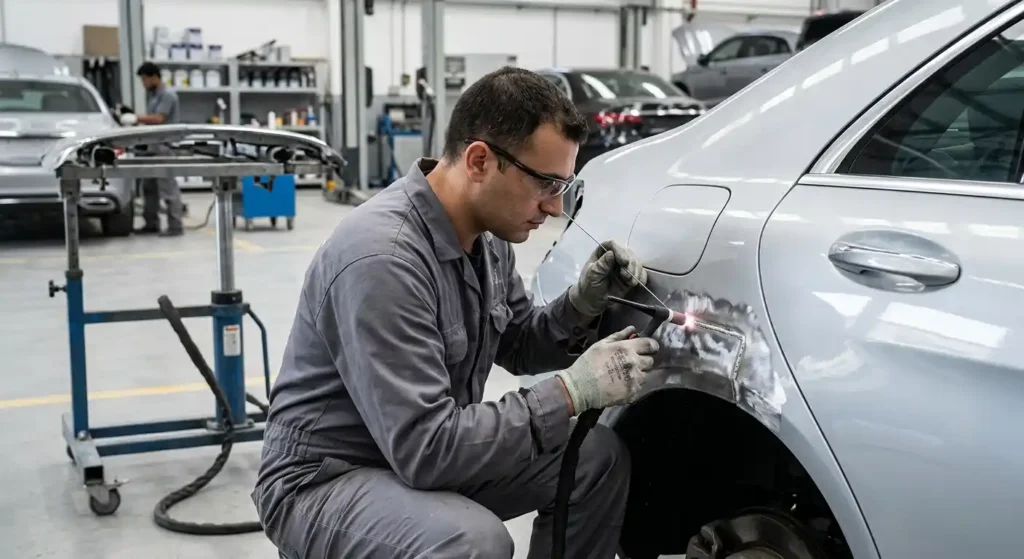
Aluminium panel repair vs replacement is not decided by dent size alone. A body shop looks at crack location, metal stretch, access, attachment points, previous repairs, corrosion or contamination risk, and the vehicle maker’s repair information before deciding whether the panel should be repaired or replaced.
This guide focuses on that decision. It does not provide a DIY welding procedure. Aluminium body structures and outer panels can require model-specific repair limits, dedicated tools and controlled workshop procedures.
Aluminium Panel Repair vs Replacement Starts With Damage Location
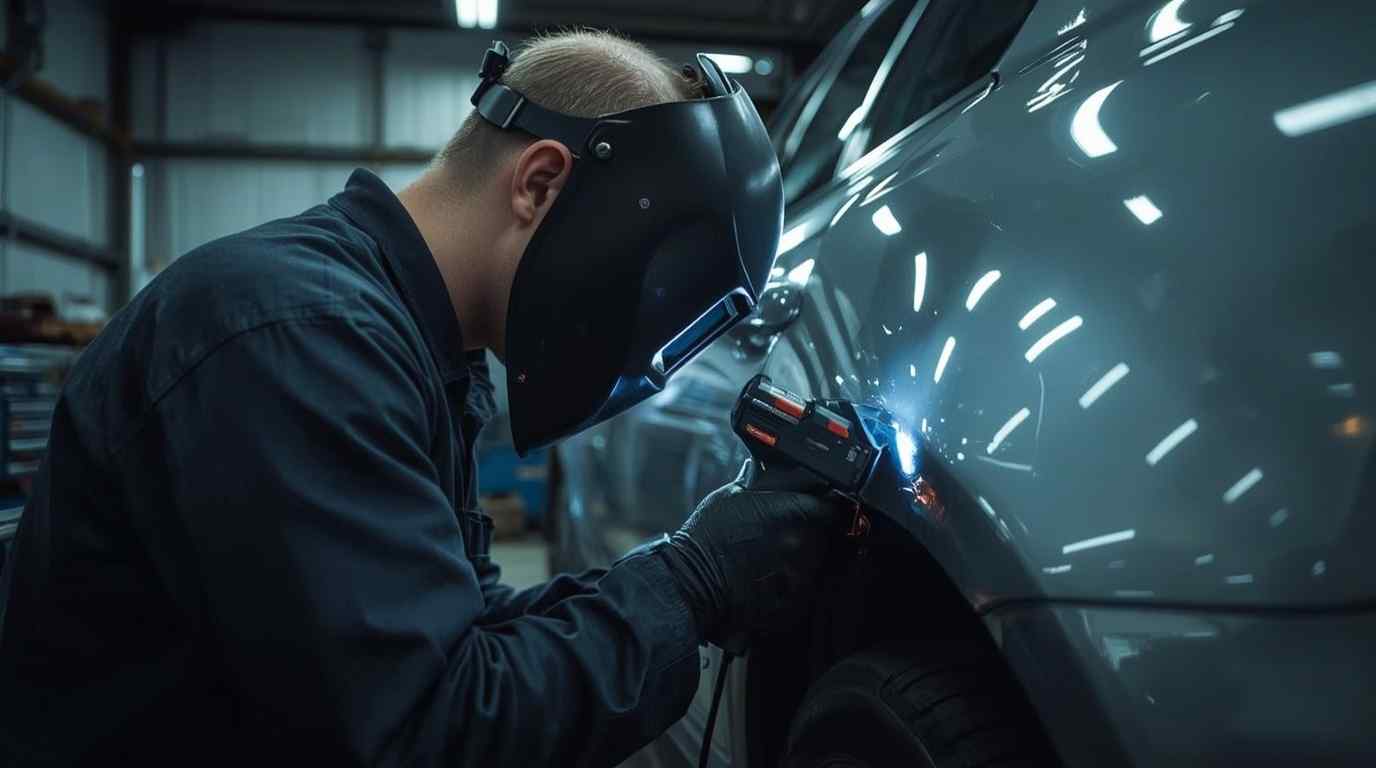
A shallow dent in an accessible outer skin can be very different from a crack near a mounting point, seam or structural attachment. Technicians first identify exactly where the damage sits and what load or function that area carries.
- Outer cosmetic skin: may be repairable when metal condition and paint strategy allow it.
- Sharp body line or stretched area: needs closer assessment because reshaping can become less predictable.
- Mounting point or bonded/welded joint: may have manufacturer-specific repair restrictions.
- Structural aluminium section: should be assessed against OEM repair information before any repair method is chosen.
Cracks, Tears and Severe Stretching Can Change the Decision
Aluminium work-hardens differently from mild steel and can be more sensitive to repeated reshaping. A panel with a tear, crack, severe stretch or prior failed repair may not be a good candidate for cosmetic reshaping alone.
The workshop should check whether the damaged area can be restored without compromising shape, attachment integrity or corrosion protection. Where limits are exceeded, replacement can be the more appropriate route.
Previous Repairs Matter More Than They Look
Filler, previous welds, heat-affected areas, hidden cracks and old corrosion treatment can all change repairability. A panel that has already been heavily worked may have less margin for another repair than an untouched original panel.
- Look for old filler and sanding edges.
- Check repaired seams and attachment areas.
- Inspect for contamination from tools previously used on steel.
- Confirm that previous corrosion protection has not been compromised.
Why Dedicated Aluminium Work Areas Are Important
Aluminium repairs need contamination control. Steel particles and inappropriate shared tools can create corrosion risk, so serious body shops separate aluminium preparation tools and work practices from general steel repair.
For broader repair capability, see our car body repair service. For technical background on equipment, see the guide to aluminium welding machines used in body repair.
Panel Access and Construction Affect Repairability
Technicians consider whether the rear of the panel can be reached, whether reinforcement sits behind the damage, and whether the panel is bonded, riveted, welded or part of a larger assembly. These construction details often determine whether a local repair is practical.
Paint and Corrosion Protection Must Be Part of the Decision
Even when the metal can be reshaped, the repair is not complete until the substrate is correctly prepared and protected. Aluminium-specific cleaning, compatible primers and the coating manufacturer’s technical process matter after the metal work is finished.
Colour matching and refinishing should follow the metal decision rather than drive it. See our automotive paint matching methods guide for the refinishing side.
When Replacement Is Often the Safer Direction
- Damage extends into an OEM no-repair area.
- The panel is cracked, torn or excessively stretched.
- Attachment points or structural interfaces are compromised.
- Previous repairs have reduced confidence in the substrate.
- Repair would require uncontrolled heat or excessive reshaping.
- Manufacturer procedures call for replacement.
When Repair May Still Be Reasonable
- The damage is limited to a repairable outer area.
- The metal is not severely stretched or torn.
- Panel access is suitable for controlled reshaping.
- Mounting points and structural interfaces remain sound.
- The repair method is permitted by the vehicle maker’s information.
What a Body Shop Should Verify Before Approving the Repair
A professional assessment should identify panel material, damage location, previous repairs, attachment method, corrosion protection needs and any OEM repair limits. That information should be documented before the technician commits to repair or replacement.
Frequently Asked Questions
Can every aluminium dent be repaired?
No. Repairability depends on location, severity, stretch, panel construction and manufacturer limits.
Does a cracked aluminium panel always need replacement?
Not automatically, but a crack or tear requires a more cautious assessment and may fall outside the permitted repair area.
Why not treat aluminium like steel?
The materials behave differently during reshaping, contamination control and corrosion protection, so the same repair approach should not be assumed.
Should I try aluminium welding at home?
No. Vehicle aluminium repair can involve structural integrity, fire risk, electrical systems and model-specific procedures. It should be assessed and repaired by a suitably equipped workshop.
Related repair guides