
Car Interior Repair Dubai
Repair cracked leather, torn upholstery, sagging roof lining, worn steering-wheel trim, damaged door cards, carpets and cabin surfaces with a scope based on the actual material and damage. We inspect colour, grain, stitching, fitted controls and safety-related equipment before recommending a local repair, retrim or replacement.
A cabin repair should blend, fit and function
A good interior repair is not simply a coat of colour over a worn area. Leather, coated leather, vinyl, fabric, plastic, foam, adhesive and decorative trim respond differently to heat, flexing and cleaning. We identify the surface first, then check whether the damage is limited to its finish or extends into seams, backing, foam or mounts.
Dubai heat can accelerate adhesive failure, colour fade and surface dryness. Daily contact adds bolster wear, steering-wheel shine, scratches, pet marks, food spills and sand abrasion. The practical goal may be a discreet local repair, a durable retrim or a coordinated cabin refresh. It should not be an automatic promise to make every aged surface look factory-new.
Cleaning treats contamination. Repair treats physical damage. If the main concern is staining, dust or odour without tears or failed material, our car seat cleaning service may be the better starting point.
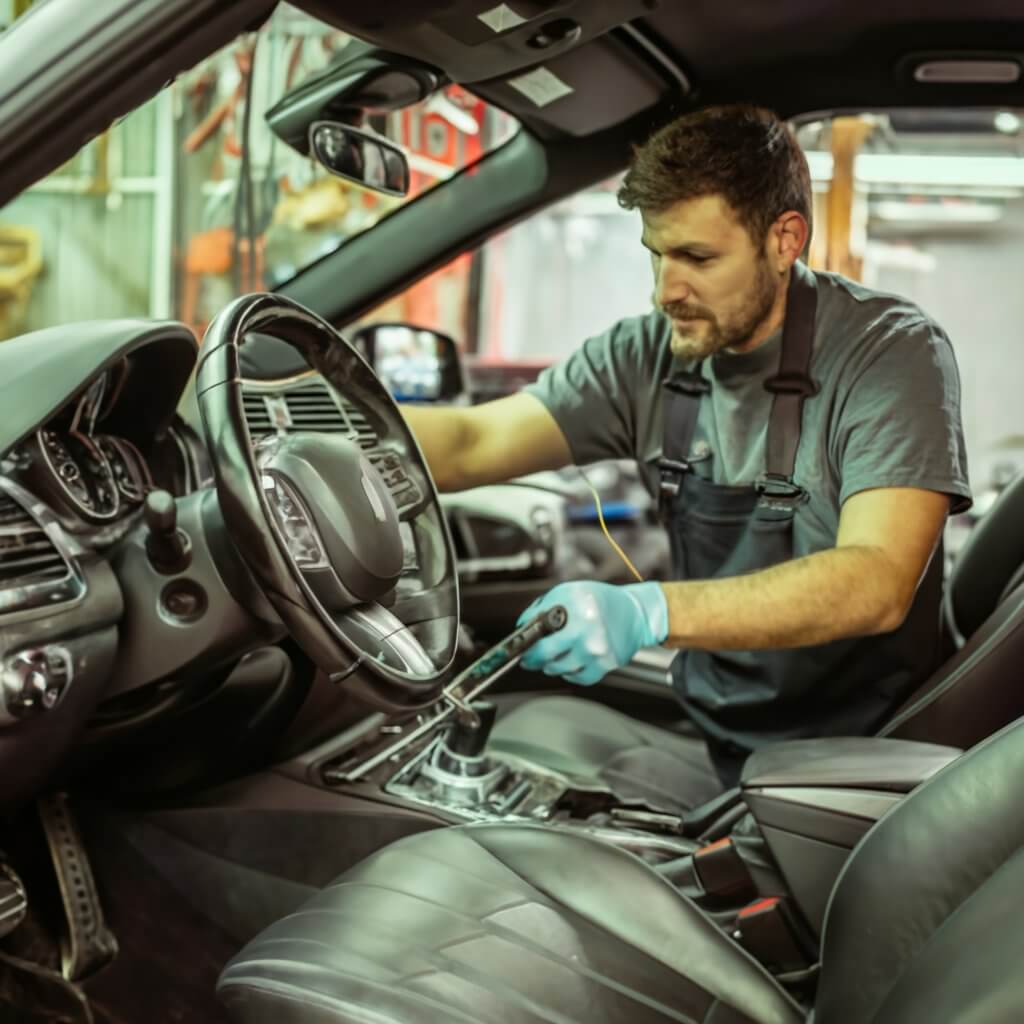
Interior areas we assess and restore
The available route depends on material, depth, access, colour match, previous repairs and whether the component contains safety or electrical equipment.
Leather, vinyl and fabric
Scuffs, colour wear, small splits, seam failure, torn fabric, damaged panels and worn bolsters are assessed for local repair, panel replacement or reupholstery.
Headliner and pillar fabric
Sagging or detached material may need controlled removal and replacement rather than glue pushed through the visible face. Sunroof openings and pillar trims affect the job.
Steering wheel and gear trim
Peeling, shine, cracked covering and failed stitching can be retrimmed when the wheel, controls, heating and airbag area support that route.
Door cards, console and plastics
Loose coverings, scratches, coating damage, broken mounts and trim separation are checked for refinishing, re-covering, fastening repair or replacement.
Carpet and mats
Burns, worn heel areas, tears, water damage and failed backing need different responses. Persistent dampness must be traced before new material is installed.
Surface and trim damage
Fading, lifting coverings and cosmetic cracks can be assessed here. Instrument, display, switch or control faults belong with the relevant dashboard repair diagnosis.
The visible symptom helps define the first inspection
Similar-looking marks can have different causes. The inspection should establish whether the problem is contamination, coating wear, material failure, failed backing, water entry or physical damage.
Leather or vinyl surface failure
Fine colour cracks may remain within the finish, while deep cracks can reach the material backing. We check flexibility around the damaged area because brittle surrounding material can fail beside a small repair.
Adhesive or foam breakdown
Headliners, door inserts and wrapped trim can detach when foam or adhesive fails. Pressing the face back temporarily does not rebuild a degraded backing, so the affected section may need removal and re-covering.
Seat foam and support wear
A flattened bolster, uneven cushion or exposed frame is not solved by replacing the outer cover alone. Foam shape, support wires, frame condition and seat movement are checked before trimming work.
Water source before new carpet
Damp carpet can follow blocked drains, door-seal leaks, sunroof drainage, air-conditioning condensation or previous flood exposure. The source and affected underlay need attention before cosmetic replacement.
Coating and soft-touch trim failure
Some interior coatings become tacky, discoloured or peel with age, heat or unsuitable cleaners. The base material determines whether controlled refinishing is possible or a replacement trim is more sensible.
Damage through the visible face
A small burn may support a local fabric repair, while a cut near a seam, perforated panel or airbag deployment seam can require a wider and more controlled replacement boundary.
Local repair, retrim or replacement
These routes solve different levels of damage. Inspection should define what will be retained, what will be removed and how the new finish will relate to the surrounding cabin.
Local repair
Suitable for contained colour loss, light scuffs, limited surface cracks or a small repairable split where the surrounding material remains stable. A local repair preserves more original material but still needs realistic colour and grain expectations.
Panel retrim
Used when one bolster, insert, steering-wheel cover, headliner or door-panel section is too damaged for a durable spot repair. Material, perforation, grain, stitch direction and thread colour are matched as closely as practical.
Replace or rebuild
Considered when material has become brittle, foam has collapsed, backing has failed widely, mounts are broken or safety-related areas cannot support an approved cosmetic repair. Parts availability and dismantling access affect the plan.
Seats and trim can contain more than upholstery
Modern seats may include side airbags, occupancy detection, heating, ventilation, motors, memory controls and wiring. Steering wheels contain an airbag module and switches. Pillar and roof trims can sit beside curtain-airbag deployment paths. Seat belts, buckles and anchor points are restraint components, not decorative trim.
We record warning lamps, damaged connectors, non-working controls and accident history before dismantling. Cosmetic covering must not close an airbag seam, change a deployment path or hide damage to a restraint component. Electrical diagnosis, coding or specialist restraint work is identified separately when required.
Do not treat deployed airbags, locked belts, damaged buckles, seat-frame distortion or restraint warnings as an upholstery-only job. The vehicle needs an appropriate accident and safety assessment before cosmetic restoration is planned. Our accident repair team can map the wider impact scope.
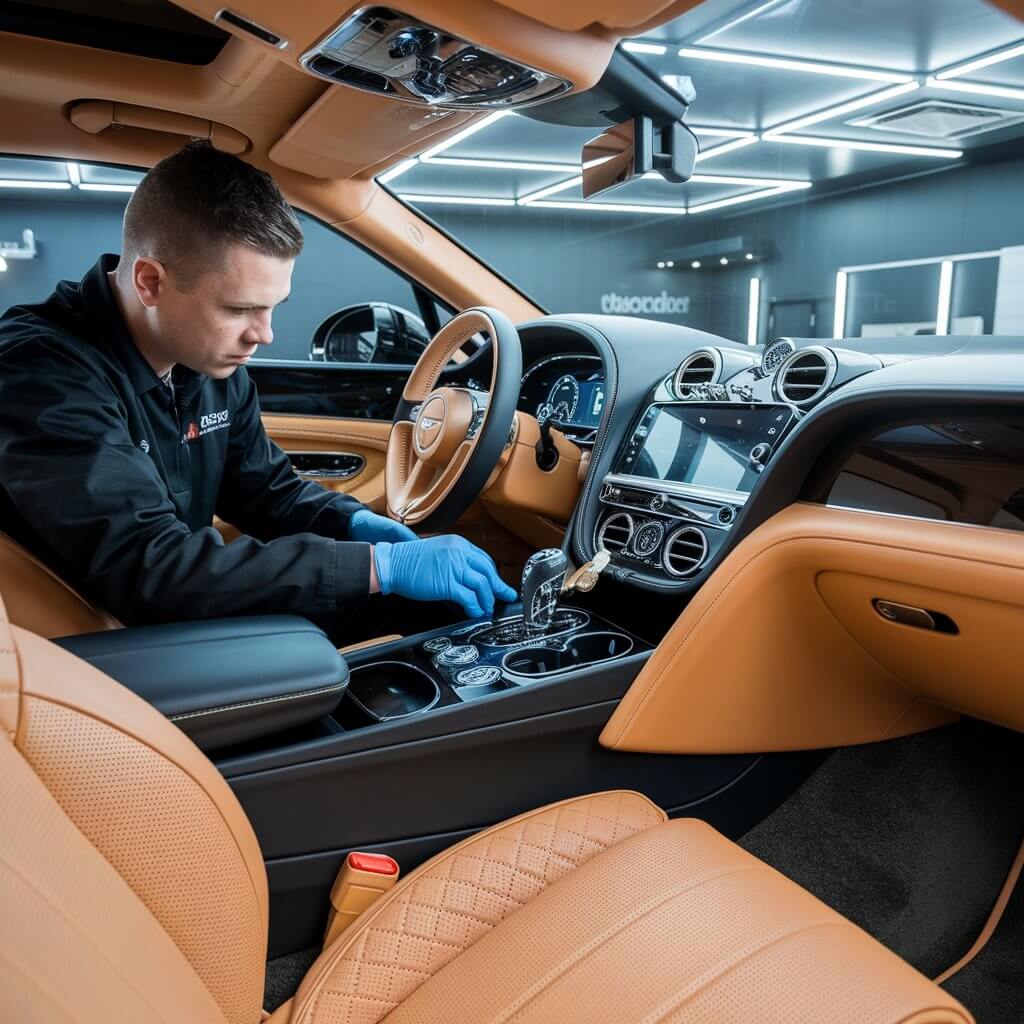
How the interior repair is planned
Record
Confirm vehicle, damaged areas, desired finish, warnings, controls and any previous repair.
Identify
Check material, colour, grain, perforation, backing, seams, foam and neighbouring wear.
Agree
Define local repair, retrim or replacement, including visible limitations and matching scope.
Restore
Remove trim where required, prepare the surface, complete the approved work and refit carefully.
Verify
Review fit, finish, stitching, movement, controls, warning lamps and the agreed repaired areas.
Colour alone does not make a repair disappear
Interior matching also depends on grain, gloss, perforation, stitch pattern, piping, panel tension and the age of the surrounding material. A newly retrimmed driver bolster may naturally look fresher than an untouched passenger seat. The proposed boundary should be discussed before work begins.
For full customisation, choices may include a coordinated material or stitching change, but this should be defined as a modification rather than an invisible restoration. Wider changes such as ambient lighting, infotainment or performance upgrades belong under car modification planning, not inside a basic upholstery quote.

What changes car interior repair cost in Dubai
A useful quotation describes the repair boundary and material, not only a single total. Photographs can support initial guidance, but the final price follows inspection where dismantling, safety systems or matching are uncertain.
What we check before the cabin is returned
The final review follows the actual repair scope. Cosmetic finish matters, but so do secure fitment and the operation of anything moved for access.
Interior repair aftercare for Dubai conditions
The correct care depends on the material and repair product. We provide job-specific guidance at handover, but several principles help avoid early wear or colour damage.
Car interior repair FAQs
Can a cracked leather seat be repaired without reupholstering it?
Sometimes. Local repair may suit limited surface wear or a contained split when the backing and surrounding leather remain stable. Brittle material, wide cracking, damaged seams or failed foam can make a replacement panel or retrim more durable.
Can you repair a sagging car roof liner?
Yes, after checking the liner board, fabric, foam backing, sunroof opening and pillar trim. Widespread foam failure usually needs the visible material removed and replaced. Injecting glue through the face can leave marks and may not provide an even result.
Do you remove odours as part of interior repair?
Odour treatment is a cleaning and source-control task. Spills, damp carpet, blocked drainage, mould, smoke and ventilation contamination need different treatment. We will separate required repair from cleaning rather than promise that a cosmetic retrim will remove the source.
Can you match the original leather colour and stitching?
We assess colour, grain, gloss, perforation and stitch pattern. Close matching is often possible, but age and wear on adjacent surfaces can remain visible. The realistic matching boundary is agreed before work.
How long does interior repair take?
Timing depends on the component, material availability, dismantling and whether parts or specialist safety work are required. A small local repair and a complete headliner or multi-seat retrim have different schedules. We confirm timing after inspection.
Can you repair interior damage after an accident?
Yes, but only after the wider collision scope is understood. Deployed airbags, damaged belts, seat frames, warning lamps and impact-damaged mounts must be handled as safety-related work before cosmetic restoration is approved.
Request an interior repair assessment
Send clear photographs of the complete cabin and close views of each damaged area. Include the vehicle make, model, year, material type if known and any non-working controls or warning lamps. We will advise whether the next step is cleaning, local repair, retrimming or an in-workshop inspection.