
Ferrari Body Shop Dubai
A Ferrari can look almost untouched after an impact and still need a much closer assessment. We inspect visible damage, panel alignment, paint condition and the areas around the impact before recommending a repair route suited to the vehicle, component and evidence in front of us.
Send wide photos, close-ups and the model year if known. Photos prepare the inspection; they do not establish the final repair scope.
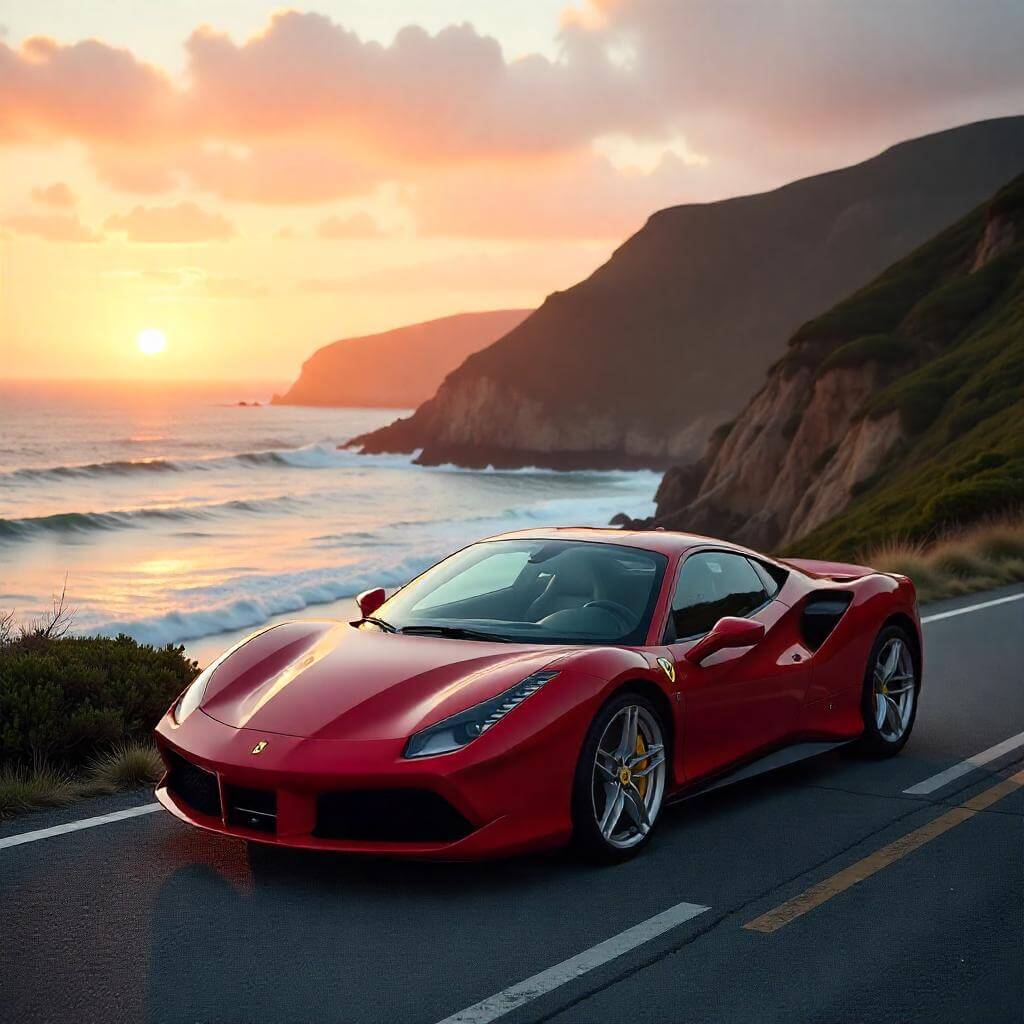
Ferrari accident, dent and paint repair in Dubai
Ferrari bodywork should not be treated as a generic panel-repair job. The right process depends on what was hit, how the force travelled through the area, panel material, paint condition, access behind the part and what must be checked after reassembly.
A light parking impact can involve a bumper cover, brackets, clips, liner, parking-sensor openings or nearby paint. A harder collision may affect mounting points, panel gaps, cooling-air paths, suspension-adjacent parts or areas that remain concealed until controlled dismantling. We begin with the vehicle rather than a preset repair promise: record the concern, inspect the impact zone, identify what needs further checking and explain the practical options.
Whether the issue is a scuffed bumper, scraped lower section, crease in a metal panel, paint damage after collision, wheel-arch impact or more involved accident repair, the aim is a controlled decision: assess first, repair relevant areas, refinish only what the agreed result requires and check the vehicle again before handover.
What to send when your Ferrari has body damage
Include the model and approximate year, the nature of the impact, clear daylight photos and any warning message, noise, wheel change, fluid mark or driving change noticed afterwards. For an insurance repair, keep the claim reference and reports already issued. Context helps us prepare, but it does not replace the physical inspection.
If there is a fluid leak, loose undertray, rubbing wheel, warning message, significant gap change or damage near a wheel or suspension area, arrange an appropriate inspection before continuing to drive.
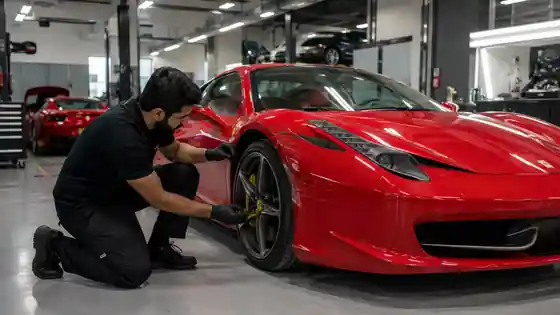
How we classify Ferrari body damage before work starts
Dividing damage into “small” and “large” is not enough. A small crack near a bumper edge can affect retention or a sensor opening. A modest dent can sit over a brace, return edge or material transition. Classification prevents both over-repairing a minor issue and underestimating a collision because the visible panel looks manageable.
Surface and finish damage
Paint transfer, clear-coat marks, stone chips and scratches are checked for depth, exposed substrate, edge condition and the finish needed around them.
Localised component damage
Dents, creases, stretched metal, cracked bumper skins, split edges and damaged trim need a component-specific decision based on access, material and mounts.
Impact-zone damage
A corner impact can extend to retainers, liners, undertrays, lamps, grilles, wheel-arch parts and adjoining panels. We inspect the area, not just the mark.
Structural or safety-adjacent concern
Meaningful collision force, changed geometry, wheel proximity, cooling concerns or movement behind outer panels can require deeper checks before cosmetic work begins.
Photos show the outer surface; they rarely reveal every broken clip, deformed bracket or condition behind a cover. When further findings appear after reasonable access is gained, the scope should be documented and discussed before it changes.
Low-clearance and aerodynamic areas need a wider inspection
Ramp contact, parking stops, road debris and steep approach angles can damage more than the first visible edge. On a low sports car, a scrape under the front or along a sill may involve several connected pieces whose condition cannot be judged from standing height.
Front splitter and lower bumper
A visible scrape can sit near lower grilles, ducts, liners, fasteners or a separate aerodynamic piece. We look for cracking, distorted attachment points, missing fasteners and changes in the way the lower edge sits. A loose or displaced section deserves assessment before normal-speed driving because airflow and road contact can worsen movement.
Side sill and wheel-arch area
Kerb contact or a side impact can affect a sill cover, wheel-arch liner, trim return, paint edge or an area close to the tyre. The inspection includes clearance, visible retention and whether the impact could have reached wheel- or suspension-adjacent parts. Cosmetic repair should wait if rubbing, steering change or wheel damage is present.
Rear diffuser and underbody pieces
Reverse parking contact, debris and steep ramps can mark the rear lower section or underbody. We check visible cracks, missing fixings, deformation and the relationship with nearby trim, heat-exposed areas and openings. The component’s material and attachment method affect whether repair is appropriate.
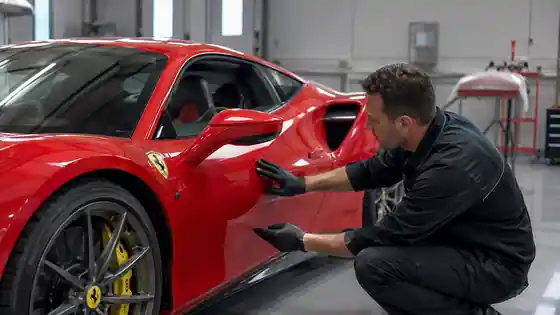
Previous bodywork can change the new repair plan
A panel may already contain filler, blended paint, repaired mounting points or layers that react differently during preparation. Signs can include colour shift, unusual texture, sanding marks beneath the finish, hard blend edges, overspray, lifting or inconsistent gap work. These observations do not automatically mean the earlier repair has failed, but they matter when estimating the next job.
Previous work can affect dent access, paint adhesion, colour behaviour and the amount of preparation needed. It can also explain why two apparently similar panels require different scopes. We record relevant existing condition so the new work is not blamed for an earlier defect and so you understand what can, and cannot, be corrected within the proposed repair.
Repair, replace or pause for deeper inspection?
There is no useful universal rule. The practical answer depends on the specific vehicle, component construction, damage position, integrity of the part, surrounding attachment points and the result that can be supported.
A repair may be considered when
- The section remains a sound basis for a repair.
- Damage is away from compromised mounts or critical edges.
- Geometry, surface and finish can be recovered appropriately.
- Adjoining systems show no reason for a different route.
Replacement or further assessment becomes more likely when
- There is fracture, tearing, delamination or lost material.
- Tabs, brackets or load points are compromised.
- Geometry cannot be recovered acceptably.
- Prior work or hidden condition prevents a durable repair basis.
Aluminium, carbon fibre and composites need different decisions
Ferrari construction varies by model, year, specification and individual component. Depending on the vehicle and location, assemblies can involve aluminium, carbon fibre, other composites, plastics and high-strength steel. No single repair method applies across the range.
Aluminium can stretch, crease and tear differently from conventional steel. Panel thickness, access, edge location, contamination control and damage severity affect whether repair is sensible. Heat or force should never be assumed appropriate simply because the outer mark looks repairable.
Surface-finish damage can conceal substrate concerns. Cracking, delamination, impact marks and attachment areas need assessment before cosmetic refinishing. Carbon-look trim should not be assumed to be structural carbon fibre, and a painted component cannot be classified from appearance alone.
Bumpers, underbody pieces, trims and aerodynamic components differ by model and configuration. Adhesives, fasteners, openings and neighbouring substrates influence the path. Replacement may be considered where a sound, durable repair cannot be supported.
Ferrari body and paint services chosen after inspection
Paint scuffs and scratches
We establish whether damage is in the clear coat, colour layer, primer or substrate, and whether correction, local repair or panel refinishing is the more suitable route.
Dents and panel damage
Paint condition, access, crease shape, material, edge location and stretch determine whether paintless dent work or conventional repair should be considered.
Bumpers, splitters and trim
Cracks, deformation, tabs, mounts, openings, liners and adjoining pieces are checked before repair or replacement assessment.
Panel replacement and fitment
When a sound repair is unsuitable, component sourcing, transfers, fasteners, gap control and paintwork all affect the written scope.
Composite-component assessment
Visible cracking and impact signs are reviewed with the attachment area and underlying component condition. Further specialist diagnosis may be recommended.
Collision-damage assessment
Outer damage, concealed areas, panel relationships and safety-adjacent concerns are mapped before body and paint stages are confirmed.
From Ferrari inspection to handover
If access reveals supplementary damage, it is documented and discussed before work outside the agreed scope proceeds.
Ferrari colour matching requires more than a paint code
A code is one input. The existing finish has been exposed to Dubai light, heat, washing, ageing and possibly previous work. Metallic, pearl, multi-layer and tinted finishes can change appearance with viewing angle and lighting.
We consider the repaired panel, adjacent panels, existing texture and gloss, blend boundaries, apertures and removed trim. The aim is a visually consistent result across more than one viewing condition, not a promise made before the surface is prepared.
Before refinishing, check
- Whether damage reaches primer, substrate or edges
- Previous filler, paint reaction, lifting or adhesion concerns
- Colour behaviour, texture and gloss around the repair
- Trim, seals, lamps and openings needing protection
- Whether blending should be considered

When does repair become less likely?
| Question | Repair becomes less likely when… | What happens next |
|---|---|---|
| Is the substrate intact? | There is tearing, fracture, delamination or missing material. | Assess replacement or specialist component options. |
| Is the mounting area sound? | Tabs, brackets or load points are compromised. | Inspect related parts and retention before refinishing. |
| Can geometry be recovered? | Gaps or reference points cannot be returned acceptably. | Measure further and reconsider the repair route. |
| Is refinishing sufficient? | Damage extends below the coating or into an adjoining assembly. | Expand the inspection beyond the visible paint concern. |
| Is a durable method supportable? | Access, contamination, prior work or material condition prevents it. | Explain alternatives rather than forcing a cosmetic fix. |
What actually changes Ferrari body-repair cost and duration?
A fixed figure or finish date before inspection would be misleading. A scuff and a corner impact may both be described as bumper damage while involving entirely different access, components and refinishing.
Cost variables
- Panel material, construction and access
- Paint-only versus component damage
- Repair or replacement suitability
- Parts, fasteners, brackets, lamps or trim
- Paint preparation, blending and finish complexity
- Concealed findings after access
Timing variables
- Inspection and insurer confirmation stages
- Parts availability where parts are required
- Repair complexity and paint curing stages
- Supplementary findings after dismantling
- Reassembly and alignment checks
- Workshop scheduling for the required operations
For an insurance repair, keep the claim reference, accident report where applicable, insurer messages, scene photos and earlier estimates. We can document visible workshop findings; coverage and claim decisions remain with the insurer.
Checks you should be able to see and understand
The final review should connect the visible finish with panel relationships, reassembled details and the functions included in the repair scope. These checks should be clear enough for the owner to follow during collection.
Ferrari model name alone does not determine the repair
Ferrari sports cars, convertibles, grand tourers, limited-production variants and four-door configurations can use different assemblies across generations and options. Vehicles such as the 296, SF90, Roma or Amalfi, 12Cilindri, Purosangue, F8, 488, 458, Portofino, California, 812 and earlier models should not be grouped under one assumed body construction. The damaged component must be identified on the individual car.
Related repair services
Budget by repair depth, not by the size of the photograph
A close photograph can make a Ferrari scuff look isolated even when the repair crosses a shaped panel, lower aerodynamic piece or adjoining finish. These planning steps show how scope, rather than badge assumptions, changes the early budget.
Surface recovery
From about AED 150
A light bumper polish or paint transfer may sit here if the coating is not cut through and the shape is unchanged.
Controlled dent work
AED 150 to AED 700
A small paintless dent is about AED 150 to AED 350. A medium dent is about AED 350 to AED 700 when paint condition and access support the method.
Shape plus finish
AED 700 to AED 1,500 or more
A larger conventional dent with paint starts around AED 700 to AED 1,200 or more. Panel painting starts from AED 450. Bumper plastic repair plus paint is about AED 500 to AED 1,200, and full bumper repainting is about AED 600 to AED 1,500.
Part or structural scope
AED 1,200 to AED 6,000 or more
This broad bumper replacement band depends heavily on the identified component and parts market. Confirmed structural or chassis work is broadly AED 2,000 to AED 5,000 or more.
Material identification is a decision point, especially around lower pieces, complex panels and previous repairs. The written estimate should distinguish repair labour, preparation, refinishing, blending, removal and refitting, and provisional parts. It should also make clear which findings could change after controlled access.
These bands are indicative only and an inspection is required. Ferrari make and model, material, parts, finish, hidden damage and current market conditions all affect the final quote. They do not imply a fixed premium, a guaranteed repair method or a final parts price.
Ferrari body shop Dubai FAQs
Can every dent on a Ferrari be repaired without replacing the panel?
No. Repairability depends on material, access, paint condition, crease shape, stretch, edge location and nearby construction. Inspection determines whether PDR, conventional repair, replacement or further assessment is sensible.
How do you determine whether a panel is aluminium, carbon fibre or another composite?
We identify the individual vehicle and component, review its construction and inspect accessible material and attachment details. Appearance alone is not reliable, especially on painted or carbon-look parts.
Can you quote Ferrari body damage from photos?
Photos support an initial review but cannot reliably confirm hidden damage, substrate condition, access, mounts or the full paint scope. A final repair scope normally requires physical inspection.
Is carbon-fibre damage always visible from the outside?
No. Surface finish damage can conceal cracking, delamination or attachment-area concerns. The component may need closer inspection before cosmetic refinishing is considered.
How do you decide between repairing and replacing a damaged part?
We consider substrate integrity, mounting areas, recoverable geometry, access, previous work, finish requirements and whether a durable repair method can be supported.
Can you match Ferrari paint colours?
We assess the paint code, existing finish, adjacent panels, colour effect, texture, gloss and blend needs. The aim is a visually consistent result under multiple viewing conditions.
Will the estimate change after dismantling?
It can if reasonable access reveals broken clips, brackets, liners, deformation or related damage that was concealed. Any scope change should be documented and discussed first.
How long does Ferrari body repair take?
Timing depends on damage, access, repair complexity, parts availability, paint stages, supplementary findings and insurer processes where applicable. A useful timeframe follows inspection.
Can you help with an insurance repair?
We can document visible workshop findings and repair observations. Keep your claim reference, accident report where applicable, insurer correspondence and photographs; coverage decisions remain with the insurer.
Should I drive the car after an impact?
Not when there is a leak, rubbing wheel, loose underbody part, warning message, steering or braking change, significant misalignment or other safety concern. Arrange appropriate assessment first.
Do you repair bumpers, splitters and exterior trim?
We assess surface damage, cracks, distortion, tabs, mounts, openings and adjoining pieces before recommending repair, replacement or further specialist support.
Are you affiliated with Ferrari?
No. Bodyshop.ae is an independent body-repair business and is not affiliated with, endorsed by or an authorised repairer for Ferrari.
Request a Ferrari repair assessment in Dubai
Send the model and year, affected area, incident description and useful photos. We will arrange the appropriate next step in Al Quoz 4, subject to physical inspection.