
Independent body & paint repair · Al Quoz 4
Geely Body Shop Dubai
Body damage is easier to solve when the repair begins with the area that actually took the impact. For Geely owners in Dubai, we inspect the affected panel, paint finish, bumper fittings and neighbouring zones before recommending dent repair, panel repair, refinishing or replacement.
That wider view matters on daily-driven sedans, crossovers and SUVs. A parking scrape may involve only paint, but a similar-looking corner impact can disturb bumper retainers, wheel-arch liners, lower trim or alignment around a lamp. The goal is a clear repair route, not a generic package based on one photograph.
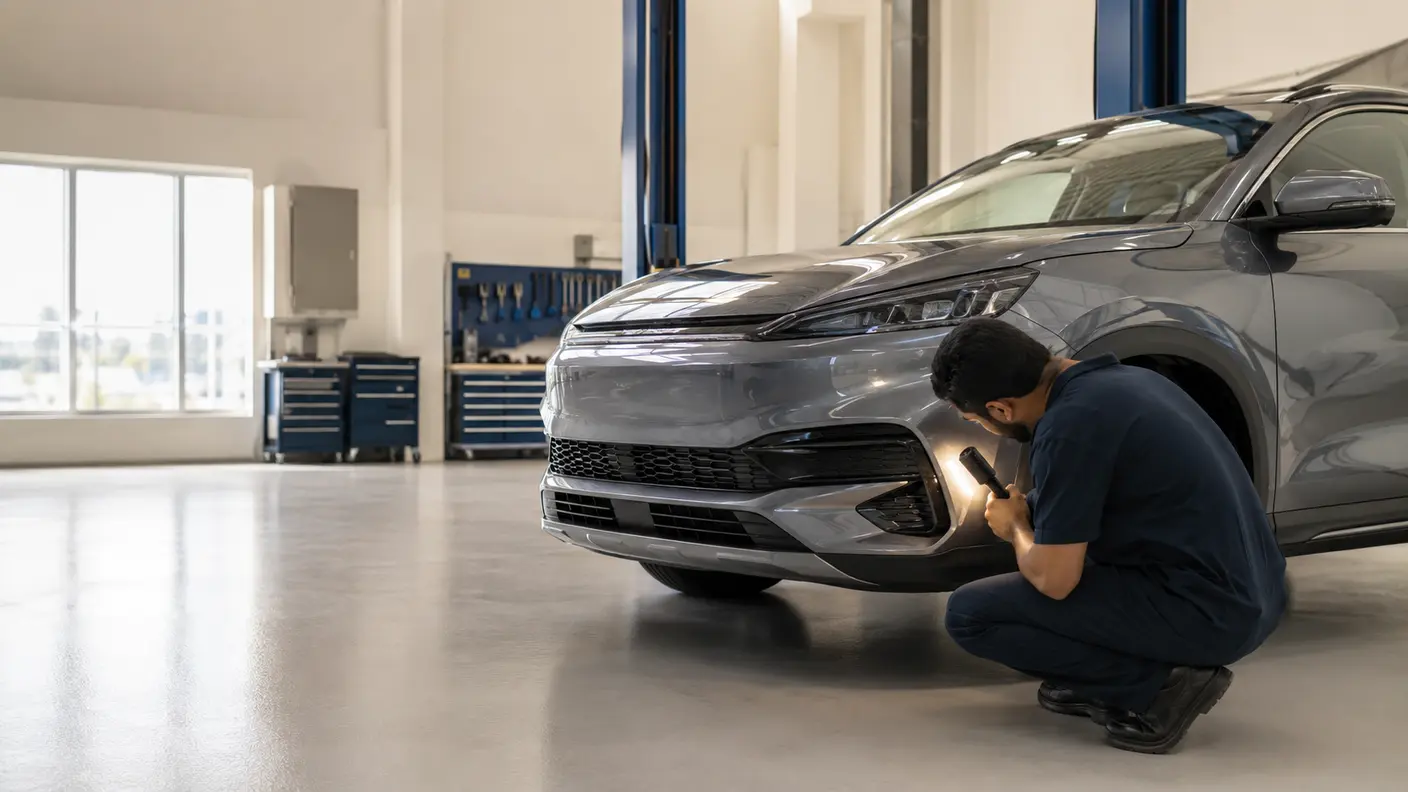
A practical repair route
Start with the damage, not a standard bumper or paint package
Two vehicles can arrive with marks in almost the same place and still need different work. One cover may have an intact shape with superficial transfer and damaged paint. Another may look only lightly scuffed but have a stretched corner, cracked guide, missing clip or gap that changed beside the headlamp. Treating both as a simple respray would overlook the condition that decides whether the finish will sit and last correctly.Our assessment starts by mapping the contact area. We note paint breaks, high and low spots, crease direction, edge damage, wheel-arch position and the relationship between adjacent panels. Where the impact pattern suggests movement behind an exterior cover, access or controlled disassembly may be needed before the complete scope can be confirmed. Our car body repair service explains how connected panel, bumper and accident damage can be considered in one plan.Record the impact
Wide and close views establish direction, affected edges, gaps and surrounding condition before work begins.Inspect connected areas
Retainers, liners, trims, lamps and nearby panels are checked when the contact zone makes them relevant.Choose the repair route
Repair, refinish and replace are separate decisions based on shape, material condition, access and fit.Verify before handover
Appearance, fitted trim, operating items and the agreed repair area receive a final owner-focused review.Everyday Dubai damage
Urban parking contact often crosses more than one surface
Tight parking spaces, ramps, columns and low barriers commonly create damage that travels around a corner. The first visible mark may be on a painted bumper, while the contact continues into a wheel-arch moulding, lower garnish or panel edge. A trolley or neighbouring door produces a different shape: usually a concentrated dent, sometimes on a body line where even a small depression becomes easy to see in reflected light.Door and quarter-panel dents need decisions based on more than diameter. A broad shallow depression may retain usable paint but cover a large crown area. A narrow crease can concentrate stretch along one line. Damage close to a hemmed edge, handle pocket or reinforcement may limit rear access. If the paint is intact, the suitability of a non-paint method still depends on these factors; the overview on our dent removal service outlines the questions behind that choice.Photographs help with triage but flatten reflections and hide depth. For useful images, stand far enough away to include the complete door or corner, then take closer views from straight on and both diagonals. Keep the nearest gap or wheel in frame when it gives scale. Avoid filters, digital sharpening and strong flash because they can disguise the true surface.Useful details to send with your photos
- Your Geely model and model year, if known.
- What the vehicle contacted and the approximate direction of impact.
- Whether paint is broken, plastic is split or a panel gap changed.
- Any new noise, rubbing, warning message or operating problem.
- Previous paintwork, protective film or repair in the same area.
Crossover and SUV impact zones
Higher body sections and lower protective trim need separate decisions
The Geely Coolray body repair guide provides model-specific context for compact-crossover bumpers, wheel arches, lower trim, panel fit and nearby exterior technology.
Front and rear corners
Corner contact can load a painted cover, black or textured trim, lamp edge and mounting guides at the same time. Restoring paint alone does not correct a cover that has moved away from its retainers or no longer follows the intended gap.Wheel arches and side sills
A scrape beside a wheel can affect the arch liner, flare or lower cladding as well as the painted panel. A loose liner may rub; a sill dent may cross a strong shape line. Each surface needs its own inspection and finish decision.Tailgate and loading edge
Rear parking contact may involve the bumper top, tailgate edge, latch relationship or trim around the load opening. Closing resistance or an uneven gap is more informative than the paint mark alone and should be reported before repair.Connected components
Bumper retainers, sensors and camera-adjacent damage require restraint
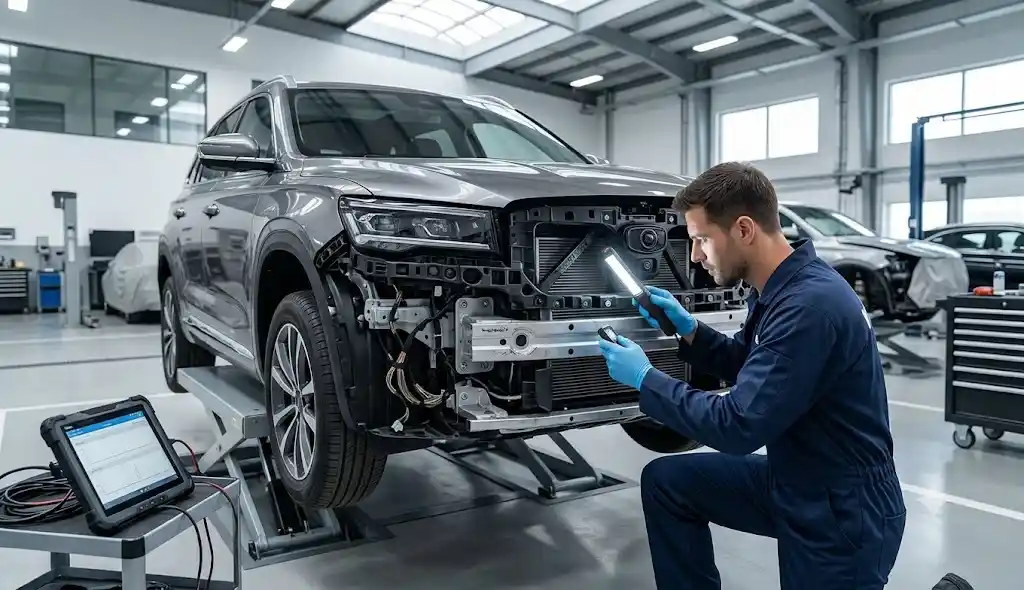
Check fit before planning paint
A bumper cover depends on guides, tabs, clips and brackets to hold its relationship with lamps, wings and the tailgate or bonnet area. If a fixing point is torn or a guide has shifted, simply pushing the cover back or refinishing its surface may leave poor fit. The repair decision should account for the cover and the items that locate it.Do not infer electronic condition from appearance
Depending on model and equipment, parking sensors, cameras or driver-assistance components may be located in or near exterior damage. A sensor that looks straight is not proof that the system is unaffected. Warning messages, damaged housings, shifted brackets or repair operations near these items can create manufacturer-procedure questions.Keep capability claims precise
Body damage can be inspected and the affected exterior area can be repaired, but electronic diagnosis or calibration must never be assumed from a bodywork assessment. If a relevant system is present, its condition and any required procedure should be identified for the specific vehicle. Where work falls outside the agreed workshop scope, the owner should be told clearly.A warning lamp changes the conversation
Do not erase, ignore or describe a post-impact warning as cosmetic. Record when it appeared, photograph the message and report it during booking. The warning may or may not relate to the visible damage, but it deserves an appropriate diagnostic route before anyone promises a complete resolution.Look beyond the cover
Hidden impact damage is a possibility, not an automatic diagnosis
Exterior covers are designed to follow styled surfaces and can spring back after contact. That means visible severity and hidden severity do not always match. It does not mean every bumper scuff conceals major damage. The useful response is proportionate inspection based on impact direction, gaps, looseness, noises and what is found during access.Possible connected items include mounting guides, absorber material, brackets, liners, undertrays, lamp tabs and the edges of neighbouring panels. At the rear, the loading edge and tailgate relationship may also provide clues. At the front, changes around the grille, lamp or bonnet gap can justify a closer look. These observations help define the repair scope; they should not be converted into dramatic claims before inspection.If controlled removal reveals additional damage, it should be documented and discussed before the scope changes. This matters for owner-paid work and insurance-related repairs alike. A clear supplemental finding should show what was discovered, why it matters to fit or repair quality, and whether the proposed action differs from the initial estimate.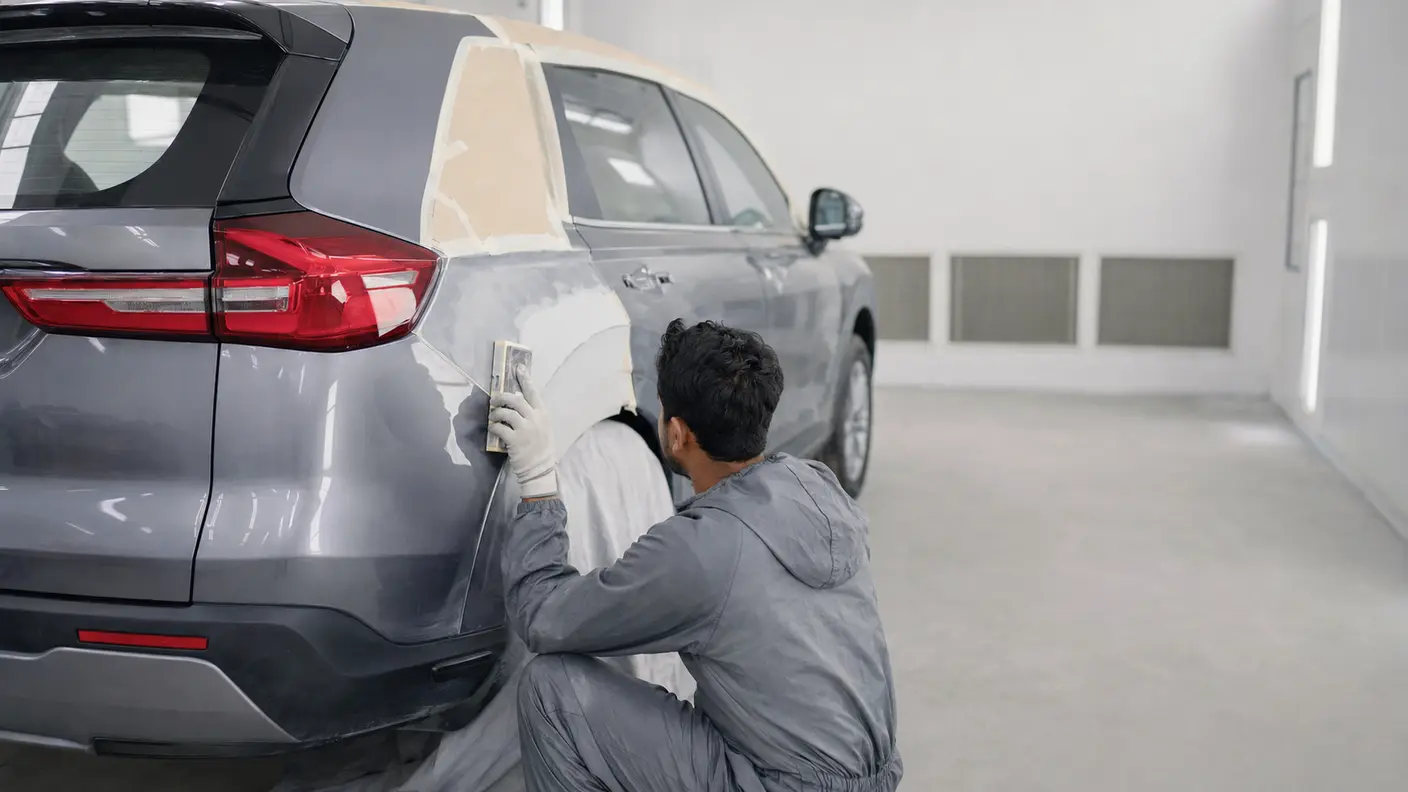
Wide panels and sharp lines
A door crease can be small in area but demanding in shape
Modern side panels often use long reflections and defined character lines. On these surfaces, a repair is judged not only by whether the low spot is gone but by whether the light travels cleanly across the repaired crown and into the neighbouring area. A crease crossing a styling line can distort both the line and the broader panel tension around it.Paint condition
Intact paint may keep more repair options open, but cracking, chips, previous filler or an older edge repair can alter the plan. The coating condition should be checked rather than assumed from a distant image.Access and obstruction
Door intrusion beams, folded edges, inner structures and trim placement influence access. Limited access does not automatically require replacement, but it changes the method and the confidence possible before disassembly.Stretch and edge position
A stretched sharp crease or damage at a hemmed edge behaves differently from a shallow open-panel dent. Repairability depends on restoring a stable shape without creating a larger finishing problem.Repair or replace?
The least invasive sensible option is not always the smallest-looking job

| Observed condition | Questions that matter | Possible direction |
|---|---|---|
| Shallow dent with intact paint | Is the metal stretched? Is there access? Does it cross an edge or body line? | Assess whether a non-paint dent method is suitable before planning refinishing. |
| Paint scrape with stable panel shape | How deep is the coating damage? Where can a durable repair boundary be placed? | Preparation and refinishing may be enough if substrate and fit remain sound. |
| Cracked bumper or torn mounting area | Where is the crack? Is material missing? Will repaired fixings reliably locate the cover? | Compare plastic repair feasibility with replacement, fitting and finish requirements. |
| Large crease or damaged panel edge | Can stable shape and clean gaps be restored? What is the extent of stretch or prior repair? | Panel repair and replacement should be compared on complete scope, not part price alone. |
Dubai paint conditions
Heat, sunlight and existing paint age influence the visible result
Dubai sunlight exposes differences that workshop lighting can soften. The same finish can also appear different across a curved bumper and a flat metal panel because each surface reflects light at another angle. Colour evaluation therefore needs a clean vehicle, suitable lighting and attention to the surrounding finish, not just a formula or a camera image.UV exposure, polishing history, wash marks and previous repairs can alter how nearby panels look. Metallic and pearl effects add another variable because application and viewing angle influence appearance. The refinishing plan may call for a local area, a broader panel repair or controlled blending where appropriate. That decision should be explained before masking and preparation begin.Preparation remains the foundation: damaged coating removal, stable edges, surface correction, suitable primer steps and clean masking. Spraying colour over contamination, unstable edges or poor shape does not solve the underlying defect. Our car painting service gives a broader view of local panel work and larger refinishing scopes.Check colour in more than one view
At collection, view the repaired area from straight on and an angle in useful daylight where possible. Look across the panel, not only at the centre of the repair. A curved bumper can change brightness naturally; the question is whether the finish transitions consistently with the agreed surrounding area.Tell the estimator about prior work
A panel that has been painted, filled, polished aggressively or wrapped previously can react differently during preparation. Disclosure helps prevent the new repair plan from being based on a false assumption about the existing coating.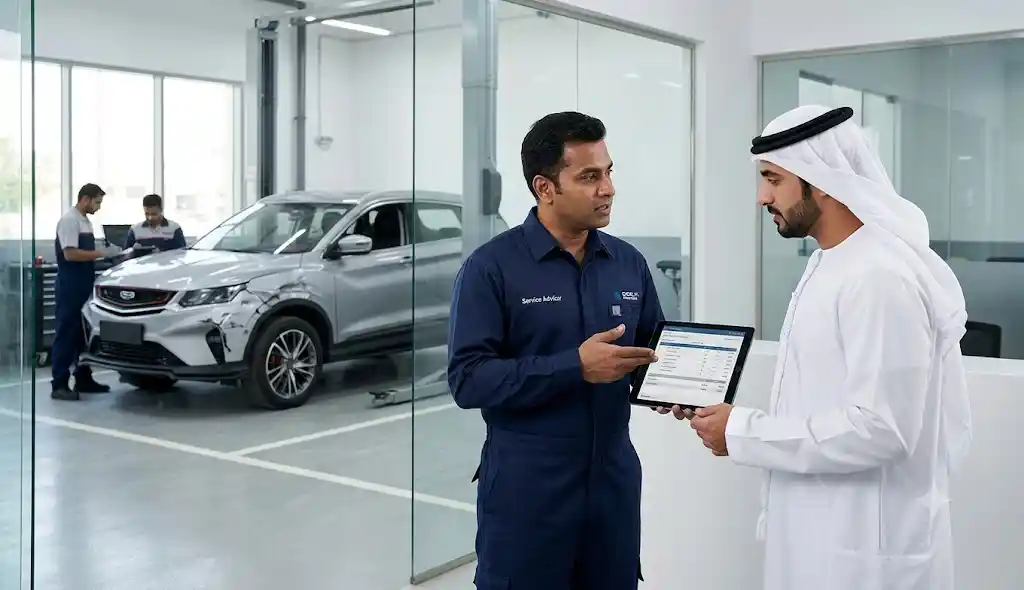
Claims and authorisation
Insurance scope should be separated from the physical repair assessment
An inspection can document visible damage and identify areas requiring access, but it does not decide what an insurer will approve. If the repair is part of a claim, confirm the insurer’s reporting, workshop and authorisation process before work begins. Keep incident documentation, claim references and photographs available.The initial estimate may be based on what can be seen externally. If disassembly reveals a damaged bracket, guide or adjoining component, the workshop should document that finding and seek the necessary owner or insurer approval before expanding the job. This avoids silent scope changes and helps distinguish collision-related findings from unrelated wear or older damage.Ask whether the estimate includes removal and refitting, clips or one-time-use items where relevant, panel preparation, paint materials, blending assumptions and final fit checks. Parts availability can affect scheduling, especially when a replacement component is required. Timing should be updated from confirmed scope rather than promised from a photograph.Before collection
An owner-focused handover checks more than gloss
Shape, finish and reflections
Review the repaired surface from multiple angles. Look for a consistent shape, clean edges and an appropriate transition to the surrounding finish under useful light.Gaps, trim and operation
Check the agreed doors, bonnet, tailgate, lamps and exterior trim where they were involved in the work. Gaps should be reviewed against the repair area, not assumed from appearance at a distance.Scope and care instructions
Confirm what was repaired or replaced, what additional findings were authorised and any aftercare advice for the new finish. Raise a concern before leaving so it can be inspected with the vehicle present.Geely exterior repair in Al Quoz 4
Get a clear repair route before work starts
Send wide and close photos for an initial view, or call to arrange an inspection. We will focus on the visible damage, nearby fitment, panel condition and refinishing scope needed for your vehicle.
Match the Geely estimate to the affected zone
A sensible early budget separates a simple surface mark from damage involving shape, paint, retainers or a replacement part. Use these bands to frame the first conversation, then let the inspection confirm the method.
Dent with intact paint
AED 150 to AED 700
A small paintless dent is about AED 150 to AED 350. A medium dent is about AED 350 to AED 700. Edge position, a strong crease or blocked rear access can move the repair outside this route.
Dent and paint damage
From AED 700 to AED 1,200 or more
This is an indicative band for a larger conventional dent requiring shape work and paint. Panel painting starts from AED 450, with blending decided by colour and location.
Bumper repair and refinishing
AED 500 to AED 1,500
Plastic repair plus paint is about AED 500 to AED 1,200. A complete bumper repaint is about AED 600 to AED 1,500. A light polish or transfer removal can start around AED 150.
Replacement or deeper impact
AED 1,200 to AED 6,000 or more
This is the broad planning band for bumper replacement. If inspection confirms structural or chassis work, the indicative band is about AED 2,000 to AED 5,000 or more.
The quote should say whether clips, side guides, trim and camera or sensor adjacent pieces are confirmed reusable. It should also separate cosmetic refinishing from any electronic diagnosis. A full repaint figure is usually not useful for a local Geely repair, but where a complete refinish is genuinely being considered, a sedan starts from AED 2,000 and an SUV starts from AED 3,500.
Planning figures only: inspection is required. The exact Geely make, model, material, parts, finish, hidden damage and current market conditions affect the final quote. No band is a promise that the initial method will remain appropriate after access.
Geely body shop Dubai FAQs
Can you inspect Geely bumper damage before repairing it?
Yes. An inspection can check the visible cover, paint loss, changed gaps, clips, nearby trim and the area around the impact before a repair route is chosen. Access may be needed where the impact suggests hidden movement.Can a Geely door dent be repaired without repainting?
Sometimes. Paint condition, crease shape, panel access, depth, edge position and metal stretch all affect suitability. An in-person assessment is needed before confirming a non-paint repair method.Should a scratched bumper be repaired or replaced?
That depends on whether damage is limited to the finish or includes cracking, distortion, missing material, torn mounting points or poor fit. Replacement should not be assumed for every scuff, and surface paint should not hide an unstable repair.Why does Geely paint matching need an in-person assessment?
Sun exposure, previous paintwork, polishing and the angle of metallic or pearl finishes can affect appearance. Inspecting the clean vehicle in suitable light helps determine the refinishing and blending scope.What can be hidden behind minor bumper damage?
There may be no hidden damage, or the impact may affect guides, clips, brackets, liners, undertrays or lamp mountings. Changed gaps, looseness, rubbing or impact direction help determine whether closer access is justified.What if parking sensors or a camera are close to the damage?
Tell the workshop about warnings or operating changes and avoid assuming that appearance proves correct function. The vehicle’s equipment and repair operation should determine whether diagnosis or another specific procedure is required.Can you help after a minor accident in Dubai?
We can assess exterior body and paint damage. If an insurer is involved, confirm its reporting, workshop and authorisation requirements directly before approving repairs.What photographs should I send for an initial review?
Send one wide view of the full side or corner, close views from several angles, and images showing nearby panel gaps or a wheel where relevant. Daylight photographs without filters are most useful.How long will Geely body repair take?
Timing depends on confirmed damage, preparation, paint scope, fitment checks, parts availability and findings after access. A meaningful schedule can be given after the repair scope is understood.Can a sharp crease across a body line be repaired?
It may be repairable, but sharpness, stretch, paint condition, line position, edge proximity and access influence the method. A small-looking crease can require more shape work than a broader shallow dent.What should I check when collecting my Geely?
Review panel shape and finish from several angles, the fit of trim and gaps in the repair area, and operation of items involved in the work. Confirm the authorised scope and any paint aftercare advice.Is BodyShop.ae an authorised Geely repairer?
No. BodyShop.ae is an independent workshop and is not affiliated with, endorsed by or an authorised repairer for Geely.Geely body repair in Al Quoz 4
Start with clear photos and a focused inspection
Send one wide view, several close angles and any detail about changed gaps, rubbing, warnings or previous repair. We will help define the visible damage and the next sensible workshop step.