
Lamborghini Body Shop Dubai
Low ride height, sharply changing panel surfaces and tightly related lower trim can make a small contact more involved than it first appears. We inspect the visible mark, the fit of surrounding pieces and the possible path of force before defining a sensible Lamborghini body repair scope.

Why low-clearance damage deserves a wider inspection
A scrape under the front edge may be almost invisible when the vehicle is parked, yet it can cross a painted bumper, a separate lower lip, a grille surround, an undertray edge and several retainers. The visible line is only the first clue. The repair decision depends on which part carries the mark, whether it has changed shape, and whether the surrounding pieces still sit without stress.
Steep ramps, parking stops, road debris and kerb contact can load the lowest parts from below rather than straight from the front. That direction matters. A lower component can be pushed upward, a fastener can pull through its mounting point, or an edge can bow while the upper bumper still looks aligned. If the repair focuses only on the painted face, the part may continue to sit low, vibrate or separate at speed.
We begin by recording ride position, visible clearances, edge relationships and any sign of contact beneath the car. This does not mean every scrape is serious. It means a low mark should be classified before it is dismissed as paint damage. Where access is limited, further inspection may depend on safe lifting or removal of an affected cover.
Four areas where a small error becomes visually obvious
A Lamborghini exterior is read through hard direction changes and long reflections. The repair has to make individual pieces agree as a complete form.
Splitter and lower bumper
The lowest edge should be checked for abrasion, cracking, distortion, missing hardware and changed height. The upper bumper can look correct even when the lower assembly is under tension.
Sill and intake transitions
A side contact can cross painted surfaces, textured trim, an aperture and a sharp return. Each material and attachment needs its own assessment before a continuous finish is planned.
Wide quarter and wheel arch
Broad rear quarters carry long light bands. A shallow wave, weak body line or uneven wheel-arch radius can remain visible even after a glossy refinish.
Diffuser and rear corner
Rear lower parts can conceal scuffs, displaced fittings or transferred load. The bumper joint, lamp edge, liner and visible underbody relationship help define the real zone.
A visible contact point can lead to five separate checks
The useful question after an impact is not only where the paint broke. It is how the load may have moved through covers, retainers and nearby body references.
1. Surface
We identify scuffing, transferred paint, coating fracture, indentation and heat or abrasion effects.
2. Shape
Directional light helps show whether the part has bowed, stretched, creased or lost a sharp transition.
3. Retention
Tabs, clips, guides and fastener points are considered where a panel edge sits proud, low or loose.
4. Adjoining fit
Gaps at the wing, lamp, bonnet, door or quarter can reveal a wider disturbance than the mark suggests.
5. Concealed path
Undertrays, liners, brackets and support areas may require access before their condition can be confirmed.
A photograph can support an initial conversation, but it often flattens shallow distortion and hides the lowest edge. Physical inspection is especially important when a bumper has changed position, a wheel-arch liner is loose, a warning appeared, or the vehicle contacted an obstacle from underneath.
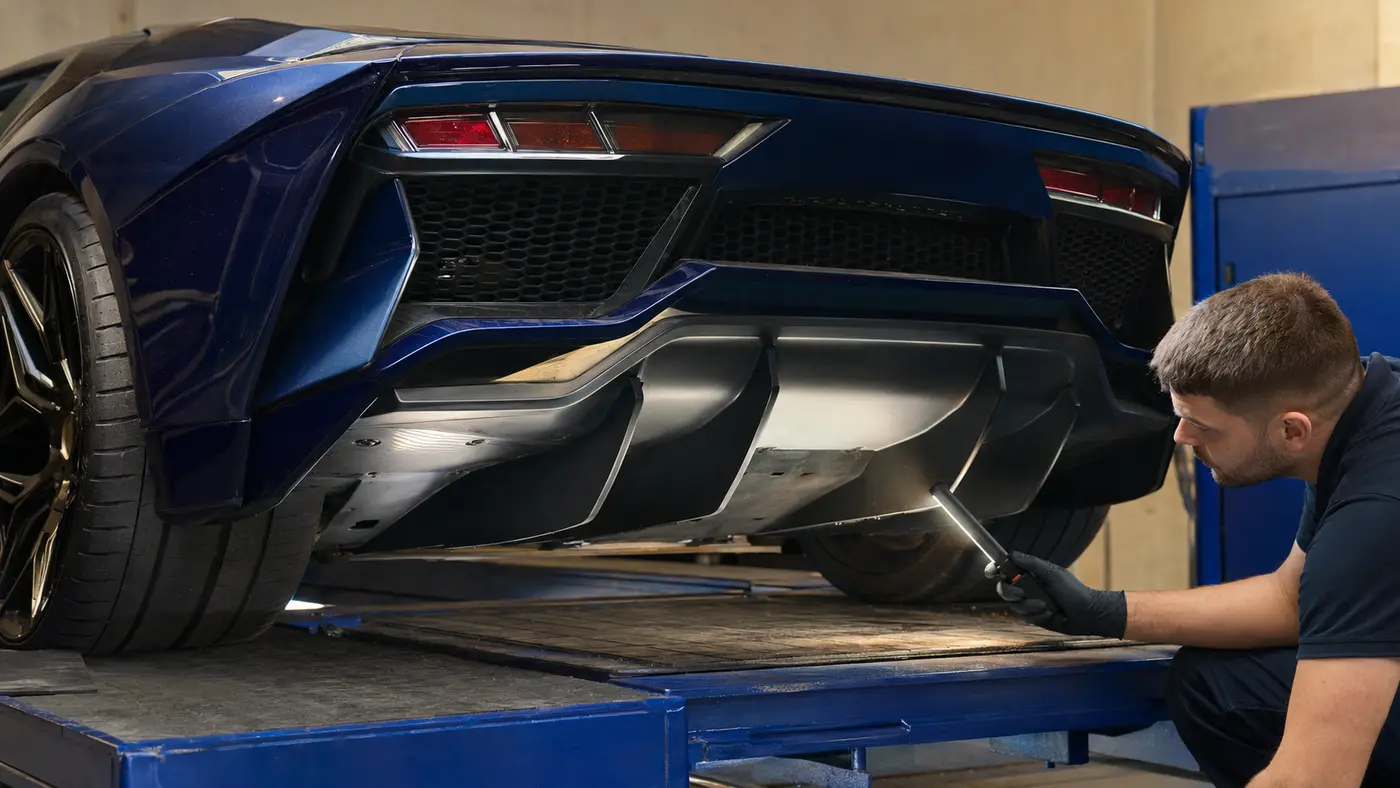
Diffuser damage should be read together with the bumper and underbody
A rear diffuser can show the first abrasion because it sits low, but the final scope depends on more than the visible face. We check whether the part remains evenly retained, whether its fins and edges are distorted, and whether the surrounding bumper or underbody panels have shifted. A missing fastener can be the result of impact, previous work or ordinary wear, so the condition needs context rather than assumption.
If a rear corner has been pushed inward, the bumper cover may flex back while its guides or adjacent fittings stay displaced. The result can be a gap that widens near the quarter, an edge that no longer follows the lamp, or a lower piece that sits on a different plane. Careful accident repair planning considers these relationships before paintwork begins.
Any report of exhaust noise, fluid marks, warning messages, steering change or tyre contact belongs outside a cosmetic promise. Those signs require an appropriate mechanical or diagnostic assessment. Body repair should not be used to imply that unrelated systems have been checked when they have not.
Surface and material identification changes the repair method
Not every visible Lamborghini exterior part should be treated as the same material, and construction can vary by model, year, option and exact component. A bumper cover, removable trim, painted panel, liner or decorative insert can respond differently to impact, heat, sanding and refinishing. We avoid assigning a material from appearance alone when the part, repair information or a closer examination is needed.
For metal panels, dent location, edge proximity, access and the amount of stretching influence whether correction is practical. A shallow dent on an open area can present a different path from a sharp fold across a styled crease. Where paint remains intact and the condition is suitable, dent removal may be considered. It is not promised before access, coating condition and panel behavior are understood.
Plastic parts require attention to crack position, deformation, missing material and the integrity of mounting points. A repairable cosmetic crack is different from damage through a stressed tab or precision joint. Decorative or lightweight exterior pieces also need identification before any heat, adhesive, sanding or coating process is selected.
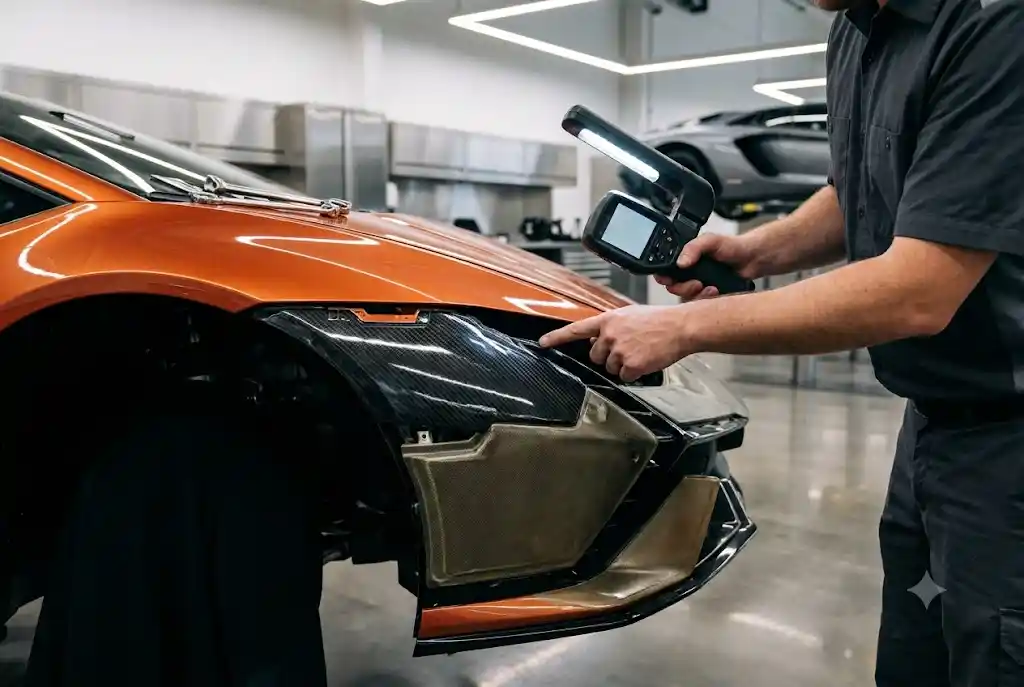
What changes the scope across common Lamborghini body repairs
| Area | What the inspection looks for | What can change the decision |
|---|---|---|
| Front bumper and splitter | Paint fracture, lower abrasion, cover distortion, grille fit, lamp and wing gaps, tabs and undertray edge | Movement through lower attachments or damage across multiple finishes can expand the work beyond one painted face |
| Side sill and lower intake | Kerb contact, crushed or scraped returns, loose trim, aperture shape, adjoining door and quarter relationships | Limited access, mixed surfaces and deformation near attachment points can alter repair practicality |
| Door and sharp character line | Dent depth, paint condition, crease continuity, edge damage, opening feel and adjacent gaps | A local skin dent differs from damage involving the shell, hinge, latch or precision edge |
| Wide rear quarter | Reflection flow, wheel-arch radius, lamp and bumper fit, vent or trim edges, access behind the damaged zone | A fixed body panel and a broad visual surface require a different decision from a small removable part |
| Rear bumper and diffuser | Corner shape, guides, lower fins, underbody fit, lamp relationship and evidence of transferred load | The outer cover can recover its shape while concealed supports or retainers remain displaced |
| Painted trim or insert | Exact part identity, coating condition, cracks, missing material, clips and surrounding finish | The suitable preparation and coating system depends on what the component actually is |
The best decision protects fit, finish and a realistic scope
Replacement is not automatically the premium answer, and repair is not automatically the economical answer. The decision should reflect the actual part and the quality that can reasonably be achieved.
When repair may be sensible
- Deformation is controlled and accessible
- Edges and mounting points remain sound
- The material and method are established
- The expected shape and finish are achievable
A repair plan should still account for preparation, adjacent finish and any dismantling needed to work without damaging nearby pieces.
When replacement may be considered
- A part is torn, severely stretched or missing material
- Critical tabs or precision joints are compromised
- Previous work has weakened the damaged zone
- A credible repair cannot restore stable fit or appearance
Part availability, related hardware and refinishing remain part of the replacement scope.
What stays uncertain at first
- Condition behind flexible covers
- Hidden fasteners and bracket points
- Previous filler or refinishing beneath the surface
- Insurer response to supplementary findings
A clear estimate separates confirmed operations from items that depend on access or authorization.
Sharp transitions make colour and reflection errors easier to see
Paint matching begins with the vehicle, not only the code. Production variants, age, ultraviolet exposure, prior refinishing and panel orientation can influence the existing appearance. Metallic and pearl finishes also change with the viewing angle. A formula that looks close on one face can appear lighter, darker or differently oriented on the next sharply angled surface.
Test applications help compare alternatives before the vehicle is committed to colour. The painter considers ground shade, application distance, overlap, metallic orientation and the space available for a controlled transition. A narrow angular panel can offer less blend room than a broad flat door, while an abrupt body line can alter how the eye reads the same colour.
Good car painting also depends on preparation. Repair contours, primer edges, sanding refinement and masking strategy affect how light travels across the finished panel. Clear-coat texture and gloss should support the surrounding vehicle rather than create one unnaturally perfect island.
Final evaluation should use controlled inspection lights and, when practical, Dubai daylight. Direct sun exposes metallic orientation and fine texture. Shade can reveal hue differences. Low-angle light reveals waves or a body line that has lost its intended sharpness.

An earlier repair can change the new plan
A panel may already contain refinishing, filler, repaired tabs or a changed coating system. That history can remain hidden until film thickness, edge behavior or dismantling gives more information. New work applied over an unstable repair can inherit its problems, so the condition beneath the latest mark matters.
Differences in texture, overspray, tape edges, uneven gaps and disturbed fasteners can provide clues, but they are not proof of a particular repair method. We record what can be observed and explain where further preparation may reveal more. If an existing defect sits outside the new incident, it should be separated from the accident scope where possible.
This is especially important around bumper retainers and lower trim. A piece that has previously been bonded or adapted may not respond like an undamaged original attachment. The estimate should avoid promising a simple clip replacement until the joint is accessible.
From arrival to handover
1. Record
We discuss the incident, photograph the damage and note fit, surface condition, lower-edge contact and reported warnings.
2. Access
Where agreed and necessary, removal or safe lifting provides a clearer view of attachments and concealed areas.
3. Define
The scope separates confirmed work, parts, refinishing and items that depend on new findings or insurer response.
4. Restore
Panel form, part fit, preparation and paint stages follow the agreed route, with material changes communicated.
5. Inspect
Shape, gaps, finish, cleanliness and basic functions within the repair area are reviewed before handover.
Keep the claim scope connected to visible evidence
For insured accident work, the policy and insurer determine coverage. The body shop contributes a documented assessment, proposed operations, photographs and part information. We do not promise that an insurer will accept every item, choose a particular part type or respond within a fixed period.
A first estimate may be based on external inspection. If agreed dismantling reveals a broken guide, concealed distortion or another impact-related condition, supplementary evidence may be prepared for insurer consideration. Extra work should not quietly appear at handover. A material change belongs in the conversation when it becomes known.
Existing scratches, older paint defects and unrelated underbody marks should be distinguished from the reported incident where possible. Clear separation improves the repair record and helps prevent confusion about what the insurer or owner has authorized.
A practical Lamborghini handover review
Look beyond gloss. The repaired area should work visually with its adjoining panels, trims and lower edges.
- View the repaired surface from a low angle to check reflection flow.
- Follow each sharp body line into the neighboring area.
- Compare bumper, lamp, wing and quarter gaps where a useful reference exists.
- Inspect splitter, sill, diffuser and liner retention without forcing them.
- View metallic or pearl colour in workshop light, shade and daylight when practical.
- Check that texture and gloss do not change abruptly at the repair boundary.
- Open and close any door, bonnet or rear cover involved in the scope.
- Check basic lamp and parking-aid behavior if those items were removed or affected.
- Confirm agreed parts and operations appear clearly on the paperwork.
- Ask what washing and surface-care guidance applies to the fresh finish.
- Report warning messages, new noise, looseness or contact promptly.
- Keep repair documents and photographs with the vehicle records.
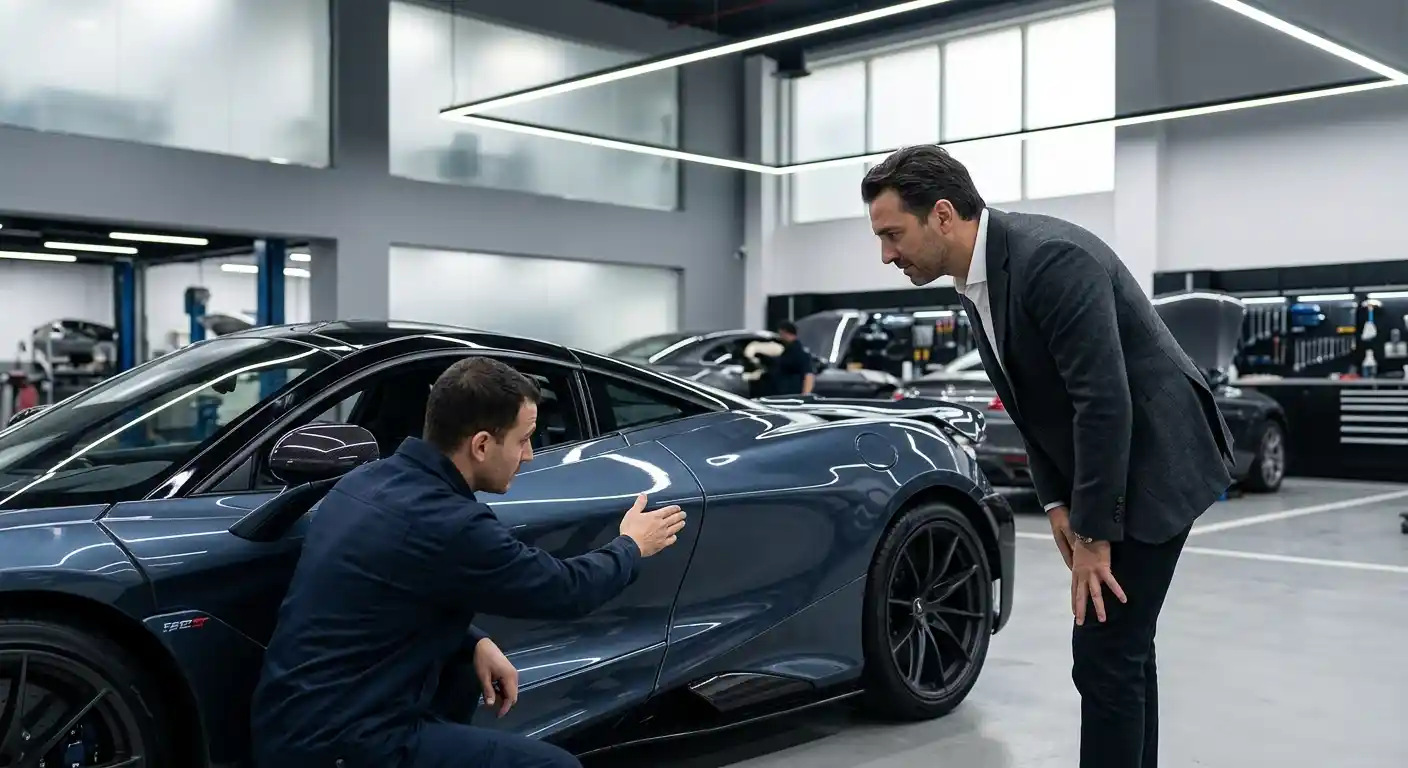
Turn the estimate toward the actual repair depth
Lamborghini body damage can involve a low bumper edge, splitter area, sill transition or wide curved surface. The planning band should follow what needs to be restored, removed, refinished or replaced, not how dramatic the close photograph appears.
Surface mark
From AED 150For light bumper polishing or transfer removal when shape and coating remain suitable.
Dent control
AED 150 to AED 700Small PDR is about AED 150 to AED 350. Medium dent work is about AED 350 to AED 700.
Repair and paint
AED 500 to AED 1,500Bumper plastic repair plus paint is about AED 500 to AED 1,200. Complete bumper repainting is about AED 600 to AED 1,500.
Part or structure
Inspect firstBumper replacement is about AED 1,200 to AED 6,000 or more. Structural work is about AED 2,000 to AED 5,000 or more.
A larger conventional dent with paint is about AED 700 to AED 1,200 or more, and panel painting starts from AED 450. Low clearance pieces and sharply defined transitions may require removal and access checks before anyone can responsibly choose repair or replacement. The estimate should state whether lower trim, retainers, adjacent panels and provisional parts are included.
Indicative planning bands only. An inspection is required. Lamborghini make and model, material, parts, finish, hidden damage and current market conditions affect the final quote. These figures do not assume carbon fibre, do not create a brand premium and do not guarantee that a visible component is repairable.
Lamborghini body repair FAQs
Can you estimate Lamborghini body damage from photos?
Photos can support an initial discussion and show the main location, but they can hide shallow distortion, underside contact, damaged tabs and previous work. A final scope usually depends on physical inspection and, for some areas, agreed access.
Should a scraped front splitter be repaired or replaced?
That depends on the actual component, material, depth of damage, deformation, missing material and attachment condition. A surface abrasion presents a different decision from a crack or damage through a stressed mounting point.
Why inspect the underbody after a low-speed kerb impact?
Low contact can push a lip, liner, undertray edge or nearby fastener upward while leaving limited visible damage above. Inspection helps establish whether the issue is only cosmetic or includes displaced attachments.
Can a Lamborghini dent be removed without repainting?
Possibly, when the paint is intact, the panel and dent are suitable, access is workable and the metal has not been severely stretched. Sharp creases, edges, fractured paint and uncertain materials can require another route.
Can a cracked bumper be repaired?
Some plastic bumper damage can be repaired, depending on crack location, distortion, missing material, mount integrity and the finish expected. Replacement may be more sensible when precision joints or highly stressed areas are compromised.
How do you match Lamborghini metallic or pearl paint?
The code is a starting reference. Existing colour, variants, previous refinishing, test applications, ground shade, application technique and blend strategy all influence the result. Evaluation under more than one light condition is important.
Will paint need to be blended into an adjacent panel?
It depends on colour, repair location, panel orientation and available transition space. Blending is considered for visual continuity, not applied as an automatic rule to every repair.
What if hidden damage appears after dismantling?
Findings that materially change the agreed scope should be documented and communicated before additional work. For an insurance claim, supplementary items may require insurer consideration.
Do you repair carbon fibre Lamborghini parts?
No universal promise is made. The component and damage must first be identified. Any specialized repair route depends on the actual construction, condition, applicable information and available capability. Replacement or referral may be the responsible outcome for some parts.
How long does Lamborghini body repair take?
Timing depends on damage, access, parts, previous repairs, insurer response, preparation and refinishing. A small cosmetic repair can be shorter than work involving several panels or concealed damage. A useful estimate follows inspection.
Is BodyShop.ae affiliated with Lamborghini?
No. BodyShop.ae is an independent Dubai body shop and is not affiliated with or endorsed by Lamborghini or its related companies. The brand name is used only to describe vehicles for which customers request service.
Bumper and low-panel repair must preserve sensor position
Where parking sensors, cameras or other fitted equipment are present, the repair plan records their openings, brackets and physical position before paint or reassembly. A cosmetic repair does not by itself prove electronic function or calibration; any warning, moved mounting point or model-specific requirement remains a separate diagnostic or calibration decision.
Arrange a Lamborghini bodywork inspection in Dubai
Send a full view, close damage photographs and images of the lowest affected edge. Include the model year, how the contact occurred, and any warning or change you noticed afterward.