

McLaren Body Shop Dubai
Low noses, sculpted airflow surfaces and lightweight-looking components make visible damage only part of the assessment. We inspect the affected zone, identify the actual component and plan the repair around fit, finish and the route the impact may have taken.
A sports car body repair plan should follow the damage path
A scrape on a low front corner can involve more than the surface that first catches the eye. The bumper cover, lower lip, nearby grille, mounting points, wheel-arch edge and underbody fixings may all sit close together. A side contact can connect the door edge, sill, quarter transition and wheel opening. The correct starting point is therefore a careful inspection of the complete local zone.
Our independent McLaren body shop service in Dubai is intended for dents, scratches, bumper damage, panel distortion, paint defects and accident-related bodywork. The first visit is used to establish what is visibly damaged, which areas need closer access and which decisions cannot responsibly be made from a photograph alone. That prevents a quick cosmetic description from becoming a premature repair promise.
We do not assume that every dark patterned part is carbon fibre, that every lower component is repairable or that every dent requires replacement. Model, component construction, previous repairs, access and damage severity can change the sensible route. Identification comes before method.
Three areas where a small contact can become a wider question
These zones are not a claim about the construction of every McLaren model. They are practical inspection areas on low, wide sports cars where adjacent fit, attachment points and surface flow deserve attention.
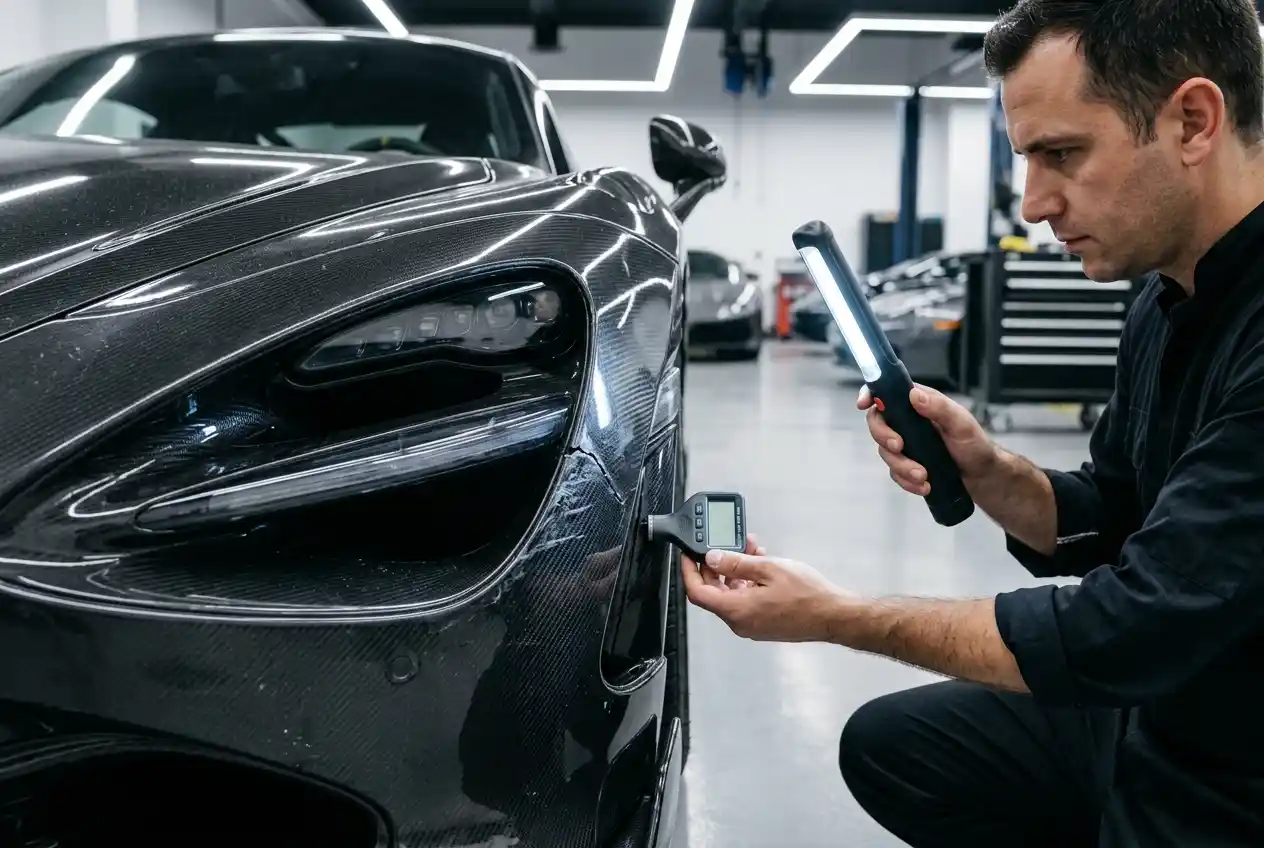
Low nose, bumper and splitter area
Kerbs, ramps and road debris can mark the visible lower edge while loading nearby fasteners or guides. We look at the scuffed face, lower contour, bumper-to-wing fit, wheel-arch connection and accessible underside. A loose corner or changed gap may indicate that the repair scope is wider than polishing the mark.
Side sill and door transition
The sill sits low and can be contacted by kerbs, lifting errors or side impacts. The assessment considers surface damage, door clearance, lower seals, edge condition and the relationship between the sill and rear quarter. Hinge-adjacent damage receives extra caution because door position and access affect the plan.
Wide quarter and rear lower area
A wide rear quarter can show shallow distortion across a long reflection line. Lower down, the bumper, trim, diffuser-like part and their fixings may carry separate damage. We separate painted surface work from component questions so the estimate does not hide uncertainty behind one broad line item.
Door edges and sill damage need clearance checks
A mark at the lower door edge can be visually small but awkwardly positioned. Before choosing a method, we check whether the door opens and closes normally, whether the edge has folded, whether the gap has changed and whether the sill or adjacent quarter carries related distortion. We also look for paint splitting at a sharp edge, because that can expose the substrate and change the refinishing scope.
Damage close to a hinge or mounting area is treated with restraint. We do not infer alignment from a single photograph and we do not force a cosmetic method onto an area where access or movement needs to be established first. When the dent is shallow, paint is intact and safe access is available, dent removal options may be considered. If the paint is broken, the edge is sharply creased or the component identity changes the method, conventional body and refinish planning may be more appropriate.
- Door movement and clearance through the opening arc
- Gap consistency at the lower edge and adjacent panels
- Paint cracking, transfer, chips and exposed substrate
- Sill contour, attachment condition and accessible underside
- Previous filler, repainting or blended finish in the same area
Appearance does not prove material or repair method
A sports car can place painted panels, plastic covers, trims, composite parts and patterned finishes close together. The visible face may not reveal the underlying construction. Before describing a part as aluminium, carbon fibre or another composite, the component must be identified using available model information, part references, accessible observations and, where necessary, further verification.
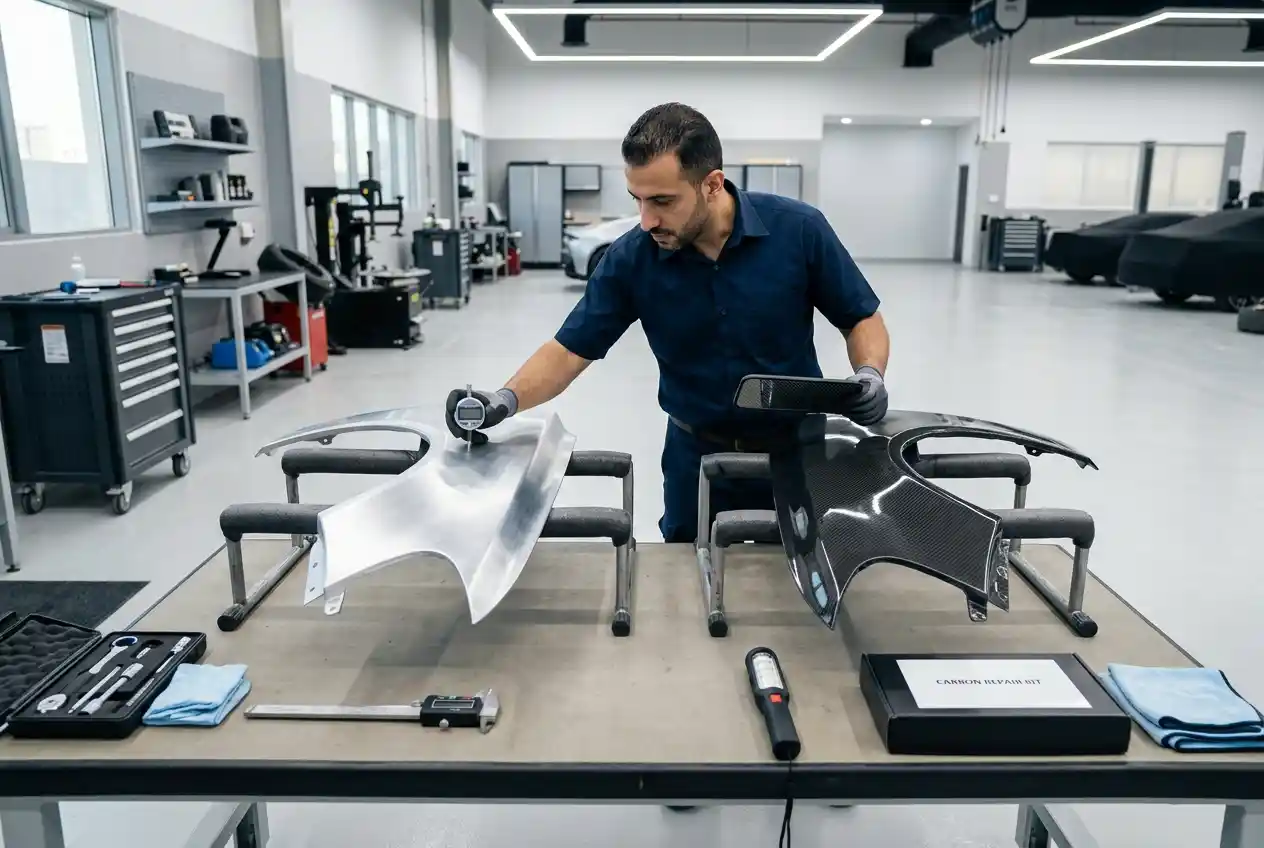
Check the shape, edge, access, paint condition and the way the surface joins adjacent pieces. The repair route depends on more than the visible colour.
Inspect deformation, splitting, torn mounting points, sensor apertures and nearby guides. A cover that returns to shape can still have attachment damage.
Do not label it by appearance. Determine whether the pattern is structural material, a cosmetic surface, a film, a trim or another construction before proposing work.
Material type, thickness, joining method, location and heat sensitivity can affect the decision. Verification is part of responsible scoping.
This identity gate protects the estimate from two common errors: promising a repair process that does not suit the actual part, and ordering a replacement before the condition and construction are understood. If identification remains uncertain at the first inspection, the uncertainty should be stated plainly rather than converted into false confidence.
Hidden lower impact paths matter
Low vehicles are exposed to ramps, parking stops, kerbs and debris at areas that are difficult to see while the car is on the ground. A front lower impact can travel from a lip or bumper corner to guides, fasteners, liners or an undertray connection. A side impact can involve the sill underside. A rear contact can affect the lower bumper edge and nearby trim attachment even when the painted face looks acceptable.
We begin with non-destructive observations and visible fit. If the evidence supports closer access, the scope can be revised after agreed removal of a liner, trim or cover. This staged approach is useful because it separates what is known from what still requires access. It also gives the owner or insurer a clearer reason for any estimate change.
Signs that can justify a wider check
- A bumper corner that sits proud or moves unusually when lightly checked
- A changed gap at the wheel arch, lower lamp area or adjoining panel
- Missing, loose or visibly displaced lower fasteners
- Scraping that continues underneath beyond the visible face
- New vibration, rubbing or a loose-panel sound after the incident
- Cracked paint near an edge even when the main surface looks shallow
Colour is only one part of a convincing finish
A successful refinish should be evaluated for colour, metallic or pearl orientation, gloss, texture and the way reflections travel across the repaired area. On a wide quarter panel or sculpted bumper, a mismatch can become more noticeable as the viewer moves around the car. Lighting conditions also matter. A colour that appears close under one lamp can separate outdoors or at a different viewing angle.
The paint plan starts with the actual colour code and a physical comparison against the vehicle. Previous repainting, ageing, surface polishing and adjacent-panel variation can affect the match. Test applications can help refine the formula and application before the final coat is committed. Blend decisions should be based on colour behaviour, panel layout and the repair location, not used automatically.
Preparation is equally important. Edges, apertures, repaired substrates and adjoining trim need a controlled masking and refinishing plan. Our car painting service covers preparation, colour matching, application and finish review for suitable assessed repairs. The exact process is confirmed only after the damage and component are identified.
The decision should be evidence-led
Replacement is not automatically the premium answer, and repair is not automatically the economical answer. The sensible route is the one that respects the component, restores acceptable fit and finish, controls risk and can be explained clearly.

Repair may be considered when
The damage is limited, the component and method are identified, access is workable, critical attachment points remain suitable and the expected finish can be achieved without an unreasonable process.
Replacement may be considered when
The part is split, torn, severely distorted, delaminated, heat affected, damaged at important mountings or otherwise outside a sensible repair scope. Availability and complete part specification still need confirmation.
More inspection is needed when
The material is uncertain, hidden connections cannot be seen, door or panel movement has changed, prior repairs complicate the substrate or the estimate depends on safe removal of adjacent parts.
For accident-related damage, the broader body repair assessment can document visible panels, bumper areas, fit and related paintwork in one scope. Any additional findings discovered after authorised access should be photographed and explained before the plan changes.
How an inspection-led McLaren body repair progresses
Initial damage record
We record the affected side, close details, panel relationships and the owner’s account of the incident. Photographs are taken before work so the starting condition is clear.
Zone and component review
The visible surface, adjoining edges, lower areas, gaps and accessible attachments are checked. Component identity and any uncertainty are noted before a method is proposed.
Estimate with decision points
The estimate separates known repair operations, paintwork, parts under consideration and items that require closer access. This gives owners and insurers a usable scope rather than a vague total.
Agreed access and repair
Work begins after the route is accepted. If controlled removal reveals additional damage, the finding is documented and the scope is updated before related extra work proceeds.
Preparation and refinishing
Repaired surfaces are prepared, colour is checked against the car and the selected paint process is applied. Trim, apertures and adjacent surfaces are protected according to the job.
Reassembly and final review
Accessible fasteners, gaps, edges and finish are reviewed after reassembly. The handover covers the completed scope and any relevant aftercare for the new finish.
What controls the schedule
Body repair timing is driven by the confirmed scope, not just the number of visible marks. A localised paint repair with straightforward access may move quickly. A job involving part verification, insurer authorisation, hidden lower damage or a difficult finish can require additional stages. We prefer to explain those dependencies instead of offering a fixed duration before the inspection.
| Schedule factor | Why it matters | What improves planning |
|---|---|---|
| Component identification | The correct repair route and part enquiry depend on knowing what is actually fitted. | Model details, clear photographs, part references and an in-person inspection. |
| Parts availability | Stock, exact specification, clips, guides and related fittings can affect both cost and arrival time. | Confirm the full required list after inspection before relying on a provisional date. |
| Insurer approval | A claim may require documents, photographs, survey or revised authorisation after hidden findings. | Share insurer instructions early and keep scope changes documented. |
| Paint complexity | Colour variation, test applications, blending decisions and cure stages can extend the process. | Assess the physical vehicle under controlled light before finalising the refinish plan. |
| Prior bodywork | Old filler, repainting or a previous blend can change preparation and colour behaviour. | Disclose known repair history and allow the substrate to guide the estimate. |
If a claim is involved, bring the registration card, driving licence, incident documents and insurer instructions that apply to your case. Requirements can vary. We can prepare an inspection record and repair estimate, but claim acceptance and authorisation remain with the insurer and the policy terms.
Protect the evidence and avoid making the damage harder to read
Take wide and close photographs before cleaning or moving anything around the impact area. A wide view records the relationship between panels, while an angled close view can show a changed gap, lifted edge or reflection line. If another vehicle or object was involved, keep the incident photographs separately from the workshop images.
Avoid aggressive polishing, sanding, pressure washing or solvent use on the damaged finish. Paint transfer can sometimes help explain the contact, and a cracked edge can worsen if it is flexed repeatedly. Strong adhesive tape placed directly on a painted or patterned surface can also create another finish problem. If a loose piece must be temporarily secured for transport, ask for guidance on a safe location and method.
Consider recovery instead of driving when
- A lower panel or liner is hanging close to the road or tyre
- The wheel rubs, steering feels different or the vehicle no longer tracks normally
- A door, bonnet or cover will not latch in its normal position
- Fluid is visible after the impact or a warning appears
- Broken material has sharp edges that cannot be safely contained
These signs do not diagnose the underlying problem. They are reasons to avoid adding movement, heat or vibration before the vehicle can be checked. When in doubt, describe the symptoms and the incident before arranging transport.
Handover should include shape, fit and finish
The last inspection should not be reduced to whether the colour looks shiny. We review the repair area at practical viewing angles, including reflection lines across wide surfaces. Gaps and edge relationships around the worked zone are compared for consistency. Where lower trim or bumper pieces were removed, accessible attachment and seating points are checked after reassembly.
The finish is viewed under controlled lighting for colour behaviour, texture, gloss, overspray, dust inclusions and polishing marks. Exterior lighting provides another useful view when conditions allow. Door or panel operation affected by the repair area is checked without forcing movement.
Track cost by impact depth and confirmed component
A McLaren body repair estimate should follow the damage path across the low nose, splitter area, sill, door transition or rear lower zone. These bands provide planning signals while material, access and part identity are still being confirmed.

The quotation should not assume a material from appearance. It should name the component, access plan, finish operation, neighbouring fit checks and any provisional part. Lower contact can also make recovery or further technical assessment more important than a quick cosmetic price. Those boundaries need to remain visible in the estimate.
Indicative figures only. An inspection is required. McLaren make and model, material, parts, finish, hidden damage and current market conditions affect the final quote. These bands do not imply an authorised repair claim, a fixed brand premium or guaranteed repairability.
McLaren body repair FAQs
Can you assess a McLaren from photographs?
Photographs can help identify the general area and prepare for a visit, but they cannot reliably show all distortion, component construction, attachment damage or hidden lower impact paths. A firm repair plan normally requires an in-person inspection.
Do you repair McLaren front splitters and lower bumper damage?
We assess low front damage, including the painted bumper, lower lip or splitter-like component, adjoining fit and accessible underside. Repairability depends on the identified part, damage severity, mountings and available method.
Can a scratched carbon-looking part be repaired?
Appearance alone does not confirm carbon fibre or any other material. The part and surface construction must be identified first. The answer then depends on whether the damage affects only a cosmetic finish or extends into the component.
Is paintless dent removal suitable for a McLaren?
It may be considered for some shallow dents where the paint is intact, the component is identified and safe tool access is available. Sharp creases, edge damage, broken paint or unsuitable construction can rule it out.
Why does a small sill mark need a wider inspection?
The sill is close to the door edge, lower seals, quarter transition and underside. A side contact can affect fit or attachment beyond the visible scuff, so the surrounding zone should be checked before a cosmetic method is chosen.
Can you match McLaren metallic or pearl paint?
We assess the colour code, the actual vehicle finish, adjacent-panel variation and previous repainting. Test applications and controlled lighting can help refine the match. The final plan depends on the colour and repair location.
Will the adjacent panel need blending?
Not automatically. The decision depends on colour behaviour, panel layout, repair position and the match achieved during testing. It should be explained as part of the paint plan.
How do you decide whether to repair or replace a damaged part?
We consider component identity, cracks or tears, distortion, mountings, edge condition, access, previous work, expected finish, parts information and overall repair risk. No single factor decides every case.
Can hidden damage change the estimate?
Yes. Lower fasteners, guides, liners or connections may not be visible until agreed access is provided. Additional findings should be photographed, explained and approved before they are added to the work.
Do you handle insurance repair estimates?
We can inspect the visible damage and prepare a repair estimate. The insurer may request documents, survey, authorisation or revisions. Coverage and approval depend on the policy and insurer.
How long does McLaren body repair take in Dubai?
Timing depends on the confirmed damage, access, parts, insurer response, paint process and any hidden findings. A reliable schedule is given after the scope and main dependencies are understood.
Are you affiliated with McLaren?
No. Bodyshop.ae is an independent body and paint repair business. We do not claim manufacturer affiliation, authorised repairer status or manufacturer approval.
Show us the whole affected area, not only the closest scratch
Send several photographs and basic vehicle details on WhatsApp, or arrange an inspection at our Al Quoz 4 workshop. We will separate visible facts, component questions and possible hidden work so the next decision is easier to understand.
Bodyshop.ae is an independent repair business and is not affiliated with, endorsed by or an authorised repairer for McLaren Automotive.