
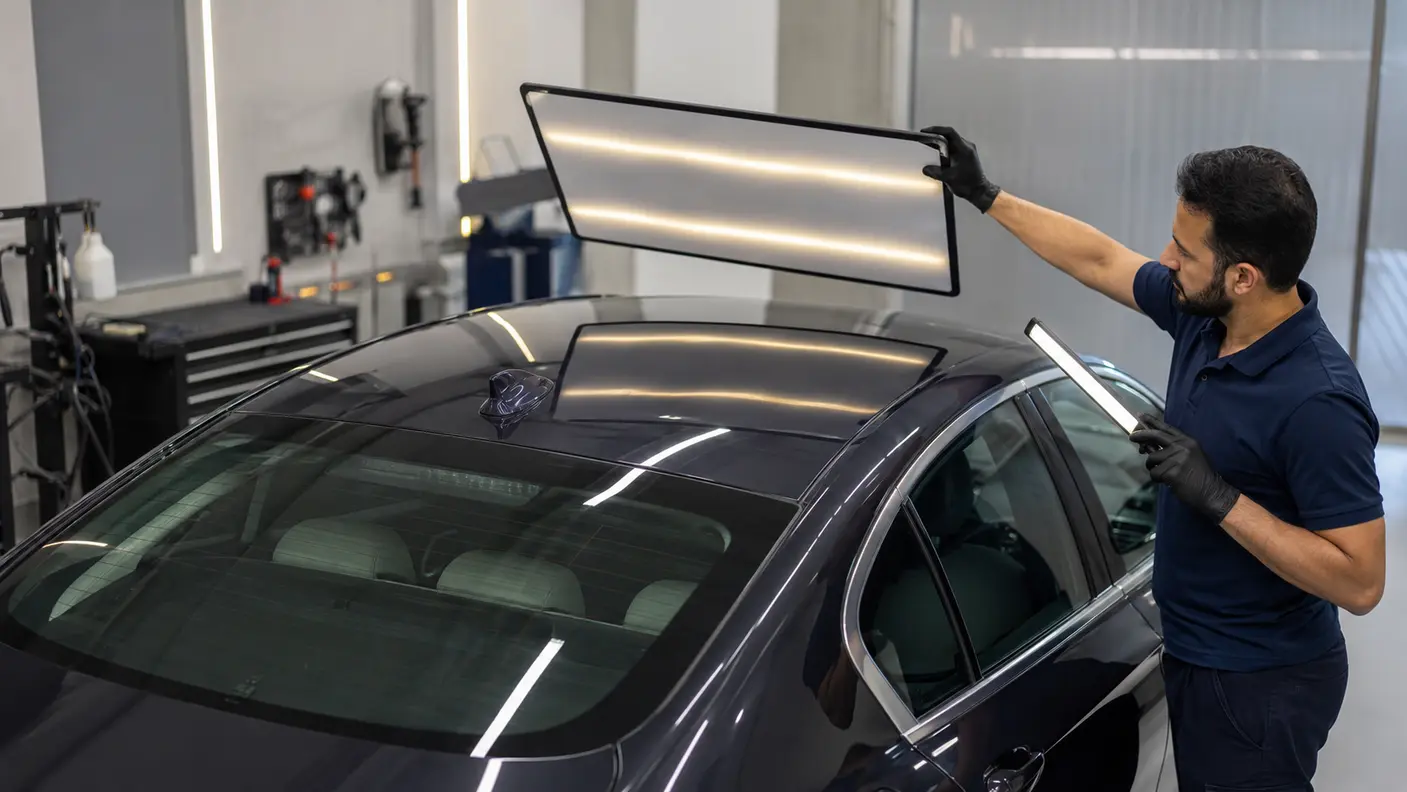
Broad reflections, roof edges and complete closure checks
Car Roof Repair Dubai
Roof damage is rarely judged well from one overhead photograph. We read the complete panel through long reflections, follow the gutters and glass apertures, consider safe access beneath the roof, and separate a suitable dent or paint repair from damage that needs wider collision or specialist assessment.
The roof works as one long visual surface
A small mark can sit inside a much larger change in shape
A clean, dry roof reflects the sky, overhead lights and building lines across a broad area. Those long reflections help reveal low spots, raised crowns, edge movement and wider distortion that a close-up photograph can miss.
Read the shape from several directions
Inspection is not limited to a view from directly above the dent. We look along the vehicle length, across its width and toward the front and rear glass. A shallow falling-object dent may have a low centre with a raised crown, while hail damage can appear only as controlled light moves across the panel. A crease near an edge can also disturb a channel or change how trim sits.
Let paint condition influence the repair route
Intact paint can keep paintless dent repair in consideration when shape, material and reverse access are also suitable. Cracked clear coat, split colour, exposed metal, previous filler or a poorly bonded old repair changes the plan. The aim is to choose the least intrusive method that can still produce a stable result.
Identify the construction before promising a method
Roof construction varies between conventional steel skins, aluminium, composite or bonded sections, panoramic glass, integrated rails and model-specific reinforcement. Material and attachment should not be inferred from appearance. Vehicle information and physical inspection must guide access and repairability. The BMW M3 body repair guide provides a model-specific example where carbon-roof boundaries and adjoining arch geometry affect the inspection plan.
Send one full-roof view from each front corner, one shallow side angle showing reflections, close images of the damage, and any affected roof edge, glass seal or interior water mark. Photographs help with triage, but the final method and price follow physical inspection.
A six-zone roof assessment
Where the damage sits can matter as much as its diameter
The roof centre, reinforced zones and attachment edges do not offer the same access or tolerance. Our first pass divides the area into practical inspection zones.
Broad centre panel
Long open areas can show wide distortion under reflections. We assess depth, metal stretch, paint condition and likely reverse-side access before discussing PDR or conventional repair.
Roof edges and channels
A dent near a gutter, ditch moulding or folded edge may be stiffer and harder to access. Trim fit, sealant and water paths must be considered before work starts.
Front glass aperture
The upper windscreen relationship is checked for a changed edge, disturbed moulding, cracking, corrosion or signs that the incident extended beyond the visible roof mark.
Rear glass and upper closure
We compare the rear roof edge, glass seal, boot or tailgate relationship and interior trim where the damage occurred near the back of the roof.
Rails and mounted trim
Roof rails, mount covers, antenna housings and decorative strips may hide fasteners or sealing points. Their condition and removal needs affect access and timing.
Interior access zone
Headliner, wiring, airbags and trim may sit beneath the panel. Presence varies by vehicle, so access must be planned rather than obtained by blind pressure or drilling.
Swipeable roof-damage field guide
Different causes leave different repair clues
The incident history points the inspection in the right direction, but the roof still decides the method. Swipe or scroll through the most common starting scenarios.
Hail and multiple shallow dents
Hail can produce many small lows over a broad area. We count the affected zones, check paint, note roof bracing and evaluate whether controlled paintless access is practical across the whole pattern.
Look for: repeated reflection breaksFalling-object impact
A branch, debris or dropped item can create a deep centre, sharp crease or surrounding crown. Paint cracking, edge proximity and the force path influence repairability more than diameter alone.
Look for: one centre plus raised edgesParking structure scrape
Low clearance can scrape rails, antenna housings or the roof skin. The mark may combine coating loss, crushed trim and deformation, so every contact point is recorded before refinishing.
Look for: damage along a travel lineSun and clear-coat failure
Dubai exposure can leave fading, oxidation, loss of gloss or peeling clear coat without a single impact centre. Coating failure needs a paint-system assessment, not dent pushing.
Look for: diffuse surface changeCollision or rollover load
A changed roof edge, pillar relationship, glass opening or door aperture can signal a wider event. Cosmetic work should pause until an appropriate collision and safety assessment defines the scope.
Look for: altered openings and gaps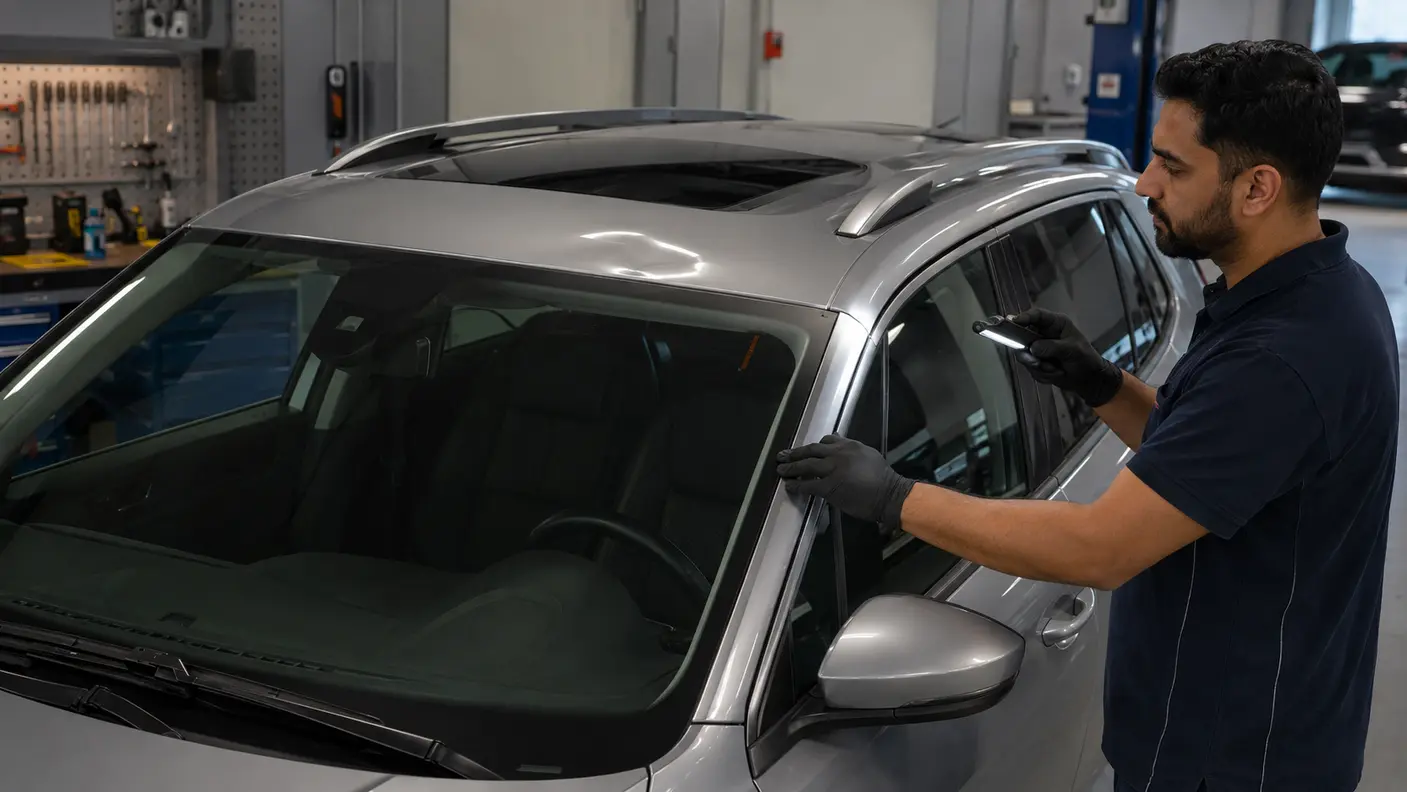
Edges, glass and water paths
A dry-looking roof dent can still involve sealing details
Roof edges can include ditch mouldings, rail mounts, antenna seals, bonded glass, seam sealer and model-specific trim. We check for displaced covers, lifted mouldings, cracked sealant, corrosion and signs of earlier repair.
Interior moisture can travel along the headliner, pillar trim or seams. Air-conditioning condensation, sunroof drainage, glass bonding and body seams may also be involved. Roof damage and a leak can overlap, but one does not prove the other.
Glass removal, leak testing, sealing and drain repair are quoted separately when outside the body-and-paint scope. The source must be confirmed before specialist work is promised.
Choose the method after access and coating checks
PDR, conventional repair and refinishing solve different roof conditions
A good estimate names the intended route and the conditions that could change it. The method should follow the panel, not a preferred shortcut.
Paintless dent repair
Paintless dent repair may suit shallow or moderate dents when the paint is intact, the material is appropriate, stretch is limited and controlled access is available. A clean open dent can be a better candidate than a smaller sharp crease beside an edge or brace.
- Original coating may be retained.
- Best suited to compatible shape and access.
- Not selected when the coating has already failed.
Conventional shape and paint
Where paint is cracked, the dent is sharp or the surface requires preparation, conventional repair can include controlled shaping, limited filling where appropriate, priming, colour application and clear coat. The wide roof surface makes preparation discipline and reflection checks especially important.
- Repairs shape and damaged coating together.
- May require removal of selected trim.
- Colour and finish are checked across a broad plane.
Replacement or wider collision route
Replacement may be considered when damage is severe, torn, heavily stretched, compromised by corrosion or inseparable from a wider collision scope. Roof-panel replacement can involve attachment methods, apertures, interior protection and refinishing beyond a local dent job.
- Part and construction must be identified.
- Scope depends on attachment and adjoining areas.
- Safety-related findings need appropriate procedures.
For suitable dents with intact paint, the estimate should state why paintless work is practical for the exact roof zone, including access, brace position, coating history and the limits of the proposed correction.
Do not treat every roof problem as a dent
Impact damage and coating failure need different evidence
Impact damage usually has a force centre, crease, crown or changed edge that interrupts the panel shape. Coating failure can spread more diffusely as fading, chalkiness, peeling clear coat, microcracking or uneven gloss. Both can exist together, especially when an old dent repair or previous respray has aged in strong exposure.
A roof that has lost clear coat cannot be restored by polishing alone where the protective film has already separated. Polishing may improve oxidation or fine surface defects when enough stable coating remains, but loose or failed clear coat generally needs proper removal and refinishing of the affected area. The preparation boundary, colour condition and blend strategy must be assessed on the actual vehicle.
Likewise, painting over a dent does not correct distorted reflections. Shape correction comes first, then surface preparation and paint. If the roof has both dents and weathered coating, the estimate should separate those tasks so the owner understands why a PDR-only price is not relevant.
Interior access needs restraint
The headliner should not be disturbed without a clear reason
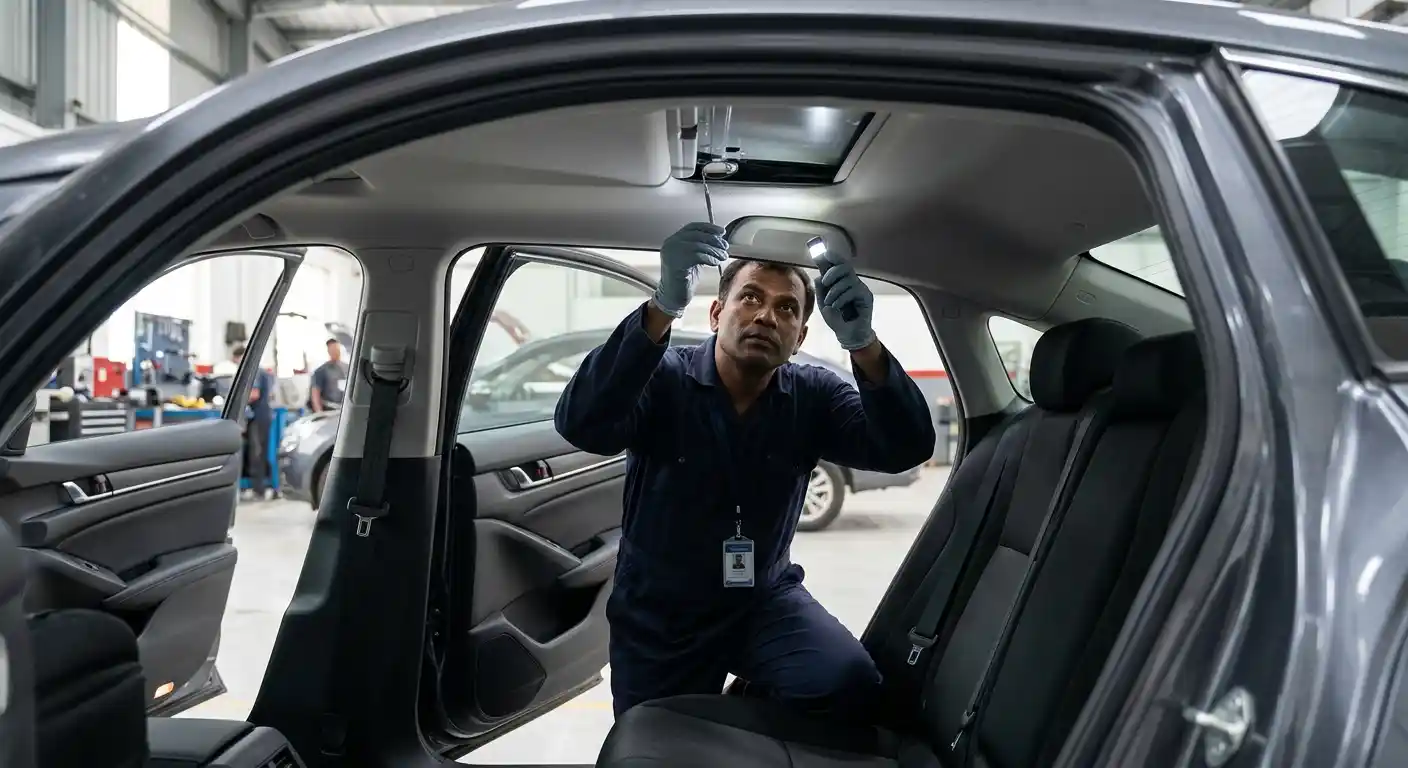
Reverse-side access can make a roof dent easier to control, but the inside of the roof may contain fragile trim, wiring, curtain airbags, microphones, antennas or other model-specific equipment.
Before any interior trim is moved, the expected access path should be understood. A headliner can crease, stain or lose shape if handled carelessly. Clips and pillar trims can be vehicle-specific. Sunroof cassettes, panoramic glass systems and roof consoles can restrict direct access to the metal. These are reasons to inspect first, not reasons to drill unseen holes or apply pressure through an unknown cavity.
Sometimes glue-pull techniques can support paintless dent work from the exterior, but suitability still depends on coating stability, previous paint and the dent shape. Refinished paint may not tolerate adhesive pulling in the same way as a known stable factory coating. The surface history therefore forms part of the risk discussion.
If access requires extensive trim or equipment work outside the approved repair scope, that requirement should be discussed before disassembly. A sensible plan protects both the roof finish and the interior components around it.
Repair or replace
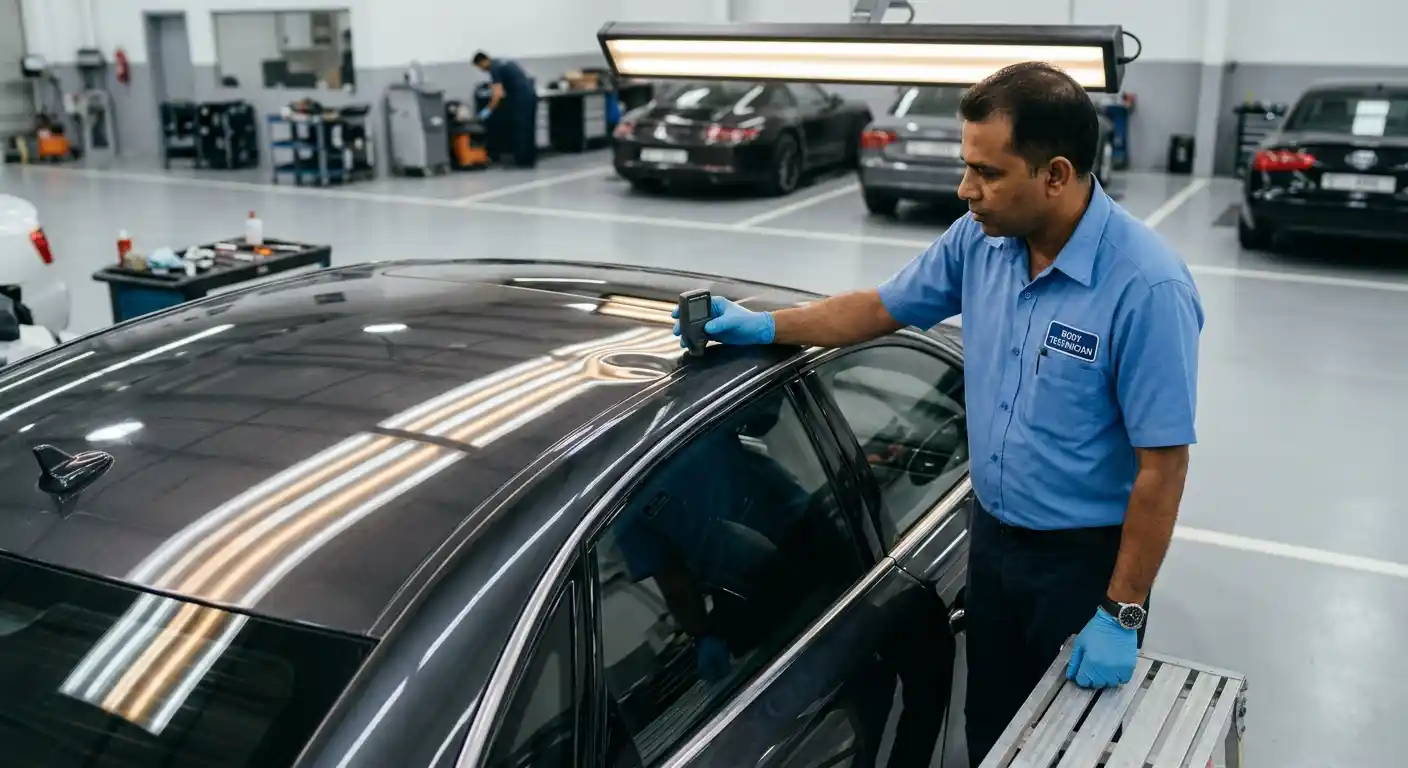
The decision is a balance of shape, access, attachment and expected finish
Repair remains worth assessing when
- The damage is local and the surrounding roof geometry remains stable.
- Metal stretch is manageable and there is no tear or severe fold.
- The coating is intact for PDR, or refinishing can address the damaged coating.
- Edges, glass apertures and mounted trim remain correctly related.
- Safe controlled access can be achieved without unjustified interior disturbance.
Replacement or wider assessment may be considered when
- The panel is severely stretched, sharply collapsed, torn or heavily creased across critical zones.
- Corrosion or extensive previous repair compromises a stable new repair.
- The roof event altered an aperture, pillar relationship or adjoining closure.
- Rollover or multi-area collision history raises wider structural questions.
- The confirmed construction and attachment method make local repair unsuitable.
These observations do not claim that a visual inspection alone validates structural safety. Where rollover load, pillar movement or aperture change is suspected, the vehicle needs an appropriate collision assessment and the repair scope must follow relevant vehicle information. Our accident repair service explains the broader inspection-led process for multi-area damage.
Roof cost planning
Car roof repair cost in Dubai
These AED planning bands compare common repair routes. The final quotation follows physical inspection of roof size, dent count, bracing, access, material, paint, glass, trim and any wider collision findings.
| Repair route | Planning band | What the band covers |
|---|---|---|
| Suitable small PDR dent | AED 150 to 350 | One uncomplicated shallow dent with intact paint and workable controlled access. |
| Suitable medium PDR dent | AED 350 to 700 | A more involved dent that remains appropriate for paintless repair after roof-brace and coating checks. |
| Conventional dent and paint | AED 700 to 1,200+ | Repairable shape damage that also needs preparation and refinishing. Broad distortion or roof size can exceed this band. |
| Panel painting | From AED 450 | A general panel-paint planning point. A roof can require more material and preparation than a smaller panel. |
| Hail, glass or replacement route | Inspection quotation | Dent count, rail or trim removal, panoramic glass, attachments, interior access and wider collision scope vary too widely for a useful generic band. |
Final pricing follows the vehicle, roof construction, damage depth, access, previous repairs, paint system, glass or trim involvement and hidden findings. When refinishing is required, the quotation should also define preparation, colour work, clear-coat scope and final reflection checks.
Insurance and documentation
A clear roof-damage record helps define the claim scope
For insurance-related damage, the first useful record includes the incident date, cause, overall vehicle views, roof close-ups, nearby glass and trim, and any interior moisture or closure changes. Hail, falling objects, parking structure contact and collision damage may be handled differently by individual policies and insurers. Coverage, excess, approval route and permitted work must be confirmed for the specific claim.
The estimate should describe the observed roof zones, proposed method, paint and trim scope, and any items that cannot be confirmed before controlled disassembly. If an insurer approves only a limited repair but inspection reveals additional related damage, the new finding should be documented before the work expands. This keeps the technical scope and authorization aligned.
We do not promise that every roof concern is covered or that an insurer will approve a particular method. Our role is to produce a clear repair assessment and supporting evidence for the agreed process.
From first inspection to handover
A roof repair needs controlled checks at each stage
Inspect and map
Clean reflections reveal dent centres, crowns, waves, coating failure and edge relationships. Photos and measurements create the starting record.
Confirm the route
Material, access, bracing, trim, paint, glass and wider-impact signs are reviewed before PDR, conventional repair or another path is approved.
Protect and repair
Interior and exterior areas are protected. Necessary trim handling, controlled shape work, preparation and refinishing follow the agreed scope.
Inspect the whole roof
Final reflections, colour, gloss, edges, trim, glass relationships and interior condition are reviewed as one complete surface.
Timing depends on the route. A suitable isolated PDR dent may be handled more quickly than conventional repair and paint. Multiple hail dents, trim removal, curing time, hidden findings, insurer approval, glass involvement or a replacement panel can extend the schedule. We prefer a realistic estimate after inspection to a short promise based on one photograph.
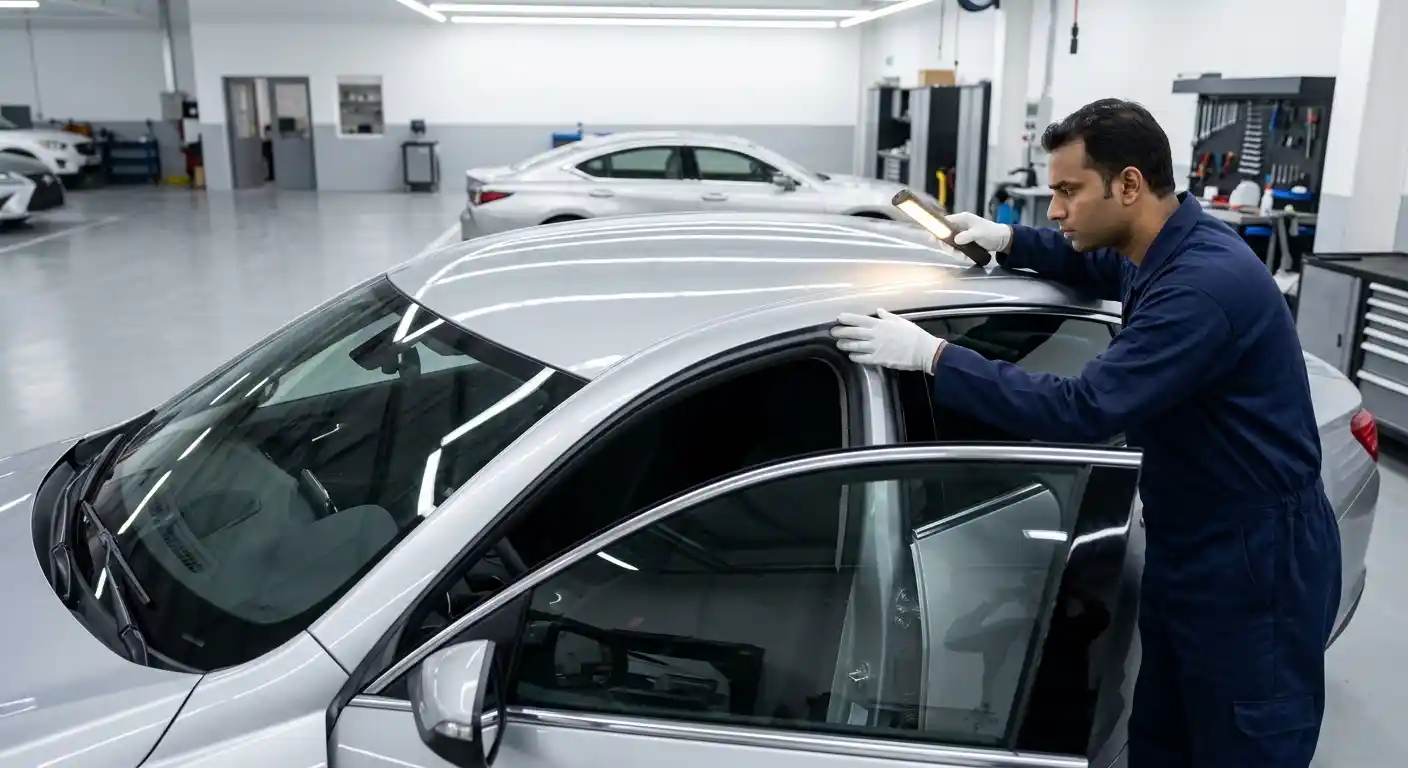
Review the repaired roof as a complete surface
Handover is more than checking the deepest dent
The roof is viewed under controlled workshop light and, where practical, broader natural reflections. We look along both sides and across the centre for a remaining low, raised crown, preparation wave or abrupt texture change. A wide panel can look acceptable from one angle and reveal an issue from another, so the view must move.
Where paint was applied, colour, metallic or pearl orientation, gloss, texture, dust control and edge finishing are inspected. Trim and mounted items within the agreed scope are checked for seating. The upper windscreen and rear-glass relationships are reviewed visually. The cabin is checked for obvious trim marks or disturbance connected to the work performed.
If water entry formed part of the approved diagnosis and repair, the relevant agreed test and limitations should be recorded. A repair to roof paint alone should not be described as proof that an unrelated drainage or glass issue has been solved.
Direct answers before booking
Car roof repair FAQs
Can a dented car roof be repaired without painting?
Sometimes. Paintless dent repair may suit a shallow or moderate roof dent when the paint is intact, the material is appropriate, metal stretch is limited and controlled access is available. Sharp creases, cracked paint, roof-edge damage, heavy stretch, old refinishing or restricted access can make conventional repair and painting more appropriate.
How much does car roof repair cost in Dubai?
Indicative site-supported bands are AED 150 to AED 350 for a suitable small PDR dent, AED 350 to AED 700 for a suitable medium PDR dent, and AED 700 to AED 1,200 or more for conventional dent and paint repair. Panel painting starts from AED 450 as a general planning point, but roof size, access and damage can increase the figure. Inspection is required for a current quote.
Can hail dents be removed from a car roof?
Many hail dents can be assessed for paintless repair when the paint remains intact and dent shape and access are suitable. The number, depth and distribution of dents, roof bracing, panoramic glass, previous paint and edge involvement affect the method, price and timing. A full roof map is needed rather than pricing one visible dent.
Does the headliner need to be removed for roof dent repair?
Not always. The access route depends on dent position, roof reinforcement, interior equipment, sunroof or panoramic-glass construction and the chosen repair technique. If headliner or pillar trim movement is necessary, the scope and risks should be discussed first. Blind drilling or pressure through an unknown cavity is not an acceptable default.
Can peeling clear coat on a car roof be repaired?
Yes, but the correct method depends on how far the coating has failed and the condition beneath it. Polishing cannot restore clear coat that has separated or peeled away. Failed material usually needs proper removal and refinishing of the affected area, with preparation, colour and blend needs confirmed on the vehicle.
Should a badly dented roof be repaired or replaced?
The decision considers material, dent depth, stretch, tears, corrosion, old repairs, edge and glass-aperture condition, access, attachment method, wider collision findings and the finish expected. Severe collapse or rollover-related damage may require replacement or broader assessment. Many isolated dents remain repair candidates after inspection.
Can a roof leak be caused by a dent?
It is possible when damage affects a roof channel, rail mount, seam, antenna seal, glass aperture or other sealing detail, but the nearest dent is not automatically the leak source. Water can travel before appearing inside, and glass bonding, drains or condensation can create different symptoms. The path needs diagnosis before a repair is promised.
How long does car roof repair take?
A suitable isolated PDR dent can be quicker than conventional repair and paint. Multiple hail dents, broad distortion, trim or headliner access, paint curing, glass involvement, parts, hidden findings and insurance approval can extend the schedule. A realistic timeframe follows inspection and scope confirmation.
Can a roof rail dent be repaired?
Damage near a roof rail can sometimes be repaired, but the rail, mounting covers, attachment points, channel, seals and underlying panel need assessment. Access can be more restricted than in the roof centre, and removal or resealing requirements vary by model. The rail should not be treated as decoration only.
Is a roof dent after rollover only cosmetic?
It should not be assumed to be cosmetic. Rollover history can involve roof-side areas, pillars, apertures, glass and other safety-related structure. Cosmetic repair should wait until an appropriate collision assessment defines the damage and relevant repair procedures. A visual page or photograph cannot validate structural safety.
Will the repaired roof paint match the rest of the car?
Colour assessment, paint formula, preparation, application technique, metallic or pearl orientation, blending need, clear coat and final polishing all affect the result. The broad horizontal panel also reveals texture and gloss differences easily. The finish should be checked from several angles rather than judged under one light.
Al Quoz 4, Dubai
Let the whole roof tell us what the dent cannot
Send a useful photo set or arrange an in-person assessment. We will review the broad surface, edges, glass apertures, trim, paint and access before confirming a repair method, estimate and realistic timing.