
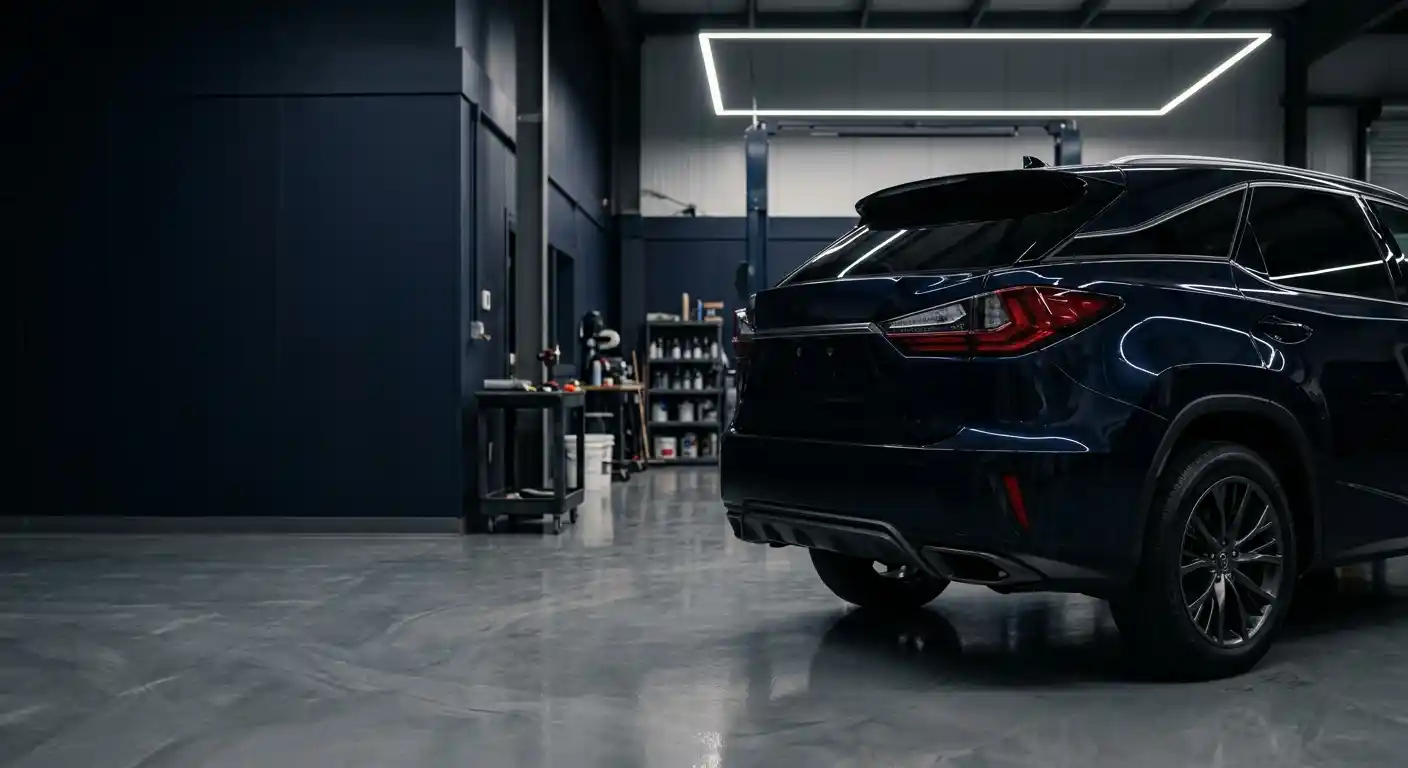
Cover, attachments, sensors and impact path
Rear Bumper Repair Dubai
A rear bumper can look lightly marked while tabs, retainers or components behind the cover have moved. We inspect the visible finish, corner fit, lower edge, attachments and fitted technology before recommending correction, plastic repair, repainting or replacement.
Start wider than the scrape
The bumper cover is only the visible layer
Most modern rear bumpers use a shaped plastic cover over attachments and impact-management components. Depending on the vehicle, the assembly can also carry parking sensors, reflector units, lower trim, exhaust finishers, cameras or radar-related equipment. A mark on the cover does not prove that every item behind it is damaged, but it does mean the repair should begin with evidence rather than paint alone.
We photograph the complete rear of the vehicle, both bumper corners, the boot lid or tailgate gap, lamp edges and the lower bumper line. Directional light helps separate removable paint transfer from coating loss, deformation, cracking and earlier repair. Hand pressure is not used casually around sensors, sharp splits or unsupported areas.
A low-speed parking contact often produces a different repair scope from a direct rear collision. For broader impact damage that reaches the closure opening, floor area, lamps or adjoining body panels, the vehicle may need our accident repair assessment rather than a bumper-only quotation.
Rear-impact depth map
Five layers of evidence guide the repair scope
The inspection moves from the visible coating towards the vehicle body. Each layer answers a different question, and a finding at one layer does not automatically prove damage at the next.
Surface
Transfer, scratches, chips, clear-coat condition and previous paint.
Cover shape
Dents, heat deformation, sharp folds, splits and missing material.
Attachments
Side tabs, brackets, retainers, clips, lower fixings and wheel-liner joints.
Fitted items
Sensors, reflectors, trims, cameras, lamps and wiring where equipped.
Impact path
Absorber, reinforcement and adjoining body relationships when access is justified.
Choose the least invasive defensible route
Repair, refinish or replace?
The correct route depends on substrate condition, crack location, access, heat history, attachment integrity, finish type and the standard expected after reassembly. Bumper size alone is not a repairability test.
Surface correction
Suitable when cleaning and inspection show transfer, very light marking or a correctable clear-coat condition without deeper colour or plastic damage.
- Confirm coating depth first
- Avoid aggressive polishing at edges
- Stop if colour loss becomes visible
Plastic repair and paint
Suitable cracks, dents and damaged areas may be restored when the plastic type, location, remaining material and reverse access support a stable repair.
- Correct shape before finishing
- Repair both visible and reverse sides as required
- Check tabs and retainers separately
Replacement scope
Replacement may be more defensible for extensive tears, missing plastic, severe heat distortion, multiple failed mounts or a repair area that cannot support reliable fit and finish.
- Verify the exact vehicle specification
- Account for trims and transferable items
- Plan preparation and paint before fitting
Cracks, tabs and retainers
A neat outer surface still needs secure attachment
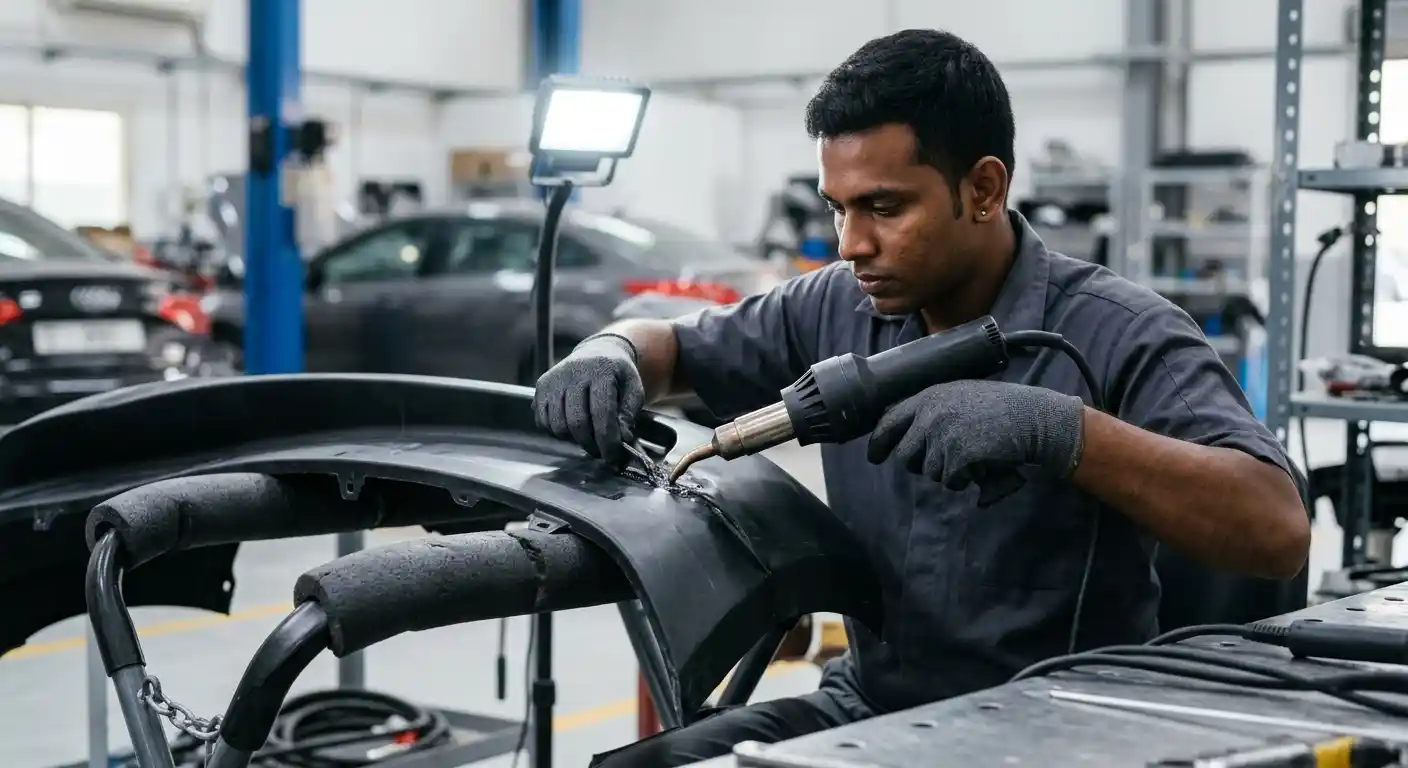
A crack in the middle of a suitable cover presents a different problem from a split that reaches a sensor opening, styled edge or mounting tab. The edge location can concentrate stress and reduce the area available for a stable repair. Plastic identification, cleanliness, previous repair and material loss also influence the method.
Side tabs and retainers control how the bumper corner meets the quarter panel. When a corner repeatedly pops out, simply pressing it back is not a repair plan. The tab may be torn, the retainer may be cracked, a screw or clip may be missing, or an adjoining edge may have moved.
Controlled workshop sequence
From intake record to secure reassembly
Record
Photograph the complete rear, both corners, lower edge, gaps, warning display and existing marks.
Classify
Separate transfer, coating loss, deformation, cracking, loose fit and possible impact-related concerns.
Define access
Explain what can be confirmed visibly and what requires authorised removal before promising a final scope.
Protect
Plan safe handling of trims, sensors, lamps, wiring, liner edges and adjacent painted panels.
Restore
Correct suitable cover shape and complete agreed plastic work on a sound, identified substrate.
Refinish
Prepare, prime and paint the required area with colour, texture and edge control planned together.
Reassemble
Refit serviceable items, replace agreed failed attachments and avoid forcing fresh paint into position.
Verify
Check finish, security, corner seating, lower edge, openings and every component disturbed during work.
Parking sensors and fitted technology
Paint quality cannot replace functional checks
Many rear bumper covers contain ultrasonic parking sensors. Some vehicles can also place cameras, hands-free access components, radar-related equipment or other systems near the rear bumper area. Equipment varies by model and specification, so the inspection should identify what is actually fitted instead of assuming a universal arrangement.
A sensor warning after an impact can relate to a damaged sensor, bracket, wiring connection, cover distortion, contamination or another fault. Repainting without checking the cause is not a diagnosis. Paint film, sensor orientation and approved repair information can matter for certain applications.
Where the repair affects a driver-assistance component, the correct post-repair procedure depends on the vehicle and the work performed. We do not promise calibration simply because a bumper was removed, and we do not claim it is unnecessary without checking the relevant requirements.
Indicative Dubai planning bands
How much does rear bumper repair cost in Dubai?
These figures support early planning and are not quotations from photographs. Material, crack position, attachments, finish type, dismantling, fitted technology, previous work, part source and hidden impact findings can change the actual amount.
Important: lamps, sensors, cameras, wiring, absorber, reinforcement, adjoining panels and closure-area work are separate when affected. Replacement pricing depends on the verified part and current availability. Wider collision costs can be compared with our Dubai accident repair cost guide.
Paint and visible finish
Colour match is only one part of bumper refinishing
Flexible plastic, edges and texture
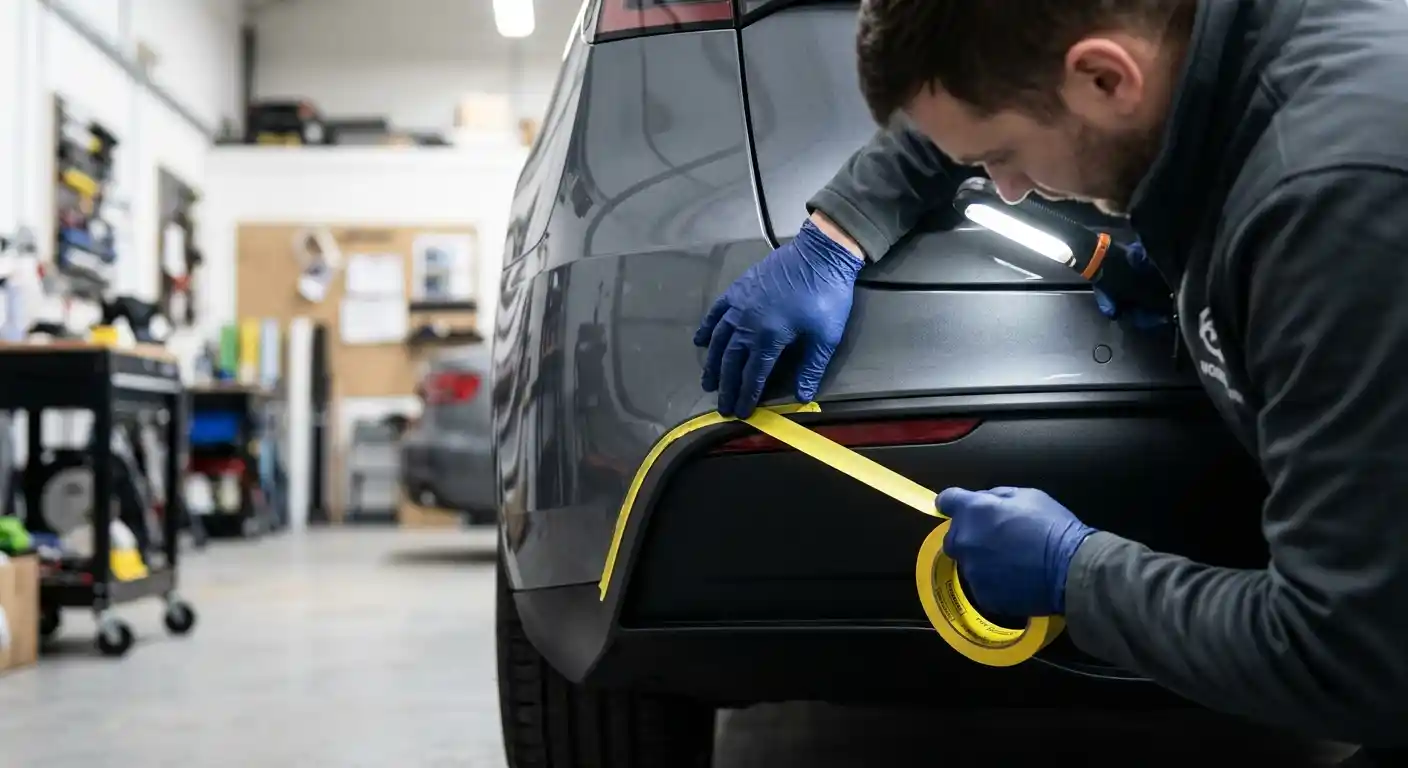
The bumper must be cleaned, prepared and supported as a plastic component, not treated as a steel panel. Contamination, old repair material, sharp edges and flexing can influence coating adhesion. Primer selection, sanding sequence and curing follow the chosen paint system and substrate condition.
Hard masking lines, dry edges and heavy material around openings can become visible after assembly. Removal of suitable trims and sensors can provide better control than painting around them, but the exact removal scope depends on the design and condition.
Colour, metallic orientation and gloss
Plastic and metal panels can present colour differently because of substrate, shape, light angle and existing finish. Formula selection is followed by spray-out or comparison where useful. Metallic or pearl orientation, clear-coat gloss and surface texture must work together across the rear view.
A bumper that matches in the spray area but shows a noticeably different gloss or texture beside the quarter panels is not a complete visual result. Handover inspection should take place clean and dry under more than one viewing angle.
Timing, insurance and parts
Separate active repair time from external waiting
A suitable local repair may move through the workshop much faster than a replacement job. Actual timing depends on inspection, authorised removal, plastic work, paint preparation, curing, reassembly and final checks. A replacement also depends on exact part identification, availability and whether trims or fitted items transfer safely.
For insurance-related damage, we can record the visible condition and prepare an estimate with conditional notes for findings revealed after authorised access. Coverage, liability, excess, reports, approval and settlement remain decisions for the insurer and policy.
Ask whether the proposed completion date counts from vehicle intake, repair approval or parts arrival. Those dates can be different, especially when an insurer or special-order component is involved.
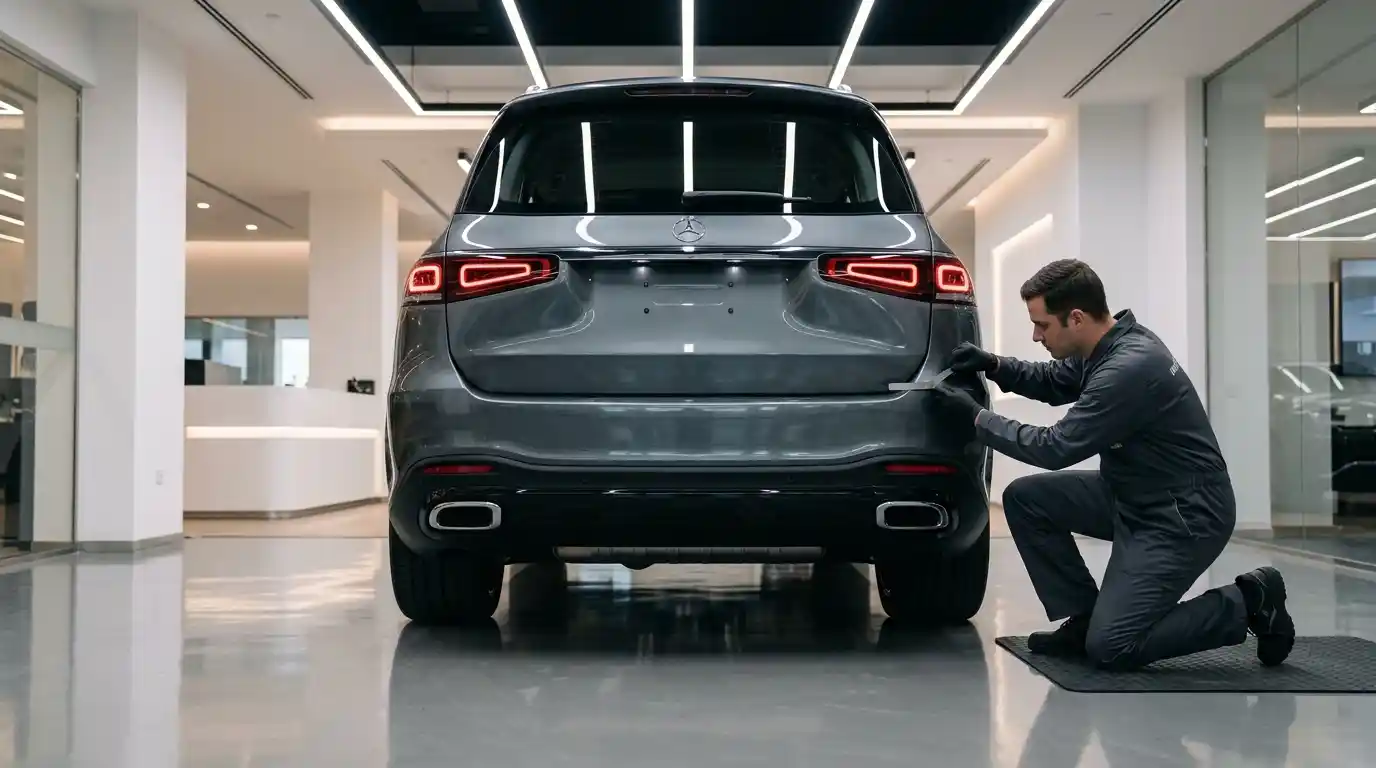
Four handover gates
The repair is not complete when the paint first shines
Final review brings appearance, attachment and agreed functional checks together. The vehicle should be inspected clean and dry, with the owner told what was repaired, painted, replaced or recommended separately.
Common owner questions
Rear bumper repair FAQs
Can a cracked rear bumper be repaired?
Many suitable cracks can be repaired, but the plastic type, crack route, material loss, edge or sensor-opening involvement, previous repair and mounting condition must be inspected first.
How much does rear bumper repair cost in Dubai?
Planning bands can start from AED 150 for suitable light surface correction. Plastic repair plus paint may plan around AED 500 to AED 1,200, a complete repaint around AED 600 to AED 1,500, and replacement from AED 1,200 to AED 6,000 or more depending on the vehicle and part.
Can a dented plastic bumper return to shape?
Some deformations can be corrected when the plastic remains stable and the location allows controlled access and heat. Sharp folds, severe stretch, cracking or previous repair can change the method.
Why does my bumper corner keep popping out?
A torn tab, cracked retainer, missing fastener, liner damage or changed adjoining fit may be responsible. Pressing the corner back without inspecting the attachment can produce only a temporary result.
Does the rear bumper need to be removed for repair?
Removal may be needed to inspect hidden attachments, repair the reverse side, handle fitted items safely or achieve controlled preparation and paint. Not every surface correction requires complete removal.
Can parking sensors be painted over?
Sensor handling depends on the component and vehicle repair information. Excess or unsuitable coating can affect some applications, so sensors should not be painted casually as part of a bumper respray.
Will parking sensors need calibration after bumper repair?
Requirements vary with the vehicle, equipment and work performed. The fitted system and relevant repair information should be checked before promising or excluding calibration.
Can you match the bumper paint to the quarter panels?
The process aims for a coherent colour, metallic or pearl orientation, gloss and texture. Plastic substrate, viewing angle, existing paint and previous repair influence the final paint plan.
When is rear bumper replacement better than repair?
Replacement may be more defensible for extensive tears, missing plastic, severe distortion, multiple failed mounts or a condition that cannot support reliable fit and finish.
Can photographs provide a final quotation?
Photographs support triage but cannot confirm reverse-side condition, internal attachments, previous repair, fitted-item damage or the exact part required. Physical inspection is needed for the final quotation.
Can rear bumper damage be handled through insurance?
We can document visible damage and prepare an estimate. Coverage, liability, excess, approval and settlement depend on the insurer and policy.
What should I check when collecting the vehicle?
Review colour, gloss, texture, both corner gaps, lower-edge security, disturbed trim, liners and agreed fitted-item checks. Ask for a clear record of repaired, painted and replaced items.
Show the whole rear, not only the scratch
Arrange a rear bumper assessment in Dubai
Send the complete rear view, both corner angles, close damage photographs and any warning displayed after the incident. We will inspect the cover, attachments, fitted equipment and adjoining relationships, then explain the repair route and current quotation.