
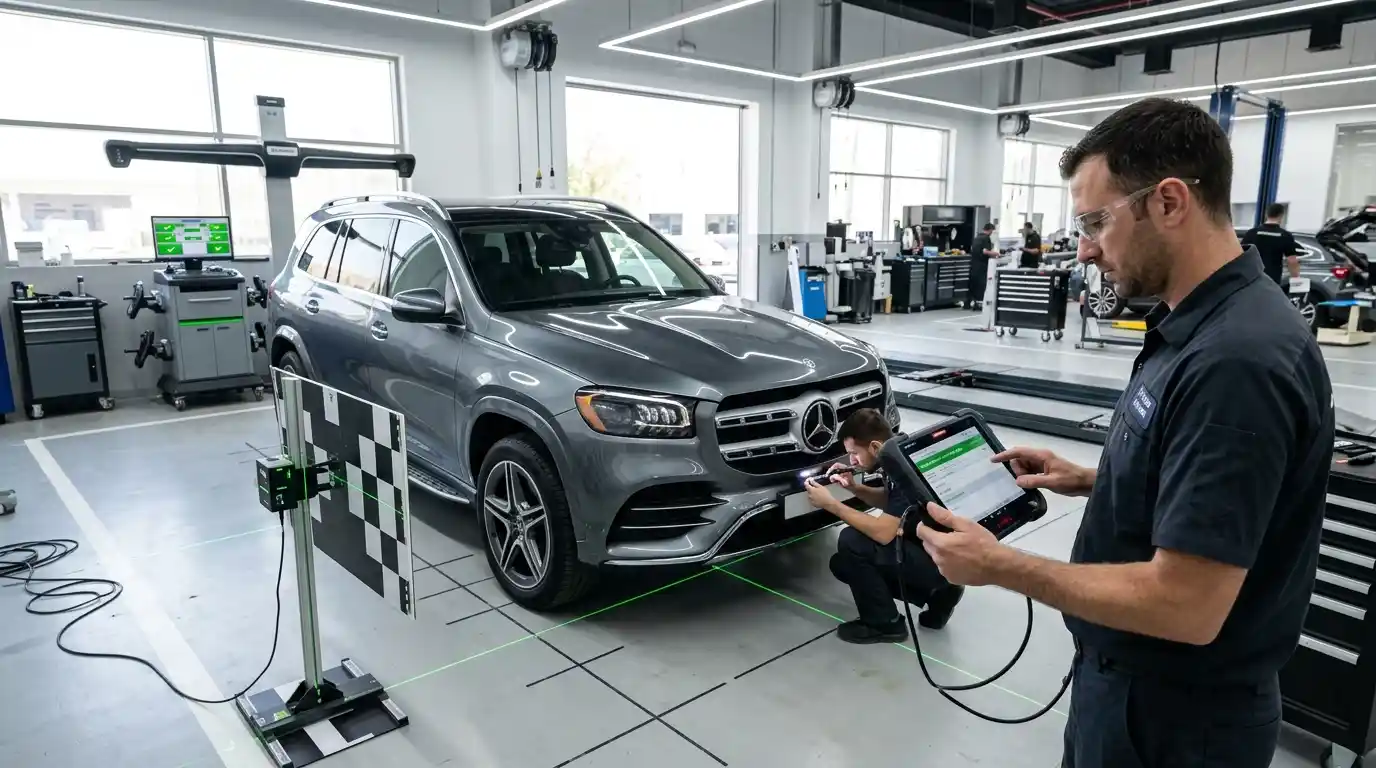
Post-accident ADAS calibration in Dubai
ADAS Calibration After Accident Dubai
Restore the accuracy of cameras, radar and driver-assistance systems after collision repair. We identify the systems affected by the repair, verify the required OEM procedure and coordinate the correct static, dynamic or combined calibration route.
Safety First
Calibration helps restore the intended reference for ADAS functions after repair.
Post-Accident Essential
Collision, glass, alignment and sensor-area repairs can trigger calibration requirements.
Precision & Accuracy
Vehicle-specific procedures determine targets, setup, tools and drive conditions.
Full System Check
Scanning, prerequisites, calibration status and final records remain connected to the repair.
Map the equipment before pricing
ADAS hardware can sit far from the visible damage
Equipment varies by make, model, year and specification. A badge, grille shape or option package is not enough to confirm what is fitted.
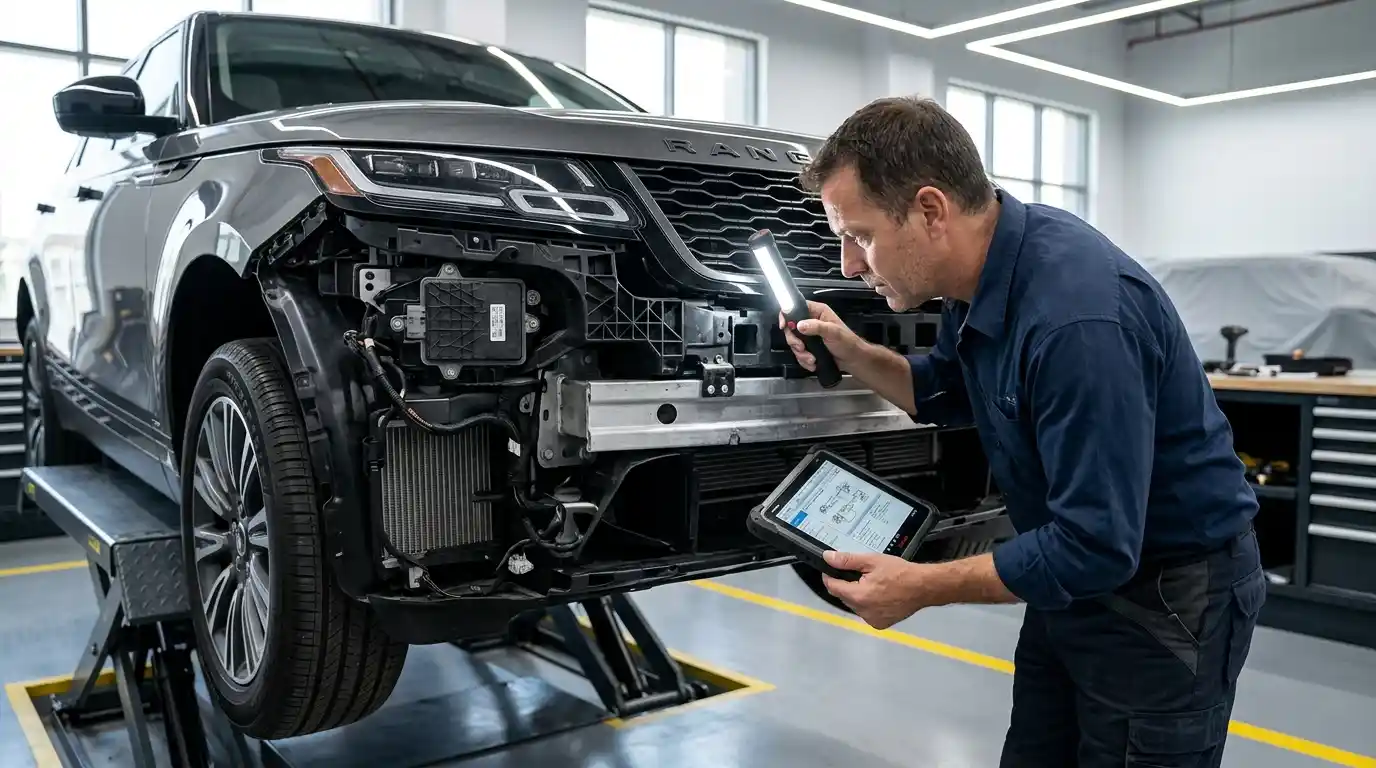
Windscreen cameras
Lane support, traffic-sign recognition, automatic high beam and forward collision functions may use a camera near the interior mirror. Glass, bracket and camera work can matter.
Radar and grille sensors
Forward radar can sit behind an emblem, grille, bumper or lower cover. Brackets, permitted paint thickness and mounting angle are vehicle specific.
Blind-spot radar
Rear bumper corners or quarter areas may carry radar units for blind-spot and cross-traffic functions. A cosmetic bumper repair can still disturb their environment.
Parking and surround systems
Ultrasonic sensors and cameras support parking views and obstacle warnings. Paint, brackets, wiring, sensor seating and panel fit can influence the final check.
Calibration trigger matrix
The accident alone does not answer yes or no
The repair planner checks vehicle-specific information for every disturbed system. These events are common reasons to investigate, not universal instructions.
| Repair event | Why the system may be affected | Required planning question |
|---|---|---|
| Camera or radar removed or replaced | Position, coding or aiming can change | What installation, programming, aiming and calibration steps does the OEM specify? |
| Mounting bracket repaired or replaced | A small angle change can alter the sensor field | Is the bracket serviceable, measurable and within the allowed repair procedure? |
| Bumper, grille or emblem refinished | Material, thickness or obstruction may affect a unit behind it | Are there paint, filler, repair or replacement restrictions in the sensor zone? |
| Windscreen replaced | Camera bracket position and optical path can change | Does the exact camera require static, dynamic or combined calibration? |
| Wheel alignment or suspension work | Vehicle thrust line, ride height and steering position can affect aim | Which geometry prerequisites must pass before calibration starts? |
| Structural pulling or panel replacement | Reference points and sensor relationships can move | Should structure and alignment be verified before the ADAS operation? |
| Fault codes or warning messages | A DTC can identify a system issue but not always its physical cause | What diagnosis, repair, clearing and post-repair test are required? |
| Battery disconnection or software operation | Some systems need initialization, programming or relearn | Does the OEM procedure distinguish programming, initialization and calibration? |
I-CAR’s OEM calibration search states that ADAS often requires post-repair calibration or aiming and that access to OEM information is mandatory for the post-repair decision.
Use the source for the exact vehicle
OEM procedures control the calibration route
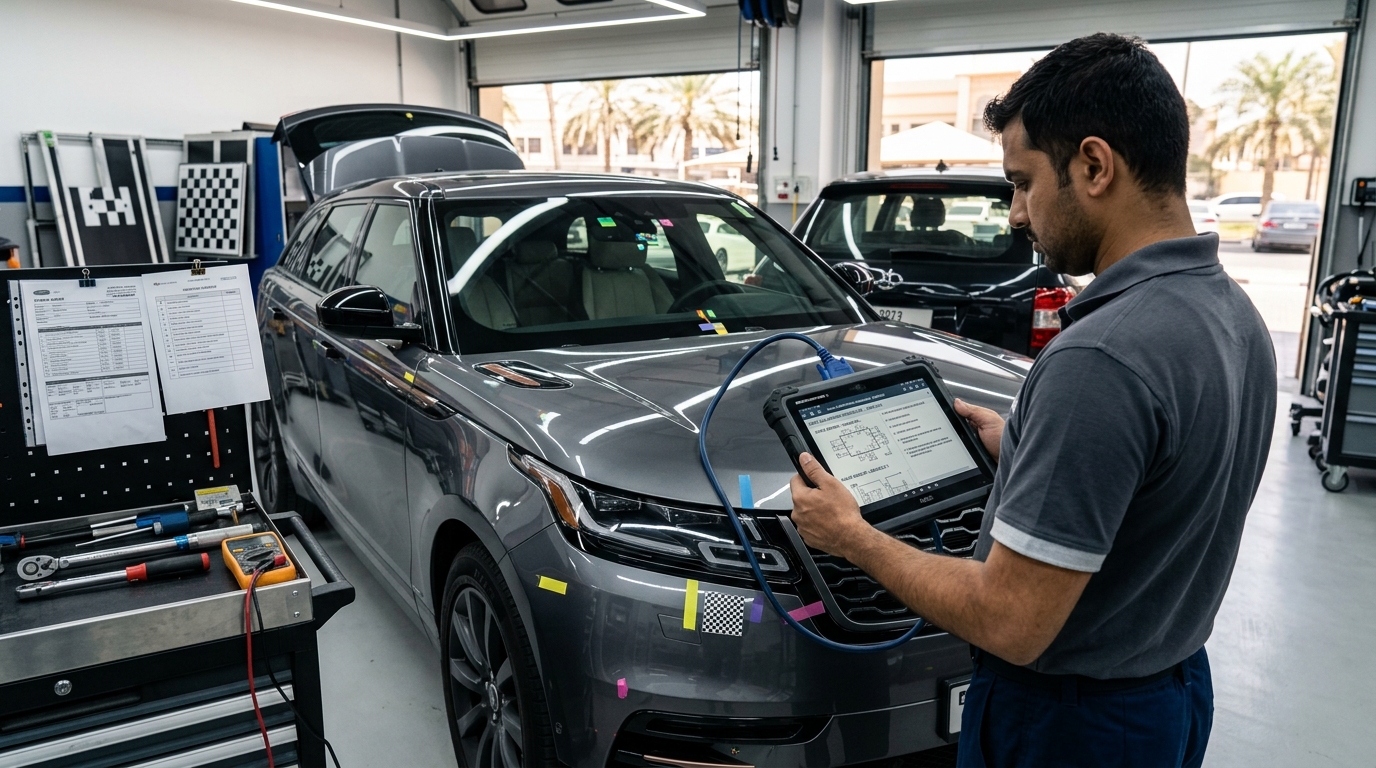
The I-CAR OEM Calibration Requirements Search helps identify systems, events, tools and information paths by vehicle. It also warns that the original vehicle-maker information is required. A procedure for another model, model year or trim is not a safe substitute.
The work order should identify the system name used by the manufacturer, the repair event that created the decision, the source and revision checked, required prerequisites, equipment, target or drive conditions and the party responsible for completion. This turns the word calibration into a traceable operation.
ADAS planning belongs beside the relevant accident repair service in Dubai. If structural measurement, glass, suspension, wheel alignment, bumper repair and diagnostics are spread across separate quotations, one owner must still confirm that the prerequisites connect and no final step is assumed.
A workshop should not promise calibration because a warning light is on, or dismiss calibration because no light appears. Some procedures set a DTC; others do not. Some systems show a warning; others can remain apparently normal while the repair information still calls for aiming or calibration.
Place the decision before parts and paint
Request an ADAS-aware accident assessment
Send the VIN, make, model, year, trim if known, impact area, dashboard warnings, windscreen or bumper work and any alignment report. The estimate can then name the information and calibration pathway that must be confirmed.
Calibration pathway
Static and dynamic calibration need different prerequisites
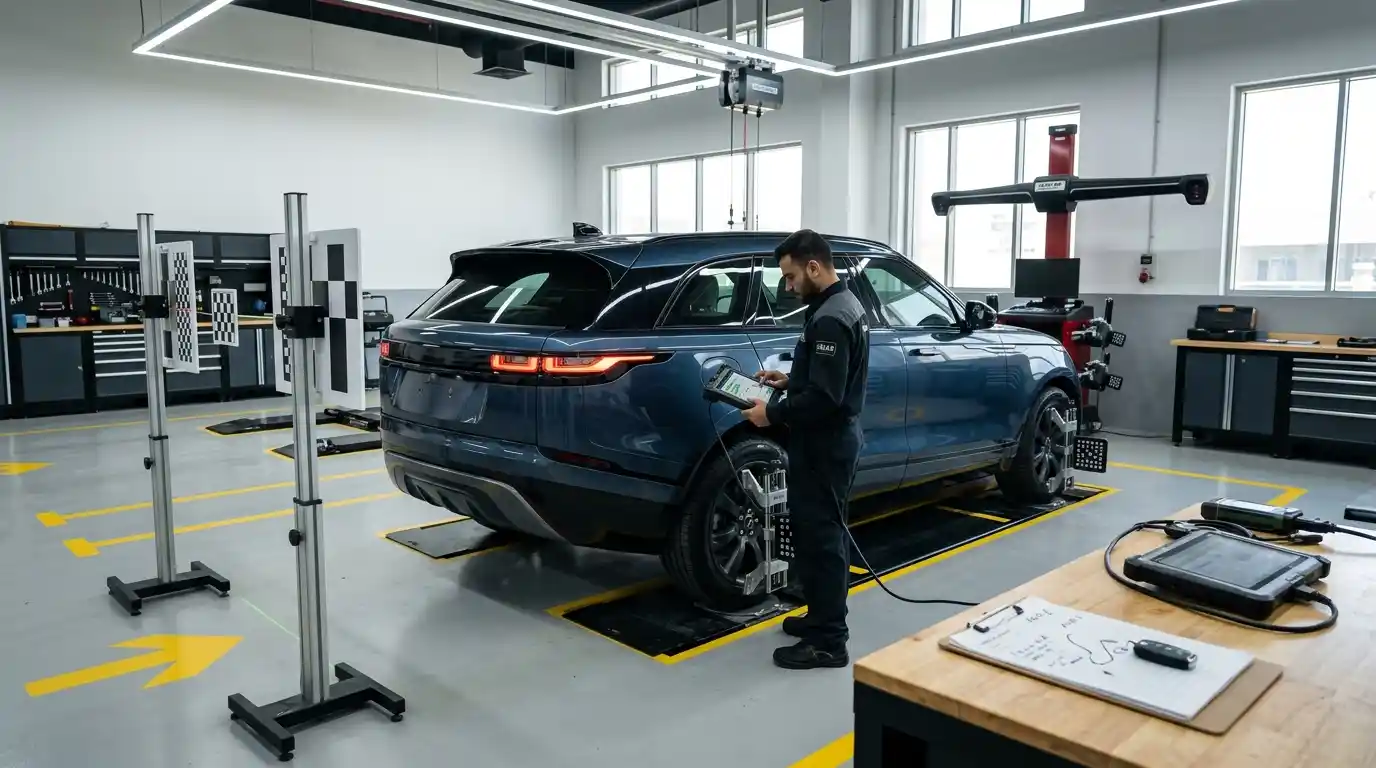
An ADAS-equipped vehicle can require static calibration, dynamic calibration or a combined procedure after collision work. Static methods use controlled targets and workspace conditions, while dynamic methods follow a defined drive procedure. The exact route comes from vehicle identification and current OEM information, not from the sensor name alone.
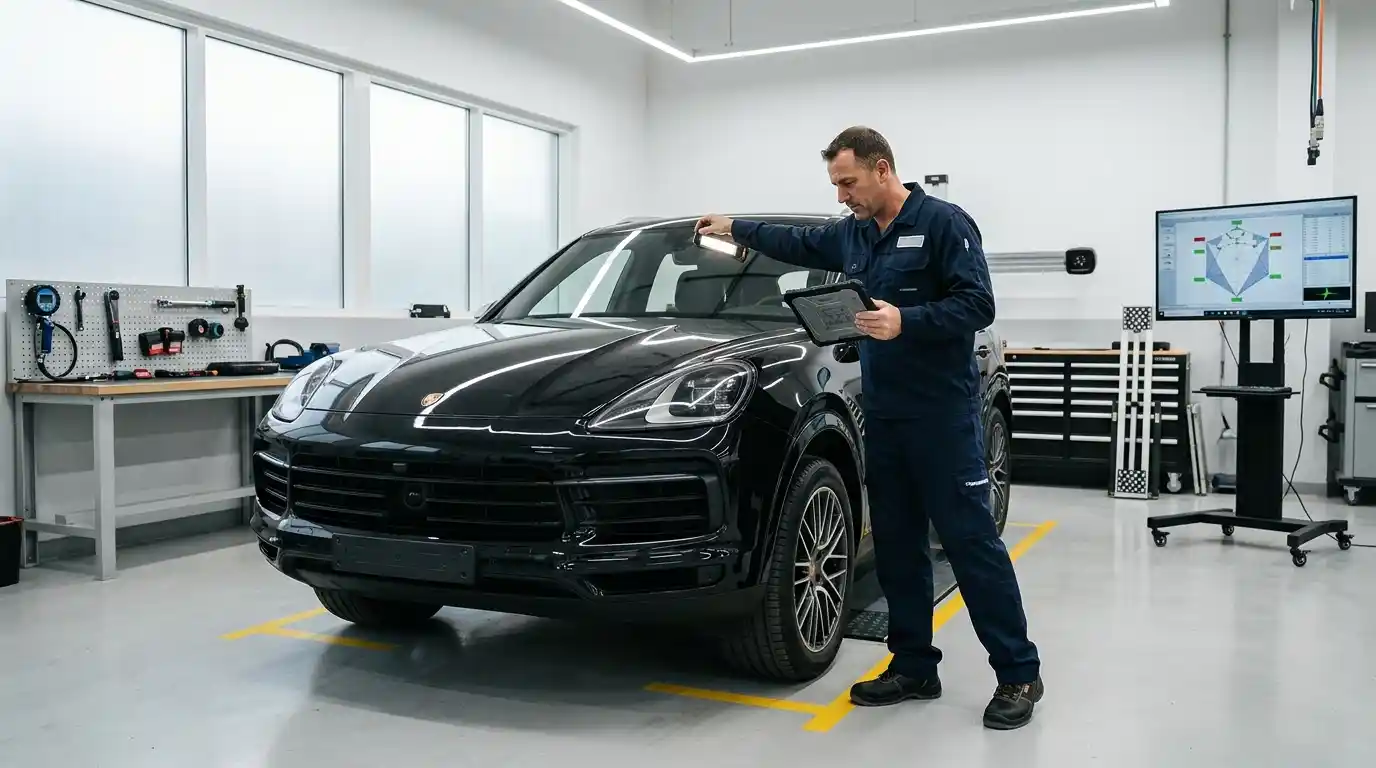
Prepare the physical vehicle
Correct tyre sizes and pressures, ride height, loading, wheel alignment, steering-angle status, clean glass, secure bumper fit and an unobstructed sensor field may all be prerequisites. A displaced bracket or unresolved body geometry can prevent reliable aiming.
Separate scanning from calibration
Pre-scan and post-scan findings support diagnosis but do not prove correct aim. Clearing a DTC does not establish target alignment or successful road calibration. Scanning, programming, aiming, calibration and road verification remain separate operations.
Name responsibility before transport
The estimate should identify the trigger, preliminary work, OEM procedure source, calibration provider and completion record. A vehicle with unresolved structural, steering, suspension or warning-light concerns should not be driven casually to another facility.
Retain completion evidence
The repair file should show vehicle details, affected system, method, prerequisites, equipment or software reference, result and unresolved faults. Any required road learning or additional confirmation should also be documented.
Keep safety systems connected to the repair
Electric and hybrid vehicles may require isolation or OEM precautions before body disassembly, measuring or refinishing. Airbag, seat-belt and structural events can also change the diagnostic plan. Calibration completes part of the post-accident technology file; it does not replace the underlying repair.
Evidence chain
From pre-scan to documented result
The sequence varies by vehicle and system. The records should still show why each decision was made.
-
Stage 01
Identify the vehicle
Record VIN, make, model, year, trim, option information and fitted systems. Confirm any relevant modifications, ride-height changes, wheels or windscreen history.
-
Stage 02
Record the impact
Photograph damage, sensor zones, dashboard messages, glass, wheel position and component gaps before dismantling or fault clearing.
-
Stage 03
Complete the pre-repair scan
Use an appropriate current scan route where required. Preserve DTCs and system status with date, mileage and technician notes.
-
Stage 04
Check OEM information
Find the exact removal, repair, installation, programming, aiming and calibration requirements for every disturbed ADAS component.
-
Stage 05
Repair the foundation
Complete approved body, structural, glass, bracket, suspension and alignment work before treating calibration as ready.
-
Stage 06
Verify prerequisites
Check tyre pressures, tyre size, ride height, loading, steering angle, wheel alignment, fuel or ballast, floor and environmental conditions as specified.
-
Stage 07
Perform the specified route
Use the required targets, scan tool, floor space, measurement, drive conditions and qualified process. Static, dynamic or combined routes are not interchangeable.
-
Stage 08
Post-scan and function review
Record completion status, remaining DTCs, limitations and specified confirmation. A general road test must not replace an OEM-defined calibration.
-
Stage 09
Build the handover pack
Supply relevant scan, calibration, alignment and repair records with clear responsibility for any outstanding operation.
Static and dynamic are procedure names
The road does not decide the method
Targets in a controlled workspace
The vehicle is positioned relative to specified targets or boards. Floor level, distances, centreline, lighting and surrounding space can be strict prerequisites.
A defined drive calibration
The scan tool and system learn during a drive that meets vehicle-maker conditions. Road markings, speed, weather, traffic and time can affect completion.
More than one operation
Some systems or repairs require static and dynamic steps, initialization plus aiming, or calibration followed by a specific confirmation. The procedure controls the order.
Responsibility must be named
In-house, mobile or specialist work still needs one repair record
A collision centre may complete a calibration with its own equipment, bring a suitable mobile provider to the vehicle or coordinate the operation at another qualified facility. The delivery model does not change the technical requirement. The estimate should identify who owns vehicle setup, procedure access, calibration, post-scan, failed-attempt diagnosis and final evidence.
Transporting a partly assembled vehicle can create additional risk. The planner checks whether bumpers, glass, wheels, alignment, ride height and sensor brackets must be final before the calibration appointment. If the vehicle cannot meet prerequisites, sending it to a target bay only adds delay.
A failed calibration is not automatically a defective camera or radar. Incorrect ride height, wheel geometry, target position, floor condition, bracket angle, part number, software level, blocked field or incomplete repair can prevent completion. The failure record should guide diagnosis rather than being deleted and repeated without a change.
Cosmetic car body repair service around a sensor zone should carry the same responsibility note when paint, filler, bracket position or component removal is restricted. The repair file remains the single source connecting body work and electronics.
At collection, the owner should know which systems were addressed, which procedure was followed, whether calibration completed, what post-scan status remained and who to contact if a warning or performance concern appears.
Calibration readiness
Do not start until the physical vehicle is ready
A failed calibration can be a process clue rather than proof that the sensor is defective.
Geometry
- Structural repairs and measurements are complete
- Wheel alignment meets the required condition
- Tyre size and pressures are correct
- Ride height and loading match the procedure
Hardware
- Correct sensor and bracket are securely installed
- Sensor field is clean and unobstructed
- Bumper, grille, emblem or glass meets applicable restrictions
- Connectors and wiring are inspected
Workspace or drive
- Target space and floor meet the static method
- Lighting and background satisfy the procedure
- Road, markings, weather and speed suit a dynamic route
- Battery support is provided if specified
Records
- OEM procedure source is identified
- Pre-scan findings are retained
- Calibration completion or failure is documented
- Post-scan and outstanding actions are clear
Remaining ADAS questions
ADAS calibration questions after an accident
Does every accident require ADAS calibration?
No. The requirement depends on the exact vehicle, fitted systems, repair events and OEM procedures. The accident should trigger an equipment and procedure check rather than an automatic yes or no.
Can a bumper repaint require calibration?
It can create a procedure check when radar, sensors, brackets or restricted paint zones are involved. The vehicle-maker information determines whether removal, refinishing, installation or calibration is required.
Is wheel alignment the same as ADAS calibration?
No. Alignment sets wheel geometry. Some ADAS procedures require a completed alignment as a prerequisite, but that does not make the two operations interchangeable.
Can a normal dashboard prove the system is calibrated?
No. Some calibration requirements do not produce a warning light, and a warning can also have causes other than calibration. Use scans, procedures and completion records.
What documents should I receive?
Ask for the repair scope, relevant pre-scan and post-scan records, alignment result when applicable, calibration report or completion evidence, and written details of any outstanding limitation.
Can calibration be completed by driving the car?
Only when the exact OEM procedure specifies a dynamic route and its conditions are met. An ordinary test drive is not automatically a calibration.
The safest ADAS answer is a traceable one that names the vehicle, repair event, OEM procedure, prerequisites and result.
Use the accident repair cost guide to compare whether diagnostics, alignment and calibration are included or provisional in a collision estimate.
At handover, unresolved calibration or warning information should be visible in writing. Silence is not a completion record.