
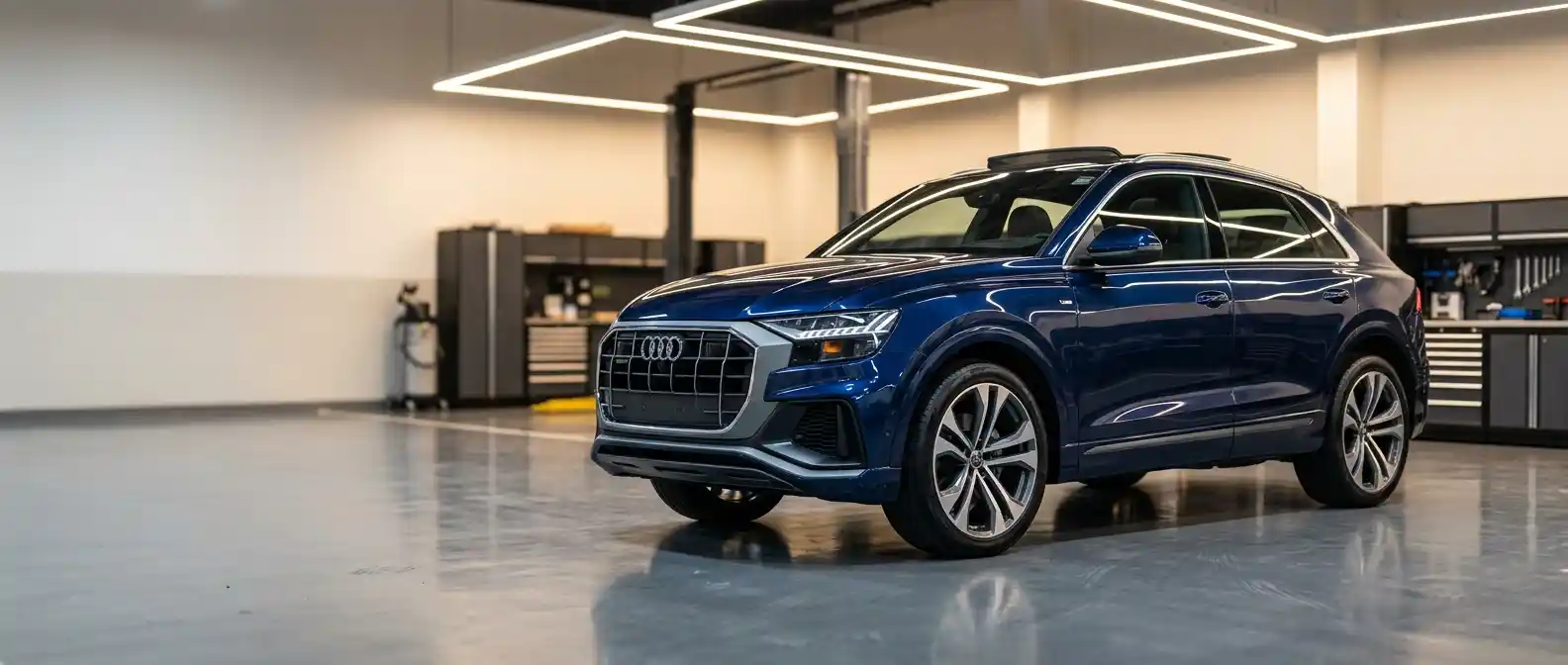
Audi Q8 Body Repair Dubai
Q8 body repair is defined by large multi-material surfaces, frameless doors, tightly aligned lamps and sensing hardware distributed around a broad SUV coupe. Audi technical material for the original Q8 generation describes a multi-material Audi Space Frame with aluminium and hot-shaped steel. That construction makes component identity and joint location essential before a dent, quarter panel or bumper is repaired.
The Q8 impact frame links surface, structure and sensing
A close mark is mapped against the whole panel and its neighbours. On the side, that includes frameless glass, door flushness, sill, wheel arch and rear-quarter reflection. At the front or rear, it includes bumper guides, lamps, grilles, lower trim, tailgate and the mounting points for cameras or sensors.
The exact generation and component must be verified. Audi’s material description for one Q8 generation is not automatically applied to every future or regional derivative.
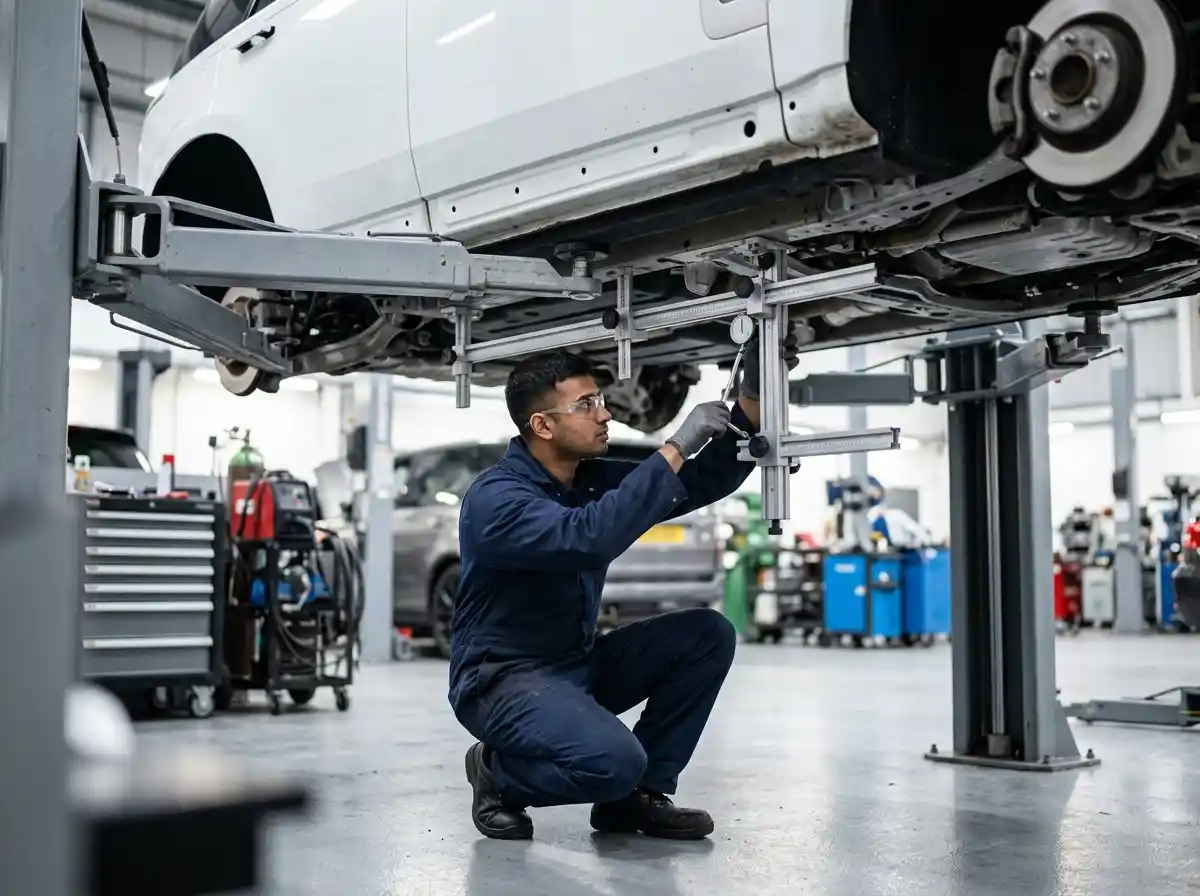
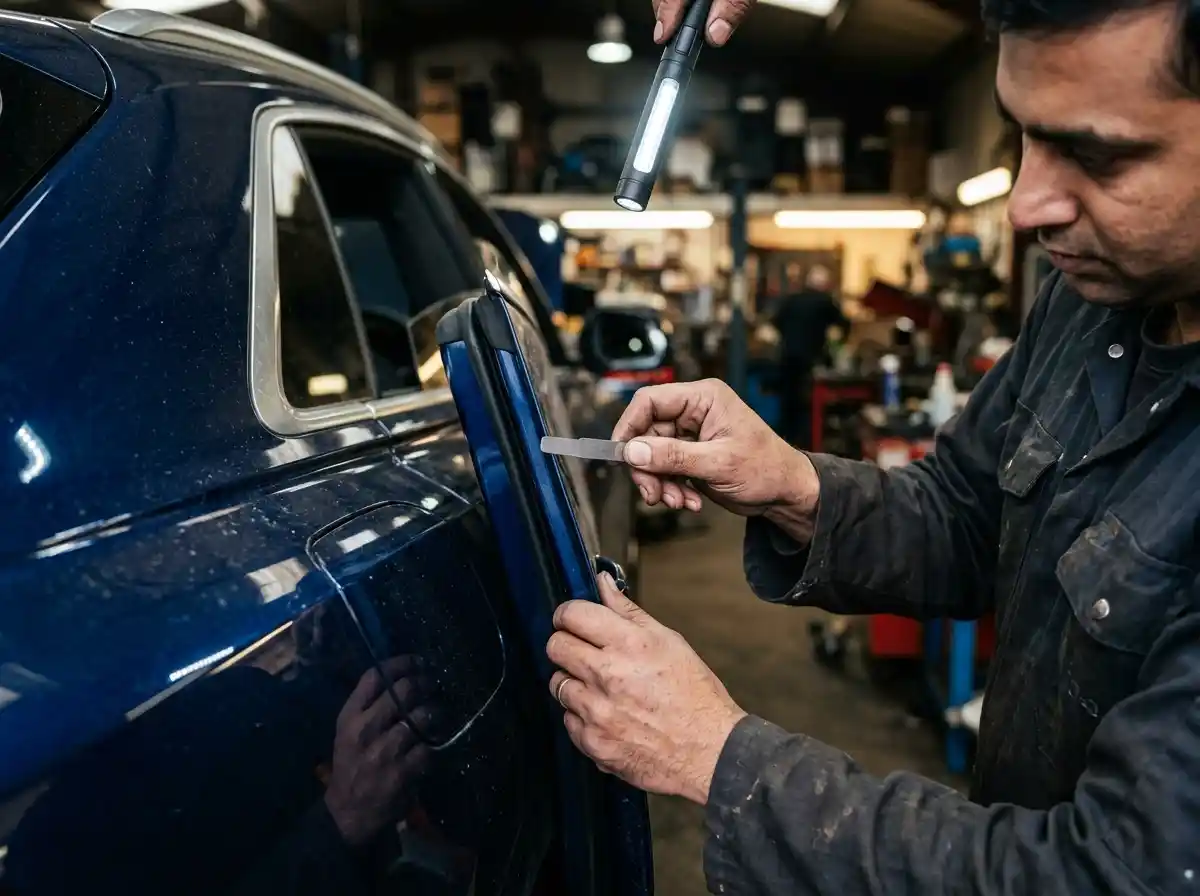
Frameless doors create a three-part quality check
Panel-gap inspection begins with the opening rather than a cosmetic adjustment. Hinges, latch, pillar and sill relationships establish the stable reference before glass and seals are refined.
Moving a striker or glass setting to hide a distorted opening can create wind noise, water entry or repeat fit problems. Mechanical geometry is resolved before cosmetic alignment is signed off.
Opening geometry
Hinges, latch, pillar and sill relationships must be correct before adjustment.
Glass and seal
Window position, weather sealing and closing effort are checked together.
Outer reflection
The door skin and rear quarter should carry a continuous line without waves or steps.
Multi-material repair needs a component-by-component decision
The Q8 body can combine aluminium sheet, castings, profiles, hot-shaped steel and conventional steel in different locations. Aluminium work requires contamination control and material-specific tooling. Hot-shaped structural pieces can carry strict limits on heat and straightening. Castings and mixed joints may require replacement rather than improvised correction.
VIN, build information and applicable repair data identify the actual component. Joining, adhesives, fasteners, sealing and corrosion protection are treated as a complete process, not separate finishing details.
Repair and replacement are compared across the complete scope
| Criterion | Repair remains credible | Replacement gains strength |
|---|---|---|
| Material state | Sound material with controlled deformation and an approved repair method. | Tear, severe stretch, damaged casting or restricted high-strength area. |
| Geometry | Edges, openings and character lines can return accurately. | Hem, joint, aperture or reinforcement no longer supports stable fit. |
| Total operation | Original joints remain and refinishing risk is manageable. | New part, joining, protection and paint reduce overall quality risk. |
Front and rear sensing zones require physical verification
Depending on package, the Q8 can use cameras, parking sensors, radar-based systems and other assistance hardware. The workshop records what is fitted and which bracket, cover, mirror, lamp or grille was disturbed.
A clean scan is not the full finish
A shifted unit can remain electrically connected. The applicable procedure may require aiming, static targets, dynamic calibration, wheel alignment or prerequisites such as tyre pressure and ride height. The result belongs in the repair record.
Bumper and lower-body damage can reach several materials
A low corner impact can mark the painted cover, tear a guide, crack lower trim and load aluminium or steel support points behind it. We inspect the cover material, sensor apertures, absorber, reinforcement relationship, undertray and wheel-arch liner before authorising plastic work.
Selected cracks may be weldable when polymer and location are suitable. Torn sensing openings, missing mounts, severe thinning or repeated previous repairs can make replacement more reliable. The cover must hold shape without being forced by fasteners.
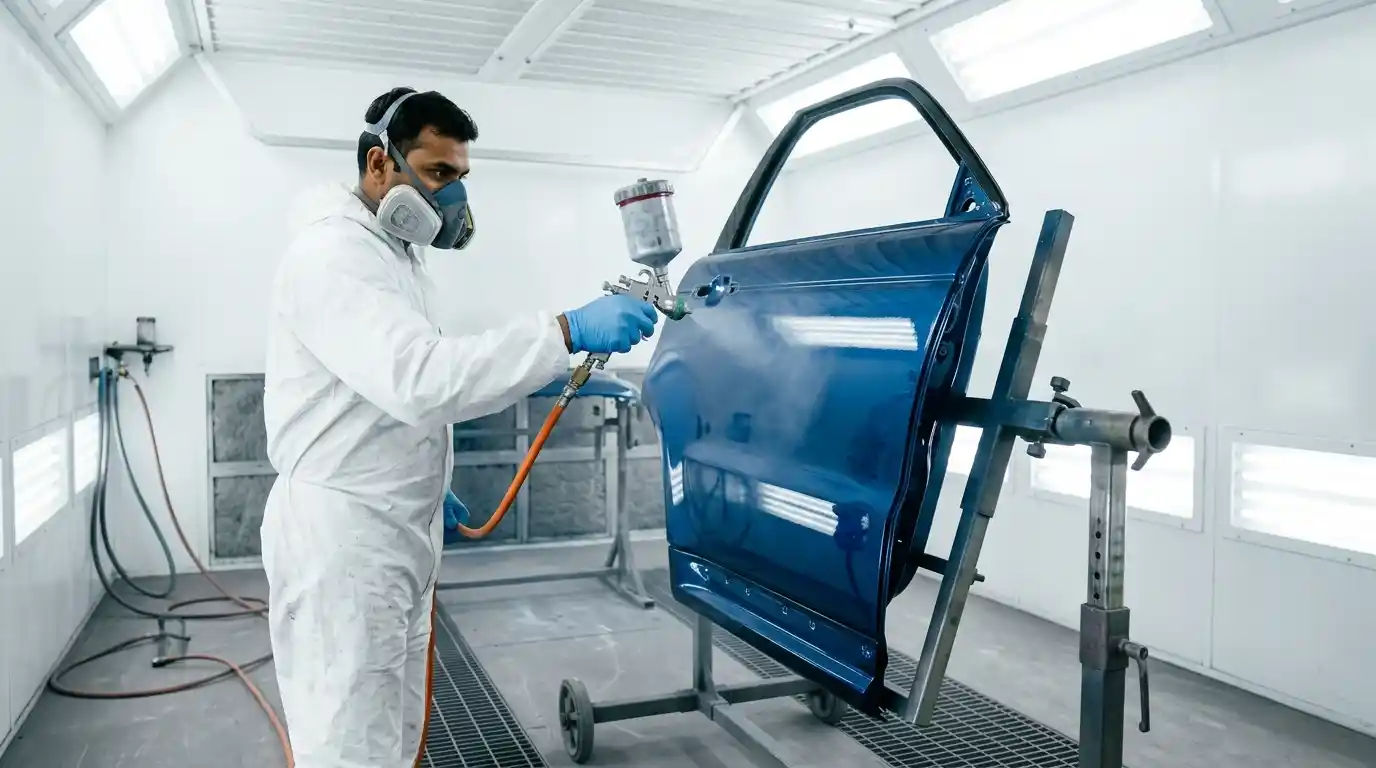
Broad panels make paint texture as important as colour
Metallic or pearl effect changes across the Q8’s curved shoulder and large doors. Paint code and electronic reading find the formula family; a spray-out beside the vehicle confirms face, side tone and particle orientation. Previous repair and sun exposure are included.
Linear light checks the repaired contour before primer and again after finishing. Final inspection covers hue, flop, gloss, orange peel, edge coverage and transitions beside black trim, bright pieces or frameless glass.
The estimate names hidden and visible decisions separately
Dent, scrape, crack, panel, known trim and paint area.
Guide, absorber, reinforcement, wiring, joint and structural measurement.
Removal, joining, protection, reassembly and parts identity.
Gaps, closures, scan, alignment, aiming and calibration.
Price and timing depend on generation, material, severity, parts, joining process, paint, electronics and calibration. Changes after dismantling are photographed and approved.
This page connects to the published Audi body shop page, our body repair service and paint refinishing process.

Handover compares the same surfaces and systems recorded at intake
Door and quarter reflections, frameless-glass fit, bumper corners, lamps, trim, tailgate and wheel-arch clearance are rechecked. Warnings and every included scan, alignment or calibration operation are closed with evidence.
Fresh-paint care is explained for the coating used. Pre-existing marks, unrelated warnings and deferred parts remain separately documented so the finished work is not overstated.
Rear-quarter damage tests both aluminium technique and visual control
On relevant Q8 generations, aluminium sheet is used across major outer areas, including side panels and rear components described by Audi. A rear-quarter dent can sit near the wheel arch, lamp pocket, tailgate opening and an inner structural relationship. The technician verifies the exact component and decides whether controlled metal finishing can preserve it.
Aluminium does not behave like mild steel. Stretch, work hardening, heat response and edge condition affect repairability. Dedicated tools and a clean workspace reduce contamination. If the damage reaches a restricted joint, casting or high-strength support, the outer repair decision is paused until the complete structure is understood.
Open quarter surface
Assess access, stretch, body line and whether metal finishing remains accurate.
Wheel-arch edge
Assess folded geometry, inner wheelhouse, cladding mounts and tyre clearance.
Tailgate corner
Assess lamp pocket, opening, seal, bumper return and inner-panel involvement.
Frameless-glass adjustment comes after the door opening is proven
A Q8 door can show wind noise, water entry or glass contact after side impact. The cause may be the outer skin, hinge, latch, pillar, sill, regulator, seal or glass setting. We check opening dimensions and door alignment before adjusting the window to compensate. Otherwise, the glass may appear correct while the body remains out of position.
Interior trim and moisture membranes are removed carefully when access is needed. Wiring, side airbags, acoustic material and handle systems are protected. After repair, glass drop and rise behaviour, seal pressure, door effort and flushness are tested alongside the exterior reflection.
Refinement check
Inspect at rest for gap and seal contact, then assess wind or water symptoms using an appropriate controlled method. A cosmetic polish cannot resolve an opening or regulator fault.
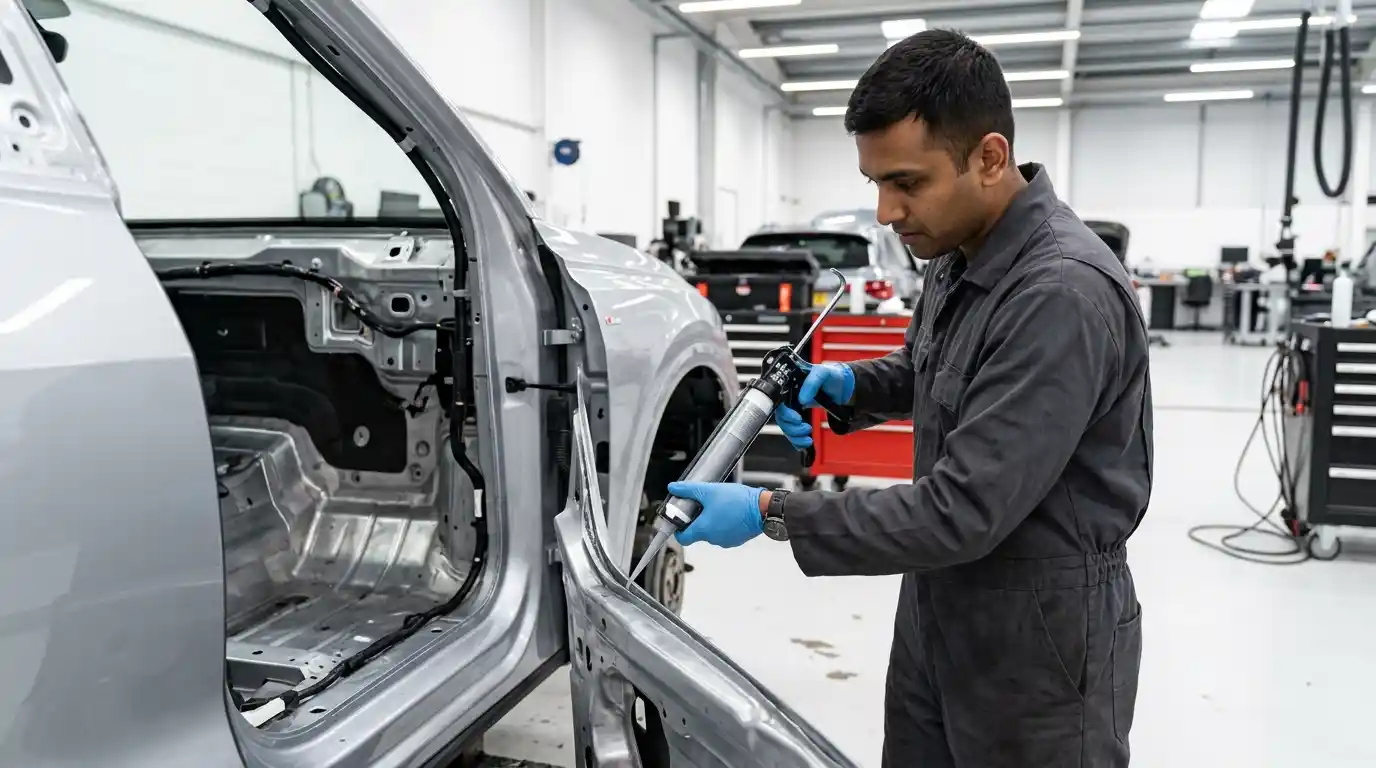
Q8 structural joints require exact fastening and corrosion protection
Multi-material construction uses different joint strategies where aluminium and steel meet. Rivets, welds, adhesive, cast nodes and profiles each have preparation and replacement requirements. The repair does not substitute a familiar fastener or generic adhesive because it is convenient.
Mating surfaces are cleaned without thinning the flange, adhesive receives the specified bead and cure, and fasteners are installed in the correct type and sequence. Dissimilar materials are isolated as required. Primers, seam sealers and cavity protection are restored before covers conceal the work.
Repair-stage evidence can show joint preparation and protection. This is particularly useful where the final outer finish would otherwise hide the difference between a controlled multi-material repair and an improvised one.
Wheel, suspension and ride-height conditions affect sensor closure
A front or side Q8 impact can alter wheel alignment or ride height even when the bumper is the visible concern. Cameras and radar-based systems interpret their environment from a vehicle sitting at a defined mechanical baseline. Tyre pressure, wheel geometry, suspension condition and bracket position are therefore checked before calibration.
Wheel, tyre, steering, ride height and body position are within the required condition.
Mount, cover, aperture and connector match the fitted system.
Static, dynamic or combined calibration is completed under its prerequisites.
Warnings, camera views and included functions are reviewed and documented.
Clearing a fault code or completing a software update is not described as calibration. The handover uses exact terms so the owner knows what was actually done.
Large-part logistics should be resolved before refinishing
Q8 doors, tailgates, bumpers, lamps and grilles can vary by generation, exterior package and assistance equipment. A large panel is inspected on arrival for shipping damage, correct apertures, edge geometry and mounting points. Critical parts are test-fitted before paint when the process allows.
Transfer items can include cameras, sensors, harnesses, trims, seals, glass and powered hardware. The estimate identifies whether they are reused, renewed, programmed or calibrated. A supplied shell should not be mistaken for a complete ready-to-install assembly.
If an item is delayed, storage and timeline changes are explained. A visually similar substitute is not accepted without verified compatibility and approval. Preventing one wrong paint cycle is a meaningful quality and cost control.
Repair evidence should survive after the broad surfaces look perfect
The job record keeps the opening views, hidden findings, material decision, joint or body correction, protection stages, part identity and system verification. Final photographs use wide angles and linear reflections so panel continuity can be compared rather than shown only as a glossy close-up.
For insurance work, supplementary damage is tied to location and impact. For cash work, the same evidence explains why the scope changed. Neither payment route changes the need for safe structure, stable attachments, controlled paint and calibration where required.
At collection, the owner receives the aftercare relevant to the applied coating and a separate list of pre-existing, unrelated or deferred items. This separation prevents the finished Q8 repair from becoming an unsupported claim about the entire vehicle.
Plug-in hybrid Q8 repairs add floor and charging-area controls
On a Q8 TFSI e or another electrified derivative, a side, underbody or rear-quarter incident is screened for high-voltage, cooling and charging-system involvement. Warning messages, coolant evidence, unusual heat, restraint deployment and enclosure proximity are recorded before ordinary metal, plastic or paint work begins.
Safe isolation, lifting, curing heat and restricted repair zones follow the exact vehicle information. Underbody covers are distinguished from the enclosure and supporting structure. If inspection identifies a battery or high-voltage concern beyond the body scope, specialist assessment is arranged rather than hidden inside a cosmetic repair.
Separate outcomes
Body shape and finish, mechanical alignment, sensor calibration and high-voltage integrity are different claims. Each requires its own evidence before handover.
Wheel and arch geometry complete a Q8 side repair
Large Q8 wheels leave small visual errors at the arch easy to notice. The workshop compares wheel centre, tyre clearance, liner position, cladding mounts and the repaired arch radius. A changed steering position, rubbing or ride-height difference is investigated mechanically before the body line is approved.
Arch trim is retained by its designed clips and fasteners; adhesive does not substitute for broken mount geometry. Final images include the wheel and full quarter so proportion can be judged.
Final inspection confirms wheel-centre position, tyre and liner clearance, cladding mounts and fasteners, and full-quarter proportion. Q8 keys and removable cargo items are reconciled before the vehicle is released.
Send a shallow reflection and the complete Q8 zone
Include the year, a full-side or full-corner photograph, a shallow angle, the close damage, panel gaps and any warning. Tell us whether frameless glass, door closure, tailgate, camera view or parking response changed.