
BYD Han Body Repair Dubai
Collision repair on the BYD Han has to protect two things at once: the long, clean sedan body above and the electric-vehicle structure below. We inspect the impact path, lower-body evidence, panel geometry, paint finish and fitted assistance hardware before deciding how the repair should proceed.
Start with the whole side, not only the dent
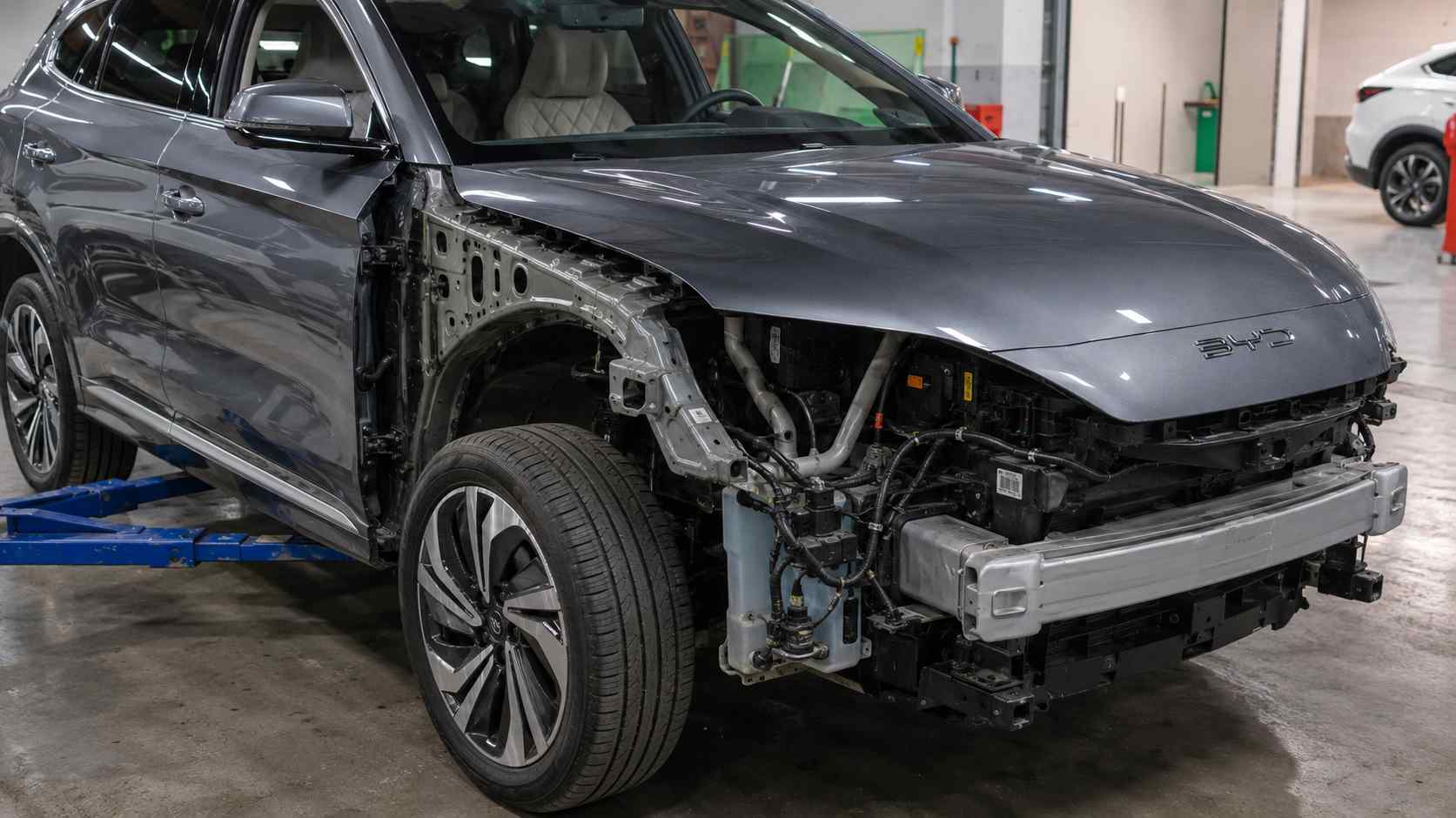
The Han is a long flagship sedan with four large closure surfaces, a low floor and a broad rear quarter. Damage centred on one door can change the reflection through two doors or load the lower sill. At the front and rear, slim lighting and integrated bumper details also depend on accurate support geometry.
Han specifications vary by year and market. We record the VIN, battery or powertrain variant where available, fitted driver-assistance hardware, paint code and dashboard messages before the repair method is finalised.
Lower-side impact needs deliberate EV screening
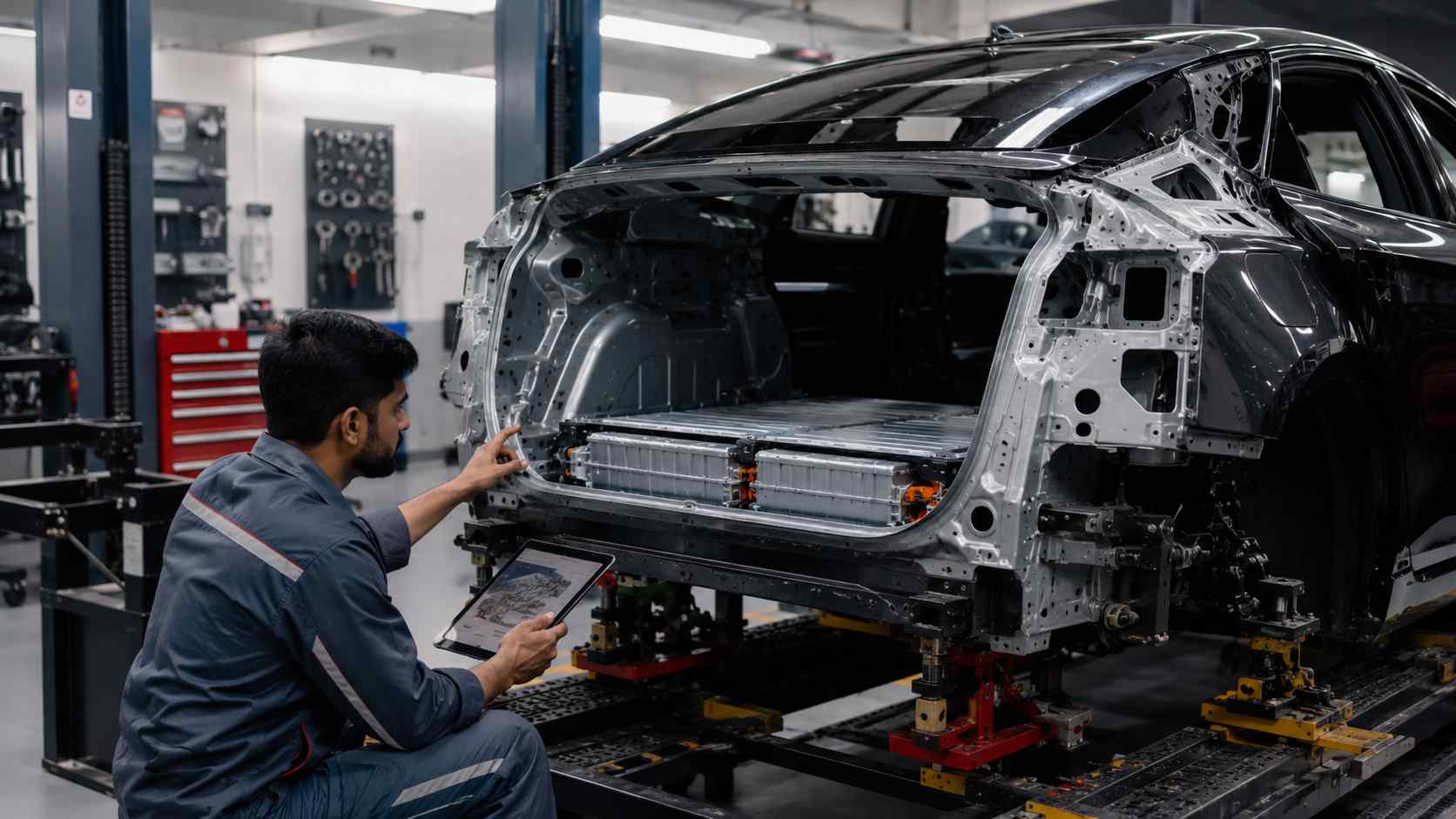
BYD identifies the Han EV as an early Blade Battery application. That does not mean every sill scrape reaches the battery, but it does mean underbody and lower-side evidence cannot be treated as a cosmetic footnote.
A lift inspection is considered after a hard sill strike, underbody scrape, object impact, wheel intrusion or floor deformation. We document witness marks, damaged shields, leakage, warning messages and changes in lower seams before approving heat, welding, pulling or intrusive repair nearby.
A vehicle that powers up can still require further assessment. Conversely, a light mark on an outer sill cover does not automatically prove battery damage. The response is evidence-led and the estimate states when battery-area clearance is excluded or referred.
Long doors expose small shaping errors
We use the complete side as the reference, then decide whether the damaged panel supports paintless dent repair, conventional metal repair or replacement.
Front door
Compare fender, mirror base, hinge area, B-pillar gap, handle and glass movement before adjustment.
Rear door
Read the damage into the B-pillar gap, quarter panel and wheel opening while recording latch effort and seal compression.
Repair boundary
Sharp creases, stretched metal, edge damage, blocked access or previous filler can change a dent from PDR to conventional repair or replacement.
Mounting geometry comes before refinishing
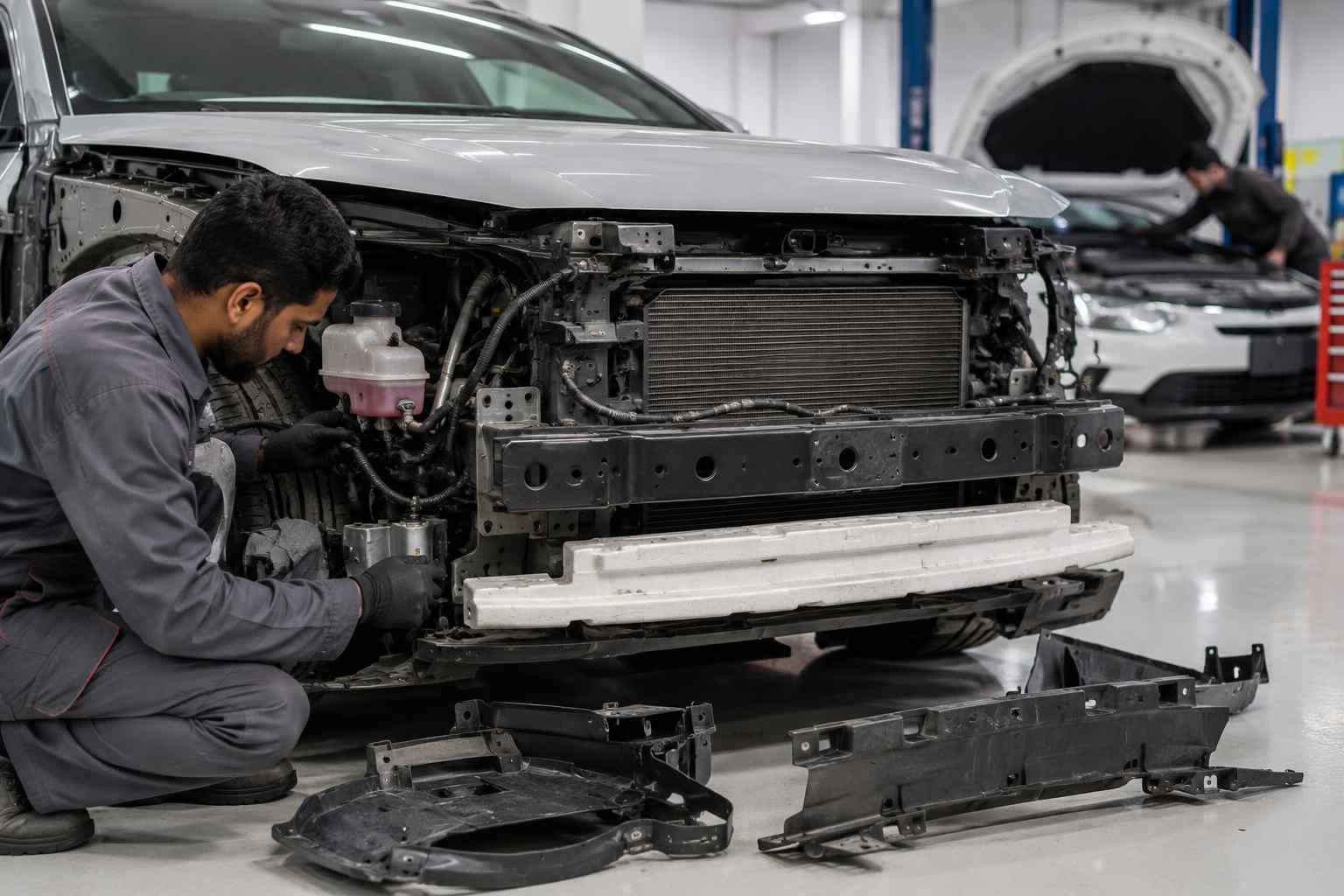
A flexible bumper cover can spring back after impact while a rigid retainer, reinforcement bracket, lamp mount or sensor support remains shifted. At the front we inspect corner retainers, grille, lamp relationships, wheel liner and accessible sensor mounts. At the rear we compare bumper height, boot-lid gap, lamp pocket and quarter ends.
BYD markets driver-assistance technology under the DiPilot name, but fitted hardware varies. We inspect the actual camera, radar-related and parking components in the impact zone and identify any scan, aiming or calibration requirement separately.
Alignment numbers need physical context
Wheel evidence
Tyre, rim, wheel position and accessible suspension are checked after a kerb or corner strike. Steering change or rubbing is investigated before cosmetic work.
Geometry evidence
Alignment measurements can quantify the result, but a bent component should not be adjusted around simply to make one reading appear acceptable.
Safe lifting
Correct lifting points are confirmed before the car is raised, especially when lower trim damage sits close to the battery enclosure.

Broad panels need controlled colour and reflection checks
We begin with the paint code and current surface, then prepare spray-out cards. Metallic face and side tone, pearl depth and clear-coat texture are compared under controlled light and Dubai daylight. A formula is the starting point, not proof of a match.
Blend decisions depend on colour behaviour and panel boundaries. The goal is to preserve unaffected factory finish where possible while avoiding an abrupt panel-edge mismatch that the test card cannot support.
After curing, we inspect colour, gloss, metallic distribution, texture, dust, masking lines and overspray. The repaired side is viewed low and obliquely, not only straight on.
Parts planning should explain the reason, not hide it
Repair
Suitable when deformation is controlled, access is reasonable and the panel material can be restored reliably without compromising the agreed boundary.
Replace
Considered for tears, severe stretch, tight edge kinks, compromised mounts or damage where the approved process does not support reshaping.
Parts and approval
VIN matching, clips, adhesives, corrosion protection and any calibration are included. New hidden findings are documented before scope or price changes.
Typical BYD Han body repair costs in Dubai
These are planning ranges, not binding quotations. Model year, paint, parts, sensor work, battery-area clearance, access and hidden deformation can change the final price.
VAT and external specialist work are identified separately. For wider comparison, see our Dubai accident repair cost guide.
Our BYD Han workflow
Record
Confirm VIN, model year, warnings, impact description and visible damage.
Map
Check reflections, closure gaps, wheel position and lower-body witness marks.
Screen
Set battery, lifting, heat and dismantling boundaries before intrusive work.
Plan
Identify parts, materials, repair information and diagnostic or calibration needs.
Approve
Explain repair versus replacement and the known price range before work proceeds.
Repair
Complete authorised metal, plastic and paint operations in the required sequence.
Refit
Restore trim, closures and affected hardware without forcing fit.
Verify
Review finish, operation and agreed electronic evidence before handover.
Useful evidence and charging-side observations
What to photograph
Send a full vehicle view, the damaged region from two angles, both door gaps when the side is affected, the nearest wheel and sill, dashboard warnings and the VIN or model year. Do not crawl under an unsupported vehicle to take photographs.
What to tell us
Mention charging problems, unusual odour, leakage, steering change, rubbing, prior repairs, film, wrap or ceramic coating. If there are battery safety warnings or serious lower-body signs, do not keep charging or driving against safety advice.
The complete side should look calm after repair
Large doors can transmit small fit errors into wind noise, water sealing and glass movement. After refit, we check latch effort, window travel, seal seating and the installed door trim. Switches, speakers and courtesy lighting disturbed for access are included in the practical check.
At final acceptance, the complete side is viewed at normal ride height, the repaired lower edge is checked, and metallic or pearl effect is compared across adjacent panels.
Arrange an independent BYD Han assessment
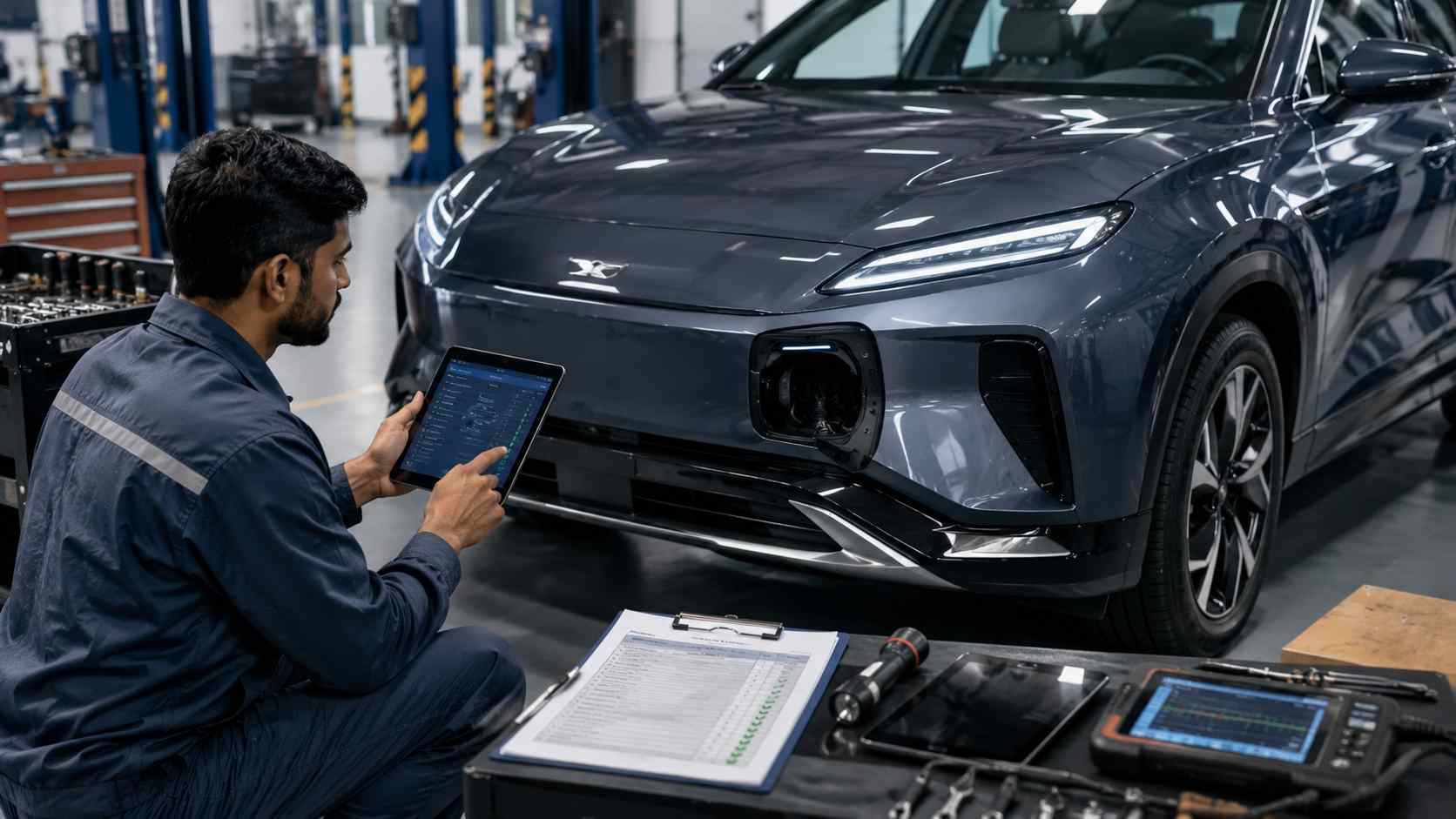
Send damage photographs or book an inspection at our Al Quoz 4 workshop. The final written quote follows inspection of the actual vehicle and the systems affected by the impact.