
COMPACT CROSSOVER CORNER REPAIR
Geely Coolray Body Repair Dubai
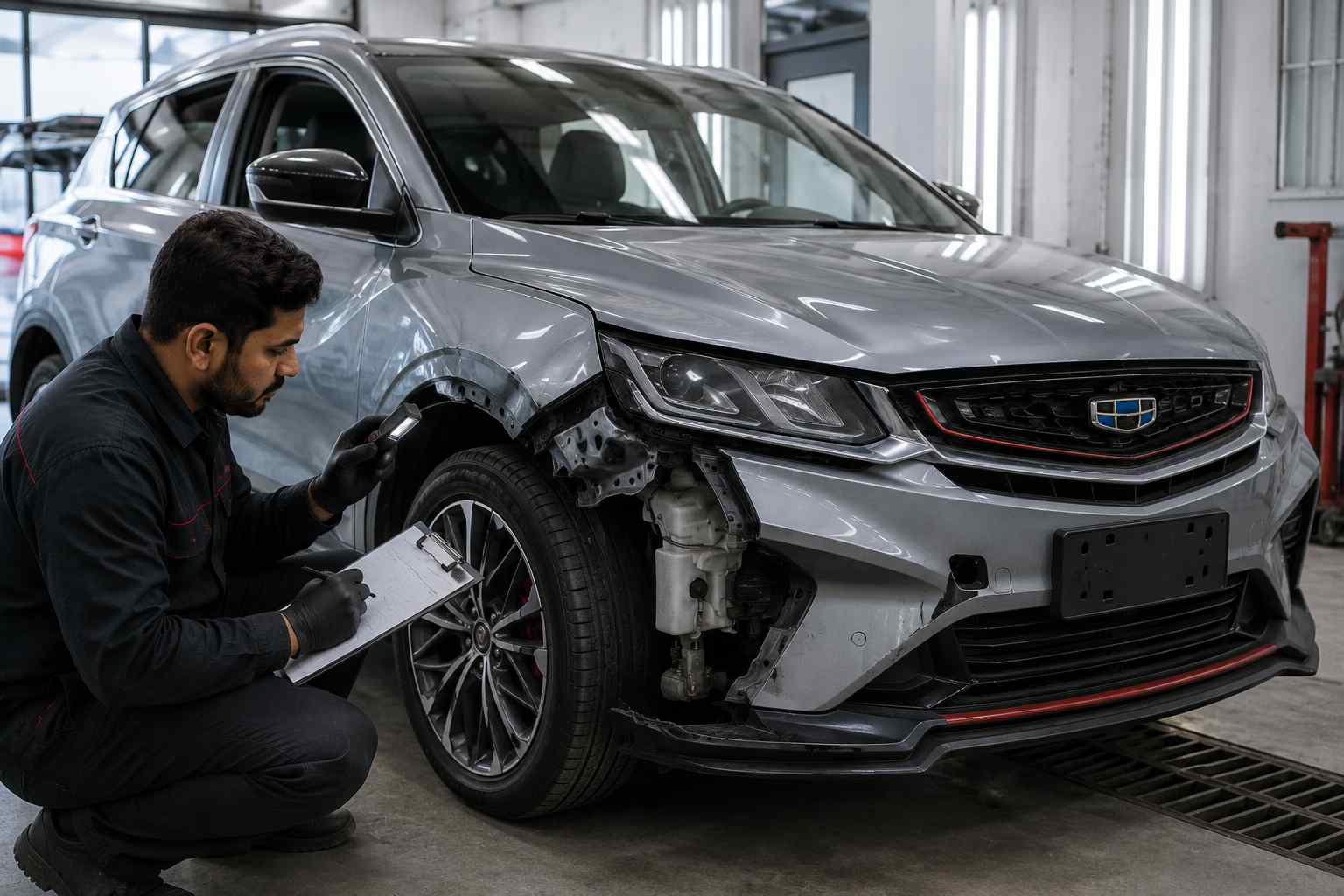
Geely Coolray body repair in Dubai is often decided at the corner stack: bumper skin, guide, lamp edge, wing, wheel arch, liner and parking equipment meet in a small area. A scuff that appears local can involve several attachments, while a dramatic-looking dent may still be repairable. We inspect the complete corner before choosing the method.
The Coolray’s short overhangs, sculpted surfaces, sporty trim and available dual-tone presentation make fit and finish especially visible. This page focuses on those model-specific body-repair decisions. It does not copy the broader workflow covered by our main accident and painting pages.
Read a Coolray impact from the tyre outward
When a Coolray corner is hit, the tyre and wheel position provide an important reference. We look for fresh tyre rub, liner contact, wheel-arch distortion and changes in steering before concentrating on paint. The inspection then moves outward through the liner, bumper guide, wing edge, lamp mount and outer skin. This order helps identify load that travelled beyond the visible mark.
Green lane: cosmetic
Surface scuff or shallow dent, stable gaps, no broken attachment, no warning and no change in driving.
Amber lane: dismantle
Bumper edge stands proud, liner is loose, lamp moves, clips are missing or a sensor area has been struck.
Red lane: measure
Wheel displacement, tyre contact, steering change, fluid loss, severe gap movement or a persistent safety warning.
Bumper-guide damage can imitate a badly fitted panel
The outer bumper is flexible, but the side guide and tabs that locate it against the wing are less forgiving. A parking impact can release or split those attachments, leaving a raised joint even after the skin returns to shape. Pushing the corner back by hand may conceal the problem temporarily and can make the written estimate look cheaper than the final repair.
We assess plastic condition, tab and guide integrity, sensor openings, grille pieces, lower trim and paint. Repair can be sensible for local deformation or a serviceable crack away from critical mounts. Replacement becomes more predictable when the plastic is torn through an attachment, permanently stretched or unable to hold the correct line. Separate guides and retainers are checked before a complete bumper assembly is proposed.
Technician check: close the gap without force
The bumper should meet the wing because its shape and attachments are correct, not because screws, adhesive or heat have been used to pull a distorted corner into place. The joint should remain stable after normal temperature changes and road vibration.
Wheel-arch and side damage need a line-of-travel check
A wheel-arch dent may sit close to the suspension area even when the mechanical components were not touched. The incident description matters: a trolley dent, door impact, kerb strike and moving side collision create different load paths. We compare wheel position, arch shape, liner attachments, door gap and sill condition before authorising cosmetic correction.
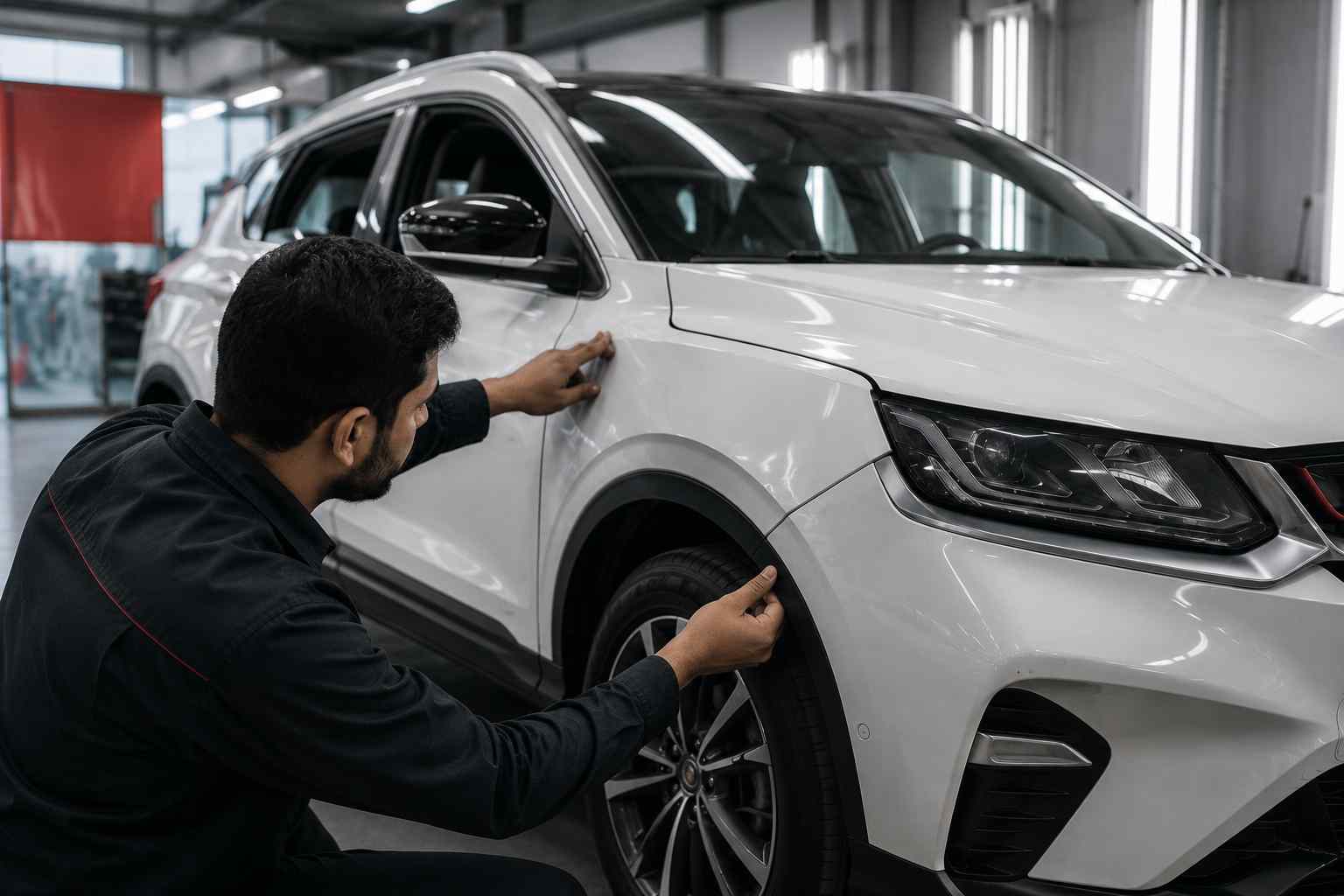
For door damage, access behind the outer skin, the position of reinforcements and the condition of the paint determine whether paintless dent repair is realistic. For a crease running into the arch or an edge, conventional repair and refinishing may be more stable. The published comparison of PDR and panel beating explains the decision without turning this model page into another generic dent guide.
Sensor closure needs geometry as well as diagnostics
Geely UAE presents the Coolray with advanced safety and parking features, but the exact combination differs by model year and trim. We verify the specific vehicle rather than copying a feature list into every estimate. Bumper, grille, mirror, windscreen or tailgate work is mapped against the cameras, sensors or other equipment actually fitted.
The repair closes in three layers. First, the bracket and body geometry must be correct. Second, wiring, connectors and diagnostic status are checked. Third, the relevant function is tested and calibration is completed only where the applicable procedure requires it. Clearing a warning without correcting a bent mount is not an acceptable finish.
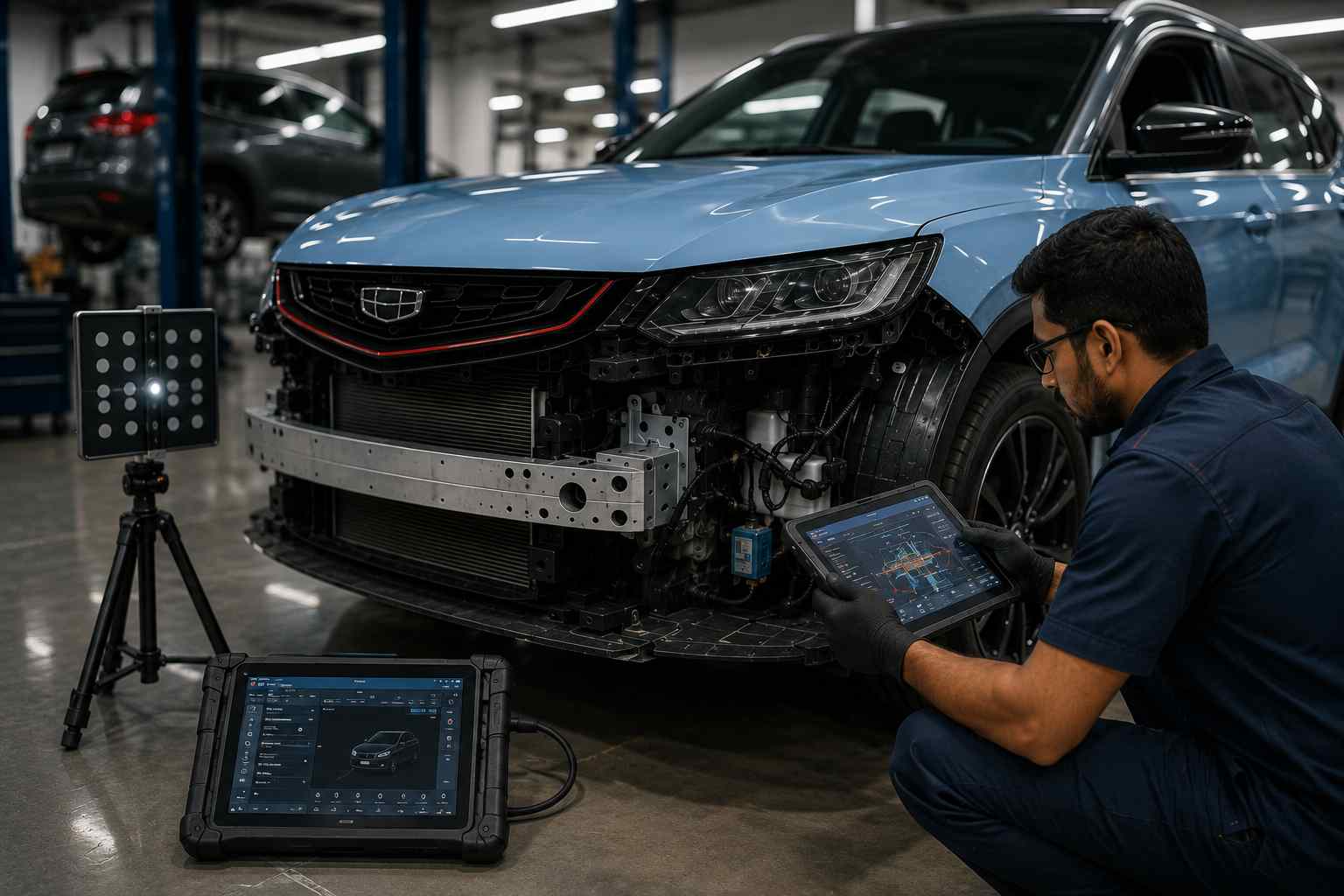
A connected sensor is not necessarily a correctly aimed sensor. Geometry, diagnostics and function must agree.
Coolray electronic closure rule
Protect the dual-tone design during paint work
Geely describes the Coolray with a sporty dual-tone design. On vehicles equipped that way, the painter must identify the exact boundary between body colour, roof treatment, spoiler, pillars and black trim. A repair near that boundary can demand more masking and edge control than an ordinary single-colour panel.
The existing finish is inspected for previous paint, sun exposure and texture before a spray-out is prepared. Metallic orientation and viewing angle are assessed under more than one light source. Colour is not approved by code alone. If adjacent-panel blending is proposed, the estimator should explain why it improves the result and which panels will be disturbed.
Openings and seals must agree without forced adjustment
Compact crossovers use short openings with prominent seals and trim transitions. A side or rear impact can change closing effort before a large gap becomes obvious. We check hinge movement, latch position, striker evidence, seal compression and water paths. Tailgate operation, spoiler and lamp fit are reviewed together when the rear upper area was involved.
Latch adjustment is used only after the opening and panel have been proven correct. Moving a striker to make a distorted door close can hide the underlying geometry and create uneven seal pressure. The quality-control record should state whether alignment was corrected at the panel, hinge, opening or latch.
Coolray body repair cost planning
Current BodyShop.AE planning ranges begin at AED 299 to 1,000 for a small dent or scratch, AED 500 to 2,500 for bumper repair or replacement and AED 1,000 to 3,000 for a door or wing repair. A front-corner combination involving the bumper, lamp, wing, brackets and diagnostics commonly sits in the broader AED 2,000 to 6,000+ scenario.
These numbers are indicative, not fixed Coolray prices. The estimate changes with the paint system, broken clips, grille or lamp parts, sensor work, wheel or suspension findings, previous repairs and local parts availability. Structural concern or a wheel out of position requires inspection before any useful total is promised. The ranges and methodology are maintained on our Dubai accident repair cost page.
What the written estimate should separate
Body and plastic
- Metal correction or PDR
- Plastic repair
- Panel or trim replacement
- Opening and gap adjustment
Paint and finish
- Preparation and primer
- Colour verification
- Blending where justified
- Texture and final polish
Systems and closure
- Scan and warning review
- Sensor or camera test
- Calibration if required
- Road and handover checks
Parts quality and availability should be written, not implied. The quotation should identify whether a component is new original, another agreed option or an existing part being repaired. Provisional items should have an approval point so dismantling does not turn into open-ended work.
Production gates stop one trade hiding another
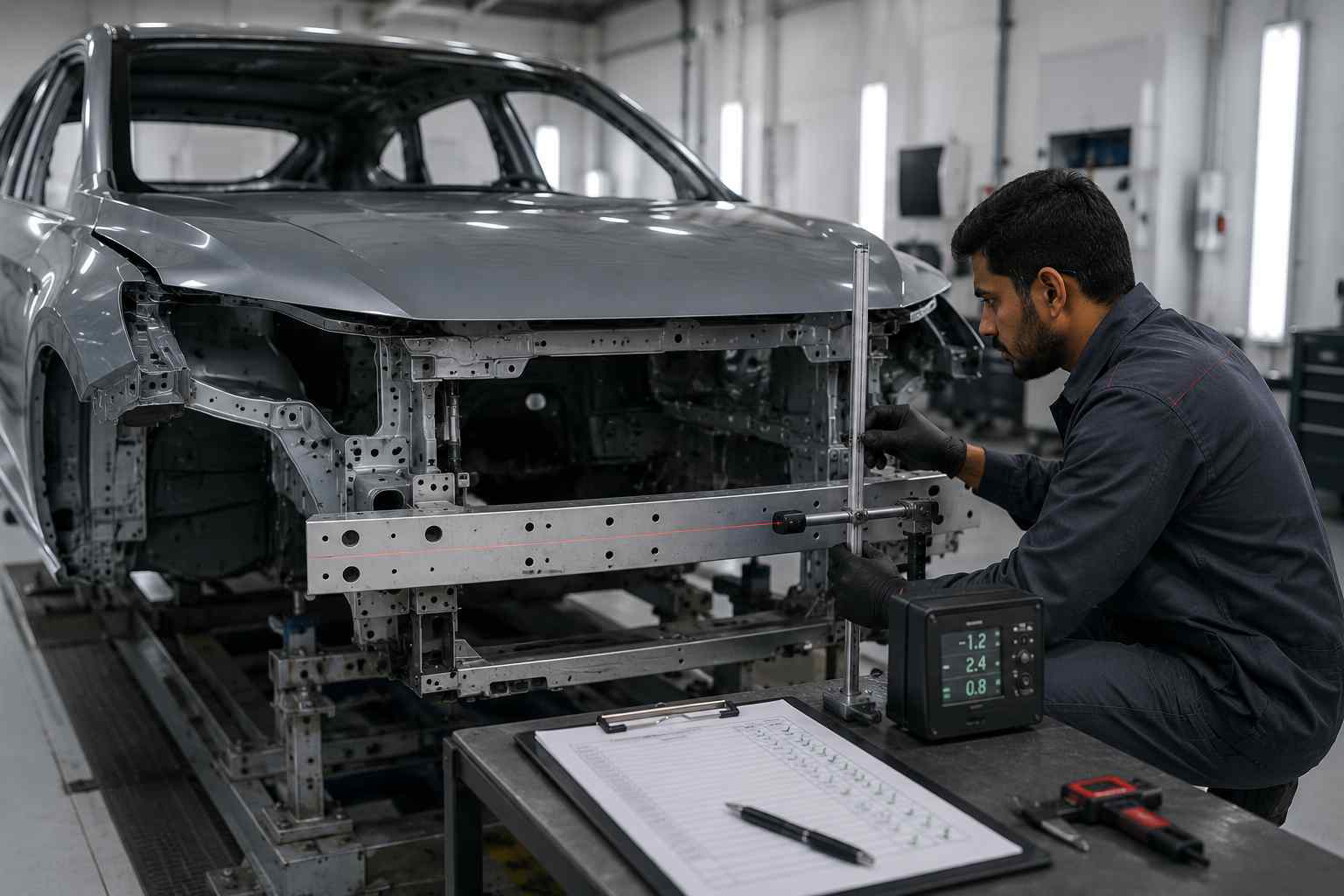
- Incident checkpoint: confirm the direction of contact, wheel involvement and any change in driving.
- Corner-stack checkpoint: compare bumper, guide, lamp, wing, arch, liner and adjacent gaps.
- Strip-down checkpoint: expose attachments only with approval and update the estimate with photographs.
- Method checkpoint: choose repair or replacement using material, access, edge condition and complete labour.
- Colour checkpoint: verify the variant and dual-tone boundaries before the vehicle enters the booth.
- Fit checkpoint: restore openings, trim transitions and normal closing effort before system checks.
- Electronic checkpoint: complete diagnostics, function testing and documented calibration where applicable.
- Release checkpoint: inspect daylight finish, tyre clearance, lamps, camera or sensors and warning state.
When the Coolray should not be driven to the workshop
- A tyre contacts the arch liner or body.
- The steering wheel position or vehicle tracking changed after impact.
- A lamp, bumper section or lower shield is insecure.
- A bonnet, door or tailgate cannot latch normally.
- Fluid is leaking or a mechanical noise began with the incident.
- An airbag, restraint, stability or other safety warning remains active.
Arrange recovery rather than driving when any of these conditions is present. A cosmetic appearance does not override a mechanical or safety symptom. For multi-panel or insurance work, our published accident repair service in Dubai explains the wider claim and workshop process.
Coolray handover: inspect proportion before gloss
Begin several metres from the car. Compare left and right stance, wheel-arch clearance, bumper height and lamp position. Then move closer and view the repaired surface along its reflection. This sequence prevents a shiny finish from distracting attention from a bumper corner or body line that is still out of position.
Check doors and tailgate for consistent effort, inspect seals and confirm that trim edges sit flat. Test every camera, parking function, lamp and warning affected by the work. Ask for the final invoice, parts list, paint operations, calibration record where relevant and warranty terms. Freshly refinished panels should be cared for according to the supplied paint-system instructions.
Photos that speed up Coolray triage
Send a full view of the damaged side, a straight corner image, a low picture showing the tyre and liner, an oblique reflection across the dent and the dashboard. For rear damage, add the open tailgate and both bumper joints. A close-up without surrounding references can hide the direction of impact and should not be the only photograph.
Rear-corner damage on the Coolray
The rear bumper, lamp, quarter-panel edge and tailgate opening form another compact stack. A low parking impact may release the bumper side guide; a higher contact may load the lamp pocket or tailgate edge. We photograph both rear corners, compare the tailgate gap from top to bottom and check the luggage opening before the bumper is removed. A working tailgate does not rule out a moved lamp bracket or cracked retainer.
If the bumper is removed, hidden findings are photographed beside the original estimate. The repair plan distinguishes absorber or reinforcement evidence, plastic attachments, quarter-panel work and tailgate alignment. This prevents the customer from receiving a vague addition after paint has already begun.
Trim and part-number control
Coolray variants can differ in grille pieces, bumper inserts, camera or sensor provision, wheel-arch trim, badges and dual-tone details. The technician records the VIN and fitted part before ordering. A visually similar bumper with different openings can create poor fit, unsafe improvisation or unnecessary holes. Replacement pieces are dry-fitted where practical before refinishing so the workshop can check clips, gaps and adjacent trim.
Reusable clips and guides are inspected rather than assumed. A fastener that has lost tension may hold in the workshop and release after heat cycles and road vibration. The final invoice should identify any replaced retainers instead of listing only the large painted component.
Dubai heat and post-paint care
High ambient temperature affects working conditions and product handling, but it does not justify changing approved material, repair or curing limits. Paint products are mixed, flashed and cured according to their technical instructions. The vehicle is not returned early because the panel feels dry to the touch. At handover, the owner receives product-specific washing and protection advice instead of a universal waiting period copied to every car.
Fresh surfaces should be inspected before any polish, coating or protective film is proposed. The workshop explains whether a later finish product requires additional curing time and which party will confirm readiness. This keeps cosmetic upselling separate from the body-repair warranty.
Coolray repair timing and parts availability
A small bumper scuff or accessible dent may be completed within a few working days. Corner damage takes longer when the bumper must be removed, hidden guides are confirmed, a lamp or trim is ordered, paint is blended and parking equipment is checked. The estimate should show the sequence instead of promising one universal completion time.
Supplier availability is verified against the exact part number before the car is dismantled for a routine cosmetic job. When the vehicle cannot be safely reassembled, the customer is told why it must remain in the workshop. When it can remain mobile, the temporary condition and follow-up appointment are documented rather than leaving the owner to chase an uncertain date.
A daily status message is not useful unless it states which gate has been passed: inspection, parts confirmation, body correction, paint, assembly or electronic closure. This gives the owner a practical forecast and exposes delays before they affect collection plans.
Comments are closed.