
Measured C-Class accident repair for everyday Dubai damage
Mercedes-Benz C-Class Body Repair Dubai
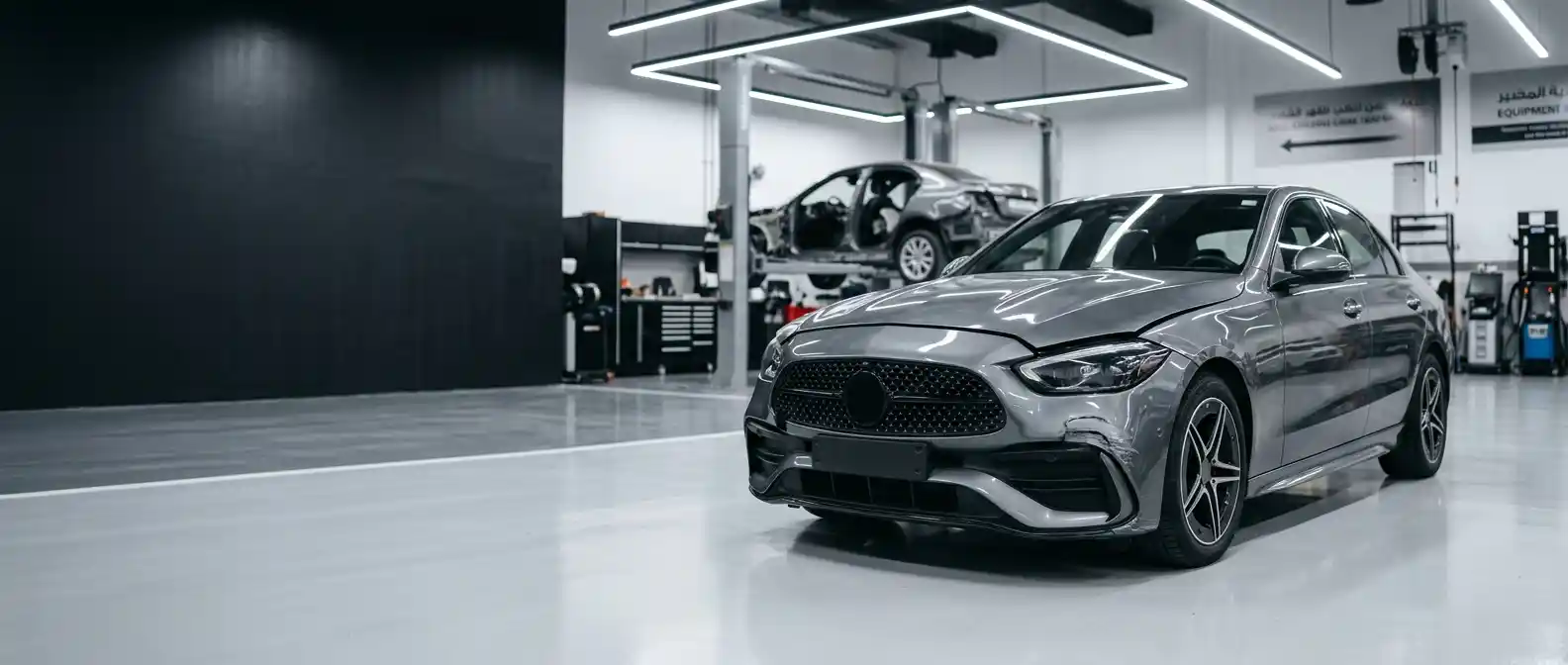
A parking scrape on a C-Class often crosses more than the painted corner. The mark can pass through an apron insert, parking sensor opening, lamp relationship, wheel arch and the edge of an adjacent panel. We map that urban-contact zone first so the quotation reflects the whole repair rather than the most visible colour loss.
C-Class workshop decision map
Choose the inspection lane from where the contact entered
This corner map begins with location, not severity labels. Front, side, rear and roof-edge contacts create different questions on a compact saloon. The owner can identify the first lane without attempting dismantling or unsafe tests.
Start with the ordinary clue the driver noticed
Useful intake details are often simple. Did the parking display change, did a door become heavier, did wind noise appear, or did the tyre begin to brush at full lock? Those observations are recorded before washing or disassembly because they show how the C-Class behaved immediately after contact.
The owner does not need to diagnose the fault. Wide photographs, an oblique reflection and a full dashboard image are safer than pushing a distorted bumper, forcing a closure or clearing a warning. If steering, braking, cooling, airbags or fluid containment may be affected, use should stop until inspection.
Front apron variants cannot be chosen by shape alone
Current C-Class equipment lines use different front styling, including distinct Avantgarde and AMG Line treatments. Decorative pieces, air openings and mounting points can therefore differ even when two cars share the same basic body. The VIN and removed part must settle the order.
We compare apertures, clips, brackets, lower shields and neighbouring lamp position before accepting a replacement. A correct-looking skin can still be wrong for a sensor, trim insert or duct. Trial fit takes place before refinishing whenever the component controls several relationships.
Lighting repair includes the body around the lamp
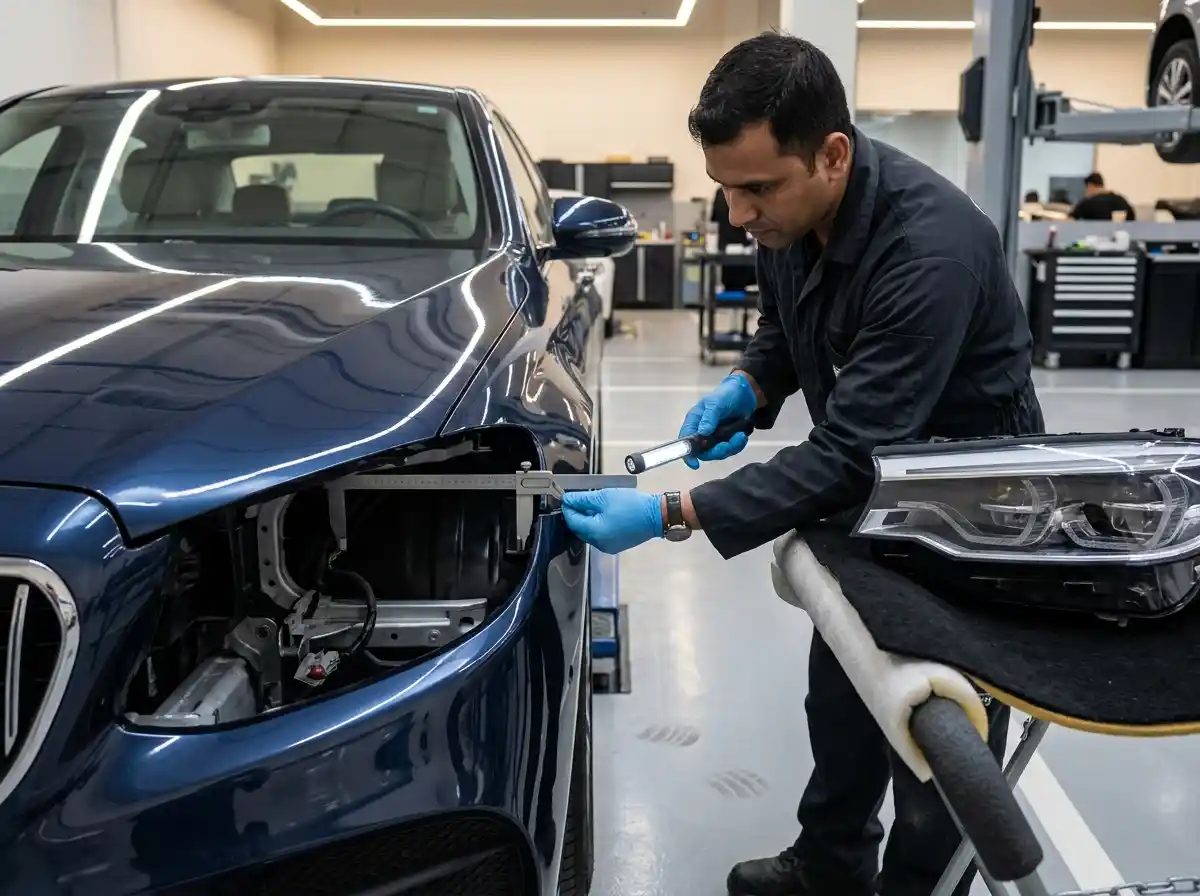
Mercedes-Benz lists DIGITAL LIGHT as configuration-dependent equipment on the current C-Class. A damaged headlamp is not treated as an isolated bright object. Its pocket, supports, bumper edge, bonnet gap and wing contour create the reference from which the unit aims and sits.
The repair file distinguishes optical condition, mounting integrity and exterior alignment. A lamp that illuminates can still have a cracked support or altered attitude. Applicable initialisation or aiming follows the completed body work and the exact equipment fitted to the vehicle.
The rear lamp split creates a two-panel reference
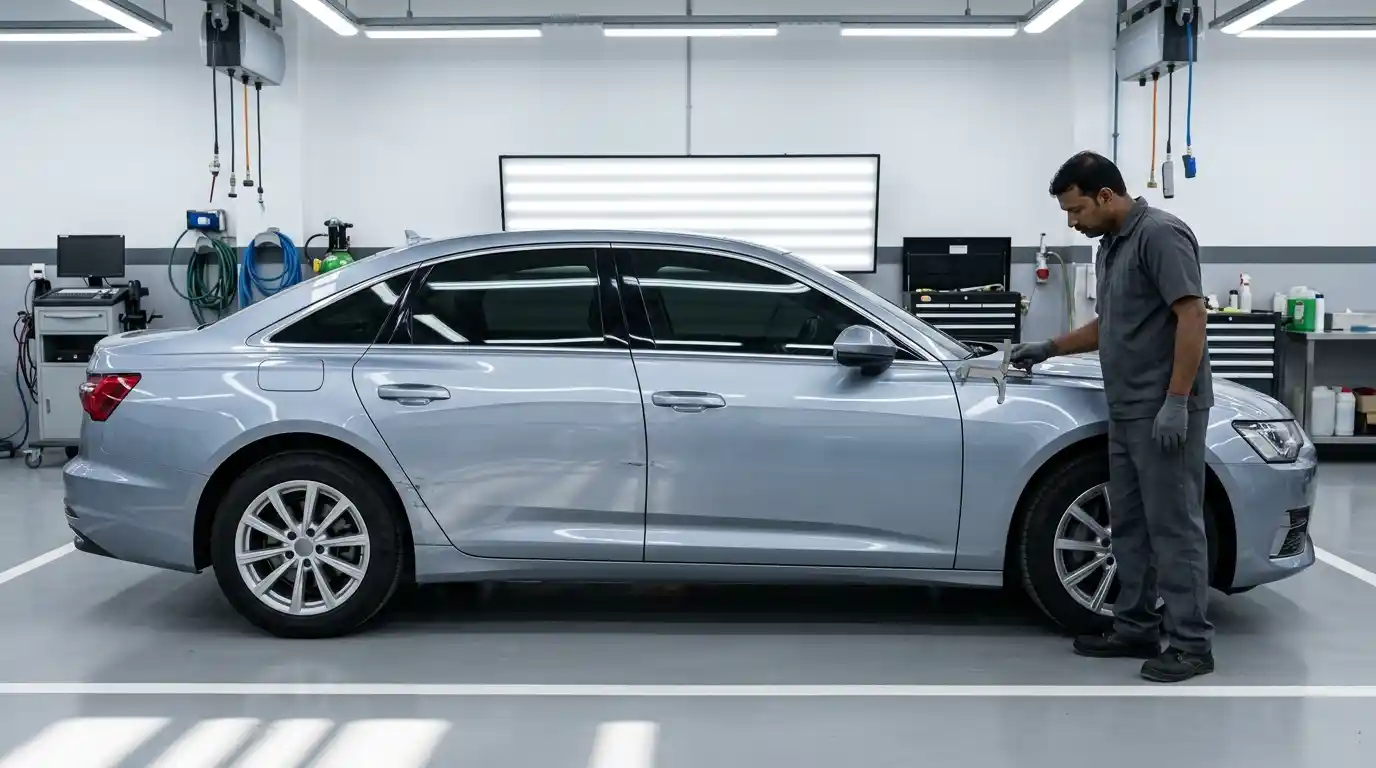
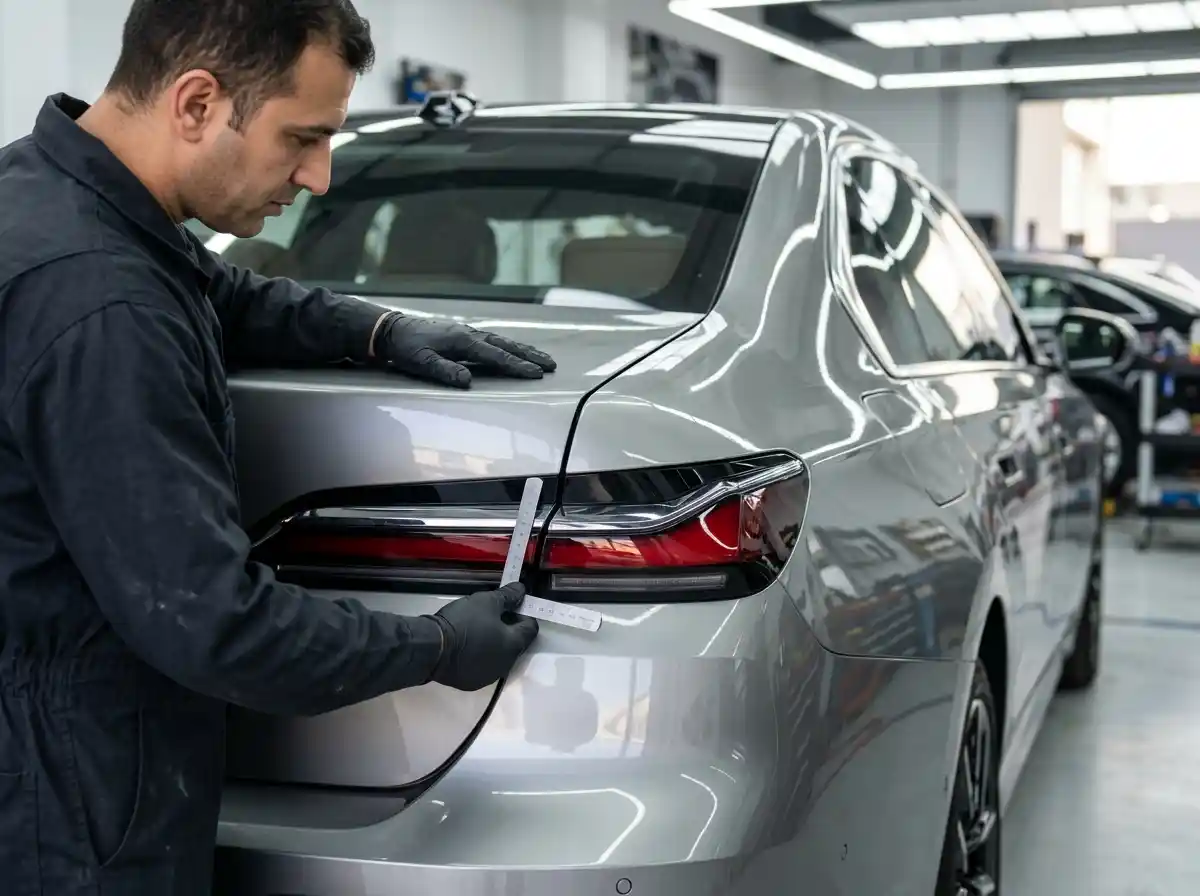
The C-Class Saloon uses two-part rear lamps, with elements carried across the quarter and boot lid. That relationship makes a rear-corner repair easy to judge and easy to get wrong. We compare height, inboard and outboard gaps, boot flushness and bumper seating as one picture.
A lamp-shaped gap is not corrected by forcing the lamp into a distorted pocket. The quarter edge, boot opening and guide locations are established first. Water paths and wiring receive their own check before trim is replaced.
Parking sensors need a physical and electronic answer
A clean scan does not show whether a sensor face sits at the intended angle. We inspect the holder, painted aperture, harness route and surrounding bumper shape before reading diagnostic information. Excess coating, repair adhesive or an incorrect bracket can change the result.
The installed package is verified from the vehicle because options vary by build and market. Any required calibration or functional procedure is carried out only with the stated body, wheel and environmental conditions met. Handover records the operation actually performed.
Colour approval at the visible transition
Paint matching follows the edge most people will see
A C-Class repair is viewed across bonnet, wing, door or quarter transitions that catch Dubai daylight strongly. Paint code selection narrows the formula, while instrument readings and spray-out cards show how candidates travel beside the existing finish. Previous work and sun exposure are considered.
Blend decisions are made case by case rather than promised from a photograph. Full-panel reflection is checked with the colour and texture so the repaired edge remains consistent from normal and shallow viewing angles.
Small plastic damage still needs a repair limit
Some bumper deformation can be restored when the plastic, access and mount condition allow a stable method. Replacement is considered when a crack crosses a critical holder, material is missing, heat history is unknown or geometry cannot be maintained after correction.
The decision includes lower trim, guides, sensor carriers and transferred hardware. Quoting only the painted skin can understate labour and create a false economy. We name the components that remain inspection-dependent so the owner knows where the uncertainty sits.
The estimate should read like the repair sequence
A practical C-Class scope separates initial access, panel or plastic work, replacement parts, preparation, colour application, reassembly and verification. It explains which findings are confirmed and which require authorised dismantling. That structure makes supplements easier to understand.
Parts supply, variant confirmation, curing, alignment and electronics can move at different speeds. We do not publish a universal turnaround promise. The owner receives milestones tied to completed gates rather than a collection date based on an unverified component.
Quality control returns to the first owner complaint
If the intake mentioned a changed parking response, stiff door or lamp gap, the final check begins there. The inspector then reviews reflections, edges, fasteners, seals, trim seating and cleanliness. Each observation is compared with the original photographs and repair scope.
Where applicable, the file includes part references, hidden-condition images, paint approval, diagnostic output and calibration or alignment evidence. Unrelated warnings and pre-existing finish defects remain separately identified. That keeps the handover honest.
The manufacturer page confirms why configuration matters
The Mercedes-Benz UAE C-Class overview distinguishes Avantgarde and AMG Line exterior treatments and describes optional DIGITAL LIGHT. Those details support the variant and lighting checks on this page.
They do not replace current repair instructions or physical inspection. The workshop confirms the exact derivative, build date, market equipment and component identity before an irreversible repair or purchase decision.
Collection should include a slow walk around the car
View the repair from normal standing height, then from a shallow angle that reveals the body line. Operate the affected closure and look at the lamp or trim relationships that were disturbed. Review the invoice beside the approved scope rather than relying on gloss alone.
Aftercare instructions must match the products used. The handover covers washing, pressure distance, adhesive cure and any coating restriction that applies. Report a new movement, warning or water path promptly with the conditions in which it appeared.
Mirror contact can continue into the door
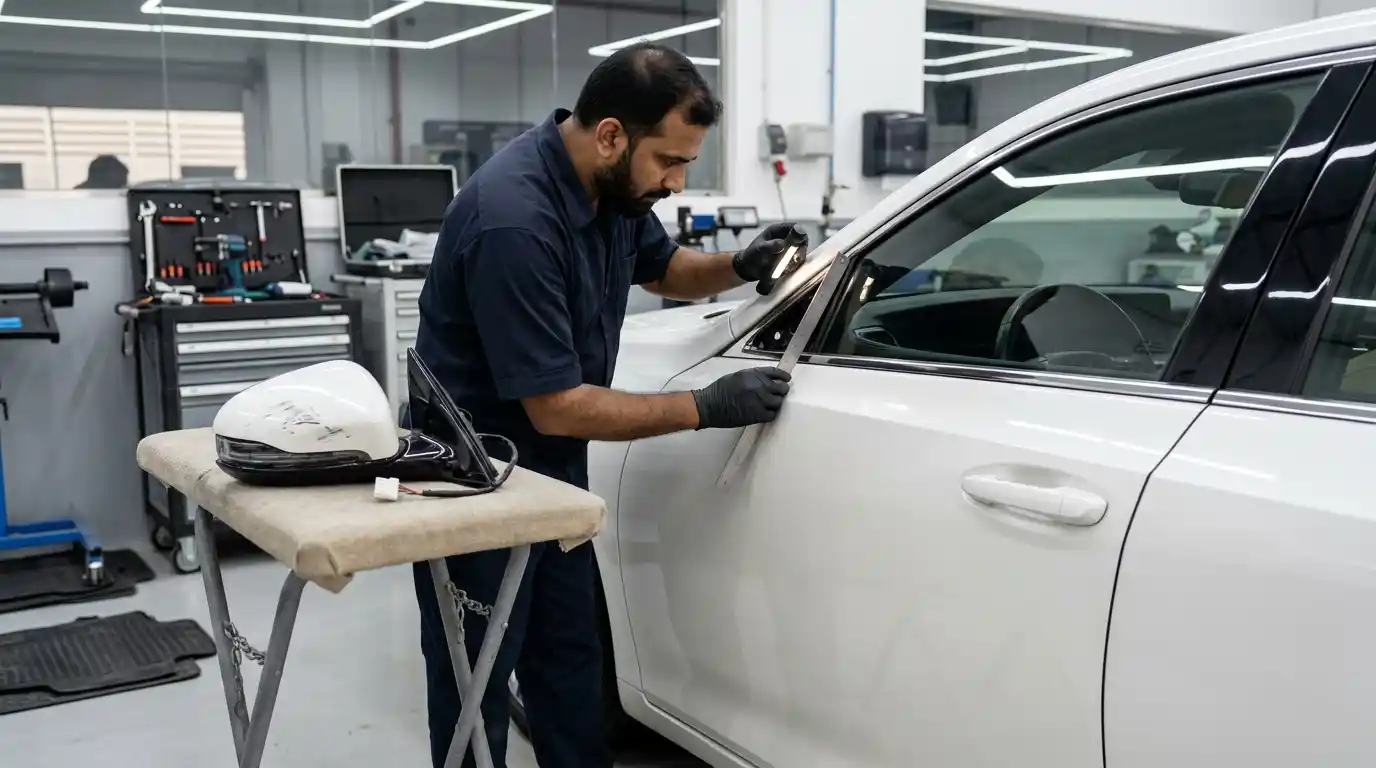
A folded or broken mirror may transfer force into its base, door skin, inner reinforcement, glass channel or wiring connector. We inspect the painted area around the mount and record mirror functions before removal. A replacement cap alone is not assumed to close the job.
Camera, indicator, heating, folding and blind-spot equipment vary by configuration. The ordered assembly must match the installed functions and connector. After fit, the door and mirror are reviewed together so wind noise or a shifted beltline is not missed.
Roof opening and glass boundary
Roof-edge damage calls for aperture caution
Contact near the windscreen, roof rail or panoramic opening can affect sealing and glass relationships. The workshop records chips, cracks, lifted trim and water evidence before disturbing the area. Cosmetic correction waits until the aperture boundary is understood.
Glass removal or bonding follows the applicable system and cure requirements. A leak is traced rather than covered with extra sealant, and contact approaching restraint or structural zones receives technical review before production.
- Initial evidence
- Glass chips or cracks
- Lifted roof or aperture trim
- Water marks and drain evidence
- Windscreen, rail and panoramic-opening relationships
Do not close the area cosmetically first. The aperture, sealing route and nearby technical boundaries are confirmed before paint, bonding or trim work hides the evidence.
Panel beating and PDR solve different conditions
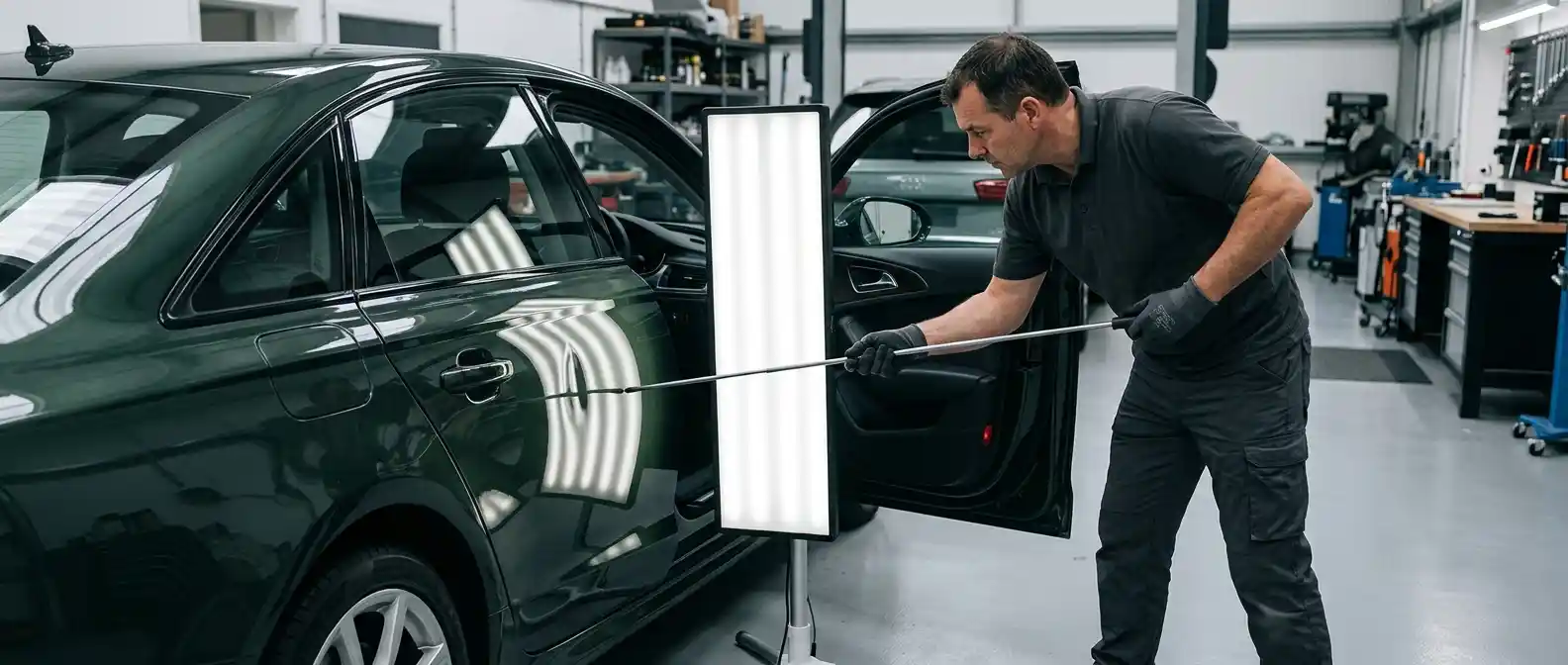
Paintless dent repair may suit accessible, stable deformation where the finish remains intact and the panel edge is not compromised. Conventional repair becomes more likely when paint is broken, the crease is sharp, access is restricted or material has stretched.
The C-Class is inspected under line lighting before either route is promised. A small footprint can contain a deep crown, while a larger shallow dent may be recoverable. The estimate explains why the selected method fits the actual panel rather than selling a technique by name.
Documentation follows every payment route
A cash repair still deserves full documentation
Choosing not to claim through insurance does not reduce the need for intake photographs, scope approval or hidden-damage evidence. The same physical repair limits apply. The difference lies in the authorisation route, not workmanship control.
Accident documents, approvals and supplements remain aligned with the accepted event and the work authorised after inspection.
Repair choices, exclusions and any inspection-dependent additions are written clearly before the work expands.
Dubai parking damage benefits from a useful photo order
Begin with the entire side or end of the C-Class so the workshop can see proportion. Add a shallow reflection along the damaged panel, then close views of cracks, lamp edges, sensor apertures and the nearest wheel. Photograph warnings without cropping the wording.
Avoid pushing a loose bumper back into place for appearance. That can break remaining guides or trap wiring. The initial images help decide whether the car can arrive normally, needs securing or should be recovered.
A repair warranty must name the work it covers
Workmanship coverage should identify the repaired area, operation and applicable exclusions. It must not be presented as a Mercedes-Benz manufacturer warranty or a promise for unrelated electronics, old paint or later parking damage. Terms need workshop approval before they are presented to customers.
The handover links any coverage to the invoice and care instructions. Photographs establish the delivered condition, while the customer retains the repair documents. Clear boundaries are more useful than a broad lifetime phrase that cannot explain what happens after a new impact.
Send the corner map that matches your C-Class
Include one wide side view, the damaged corner, its nearest lamp or wheel, the affected closure gap and any full warning message. We can then recommend inspection, recovery or a photo-led first assessment.