
Taycan collision repair with a defined EV boundary
Porsche Taycan Body Repair Dubai
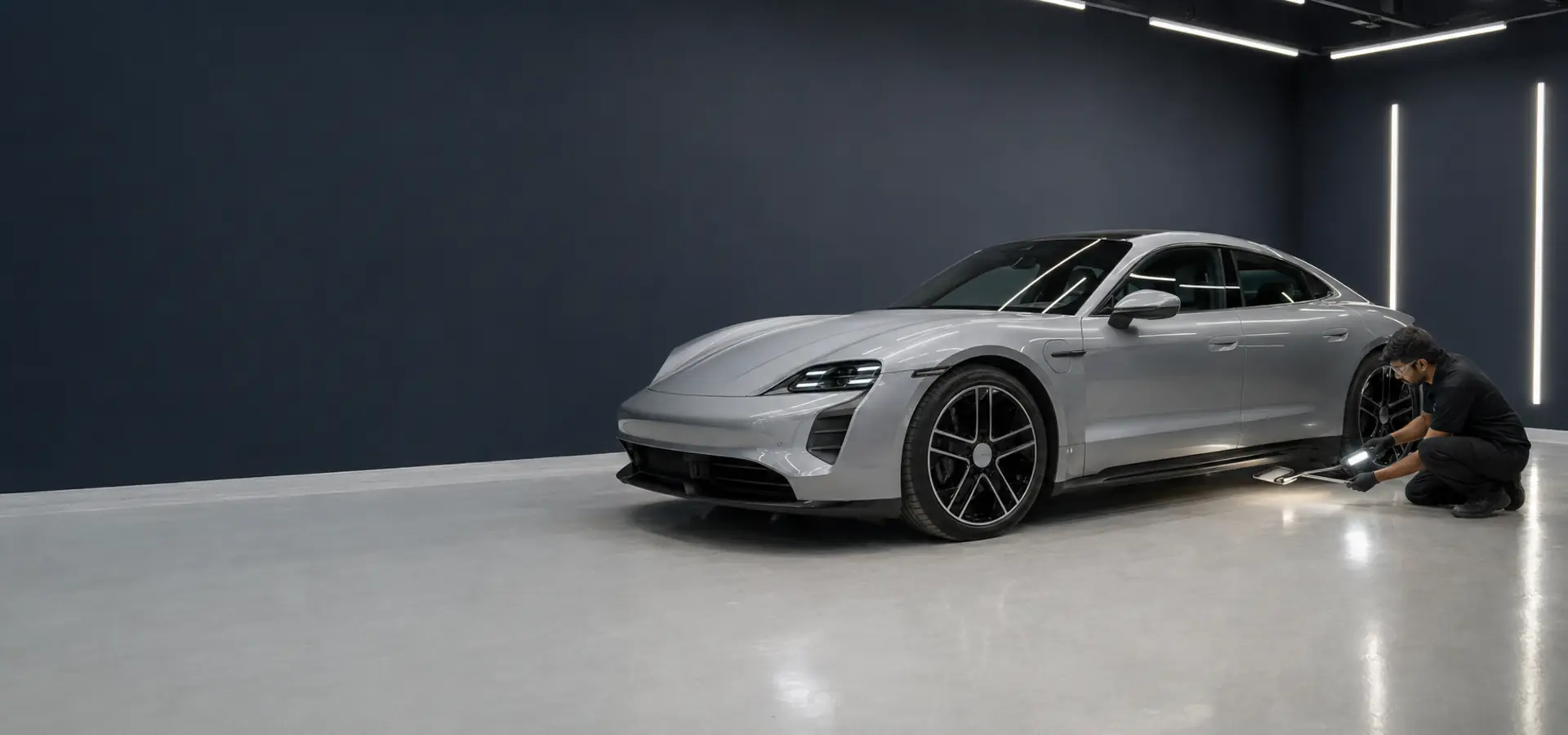
Porsche Taycan body repair in Dubai starts by controlling vehicle state and the high-voltage boundary before low bodywork or paint is touched. A kerb strike can mark an apron while continuing beneath the floor, and a quarter impact can approach charging equipment. The repair map separates observation, isolation authority, body work and release.
Taycan EV permission chain
Do not let cosmetic urgency cross an unreleased electrical boundary
Five permissions move the Taycan from scene information to body finish. A later stage cannot authorise an earlier safety decision.
Recovery planning starts before the vehicle moves
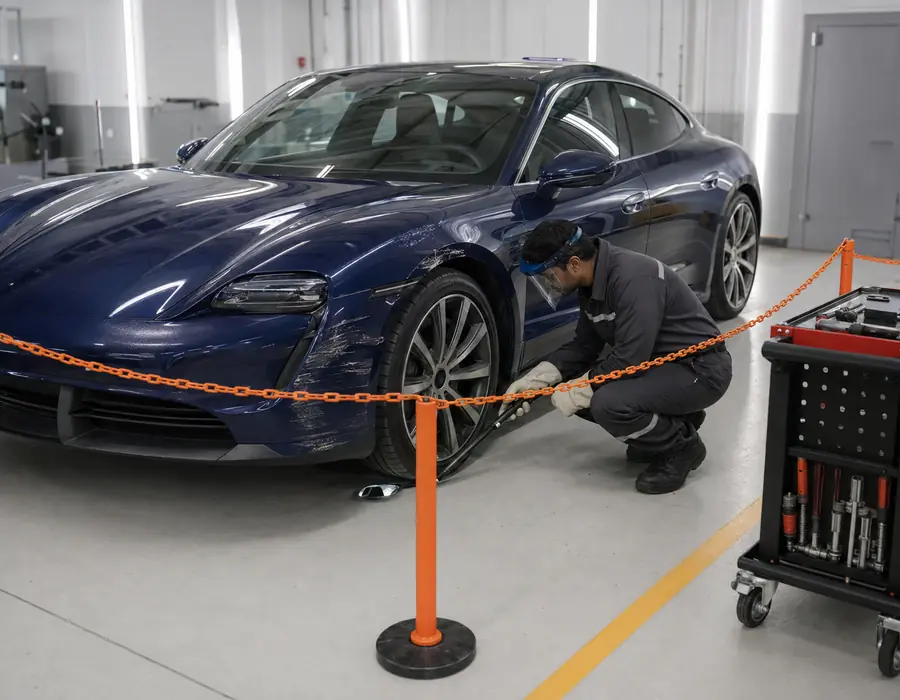
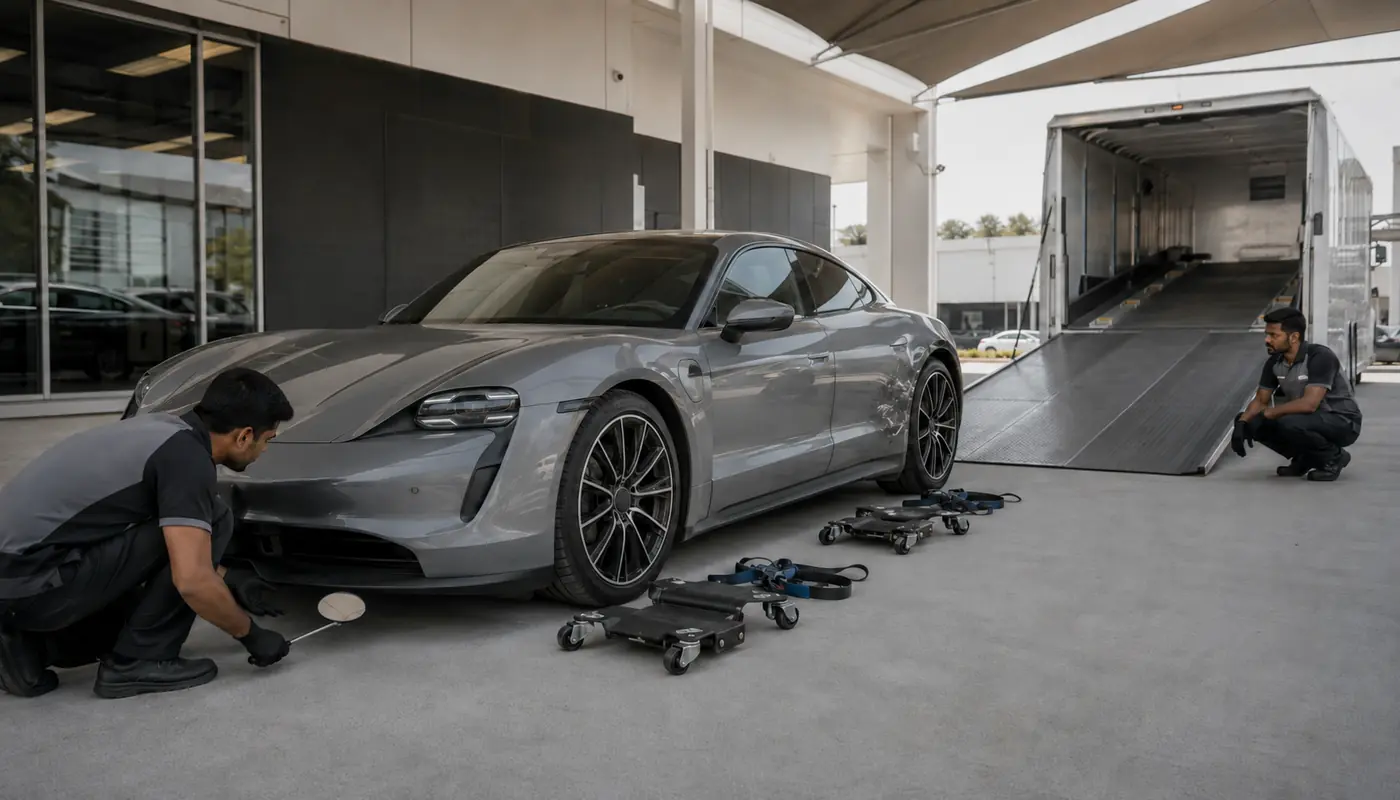
The recovery provider needs location, warning state, wheel condition, visible underbody damage and whether charging equipment is involved. Owners should not improvise towing points, crawl under the Taycan or repeatedly power it to clear a message.
If smoke, fire or immediate public danger exists, people move away and contact emergency services. Otherwise trained personnel choose transport and intake conditions. Scene observations follow the vehicle into the bay.
Unusual heat or odour creates an EV stop
Heat, vapour, hissing, chemical odour or a high-voltage warning after impact is not treated as a cosmetic inconvenience. The Taycan is placed and assessed under the applicable EV safety process.
Body technicians do not infer battery condition from silence or a clean scan. The trained role releases the work boundary. That decision is documented before cutting, heating or lower-body access.
Lift points are confirmed against impact evidence
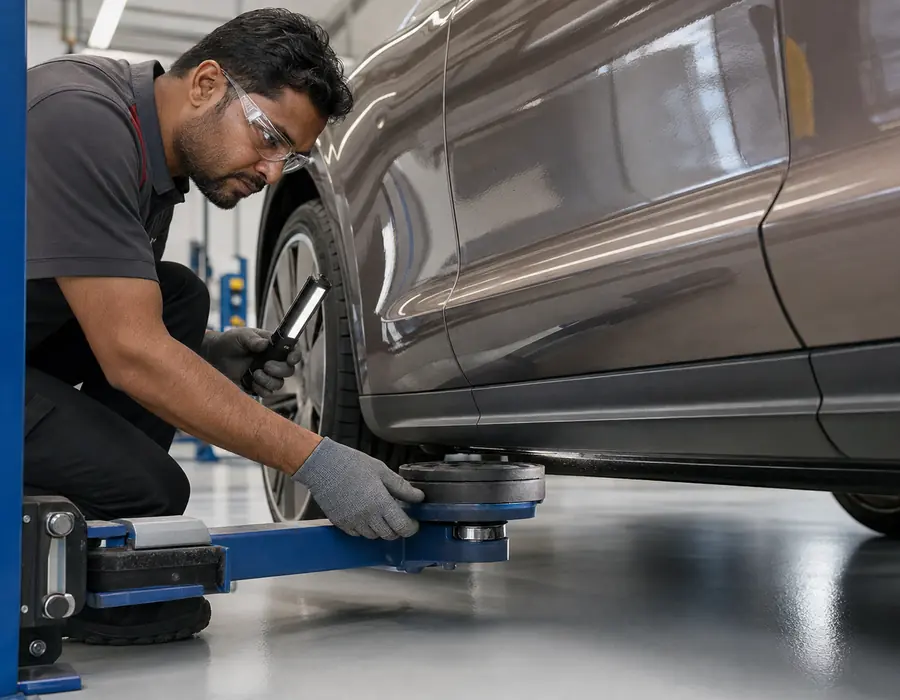
A damaged sill cover or floor mark can make a normal-looking lift position uncertain. Approved locations and surrounding condition are checked before raising the vehicle. Covers are not used as structural clues.
Once safely elevated, the mark is followed with location and scale. Battery-enclosure, cable or restricted findings stop ordinary body production and move to the appropriate specialist route.
Low front contact may continue under the car
The Taycan’s low stance makes ramp edges and road debris relevant. A complete front photograph, both wheels and a safe low view preserve direction. Ducts, covers and fasteners are labelled during access.
Cooling warnings, fluid traces or loose material prevent a test drive. Hidden routes remain visible at sign-off. A perfect front finish cannot prove underbody clearance.
Charging-area damage remains separately authorised
Distortion, water, heat or warnings near a charging flap means charging stops. The owner does not push the connector into a moved opening. Body shape, closure and seal condition are photographed.
Electrical verification is not implied by quarter-panel repair. The scope names the observation, body operation and specialist evidence independently. Recharging follows the approved release.
Use the Taycan state to choose the inspection lane
The visible Taycan mark decides where to begin, but vehicle state controls progress.
| Evidence | Repair decision |
|---|---|
| Heat, odour or warning | Stop normal use and apply the trained EV route |
| Underbody or lift-point contact | Inspect before lifting or cosmetic work |
| Charging-area distortion | Separate charging and body approvals |
| Low apron or wheel impact | Trace cooling, suspension and attachments |
The Taycan route should not be transferred to every vehicle in the range. Use the Panamera repair page for liftback and long-saloon geometry, or the Macan repair page for petrol or electric generation checks.
Use the Al Quoz body repair service for the full repair method, parts, paint and quality-control pathway once the Taycan check is complete.
Wheel-corner work begins before colour
Tyre, rim, liner, steering feel and arch clearance are screened when the impact reaches a wheel. Alignment data is requested only when it answers the event. Ride state is recorded.
A scan cannot reveal a bent bracket, and alignment cannot approve a painted aperture. The body and mechanical evidence are connected in one impact record.
Sensor views depend on physical geometry
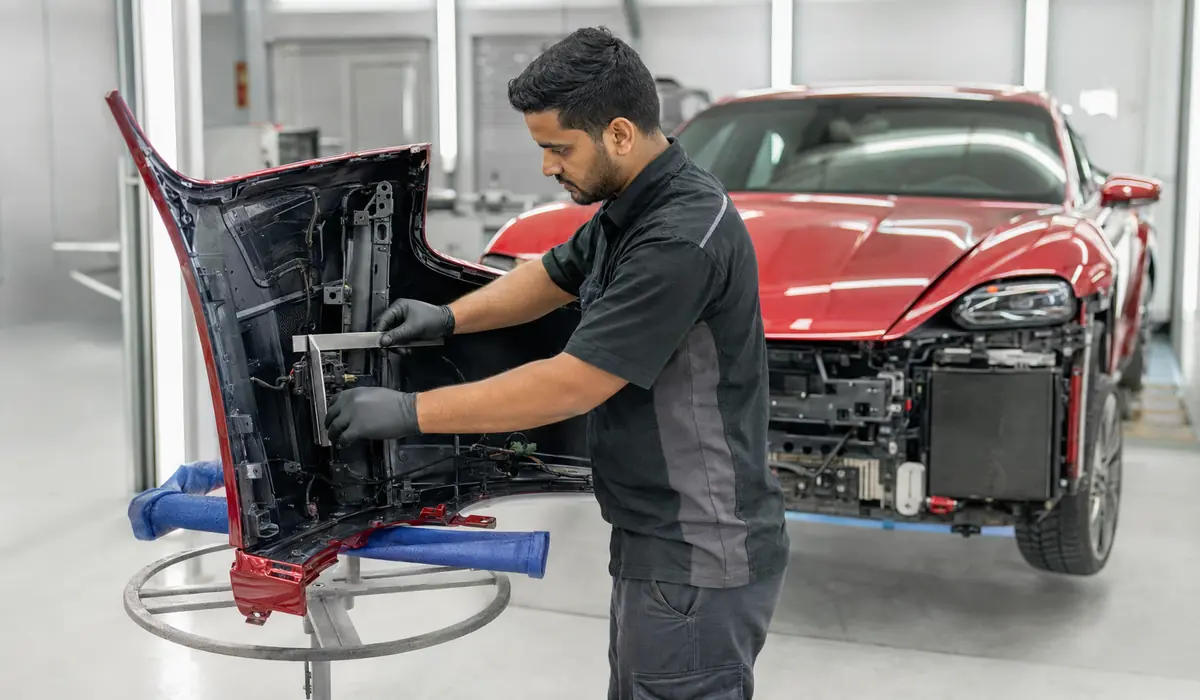
Cameras and driver-assistance equipment vary by configuration. Intake records the fitted units and warnings. Brackets, apertures, ride height and wheel geometry are corrected before applicable calibration.
The output names the actual operation. Clearing a fault does not certify every system. Paint thickness and repair adhesive near sensor zones also receive control.
Four-door gaps are checked under a stable body state
A side strike can cross doors, sill, glass and charging hardware. Arrival gaps and closing effort are preserved until aperture evidence is understood. Interior trim and connectors are protected.
Panel method depends on material, access and allowed operation. Reassembly verifies glass, seals and handles where affected. Movement is not forced through resistance.
Glass and roof work stays coordinated with the shell
Damage near bonded glass or panoramic-roof borders requires opening geometry before removal. The glass is not used to pull a distorted aperture into place.
Preparation, bonding, cure and water tests follow applicable systems. Camera-related work, where relevant, remains a separate acceptance item.
Electric-sports-car paint still needs ordinary discipline
Paint code, instrument readings and spray-outs are compared beside the Taycan. Previous work, ground shade and effect travel influence blend decisions.
Colour, texture, edge finish and panel form are reviewed separately. A numerical match cannot approve a broken reflection across the wide fender.
Variant and aero pieces are identified precisely
Sport Saloon and Cross Turismo bodies, plus performance variants, can use different bumpers, lower pieces and rear hardware. VIN, physical parts and connectors settle identity.
Trial fit precedes refinishing where clearances matter. Non-standard aero additions are documented and not assumed original or reusable.
The estimate keeps EV work visible
Visible body operations, parts, paint, isolation support, diagnostics and external specialist tasks remain separate. Underbody and charging conditions are marked dependent until accessed.
No generic Taycan price or completion promise is published. Supplements require evidence and approval. Safety gates are never compressed for schedule.
Release requires more than restored appearance
Final review checks the original scene state, EV boundary, impact map, body geometry and affected functions. Electrical release and finish approval remain distinct.
Records may include isolation status, hidden photographs, parts, scans, alignment and calibration. Deferred issues are named. Aftercare follows coating and charging boundaries.
Official Porsche information confirms the electric platform
The Porsche Taycan range identifies the family as fully electric and shows Sport Saloon and Cross Turismo bodies. That supports EV and body-form gates.
Sales information does not authorise collision work. Current repair procedures and trained roles control isolation, structure and calibration. No Porsche approval is claimed.
Photo estimates stop at the unseen boundary
Images can show the contacted panel, wheel and warning display. They cannot verify the battery enclosure, isolation state or every lower attachment. The first response states those limits.
The bay inspection converts uncertainty into evidence. Newly exposed work is photographed before authorisation. No remote quotation pretends to certify EV safety.
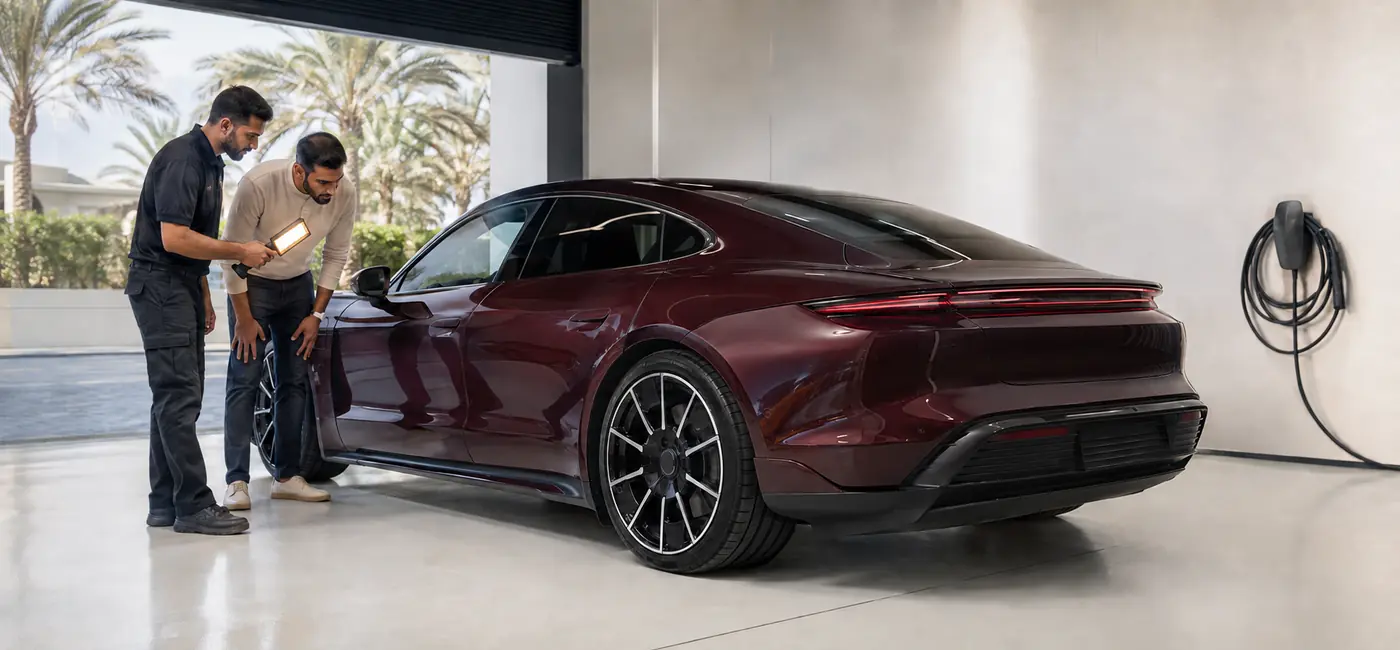
Aftercare separates charging from finish
Paint washing guidance and EV charging readiness come from different acceptance records. The handover does not merge them. New film or adhesive receives its own timing.
The owner reports heat, odour, warnings, fluid traces, loose lower pieces or finish defects without trying to reproduce the condition by driving or charging.
Cabin state and restraint messages are preserved
A collision warning, airbag message or belt concern is recorded without clearing it at intake. Body appearance cannot certify occupant systems. Trim removal around affected openings is controlled and connectors remain traceable.
Specialist restraint operations are identified separately from panel work. The release file states completed checks and unresolved requirements. A successful diagnostic connection alone does not declare the system safe.
Door handles and charging closures need correct recesses
Flush or powered hardware can respond while rubbing against a distorted panel. Surrounding shape, gap and paint build are examined before repeated movement. Resistance creates a stop.
Body geometry is corrected before functional confirmation. Replacement identity follows VIN and fitted configuration. A smooth exterior surface must still provide the required clearance.
Cooling observations remain distinct from battery status
Electric-drive cooling paths, ducts and heat exchangers may be affected by a front or lower strike. Leakage or unusual pump activity is recorded and escalated. The absence of heat does not certify every component.
Hidden guides stay visible until documented. Mechanical and high-voltage releases remain separate. A painted apron cannot close either boundary by implication.
Protective film can alter the visible footprint
Film may tear, stretch or hold loose coating after contact. Its edges and condition are photographed before removal. The underlying damage can be larger or shaped differently from the visible mark.
Replacement film waits for paint cure and inspection. Colour, texture and panel form are approved before film installation. The estimate separates removal, coating and refit.
Previous structural work changes the evidence
Existing repair evidence
Paint readings, fasteners and underside marks can reveal earlier repair. Those conditions are documented before the new operation changes them. Current procedures determine whether another local repair remains permitted.
Clear scope distinction
The owner receives a distinction between new impact and existing work. Preparation hours are not used to hide uncertainty. If the route changes, the technical reason accompanies the revised scope.
Insurance timing never shortens the EV gate
Financial approval and electrical permission are different. No completion promise overrides trained assessment, isolation requirements, adhesive cure or calibration prerequisites.
Supplements explain the newly exposed boundary with photographs. Production resumes only after the correct role releases it. This protects both the Taycan and workshop staff.
Dubai heat does not justify generic EV claims
Ambient heat can influence observations, charging and paint production, but it does not prove collision damage or battery condition.
- Use vehicle evidence. Vehicle state, warnings and measurements remain the basis for the repair decision.
- Avoid invented thresholds. Generic temperature figures are not presented as proof of collision damage.
- Avoid scare language. Normal Dubai heat is not automatically treated as an EV fault.
- Escalate real symptoms. Genuine heat, odour, vapour or warning signs follow trained safety guidance.
- Keep ordinary quality controls. When no EV warning exists, normal body and paint inspection still applies.
A replacement part cannot bypass EV planning
Even a bolt-on exterior piece may require access near wiring, sensors or charging components. The work boundary is reviewed before removal. Part identity and fasteners are confirmed from current information.
Dry fit and electrical prerequisites occur in the correct order. A simple-looking bumper exchange does not authorise technicians to cross an unreleased high-voltage zone.
Vehicle state is managed during a long repair
The Taycan may spend several stages stationary while panels, glass or paint progress. Approved state-of-charge and workshop procedures are followed by the trained role. Body staff do not improvise charging to keep displays active.
Cabin protection, keys and electronic trim are controlled. Handover records any relevant state management without presenting routine communication as battery certification.
Finish inspection includes low aerodynamic surfaces
- Inspect lower surfaces. Check for dry spray, missed edges and incorrect gloss.
- Use the correct viewing height. Review each aerodynamic surface safely after the coating has cured.
- Keep approvals separate. Underbody security and paint quality are recorded as different checks.
- Do not confuse defects. A coating issue does not prove structural damage.
- Record both outcomes. A secure cover does not approve colour, texture or finish quality.
Workshop emergency planning remains practical
The intake location, isolation status and responsible trained role are known to the team before work begins. This supports a controlled response without using alarming marketing language.
Real warning signs receive immediate action under current procedures. Routine EV presence is not portrayed as danger. Clear roles protect people while allowing ordinary paint and panel quality to remain demanding.
Send the Taycan state before the cosmetic detail
Include every warning, the complete impact area, both nearby wheels, charging-port condition and a safe low view. We will define the EV boundary before planning body access. Mention whether the vehicle was driven or charged after the event.