
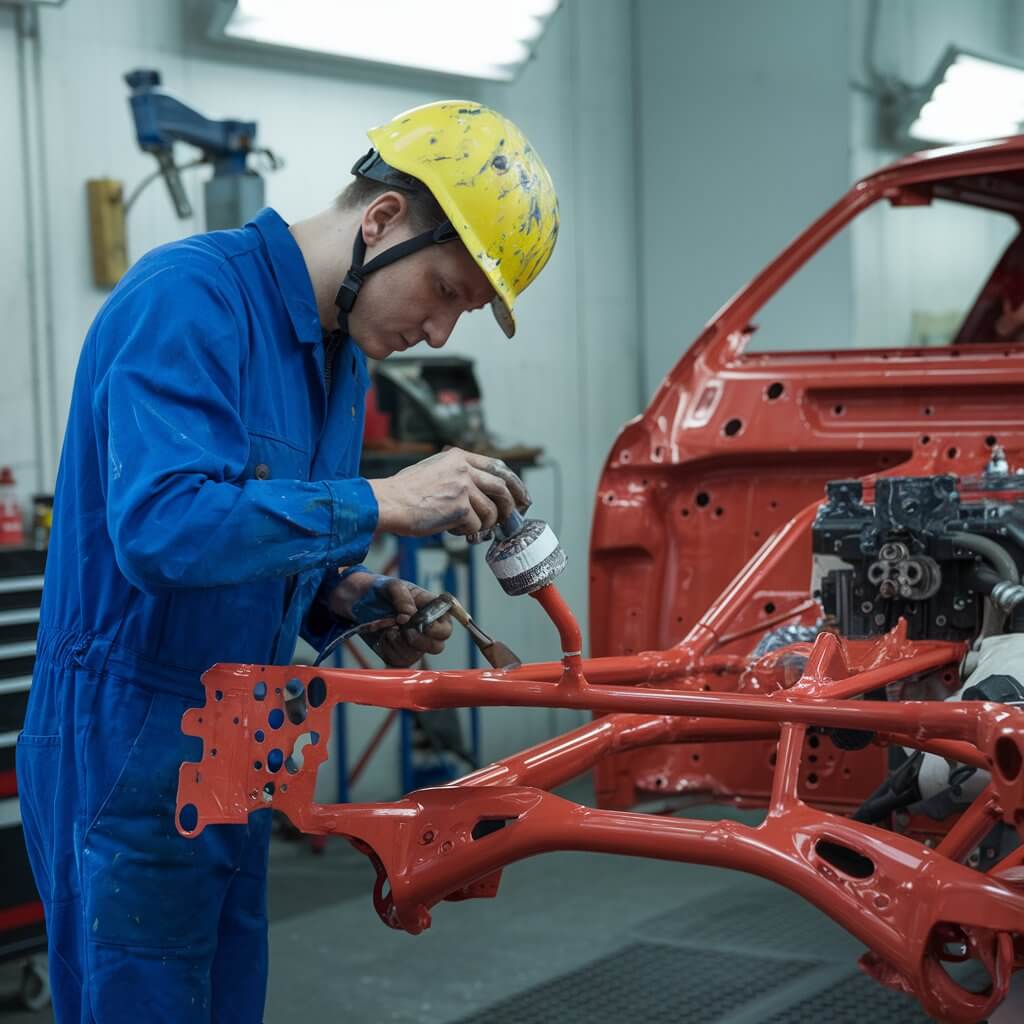
Chassis and underbody corrosion protection in Dubai
Anti Rust Paint for Car Chassis Dubai
Anti-rust protection starts with the condition of the metal, not with the coating tin. We inspect the underbody, identify existing corrosion and damaged protection, prepare the surface, then apply the appropriate primer, coating or cavity protection for the area being treated.
BodyShop.AE provides chassis and underbody rust treatment in Al Quoz 4 with a focus on surface preparation, coverage and clear maintenance advice.
Why underbody protection matters
Why anti rust paint is used on a car chassis in Dubai
Heat alone does not create rust, but moisture, salts, damaged coatings, trapped contamination and exposed metal can accelerate corrosion when protection has been compromised.
The underside of a vehicle is exposed to road debris, water, sand, wash chemicals and impacts that can chip factory coatings. Seams, fasteners, repaired areas, wheel housings and lower edges deserve particular attention because corrosion can begin where protective layers are thin or damaged.
Anti-rust treatment is therefore more than painting the visible underside black. The useful question is whether the surface below the coating is clean, stable and suitable for the material being applied. Coating over active corrosion or moisture can hide the problem rather than solve it.
Common corrosion zones
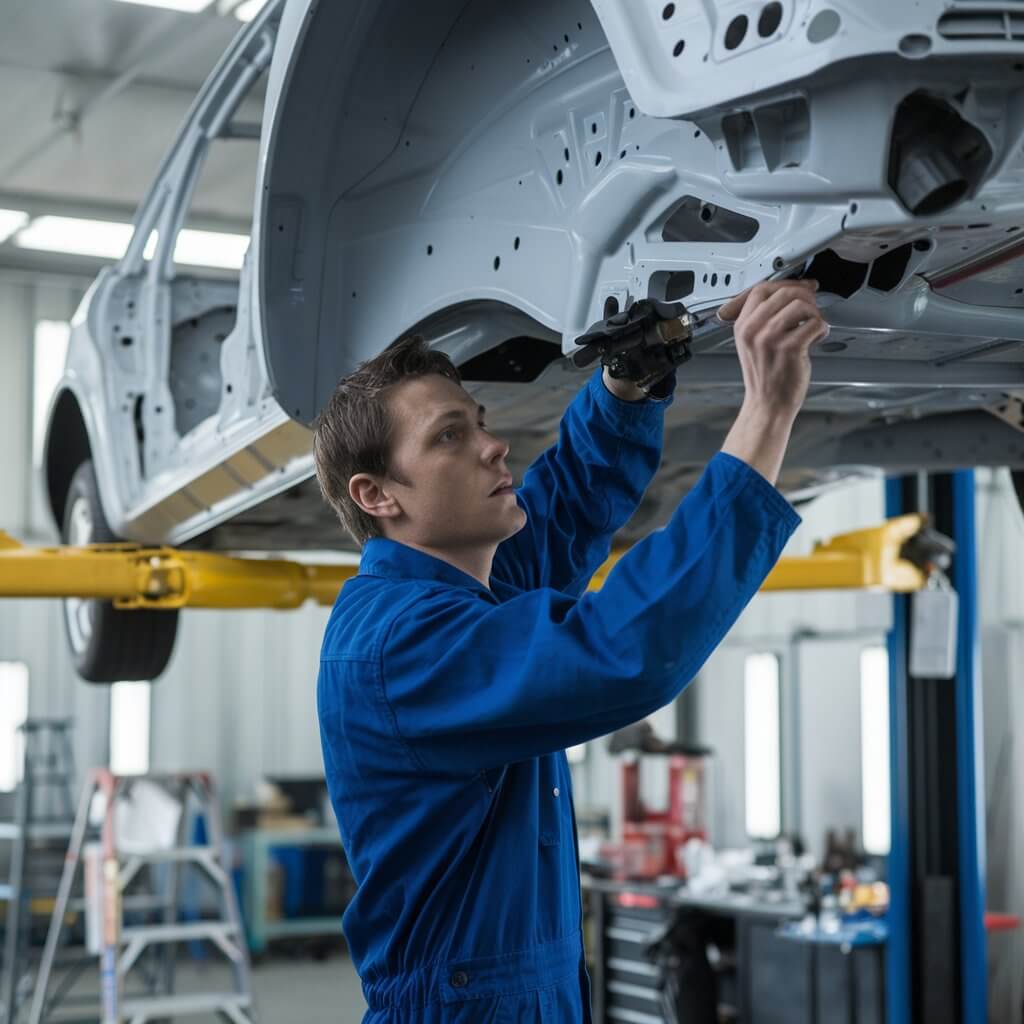
Where chassis and underbody corrosion often begins
Seams and welded joints
Moisture and contamination can remain around overlaps, seams and damaged sealer. These areas need cleaning and the correct protective layers after repair.
Stone-chip areas
Lower rails, floors and wheel-adjacent surfaces can lose protection when gravel or road debris chips the coating and exposes metal.
Fasteners and brackets
Bolts, brackets and mounting areas can show early surface corrosion, especially where coatings have been disturbed during previous work.
Wheel housings and edges
Spray, sand and debris are concentrated around wheel housings, lips and lower panel returns where abrasion can damage protective films.
Closed cavities
Box sections and cavities may need wax-type protection rather than a thick exterior coating. Access and drainage must be considered before application.
Previous repair zones
Grinding, welding, panel replacement or chassis repair can remove factory corrosion protection. Those layers need to be restored as part of the repair.
Look before coating
Signs your car may need an anti-rust inspection
Flaking or bubbling coating
Peeling, bubbles or lifted underbody protection can indicate loss of adhesion or corrosion underneath and should be inspected before another layer is added.
Visible brown or red corrosion
Surface rust around exposed metal, seams or fasteners is a reason to clean and assess the area early rather than wait for deeper metal loss.
Corrosion near joints or welds
Rust close to structural seams, mounts or repaired joints needs more care because the condition of the metal matters more than the appearance of the coating.
Water or contamination traps
Persistent moisture, blocked drains, mud or contamination around underbody areas can shorten coating life and should be corrected where possible.
Chips after impact or repair
Scrapes, lifting damage, accident repair or chassis work can break the protective system and create exposed edges that need restoration.
Weak or perforated metal
Soft, heavily scaled or perforated metal is not a paint problem. Structural assessment and repair come before any protective coating.
Preparation controls adhesion
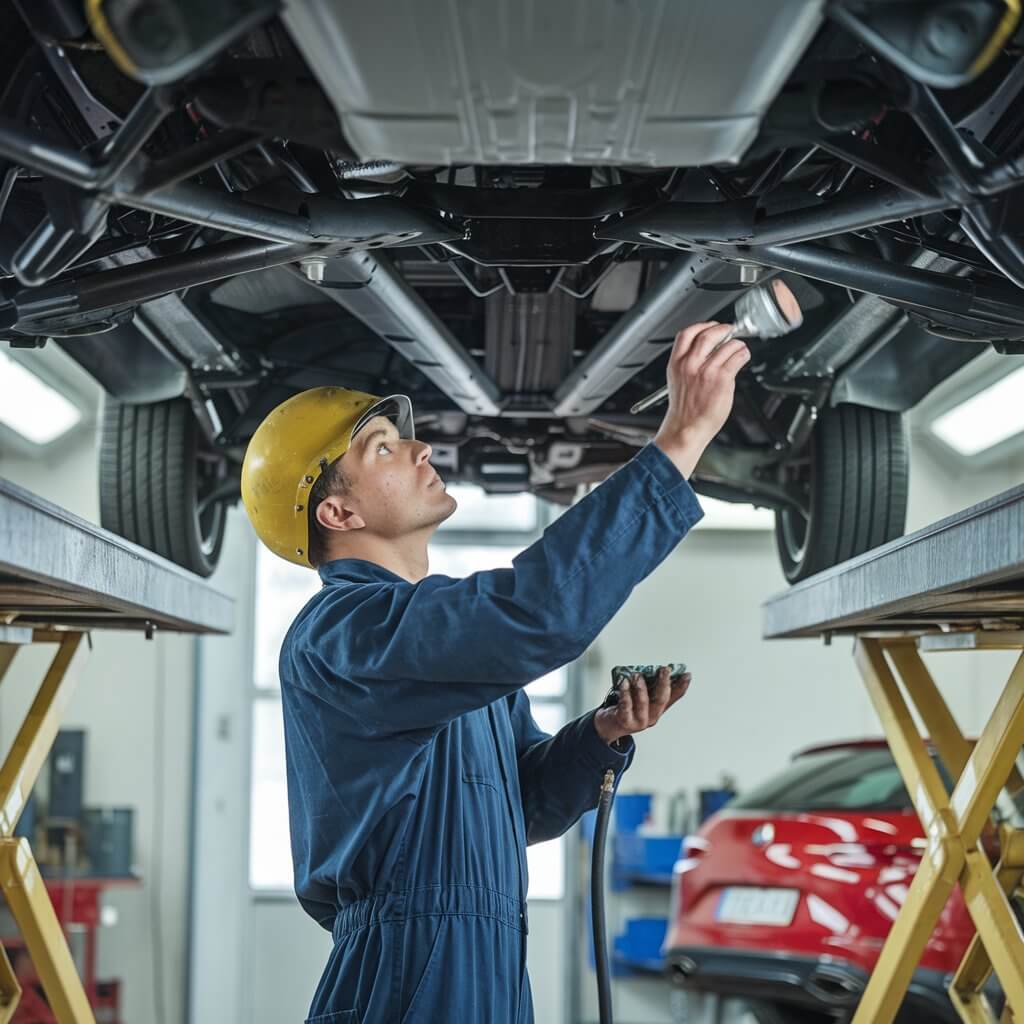
How anti rust paint works on a car chassis
Protective coatings separate prepared metal from moisture and contaminants. Their performance depends on adhesion, film continuity, compatible layers and whether seams, cavities and exposed edges receive the protection designed for them.
Before application, dirt, loose coating, grease and unstable corrosion are removed. The surface is then prepared according to its condition. Bare or repaired metal may require primer before seam sealer, underbody coating or topcoat. Enclosed cavities may need a penetrating wax rather than a thick exterior finish.
One coating cannot perform every job. A durable result comes from matching the material to the location and restoring the protective system disturbed by corrosion or repair.
Protective material options
Types of anti-rust protection used around a chassis and underbody
Epoxy or corrosion-resistant primer
Used on suitable prepared bare metal as a foundation layer before other coatings. Surface cleanliness and compatibility with the following layers matter.
Underbody coating
A durable exterior layer can help protect exposed underside surfaces from abrasion and contamination. It should not be used to conceal active corrosion.
Seam sealer
Restores protection at repaired or disturbed seams where the original sealer has been removed. It serves a different function from general undercoating.
Cavity wax
Designed to reach enclosed sections, overlaps and internal cavities where exterior coatings cannot be applied effectively. Access and drainage remain important.
Zinc-rich or specialist coatings
Some repair systems use zinc-rich or other corrosion-control materials in specified applications. Compatibility with the repair procedure and subsequent layers must be checked.
Finish and touch-up protection
Exposed edges, repaired chips and disturbed coating around fasteners may need local restoration so the overall protective system remains continuous.
Application sequence
How we approach anti rust paint application to a car chassis
Inspect and document
Lift the vehicle where appropriate, identify rust, coating damage, wet areas, previous repairs and parts that should not be covered.
Clean the underbody
Remove dirt, grease, loose contamination and debris so corrosion and damaged protection can be seen clearly.
Remove unstable corrosion
Prepare affected metal by an appropriate mechanical or surface-treatment method until the remaining surface is suitable for the selected system.
Mask and protect components
Keep coatings away from areas where overspray or buildup is inappropriate, including service points, moving parts and specified components.
Prime and protect
Apply compatible primer, seam protection, underbody coating or cavity material according to the location and surface condition.
Inspect coverage
Check edges, seams and repaired areas for missed zones, contamination or incomplete film before the vehicle is returned to service.
Protection has limits
Anti-rust paint cannot repair structural corrosion
A coating protects suitable metal; it does not restore metal that has already lost section thickness, cracked, perforated or weakened around a structural joint.
If serious corrosion is found around rails, sills, floors, suspension mounts, subframe mounts or other structural areas, the vehicle needs an appropriate structural assessment before coating continues. Our car chassis repair Dubai page explains why repairability depends on the exact construction, material and damage location.
The same rule applies after collision repair. Welding, pulling, replacement and grinding can disturb factory corrosion protection, so the repair plan should restore primer, seams, cavities and underbody layers after structural work is complete.
Maintenance after treatment
How to maintain chassis protection after anti-rust treatment
Routine care
- Clean excessive sand, mud and contamination from the underbody when appropriate.
- Inspect wheel housings, lower edges and exposed surfaces for new chips or scrapes.
- Keep drains and water paths clear where the vehicle design provides them.
- Avoid aggressive cleaning that strips or damages the protective film.
After repair or impact
- Reinspect any area that has been welded, ground, straightened or replaced.
- Check underbody protection after lifting or undercarriage contact.
- Restore chipped coating before corrosion spreads underneath surrounding material.
- Ask for cavity and seam protection to be included when structural repair disturbs those layers.
Common mistakes
What reduces the life of anti-rust chassis protection
Coating over active rust
Covering scale or moisture may hide corrosion while adhesion fails underneath.
Skipping surface preparation
Primer and undercoating cannot perform properly on grease, dust, loose paint or unstable corrosion.
Using one material everywhere
Cavities, seams, bare metal and exposed underbody surfaces can require different protective products.
Blocking drains or service areas
Excess coating in the wrong location can interfere with drainage, fasteners or future servicing.
Ignoring damage after repair
Welding, straightening and panel work can remove protection that needs to be restored before handover.
Assuming protection is permanent
Road debris and abrasion can damage even a well-applied system, so periodic visual inspection still matters.
Why BodyShop.AE
Inspection-led chassis and underbody protection
Condition before coating
We separate surface corrosion, damaged protection and deeper structural concerns before selecting the treatment route.
Area-specific materials
Exterior underbody surfaces, seams, bare repaired metal and cavities are treated according to their different protection needs.
Connected body repair
If corrosion is found beside accident or chassis damage, the protective work remains connected to the body repair instead of being treated as a cosmetic cover-up.
Controlled application
Preparation, masking, film coverage and final inspection are kept visible as separate stages of the job.
Clear limitations
Where metal condition requires structural assessment or replacement, that limitation is identified before protective coating continues.
Maintenance guidance
Owners receive practical advice about cleaning, chip inspection and when repaired or worn areas should be rechecked.
Common questions
Anti rust paint for car chassis FAQs
Can anti-rust paint be applied over existing rust?
Loose or active corrosion should not simply be covered. The area needs cleaning, corrosion removal and an assessment of the remaining metal before a compatible protective system is applied.
Is anti-rust treatment suitable for every car?
The principle of corrosion protection applies widely, but materials, underbody construction, factory coatings, EV battery areas and repair procedures vary. The treatment should be selected for the actual vehicle and area.
How long does anti-rust protection last?
There is no universal lifespan. Product type, preparation, road exposure, abrasion, repairs and maintenance all affect durability. Periodic inspection is more useful than relying on a fixed number of years.
Does rubberized undercoating stop existing structural rust?
No. A thick undercoating can protect a properly prepared surface, but it cannot restore metal that is already perforated, heavily scaled or structurally weakened.
What areas are normally checked before treatment?
Typical inspection areas include the floor, rails or frame surfaces, seams, wheel housings, lower edges, brackets, fasteners, repaired zones and accessible cavities. The exact construction varies by vehicle.
Should corrosion protection be restored after chassis repair?
Yes, where the repair has disturbed factory protection. Bare metal, seams, cavities and underbody coatings should be restored as part of the supported repair process.
Start with the metal condition
Arrange an anti-rust chassis inspection in Dubai
Send photos of visible rust, peeling underbody coating or the area that was recently repaired. We can use them for initial preparation, then inspect the vehicle to determine whether it needs cleaning and coating, local corrosion repair or a deeper structural assessment.