
Audi A4 Body Repair Dubai
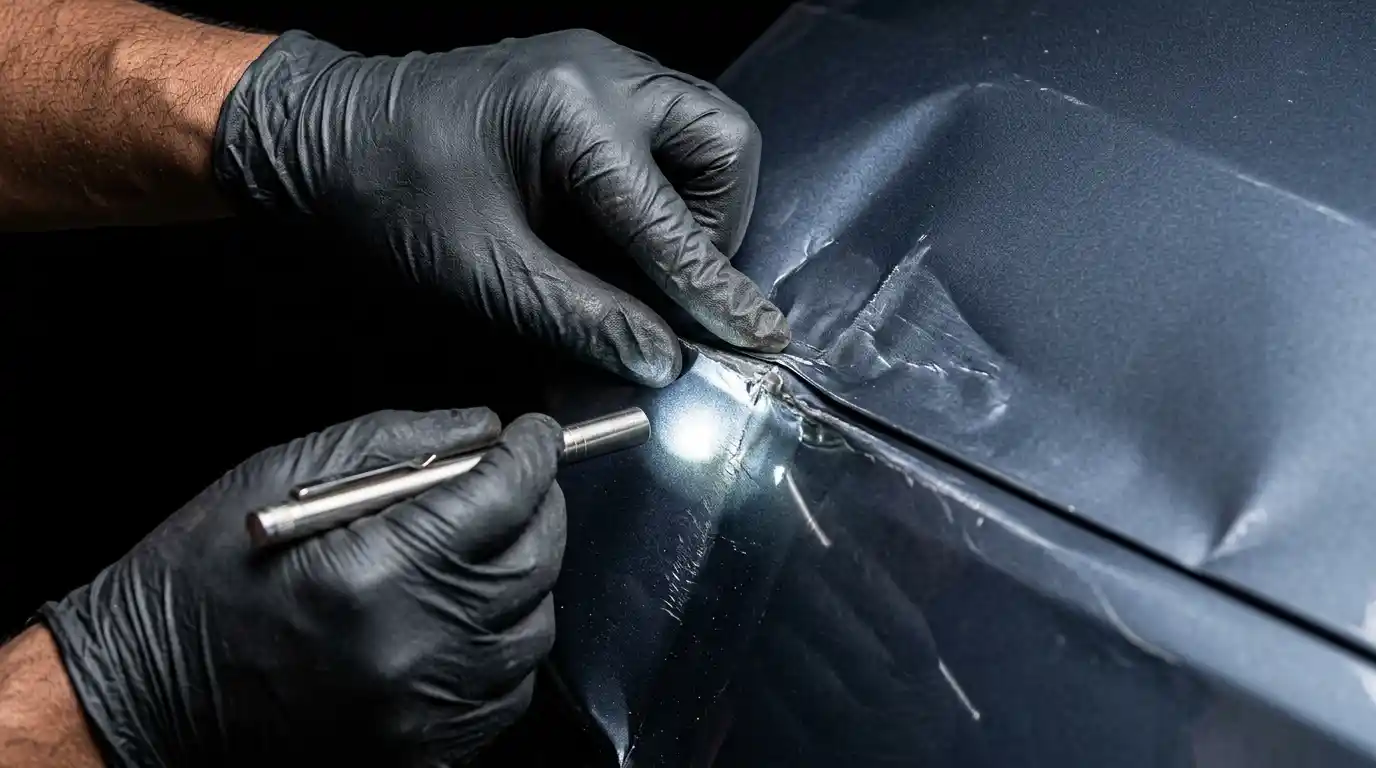
The Audi A4 makes body accuracy visible along compact, precise lines. A front-wing crease can interrupt the bonnet and lamp gaps; a parking scrape can travel through both doors; a rear-corner impact can disturb the bumper guide beneath an apparently minor scuff. We inspect the complete line of contact, verify the generation and fitted hardware, then choose the least invasive repair that can still restore geometry, finish and function.
Follow the mark beyond the damaged panel
Start with a wide view of the full side or corner. The technician looks for changes in the character line, door-to-door flushness, wheel-arch clearance, lamp position and the way the bumper returns into the wing. These relationships show whether the job is isolated surface work or a connected alignment problem.
Audi technical data for a recent A4 describes unitary steel-aluminium composite construction. The exact component still depends on generation and derivative. Material identity is confirmed before heat, pulling, welding or replacement is authorised.
Front line
Bumper, grille, lamp, bonnet edge, wing and lower shield.
Side line
Mirror, door skins, hems, sill, handles and latch relationships.
Rear line
Quarter panel, lamp, boot lid, bumper guide and parking hardware.
Four A4 damage patterns call for different methods
Open-panel dent
Paintless dent repair may suit intact coating, usable access and controlled metal stretch.
Sharp crease
Conventional metal correction and refinishing may be needed where the line and paint have failed.
Torn bumper corner
Plastic type, crack path, guide and sensor aperture decide repairability.
Disturbed opening
Measurement and hinge, latch or structural review come before surface correction.
Previous repair can alter every choice. Old filler, corrosion, excessive paint depth or a poorly welded panel changes heat tolerance, access and the quality risk. We record those conditions instead of treating them as new accident damage.
Material identification controls the repair boundary
A bolt-on aluminium bonnet or wing does not share the same technique as a high-strength steel pillar or sill. Aluminium work requires contamination control and material-appropriate tools. High-strength structural components can carry restrictions on heating, straightening and sectioning. The repair information for the exact A4 generation resolves the boundary.
Replacement is not automatically superior. It can add dismantling, fastening or joining, sealing, corrosion protection, paint and calibration. Repair can retain more original construction, but only when shape and material can be restored without exceeding the component’s limits.
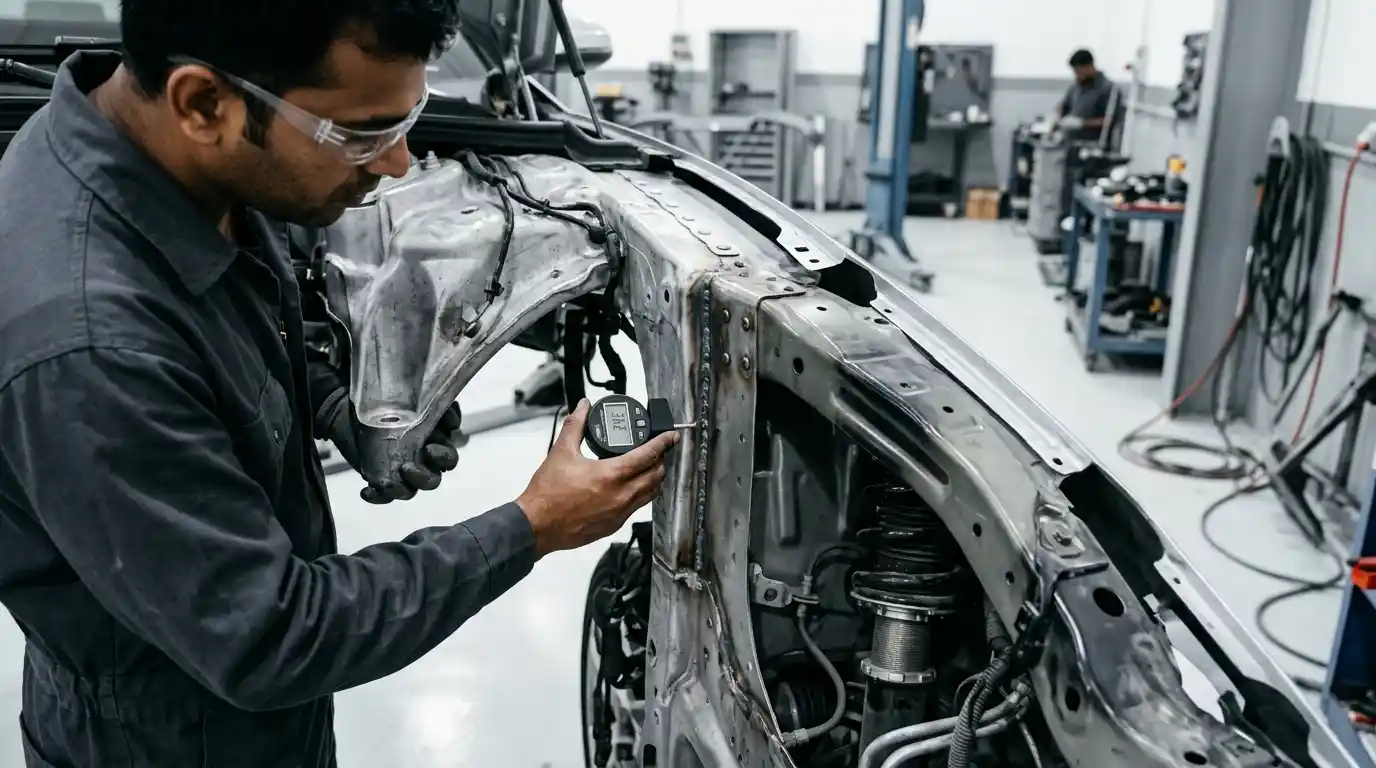
Repair and replacement are compared before paint begins
| Question | Evidence for repair | Evidence for replacement |
|---|---|---|
| Can shape return | Deformation is controlled, material is sound and access supports accurate correction. | Severe stretch, tearing, kink or a restricted structural zone prevents a reliable result. |
| Will fit remain stable | Edges, mounts and adjoining panels can return to designed relationships. | Hems, apertures, reinforcement or critical attachment points are irreversibly distorted. |
| What is the full scope | Repair labour and refinishing remain lower-risk than replacement operations. | New part, joining, protection and paint provide better total quality. |
A4 bumper work includes the assistance hardware
Depending on year and equipment, the A4 can use cameras, parking sensors and radar-based driver assistance. A front or rear cover should not be refinished in isolation if the impact changed a bracket, aperture or the support beneath it. A connected sensor can still be physically misaligned.
We record which component was disturbed and apply the relevant scanning, aiming or calibration requirement. Paint, primer and repair material are controlled in sensitive areas. Wheel alignment, tyre condition or ride height may also need attention before some calibration steps can be completed accurately.
Paint matching protects the A4 character line
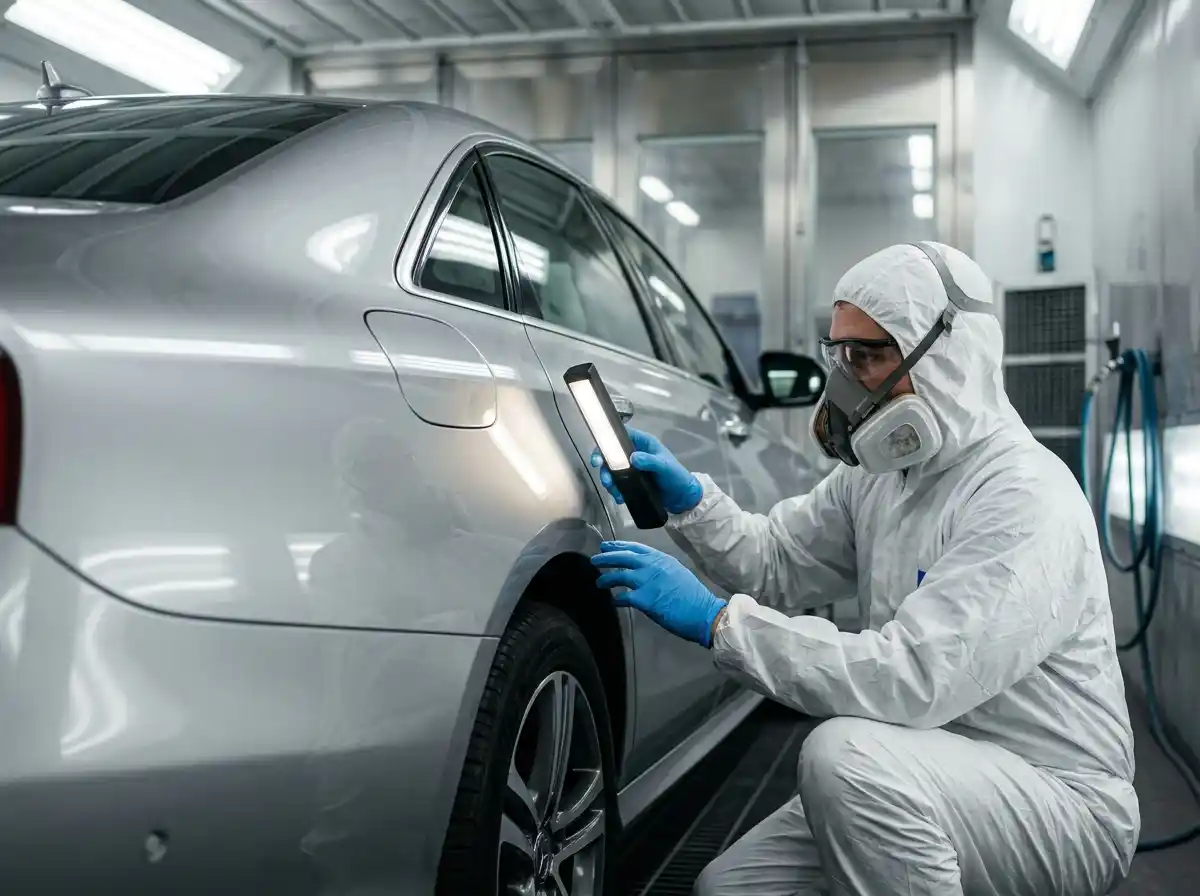
The paint code starts the formula search. Electronic measurement and a spray-out beside the car determine the useful variant, including face colour, side tone and metallic orientation. Previous repainting or Dubai sun exposure is considered because the neighbouring panel is the visual reference.
Metal or plastic contour is completed before primer. The surface is blocked with linear light so a low spot does not remain beneath a glossy finish. Final checks cover colour, texture, gloss, edge coverage and the blend transition.
The repair sequence closes one uncertainty at a time
Record the full impact zone, gaps, warnings and pre-existing marks.
Remove enough trim to inspect supports, wiring, reinforcement and part identity.
Approve repair, replacement, refinishing and verification as a connected scope.
Restore material, joints, corrosion protection and panel geometry.
Reassemble, measure, scan and calibrate where the applicable procedure requires it.
Compare reflections, closures, lamps, trim and system status with the opening record.
The estimate labels visible and hidden work separately
Confirmed dents, paint damage and obviously broken parts belong in the first scope. These items can be described clearly before dismantling begins.
Guides, absorbers, brackets, wiring or reinforcement hidden by a bumper or trim are marked as conditional until access is created. Photographs support any revised approval.
Cost and time vary with A4 generation, material, severity, previous repair, parts, finish, electronics and calibration. A close photograph is useful preparation, but it cannot confirm a concealed bracket or structural measurement.
This model page supports the broader Audi body shop service. The confirmed job may also use our dent removal process or paint refinishing service.
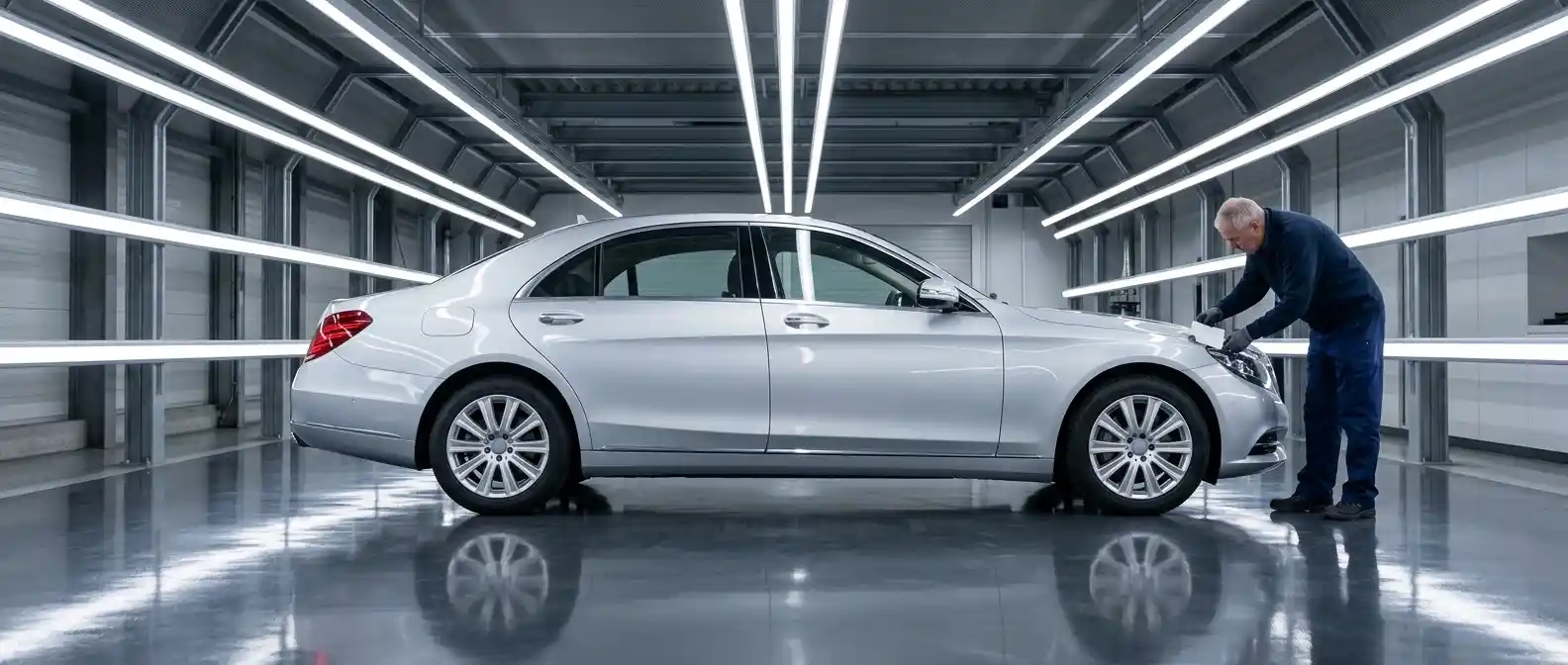
Proof at handover should follow the original line
Door and wing reflections should remain continuous, bumper corners should sit flush, lamps and trim should be evenly seated, and closures should operate without being forced. Required scan, alignment or calibration results remain part of the job record.
Fresh-paint aftercare is explained for the applied coating. Pre-existing marks, unrelated warnings and any deferred part are listed separately.
Door and rear-quarter contact needs an access plan before dent work
An A4 door skin may look open and simple from outside while side-impact reinforcement, window mechanism, wiring, acoustic material and folded edges limit tool access. The technician checks whether trim removal creates a safe route and whether the paint remains flexible enough for paintless correction. Drilling an unapproved access hole merely to reach a dent is not treated as a normal shortcut.
When a crease continues into the rear quarter, the repair boundary changes. The quarter is part of a larger welded body side on many generations, so unnecessary replacement can disturb extensive original joints. At the same time, deep stretching near the wheel arch, fuel or charging area, lamp pocket or inner structure can make metal repair a poor choice. The complete shape and backside condition decide.
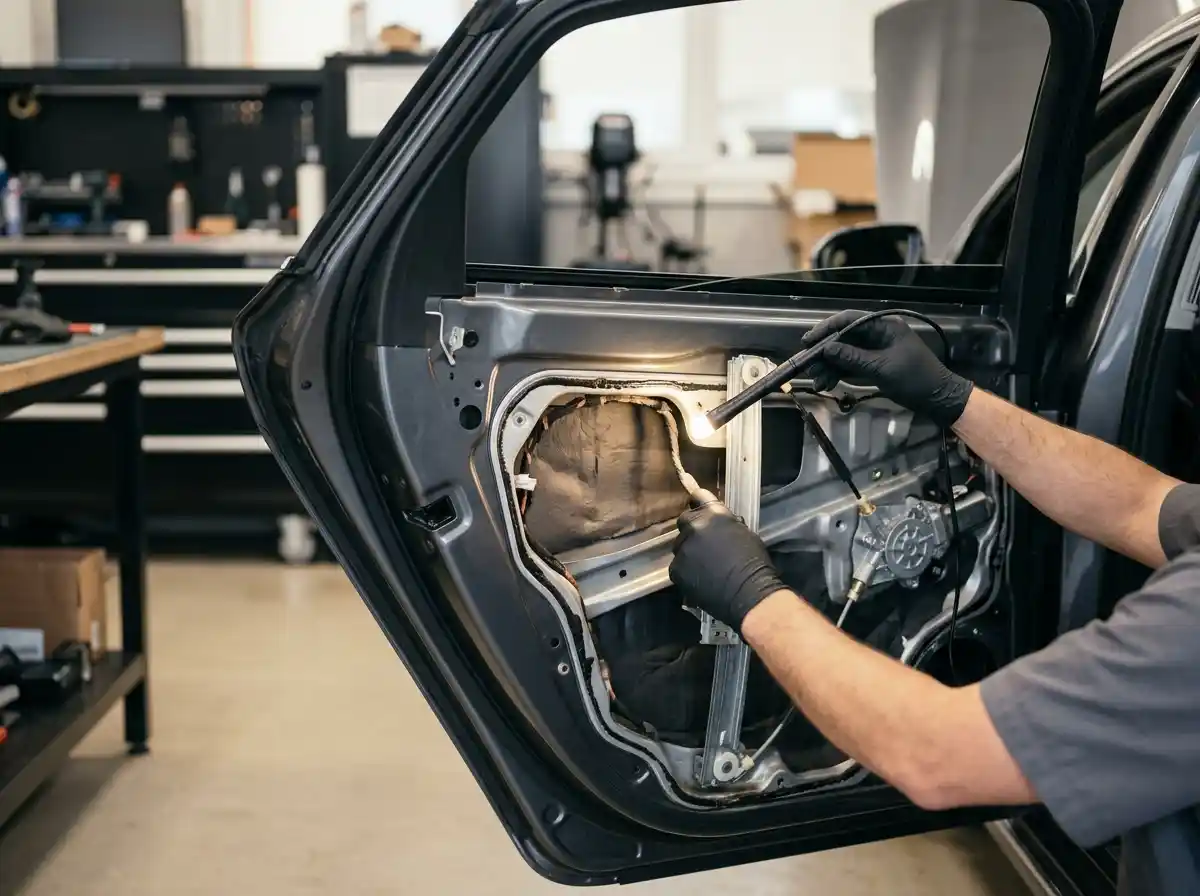
Open door centre
Check paint, access, stretch and intrusion-beam distance.
Door edge
Check folded hem, seal, latch relationship and chipped coating.
Quarter crown
Check wheel-arch contour, lamp line and inner-panel involvement.
Two-panel crease
Check door-to-quarter continuity and whether both panels need finish work.
Paintless dent repair has a defined A4 use case
PDR preserves factory paint and reduces material build when the coating is intact, the metal is not torn or excessively stretched, the dent is accessible and the technician can restore the line without damaging reinforcement or corrosion protection. It is especially useful for suitable shallow parking dents away from hard edges. It is not automatically the correct option because the damage is small.
A crease through a sharp style line, cracked paint, aluminium behaviour, a closed reinforced area or old filler can move the work towards conventional repair. Conventional work restores the contour, isolates the substrate, applies primer and refinishes the panel. Replacement is considered only after both methods are compared against structural role, joint disturbance, finish risk and total cost.
Ask whether the paint is original and intact, what access exists, whether the panel material is confirmed, how much stretch is present, and what visual limitation may remain. A useful PDR opinion explains these conditions rather than promising “no paint” from one image.
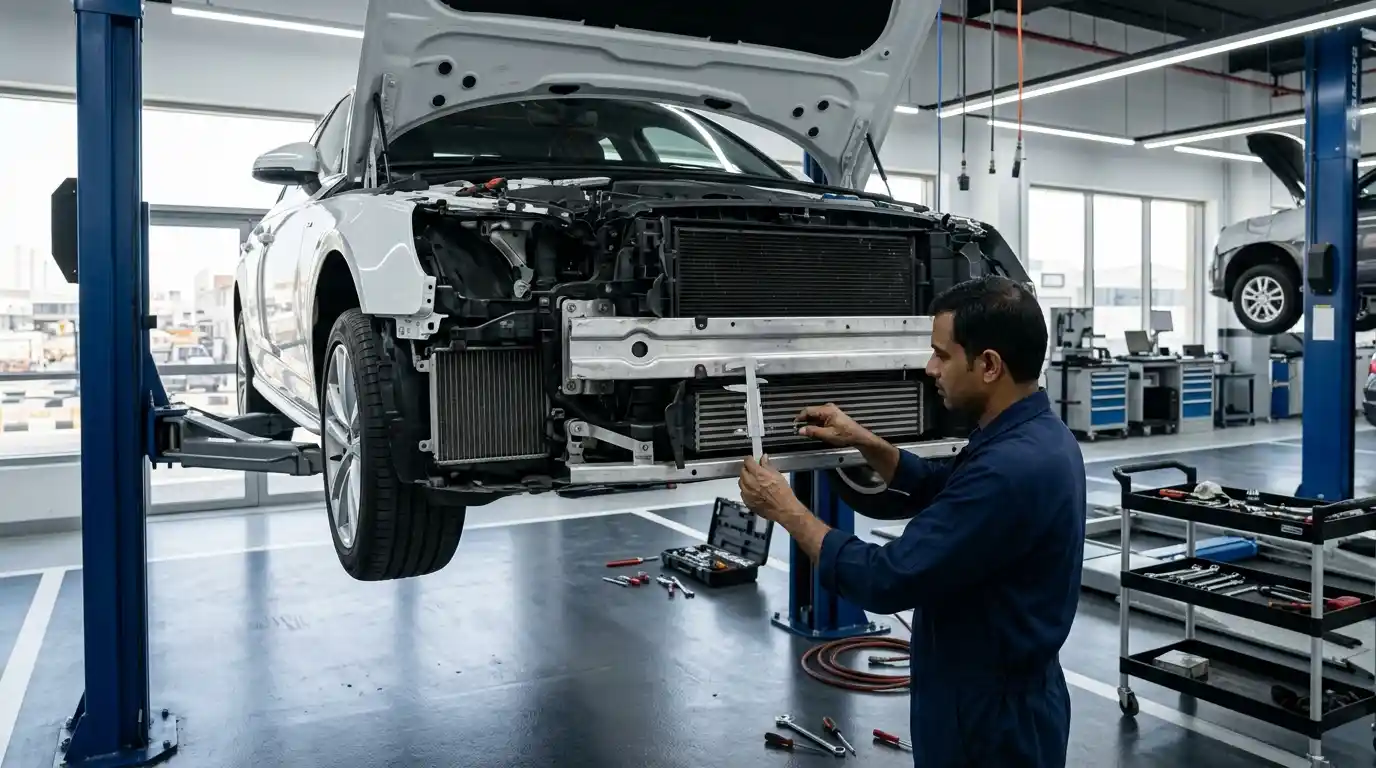
Front-end repair connects cooling, lighting and driver assistance
The A4 front bumper, grille, lamp, wing and bonnet form a compact set of relationships. A corner strike can crack a lamp tab, bow the wing edge, release a bumper guide and mark a lower air duct while leaving the reinforcement apparently untouched. Controlled removal exposes these interfaces so the estimate does not stop at the painted cover.
Where the vehicle carries front radar or camera-supported functions, bracket position and cover condition enter the plan. Cooling shutters, air guides and undertrays are restored because missing or distorted pieces can affect airflow and noise. Headlamp replacement may also involve configuration or aiming depending on the fitted unit. Each operation is named separately.
If the radiator support, cooling pack, steering or suspension shows impact, the vehicle receives the appropriate mechanical or structural check before cosmetics continue. BodyShop.AE does not infer safe driving from a bumper that has clipped back into place.
Corrosion protection closes the material repair
Grinding, dent pulling, welding or panel replacement can disturb zinc coatings, primer, seam sealer and cavity wax. The repair sequence restores the protection suitable for the identified material and location. On aluminium, clean dedicated tools reduce steel contamination. On steel, exposed areas and weld zones receive compatible treatment before trim hides them.
Folded edges and seams receive particular attention because moisture can remain where it is not visible. Drain openings stay clear, seam sealer follows the original function and cavity protection reaches the closed section without blocking hardware. These stages are recorded before final assembly when the repair is significant enough to conceal them.
Compare quotations by repair boundary, not by the bottom line
One A4 estimate may price only a visible dent and panel paint. Another may include bumper removal, a broken guide, lamp-tab repair, blending, calibration and new fasteners. The totals cannot be compared until the named work matches. Ask each workshop which parts remain uncertain, what dismantling is included and how scope changes will be approved.
Warranty language should also be specific. It should identify the workmanship or paint coverage, duration, exclusions and the process for reporting a concern. It must not imply that an independent repair preserves every manufacturer or insurer condition without review. Operational and warranty claims require workshop approval before they are presented to customers.
For an insurance job, the approved insurer scope may need a supplement after hidden damage is exposed. The technical requirement does not disappear because it was not visible in the first photograph. The workshop documents the finding and waits for the relevant authorisation path.
Owner questions reveal whether the repair scope is complete
Ask which panel material was confirmed, what will be removed, whether any hidden attachment is conditional, where the paint will stop, and what systems require checking after assembly. Ask how parts identity will be verified and how a changed scope will be approved. A clear answer should refer to this A4 rather than a generic “German car” process.
At handover, ask to see the original damage map and the final checks. The workshop should distinguish workmanship evidence, diagnostic status, calibration and paint aftercare. If a limitation remains, it should be written plainly instead of hidden behind a general guarantee.
Show us the line that changed
Send a full-side or full-corner view, a shallow reflection angle, a straight close-up and any warning message. Add the A4 year, vehicle location and whether steering, wheel position, camera view or closure operation changed after the incident.