

Audi A8 Body Repair Dubai
Audi A8 body repair Dubai starts with the A8 as a multi-material flagship, so a dent cannot be approved by appearance alone. Audi has described A8 body generations using a sophisticated mix of materials in the load-bearing structure. Outer panels, castings, profiles, high-strength components and bonded or riveted joints can demand different methods within the same impact zone. Our first task is to identify the generation, component and repair boundary before the surface is touched.
Audi A8 Body Repair Dubai Starts With Four Repair Gates
Identity gate
VIN, generation, wheelbase, derivative and fitted exterior package.
Material gate
Exact panel, structural role, joint type and repair restrictions.
System gate
ADAS hardware, restraints, suspension context and warning status.
Finish gate
Surface accuracy, colour variant, blend strategy and verification.
If any gate remains unresolved, the work pauses at the appropriate stage. A polished panel is not allowed to become a substitute for material proof or a required calibration.
Material changes the technician’s options
Use dedicated tools and contamination control; assess stretch and edge condition carefully.
Follow strict limits on heat, straightening and sectioning.
Confirm whether correction is permitted or replacement is required.
Recreate preparation, fastener, adhesive cure, sealing and protection as specified.
Repair and replacement are evaluated beyond the panel price
Repair may be preferable
Material remains sound, deformation is controlled, the component is repairable, original joints can stay intact and flagship surface accuracy remains achievable.
Replacement may reduce risk
Tearing, severe stretch, damaged casting, restricted high-strength location, compromised joint or unstable previous repair prevents a dependable result.
The final comparison includes dismantling, joining, corrosion protection, sealing, paint, trim, sensor work and parts supply. A technically possible repair can still be poor value if finish risk is high; a replacement can be unnecessary if it removes sound original construction.
Large A8 closures expose geometry errors
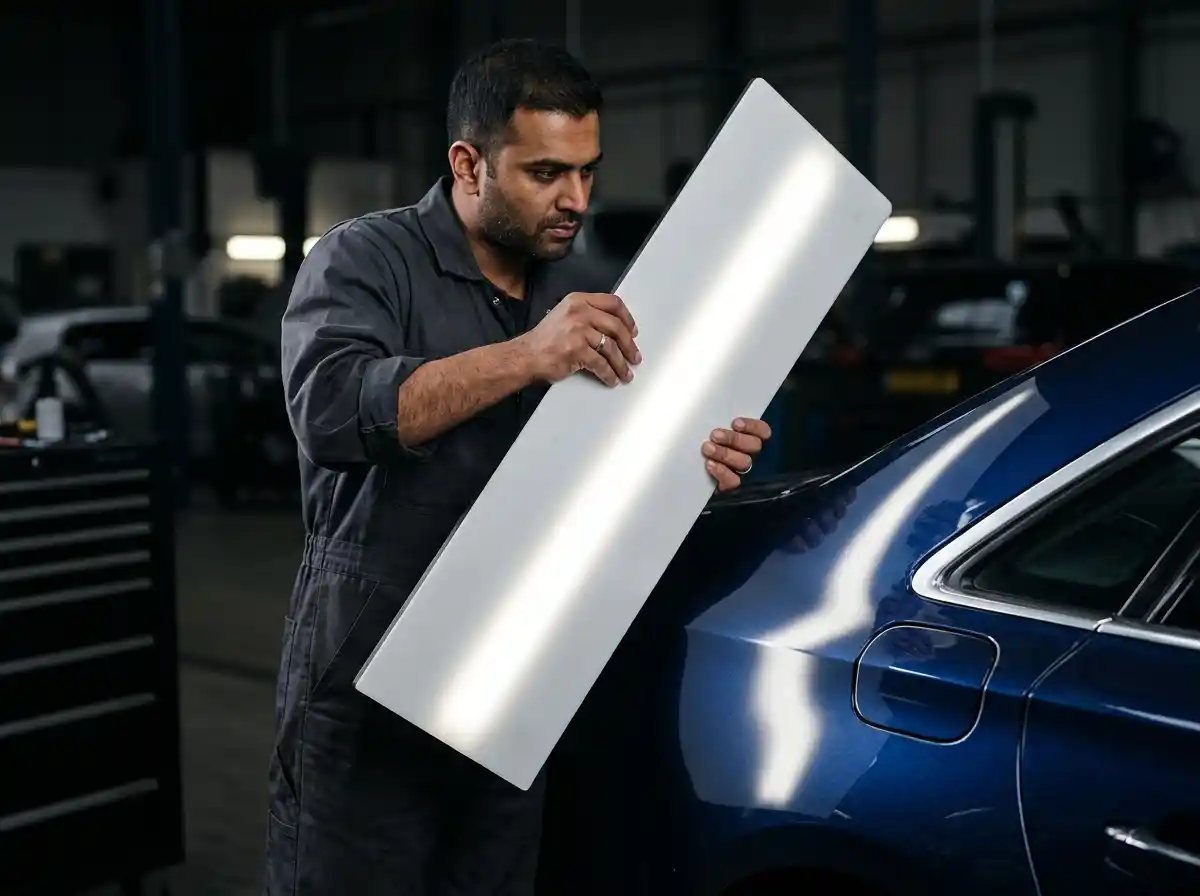
Long doors, bonnet, boot lid and rear quarter surfaces require reflection control from several viewing heights. The repaired panel should meet adjacent faces without a step, the character line should continue naturally and the closure should latch without being forced. Adjusting hardware to mask a distorted opening is not equivalent to restoring the opening.
Surface shape is completed before primer. Linear lighting reveals low spots, hard filler boundaries and waves. Brightwork, seals and acoustic glazing relationships are protected during dismantling and checked at reassembly because luxury refinement depends on more than the painted skin.
Driver-assistance equipment follows the disturbed body zone
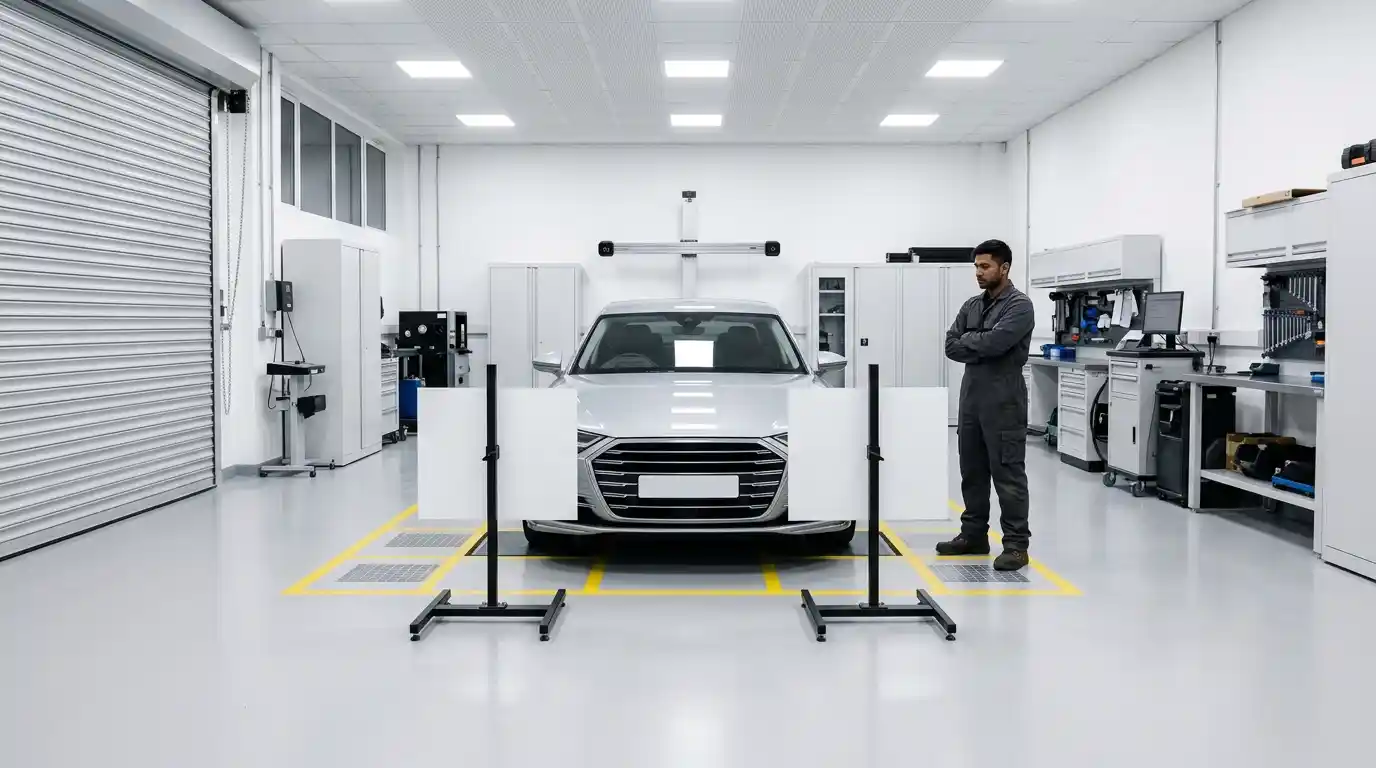
Audi has offered extensive assistance packages on the A8, including camera, radar, parking and other model-dependent systems. The fitted package varies. We record every component removed, replaced or displaced and connect it to the applicable scan, aiming or calibration procedure.
No warning does not prove correct aim
A physically shifted bracket can still communicate with the vehicle. Verification can depend on wheel alignment, tyre condition, ride height, target setup or a defined road drive. The repair record states what was performed and why.
Bumper, grille and lamp repair must preserve the architecture
Front and rear A8 corners combine painted covers with bright trim, lamps, grilles, lower shields and sensing hardware. A cover can spring back over broken guides or a shifted support. We inspect attachments beneath the surface before approving cosmetic repair.
Plastic welding is limited to suitable material and crack locations with stable mounts. A torn sensor aperture, missing locating tab or repeated previous repair can make replacement more reliable. Filler and paint are controlled around any restricted sensing region.
Paint matching includes depth, texture and edge discipline
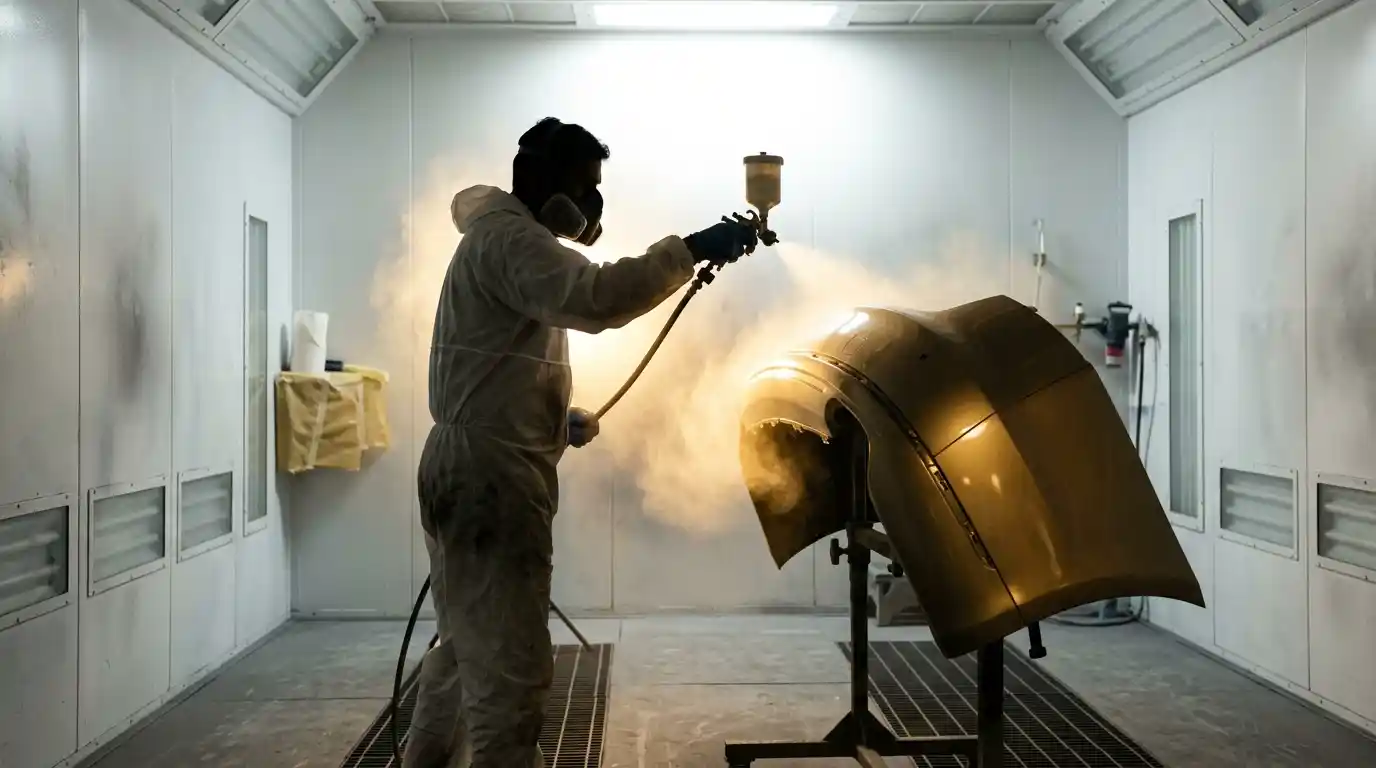
The A8’s large calm surfaces make metallic orientation and texture differences visible. Paint code, electronic reading and a spray-out beside the vehicle establish the usable variant. Previous refinishing and Dubai exposure are recorded because the current adjacent panel controls visual harmony.
After curing, colour is viewed face-on and at shallow angles. Gloss, orange peel, dust, edge coverage and blend transition are checked beside bright trim and black exterior pieces. Polishing refines the surface but is not used to erase evidence of poor preparation.

The flagship handover uses a proof checklist
- Opening damage and pre-existing condition recorded
- VIN and exact panel material identified
- Structural measurement completed where required
- Joining and corrosion protection documented
- Panel gaps and flushness compared
- Closures, seals and brightwork seated correctly
- Colour and texture reviewed under useful light
- Warnings and required system work closed
- Scan, alignment or calibration evidence retained
- Aftercare and remaining limitations explained
The estimate distinguishes confirmed work from access risk
Known panels, paint operations and visible parts form the first scope. Hidden guides, absorbers, joint damage, wiring or structural findings remain conditional until dismantling. Photographs and explanation support any change before further approval.
Cost and time vary with generation, material, part supply, damage severity, joining process, finish, electronics and calibration. The schedule is reliable only after those dependencies are known.
This page supports the published Audi body shop page and connects to our body repair service and paint refinishing process.
A8 generation and wheelbase affect parts, geometry and access
An A8 and A8 L can share design language while using different long-body components, door lengths, sill sections, glazing and trim. Facelift changes can alter bumpers, grilles, lamps and assistance hardware within the same generation. VIN, wheelbase, build date and installed package are therefore recorded before parts ordering or section boundaries are approved.
Wheelbase
Confirm standard or long body before doors, sills and side trim are identified.
Exterior revision
Confirm lamp, grille, bumper and brightwork version.
Assistance package
Confirm cameras, sensors, radar, night-vision or parking equipment fitted.
Powertrain
Confirm combustion, hybrid and any related high-voltage or cooling context.
This identification is part of repair quality. Painting the wrong bumper variant before discovering a missing aperture creates avoidable cost; choosing the wrong door or trim can compromise sealing and system function.
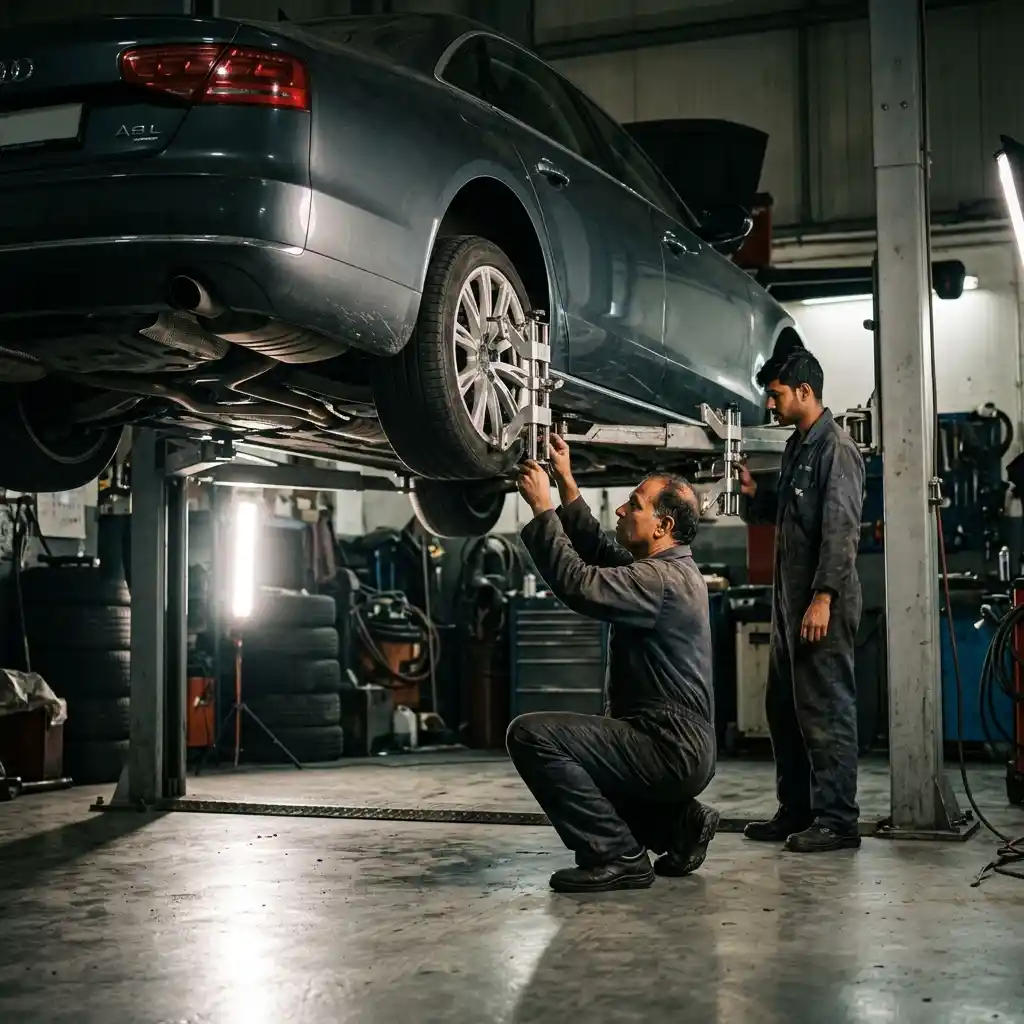
Audi A8 structural control
Structural measurement protects the flagship opening
A large door can hide small movement in the sill, pillar or hinge area. The technician compares reference points and opening geometry before adjusting latches or glass. Where collision force reaches the passenger cell, the body is supported and measured according to the applicable procedure; cosmetic work waits until the load path is understood.
The A8’s multi-material structure can transfer force through cast nodes, extrusions, bonded joints and high-strength sections. A visually localised crease may therefore require measurements beyond the outer panel. If a casting or restricted component is damaged, replacement boundaries follow the technical information rather than an improvised straightening attempt.
Aluminium workspace control reduces future corrosion risk
Steel dust embedded in aluminium can create corrosion sites beneath an otherwise attractive finish. Tools, abrasives, benches and work areas used for aluminium are controlled and cleaned. Panels are handled to avoid deep gouges that add unnecessary filler or reduce remaining thickness.
Adhesive and riveted joints need disciplined preparation. The old joint is removed without damaging the mating flange, surfaces receive the specified treatment, and new adhesive and fasteners are installed within their working and cure times. Sealers and cavity protection are restored before the area is concealed.
These operations should be technically reviewed. The brand name alone does not prove capability; the workshop must demonstrate that the method and environment suit the material involved.
Active suspension and assistance features add calibration dependencies
Some A8 configurations use advanced suspension and extensive assistance systems. Body position, ride height and wheel alignment can influence the environment from which cameras and radar units are calibrated. The vehicle must therefore reach the specified mechanical condition before electronic aiming is attempted.
The repair record distinguishes suspension diagnosis, ride-height correction, wheel alignment, fault scanning, sensor aiming and calibration. These are not interchangeable. If an active system or restraint event lies outside the body shop’s capability, specialist support is arranged before the car is represented as complete.
Physical baseline
Body geometry, bracket position, tyres, wheel alignment and ride height are correct.
Electronic closure
Diagnostics, aiming, calibration and relevant function checks reach the required result.
Luxury refinement is checked through quiet operation
A8 handover includes more than panel gloss. Door effort, soft-close or powered features where fitted, seal contact, glass position, wind-noise risk, lamp fit, boot-lid operation and trim retention are reviewed. Acoustic pieces and water-management membranes return to their intended locations after access.
A short controlled drive may be useful when the approved repair affected wheel alignment, assistance operation or noise, provided the vehicle is safe and the procedure calls for it. Static inspection still checks panel reflections and gaps. Each observation closes a concern from intake rather than adding a generic test list.
New condition compared with the opening record.
Named tests and documents, not broad assurances.
Pre-existing, unrelated or deferred items shown separately.
Insurance scope cannot replace the A8 technical repair plan
An insurer may authorise parts and labour through its own process, but the workshop remains responsible for identifying material, joining, protection and safety requirements. If dismantling reveals a damaged casting, restricted high-strength part, assistance bracket or restraint dependency, the finding is documented and submitted through the applicable supplementary approval route.
The estimate separates confirmed external damage from areas that need access. It also distinguishes customer-requested cosmetic work from accident-related operations. This is important on an A8 with previous paint or repair because old filler, corrosion or an unrelated warning should not be presented as new collision damage.
If a proposed insurer method conflicts with the applicable technical information or the workshop’s safe capability, the issue is escalated rather than quietly compromised. Commercial pressure is not evidence that a restricted component can be repaired.
A publishable A8 case needs structural and finish proof
A real case records the exact model and wheelbase, impact, warnings, inspection, material identification, repair boundary, joining or panel work, paint process and verification. Photographs conceal owner identity and number plate. Timing, cost, warranty and insurer statements appear only with the required approval.
Final images use broad reflections and opening gaps, while repair-stage images show any important joint, protection or hidden attachment before it is covered. Scan, alignment, suspension or calibration claims use the corresponding job evidence. A generic luxury repair story cannot substitute for an A8 workshop record.
Model-page evidence boundary
The A8 page keeps model-specific claims tied to vehicle identity, current repair information and documented workshop findings. Generic luxury repair stories are not presented as customer cases.
Audi A8 cabin access control
Interior protection is part of flagship body access
Structural or closure work can require removal near leather, wood, screens, rear-seat controls, airbags and acoustic trim. The intake record captures condition, and components are covered, labelled and stored in a clean area. Tools and dusty body operations remain separated from the cabin.
After assembly, seats, trim, lighting and controls disturbed by the repair are checked without making claims about unrelated vehicle functions. A clean interior return is evidence of disciplined access, not an optional detailing flourish.
The A8 intake inventory records keys, removable rear controls, charging equipment on electrified versions and loose boot items. These are reconciled before release so an accessory issue is not confused with the body repair.
Every flagship detail is checked.
Begin with the VIN and the complete impact zone
Send the A8 year, VIN if available, a wide view, a reflection angle, a close detail and every warning. Tell us whether doors, boot lid, steering, suspension, camera view or parking response changed. We will prepare a material-led inspection without promising a repair method from a photograph.