
Audi Q5 Body Repair Dubai
Q5 parking and kerb impacts often cross three zones at once: the painted bumper, the wheel-arch area and the sensing or underbody hardware beside them. A cover can look repairable while its guide is broken, and a wheel can look straight while the liner or suspension clearance has changed. We inspect the complete SUV corner before deciding dent repair, plastic repair, panel replacement or paint.
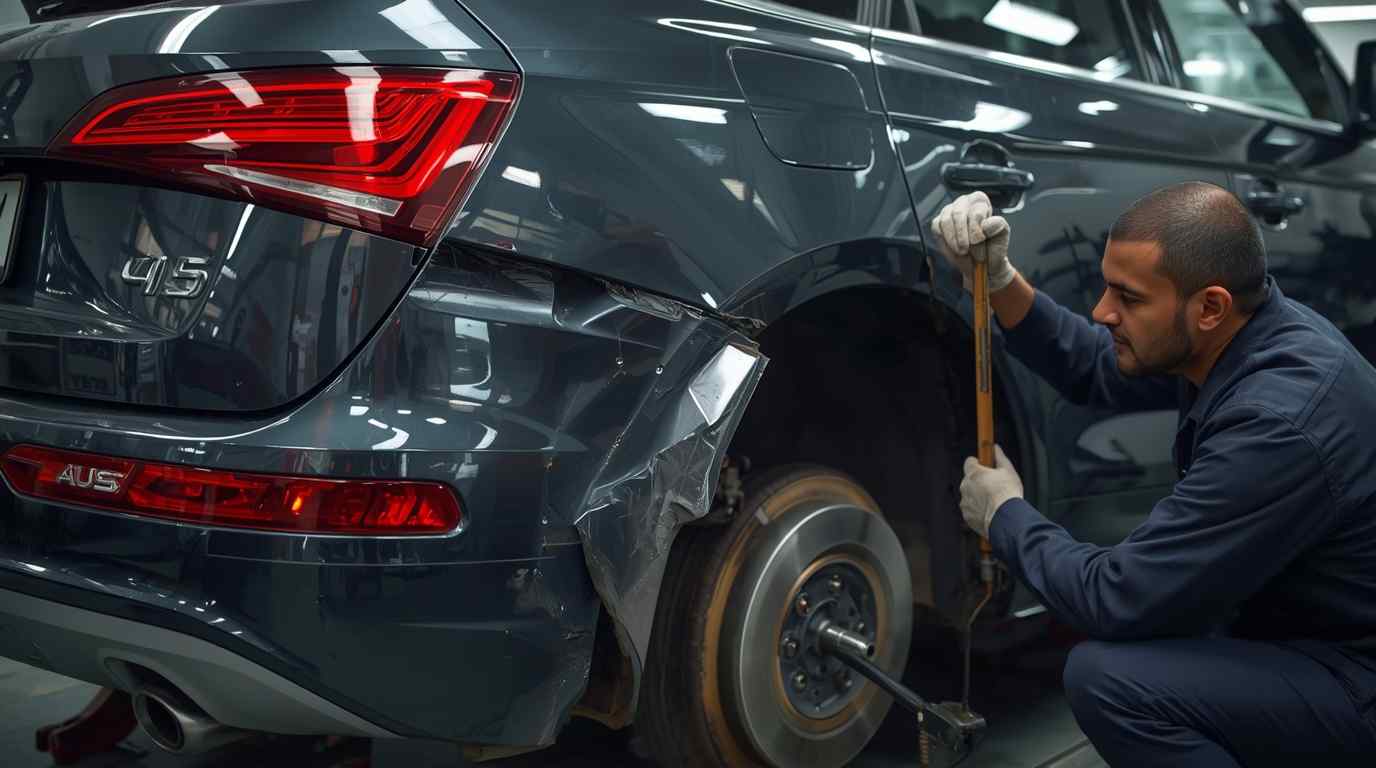
The Q5 damage map begins at the wheel
Front wheel corner
Check bumper guide, wing edge, lamp mount, arch liner, tyre clearance, undertray and any front sensing hardware.
Rear wheel corner
Check quarter-panel crown, door edge, arch trim, bumper return, lamp and rear parking system.
Side-sill corridor
Check outer trim, pinch and lifting areas, door gaps, floor relationship and high-voltage context on electrified variants.
Tailgate zone
Check closure gap, latch, powered operation, lamp fit, bumper supports, camera view and sealing.
Steering change, wheel displacement, tyre rubbing, brake concern, fluid loss or a restraint warning means the vehicle should not be assumed safe to drive. Recovery may be the correct next step.
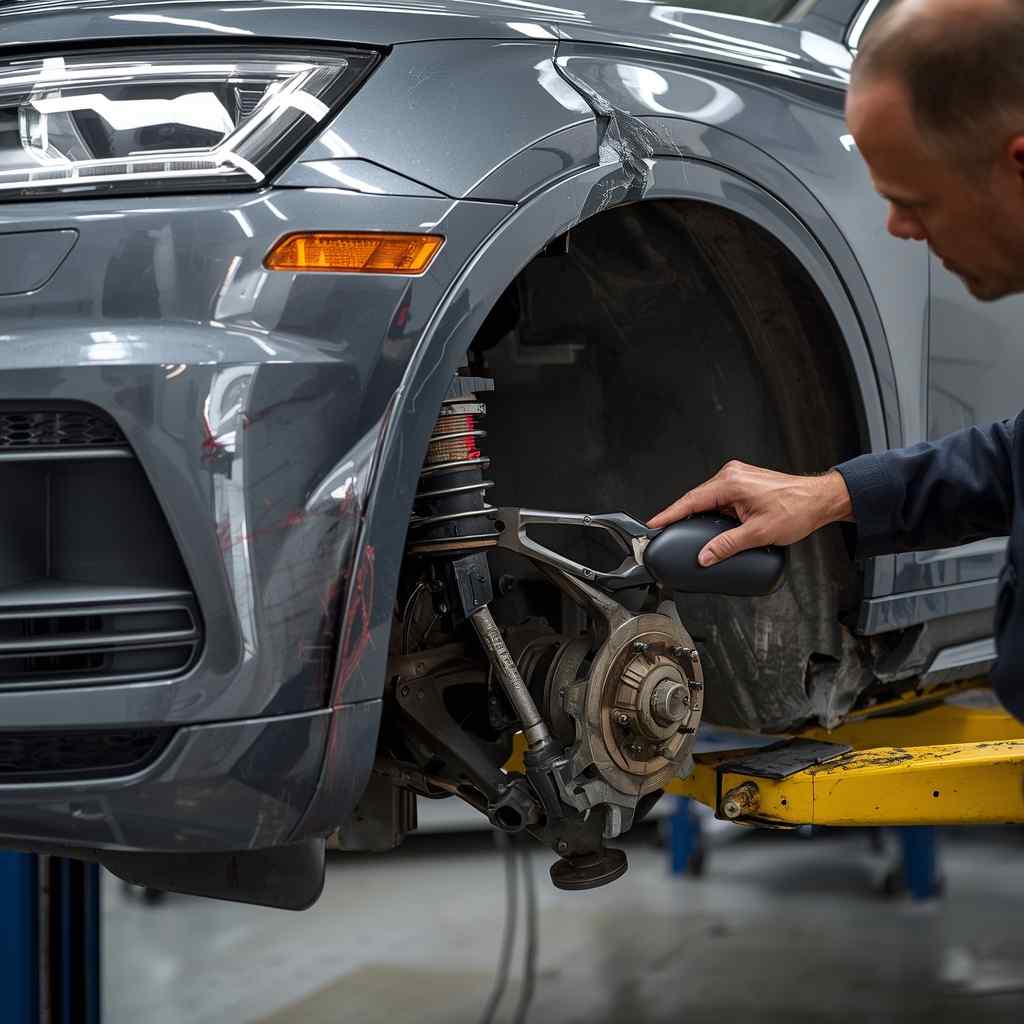
Controlled access prevents cosmetic under-scoping
We remove only the pieces needed to inspect retainers, absorbers, reinforcement attachments, liners, shields and wiring. The opening condition is photographed so newly revealed damage can be connected to the impact rather than treated as an unexplained addition.
Model year, VIN, exterior package and fitted assistance systems guide parts identity. Q5 bumper and grille pieces can differ across generations and trims even when their overall shape appears familiar.
Three repair routes cover most Q5 outer damage
Preserve the panel
Paintless dent repair may suit intact paint, accessible metal and a controlled dent away from restricted reinforcement.
Correct and refinish
Sharper creases, paint breaks and suitable bumper damage may need conventional body or plastic work followed by paint.
Renew the component
Tearing, severe stretch, critical mount damage, restricted structure or unstable previous repair can make replacement stronger.
The total comparison includes labour, parts, fit, corrosion protection, paint, blend area and electronic operations. One cheap line does not decide the complete repair.
Bumper repair must restore the locating system
A Q5 bumper corner is held by guides, tabs and fasteners that establish its relationship with the wing and lamp. A surface repair will not stay correct if those parts remain broken. Plastic welding is considered only for identifiable compatible material with a suitable crack position and recoverable mounts.
Sensor apertures and brackets receive separate attention. Filler or coating build is not allowed to distort the opening or interfere with the applicable material requirement. After reassembly, the cover should sit naturally rather than being pulled into shape by screws.
Sensor verification follows what was moved
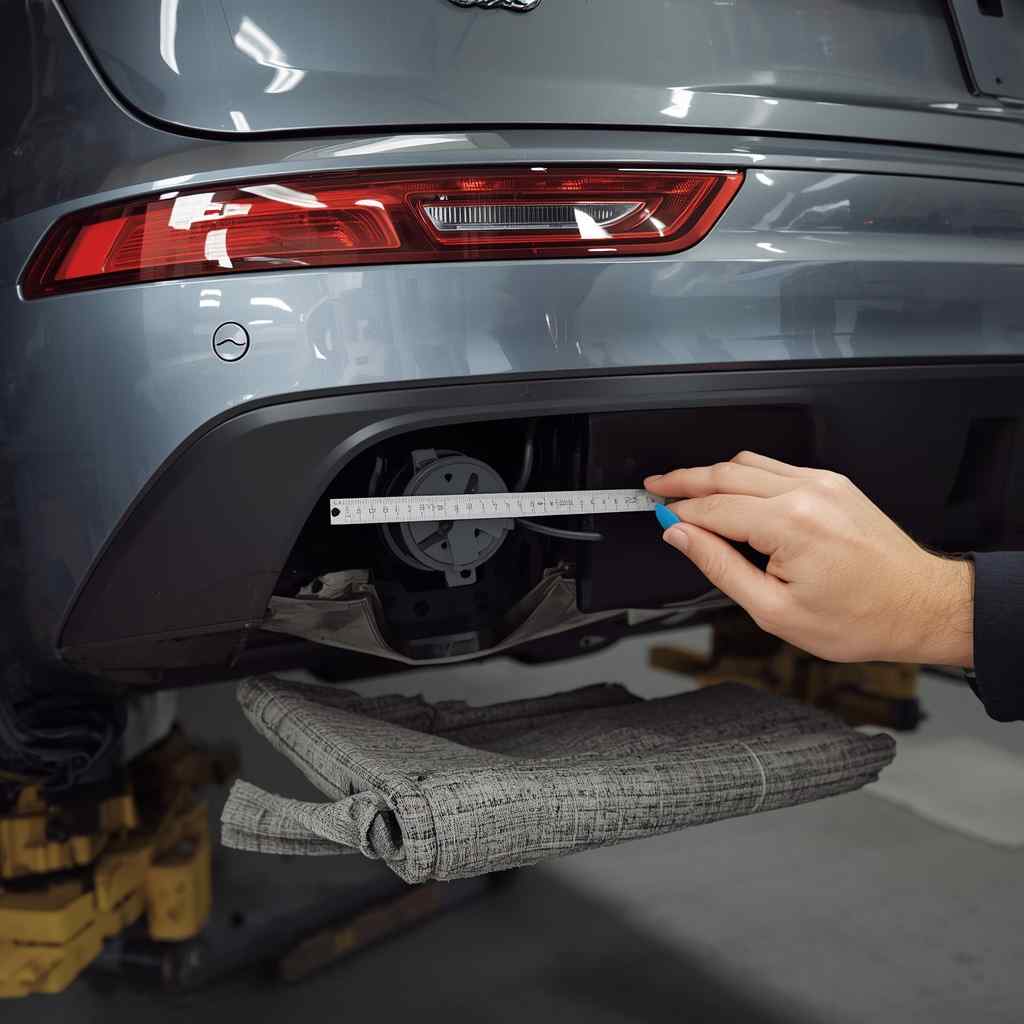
Q5 equipment can include parking sensors, cameras and radar-based assistance, with packages varying by generation and trim. We record the actual hardware and connect removal or displacement with the appropriate scan, aiming or calibration procedure.
A bracket can communicate electrically while pointing incorrectly. Wheel alignment, tyre pressure, ride height, target conditions or a defined road drive may be required before verification is complete.
Mixed materials require component-specific repair information
Q5 generations use different combinations of steel, high-strength steel, aluminium and plastics. The technician identifies the exact panel and structural role before applying heat, pulling, sectioning or joining. Aluminium work needs contamination control; high-strength structural areas can carry strict correction limits.
Electrified Q5 variants add high-voltage considerations around floor, sill, charging and underbody damage. Battery warnings, coolant loss, enclosure contact or unusual heat require a safe-state decision before ordinary body operations.
Paint matching accounts for the SUV’s changing angles
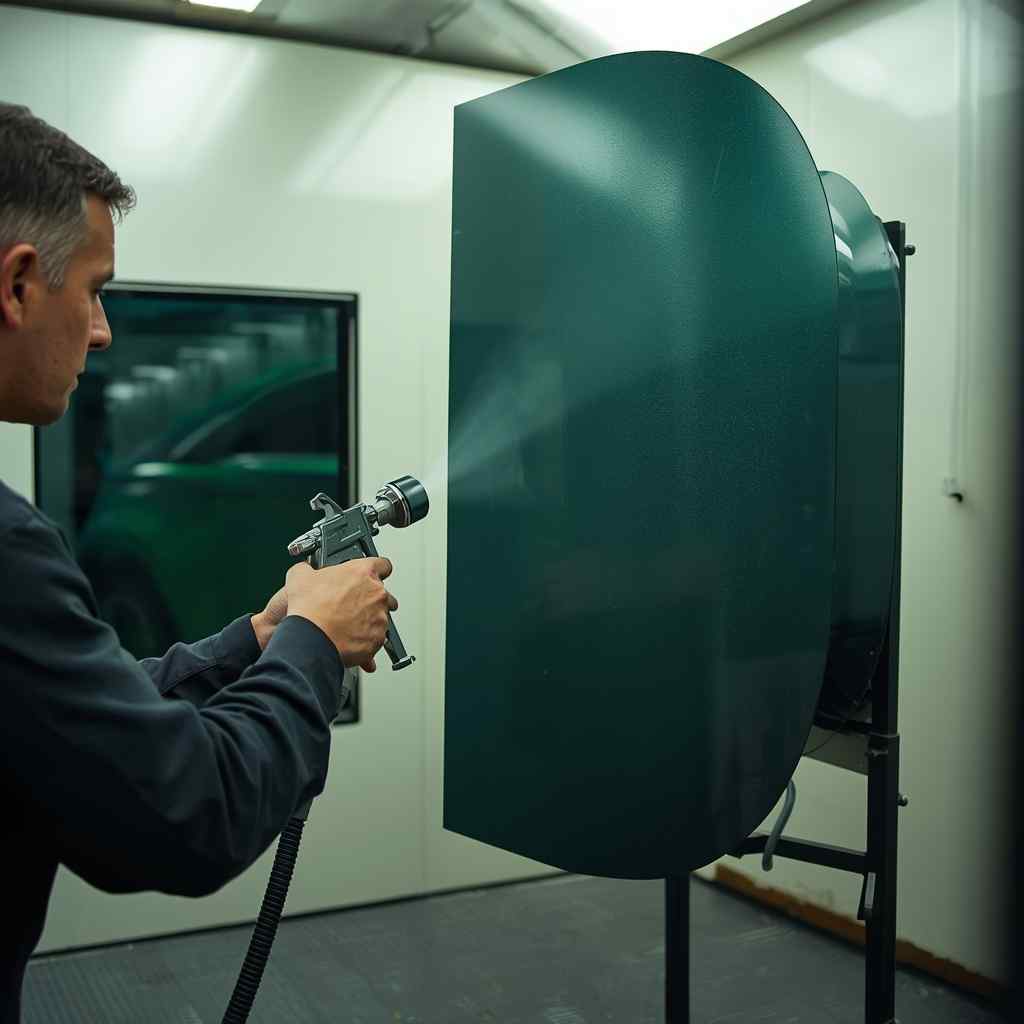
Curved wheel arches, bumper returns and strong shoulder lines show metallic colour from several orientations. Paint code and electronic reading narrow the formula, while a spray-out beside the car confirms face colour, side tone and effect. Previous paint and sun exposure are recorded.
The repaired contour is blocked before colour. Final review covers shape, hue, metallic texture, gloss, orange peel, edge coverage and the transition beside cladding or contrasting trim.
The estimate shows both visible work and dismantling risk
Known panel correction, paint and clearly damaged parts are listed first. Hidden guides, absorbers, wiring, reinforcement, wheel-area or underbody findings are marked conditional until access. Photographs support a revised approval if the scope changes.
Cost and timing depend on generation, material, severity, parts, paint, electronics, calibration and high-voltage controls where relevant. Parts position is confirmed before a completion date is promised.
This model page supports our Audi body shop service. Related work may use the accident repair process or panel and body repair service.
Handover includes a wheel-arch and closure check
We recheck tyre and liner clearance, arch trim, bumper corner, lamp, undertray, panel gaps and door or tailgate operation against the opening record. Warnings and any included sensor, alignment or calibration work are closed with evidence.
Paint aftercare is explained for the applied system. Pre-existing marks, unrelated warnings and deferred items remain separately listed.
Q5 front-corner damage can reach cooling and lighting mounts
A low-speed contact can scrape the bumper and still crack a headlamp tab, bow the wing edge or move the lower ducting. The reinforcement may remain sound while guides and brackets no longer establish the correct surface. Controlled dismantling is used to see these connections before a “bumper paint” estimate is accepted as complete.
Air guides, active shutters where fitted, undertrays and wheel-arch liners are returned because they influence airflow, contamination and noise. A lamp that appears operational can have a broken mount and unstable aim. Replacement lighting may require configuration or aiming based on the exact unit and equipment.
Painted cover
Surface damage, plastic shape, crack path and sensor openings.
Support layer
Guides, absorber, reinforcement attachment and lower shields.
Lighting layer
Lamp housing, tabs, connectors, aim and wing relationship.
Cooling layer
Ducts, shutters, radiator support and evidence of fluid loss.
Door, sill and wheel contact needs a mobility screen
A side scrape across doors can remain cosmetic, but a concentrated strike at the sill or wheel may involve the opening, suspension or high-voltage floor on electrified versions. The owner should report tyre rubbing, a changed steering wheel position, new vibration, a door that no longer latches normally or any airbag and seatbelt message.
The workshop checks door gaps, hinge and latch areas, wheel-centre position, arch clearance, sill shape and accessible structural references. It does not move a striker or arch trim to disguise a deeper misalignment. Mechanical and structural findings are resolved before the surface is refinished.
A wheel is displaced, the tyre contacts bodywork, braking or steering changed, a door cannot secure, fluid is leaking, restraints activated, or floor and high-voltage damage is possible. A phone image cannot clear these conditions.
Electrified Q5 variants add charging and enclosure context
Plug-in hybrid and electric Q5-family vehicles position high-voltage equipment differently by generation. An impact near the charging side, sill, floor, underbody or cooling circuit receives a safe-state review before sanding, pulling, welding or heat. Warning status, coolant evidence, enclosure contact and approved lifting points are recorded.
Protective covers are distinguished from the battery enclosure and body structure. A scraped shield is not automatically a damaged battery, while a smooth cover is not proof that nothing lies beneath. If the applicable procedure or inspection places enclosure work outside the body shop’s scope, specialist assessment is obtained.
Curing temperature and duration are also checked against the vehicle and repair procedure. The workshop does not apply one booth routine to every electrified body without considering components that remain installed.
Wheel-arch repair must preserve contour and protection
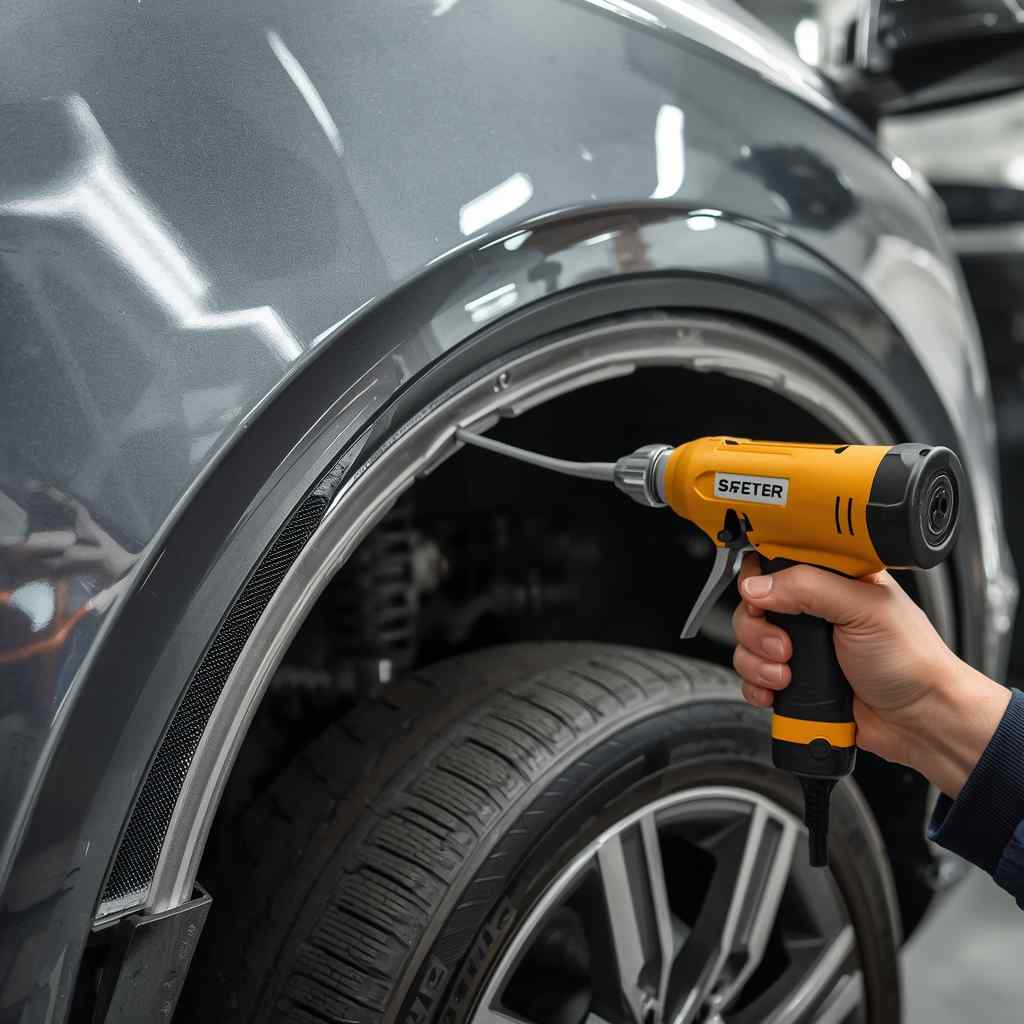
The Q5 arch crown is a strong visual and functional reference. Metal stretching, rolled edges, cladding mounts and inner-liner clearance affect whether repair remains suitable. A dent on the open crown may be correctable; a torn edge or deformation continuing into the inner wheelhouse can require more extensive work.
When grinding or joining disturbs protective layers, primer, seam sealer and cavity protection are restored. Drain and attachment holes remain clear. Plastic arch mouldings are checked for cracked tabs and surface stress before reuse; adhesive is not used as a universal substitute for designed clips.
Contour
Compare the arch radius and reflected line with the wheel and adjacent panel.
Clearance
Confirm tyre, liner, suspension and mudguard space through steering and load conditions as relevant.
Protection
Restore coating, seam and cavity treatment disturbed by the repair.
Quotation comparison starts with the same Q5 scope
Check whether each estimate includes removal and reassembly, clips and guides, wheel-arch liner, lamp mounts, paint blending, scans, calibration and wheel alignment where relevant. A lower total that excludes these operations is not necessarily better value. Conditional hidden items should be named rather than treated as a blank allowance.
Parts identity matters. Bumpers, grilles, lamps and trim can change by model year and exterior package. The workshop verifies VIN, openings, connectors and finish before painting. A test fit can prevent a costly discovery after the component has been refinished.
For insurance work, a supplement may be required when hidden damage is exposed. The workshop provides location photographs and a technical explanation; the owner or insurer follows the applicable approval route. Necessary safety work is not recast as optional decoration.
Roof rails, panoramic-glass edges and upper closures need a different impact check
Impact risks to record
- Roof skin, rail mounts and panoramic opening
- Upper pillars and tailgate relationship
- Water sealing and structural condition
- Glass, airbags and restraint warnings
A serious roof event is not treated as a local cosmetic dent until these systems are checked.
When controlled repair may remain suitable
- Structure remains unaffected
- Glass opening stays stable
- Paint coating remains intact
- Dent location allows safe access
Damage near bonded glass, reinforcement or a rail mount can require material-specific access, sealing work and justified headliner removal.
Final verification after repair
- Roof reflection and contour
- Rail seating and attachment
- Drain paths and glass perimeter
- Tailgate opening and seal relationship
A controlled water test may be used where the sealing system was disturbed.
What a trustworthy Q5 repair record should prove
A useful Q5 repair record should identify the exact generation, damaged zone, owner-reported changes, inspection, repair-versus-replace reasoning, parts, body and paint work, sensor or alignment operations and verified result. Wide photographs demonstrate corner, wheel and closure relationships; close details support rather than replace them.
Remove number plates, documents and personal information unless permission exists. Use actual workshop records, dates and approved claims when a real case is presented. Do not convert the common parking scenario described on this page into a fictional case study.
This page explains the evidence a genuine Q5 repair file should contain without inventing a customer case. Model-specific inspection, parts, geometry, paint and system checks remain the basis for the commercial repair page.
Road verification follows a defined Q5 concern
Controlled road verification
A controlled road check is used only when safe and relevant to wheel alignment, wind noise, assistance calibration or a symptom reported at intake. The route and conditions suit the operation. It is not an informal test drive, and it does not replace static torque, gap, scan or underbody checks.
The result is recorded against the original concern, including any limitation caused by traffic, weather or an unrelated fault.
Custody items returned
Keys, parcel shelf, cargo-floor pieces, wheel-lock key and charging cable on an electrified Q5 are tracked when removed. Returning these items closes the workshop custody record as clearly as the panel work.
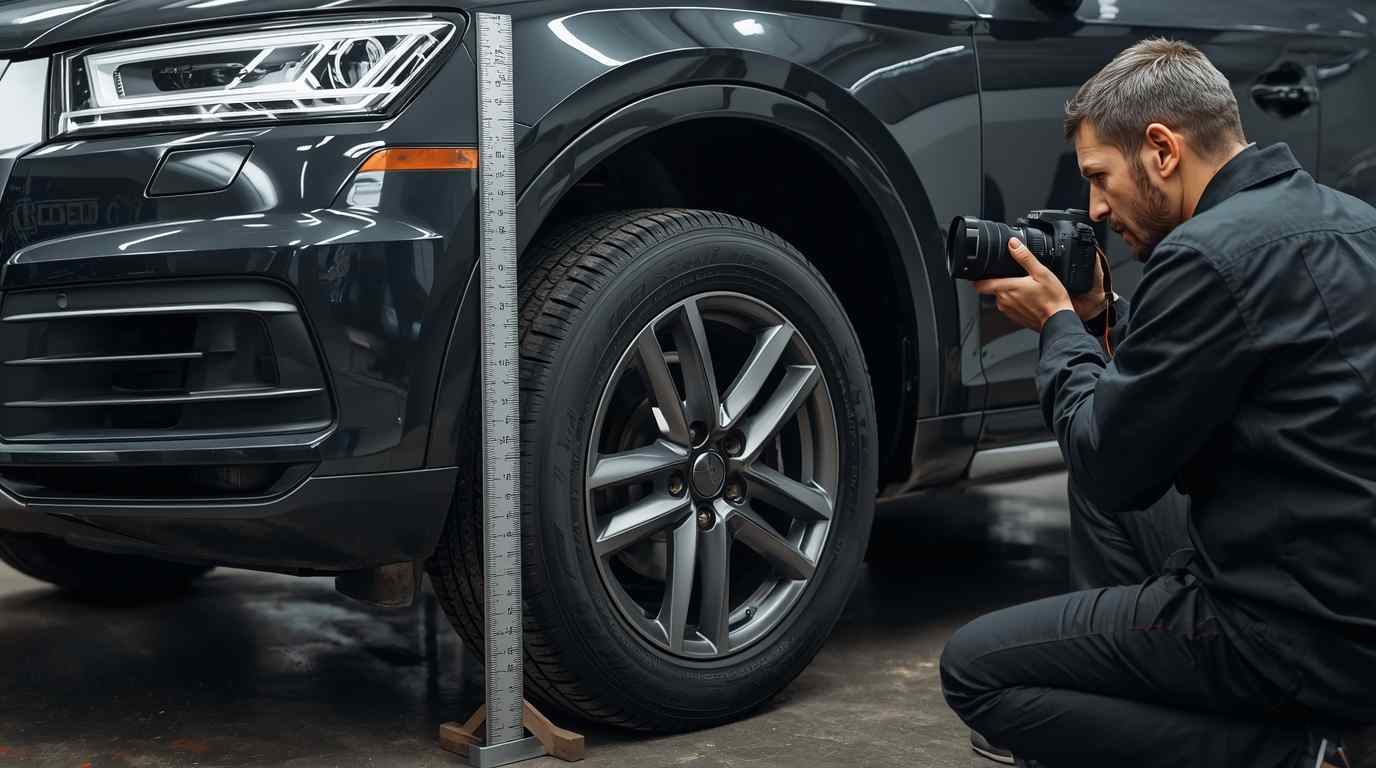
Photograph the wheel and the whole corner together
Send one wide corner view, the wheel and arch, the close damage, adjacent gaps and any warning. Add Q5 year, vehicle location and whether steering, tyre clearance, camera view or powered tailgate behaviour changed.