
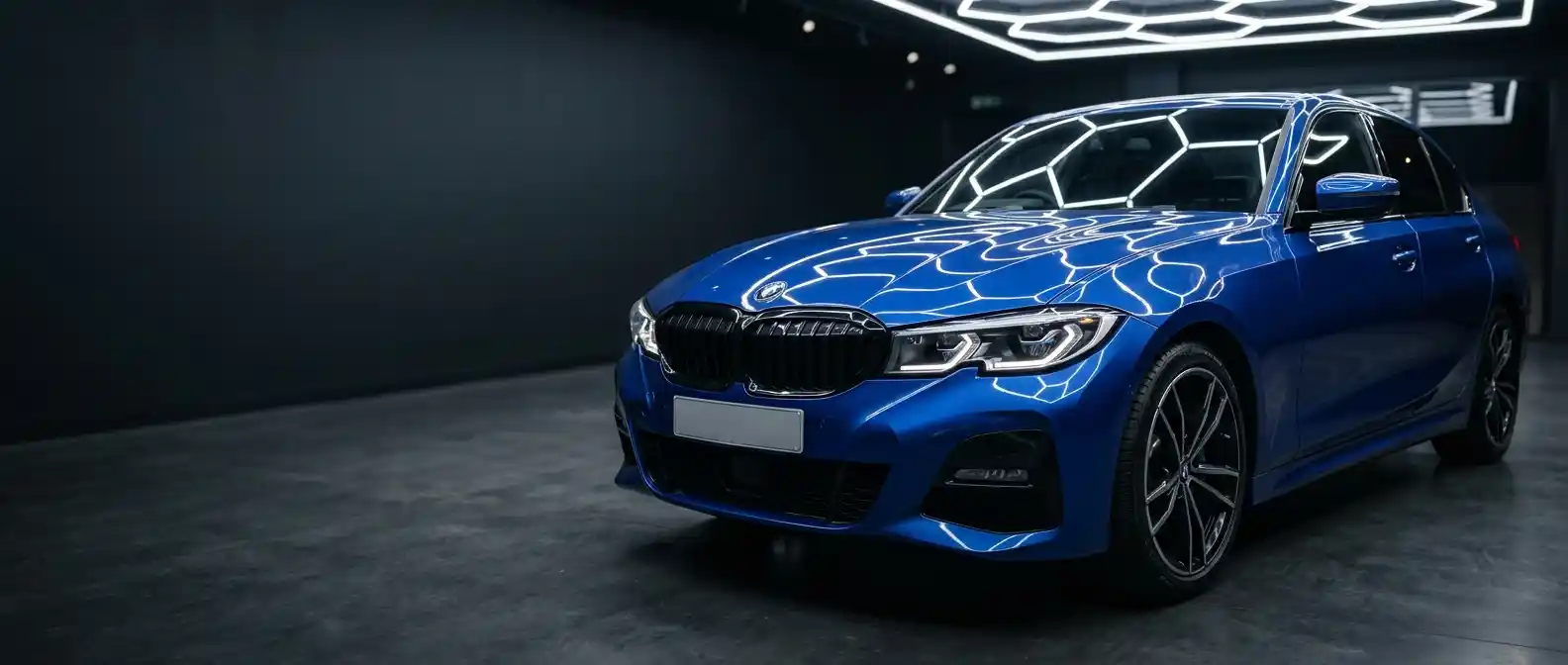
Independent BMW 3 Series body and paint assessment in Dubai
BMW 3 Series Body Repair Dubai
BMW 3 Series body repair should restore more than the visible panel. Wheel-corner geometry, bumper fit, door relationships, sensors and paint finish can all belong to the same impact zone.
We begin with the damaged area, identify what changed around it, and build the repair scope from evidence rather than from the first mark visible in a photo.
Start with the impact path
The visible mark is only one point on the repair map
A BMW 3 Series can show modest outer damage while force has also reached a wheel corner, bumper guide, lamp pocket, door edge or nearby sensor mount.
Wide photographs, wheel position, changed gaps, steering feel and dashboard messages help define the first inspection route. The purpose is not to over-diagnose a small mark. It is to avoid treating a wider impact as a paint-only problem.
If steering, braking, tyre clearance or a warning has changed, the safer route is inspection or recovery before driving further.
Four repair lanes
Alignment chain separates the repair into accountable decisions
Wheel centre
Tyre clearance, wheel setback, suspension reference and steering behaviour define whether the impact is larger than the painted panel suggests.
Door datum
Door gaps, flushness, latch feel, seals and the side reflection help show whether side geometry remains consistent.
Bumper datum
Bumper guides, mounts, lamp pockets and adjoining edges are checked before a cosmetic bumper repair is treated as complete.
Sensor datum
Brackets, covers, apertures and surrounding body geometry are restored before calibration or diagnostic closure is considered.
Model identity first
Exact specification controls parts and repair decisions
The generation, derivative, build date and fitted equipment matter before dismantling. A visually similar bumper, lamp or mirror can still differ in apertures, electronics, trim, mounting geometry or sensor equipment.
The VIN and physical vehicle should agree with the proposed part before it enters paint. Previous repair, warning messages and owner-reported changes are also recorded as the intake baseline.
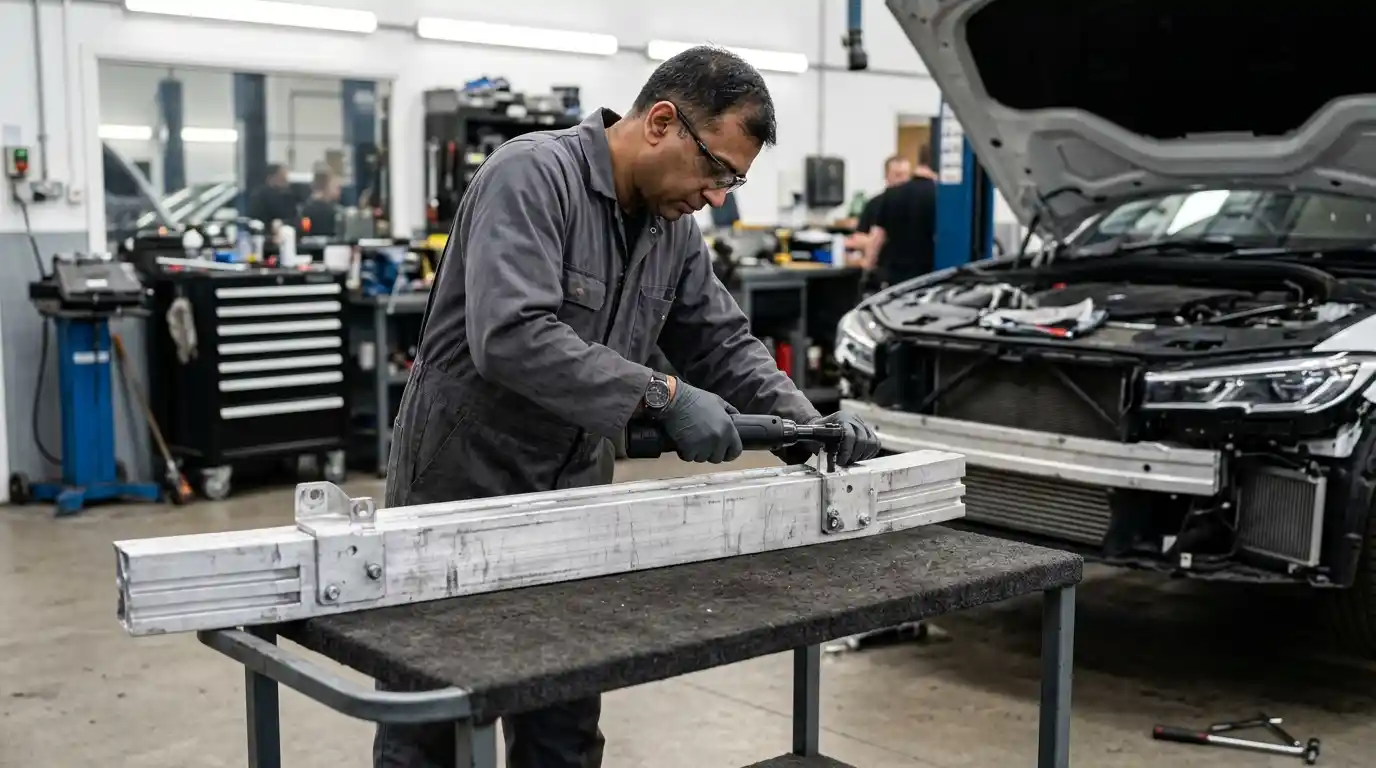
Repair versus replacement
Choose the complete operation, not the cheapest component
Repair and replacement are compared on material condition, recoverable shape, access, attachment integrity, finish risk and total installed work.
Repair may make sense when
- The panel retains a recoverable shape
- Critical edges and mounts remain serviceable
- The material and method support correction
- The finish can be restored without excessive disturbance
- Previous repair does not undermine the new process
Replacement enters the discussion when
- Material is torn or stretched beyond stable correction
- A critical mounting point is cracked or displaced
- The repair zone falls inside a restricted procedure area
- Hidden attachment damage makes repair unreliable
- Total repair risk exceeds a suitable replacement route
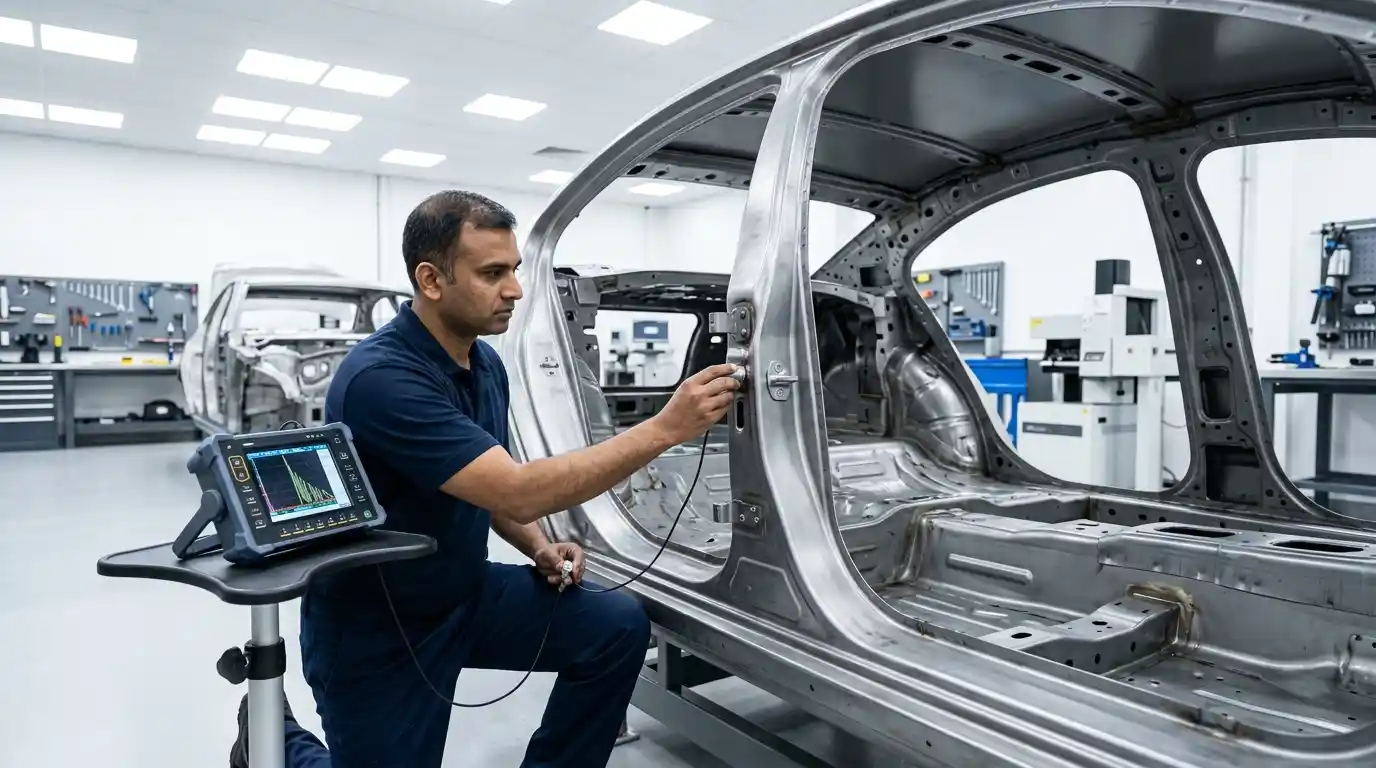
Material and joining rules
Metal correction begins only after the component is identified
The 3 Series uses generation-specific body materials and joining methods. Visual appearance alone cannot authorise heating, pulling, sectioning or welding.
Applicable repair information controls whether a part may be corrected or should be replaced. Flanges, adhesive, fasteners, weld locations and corrosion protection are part of the repair, even when they disappear behind trim after reassembly.
Sensor and electronics closure
Diagnostics cannot substitute for correct geometry
Pre-repair record
Warnings and communication status are recorded before dismantling so the workshop has a genuine starting point.
Physical mounting
Brackets, covers, camera view, wiring and surrounding panel geometry are checked before software steps are treated as final.
Calibration prerequisites
Body condition, wheel alignment and any required setup are completed before the applicable static, dynamic or combined procedure.
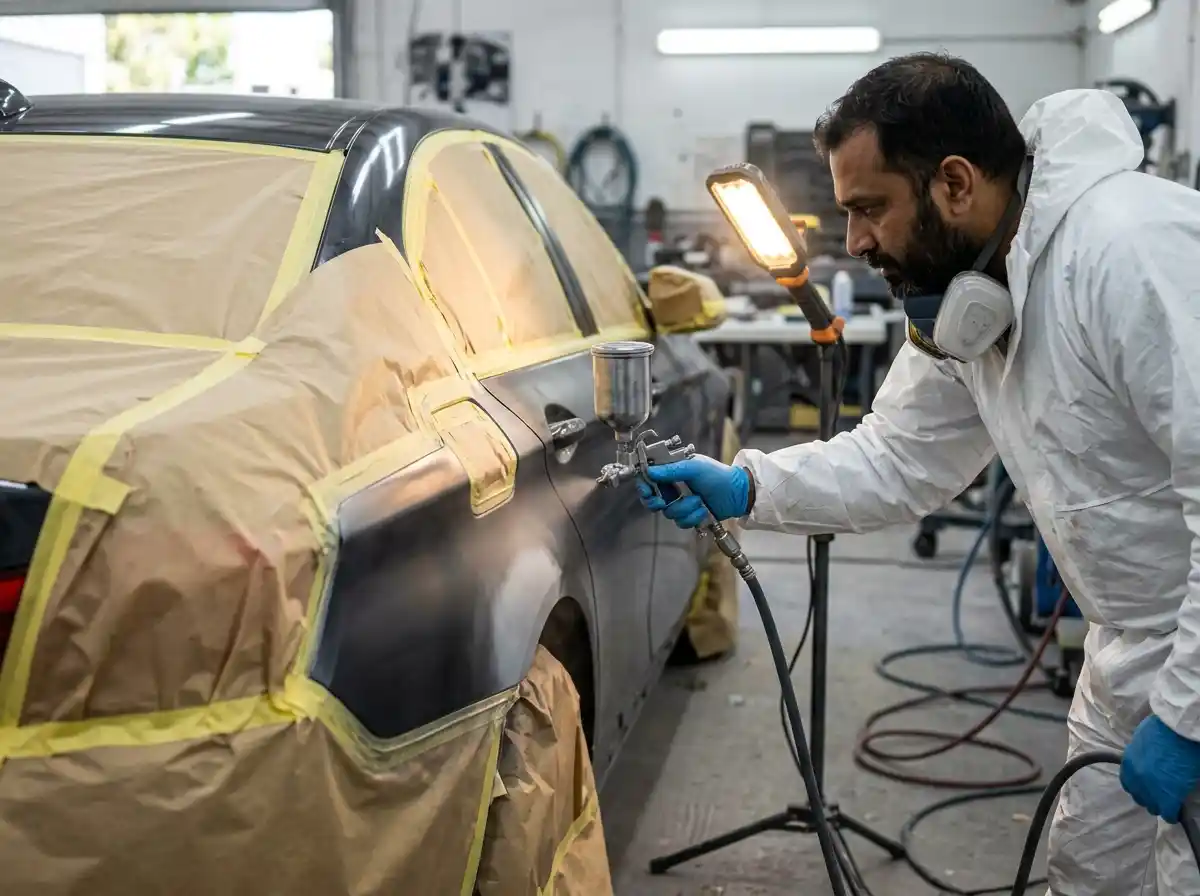
Paint and finish
Colour matching is only one layer of the final result
BMW 3 Series body lines and reflections make substrate shape, metallic travel, gloss, clear-coat texture and masking boundaries easy to notice.
Paint code narrows the formula family. Spray-out comparison and viewing angle help decide how the new finish relates to the existing vehicle. Final review includes face colour, side tone, gloss, orange peel, edge coverage and contamination.
From intake to handover
A clear production sequence keeps one trade from hiding another
Record the condition
Photograph damage, gaps, wheel relationships, warnings and relevant previous repair.
Inspect with controlled access
Remove only what is needed to expose mounts, reverse-side deformation and affected attachments.
Approve geometry and material decisions
Measurement and material limits are settled before irreversible work begins.
Repair, fit and prepare
Body correction, trial fit and corrosion protection are resolved before the paint stage.
Refinish and reassemble
Paint, trim, seals, lamps, wiring and hardware return in a controlled sequence.
Verify the assembled car
Gaps, closures, wheel alignment, scans, calibration responsibility and finish are checked before collection.
Photo estimate boundaries
Photos help route the inspection but do not settle the final quote
Images can show location, impact direction, broken material and obvious fit changes. They do not reveal every reinforcement, mount, previous filler layer or hidden deformation.
A final quotation follows physical inspection and any authorised access needed to see the true repair zone.
BMW 3 Series body repair questions
Frequently asked questions
Can a BMW 3 Series dent be repaired without repainting?
Sometimes. Paint condition, dent depth, edge proximity and access behind the panel determine whether paintless dent repair is suitable.
Does wheel-corner damage always mean chassis damage?
No. Tyres, wheels, suspension, steering, subframe position and body mounting points can all contribute. Measurement and inspection determine how far the impact travelled.
Can a bumper be repaired instead of replaced?
It depends on cracks, tabs, mounts, distortion, nearby lamps or sensors and whether the component can be restored reliably.
Does sensor work always require calibration?
Not always. The requirement depends on the fitted system, repair event and applicable procedure. Geometry and prerequisites must be correct first.
How long does BMW 3 Series body repair take?
Timing depends on damage depth, dismantling, repair versus replacement, parts, paint process, alignment, diagnostics and calibration where applicable.
Can photos provide the final price?
Photos help with triage, but hidden mounts, material condition and previous repair can change the final scope after inspection.
Send the evidence that defines this 3 Series repair
Include one full side, the damaged corner, steering-wheel position, tyre clearance and dashboard status. Mention any change in steering, closure, camera view or warning status.