
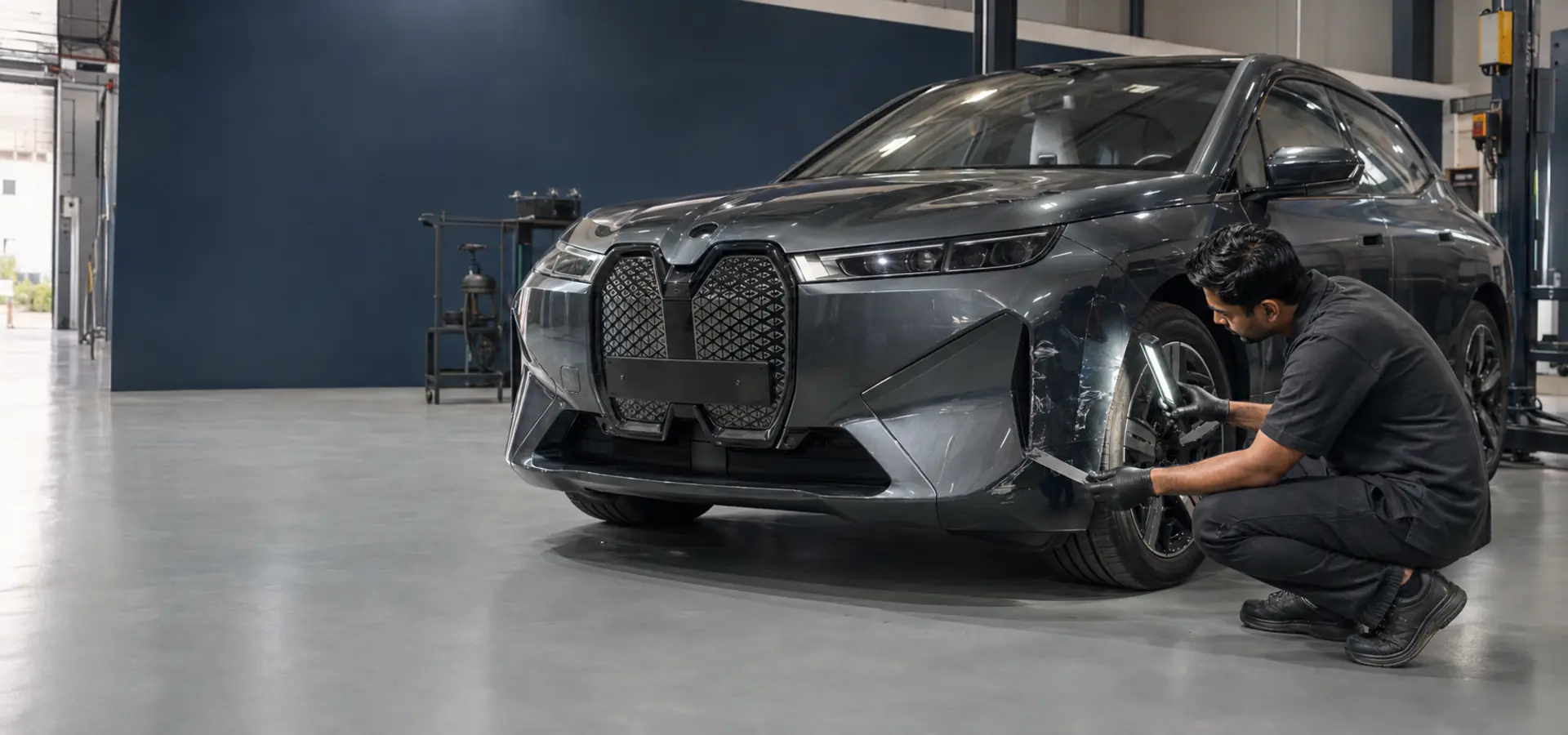
Independent BMW iX body and paint assessment in Dubai
BMW iX Body Repair Dubai
BMW iX body repair can involve much more than the visible outer panel. Battery-floor proximity, mixed materials, wheel geometry, charging-area components, cameras, sensors and paint finish may all belong to the same impact zone.
We start with the visible contact point, record the vehicle as it arrives and build the repair route from evidence before conventional body or paint work begins.
Safety first
Floor or sill contact changes the first workshop decision
A damaged sill, floor edge or underbody area on an electric SUV cannot be treated as an ordinary cosmetic repair until the high-voltage and structural boundaries are understood.
Visible body damage may sit beside battery protection, cooling routes, lifting points, wiring or lower covers. The workshop should record where the impact occurred, whether the vehicle is charging normally, whether warnings are present and whether wheel or steering behaviour changed.
If there is smoke, heat, unusual odour, obvious battery-area deformation or uncertainty around high-voltage damage, do not continue driving or touching the affected area. Recovery and appropriate safety handling take priority.
Four accountable repair lanes
Separate the iX impact into energy, material, geometry and finish
Energy boundary
High-voltage status, battery-floor proximity, cooling and charging-area dependencies are screened before ordinary body work.
Body material
Steel, aluminium, thermoplastic and composite-related zones require component-level identification before pulling, heating, cutting or joining.
Geometry and sensors
Wheel position, panel openings, brackets, cameras and sensor apertures are checked before diagnostic closure is treated as final.
Finish and handover
Panel shape, paint effect, texture, edge coverage, trim seating and relevant records are reviewed before collection.
Exact specification first
Model identity controls parts, materials and system boundaries
The iX generation, derivative, build date and fitted equipment matter before dismantling. A visually similar bumper, lamp or lower cover may still differ in apertures, camera equipment, cooling features or attachment geometry.
The VIN, physical vehicle and current repair information should agree before a replacement part enters paint. Previous repair, warning messages, wheel position, closure behaviour and owner-reported changes are recorded as the intake baseline.
Impact path
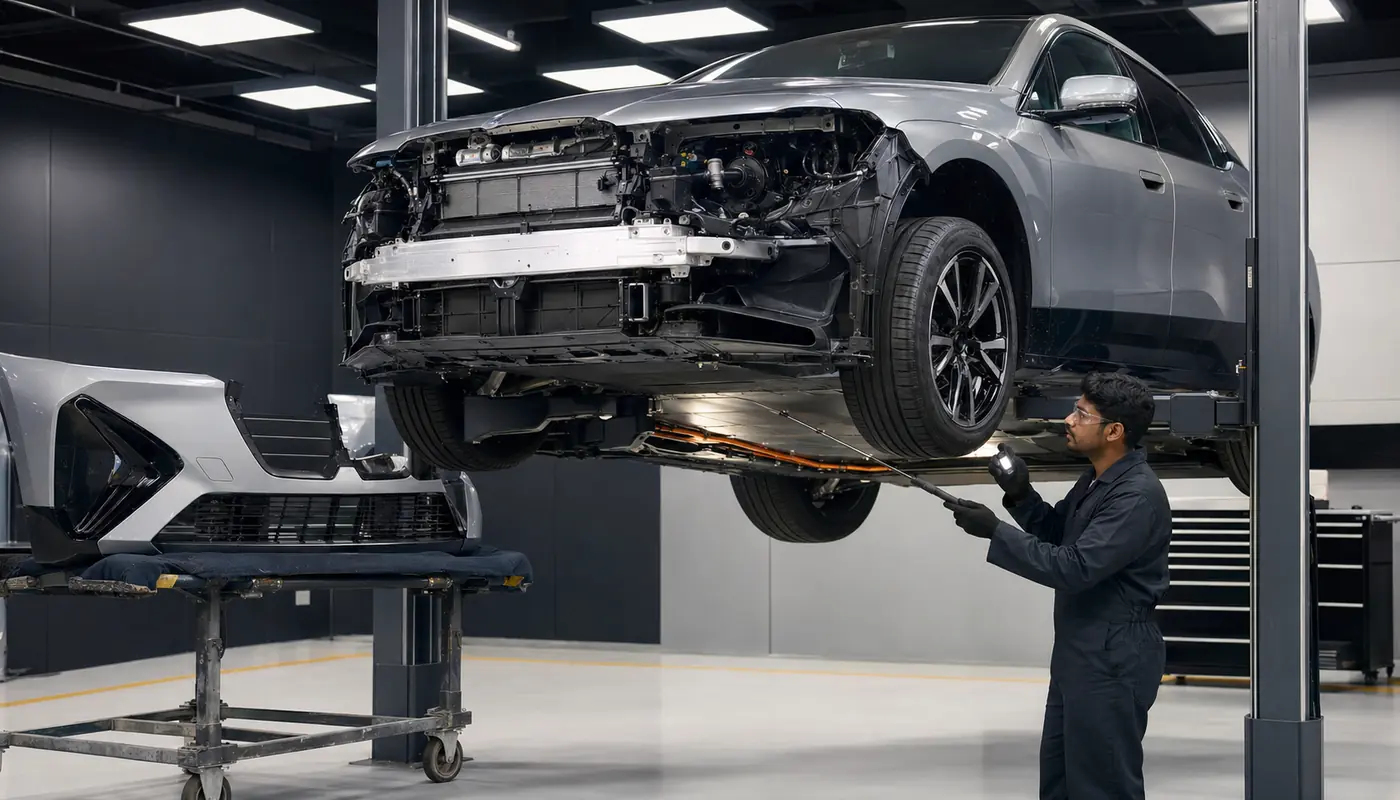
The visible mark is only one point on the damage route
A bumper or arch scuff can remain cosmetic, but a moved guide, changed gap, disturbed wheelhouse or warning message can widen the repair scope.
Wide view before close view
Whole-side and corner photos show impact direction and proportion. Close photos are then used to identify cracks, coating layers and broken attachments.
Wheel and closure clues
Changed wheel position, tyre clearance, steering feel, door effort or tailgate alignment can indicate that the impact reached farther than the painted mark.
Warnings are evidence
Dashboard messages and changed charging, parking or camera behaviour are recorded before codes are cleared or components are moved.
Material and joining rules
Material rules begin before metal correction
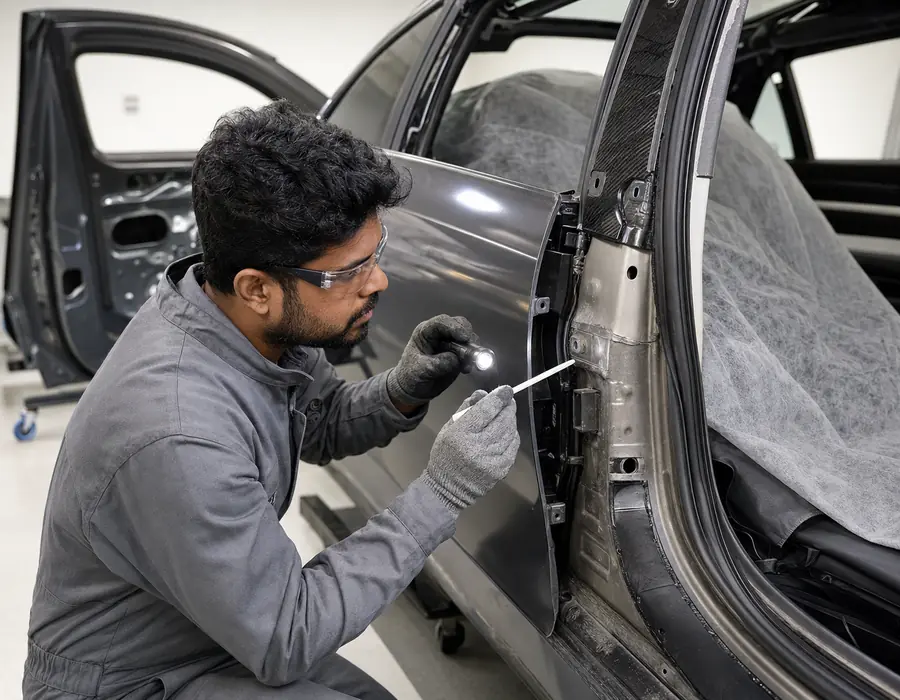
The BMW iX can include steel, aluminium, thermoplastic and composite-related body zones. Appearance alone cannot decide whether a component may be heated, straightened, sectioned or repaired.
Applicable repair information controls the method. Flanges, adhesive, fasteners, weld locations, corrosion protection and cavity treatment remain part of the repair even when they disappear behind trim.
Repair versus replacement
Repair and replacement compete on the complete operation
The decision should consider material state, recoverable shape, access, attachment integrity, finish risk, transferred hardware and the total installed operation.
Repair may make sense when
- The panel retains a stable recoverable shape
- Critical mounts and edges remain serviceable
- The approved material process supports correction
- Access allows the damage to be restored without disproportionate disturbance
- The final finish can be achieved without hiding unresolved geometry
Replacement enters the discussion when
- Material is torn or stretched beyond stable correction
- A critical mounting point is cracked or displaced
- The damage falls inside a restricted repair zone
- Hidden attachment damage makes repair unreliable
- Total repair risk exceeds a suitable replacement route
Sensor geometry
Sensor closure needs geometry as well as diagnostics
A connected camera, parking sensor or radar-related component can still sit on a moved bracket or look through a changed aperture. Clearing a fault code does not prove the physical reference is correct.
Pre-repair records preserve warning and communication status. Physical checks cover bracket position, cover compatibility, wiring, camera view and nearby body geometry. Where a calibration procedure applies, its prerequisites are completed first.
Openings and seals
Closures must agree without forced adjustment
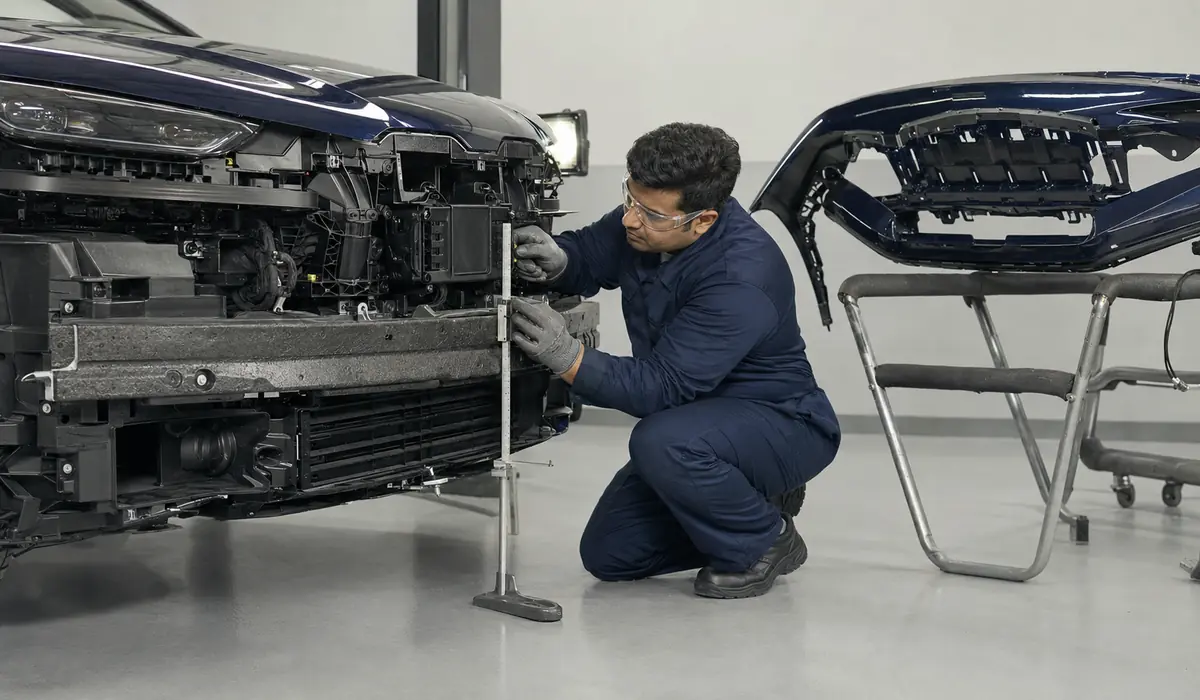
Measure before adjustment
Doors, tailgate, bonnet service access, glass and charging flap are checked as connected geometry. Moving a striker to hide distortion can create wind, water or closing concerns.
Repeat the same checks after repair
Gap width, flushness, effort, seal contact and relevant electrical behaviour are compared with the intake condition after reassembly.
Parts and fitment
Parts accuracy is decided before the spray booth
Identify the exact component
VIN, model year, connector, aperture, fitted camera or sensor package and regional specification all matter.
Trial-fit before paint
Incoming panels, covers and transferred hardware are inspected and trial-fitted where the repair operation permits.
Let supply control the milestone
If a component or single-use fastener is not confirmed, the completion date remains conditional rather than becoming a promise.
Paint and finish
Colour matching is only one layer of the finish
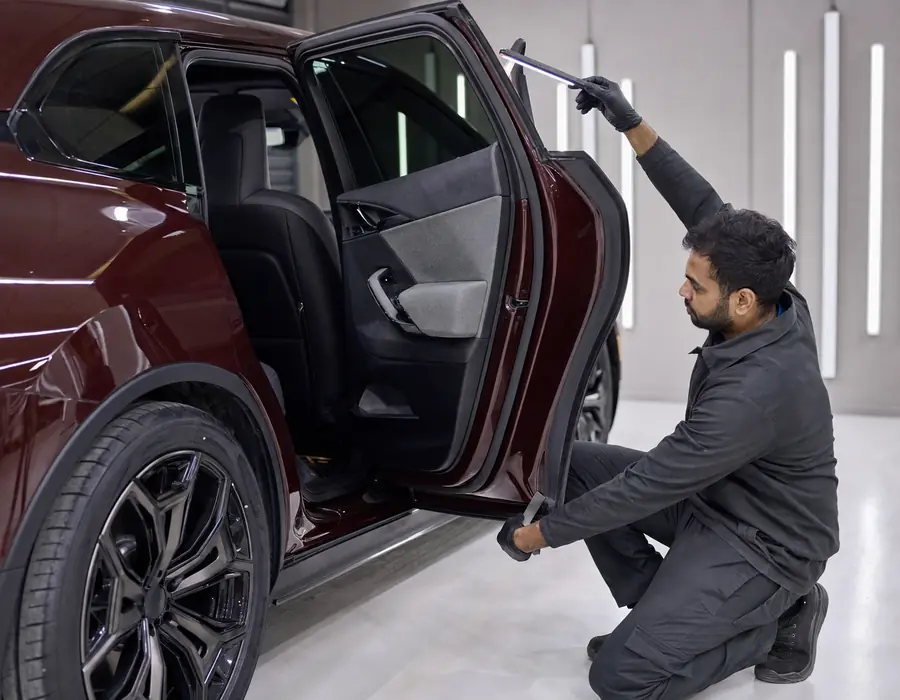
Large clean panels and technical trim make contour, substrate preparation and viewing angle important. Paint code narrows the formula family, but sample comparison and the existing finish decide the final relationship.
Final review covers face colour, side tone, metallic or pearl travel, gloss, texture, edge coverage and masking boundaries. Colour alone cannot sign off a finish when the reflection still breaks.
Controlled workshop sequence
Production gates stop one trade hiding another
Record the vehicle
Document damage, wheel position, gaps, charging area, warnings and previous repair.
Screen safety boundaries
Establish high-voltage, floor, sill and thermal dependencies before normal body operations.
Gain controlled access
Remove only what is needed to inspect mounts, reverse-side deformation and attachments.
Approve repair decisions
Material, geometry, repair-versus-replacement and parts decisions are settled before irreversible work.
Repair, fit and refinish
Structure, panel fit, corrosion protection and trial fit are completed before paint and final reassembly.
Verify the assembled iX
Closures, alignment, warnings, scans, calibration responsibility and finish are checked before collection.
Handover evidence
Handover repeats the evidence captured at intake
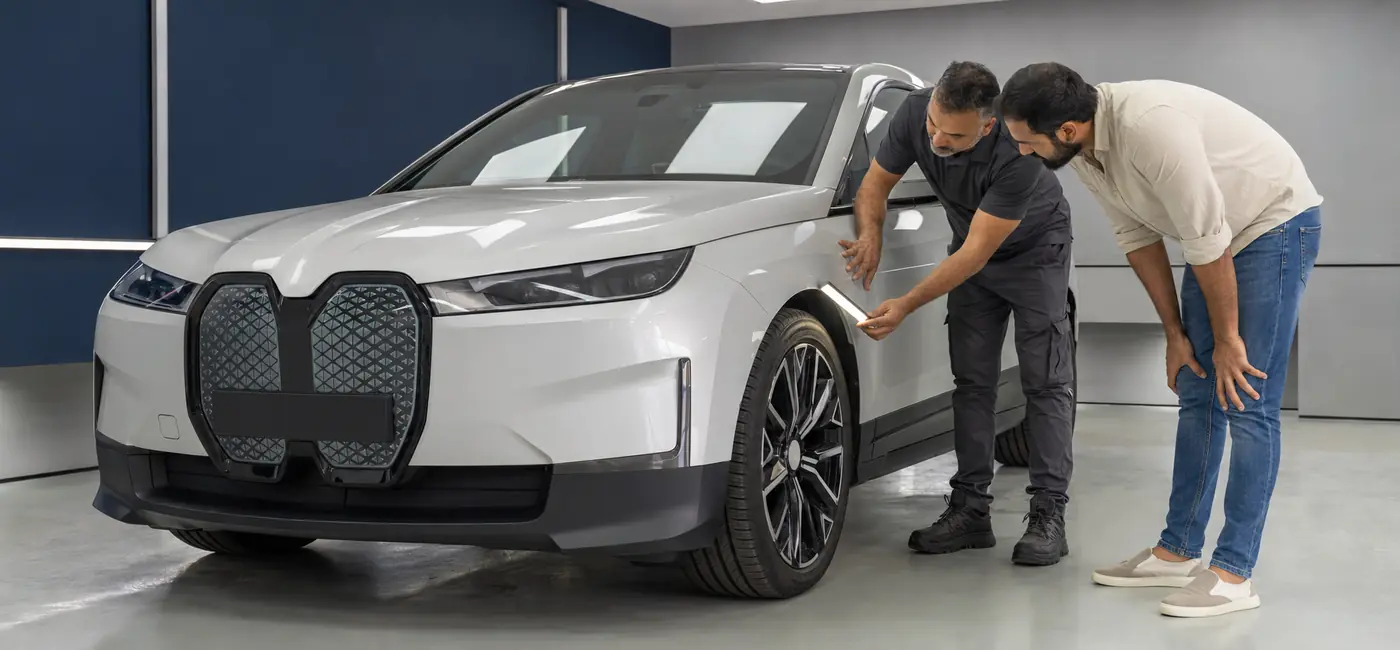
Quality control compares the finished BMW iX with the arrival record. Full-panel reflections, gaps, closures, lamp seating, trim, fasteners, wheels and dashboard status are reviewed again.
Useful records can include hidden findings, material decisions, paint approval, parts identity, alignment, scan and calibration evidence where included. Pre-existing marks and deferred work remain separate.
Indicative planning figures
BMW iX body repair costs depend on the complete scope
These figures are planning ranges, not final online quotations. Hidden findings, material, access, parts, paint process, wheel geometry and high-voltage dependencies can change the amount.
| Typical scope | Indicative range |
|---|---|
| Minor accessible dent | AED 450 to 1,100 |
| Bumper repair and paint | AED 950 to 2,200 |
| Single-panel repair and refinish | AED 1,200 to 3,200 |
| Panel replacement with transfers | AED 3,500 to 10,000+ |
| Sill, floor or EV-adjacent impact | Measured after safety screening |
A written estimate should separate confirmed work from inspection-dependent items and state which alignment, scan, calibration or function checks are included.
BMW iX body repair questions
Frequently asked questions
Can a small iX body dent be repaired without repainting?
Sometimes. Paint condition, dent depth, access, edge proximity and material determine whether paintless dent repair is suitable.
Does sill damage always mean battery damage?
No. Sill or floor contact can involve several layers and systems. Inspection determines whether the battery enclosure or another high-voltage boundary is affected.
Can BMW iX body panels be heated and straightened like ordinary steel?
Not automatically. Material identity and the applicable repair procedure determine whether heating, pulling, sectioning or replacement is permitted.
Does every sensor-area repair require calibration?
No. The requirement depends on fitted equipment, repair event and applicable procedure. Physical geometry and prerequisites must be correct first.
How long does BMW iX body repair take?
Timing depends on damage depth, safety screening, dismantling, material decisions, parts, paint, alignment, diagnostics and calibration where applicable.
Can photos provide the final price?
Photos help with triage, but hidden mounts, material condition, previous repair and EV-adjacent dependencies can change the final scope after inspection.
Send the evidence that defines this iX repair
Include sill and floor contact, charging area, affected camera views, wheel positions and warning messages. Mention any change in steering, closure, parking response, charging or warning status.