
Independent body and paint assessment in Al Quoz 4
Cadillac Body Shop Dubai
A scuffed Cadillac bumper is not only a paint question. The same area may carry parking sensors, radar-related hardware, lamp mounts, grilles, active shutters or trim whose position changes what the vehicle can see and how the panel should fit. Our Cadillac body repair approach starts with the impact path, the exact vehicle configuration and the condition of every neighbouring component before cosmetic work is approved.
The first repair decision sits behind the visible mark

Cadillac vehicles in Dubai range from long luxury saloons and compact crossovers to large SUVs with broad bumpers, powered closures and substantial brightwork. The shape of the vehicle changes how collision force travels. A corner impact on an Escalade can disturb a bumper guide, wheel-arch edge and lamp relationship, while a side contact on a CT5 may interrupt a long reflection across two doors even when only one panel carries obvious paint damage.
We therefore inspect more than the photographed scratch. Panel gaps, lamp seating, grille alignment, wheel-arch liners, lower shields and the feel of a door, bonnet or tailgate are recorded before a repair method is selected. Where steering, suspension, airbag, cooling or structural damage may be involved, the vehicle should not be assumed safe to drive until it has been inspected.
Cadillac perimeter check
The practical question is whether impact, removal or refinishing can affect a component that depends on position. Equipment differs by model year and trim, so the VIN and the fitted hardware guide the check rather than a generic Cadillac list.
- Front zone including grille, lamps, sensor faces, lower air guides and undertrays
- Corner zone including bumper retainers, wheel-arch trim and liner attachments
- Side zone including mirrors, door handles, bright mouldings and closure gaps
- Rear zone including camera view, parking sensors, tailgate fit and lamp mounts
Visible finish
Scratch depth, dent shape, colour, metallic orientation and clear-coat condition.
Hidden attachment
Tabs, brackets, clips, absorbers and supports that hold the outer surface in position.
Electronic context
Warnings, camera images and assistance features that changed after the incident.
What we ask before recommending repair or replacement
Identify the exact vehicle
Model, year, VIN and trim help distinguish a petrol SUV, performance derivative or EV and reveal which lamps, cameras, sensors and exterior packages are actually fitted.
Trace the contact
We compare the point of contact with the deformation, broken fasteners, disturbed seams and marks on adjacent pieces. This prevents a shallow surface repair from concealing a fit problem.
Test access and material
The technician considers panel material, backside access, crease location, previous filler or paint, corrosion protection and whether heat or pulling would conflict with the component’s repair limits.
Define the finish area
Paint code is only a starting reference. Existing fade, metallic or pearl effect, viewing angle and neighbouring-panel colour determine whether the job needs a local repair, full panel refinish or controlled blend.
Plan reassembly and checks
Removed parts, one-time fasteners, scans, aiming, calibration, wheel alignment or road verification are written into the scope when the damage and vehicle configuration require them.
Broad Cadillac surfaces make shape errors easy to see
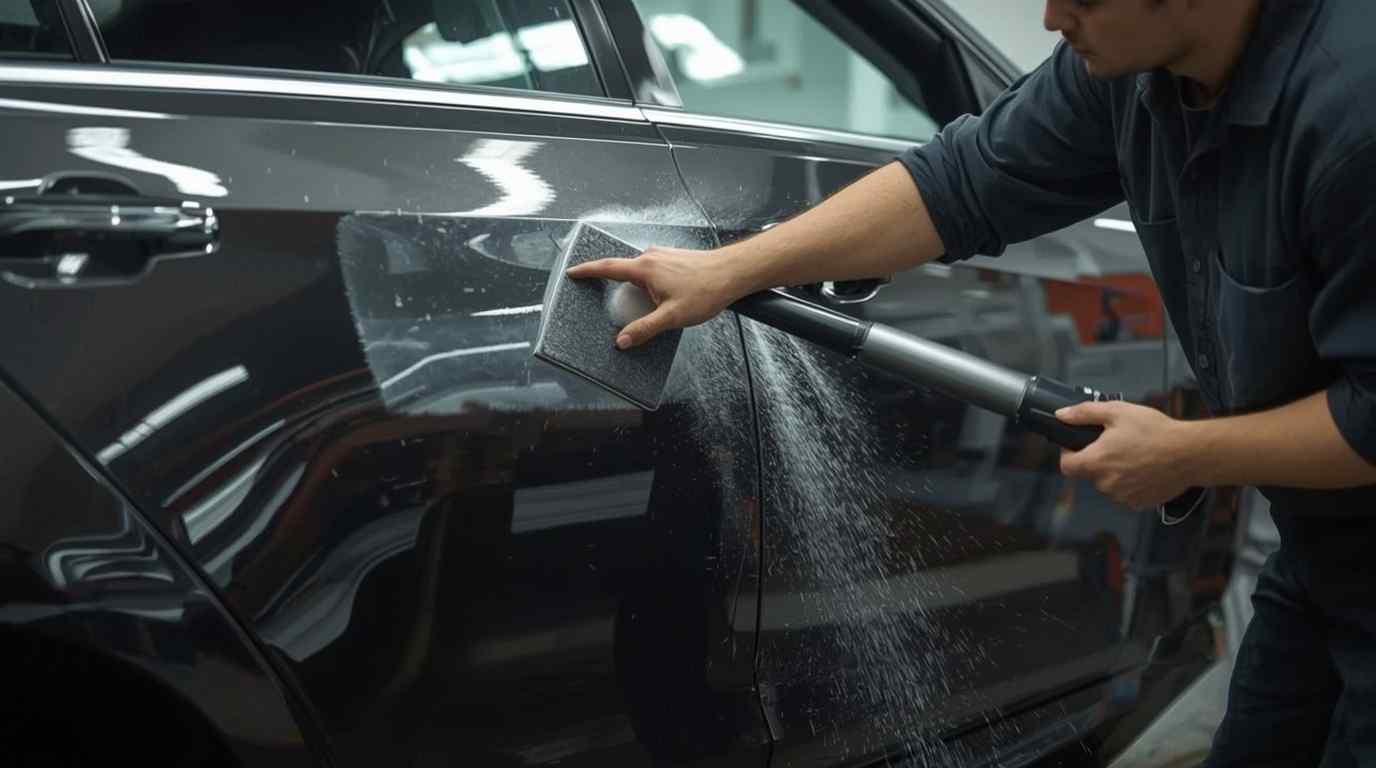
Large doors, bonnets, tailgates and quarter panels show repair quality through reflection continuity. A panel can be shiny yet still show a low spot, a hard filler edge or an orange-peel texture that differs from the surrounding factory finish. On dark colours, long workshop lights and outdoor daylight often reveal these defects more clearly than a close inspection under one lamp.
Our bodywork sequence restores the metal or plastic contour before primer is used to refine the surface. The repaired area is blocked, checked from several angles and only then moved into the paint process. This order matters because paint cannot hide inaccurate geometry. It normally magnifies it.
Door and quarter reflections
Long horizontal highlights should travel through repaired and untouched areas without an unexplained wave or abrupt change.
Edges and character lines
Press lines must stay crisp without becoming unnaturally sharp, flat or heavy with material.
Closure relationships
A door, bonnet or tailgate should sit evenly and operate consistently without being forced to disguise a misaligned opening.
When a Cadillac bumper can be repaired

Minor scuffs, isolated paint loss, shallow deformation and selected cracks may be repairable when the bumper skin retains sound material, stable mounting points and recoverable shape. The decision changes if the damage crosses a sensor aperture, runs through a heavily loaded mounting area or accompanies distortion in the reinforcement and surrounding body structure.
| Finding | Repair may remain practical | Replacement discussion becomes sensible |
|---|---|---|
| Surface abrasion | Damage is limited to coating layers and the plastic contour is stable. | Material is deeply gouged, thinned or previously repaired beyond a reliable base. |
| Crack or split | Plastic type is identifiable and the crack is accessible away from a critical mount. | Several fractures meet, a sensor opening is distorted or a structural tab is missing. |
| Corner displacement | Retainers and side guides can be renewed and the cover returns to designed position. | Reinforcement, brackets or adjacent metal have shifted and no longer support correct fit. |
| Sensor area | Location and surface meet the relevant component requirements after correct refinishing. | Repair would alter thickness, angle, aperture or mounting stability in the sensing zone. |
Paint matching is judged on the vehicle, not on a screen
Cadillac finishes can include solid, metallic, pearl and multi-layer effects. A digital reading and paint code help create the formula, but spray-out cards, variant selection and comparison beside the vehicle are what show whether hue, value, flop and metallic texture behave correctly. The technician also considers previous repainting because an old repair may already differ from the factory standard.
A convincing match is more than colour. Gloss, texture, blend transition, edge cleanliness and the absence of dry spray, dust nibs, runs or masking lines all affect how the repaired panel reads beside original paint.
Preparation and application take place as controlled stages. Parts that should not carry paint are removed or protected, the substrate is isolated correctly, basecoat is applied with attention to orientation, and clear coat is cured before refinement. Polishing is limited to what the new finish needs rather than used to conceal uneven application.
EV and high-voltage considerations change the work plan
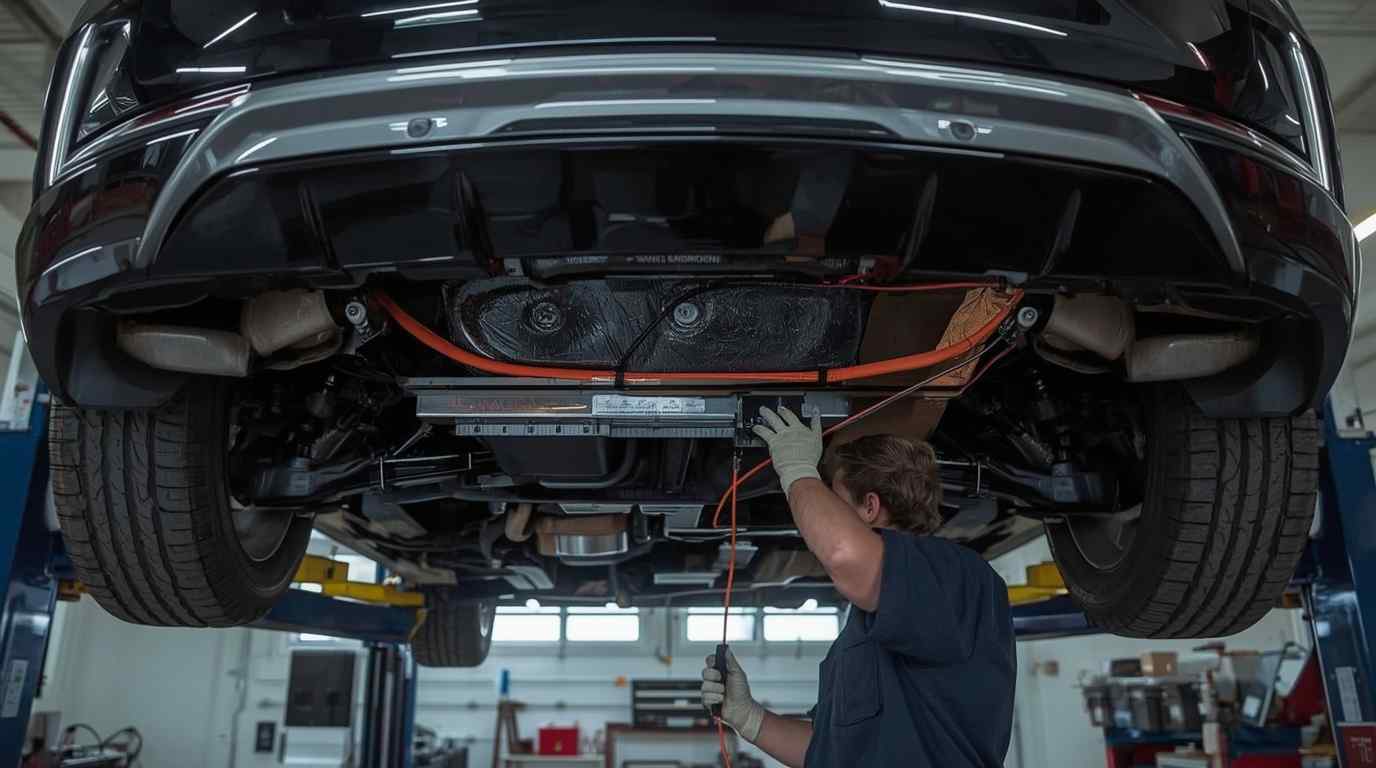
Cadillac’s electric models add high-voltage and underbody considerations that must be separated from ordinary cosmetic repair. A low side or floor impact, damaged charging-area component, battery warning, coolant loss or restraint event requires an appropriate safety path before sanding, welding, pulling or heat is considered. A photograph cannot clear a high-voltage concern.
The repair plan should identify safe isolation requirements, lifting points, restricted heat zones, inspection of the battery enclosure and whether a qualified diagnostic or manufacturer procedure is needed. We do not present cosmetic appearance as proof that the electrical or structural system is unaffected.
Parts planning prevents an incomplete estimate
A Cadillac quotation can change after trim removal if hidden brackets, absorbers, guides, seals or fasteners are damaged. The VIN helps distinguish visually similar parts, but availability and supersession still need confirmation. We separate repair labour, refinishing, required replacement parts and post-repair operations so the owner can see why the scope moved.
Reusable after inspection
Undamaged trim or fittings may return only when clips, finish and mounting integrity remain suitable.
Replace for fit
A low-cost guide or retainer can matter more than filler when it controls a bumper corner or lamp gap.
Order by identity
VIN, build date, option package and side-specific details reduce the risk of ordering a part that looks right but fits differently.
A useful estimate records uncertainty rather than hiding it
Before disassembly, the quotation should distinguish confirmed visible work from items that need access to verify. The scope may include dent repair, panel correction, bumper repair, component replacement, paint preparation, blending, wheel alignment, diagnostics or calibration. We do not publish a generic Cadillac price because model size, material, damage depth, parts and electronic operations can change the total substantially.
For an insurance repair, bring the accident report, claim details and insurer instructions you already have. For a cash repair, clear photographs and the VIN can help us prepare the inspection, but the final quotation follows physical assessment. Hidden damage discovered after removal should be photographed and explained before additional work proceeds.
The repair may connect to our accident repair service, controlled car painting process or the wider body repair scope, depending on what the inspection confirms.
Handover evidence should match the approved work
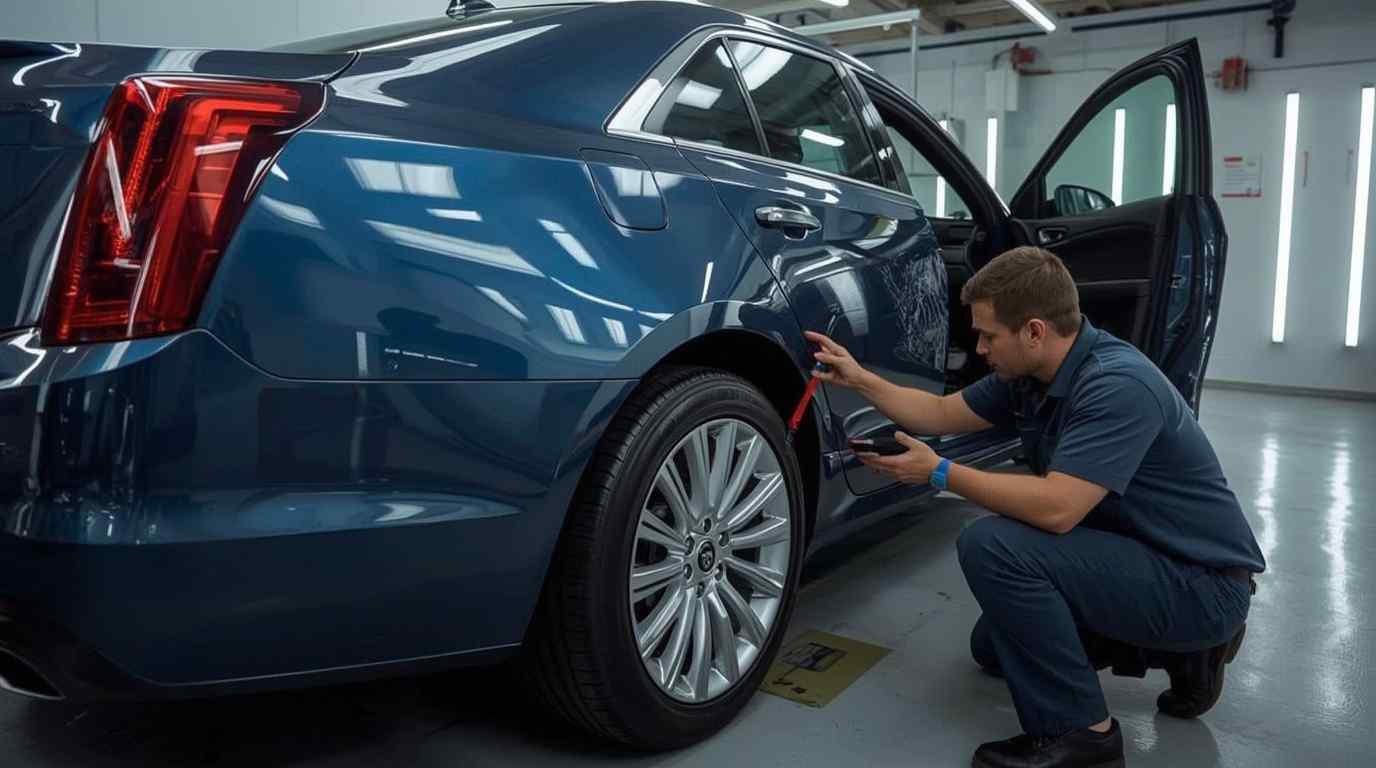
At completion, the repaired surfaces are checked clean and dry under useful lighting. Panel gaps, closures, trim seating, lamp fit and the relevant warning status are reviewed against the recorded scope. Where a scan, calibration, alignment or other specialist check was required, its completion should be documented rather than implied by a polished panel.
The owner receives aftercare relevant to the paint system and work performed. Fresh paint should not be subjected to aggressive polishing, harsh chemicals or adhesive products before the coating has reached the condition advised for that repair. Any remaining limitation, unrelated warning or deferred item should be written clearly at handover.
Cadillac body style changes the inspection priority
An Escalade or XT6 presents broad closures, tall bumper corners and long wheel-arch relationships. A low-speed rear contact can reach powered-tailgate fit, lamp seating and the reinforcement beneath a cover that has largely returned to shape. A CT4 or CT5 places more visual emphasis on low beltlines, long door reflections and compact bumper-to-wing gaps. A Lyriq adds high-voltage floor context and a visually integrated front surface where sensing and cooling hardware must be identified before refinishing.
These are inspection priorities, not fixed defect lists. Model year, wheelbase, trim and market specification can change materials and exterior equipment. The VIN and the vehicle in the workshop take precedence over a photograph or generic online diagram. That discipline also prevents a part from being ordered solely because it shares the correct model name.
Large SUV
Give extra attention to powered closures, bumper supports, arch trim, steps, towing-related pieces and the way a tall side panel reflects light.
Luxury saloon
Read door and quarter geometry across a long horizontal highlight; inspect low front splitters and lamp relationships after kerb contact.
Electric crossover
Separate outer cosmetic work from underbody, cooling, charging-area and high-voltage questions before ordinary body operations begin.
Insurance and cash repairs need the same technical baseline
An insurer-approved scope and a customer-funded scope may follow different authorisation routes, yet neither changes the material, geometry or safety requirements of the vehicle. The opening record should contain the same useful facts: identity, impact location, visible and suspected damage, warning status, dismantling boundary and the verification needed after assembly. The party paying for the repair should not determine whether a broken mounting bracket is ignored.
For an insurance file, provide the accident report and claim instructions available to you. We can help explain the workshop estimate and separate confirmed damage from supplementary findings after dismantling. We do not guarantee what an insurer will approve, and we do not present a commercial discussion as technical evidence. For a cash repair, the owner receives the same explanation of why repair, replacement, blending, parts or calibration are included.
A strong approval record protects both sides. It states what was accepted, which items remained conditional, who approved a change and what evidence supports the completed work. Where a part is unavailable, any temporary arrangement must be safe, explicit and unrelated to a false claim that the repair is fully finished.
Send the angles that reveal the impact
For a useful first review, photograph the full vehicle corner or side, the damaged area straight on, the panel gaps beside it and any warning shown on the instrument display. Include the model, year, location and whether the vehicle drives, steers and closes normally. We will tell you what can be assessed from the photos and what needs workshop inspection.