
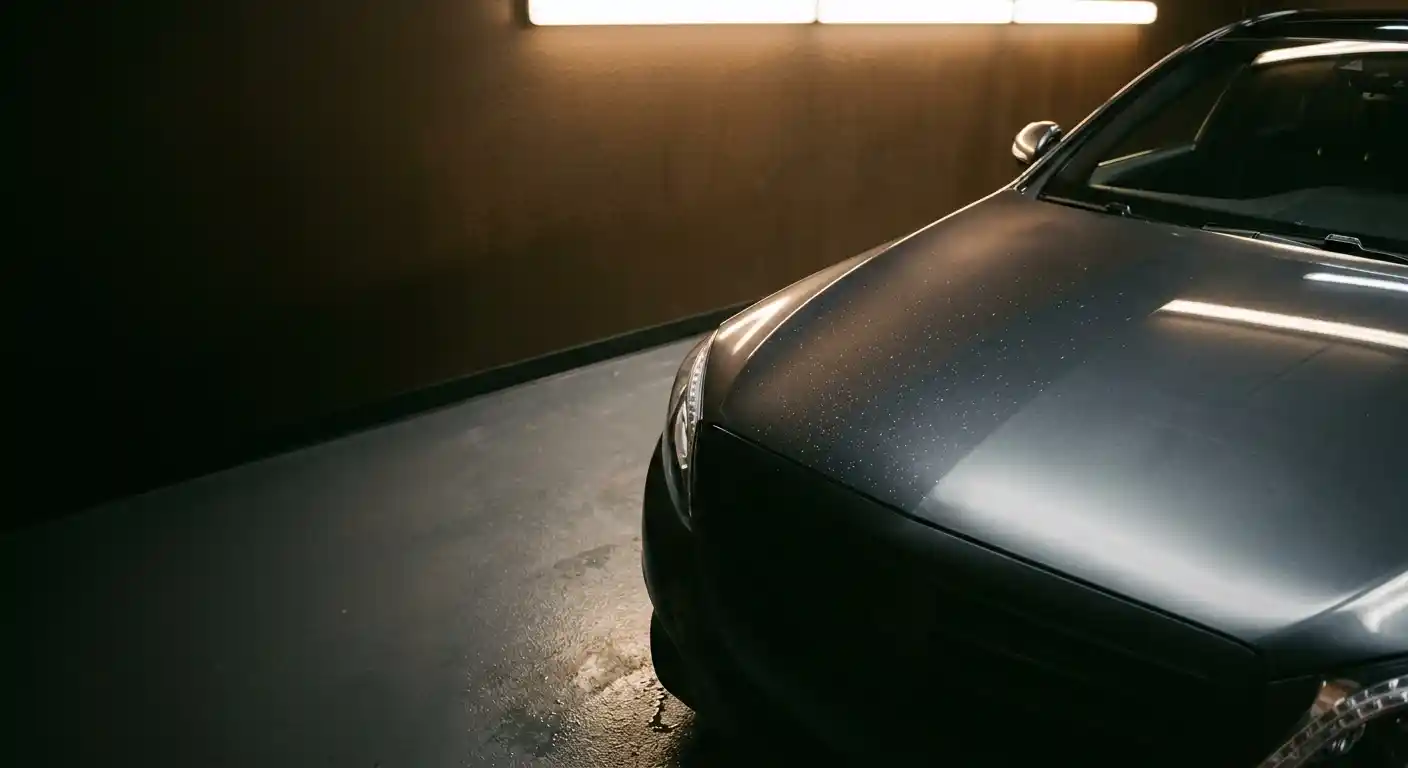
Identify the deposit before touching the finish
Car Overspray Removal Dubai
Overspray can settle as fine paint mist across bodywork, glass, trim and seals. Safe removal begins by identifying the contaminant, affected materials and coating condition, then testing the least aggressive effective method on a controlled area.
Do not start with a strong solvent
The deposit and the surface must be diagnosed together
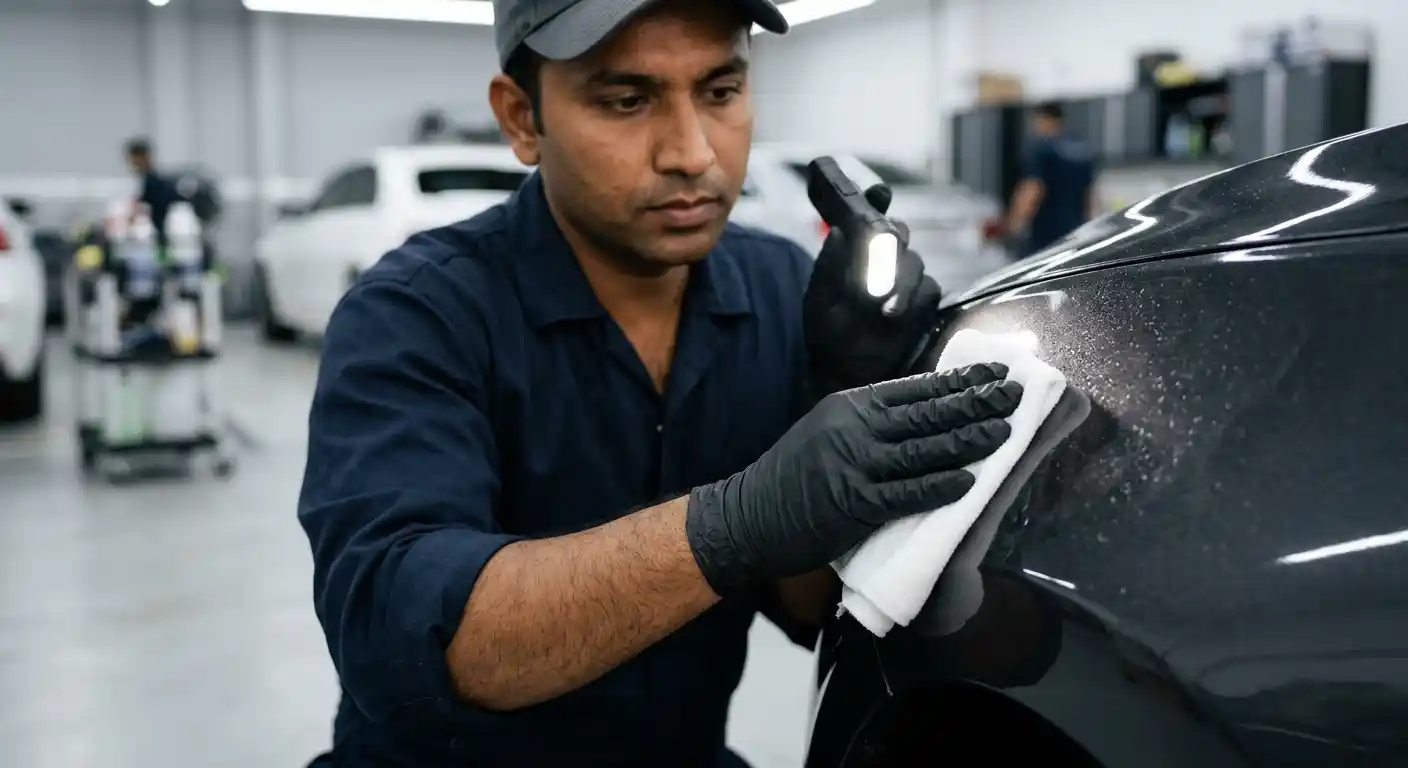
Fresh paint mist, cured industrial coating, road marking material, concrete sealer and workshop contamination do not respond in the same way. A product that softens one deposit can stain trim, swell an edge or dull a repaired panel.
We inspect the car clean and dry under directional light and by touch where safe. The pattern across horizontal panels, glass, mirrors, plastics and protected areas helps show whether the contamination arrived as airborne mist or another deposit.
If overspray sits over unstable paint, peeling clear coat or a previous weak repair, removal can reveal the underlying defect. Those paint issues are then considered within the appropriate car painting scope, not hidden in a decontamination promise.
Contamination map
Four surfaces can need four different methods
One vehicle may require separate treatment plans rather than one chemical wiped over everything.
Painted panels
Clear-coat condition, previous repair, deposit hardness and film thickness guide decontamination and any correction.
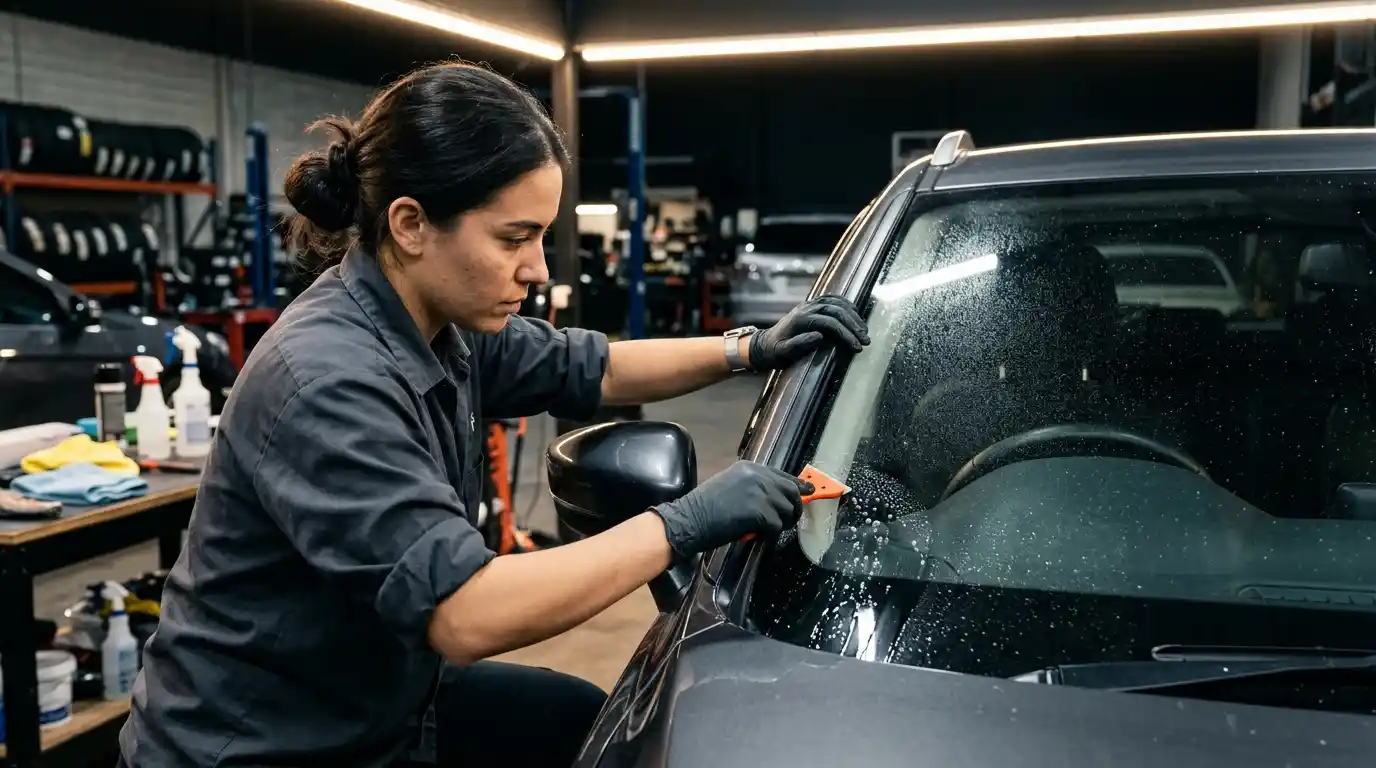
Glass
Suitable glass methods can differ from paint, especially around tint, cameras, seals and delicate printed areas.
Textured plastic
Porous or textured trim can hold pigment and react badly to aggressive solvent or abrasive scrubbing.
Rubber and seals
Weatherstrips and mouldings require compatibility checks because staining or swelling may be irreversible.
Map the full contamination
Send the roof, glass and protected edges too
Overspray distribution across different surfaces helps identify the deposit and realistic scope.
Least aggressive effective method
Test, decontaminate, refine
The technician escalates only when the result and surface condition support the next step.
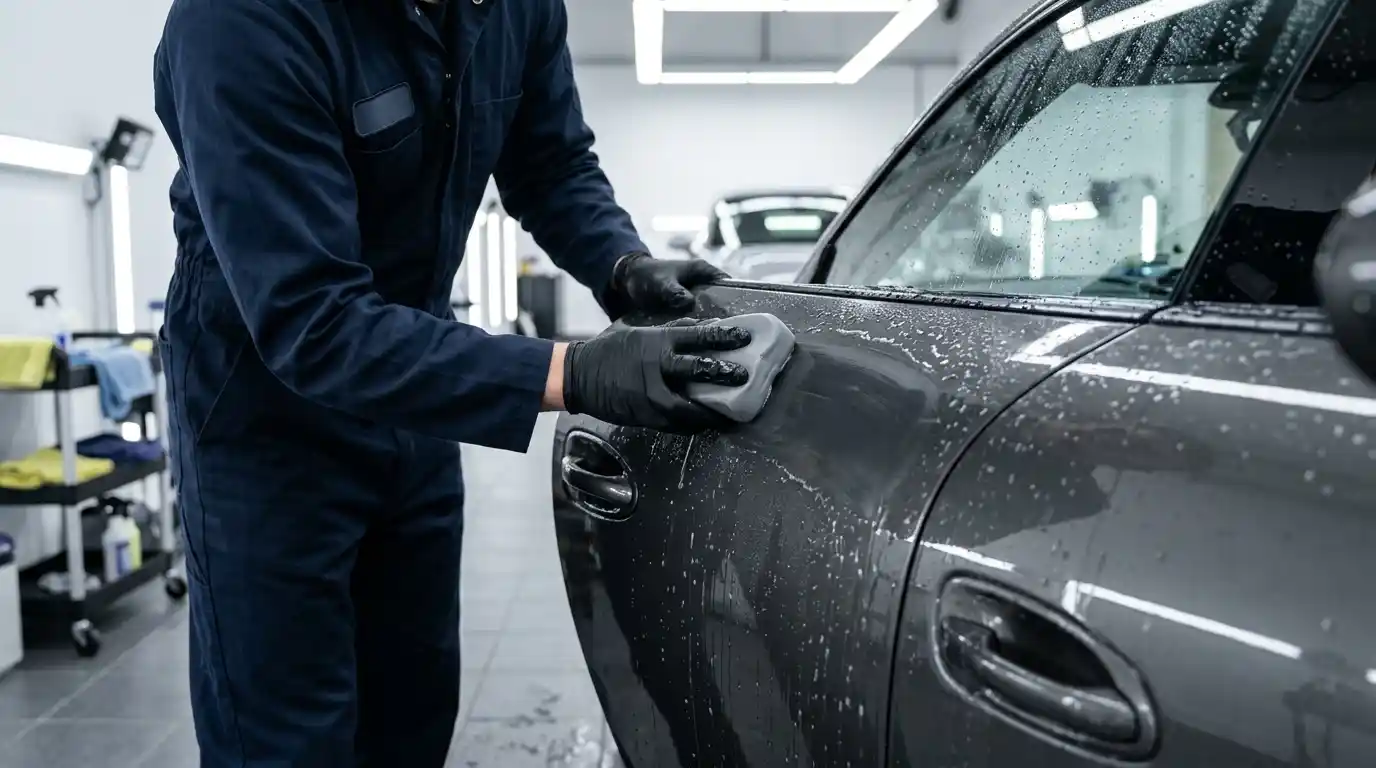
Wash and chemical test
Loose contamination and road film are removed first. A small controlled test identifies whether a paint-safe chemical method can reduce the deposit.
- Work on a cool surface
- Use a documented test spot
- Inspect after rinsing
Mechanical decontamination
Suitable bonded mist may respond to controlled clay or another surface-specific process, with lubrication and frequent inspection.
- Avoid grinding contamination in
- Replace loaded media
- Monitor marring
Paint correction or separate repair
Marring left after safe deposit removal may need controlled polishing. Deep etching or coating failure becomes a paint-repair decision.
- Measure and inspect first
- Preserve clear-coat thickness
- Separate removal from refinishing
Evidence-led removal sequence
One test area sets the direction for the whole car
The method is confirmed before production work spreads across multiple surfaces.
Document
Record the contamination pattern, affected materials, existing defects and any prior removal attempts.
Wash
Remove loose dirt with a controlled wash so grit is not dragged through bonded contamination.
Test
Use a small representative area to compare deposit removal, marring and substrate reaction.
Treat by surface
Work panel by panel and separate paint, glass, plastic, rubber and delicate trim methods.
Refine
Correct suitable paint marring only after contamination is removed and clear-coat condition is understood.
Verify
Inspect under directional light, natural light and touch where appropriate, then document residual defects.
Indicative Dubai planning bands
How much does car overspray removal cost in Dubai?
Pricing depends on vehicle size, deposit type, coverage, curing, trim complexity, previous paint and the correction needed after safe removal. A bonnet-only mist and a fully contaminated SUV are not equivalent.
These are inspection-led planning ranges. Replacement of stained trim, glass work and refinishing are separate when needed. Our guide to car paint defects helps distinguish contamination from coating failure.
Removal without unnecessary clear-coat loss
A clean surface should still be a healthy surface
Avoid the aggressive shortcut
Strong solvent, razor blades on the wrong surface, dry scraping and heavy machine compounding can remove the deposit while creating a second repair problem.
The goal is not merely to make specks disappear. It is to remove contamination while controlling staining, marring, texture change and clear-coat reduction.
Handover under useful light
The vehicle is reviewed across the original contamination pattern, including roof, glass edges, mirrors, recesses and textured trim. Residual defects are identified rather than concealed by dressing.
Aftercare depends on the treatment performed. Protection products are considered only after the surface is clean, stable and free from material that would interfere with bonding.
Common owner questions
Car overspray removal FAQs
Can car paint overspray be removed safely?
Often, yes. The contaminant, curing, affected material and paint condition must be identified before choosing a method.
How much does overspray removal cost in Dubai?
Small local work may plan around AED 250 to AED 600. Several panels can range from AED 600 to AED 1,500, while complete vehicles can exceed AED 1,200.
Will clay remove overspray?
Clay may help with suitable bonded contamination, but it can mar paint and is not appropriate for every deposit or surface.
Can thinner remove paint mist?
Uncontrolled solvent can stain trim, soften coatings or damage previous repairs. A compatibility-tested professional method is safer.
Can overspray be removed from glass?
Often, but glass treatment must consider seals, tint, cameras, printed areas and the exact deposit.
What about textured plastic trim?
Textured plastic can retain pigment and react to solvent or abrasion. It needs a separate test rather than the paint-panel method.
Will the car need polishing afterwards?
Mechanical decontamination can leave marring. Controlled polishing may be recommended after the deposit is removed and paint thickness is considered.
Can overspray damage clear coat?
Some deposits can etch, bond strongly or require a removal process that exposes existing coating weakness. Inspection determines what remains reversible.
Can photos provide a final quote?
Photos show coverage but rarely confirm deposit hardness, previous paint or the safest removal method. A physical test area is normally required.
What should be checked at handover?
Review all originally affected surfaces under useful light, including glass edges, roof, mirrors, recesses, trim and any residual coating defects.

Begin with a controlled test
Arrange car overspray removal in Dubai
We will identify the deposit, inspect the paint and trim, test the least aggressive method and explain the removal and finishing scope.