
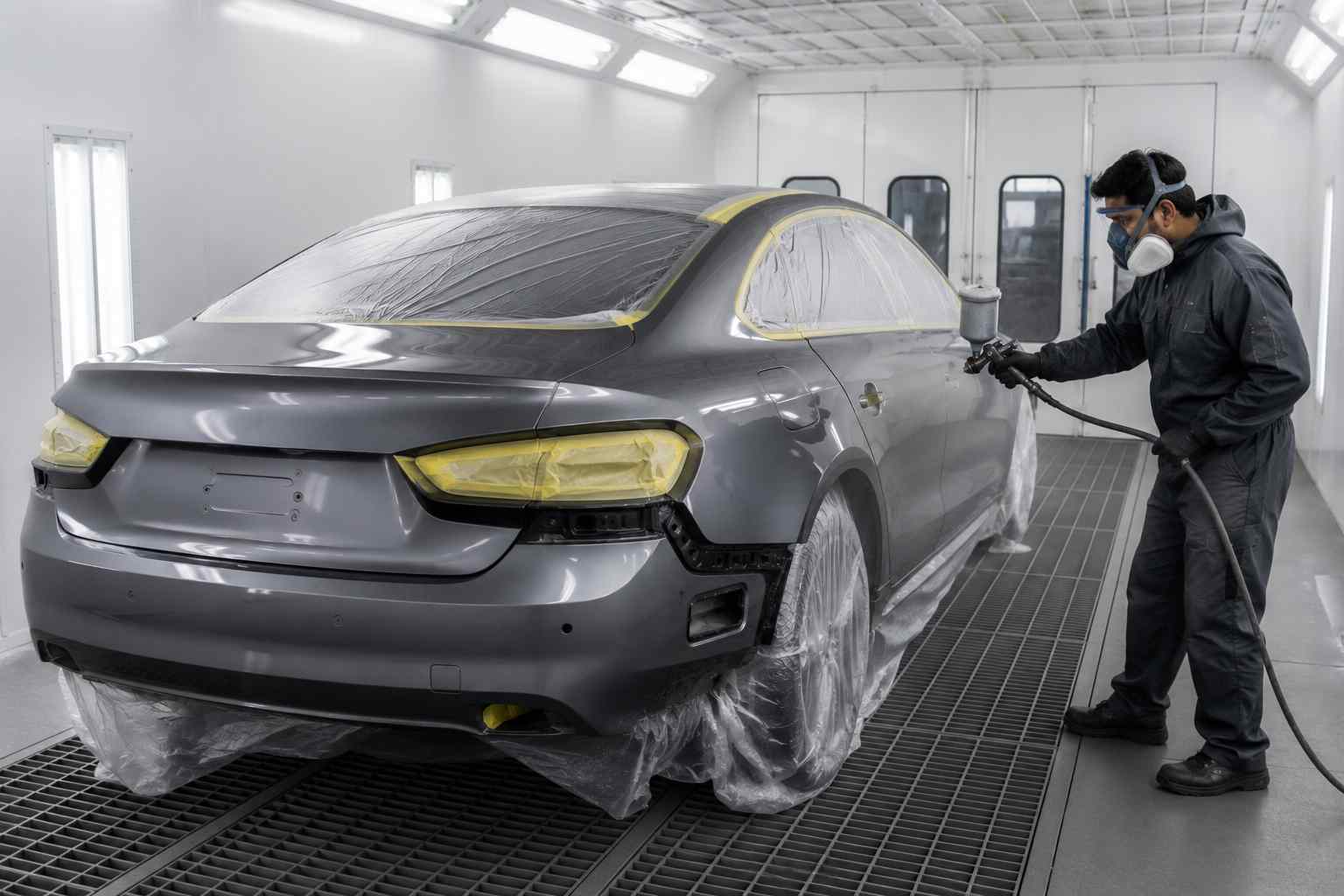
The controlled room behind the visible finish
Car Paint Spray Booth Dubai
A car paint spray booth controls the environment in which primer, basecoat and clear coat are applied and cured. Filtered airflow, cleanliness, temperature, product timing and painter technique work together to reduce contamination and produce a repeatable finish.
The booth cannot rescue weak preparation or a poor colour plan. It protects a correctly prepared repair while each coating layer is applied, flashed and cured according to the chosen paint system.
Follow the air
Five zones decide what lands on the panel
A useful booth explanation begins with movement. Air enters through filters, passes through the working zone, carries suspended overspray away from the repair and exits through further filtration.
Incoming air is filtered before it reaches the vehicle. Damaged, overloaded or poorly seated filters can weaken contamination control.
The plenum and booth design spread air across the work area. Uneven movement can influence overspray travel and working conditions.
The painter controls gun distance, overlap, speed and orientation while the environment supports stable material transfer.
Airflow moves airborne overspray away from the wet film. The booth floor, walls, grilles and masking must not become contamination sources.
Exhaust filtration captures paint particles according to the booth system. Maintenance and safe operation are part of quality, not background housekeeping.
The booth starts outside the booth
Clean preparation prevents dirt from travelling inward
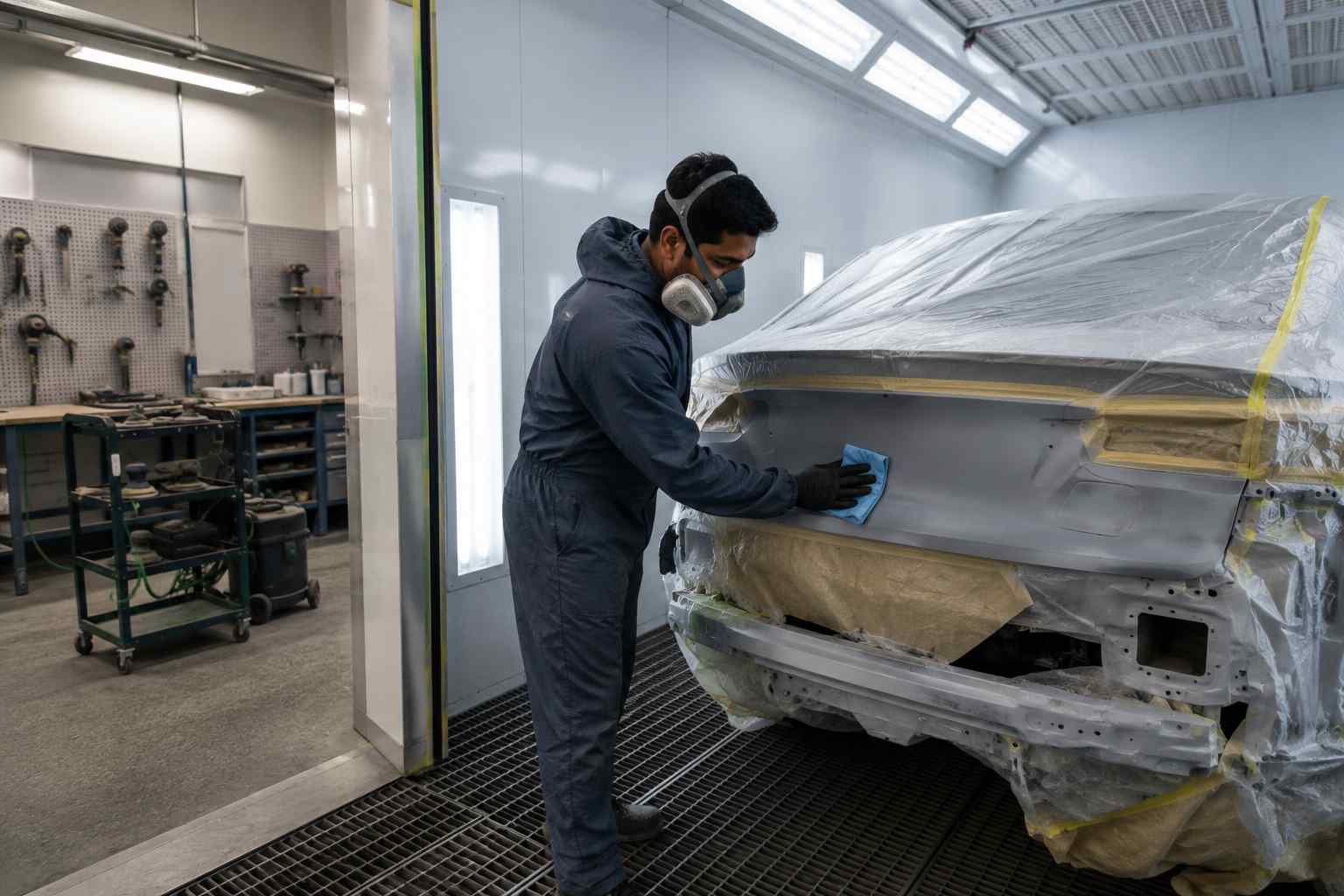
Panel repair, filler shaping, corrosion treatment, sanding and most dusty operations belong in their controlled preparation areas. The vehicle should enter the spray booth only after the repair shape, substrate, masking plan and coating readiness have been checked.
Compressed air cannot be used casually to scatter dust through the workshop. Clothing, hoses, masking paper, wheel covers, panel edges and the vehicle interior can all carry particles. A clean painter and clean equipment matter as much as clean walls.
Before application, the surface is cleaned with compatible products and wiped in a way that does not push residue into edges. Static, silicone, wax, oil, polish, adhesive residue and water can contribute to defects. The car painting service in Dubai therefore connects surface preparation directly to booth quality.
Material timing
Application and flash-off are separate controls
Primer and sealer
The substrate must be compatible, sanded to the specified finish and clean. Sealer shade can influence coverage and colour value on translucent systems.
Basecoat
Coverage is built without flooding edges or trapping solvent. Metallic and pearl orientation may require a controlled final technique after colour coverage is achieved.
Clear coat
Film build, overlap, flash and gun setup affect gloss, flow, texture and durability. Excess material can create runs or solvent retention, while dry application can weaken appearance.
Flash-off is the interval in which volatile components leave one coat before the next operation. It depends on the product, reducer or hardener choice, film thickness, air movement, booth condition and temperature. Rushing the interval can trap solvent. Extending or accelerating it outside product guidance can create adhesion, texture or intercoat problems.
Defect prevention map
Different defects point to different controls
| Observed concern | Possible booth or application factors | What must be reviewed |
|---|---|---|
| Dirt nibs | Contaminated clothing, masking, filters, surfaces, hoses or air movement | Entry cleanliness, tack procedure, booth condition and contamination source |
| Orange peel | Material viscosity, atomisation, gun distance, overlap, temperature or flash | Product setup, spray technique, film build and intended factory texture |
| Dry spray | Excess distance, fast movement, unsuitable setup or overspray landing outside the wet edge | Gun pattern, pressure, reducer, panel sequence and airflow interaction |
| Runs or sags | Heavy film, slow movement, close distance, poor overlap control or excessive reduction | Wet-film application, edge loading, lighting and coat sequence |
| Solvent pop | Heavy coats, short flash, trapped solvent or unsuitable curing progression | Film build, product timing, substrate and bake schedule |
| Fisheyes | Surface or airborne contamination such as oil, silicone or incompatible residue | Cleaning materials, compressed air, polish history and workshop contamination controls |
| Cloudy metallic | Uneven overlap, wet spots, patchy control coat or inconsistent distance | Formula, painter technique, flash, gun pattern and test-panel result |
Our guide to car paint defects and their causes separates visual symptoms that are often confused. Diagnosis should inspect the complete coating stack before blaming the booth or choosing polishing as a universal fix.
Curing is a product process
Heat does not simply make every repair dry faster
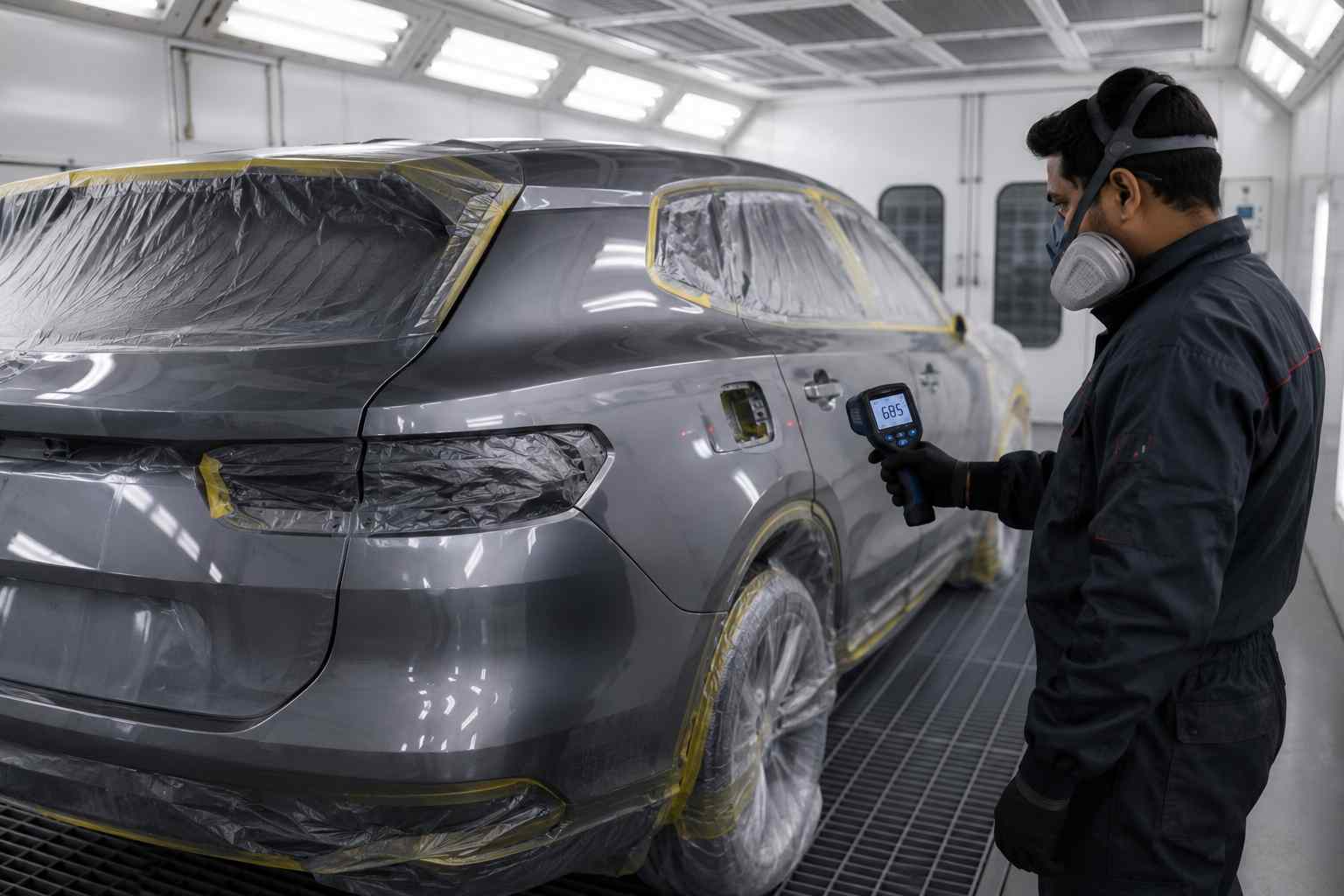
Coatings move through evaporation, chemical reaction and film formation according to the product system. Booth bake or low-bake cycles can support that process, but the selected temperature, ramp, duration and cool-down must suit the coating, substrate and vehicle condition.
Panel temperature can differ from displayed air temperature. Heavy steel, aluminium, plastic bumper covers, composite parts, seam sealers, adhesives and repaired substrates respond differently. Heat-sensitive components and electric-vehicle considerations also require a planned method.
A surface that feels dry may not be ready for assembly, polishing, washing, adhesive trim, protective film or harsh chemical exposure. Handover instructions should explain what the paint can tolerate and when.
The painter’s view
Lighting must reveal coverage, overlap and texture
Booth lighting should let the painter see the wet edge, panel contour and reflected texture without creating blind zones. Dark colours, low-gloss finishes, pearl whites, bumper recesses and horizontal surfaces can each hide different errors.
Colour is also inspected outside the immediate application view. A panel can look uniform under booth lights and show a mismatch or metallic cloudiness in daylight. Final acceptance therefore needs suitable inspection lighting and more than one viewing angle after curing and reassembly.
Confirm masking, surface cleanliness, sealer coverage, panel edges, blend preparation and booth readiness.
Observe coverage and flash without touching or contaminating the film. Correct the process only within the product method.
Review gloss, flow, edge loading, runs and obvious contamination while the repair is still controlled.
Allow the coating to cool and stabilise before deciding which dust correction or polishing is appropriate.
Check colour transitions, texture, panel gaps, trim, lamps, handles and protected openings.
Explain aftercare and record any agreed limitations, future check or protective-film waiting period.
Quality evidence
Ask what the booth process controlled
A photograph of a vehicle inside a booth proves only location. A useful repair record connects surface preparation, paint formula, spray-out approval, coating products, application stages, curing and final inspection.
For larger jobs, the article on paint booth tools and controls provides equipment context. This service page owns the customer decision about how the booth supports a real vehicle repair.
The useful standard
A controlled booth protects a controlled repair
The car paint spray booth should make airflow, cleanliness, visibility, application timing and curing more predictable. It does not replace metal work, sanding accuracy, masking discipline, paint matching or painter judgement. Those inputs must reach the booth in the right condition.
Judge the final repair as a system. Colour, effect, gloss, texture, coverage, edges, reassembly and aftercare should agree with the approved scope. When a finish problem appears, diagnose the stage that produced it before choosing correction.
Booth types and airflow language
Booth design changes air direction, not the need for discipline
Automotive booths may move air from ceiling to floor, diagonally, from one end to another or through another engineered pattern. Terms such as downdraft, semi-downdraft and crossdraft describe the route, but the label alone does not prove filtration condition, airflow balance or finish quality.
A downdraft arrangement can help carry overspray downward and away from the vehicle. A crossdraft arrangement moves air along the vehicle. Each design has loading, masking and maintenance considerations. The important question is whether the installed system operates as intended and supports the coating process being used.
Doors, seals, intake filters, exhaust filters, grilles and pressure relationships need routine attention. Opening the booth unnecessarily during application can disturb control. Parking unrelated items inside turns a controlled room into storage and creates contamination sources.
Vehicle masking strategy
Protect openings without creating hard paint edges
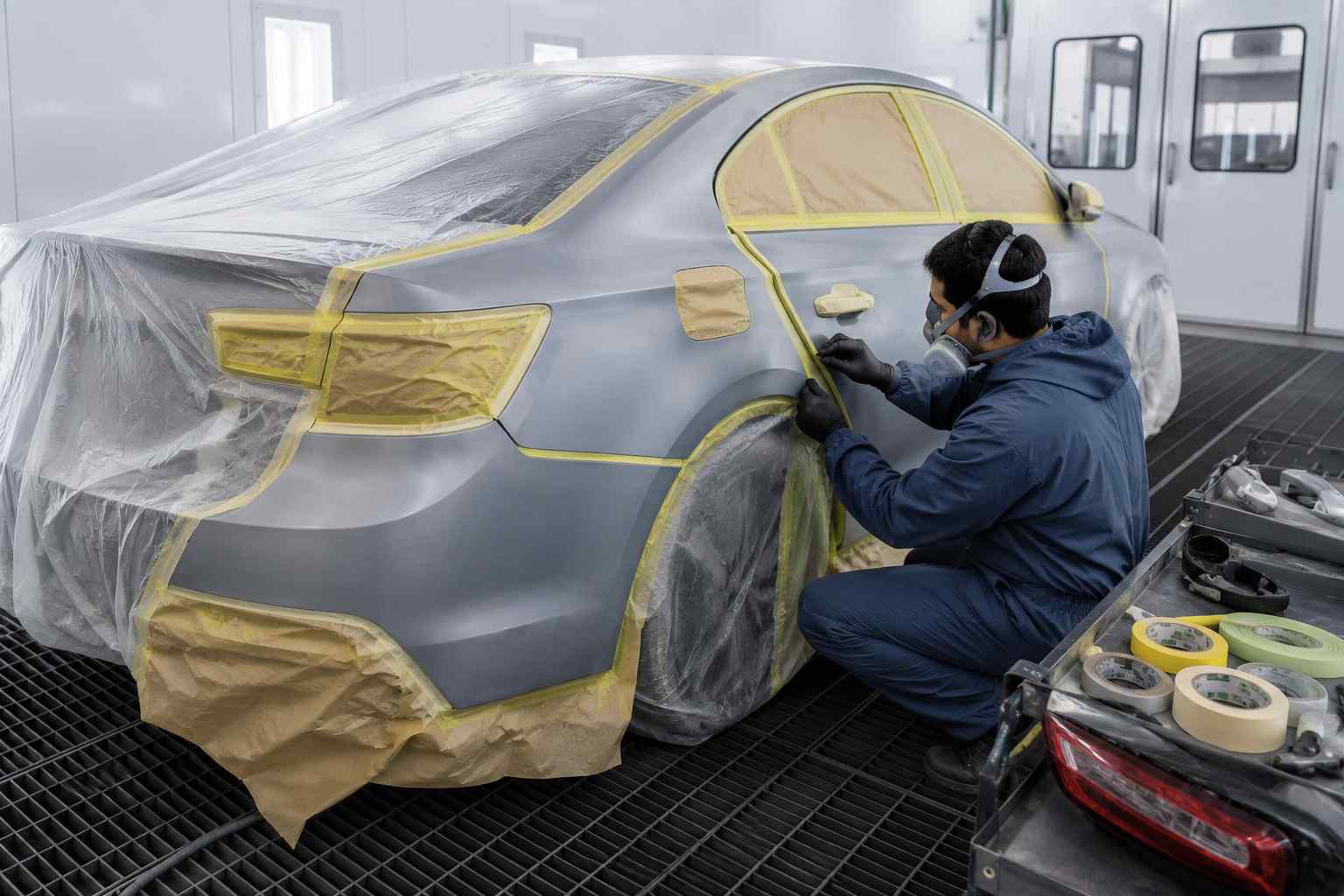
Masking has two jobs. It protects glass, wheels, tyres, interiors, mechanical components and undamaged surfaces from overspray. It also defines where primer, colour and clear coat will end. Poorly placed tape can create a visible ridge, expose an edge or trap dirt near the wet film.
Whenever practical, handles, lamps, mouldings and adjacent components are removed when that produces a cleaner repair and avoids a hard boundary. When removal is not justified, the masking method should follow the panel geometry and coating operation. Foam tape, back masking and aperture protection are chosen for a job, not used as decoration.
Blend panels require preparation beyond the colour area because clear coat and polishing need a stable surface. The painter must know the dismantling and masking plan before material is mixed.
Booth maintenance evidence
A clean room needs a recorded maintenance routine
Filter condition
Intake and exhaust filters are inspected and changed according to condition and system requirements. A filter should not be judged only by how it looks from the working side.
Surface control
Walls, floor, grilles and light covers are cleaned with methods that do not launch old overspray or lint into the next repair.
Air and equipment
Compressed-air quality, hoses, spray guns, mixing tools and protective clothing remain part of the contamination boundary.
The car paint spray booth Dubai customer sees is only the final room in a longer process. A reliable handover connects booth operation to substrate preparation, paint matching, recorded product timing and inspection after reassembly.
Finish correction after curing
Polishing has a narrow and useful job
Minor dust nibs or local texture irregularities may be corrected after the clear coat has cured sufficiently. The technician assesses film condition, sands only where appropriate and refines the area without cutting through clear coat or flattening the panel into an unnatural mirror.
Polishing cannot repair adhesion failure, solvent pop throughout the film, severe runs, fisheye craters, incorrect colour or widespread dry spray. Those defects may require sanding and refinishing after their cause is corrected. Matte and satin finishes generally cannot be polished locally without changing sheen.
A record of what was corrected helps future warranty review. It distinguishes acceptable final refinement from a coating defect that was hidden temporarily by glaze or heavy polishing.
Customer questions about booth work
Ask for process evidence instead of a booth brand
Useful questions include whether dusty preparation is separated from application, how paint and variant are tested, how masking protects openings, which product system is used, how flash and curing are controlled and how the finish is inspected after reassembly.
A large or expensive booth does not guarantee a clean repair. Filter maintenance, contamination control, painter discipline and product timing determine whether the equipment performs its job. Equally, a small local defect does not justify uncontrolled open-workshop spraying.
At collection, check colour transition, gloss, intended texture, dust correction, edges, overspray and refitted trim. If a defect is visible, photograph it in context before polishing or chemical treatment. The correction should target the layer and cause rather than automatically repainting the entire panel.