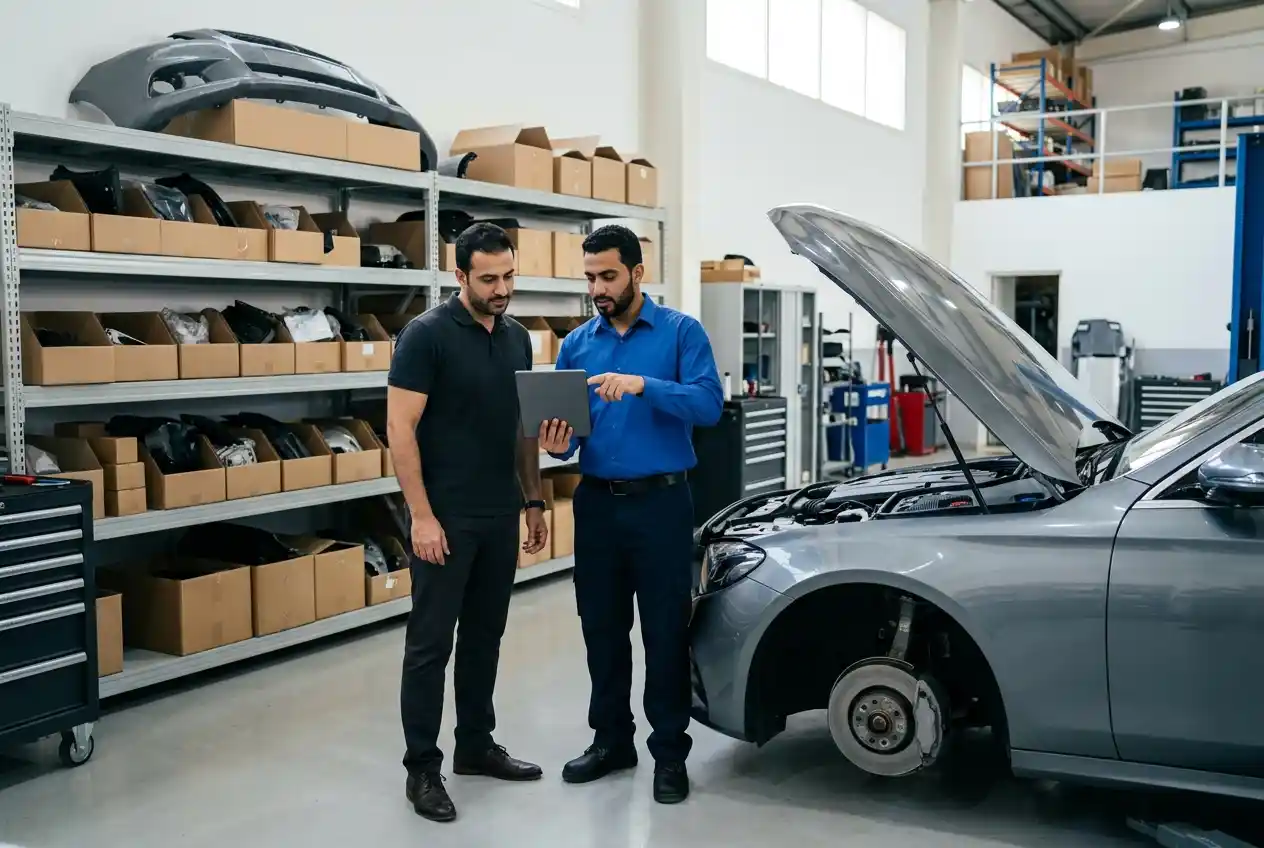
GEELY EMGRAND SEDAN REPAIR PLAN
Geely Emgrand Body Repair Dubai
Geely Emgrand body repair in Dubai should restore the sedan’s long visual lines, boot opening and lamp alignment rather than treating each damaged piece in isolation. We inspect the impact direction, panel relationships and rear-view equipment before deciding what can be repaired, what requires replacement and where paint blending is justified.
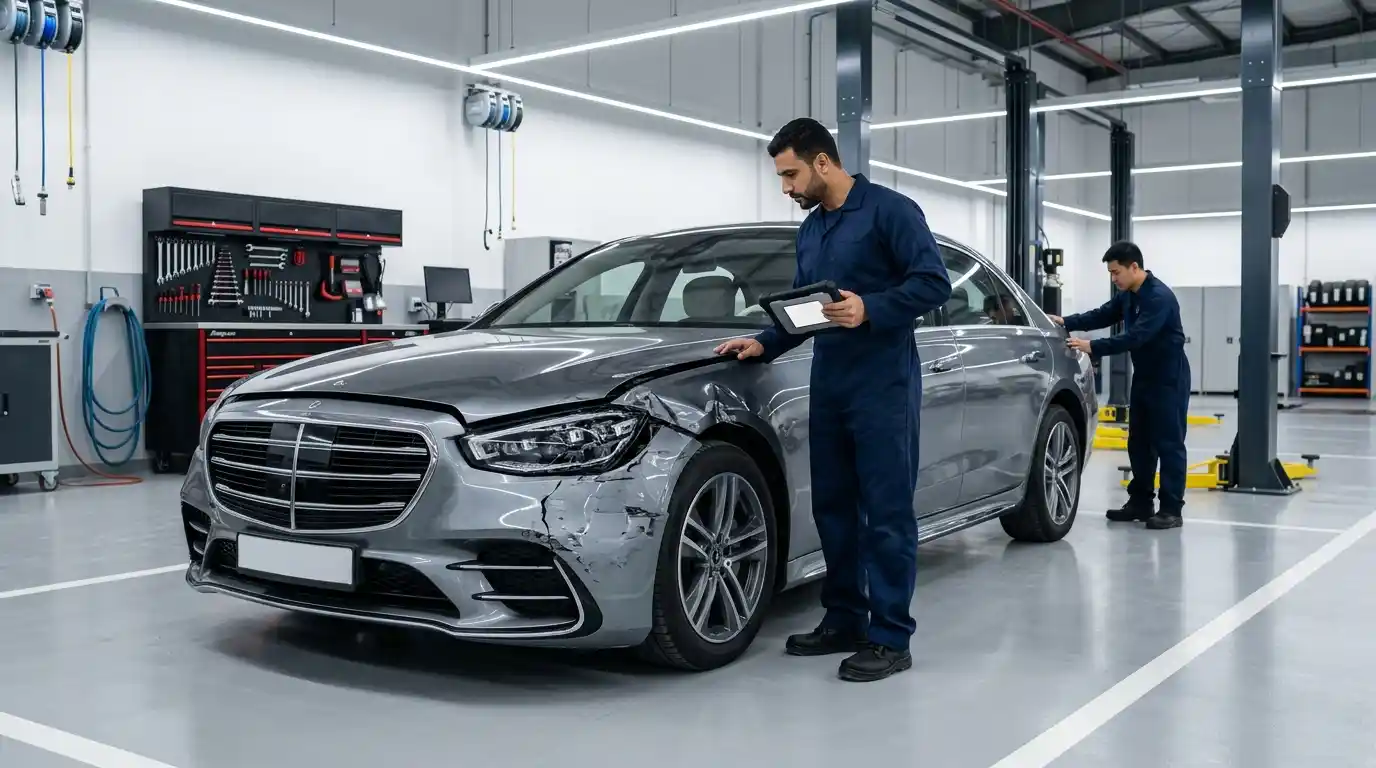
The Emgrand’s broad grille, defined waistline, through-type rear lighting and conventional boot layout create different repair priorities from a compact SUV or electric sedan. Rear damage is judged across the boot lid, lamps, bumper, quarter panels and latch area. Side damage is checked along the doors and the continuous body line. Front-corner damage is traced from the bumper skin through the lamp mounts and wing edge.
Use the sedan lightline as a repair ruler
Front reference
Bonnet-to-wing gaps, grille position, headlamp seating and bumper corners should agree from left to right.
Side reference
The waistline, door gaps, handles and lower sill reveal height or twist that a close-up dent photo may miss.
Rear reference
The lamp band, boot aperture, latch effort and bumper-to-quarter joint provide a continuous alignment check.
Before removal begins, photographs capture these references from straight and oblique angles. That record helps the technician distinguish accident movement from a pre-existing gap and gives the estimator a defensible starting point. It also makes the collection check more useful because the same viewing angles can be repeated after assembly.
Rear-impact assessment is more than a bumper quote
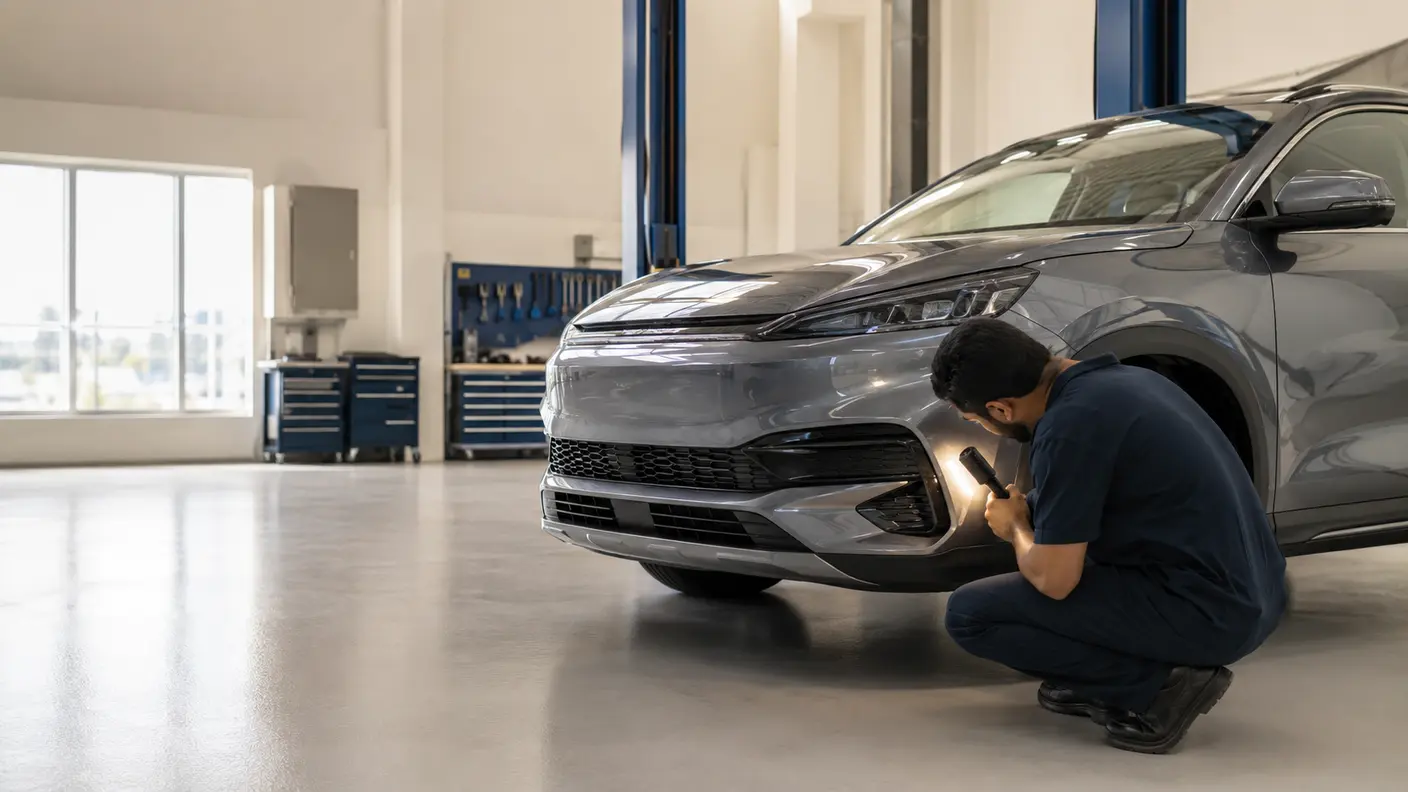
A light parking strike may mark only the painted bumper. A harder contact can break side retainers, deform the absorber, move the reinforcement or transfer load toward the rear panel and boot floor. On a sedan, a small change at the rear panel can affect the latch, lamp position, weather seal and the height of the boot lid.
We compare the boot opening diagonally, inspect the spare-wheel or lower luggage-floor area when access is justified, and look for fresh seam disturbance, water paths and shifted trim. The repair plan notes which findings are visible and which require bumper removal. If the tail lamps bridge the visual width of the car, a slight height difference becomes obvious even when each lamp works normally.
Rear-damage evidence to send
- One complete rear view taken from the centreline.
- Both bumper-to-quarter joints at the same distance.
- The boot gap along the top and both sides.
- A picture of the latch area and the luggage-floor surface.
- The dashboard and rear camera display with the ignition on.
Indicative Emgrand repair costs
These figures are planning ranges drawn from BodyShop.AE’s current Dubai accident-repair cost guide. They are not binding quotations. Paint type, the number of affected panels, replacement parts, hidden attachments and damage discovered after dismantling can change the total.
Small dent or scratch
AED 299 to 1,000
Possible when the panel remains stable and the paint or dent can be corrected locally.
Bumper repair
AED 500 to 2,500
Changes with cracks, clips, retainers, sensor holes, paint and hidden reinforcement damage.
Door or wing
AED 1,000 to 3,000
Depends on the crease, edge condition, strip-down and colour blending required.
A rear-corner job involving bumper, lamp, quarter-panel work and boot alignment can exceed the individual part ranges because several operations overlap. Structural or boot-floor movement begins around AED 2,000 to 5,000+ in the general guide but requires measurement before a realistic Emgrand quotation can be issued. See the published accident repair cost guide for assumptions and exclusions.
Door dents and quarter-panel damage need different access plans
A door offers removable trims and, in some locations, workable rear access. The quarter panel is part of the body shell and usually demands a different method. We inspect the position of the crease relative to door edges, handle recesses, intrusion structures and the wheel opening before suggesting paintless dent repair or conventional metal and paint work.
Paintless dent repair can preserve the original finish when the coating is intact, the metal has not been sharply stretched and safe access exists. It is not a default answer for every shallow-looking dent. A fold at the panel edge, broken paint, prior filler or a restricted reinforcement may make another method more reliable. The useful comparison is explained in our article on paintless dent repair versus panel beating.
Choose the method that restores shape, stability and finish with the least unnecessary disturbance. Do not choose by dent diameter alone.
Emgrand panel decision rule
Repair or replace the boot lid?
Boot-lid repair may be sensible for accessible dents away from the hem, latch and reinforcement. Replacement becomes more likely when the inner and outer skins have separated, the hem is sharply folded, the latch area has moved or the panel cannot sit evenly without force. The price comparison must include paint, transfer of trims and lamps, alignment, corrosion protection and any new badges or clips.
The boot should close with normal effort and release without binding. The seal must contact consistently around the opening. A workshop should not lower the latch simply to hide a distorted aperture because that can create uneven compression, wind noise or water entry. If the opening itself has moved, that movement must be measured and addressed first.
Rear-view camera checks after body work
Geely UAE lists a rear-view camera for the Emgrand. Equipment and trim can vary, so we confirm what is installed on the specific vehicle. Work around the boot lid, rear bumper or camera housing should finish with an image check, clean lens, secure wiring and verification that removed trim has not pinched the harness.
A normal picture on the screen does not prove that the body geometry is correct. The camera check is performed after the boot and bumper sit properly. If another system, sensor or warning is present on the actual car, the repair plan identifies the relevant scan or functional test instead of making a blanket calibration promise.
Paint matching across long sedan panels
Long doors and quarter panels can reveal a shade or metallic-orientation difference across a wide viewing area. The painter identifies the existing finish, checks variant information and prepares a spray-out before applying colour to the car. Adjacent-panel blending is considered when a direct edge-to-edge match is unlikely to remain invisible under daylight and workshop lighting.
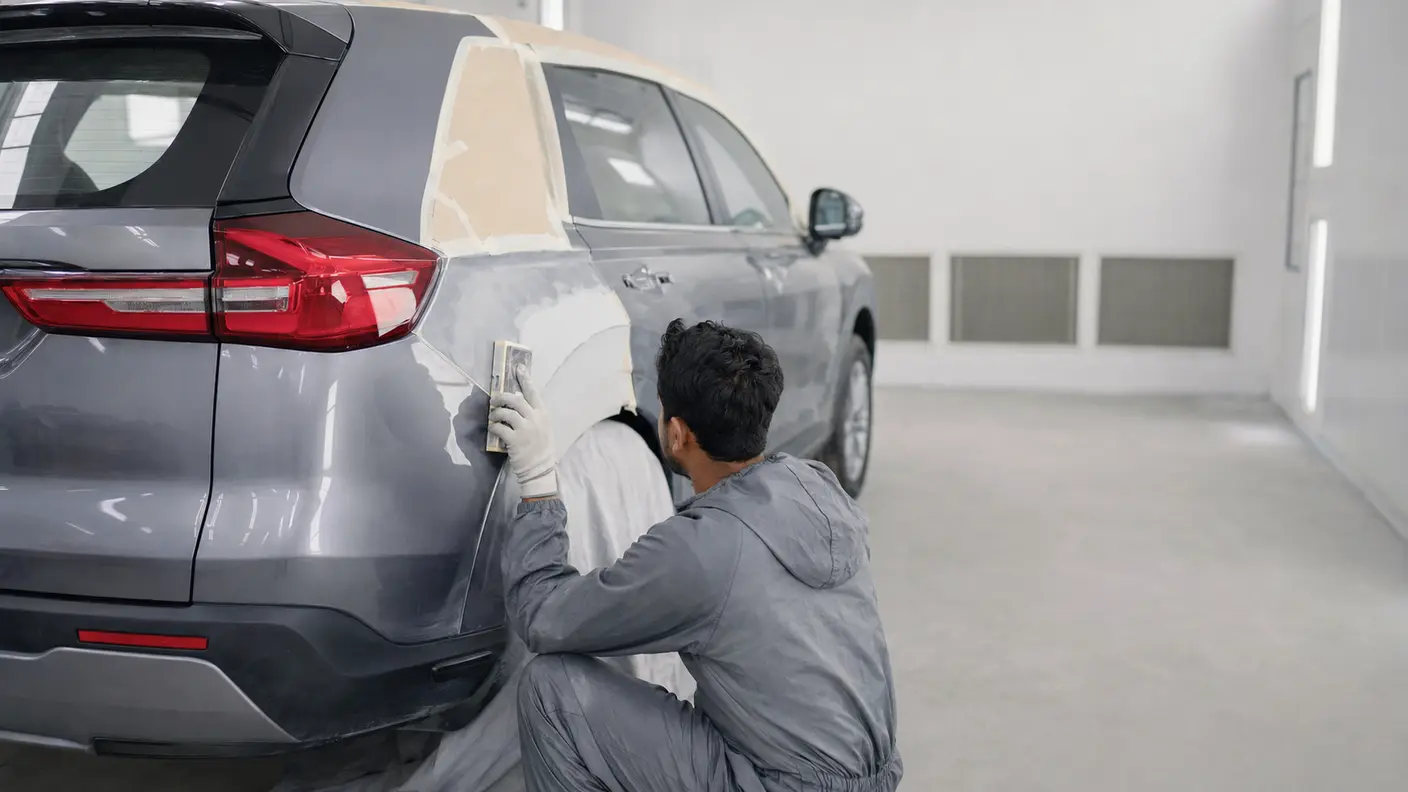
Preparation should protect handles, glass, rubber seals, lamps and interior openings from dust and overspray. After curing, the finish is examined from a shallow angle for ripples, sanding marks, dry spray, heavy texture and abrupt blend edges. Our car painting service page explains the wider refinishing workflow without duplicating the Emgrand-specific alignment guidance here.
The Emgrand repair sequence
- Document the car: record VIN, trim, mileage, warning state, prior repairs and the owner’s incident description.
- Set visual references: photograph the lightline, waistline, gaps, opening and reflection before dismantling.
- Expose likely hidden damage: remove authorised bumper, liner or trim items only where the impact path justifies it.
- Write the method plan: list repair, replacement, paint, alignment, electronics and provisional work separately.
- Restore structure and panels: correct the foundation before fitting outer parts or adjusting closures.
- Prepare and refinish: verify colour, protect openings, cure the coating and finish the surface without masking misalignment.
- Reassemble: use serviceable attachments, route wiring correctly and restore even gaps and normal latch effort.
- Quality-control: review daylight colour, camera view, lamps, seals, warning state and road behaviour where relevant.
If the incident involved more than cosmetic damage, the broader Dubai accident repair service covers insurance support, safety triage and multi-trade collision work. This page owns the model-specific sedan geometry, boot, lamp and panel-finish questions.
Estimate traps to avoid
Bumper-only pricing
A quote may omit retainers, reinforcement, lamps or rear-panel work that becomes visible after removal.
Latch adjustment as a shortcut
Changing the latch can disguise a moved opening without restoring the reason the boot no longer sits evenly.
Colour chosen by code alone
The code identifies a family; variant, ageing and application still need a controlled match on the vehicle.
How to inspect the finished Emgrand
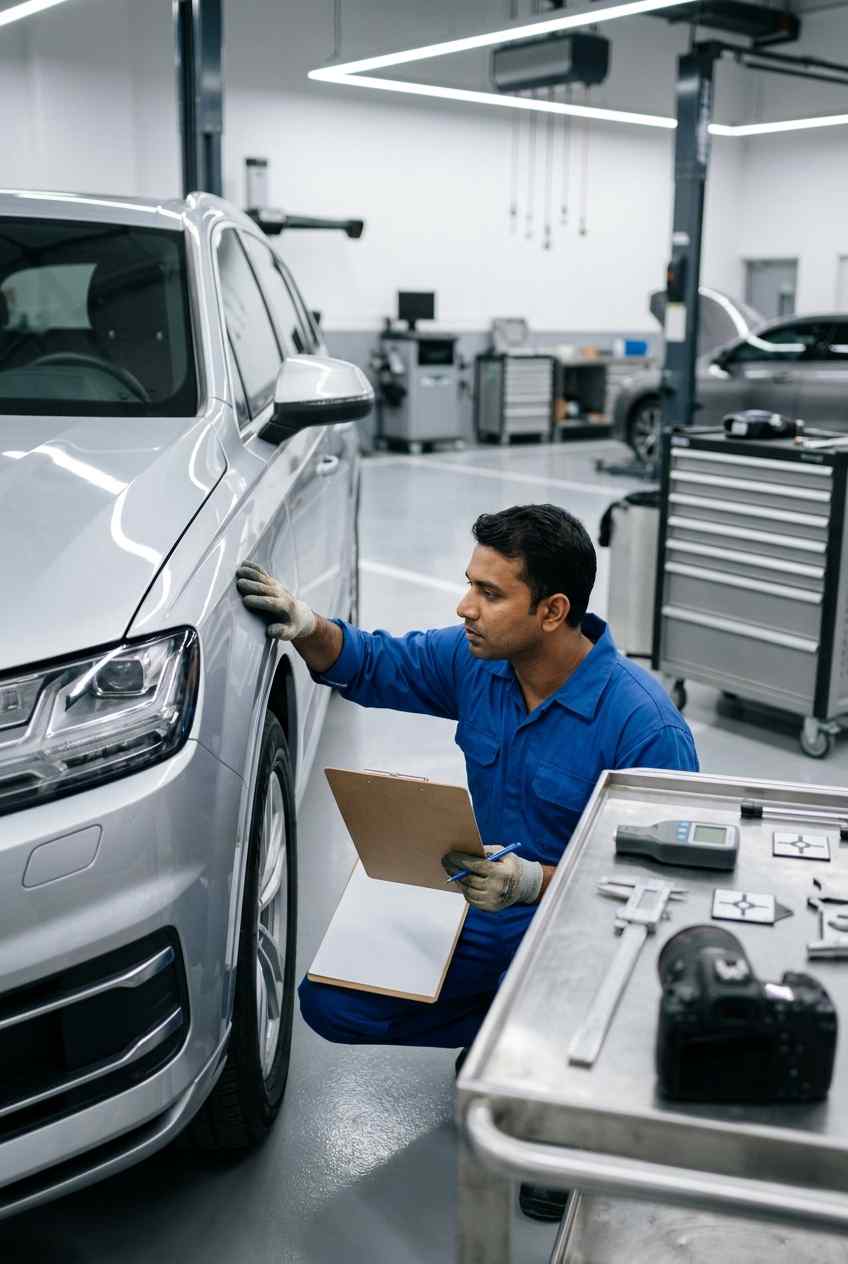
Stand behind the car and compare the lamp band, boot height and bumper corners. Move to each rear quarter and look along the reflection. Open and close the boot several times, check the seal and inspect the luggage area for disturbed trim. Along the side, the body line should cross both doors without a step, and handles should sit consistently.
Test the rear-view camera, parking equipment fitted to the car, lamps, windows and locks. Confirm that no new warning remains. Ask the advisor to identify replaced parts, paint and blending operations, additional work approved after dismantling, and the warranty supplied. Do not accept a single lump-sum invoice when the estimate involved several different repair operations.
Questions to ask before authorising Emgrand repairs
- Which damage is confirmed and which item remains provisional until dismantling?
- Can the original panel be restored without excessive filler or compromised edge strength?
- Are bumper retainers, lamp mounts and clips included in the written parts list?
- Will the boot opening be measured if the latch or gaps changed after impact?
- How will colour be verified before the panel is sprayed?
- What camera, lamp and warning checks are included at handover?
- Which warranty applies to body work, paint and fitted parts?
Front-corner repairs on the Emgrand
At the front, the grille and lamp edges create strong visual references across the width of the sedan. A pushed bumper can disturb the side guide, wing tip, headlamp bracket and bonnet gap without leaving a large dent. We compare both sides before removal, then inspect the reinforcement path, lower attachments and cooling openings when the impact justifies access. Lamp function alone does not confirm that its mounting points remain stable.
A front-corner quotation should separate outer-plastic repair, lamp or grille parts, wing work, bonnet alignment, paint and any diagnostic checks. If a wheel or suspension area was also struck, alignment and mechanical findings remain a separate line rather than being hidden inside a body-repair total. This makes insurer approval and owner decisions easier to trace.
Water, dust and wind checks after opening repairs
Dubai heat does not change the engineering limits of a repair, but it can expose weak sealing and trim fit. After work near a door, boot, lamp or glass edge, seals are inspected for continuous contact and drainage paths remain open. The workshop checks for trapped trim, pinched wiring and adhesive or coating that blocks a designed outlet. A controlled water test is used when the repair disturbed a weather boundary; pressure is not aimed directly into seals to manufacture a failure.
On the road, new wind noise can reveal a mirror, door frame or seal that no longer sits as it did before. That complaint should be recorded at intake and repeated during quality control. It is more useful than adjusting an opening until it merely looks symmetrical while the owner’s original symptom remains.
Parts planning before the Emgrand enters paint
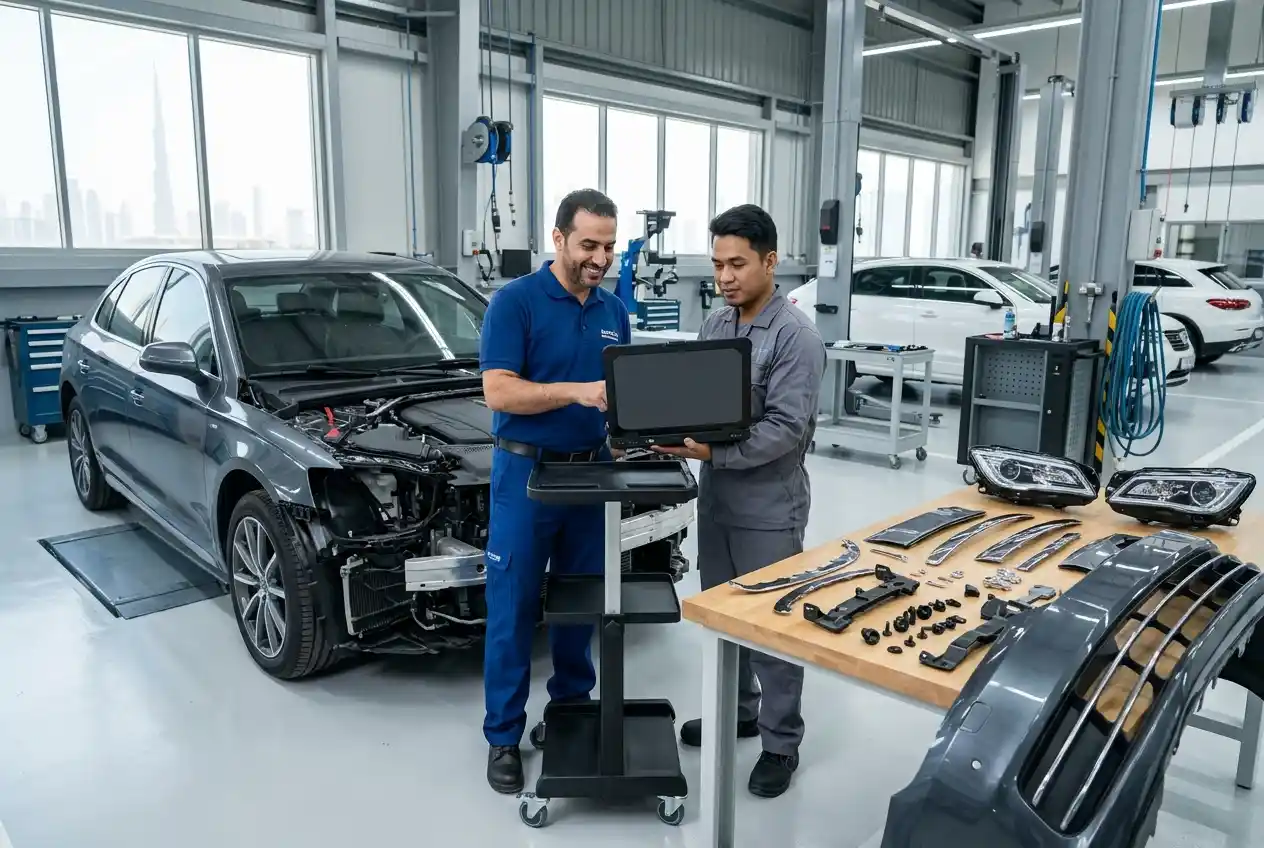
Part numbers, side, model year, trim and included subcomponents are confirmed before a replacement item is prepared. A bumper cover may not include guides, grilles, brackets or badges. A lamp may require transferred modules or seals. Painting the wrong or incomplete part creates delay and risks repeating preparation. The estimate therefore identifies parts that are confirmed, parts awaiting supplier verification and reusable items that must pass inspection.
If an agreed alternative to a new original part is proposed, the quotation states its category, condition and warranty. Safety-critical or fit-sensitive decisions are not disguised with the phrase “same as original”. The owner can then compare cost, availability and expected fit on the same written basis.
Workshop communication while parts are pending
An Emgrand repair can pause for a lamp, bumper guide, trim or panel even after the body method is agreed. The advisor should separate active workshop time from supplier waiting time and insurer approval. If the vehicle can be assembled safely while a cosmetic trim is pending, that option is discussed; it is not assumed. The customer receives a new completion forecast when a confirmed part date changes.
Photographs at dismantling, after panel correction and before handover make updates specific. They also prevent the owner from receiving the same vague message each day. A delayed part is different from delayed workmanship, and the repair file should make that difference visible.