
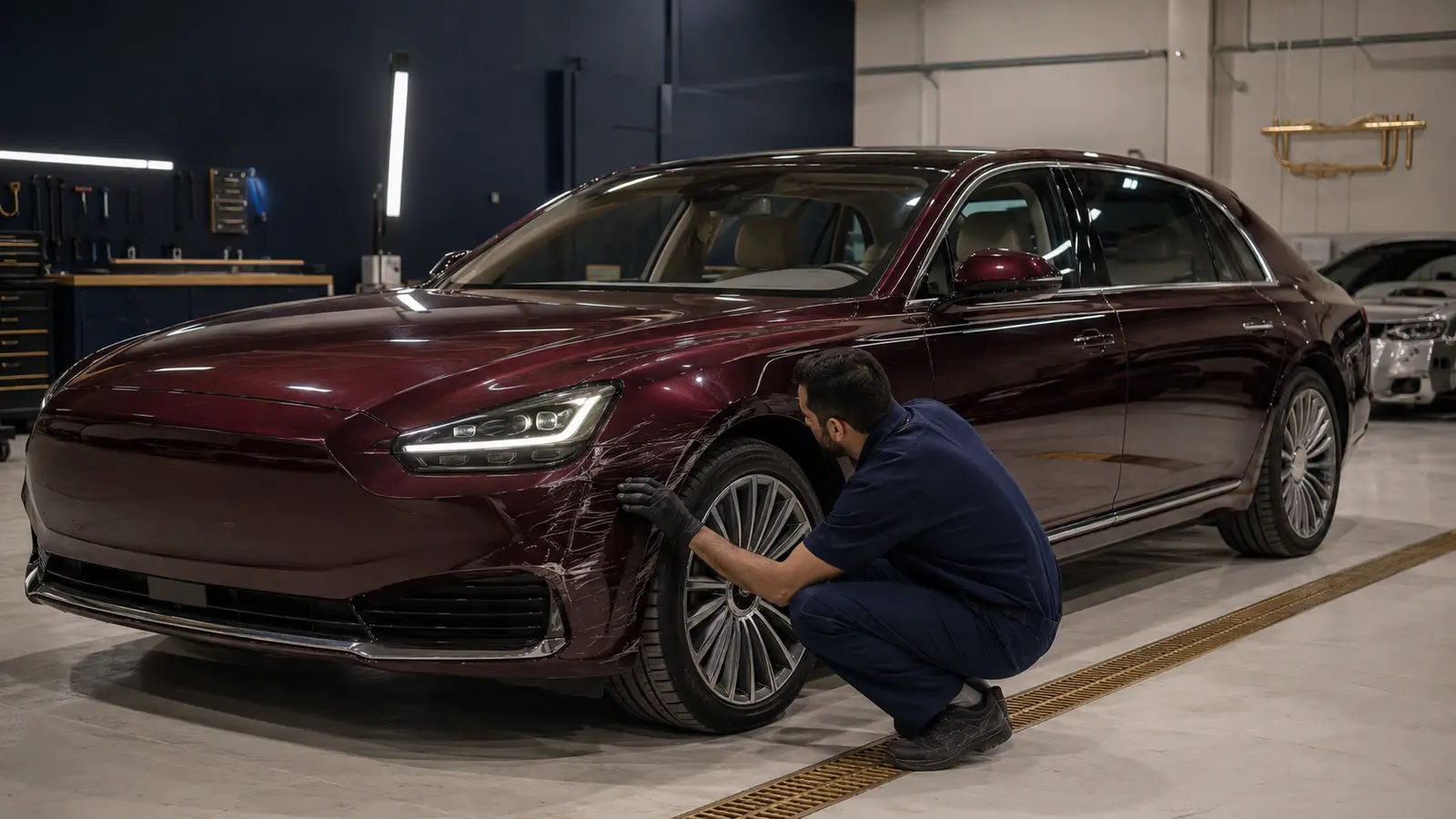
Hongqi Body Shop Dubai
Body damage on a large luxury saloon or SUV is rarely just a mark in isolation. We assess the complete visual line: panel shape, bumper fit, bright trim, paint appearance and the nearby impact path before proposing a repair.
Restore a coherent exterior, not just the damaged spot
A luxury vehicle can look wrong even when the obvious dent has disappeared. A waviness that interrupts a long door, a bumper corner that sits slightly proud, or a bright moulding that no longer follows the adjacent line can remain visible from several metres away. Hongqi body repair therefore begins with context. We inspect the affected part and then step back to read the complete side, corner or end of the vehicle.
This matters on substantial saloons and SUVs because broad surfaces create long, uninterrupted reflections. They can make gentle distortion more noticeable than a sharper mark on a smaller, heavily sculpted panel. The correct objective is not to chase perfection with unnecessary work. It is to identify what has genuinely changed, understand how far the damage travels, and choose a proportionate method that restores shape and fit.
Exact construction, fasteners, finishes and driver-assistance components vary by model, year and specification. We do not assume that every Hongqi is assembled in the same way. The vehicle, the damage and available repair information guide the estimate.
That distinction protects the owner from a deceptively simple quote. It also prevents an inspector from promising replacement when a controlled repair could be sensible, or promising repair before panel access, edge condition and attachment points are understood.
How we read Hongqi body damage from outside to inside
The sequence is deliberate. A mark can be cosmetic at the surface while a nearby bracket, retainer or mounting edge has also moved. We start broad, narrow the investigation and document uncertainty before repairs begin.
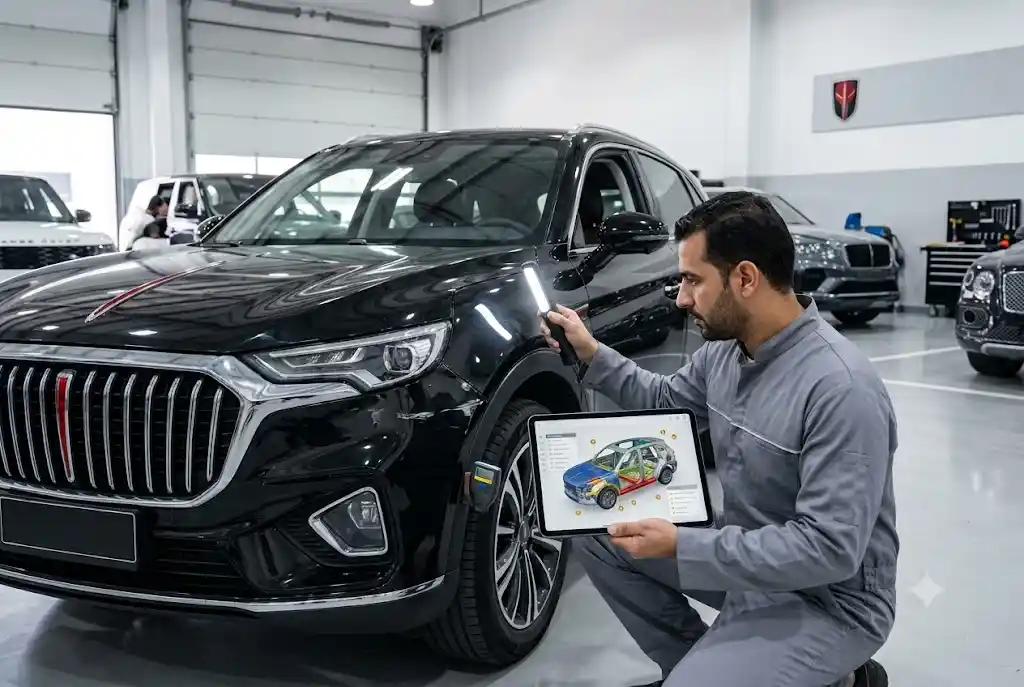
Read the complete stance
Before focusing on the scratch or dent, we view the vehicle from the front, rear and along both sides. This can reveal a dropped bumper edge, a changed wheel-arch relationship, a door that sits differently from its neighbour, or distortion that becomes visible only in a long reflection. Tyre clearance and obvious signs of contact around a wheel are also noted; mechanical or alignment concerns may require separate investigation.
Map the visible surface
Directional light is used to identify the dent boundary, crowns around an impact, sharp folds, scratches through the coating and areas where a panel may have stretched. On long doors and quarter panels, the visible low point is only part of the story. The surrounding high areas often determine whether metal reshaping is controlled and sensible.
Trace lines and neighbouring gaps
We compare the affected side with reference areas where useful, while allowing for normal production variation. Character lines, mouldings and panel gaps are viewed together. A door-to-fender gap, for example, may help explain whether the damage is confined to the outer skin or whether hinges, edges or adjacent panels deserve attention.
Check attachments and hidden routes
Bumper skins can spring partly back after a parking impact while clips, side retainers, guides or brackets remain distorted. Trim can conceal edge damage. Where access is justified, removal allows mounting points and contact marks to be inspected rather than guessed. Any camera, sensor or lamp in the affected area is identified for appropriate handling; requirements are confirmed for the specific vehicle rather than assumed.
Build the repair plan and hold points
The estimate separates known work from conditional items. A hold point might be set after bumper removal, coating removal or insurer authorisation. This keeps the decision auditable: if concealed damage changes the plan, the reason can be shown before additional work proceeds.
Doors and side panels must read as one continuous surface
A shallow parking dent may look minor in a close photograph, yet a lower viewing angle can show distortion travelling across much more of the door. The first task is to map the true boundary and confirm whether the original paint remains intact.
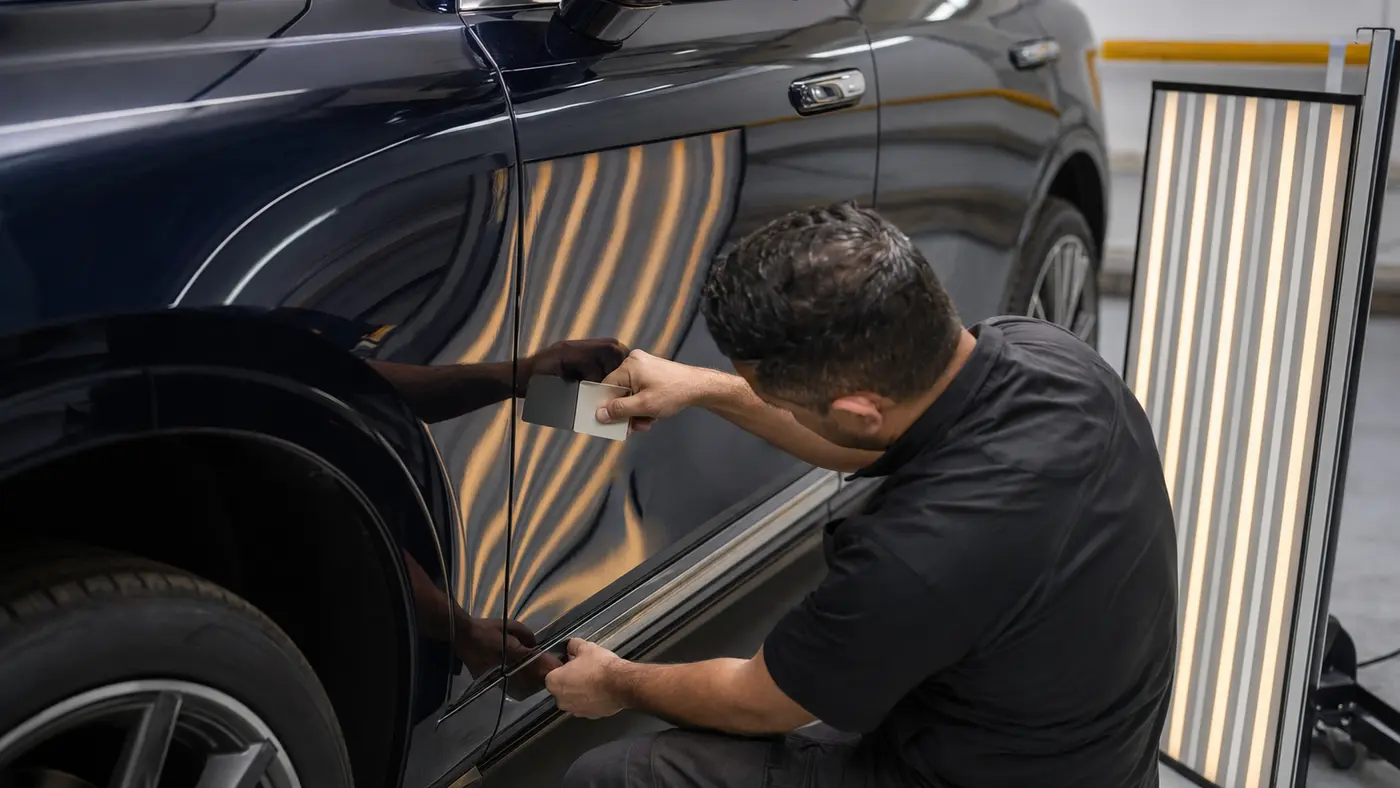
Paintless dent removal may suit sound paint, a workable dent shape and safe rear access. Sharp creases, stretched metal, reinforced zones, damaged edges or cracked paint can require conventional repair. Our dent-removal service explains the broad distinction, but the vehicle decides what is practical.
View reflections from several heights and directions.
Follow body lines into undamaged reference areas.
Inspect edges, handles, mouldings and nearby gaps.
Check for previous filler or refinishing.
Remove interior trim only when access justifies it.
Four situations where a wider inspection earns its place
01 Car-park door and trolley marks
These often create a local dent, paint transfer or a sharp chip along a body line. The decision depends on paint condition, dent depth and access, not simply the diameter. A small but sharp crease can demand more intervention than a broad, shallow low spot.
- Look for cracked clear coat at the centre.
- Check whether trim or an edge has been contacted.
- Separate removable transfer from actual coating loss.
02 Bumper-corner parking impact
The bumper cover may show scuffing and deformation, but the side retainer and the meeting line with the fender or quarter panel matter just as much. Repainting a loose cover will not correct a broken guide or strained mounting tab.
- Inspect upper and side seating.
- Check lamps, reflectors and trim near the contact.
- Record any camera or sensor in the work area.
03 Side swipe across several panels
A continuous scrape can include different damage on each component: transferable residue on one panel, a repairable crease on another and an edge deformation at the rear. The estimate should not treat the complete stripe as one uniform operation.
Our body-repair approach starts by separating reshaping, preparation, fit and refinishing tasks so the scope remains clear.
04 Low-speed front or rear contact
Visible damage may be concentrated on a cover, grille surround or bright trim while the force has travelled into supports behind it. This does not mean concealed damage is automatically present. It means retainers, brackets and accessible mounting points should be checked when the contact pattern justifies it.
- Compare the complete bumper gap from side to side.
- Check opening and closing of nearby panels.
- Escalate any fluid leak, warning or driving concern promptly.
The sensible decision is evidence-based, not automatic
Owners often ask for a yes-or-no answer from photographs. Images are useful for triage, but replacement decisions can depend on edge condition, panel access, material behaviour, attachment damage, previous work and the availability of an appropriate procedure. The goal is a durable, proportionate repair, not the maximum amount of work and not the minimum at any cost.
Repair may be considered when
- The damaged area can be restored without excessive stretching or weakening.
- Edges, mounting points and adjacent structures remain serviceable.
- Access supports a controlled method.
- The final surface can be prepared without an unreasonable filler build.
- The repair method is appropriate to the identified component and damage.
Replacement may be considered when
- There is severe tearing, stretching or deformation in a critical area.
- Mountings, edges or integral features cannot be restored reliably.
- Previous repairs materially compromise the new repair zone.
- Labour and intervention required for repair become disproportionate.
- Applicable repair information directs replacement for the condition found.
A bumper cover can conceal a split guide, compressed absorber, transferred paint on a reinforcement, disturbed wiring support or a damaged bracket. These examples are possibilities, not assumptions. When access reveals a new fact, we document it and explain how it changes the plan.
Colour matching includes texture, metallic behaviour and viewing angle
A colour code is a starting reference, not a promise that mixed paint will visually disappear on every vehicle. Age, exposure, previous refinishing, metallic or pearl orientation, application technique and the shape of the panel can all affect appearance. Broad Hongqi body panels make disciplined colour evaluation especially useful because the eye has a large uninterrupted area to compare.
Preparation also matters. The repaired surface must be stable and correctly shaped before refinishing begins. Spraying over poor contour simply gives a glossy finish to an inaccurate panel. When blending is technically appropriate, its purpose is to manage the visual transition, not to hide weak colour matching.
Our car-painting service covers panel preparation and refinishing in more detail. For this page, the essential point is that colour, gloss and surface texture are judged together.

From first photographs to final walk-around
A predictable process does not mean every repair receives identical treatment. It means each decision has a clear point, information is recorded and the owner knows what happens next.
Photographs, location of damage, warning messages, driving concerns and insurance status are collected. If there is a safety concern, the vehicle should not be driven merely to obtain an estimate.
The vehicle is viewed clean and dry where practical. Surface shape, gaps, trim and nearby components are inspected, with conditional items clearly identified.
The proposed operations, known parts and likely hold points are explained. Insurer or owner approval is obtained as applicable before the agreed work proceeds.
Relevant trim or covers are removed when justified. New findings are documented. Reshaping, fitting and preparation follow the confirmed component condition.
Paint appearance is evaluated through the refinishing stages. Protected trim is refitted, gaps are reviewed and affected functions are checked within the agreed scope.
The repaired area is examined from close range and normal viewing distance. Surface, colour, texture, cleanliness and panel fit form the final walk-around.
Bright mouldings, cameras and sensors change handling, not the need for honesty
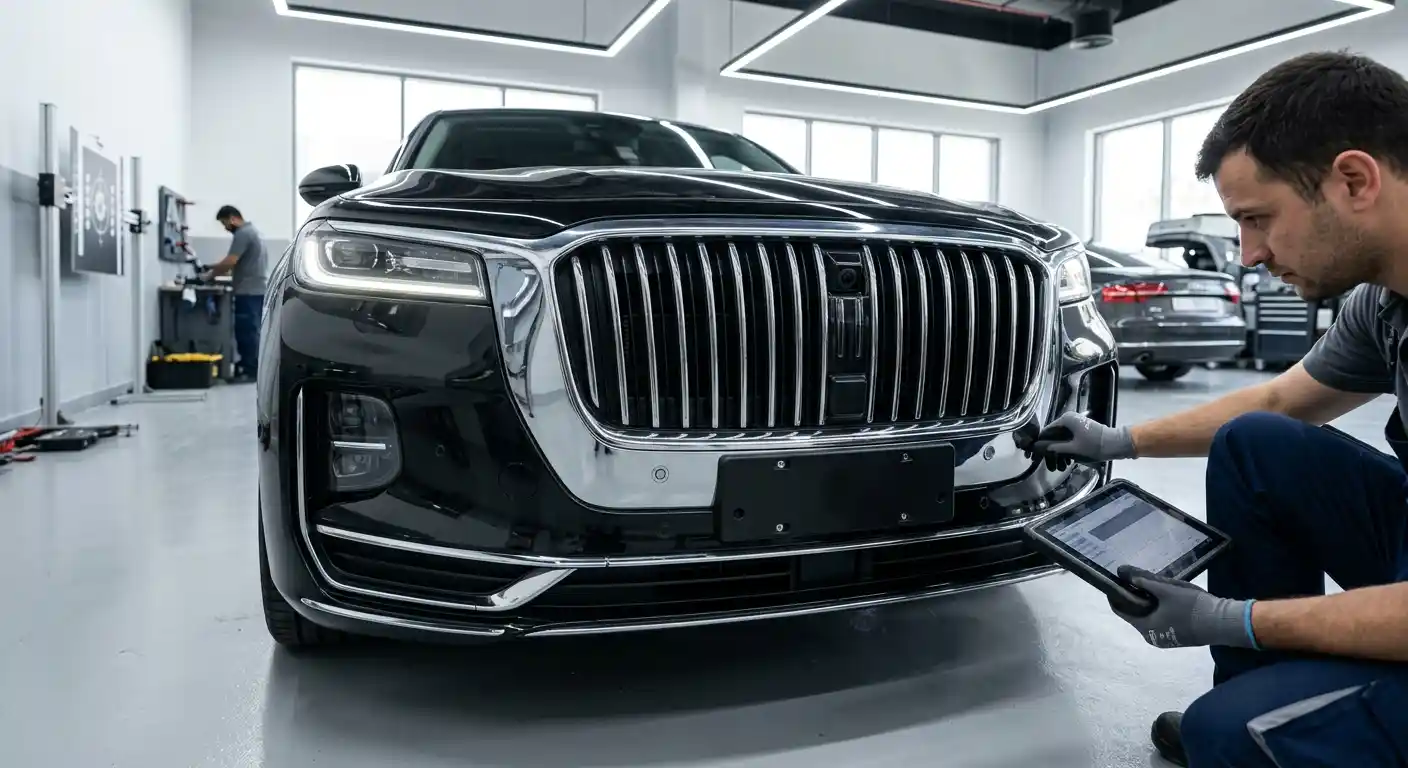
Protecting bright and chrome-like finishes
Bright exterior pieces can scratch, kink or lose their seating when an adjacent panel or bumper moves. Before work, relevant trim is examined for existing marks and attachment condition. Masking may protect some pieces during limited operations; removal can be more appropriate when refinishing reaches an edge or when access is required. The decision balances protection against the risk of disturbing a delicate clip or single-use attachment.
A polished or chrome-like appearance does not identify the underlying material. We avoid assuming that every bright component can be reshaped, polished or reused. The actual part condition and attachment method matter.
Cameras and parking sensors near the repair
A bumper or panel repair should begin by identifying nearby cameras, parking sensors, wiring and mounting provisions. A cosmetic surface operation can still require careful removal and refitting around these items. If an impact has moved a bracket or the repair involves a component carrying a device, requirements for inspection, positioning, diagnostics or calibration must be confirmed for the specific vehicle and repair.
We do not promise from a web page that a particular calibration is required or that every electronic check can be completed in-house. The responsible approach is to identify the device, inspect the affected mounting area, consult applicable information and explain any necessary next step before handover.
Keep the claim understandable from assessment to handover
Useful information at the beginning
- Vehicle details and a clear description of the incident.
- Police or accident documentation where applicable.
- Insurer and policy information if the repair is a claim.
- Wide and close photographs from before temporary cleaning or polishing.
- Any warning messages, unusual noise, fluid loss or change in driving behaviour.
- Previous repair information relevant to the same area, if known.
Coverage, excess, part policy and authorisation depend on the individual policy and insurer decision. A body shop can document damage and prepare a repair scope, but it should not promise coverage on an insurer’s behalf.
A useful final handover check
- The repaired surface from multiple angles and normal viewing distance.
- Paint colour, metallic or pearl behaviour, gloss and texture.
- Panel, bumper and trim seating around the affected area.
- Opening and closing of involved doors, bonnet or luggage lid where applicable.
- Cleanliness and removal of polishing residue from edges and trim.
- Any aftercare advice, outstanding external procedure or documented limitation.
The owner should leave knowing what was repaired, what was replaced, what checks were completed and whether any follow-up is advised.
Four lines a useful Hongqi repair estimate should explain
The price becomes easier to understand when each line connects to a visible condition or an inspection finding. These are planning bands for common bodywork, not a model based surcharge.
Dent method
Small paintless dent repair is about AED 150 to AED 350. A medium dent is about AED 350 to AED 700 when paint and access allow it.
AED 150 to AED 700
Shape and refinish
A larger conventional dent with paint is about AED 700 to AED 1,200 or more. Panel painting starts from AED 450. Long door and quarter surfaces can require a broader finish plan than the dent footprint.
From AED 450
Bumper route
Light polishing or transfer removal can start around AED 150. Plastic repair plus paint is about AED 500 to AED 1,200. Complete bumper repainting is about AED 600 to AED 1,500.
Method specific
Parts and hidden scope
Bumper replacement is about AED 1,200 to AED 6,000 or more. Confirmed structural or chassis work is broadly about AED 2,000 to AED 5,000 or more.
Inspect first
For Hongqi bodywork, the estimate should also identify bright mouldings, lamp edges, retainers and neighbouring gaps that must be protected or realigned. Part numbers and current availability should be confirmed before a replacement figure is treated as final. If access may reveal concealed damage, that decision point belongs in writing.
Indicative figures only. An inspection is required. Hongqi make and model, material, parts, finish, hidden damage and current market conditions affect the final quote. The visible size of a mark does not guarantee the least expensive method.
Hongqi body repair FAQ
These answers explain the decision process. A vehicle inspection remains necessary for a confirmed scope, parts requirement and price.
Can you estimate Hongqi body repair from photographs?
Photographs can support an initial discussion, especially when you send close, wider and reflection-angle views. They cannot reliably show every dent boundary, broken mounting or concealed impact path. A workshop inspection is required before the final method and price are confirmed.
Can a dent on a Hongqi door be repaired without repainting?
Paintless dent removal may be considered when the original coating is intact, the dent has a suitable shape and safe access is available. Sharp creases, stretched metal, damaged edges, cracked paint or reinforced areas may require another repair method.
Why does a small bumper impact need inspection behind the cover?
A flexible bumper cover can partly recover while a side retainer, guide, bracket or nearby attachment remains displaced. Inspection behind the cover is not automatic for every scuff; it is recommended when gaps, movement, impact position or other evidence suggests concealed damage may exist.
How do you decide whether to repair or replace a Hongqi panel?
The decision considers damage severity, stretching, tears, edges, mounting points, access, previous work and any applicable repair information. Cost and intervention are also compared. We avoid promising either route until the component and its surrounding area have been assessed.
Can metallic or pearl Hongqi paint be matched in Dubai?
Colour codes provide a starting point, while spray-out evaluation, application control and visual checks help refine the match. Age, sun exposure, previous refinishing and panel angle can influence appearance. Colour, metallic or pearl behaviour, gloss and texture should be judged together.
Will you blend paint into an adjacent panel?
Blending may be proposed when it is technically appropriate to manage the visual transition. It is not an automatic operation and should not substitute for careful colour preparation. The damage position, colour behaviour, panel relationship and existing finish inform the decision.
How are bright or chrome-like trim pieces protected?
Relevant pieces are inspected and their condition recorded. Depending on repair access and paint edges, they may be protected in place or carefully removed. We do not assume every bright component can be polished, reshaped or reused; the actual material, finish and attachments must be considered.
What happens if a camera or parking sensor is near the damage?
The device and its mounting area are identified before repair. Removal, refitting, inspection and any model-specific diagnostic or calibration requirement are then confirmed from the actual repair scope and applicable information. No universal requirement is assumed from the web page alone.
How long does Hongqi body repair take?
Timing depends on inspection, dismantling, parts availability, insurer authorisation, repair complexity, curing stages and quality checks. A local dent may be considerably quicker than multi-panel accident work. We provide a more useful estimate after the scope is known and update it if concealed damage changes the plan.
Can you assist with an insurance repair?
We can inspect the damage, document the visible condition and prepare a repair scope for the process. Coverage, excess, parts policy and final authorisation are controlled by the individual policy and insurer. Bring the applicable accident and insurance documents when booking.
What should I check when collecting my Hongqi after body repair?
View the repair from several angles and a normal distance. Check surface continuity, colour behaviour, gloss, texture, panel gaps, bumper and trim seating, cleanliness and the operation of involved openings. Ask what was repaired or replaced and whether any aftercare or follow-up step applies.
Arrange a Hongqi body damage assessment in Dubai
Send clear photographs and a brief incident description, or bring the vehicle to Al Quoz 4 for an inspection-led repair discussion. We will separate visible work from conditional checks and explain the next decision before the scope proceeds.