
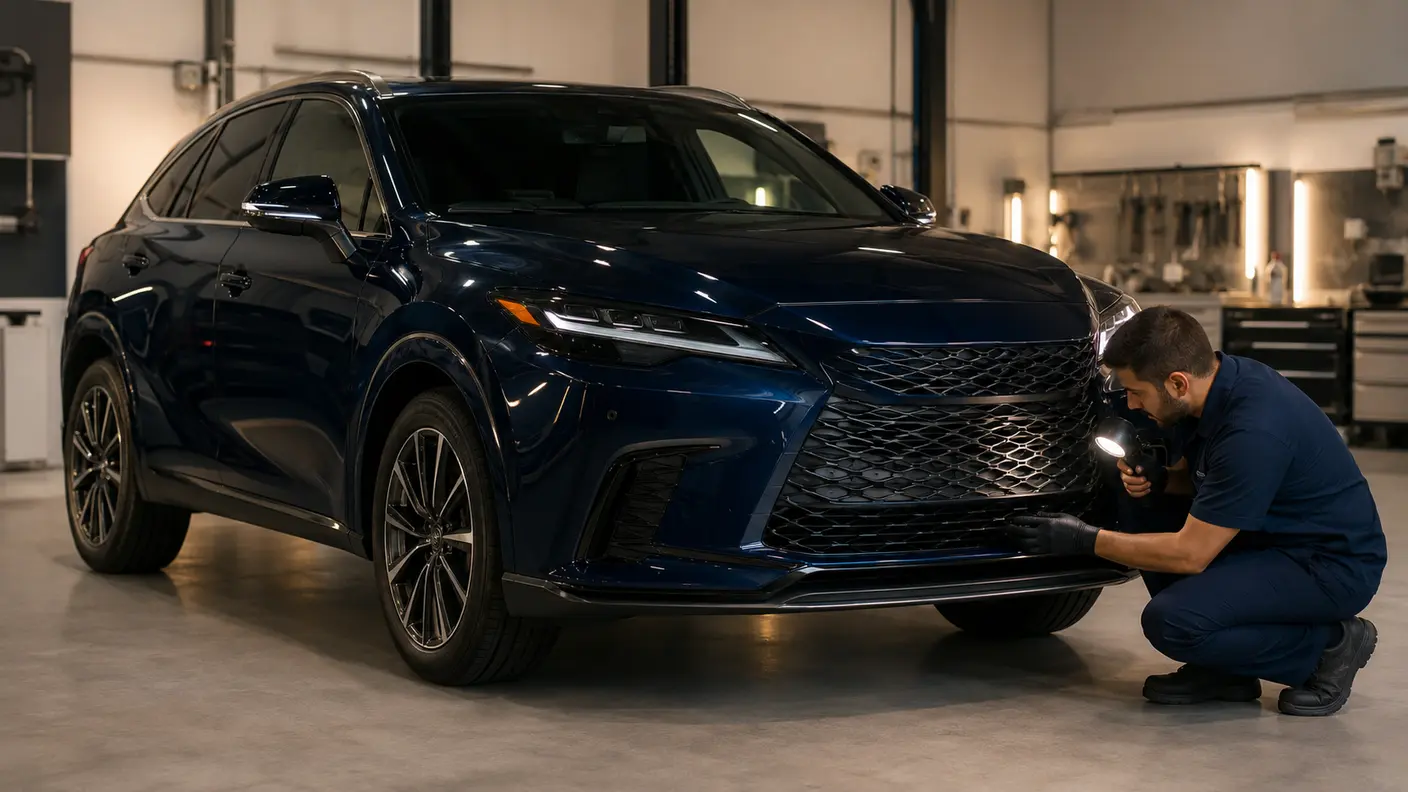
Lexus Body Shop Dubai
Refined bodywork is judged across the whole surface, not only at the point of impact. We assess dents, bumper damage, sharp creases, panel gaps, trim fit and pearl or metallic paint so the repair plan follows the vehicle’s visible lines.
A photo can help us understand the visible area. A workshop inspection is normally needed before the repair method, parts, paint scope and timing can be confirmed.
Precision begins with reading the complete panel
A small mark on a Lexus can sit inside a much larger visual system. A bumper corner may meet a lamp edge, wheel-arch line, grille-adjacent opening, lower trim piece and painted wing within a short distance. A door dent can interrupt a crisp shoulder line that continues into the quarter panel. Repair quality therefore depends on understanding how every nearby surface is meant to relate.
Our first task is to classify the damage. We look for stretched metal, split plastic, disturbed paint, displaced brackets, sharp folds, previous filler, cracked mounting points and signs that the visible mark may be only one part of the event. The aim is not to make an immediate promise from a photograph. It is to build a repair scope that separates what is known from what still requires access or dismantling.
This is especially important on dark metallic, silver pearl and multi-layer-looking finishes. Dubai sunlight can reveal a mismatch that appears acceptable under one workshop lamp. Angle, flake orientation, ground-coat condition, blend area and final gloss all affect how the eye reads the panel outdoors.
If the damage needs broader metal or plastic restoration, our body repair service explains the general workshop scope. The Lexus page remains focused on the decisions that matter when refined surfaces, close panel relationships and layered-looking paint must work together.
Shape, fit and finish must agree
A repair can look incomplete when only one layer is corrected. We evaluate the physical form, the way parts meet and the way light travels across the final coating.
Shape
The panel crown, sharp crease, return edge and local tension determine whether a dent can be moved cleanly or whether conventional refinishing is more sensible.
- Dent depth and diameter
- Metal stretch and fold severity
- Access behind the damaged area
- Edges, swage lines and double skins
Fit
A repaired face still needs to sit correctly beside lamps, mouldings, doors, quarters and bumper guides. Tiny retainers can affect a much larger visual gap.
- Panel-to-panel gaps
- Bumper guide engagement
- Trim clips and mounting tabs
- Opening and closing clearance
Finish
Colour is only one part of paint appearance. Metallic orientation, pearl effect, gloss level and texture influence the transition between repaired and adjoining panels.
- Colour viewed from several angles
- Metallic or pearl travel
- Blend and edge planning
- Texture and polishing control
Connect the condition, method and planning band
Lexus bodywork often asks for close control of character lines, pearl or metallic appearance and bumper fit. This compact matrix helps translate those conditions into an early budget without pretending the photograph is a final estimate.
Where a full refinish is genuinely appropriate, a sedan starts from AED 2,000 and an SUV starts from AED 3,500. That broad figure should not replace a focused repair quote. The estimate should separate panel work, paint, trim handling and parts, and it should explain any decision that remains open until controlled access.
Indicative planning figures only. An inspection is required. Lexus make and model, material, parts, finish, hidden damage and current market conditions affect the final quote. Pearl or metallic finish requirements can alter the paint scope without changing the dent size.
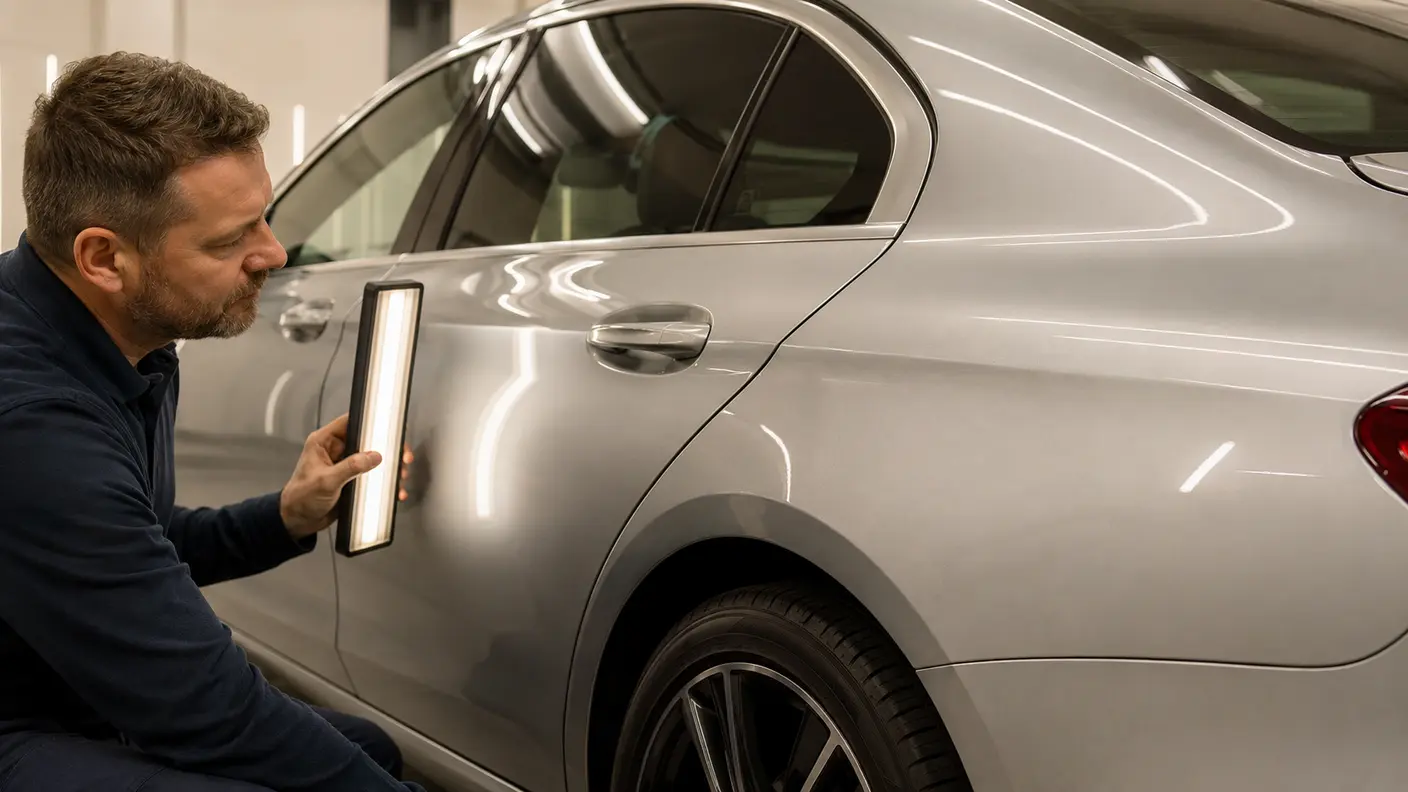
Pearl and metallic finishes change with angle
A paint chip or camera image is useful, but it cannot tell the entire story. Metallic and pearl finishes can appear lighter, darker, warmer or cooler as the viewer moves. The same finish also behaves differently under warm indoor lighting, shaded daylight and strong Dubai sun.
Before refinishing, the repair area must be shaped and prepared consistently. Uneven substrate colour, primer coverage or sanding can influence the final appearance. During colour evaluation, the panel needs to be considered beside the adjoining surfaces rather than as an isolated rectangle. Where a blend is appropriate, its position should follow practical panel boundaries and the way the colour travels.
After application, the evaluation continues. We look at the face and side tone, metallic distribution, gloss, dust contamination, edge quality and reflected line. The vehicle should be viewed from more than one height and direction. A match that works only from directly in front is not a complete assessment.
Our car painting service covers general refinishing and colour work. For Lexus body repair, the paint plan is connected to the panel shape, adjacent parts and the way the finish is likely to look outdoors.
Different areas require different questions
There is no single technique for every dent, scrape or impact. These are the inspection questions that help convert a visible symptom into a useful repair plan.
Front bumper and sculpted openings
Complex front shapes can hide damaged guides or stressed tabs behind an apparently simple scrape. We consider splits, distortion, sensor openings, lower pieces, lamp relationships and the alignment of the bumper beside both wings. Repairability depends on material condition and whether the mounting geometry can hold the surface correctly.
Doors and sharp character lines
A shallow dent in an open area may respond differently from a fold that crosses a sharp crease. Access can be limited by reinforcement, glazing mechanisms and double-skin construction. Paint condition is also decisive. If the coating is broken or the metal is stretched, a paintless approach may not be suitable.
Quarter panels and wheel arches
The quarter panel often combines a broad visual surface with tight edges around the wheel opening, rear lamp and bumper. We check the arch return, adjacent door gap, inner access and previous work. The repair plan should protect the intended curve without creating a flat spot or heavy edge.
Boot, tailgate and rear bumper area
A rear impact can disturb more than the bumper cover. Uneven gaps, difficult closing, water-path damage, displaced trim or changes around the luggage opening justify a wider inspection. Visible paint damage does not by itself confirm the condition of parts behind the cover.
When paintless dent repair may be considered
Paintless dent repair is generally most promising when the original paint is intact, the metal is not sharply stretched and controlled access is available. Creases at panel edges, cracked coating and previous filler can change that judgement. Read more about the general method on our dent removal page.
The sensible choice protects the whole result
Repair is often attractive because it can retain more of the existing assembly and limit the work area. Replacement can be more sensible when the part cannot recover its shape, its mountings are compromised or access and material condition make a stable repair unlikely. Cost alone does not settle the decision.
The assessment should include the damage zone, the adjoining panels, the availability and condition of replacement parts, paint implications and the labour needed to disassemble and reassemble the area. A bumper cover that looks repairable from outside may have torn attachments. A door skin can look heavily marked while the underlying structure remains the larger question.
We explain the visible evidence and identify where dismantling could reveal more. If the scope changes after access, that change should be discussed before additional work proceeds.
Favouring repair
Damage is local, the material can be restored predictably, important mountings remain sound and the finished shape can be controlled without excessive intervention.
Favouring replacement
Cracks, tears, severe stretch, inaccessible deformation or damaged attachment points make a stable and visually consistent repair doubtful.
Waiting for access
Some decisions should remain provisional until trim, liners or the bumper cover are removed and the hidden interfaces can be inspected.
Small retainers can control a large visual line
Trim and bumper fit are easy to underestimate. A slightly displaced guide, fatigued clip or distorted mounting flange can create a visible step between surfaces even when the painted face looks smooth. Reusing a retainer is not automatically economical if it prevents the panel from sitting correctly.
After the main repair, the area should be checked as an assembly. That includes gap consistency, edge height, moulding security, wheel-arch trim, lamp seating and the movement of nearby doors or the tailgate. Parking-assistance openings and other external fittings should be visually checked for correct seating. Any operational check must remain appropriate to the work performed and the vehicle condition.
The final view should be both close and wide. A close view finds loose edges and finish defects. A wide view shows whether the body line continues and whether one repaired corner sits naturally within the whole vehicle.
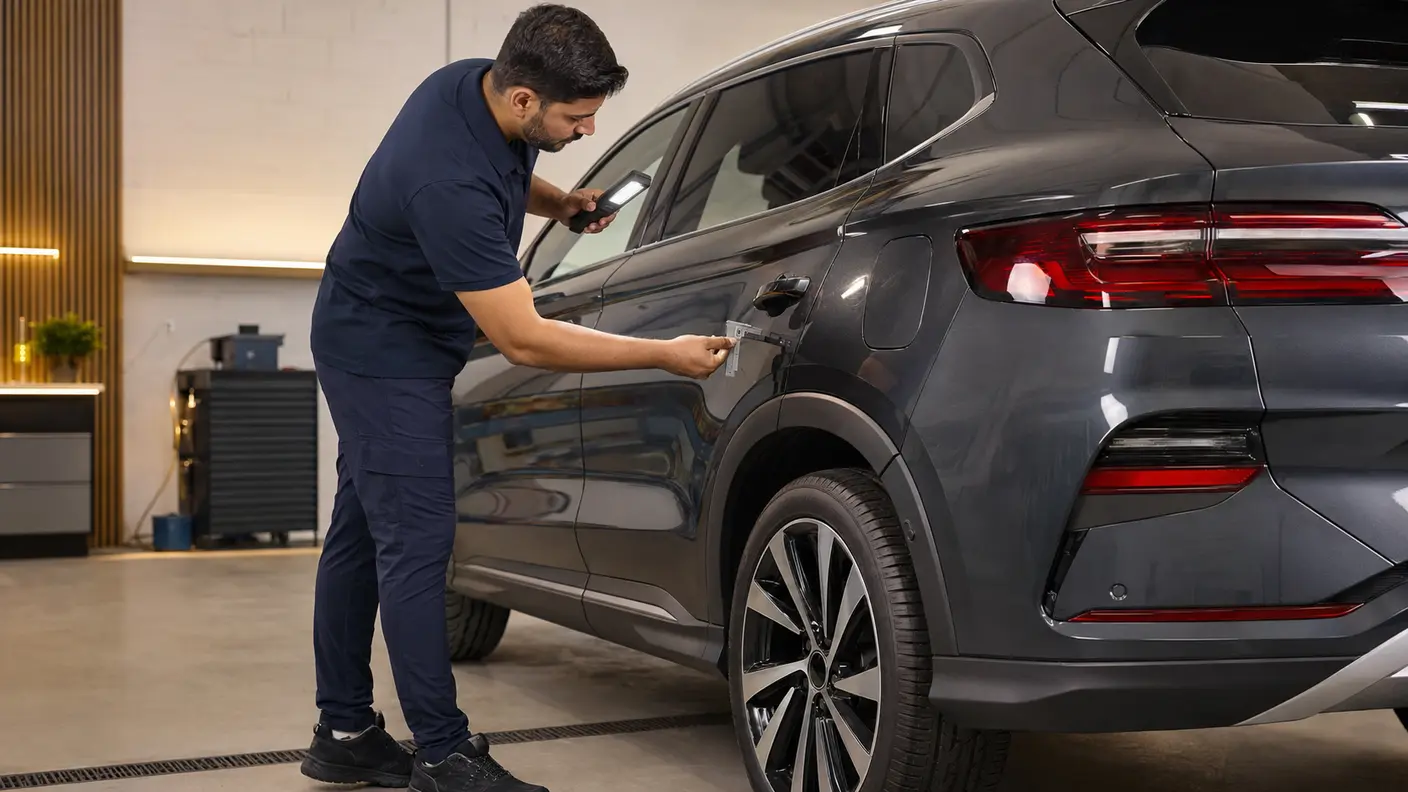
The visible mark is a starting point, not always the full scope
A collision transfers force through connected parts. The bumper cover may spring back while brackets, absorbers, guides or adjacent edges remain displaced. A door impact can affect the latch relationship or the gap to the quarter panel. A rear hit can change the way the boot or tailgate closes. None of these outcomes should be assumed from appearance alone, but each can provide a reason for closer inspection.
Clues worth reporting
New wind noise, warning messages, rubbing sounds, difficult opening, water entry, uneven gaps or a trim edge that repeatedly lifts can help focus the inspection. Tell the workshop what changed after the event, even if it appears unrelated to the dent.
Previous repair history
Old filler, paint edges, non-original fasteners or earlier alignment work can alter the new repair method. Previous work does not automatically mean the panel must be replaced, but it affects preparation, access and the confidence of any repair estimate.
Hybrid and electric vehicle awareness
Some Lexus vehicles use hybrid or electric drive systems. Before body work, the exact vehicle, damage zone and warning status should be identified. Work near high-voltage components requires an appropriate isolation and assessment plan. This page does not claim hybrid-system diagnosis or manufacturer credentials. If the impact or warnings suggest involvement beyond body and trim areas, the scope must be paused and directed to suitably qualified assessment.
A repair process with visible decision points
Initial inspection
We record the visible damage, surrounding panel relationships, paint condition, trim fit and any symptoms you report. Photos support the record, but access may still be required.
Scope and estimate
The proposed work separates repair, replacement, preparation, paint and reassembly. Provisional items are identified where hidden conditions have not yet been seen.
Controlled dismantling
Where needed, nearby trim, liners or covers are removed to inspect mounts and interfaces. Any material change to the scope should be discussed before proceeding.
Shape restoration
Metal or plastic work follows the condition of the part. The aim is a stable form that supports the intended crease, crown, edge and adjoining gap.
Preparation and refinishing
The substrate is prepared, the colour and effect are evaluated, and the finish is applied with attention to transition, gloss and surface texture.
Reassembly and checks
Trim, lamps, liners and fittings within the repair scope are refitted. Gaps, edge heights, security and relevant operation are checked before cleaning and handover.
Keep the evidence and the repair scope aligned
If the repair involves an insurance claim, start by confirming what the insurer requires before authorising work. Requirements can vary according to the policy, accident circumstances and chosen repair route. The insurer may request photographs, a police or accident document, an estimate or an inspection. Coverage and final approval remain decisions for the insurer.
A useful estimate describes the repair area rather than only giving a total. It may separate labour, paint materials, trim, replacement parts and dismantling that is needed to inspect hidden points. If additional damage is found after access, photographs and an updated scope can help explain why the estimate changed.
Keep copies of the vehicle registration, claim reference, accident documentation and messages relating to approval. Ask whether you must wait for written confirmation before repairs start. If you choose to proceed privately, confirm the scope and payment terms directly with the workshop.
Inspect the result in layers
A careful handover is not a quick glance at a polished panel. The repaired zone should be viewed as a complete section of the vehicle. Shape, fit, finish and relevant operation each deserve a separate check.
Shape and reflection
Look along the surface from low and high angles. Reflected lines should travel naturally across the repaired area without an unexpected hollow, crown or sharp sanding edge.
Colour and texture
View the finish indoors and, when practical, in daylight. Consider face tone, side tone, metallic or pearl effect, gloss, texture and the transition to adjoining panels.
Fit and function
Check panel gaps, trim security and nearby openings. Confirm which operational checks were included in the repair scope and report anything that changed after collection.
Fresh paint care
Ask for care instructions that match the materials used and the completed work. Avoid assuming that every coating has the same cure behaviour. If polishing, protective film or detailing is planned, confirm the suitable waiting period with the workshop responsible for the refinish.
Lexus body repair FAQs
These answers describe the assessment process. The correct method and price depend on the inspected vehicle and damage.
Can you estimate Lexus body damage from photos?
Photos can help identify the visible area and prepare for an inspection, but they may not show hidden mountings, metal stretch, previous work or damage behind a bumper. A workshop inspection is normally required before confirming the method, parts, price and timing.
Can a dent on a sharp body line be repaired?
Sometimes. Repairability depends on dent depth, metal stretch, paint condition, access and the position of the crease. A sharp fold at an edge or damage over previous filler can reduce the suitability of paintless or conventional repair.
How do you assess a damaged Lexus bumper?
The visible surface is checked for cracks, distortion and paint damage. Fit beside the wings, lamps, lower trim and wheel arches is also considered. Where needed, access or dismantling is used to inspect guides, tabs, retainers and parts behind the cover.
Can pearl or metallic Lexus paint be matched?
A matching process can be planned, but the final appearance depends on more than a colour code. Substrate condition, variant selection, application, metallic or pearl orientation, blend planning, gloss and viewing angle all influence the result.
Will you blend paint into an adjacent panel?
Blending is a repair-plan decision, not an automatic rule. It may be considered when it provides a more natural colour transition, especially with effect finishes. Panel condition, colour behaviour, repair location and practical boundaries should guide the choice.
Is paintless dent repair suitable for every Lexus dent?
No. It is generally most suitable when the original paint is intact, the metal is not sharply stretched and controlled rear access is available. Cracked paint, severe creases, edge damage and previous filler can require another approach.
When is panel replacement more sensible than repair?
Replacement may be more sensible when the part is severely stretched, torn, cracked, inaccessible or unable to hold its intended shape and mountings reliably. Parts availability, adjacent work and paint scope must also be considered.
Do you check for hidden damage after a collision?
The assessment looks for clues such as uneven gaps, displaced trim, closing changes and damage around connected parts. Some hidden areas can only be confirmed after controlled dismantling, so the initial scope may contain provisional items.
What precautions apply to hybrid or electric models?
The exact vehicle, damage location and warning status should be identified before body work. Areas near high-voltage components require an appropriate isolation and assessment plan. This page does not claim hybrid-system diagnosis or manufacturer credentials.
Can you help with an insurance repair estimate?
An inspection-led estimate can document the visible repair scope. The insurer decides coverage, required evidence and approval. If hidden damage is discovered after access, an updated scope and photographs may be needed.
How long does Lexus body repair take?
Timing depends on damage severity, dismantling, parts availability, repair method, paint stages and insurer decisions. A small local repair can differ greatly from work involving several panels or hidden damage. Timing is best discussed after inspection.
What should I check when collecting the vehicle?
View the repaired surface from several angles, compare the finish in useful lighting, check nearby gaps and trim, and confirm any relevant opening or fitting within the repair scope. Ask for fresh-paint care instructions before leaving.
Arrange a Lexus bodywork inspection in Dubai
Send clear photographs or call to discuss the visible damage. We will explain what can be assessed remotely, what needs workshop access and which decisions should wait until the vehicle is inspected.
Bodyshop.ae is an independent body and paint workshop. This page does not state or imply affiliation with, endorsement by or manufacturer approval from Lexus.