
Independent body and paint repair in Al Quoz 4
Maybach Body Shop Dubai
A luxury body repair should be judged in the same quiet details that define the car: reflections that travel cleanly across long panels, measured gaps, correctly seated bright trim, soft rubber seals and a finish that remains convincing in Dubai daylight.
We begin with the impact area and the connected surfaces around it. A mark on a rear door can change the reflection across a long side profile. A bumper corner can shift a retainer without looking dramatic. A scuffed bright trim piece may need a different decision from the painted panel beside it. The repair plan should separate those conditions before preparation begins.
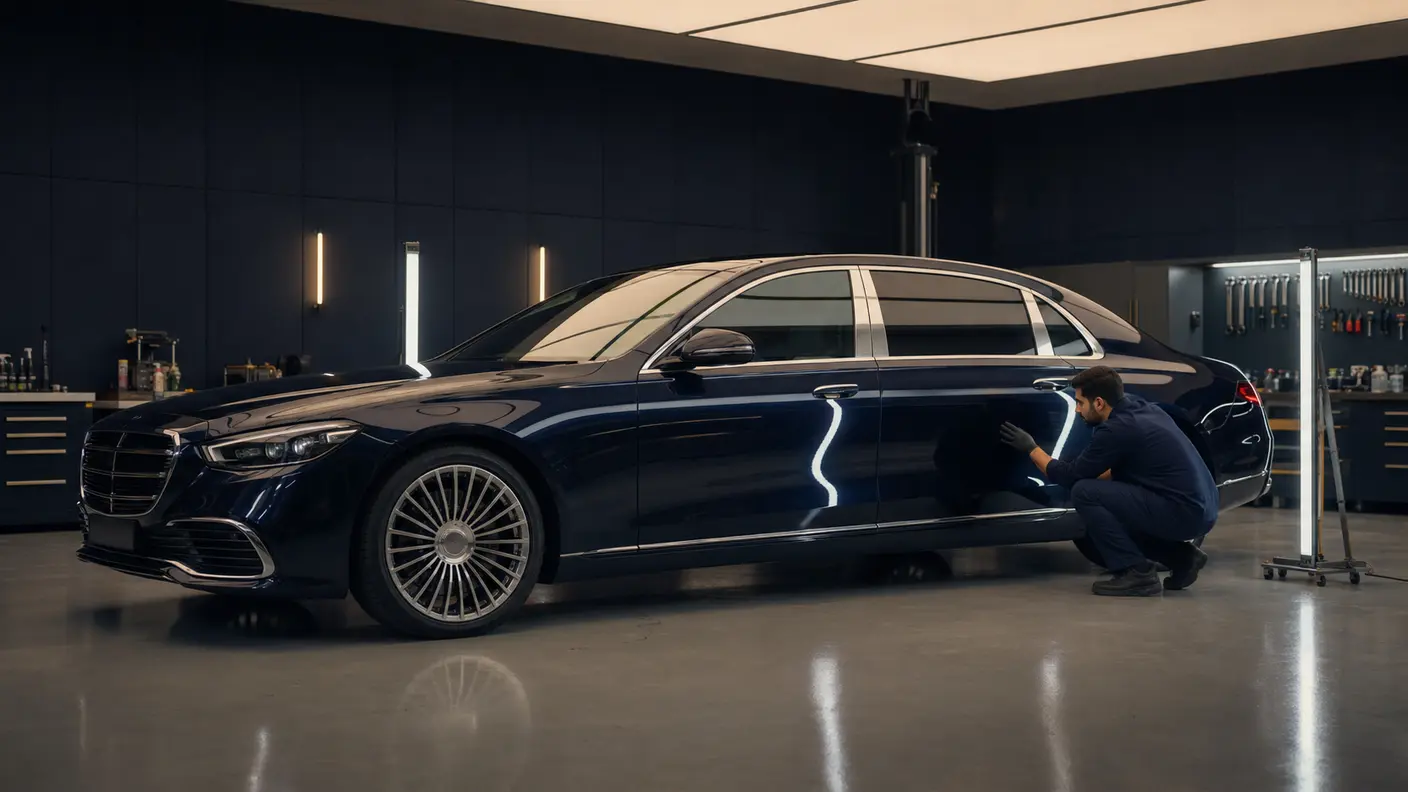
Quiet luxury, measurable details
Good bodywork is visible in reflections, gaps and finish
Paint gloss alone can distract from a panel that has not recovered its intended shape. On a long luxury sedan, the eye follows the complete side of the vehicle. A local low spot, a repaired crown that is slightly heavy, or a door edge that no longer meets the next panel consistently can interrupt that calm line. Controlled lighting helps reveal the surface, but the vehicle should also be reviewed from several heights and angles.
Read the full panel
A repair should be viewed beyond its centre. Light must travel through the repaired zone and into the surrounding shape without an unexplained wave or sharp transition.
Compare connected edges
Door, quarter, sill, lamp and bumper relationships provide clues about movement. A single gap is not judged in isolation from the rest of the affected area.
Check colour and texture
Colour, metallic effect, gloss and surface texture should be considered together under useful light. A formula alone cannot describe the current finish on the car.
These checks shape our broader car body repair approach. They help distinguish a finish-only concern from damage that also requires metal or plastic shape correction, trim work, fitting or controlled access behind an exterior panel.
Long wheelbase side damage
Doors and quarter panels must be read as one continuous profile
Long doors and broad rear quarters create large, uninterrupted reflection areas. A parking dent may occupy only a hand-sized zone yet remain obvious because it bends a line that runs through much of the side. Damage near a door handle, belt moulding, wheel arch, sill or folded edge may also influence access and repair method.
The first question is not simply how wide the dent appears. We consider whether the paint is intact, whether the metal seems stretched, how sharp the crease is, where the panel reinforcement sits and whether the damage reaches an edge. Previous repair in the same area can alter how the panel responds and how much preparation is needed.
If paint remains sound, a non-paint method may be worth assessing. Suitability still depends on panel access, crease geometry and coating condition. The purpose is to preserve a usable finish when practical, not to force one technique onto every dent. Our dent removal overview explains the factors behind that choice.
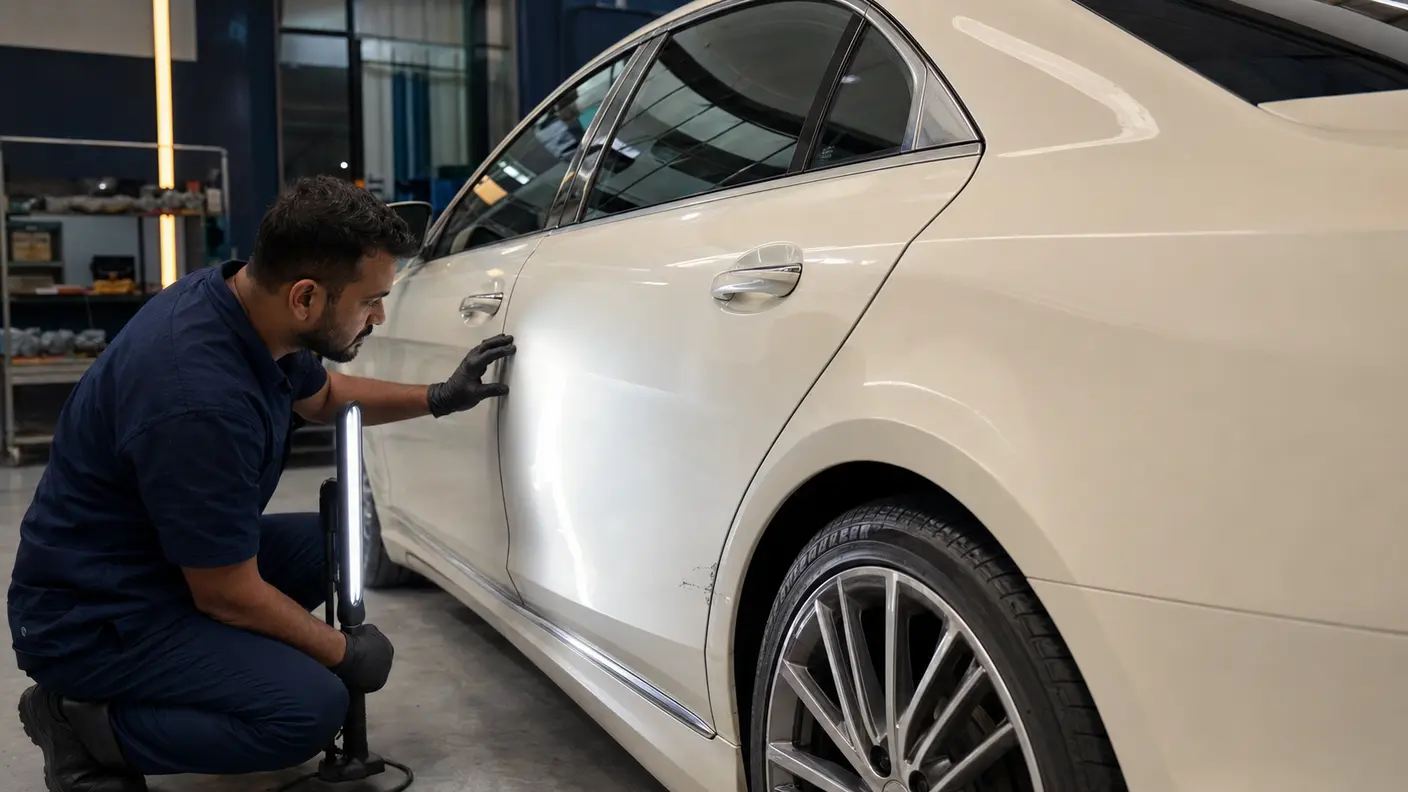
Send one full-side image, a straight close view and two diagonal views. Include the nearest door gap, wheel arch or trim line. Avoid filters and strong flash because they can flatten the dent or alter the finish.
Rear quarters and bumper corners
A modest parking impact can cross several repair decisions
Quarter panel shape
The rear quarter often combines a broad surface, wheel-arch crown and narrow edges around trim or lamps. A crease that reaches one of those features can require more shape work than its visible area suggests.
Bumper cover and retainers
A cover can recover much of its shape after contact while a guide, tab or clip remains moved or broken. Gap changes and looseness matter as much as the scratch on the surface.
Lamp and bright trim fit
The edges around a lamp, reflector or decorative strip help reveal whether the corner still sits correctly. Paint work should not begin before relevant fit concerns are understood.
A rear corner assessment also considers the loading edge, boot relationship, wheel-arch liner and any operating change reported by the driver. Not every scuff hides deeper damage, and a cautious inspection should not become an automatic claim that it does. The visible pattern, impact direction, changed gaps and findings after access determine whether the scope needs to expand.
Bright trim and soft seals
Chrome-like details, mouldings and seals need their own condition check
Bright trim can draw the eye across the full length of a luxury sedan. A small kink, lifted end or uneven reflection may remain noticeable even when the painted panel below it has been corrected. The correct decision depends on what the part is made from, how it is attached and whether its visible surface can be restored without creating a different defect.
Trim surface
Scratches, dents, coating damage and deformation are separate conditions. Polishing cannot remove a deep cut, and aggressive correction can change the surrounding sheen.
Clips and seating
A moulding that sits proud may have a damaged clip, distorted mounting point or contamination beneath it. Pressing it down without understanding the cause can conceal an unstable fit.
Door and glass seals
Rubber seals should be protected during preparation and refitting. A twisted or pinched seal can spoil the finished appearance and may affect closing feel or wind noise.
Removal itself can carry risk on delicate finish parts and aged clips. The estimate should make clear whether trim is expected to be protected in place, removed and refitted, or replaced after inspection. Where exact construction or availability varies by model and specification, that should be confirmed for the particular vehicle instead of assumed from the Maybach name.
Repair or replace
The decision should reflect condition, access and the complete fitted result
| Condition found | Questions that shape the plan | Possible direction |
|---|---|---|
| Shallow dent with intact finish | Is the panel stretched? Is there suitable rear access? Does the dent cross a sharp line, edge or previous repair? | Assess whether shape can be restored while retaining the existing finish. |
| Crease with paint damage | How far does distortion travel beyond the visible crease? Can a stable shape and clean edge be recovered? | Compare panel repair and refinishing with replacement based on complete scope. |
| Scuffed or distorted bumper corner | Is the cover cracked, stretched or torn at a fixing point? Are guides, nearby trim and gaps sound? | Consider plastic repair, refitting and replacement as separate choices. |
| Kinked bright trim or lifted moulding | Is only the surface marked, or is the part deformed? Are clips and mounting points intact? | Plan careful correction, refitting or replacement according to the exact part. |
Replacement is not automatically the premium answer, and repair is not automatically the economical answer. A new component still needs correct preparation, paint where applicable, transfer or renewal of relevant fittings, controlled installation and final alignment. Conversely, a repair that requires excessive correction or leaves doubtful mounting strength may not be sensible. The estimate should compare the complete outcomes, not only labour hours against a part price.
Model, year, body variant and equipment can affect the component ordered and the operations around it. Part identity should be checked using the vehicle details before timing is promised. If availability is uncertain, the schedule should separate active workshop time from waiting time so the owner can make an informed decision.
Premium and two-tone finishes
Colour is only one part of a convincing paint repair
A refined finish is evaluated through hue, brightness, metallic or pearl behaviour, gloss and surface texture. The same colour can appear different on a curved bumper and a flatter quarter because each surface returns light differently. Dubai sunlight makes these relationships especially visible.
Some Maybach vehicles may use premium effect colours or two-tone finishes, depending on model and specification. That possibility should be confirmed on the actual vehicle. A two-tone boundary introduces an additional alignment and masking question, while effect pigments make application and viewing angle more important. Neither condition should be reduced to a generic colour code.
Existing paint age, polishing history, UV exposure and previous refinishing influence the current appearance. The repair plan may involve one panel or a controlled transition into an adjacent panel where appropriate. That boundary should be discussed before preparation. Our car painting service provides a wider explanation of panel preparation and refinishing choices.
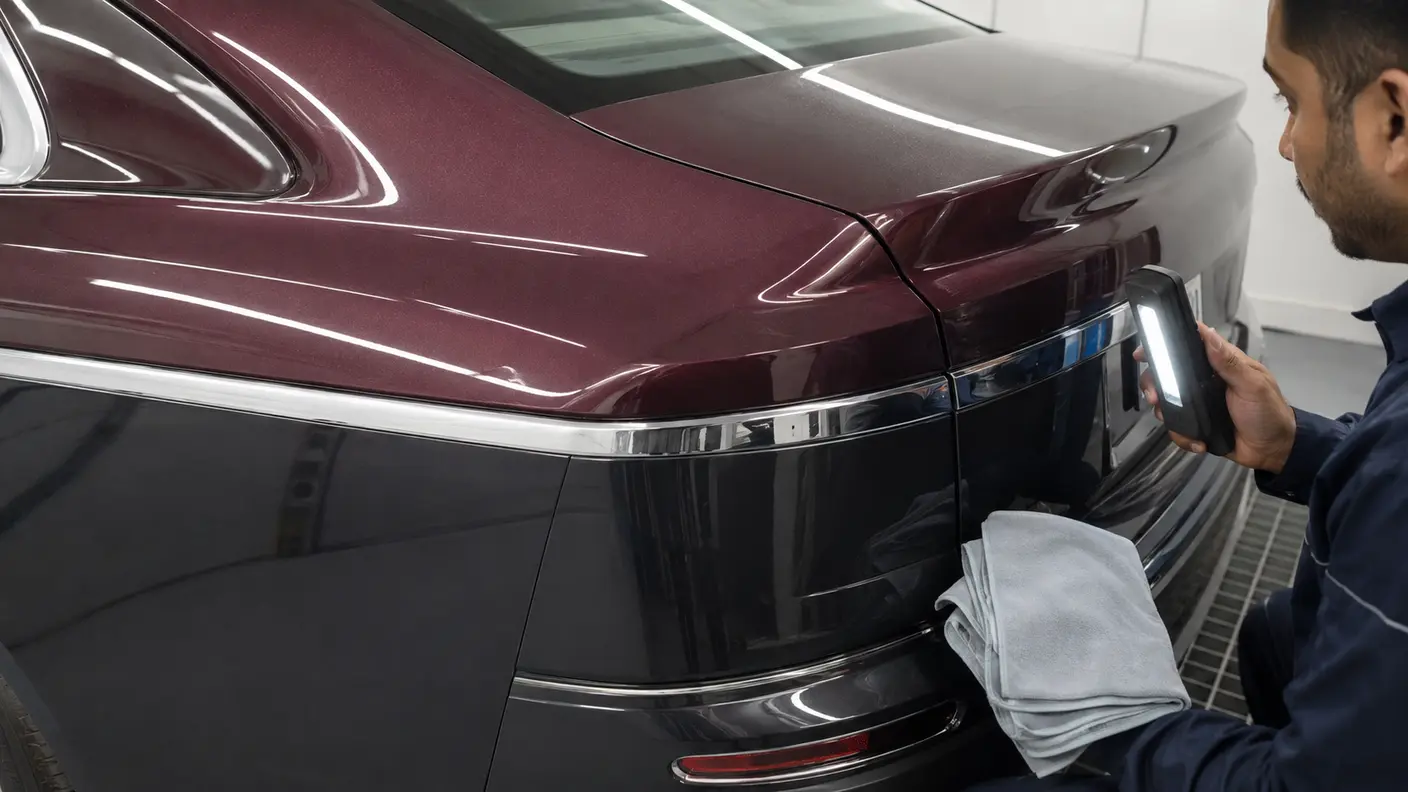
Hidden impact possibilities
Surface appearance does not always describe the complete corner
Flexible exterior covers can move during impact and recover much of their original outline. That can leave a shallow scuff outside while a retainer, bracket, absorber, liner or lamp tab behind it has moved. It can also happen the other way around: a conspicuous paint mark may be limited to the exterior finish. The assessment must remain evidence-led in both directions.
Changed gaps, a loose corner, a new rattle, a lamp that no longer sits evenly, a boot that closes differently, tyre contact or a visible undertray change can justify closer access. Controlled removal should be documented, especially when the initial estimate was based only on external inspection. Any new finding should be explained before work proceeds beyond the agreed scope.
Do not treat fluid loss, tyre rubbing, loose parts, steering changes, warning messages, damaged lighting or a door or boot that will not secure normally as a cosmetic issue. A bodywork page cannot determine roadworthiness remotely.
A disciplined workshop path
From first photos to final reflection check
Document
Record wide and close views, panel gaps, trim condition, previous work and any operating change reported by the driver.
Define
Separate shape repair, paint, plastic, trim, fitting and parts decisions. Identify anything that needs access before confirmation.
Repair
Complete the agreed correction and preparation in the correct order, protecting adjacent finish, seals and interior surfaces.
Verify
Review reflections, gaps, trim seating, finish and relevant operation under appropriate light before owner handover.
Inspection points should be recorded at the start because the final check needs a reference. If a pre-existing mark, older colour difference or unrelated trim defect is outside the repair area, noting it early prevents confusion at collection.
Scope, parts and insurer process
Timing becomes reliable only after the repair route is clear
A photograph can support triage, but it cannot reveal every mounting point or confirm every part. A useful estimate states what is visible, what is assumed and what can only be checked after access. It should identify panel work, paint boundaries, trim handling, parts, fitting and final checks rather than compressing everything into one unexplained line.
If an insurer is involved, confirm its reporting and workshop process before repairs begin. Physical damage assessment and insurer decisions are separate. If controlled disassembly reveals related damage, that finding should be photographed and discussed before the scope changes. The same discipline applies to owner-paid work.
Parts availability can affect a luxury vehicle schedule more than active repair time. A trim strip, bracket, seal or model-specific component may determine when final assembly can be completed. Ordering should follow accurate vehicle and part identification. A date based only on the first visual estimate can be misleading.
Ask for these details in the estimate
- The visible damage and connected areas included in inspection.
- Repair, replacement, paint and refitting shown as distinct operations.
- Any parts or clips that still require confirmation after access.
- The expected refinishing boundary and whether adjacent paint is involved.
- What could change the timing after disassembly or parts confirmation.
- Which pre-existing marks are outside the agreed repair area.
It should show what was uncovered, why it affects fit or finish, and what decision is now required from the owner or insurer.
Chauffeur and fleet handover
Collection should work for the person who operates the car and the person who owns it
A chauffeur-driven or managed vehicle may be delivered and collected by someone other than the final decision-maker. That makes documentation especially useful. The handover should identify the repaired area, parts changed where applicable, additional findings accepted during the job, finish care advice and any item outside the bodywork scope.
The operating driver can help by reporting small changes after the incident: new wind noise, a door that needs more effort, a parking sensor message, boot closing resistance or a trim rattle. These observations do not prove a diagnosis, but they help direct inspection. Contact details for the person who can make scope decisions should be clear before the vehicle is left at the workshop.
At collection, review the car clean and under useful light. Open and close the relevant door or boot, inspect trim seating and compare gaps around the repaired zone. Walk along the side at a shallow viewing angle so long reflections become visible. If a concern is noticed, raise it while the vehicle and repair record are together.
Owner handover checklist
Do not judge the repair from one straight-on glance
View the shape
Look along the panel from low, medium and standing height. Follow reflections through the repaired area into the surrounding surface.
Review fit and operation
Check relevant gaps, trim ends, seals and the opening or closing action of parts involved in the repair.
Confirm the record
Understand what was repaired or replaced, what extra findings were accepted, what remains outside scope and how to care for the finish.
Colour should be reviewed from more than one angle because metallic and pearl behaviour changes with viewing position. A bumper and metal panel can also reflect light differently due to shape and substrate. The question is whether the result is coherent with the agreed surrounding area, not whether every surface has identical brightness from every angle.
Accident repair scope
Maybach accident repair begins with the impact path, not the visible mark
After a collision, the outer dent or bumper scuff is only the starting evidence. The inspection follows the direction of contact across panel gaps, closures, trim, mounting points and nearby body references so the repair plan is based on what actually moved.
A bumper corner can transfer load into a guide or bracket, a rear impact can disturb boot-opening relationships, and a side contact can change door or quarter-panel alignment without making every effect obvious in photographs. Controlled access is used only when the visible evidence justifies checking a hidden area.
Scope before finish: body geometry, connected fittings and hidden-damage evidence are resolved before paint is treated as the final answer. Any additional finding should be documented and agreed before the repair scope changes.
A refined quotation still needs plain, useful numbers
Maybach bodywork should be estimated through the required operations: shape restoration, opening fit, finish continuity, trim handling and confirmed parts. The brief below provides early Dubai planning bands without attaching an invented premium to the name.
Indicative scope register
- Small paintless dent
- AED 150 to AED 350
- Medium dent
- AED 350 to AED 700
- Larger dent with paint
- AED 700 to AED 1,200 or more
- Panel painting
- From AED 450
- Bumper plastic repair plus paint
- AED 500 to AED 1,200
- Complete bumper repaint
- AED 600 to AED 1,500
On long doors and quarter panels, colour and reflection can extend beyond the closest mark. Bright trim, seals and opening operation also need named line items if they are affected. A useful estimate says what will be removed, repaired, painted, blended, replaced and checked at handover. It also labels provisional parts rather than hiding uncertainty in one total.
Indicative only: an inspection is required. Maybach make and model, material, parts, finish, hidden damage and current market conditions affect the final quote. These bands do not guarantee the repair method or final availability of any component.
Maybach body shop Dubai FAQs
Can you assess Maybach body damage from photographs?
Photographs can support an initial review and help identify the likely inspection area. They cannot confirm panel depth, hidden fixings, exact paint condition or every connected part. An in-person assessment may still be needed before the scope and timing are confirmed.
Can a Maybach door dent be repaired without repainting?
Possibly, when the paint is intact and the dent shape, access, edge position and metal condition suit that method. A long door, sharp crease, body line or previous repair can change the decision, so suitability should be checked on the vehicle.
Why are long-panel reflections important?
They make small changes in shape easier to see across a broad door or rear quarter. A repair should be reviewed beyond the centre of the dent so the reflection travels consistently into the surrounding panel.
Should a damaged Maybach bumper be repaired or replaced?
That depends on cracks, distortion, missing material, torn fixing points, connected trim and fit around nearby panels or lamps. Surface scuffs may not require replacement, while an unstable mounting area may need more than paint.
Can bright trim or chrome-like mouldings be repaired?
It depends on the part, finish, attachment and type of damage. A surface mark, kink, lifted end and damaged clip are different conditions. The exact component should be inspected before correction or replacement is proposed.
What is different about a two-tone paint repair?
A two-tone finish adds a colour-boundary and masking requirement to the normal colour, effect, gloss and texture checks. The actual paint specification and current vehicle finish must be confirmed because not every Maybach uses the same system.
What can be hidden behind a minor rear-corner impact?
There may be no hidden damage, or the contact may affect a guide, clip, bracket, absorber, liner, lamp tab or nearby trim. Changed gaps, looseness, noises and impact direction help determine whether controlled access is justified.
How long does Maybach body repair take in Dubai?
Timing depends on confirmed damage, repair method, paint scope, trim handling, access findings and parts availability. A meaningful schedule can be given after those items are identified rather than from one exterior photograph.
How should insurer-related damage be handled?
Confirm the insurer’s reporting and workshop process before work begins. The initial estimate should state visible findings and assumptions. Any related damage found after access should be documented before the scope changes.
What should a chauffeur report after an impact?
Report the contact direction, warning messages, new noises, wind noise, rubbing, changes in door or boot closing and any lighting or parking-system concern. These details guide inspection but do not replace diagnosis.
What should I check when collecting the vehicle?
Review panel reflections from several angles, gaps, trim seating, seals, finish and operation of the parts involved in the repair. Confirm the completed scope, accepted additional findings and finish care guidance.
Is BodyShop.ae connected with the Maybach manufacturer?
No. BodyShop.ae is an independent Dubai workshop and is not connected with or endorsed by Maybach or any vehicle manufacturer.
Maybach body repair in Dubai
Begin with a measured inspection
Send wide and close photographs for an initial review, or arrange an in-person inspection in Al Quoz 4. We will consider the visible damage, connected fit, trim condition and paint scope before setting out the next step.