
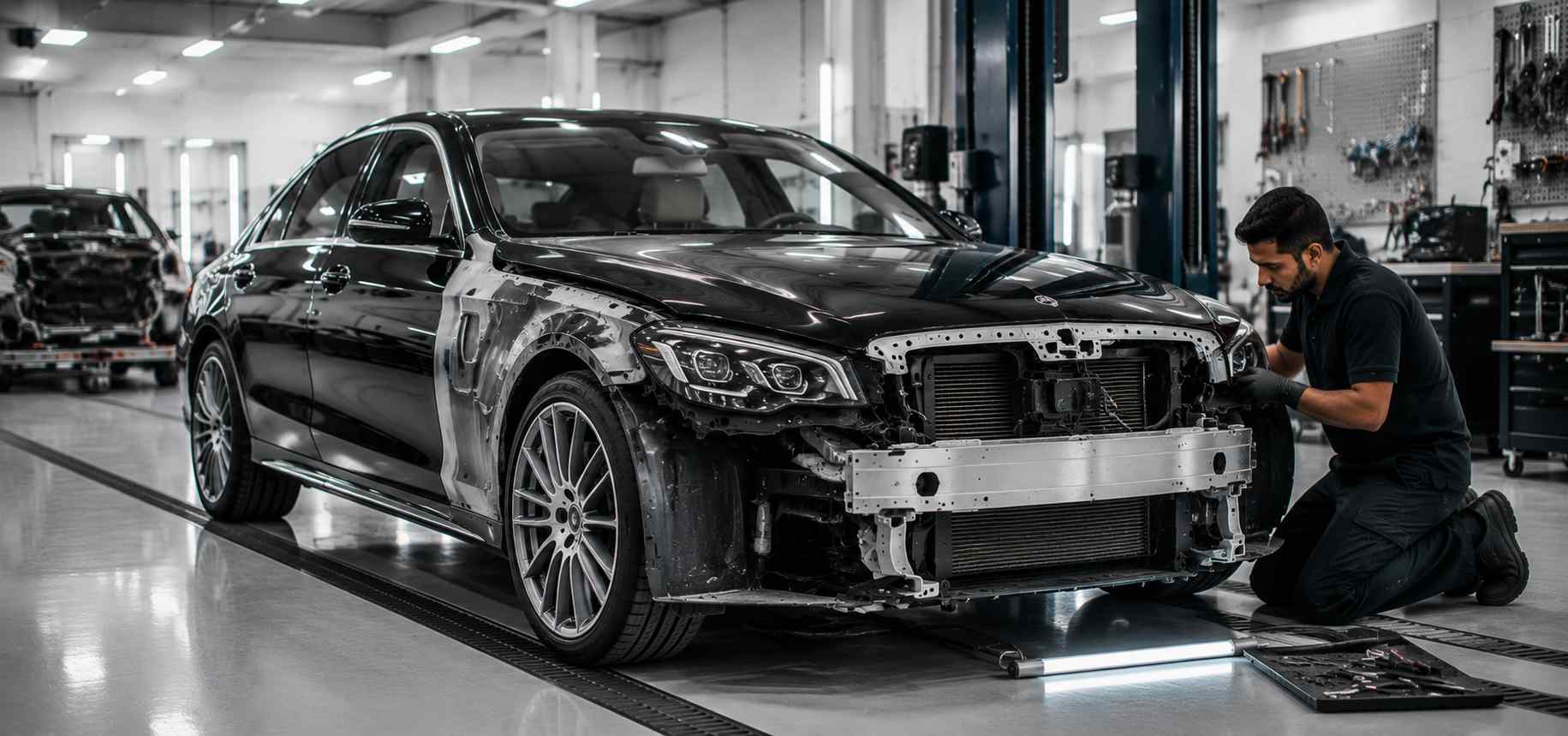
S-Class precision repair decisions in Al Quoz
Mercedes Benz S Class Body Repair Dubai
Mercedes Benz S Class body repair Dubai is judged through small disagreements across large, quiet surfaces. A minor contact can alter a flush handle zone, lamp pocket, door aperture, bumper sensor view or the uninterrupted reflection along a saloon side. Our scope uses a precision ledger so fit, function and finish are each proved rather than blended into one vague quality claim.
Reflection measurement
Mercedes Benz S Class Body Repair Dubai Starts with Reflection Measurement
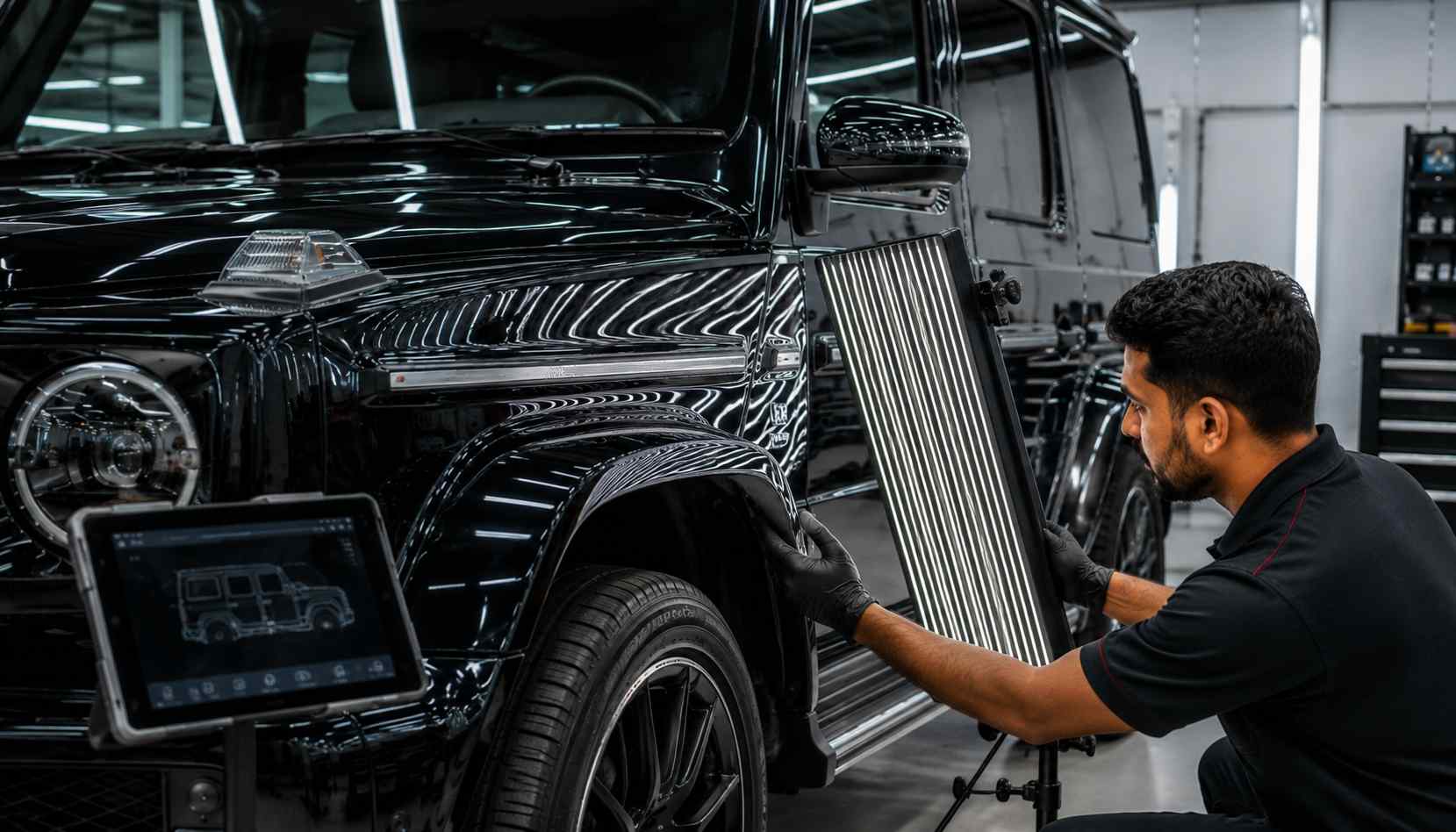
Long S-Class panels reveal a crown change well beyond the obvious dent. Intake uses line lighting and shallow viewing angles before washing, polishing or trim removal changes the evidence. The photograph set includes the complete side or end of the car so a local close-up remains connected to its body line.
A panel is not considered straight because the damage disappears under one lamp. The surface must read consistently at standing height, low angle and across the transition into neighbouring panels. Material, prior repair, access and edge loading then determine whether controlled repair or replacement is the defensible route.
Flush exterior hardware creates its own acceptance test
Where flush-fitting handles or powered elements are installed, surrounding panel shape and clearances matter to movement. A handle that extends can still rub, sit proud or meet an altered recess. The fitted configuration is recorded, and damaged hardware is not repeatedly cycled simply to see whether it continues working.
The body reference is corrected before functional approval. Paint build, masking edge and replacement-part fit are examined because small changes can affect movement or appearance. Handover records the check completed on the actual vehicle rather than claiming that every S-Class configuration uses the same mechanism.
Door quietness begins with aperture geometry
A side impact can change closing effort, seal compression, glass travel and wind-noise behaviour without producing a dramatic gap. We preserve the arrival adjustment until the aperture, hinge area and latch relationship have been assessed. Moving one component too early can hide the impact path and create a second fit problem.
Reassembly checks door movement at several points rather than relying on one firm closure. Seals are inspected for seating and damage, while trim is protected from adhesive and paint dust. A road test is authorised only when a defined observation cannot be made safely in the bay and all prerequisites for use have been satisfied.
Lighting units require a stable body pocket
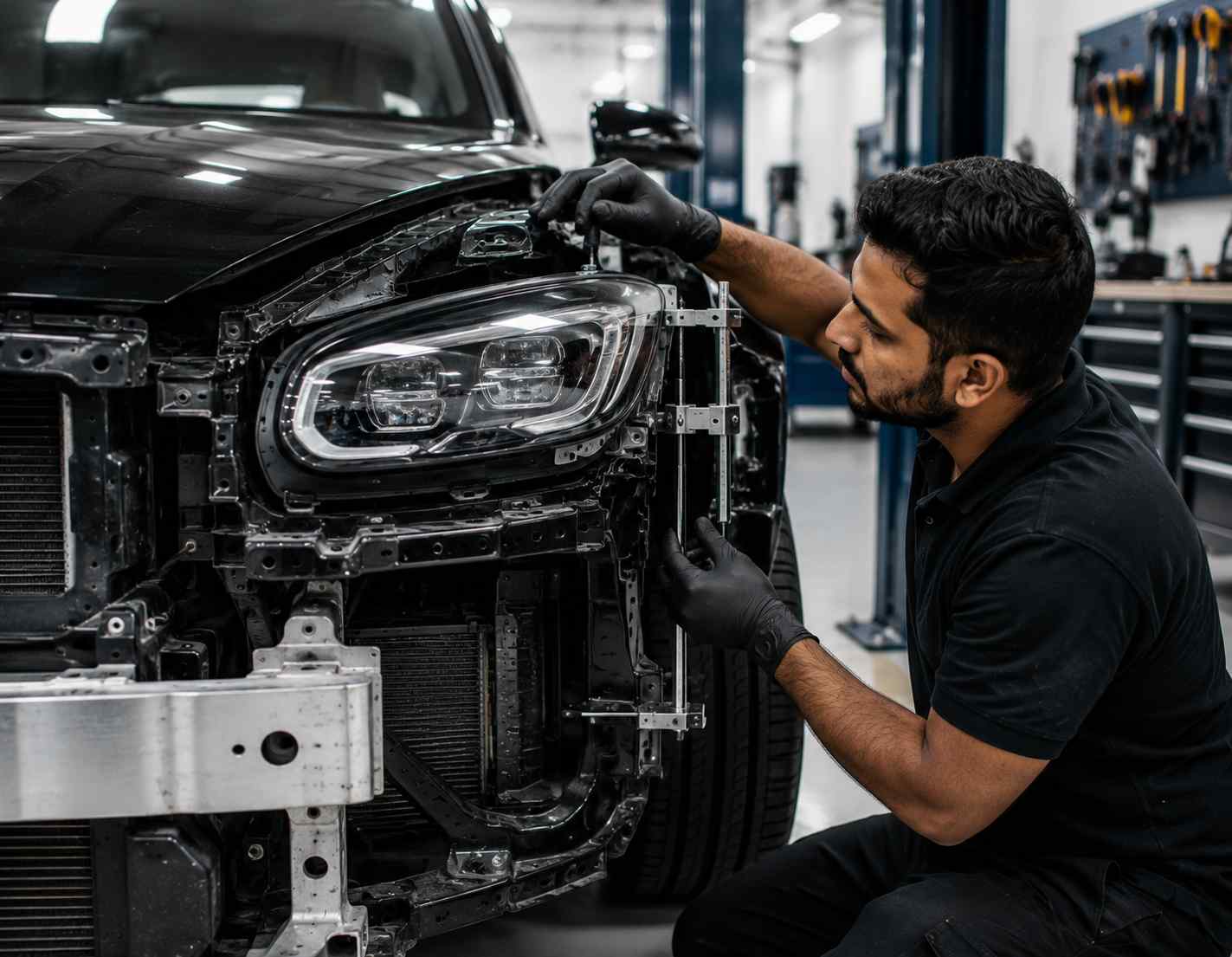
The S-Class can carry sophisticated lighting equipment depending on configuration, but electronics do not replace geometry. A lamp must sit in an undistorted pocket with sound mounts and correct relationships to bonnet, wing, grille or boot surfaces. Illumination alone cannot establish that condition.
Physical fit, wiring condition, lighting function and any applicable aiming or initialisation are documented separately. If the surrounding body is still being adjusted, the lamp is not used as a lever or final ruler. Current instructions and the installed system define the required operation.
S-Class precision ledger
Approve five separate qualities before the repair is complete
The ledger prevents a perfect colour from concealing a poor gap or a successful scan from concealing a moved bracket. Each row has its own evidence and reviewer.
Bumper sensor work begins outside the diagnostic tool
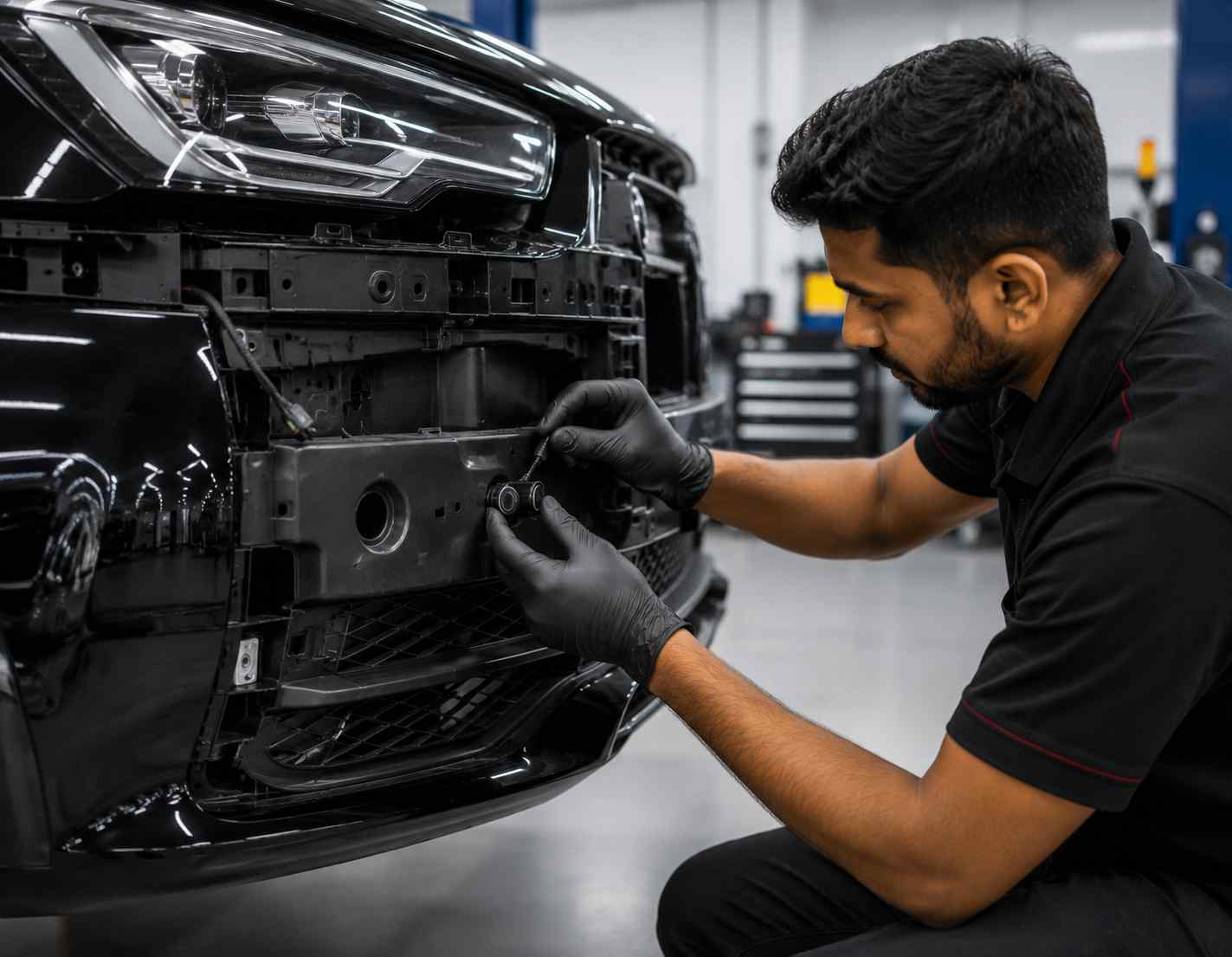
A parking sensor or radar device can communicate while its holder has shifted. We inspect aperture shape, paint thickness, bracket position and harness routing before interpreting electronic status. A repaired bumper must restore the physical viewing condition, not merely remove a fault message.
Where calibration is applicable, body geometry, wheel condition and other stated prerequisites are completed first. The final record identifies the specific system checked and the result obtained. Broad phrases such as all sensors tested are avoided because they conceal what was actually measured.
Bonnet and grille alignment is read as one composition
A low front contact may disturb the grille or apron while leaving the long bonnet visually dominant. We establish the painted opening, latch references and lamp seating before decorative pieces are asked to close the gaps. Chrome and gloss trim can attract attention, but they are not allowed to dictate incorrect body geometry.
Replacement grilles and bumper variants are verified through VIN, apertures, connectors and the removed part. Trial fit happens before colour when the assembly controls several lines. Latch operation and secondary retention are checked after adjustment without repeated slamming to overcome resistance.
Rear repair includes boot opening and water management
A rear corner can affect bumper guides, lamp pockets, boot flushness, vents and seals. Dry evidence is recorded before washing. If the boot movement, latch sound or closing effort changed, that observation becomes part of the opening assessment rather than a later convenience complaint.
Water testing is targeted after likely paths are identified. Extra sealant is not spread over an uncertain source. The finished rear must show consistent lamp and boot relationships, normal applicable operation and secure internal trim without implying that unrelated electronics were included in the body scope.
Paint matching must survive quiet luxury surfaces
The S-Class can use metallic, pearl, special or matte finishes depending on build. The VIN and paint code identify the starting system, while instrument readings and spray-out cards compare candidates with the aged vehicle. Previous refinishing and ground shade can matter more than the formula name.
Face colour, side tone, effect travel, gloss or matte uniformity, clear-coat texture and edge finish receive separate review. A local colour match can still fail if the full panel reflection changes. The car is checked under controlled light and useful daylight rather than approved beneath a single bright workshop source.
Measure the S-Class disagreement before correction
A quiet S-Class surface can hide a small geometric error.
- Panel form under full-length reflected light
- Door, bonnet and boot aperture geometry at rest
- Flush hardware, lamp pockets and exterior trim
- Sensor and camera mounts before diagnostics
- Colour travel and clear-coat texture
Interior protection is part of body quality
Long repairs can expose fine trim, screens, seats and soft surfaces to dust or handling marks. Intake photographs establish their condition before protective covers are fitted. Removed pieces are labelled and stored by zone so the reassembly team can trace fasteners, seals and connectors.
Cleaning is not used to erase evidence of workshop-created damage. The cabin is reviewed in neutral light after body work and before handover. Any pre-existing mark remains distinguished from the repair event, which protects both the owner and the workshop from vague later disagreements.
Parts identity follows the option list, not the silhouette
S-Class aprons, grilles, lamps, sensors, handles and trims can change by model year, derivative and equipment. Supplier photographs do not settle the order. We compare part references, connectors, openings and the removed component before surface preparation begins.
New parts are inspected for transport damage and fitted dry when they control important gaps. Transfers are catalogued, and one-use hardware is identified before production. If supply becomes uncertain, the milestone is revised around a confirmed part rather than protected by an unrealistic completion promise.
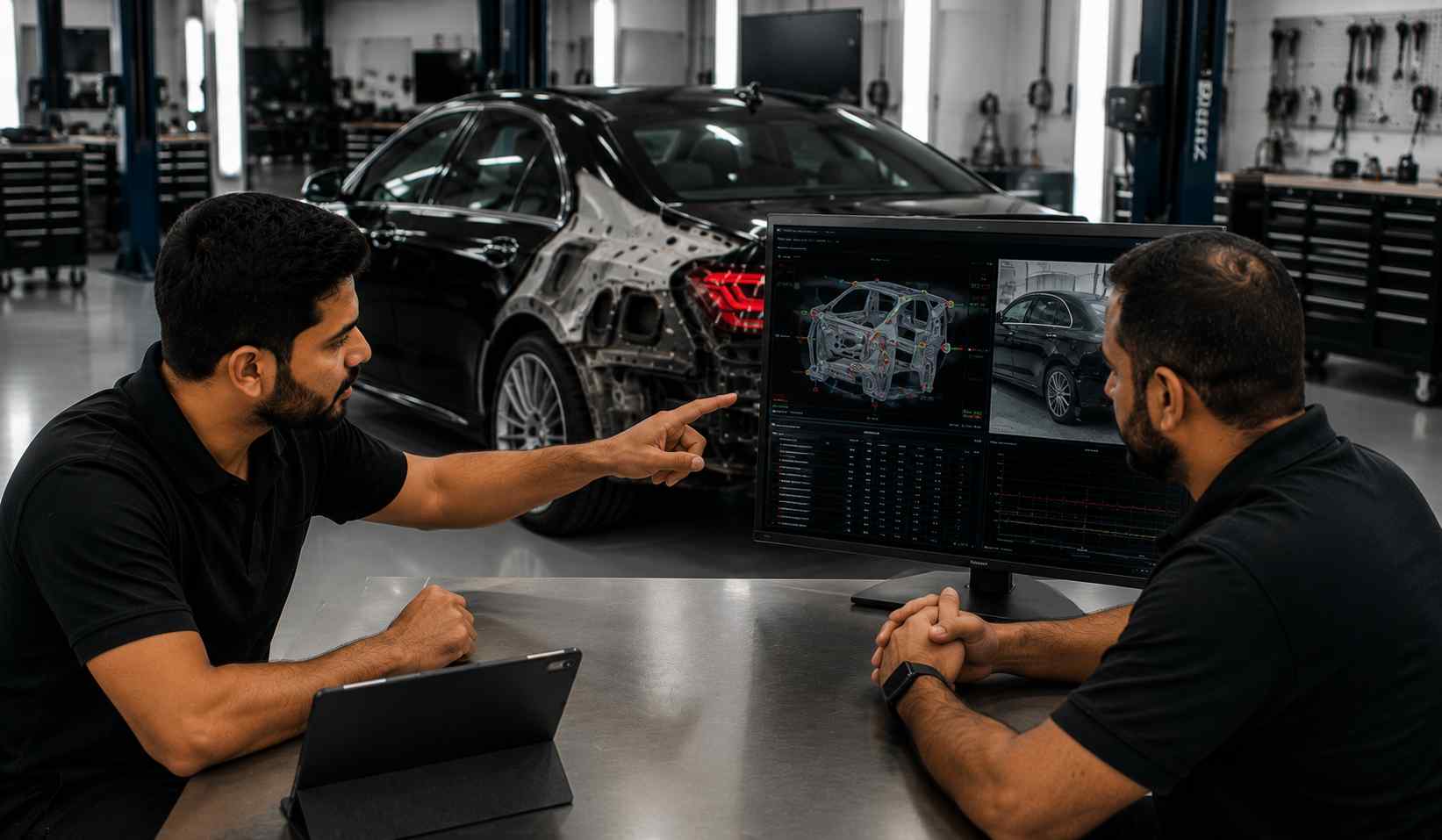
The quotation keeps precision tasks visible
A useful estimate separates panel work, replacement pieces, paint materials, trim operations, electronic verification and outside services. Hidden damage remains identified as an inspection dependency until access is created. The owner can then see why a revised scope changed instead of receiving one enlarged total without explanation.
No S-Class price or turnaround is invented in this draft. Manager approval would be required for ranges, warranties and operational promises. Any future price must include stated inclusions and the project disclaimer beside it. This page concentrates on the decisions that drive cost.
Final quality control
The final reviewer uses the same five ledger rows
Quality control returns to form, gap, movement, view and coating. Each item is judged with the evidence suited to it. A reflection board does not approve a powered handle, and a diagnostic report does not approve paint texture. This separation makes the handover more precise without turning it into a decorative checklist.
Records can include panel measurements, trial-fit photographs, parts identity, spray-out approval, scan output and applicable calibration evidence. The invoice names deferred work and pre-existing conditions. The collection discussion then answers what was repaired, how it was verified and what aftercare applies.
Official information is limited to visible configuration
The Mercedes-Benz UAE S-Class overview shows multiple variants, paint choices and configuration-dependent exterior features. That supports the need to verify the installed car before parts or functional checks are planned.
It does not authorise structural, refinishing or calibration procedures. Those depend on current repair information, VIN data and the physical vehicle. This draft avoids unsupported joining, material and certification claims, and it does not imply that BodyShop.AE is an authorised Mercedes-Benz repairer.
Separate approval paths
Wheel, body and trim quality are not judged by one finish
Wheel finish and body colour are approved separately
A corner impact may damage both an alloy wheel and a painted wing or bumper. The wheel’s structural condition and permitted repair route are decided independently from its cosmetic finish. Matching body colour does not authorise a wheel correction, and a refinished wheel does not prove alignment.
Tyre evidence, rim findings and the relevant mechanical check are connected to the impact record. Body production starts only when the corner reference is understood. The handover names which wheel-related operation was completed and which condition remained outside scope.
Chrome and gloss trim reveal handling damage quickly
S-Class exterior trim can show fingerprints, tool marks, scratches and distorted reflections that ordinary paint lighting misses. Intake photographs protect existing condition, while removed pieces are stored away from abrasive hardware. Replacement trim is inspected before installation.
Final review uses diffuse and directional light. Decorative pieces must sit on correct body references rather than being pulled into alignment. A fresh trim surface cannot compensate for a moved opening, and cosmetic marks caused during production are corrected before collection.
Cash and insurance repairs use the same physical limits
Payment route changes authorisation, not material behaviour or safety boundaries. A direct-paying owner still receives intake photographs, a written scope and evidence for hidden changes. Insurer-managed work still needs technical support for the selected operation rather than relying on financial approval alone.
Supplements identify newly exposed findings and the reason they matter. The production team does not compress required curing, measurement or calibration to fit an administrative date. Each release is based on the completed evidence for the vehicle.
Aftercare protects the new finish without overpromising
The owner receives guidance tied to the coating and components actually fitted. Washing pressure, chemicals, adhesives and protective film require product-specific care. Universal claims about immediate washing or fixed cure periods are avoided because they may not suit the system used.
A finish concern is best photographed in neutral light and reported with the condition in which it appeared. New stone chips, parking contact and unrelated panel marks remain distinguishable from workmanship. The repair warranty, if offered, must identify approved terms rather than imitate a manufacturer warranty.
Choose the next repair route
Continue from S-Class precision to the correct service
Accident repair service
Use this service when collision documentation, hidden impact layers or insurer approval controls the work.
Body repair service
This service covers panel, aperture, structural and fitted-hardware decisions beyond the S-Class-specific checks.
Automotive paint matching and refinishing
Continue here when physical fit is accepted and colour remains the main decision.
Photograph the S-Class where light reveals disagreement
Send the full affected elevation, an oblique reflection, all nearby gaps, dashboard warnings and a short note about any change in handle, door or boot movement. We will map the precision checks needed before refinishing.