
Independent EV body and paint repair in Al Quoz 4
NIO Body Shop Dubai
NIO body shop Dubai repair covers accident damage, dents, bumpers, panels and paintwork with EV-aware inspection before cosmetic work begins. The visible panel is only one layer of the repair decision: sill, floor, battery protection, charging-area hardware and sensing mounts can change the safe route.
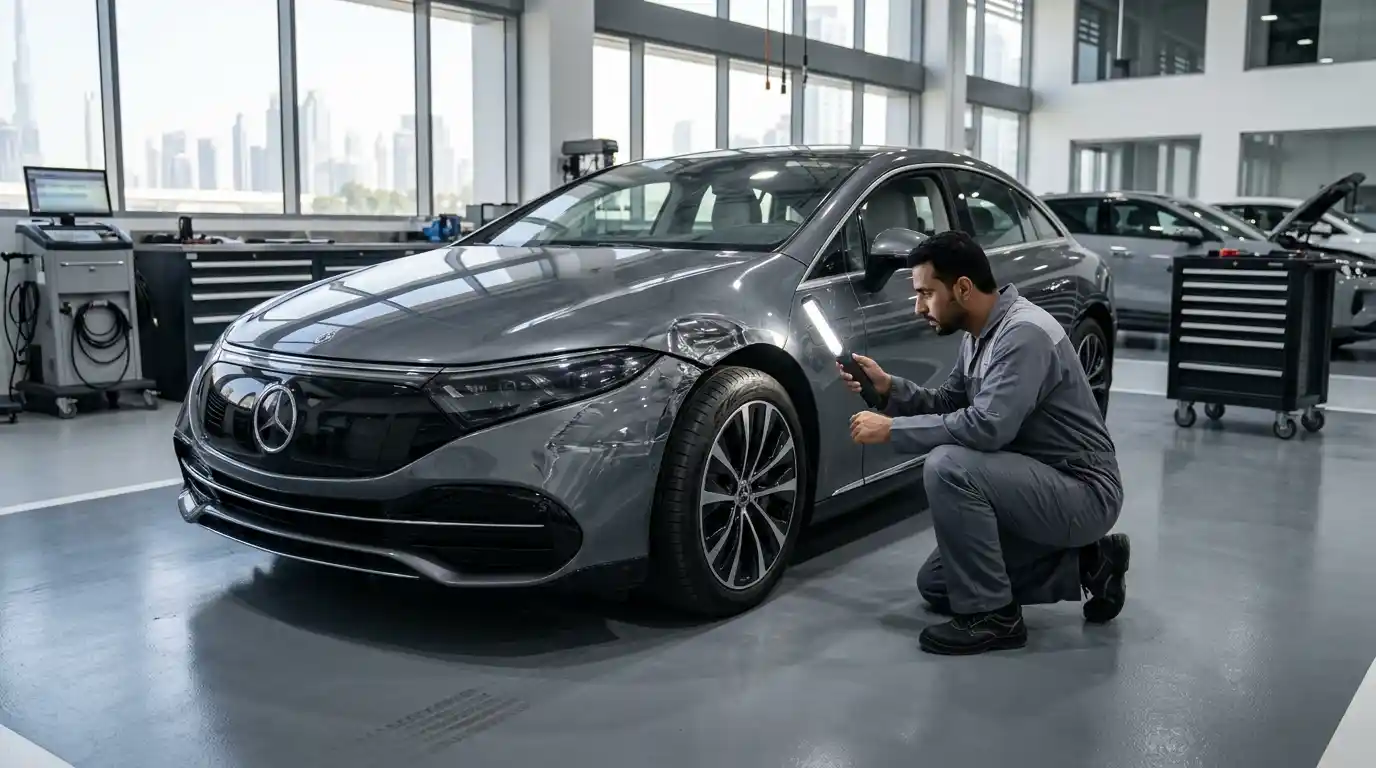
Accident panel and paint repair
NIO body repair starts with the force path, not the paint mark
From parking damage and bumper impacts to panel distortion, dents and paint damage, the commercial repair scope begins with the body. EV safety, battery-area inspection and sensing-system checks support that repair rather than replacing it.
High-voltage or thermal sign
Battery or electrical warning, unusual heat, smoke, smell, sparking, coolant loss or damage near the enclosure needs an emergency or recovery-led response.
Mobility or restraint sign
Airbag deployment, wheel displacement, steering change, brake concern or body contact with a tyre makes road use uncertain until inspected.
Structural or floor sign
Deep sill, pillar, floor or underbody deformation can reach load paths and battery protection even when the upper outer panel seems modest.
Keep occupants away from a vehicle showing heat, smoke or electrical danger and contact the appropriate emergency services. BodyShop.AE does not declare an impacted NIO safe through WhatsApp. Photographs help triage logistics, not replace a qualified physical inspection.
Identify the exact vehicle
One NIO badge can hide four different repair layers
Panels, paint, bumpers, lamps, glass, trim and closures.
LiDAR, cameras, radar units, ultrasonic sensors and their brackets on equipped vehicles.
Passenger structure, restraints, high-voltage isolation, cooling and battery enclosure.
Warning status, diagnostic records, system availability and calibration requirements.
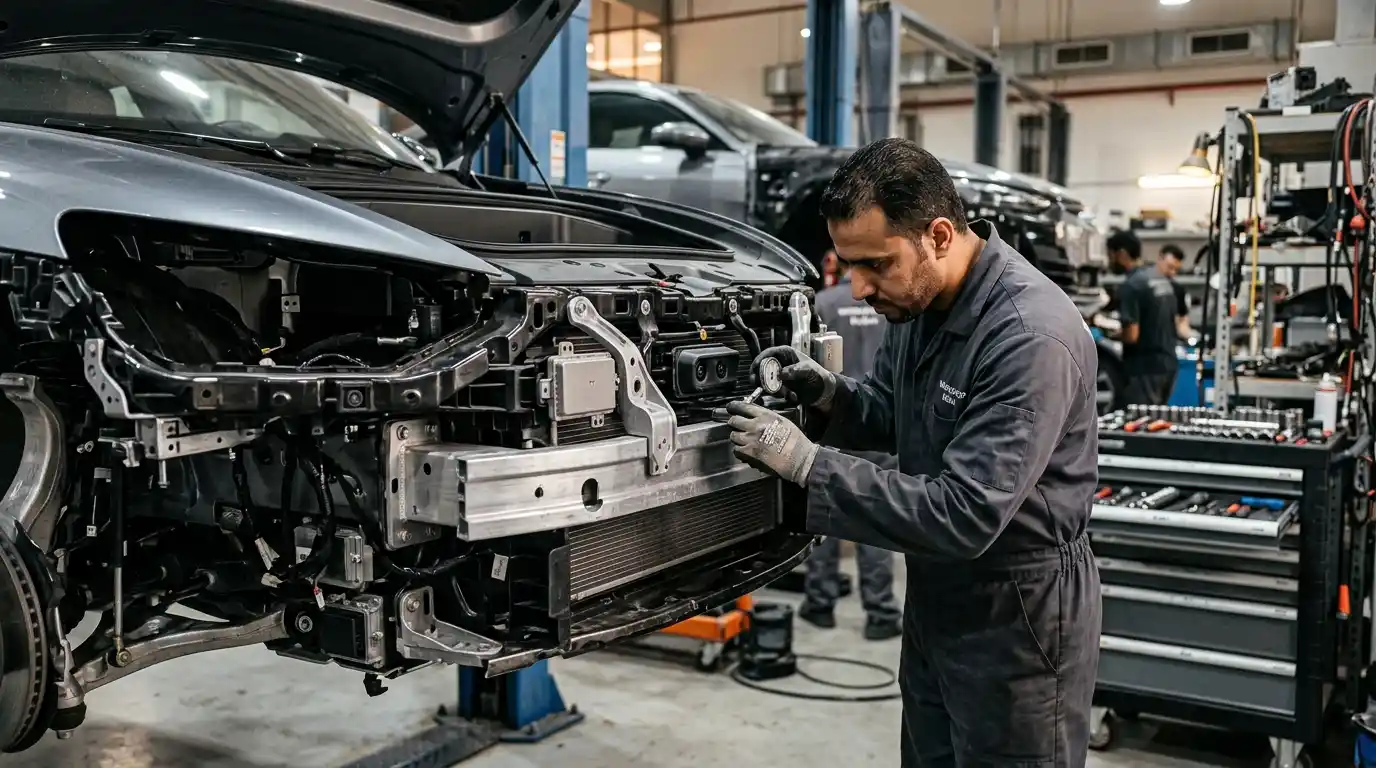
Aquila sensing and body geometry
Mounting position is part of the body repair
NIO’s official information describes its Aquila sensing architecture using a broad sensor set, and model information highlights LiDAR-supported functions. The repair implication is practical: a sensing component can remain powered while its physical relationship has changed.
Verification follows the component and applicable procedure. Scanning, aiming, static targets, dynamic driving or other steps are selected because the repair disturbed them, not because every NIO receives the same package.
Roof and upper zone
Inspect housings and adjacent panels after overhead, windscreen or roof-edge contact.
Front mask
Check bumper, grille, lamp and sensing brackets before cosmetic refinishing.
Corner field
Confirm sensor apertures, bumper guides and wheel-arch attachments are stable.
Rear field
Review camera view, parking response, tailgate fit and lamp mounting after impact.
High-voltage screen before heat
The safe-state decision comes before sanding, pulling or curing
The technician records impact location, enclosure proximity, charging-area condition, coolant evidence, warnings and restraint status. Safe isolation, approved lifting points and restricted work zones are then established for the exact vehicle.
Pulling, welding, cutting, curing and refinishing temperatures cannot be assumed harmless around an EV platform. A battery enclosure is not straightened or patched as if it were an ordinary floor pan. If inspection identifies damage or uncertainty outside the body shop’s approved scope, the vehicle is referred for the appropriate specialist decision.
Record the safe-state decision, diagnostic status, visible underbody and sill condition, lifting arrangement and any limitation before dismantling continues. Cosmetic completion must never be presented as proof of battery integrity.
From impact record to handover
Six controlled stages keep the repair route visible
Locate contact and deformation.
Control high-voltage and mobility risk.
Inspect mounts, seams and supports.
Agree repair, parts and verification.
Correct shape, joints and finish.
Close fit, system and evidence checks.
The sequence may pause for a part, technical review or specialist operation. That pause is preferable to continuing with an incomplete assumption. Completion time is confirmed after the safe state, damage boundary and supply position are understood.
Repair or replacement
EV dependencies can change what looks cheapest at panel level
An outer aluminium or steel panel may be repairable when material condition, access, location and finish allow controlled correction. Replacement may be indicated by tearing, severe stretch, restricted structural position, damaged joint, compromised mount or a procedure that prohibits the intended repair.
Repair may remain sensible when
- The material retains a recoverable overall shape.
- Edges, mounts and neighbouring junctions remain serviceable.
- Access allows controlled correction without disproportionate disturbance.
- Heat, high-voltage proximity and sensing hardware do not make the method unsuitable.
Replacement may enter the plan when
- Tearing, severe stretch or restricted structural location limits correction.
- A joint, mount or sealing surface cannot be restored sensibly.
- Battery, sensor, programming or parts-transfer consequences make aggressive repair the higher-risk route.
- The applicable procedure prohibits the intended repair.
The exact material and generation must be verified rather than inferred from brand reputation. Isolation time, high-voltage restrictions, sensor removal, calibration, sealing, underbody protection and parts programming where applicable all belong in the complete operation.
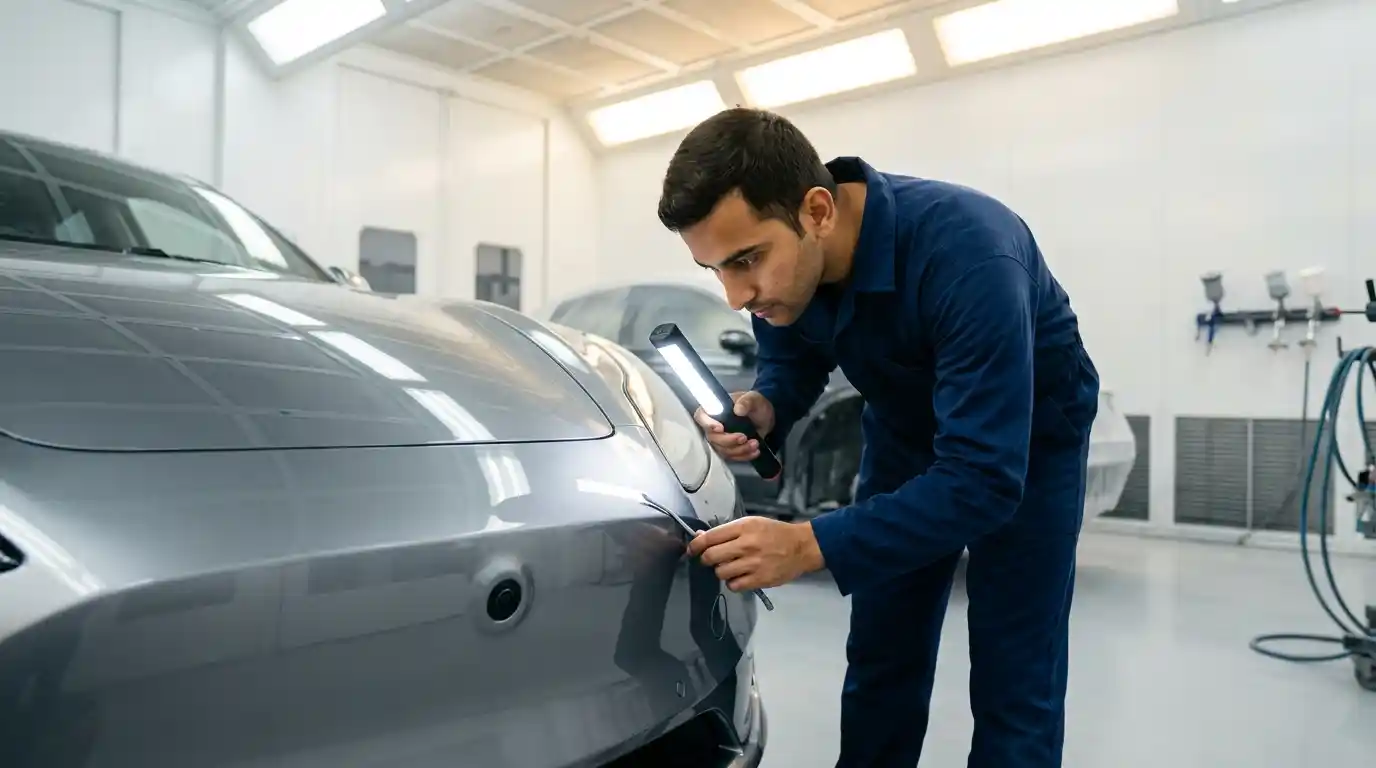
Paint and sensing zones
Refinishing protects appearance without hiding geometry
NIO paint matching starts with code and variant, then uses a spray-out beside the existing vehicle. Metallic or pearl orientation, sun exposure and previous repainting affect the visual result. Broad smooth surfaces and clean design lines make small texture or shape differences visible, so contour and blocking are checked before colour.
Where a cover or panel supports a sensing component, material build and coating restrictions are followed. Filler is not used to disguise a twisted opening, and paint is not allowed to load an aperture or face beyond the applicable requirement. Final review covers hue, flop, texture, gloss, edges and adjacent trim alignment.
Software, calibration and quotation
Digital work does not replace physical repair evidence
An OTA update does not prove geometry
Software can change features and diagnostic behaviour, but a camera or radar-related component still depends on correct physical position. The repair plan distinguishes fault diagnosis from body alignment and calibration, and it notes wheel alignment, tyre pressure, ride height, target environment or road-route conditions when specified.
The estimate keeps dependencies separate
Visible repair, dismantling, parts, paint, scans, alignment and calibration are listed separately where possible. High-voltage safety or specialist battery work is identified as a dependency rather than buried in a generic labour total. Newly revealed damage is photographed before revised approval.
Depending on the confirmed route, work may connect to our accident repair assessment, body panel repair service or paint refinishing process.
Handover boundaries
The result and its limitations are documented separately
The completed vehicle is compared with the opening impact map. Panel shape, gaps, closures, lamp and trim fit, underbody covers, warnings and the systems included in the job are reviewed. Required scan, calibration or alignment evidence is retained with the repair record.
Any battery or high-voltage decision outside the body repair scope is stated clearly. Paint aftercare follows the coating and cure. Pre-existing marks, unrelated faults and deferred items remain separate so the owner can distinguish restored work from unresolved vehicle history.
Model-family emphasis
ET5, EC6 and EL8 move the inspection focus to different zones
Each model still requires VIN and market-specification confirmation before a component or procedure is chosen. Body form changes access, panel relationships and where impact evidence is most useful.
Low saloon side event
Read door flushness, sill condition, wheel clearance and the continuous shoulder reflection across the lower profile.
Coupe-SUV rear event
Check quarter crown, tailgate opening, lamp pocket, camera view and bumper support along the sweeping rear body.
Flagship SUV corner event
Check broad bumper architecture, lamps, sensing hardware, wheel arch and lower shields across the larger corner field.
A repairable outer dent can sit over reinforcement, acoustic treatment or wiring that blocks paintless tools. A replaceable cover can require numerous trim and sensor transfers. We calculate the complete operation rather than using vehicle size as a simple price multiplier.
Recovery and workshop handling
Transport decisions are part of EV body safety
If the NIO cannot be confirmed safe to roll or power, recovery planning should address wheel lock, underbody contact, high-voltage warning, restraint deployment and any sign of heat or fluid loss. Improvised jacking or dragging can add damage at battery-protection and suspension areas.
At the workshop, the vehicle is parked in an appropriate location while safe state is established. Keys, charging status and remote or connected functions are managed so the car does not move or energise unexpectedly. Quarantine or monitoring is based on observed condition and applicable procedure, not applied as theatre to every cosmetic EV repair.
Note transport method, arrival warning status, visible underbody condition, state of charge where available, key control, isolation decision and who approved the vehicle to proceed into body work.

Battery enclosure and sealing
Outer paint cannot answer an enclosure question

A scraped aero shield is not automatically enclosure damage, and a smooth outer sill is not proof that the enclosure is unaffected. Inspection distinguishes protective covers, body structure, cooling lines, fasteners and the enclosure itself. Repairs around floor and sill zones must not block drain paths, crush lines or replace specified sealers with generic products.
Outer cover
Check attachment and abrasion without overstating what lies beneath.
Body interface
Check sill and floor geometry, joints and approved lifting points.
Cooling path
Investigate leaks or displaced lines before the vehicle is energised.
Enclosure
Use the specific inspection and specialist boundary for any contact.
Parts, software and wheel state
Configuration identity travels with the physical component
Parts and software identity
A visually correct camera, lamp or sensor can still require the right part number, software compatibility and installation process. VIN, connector, bracket, hardware revision and configuration are checked before the part is treated as interchangeable.
Programming, pairing, coding and calibration are separate concepts. Clearing a fault is not described as programming; programming is not described as aiming; an OTA update is not described as body alignment.
Wheel and suspension reference
A side or corner impact can change toe, camber, steering position or ride height without leaving a dramatic body mark. Those mechanical conditions affect tyre clearance and can alter the baseline from which cameras and radar-related systems are calibrated.
Uneven wheel position, new steering offset, tyre rubbing or abnormal warning status is investigated through the appropriate mechanical path before electronic verification is treated as the last step.
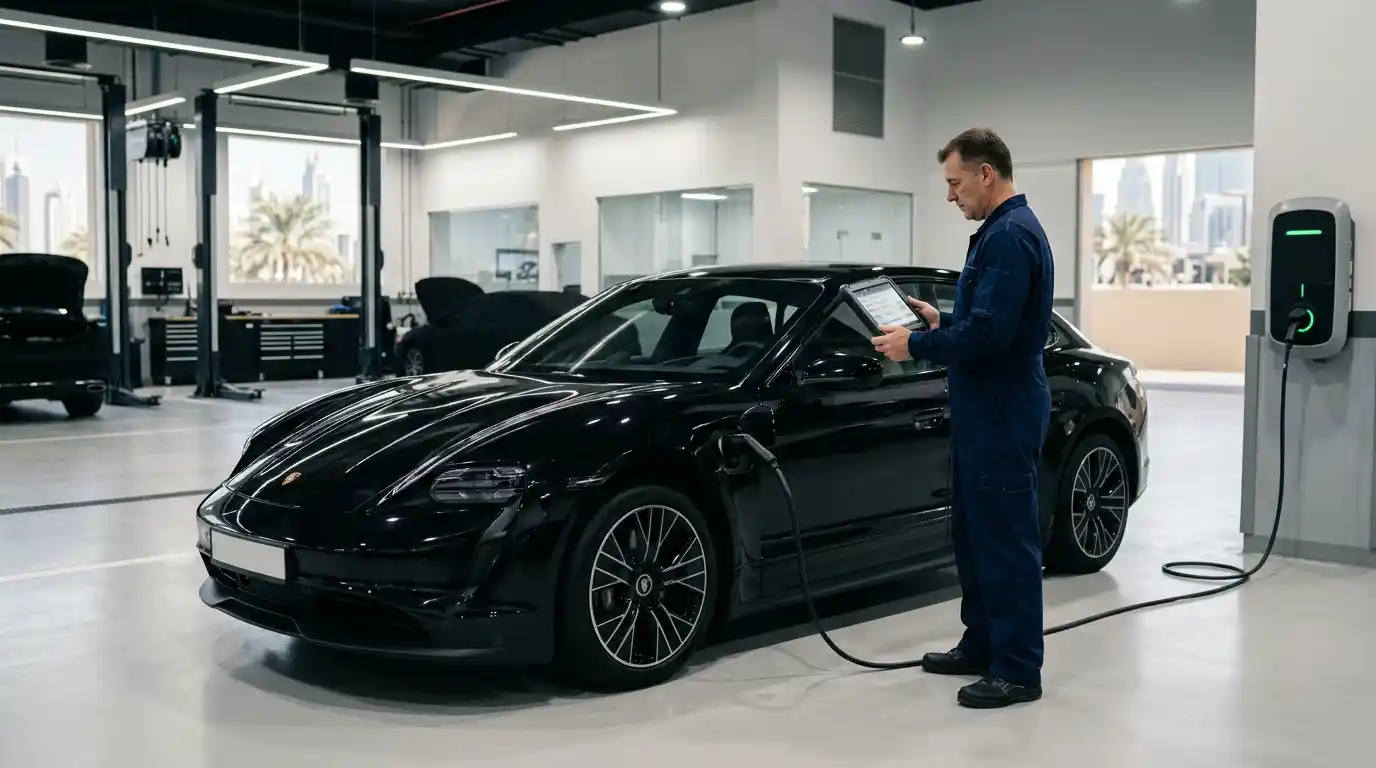
Re-energisation boundary
Charging is resumed only after the affected area is closed
If repair or dismantling reached a charging-side component, high-voltage connector, cooling path or related body opening, the car is not connected to a charger merely as a convenience test. The applicable inspection and re-energisation steps come first. Charging status and warnings are then reviewed under controlled conditions and recorded.
Before release, the NIO key, charging equipment and removed emergency accessories are returned and matched with the intake inventory.
Start with the impact location
Tell us where the force entered the vehicle
Send one wide photograph of the complete side or corner, close views of the impact, the sill or underbody if safely visible, and every warning message. Add model, year, location and whether the vehicle is driveable. We will advise the suitable inspection or recovery path without using photos to overstate safety.