
Panamera collision repair measured along the full body
Porsche Panamera Body Repair Dubai
Porsche Panamera body repair in Dubai should be read across the entire sport-saloon profile. A local strike can disturb a long door reflection, rising rear window line, liftback opening, active rear hardware or a charging area on hybrid variants. We use longitudinal references so a neat local patch does not leave the car visibly broken from another angle.
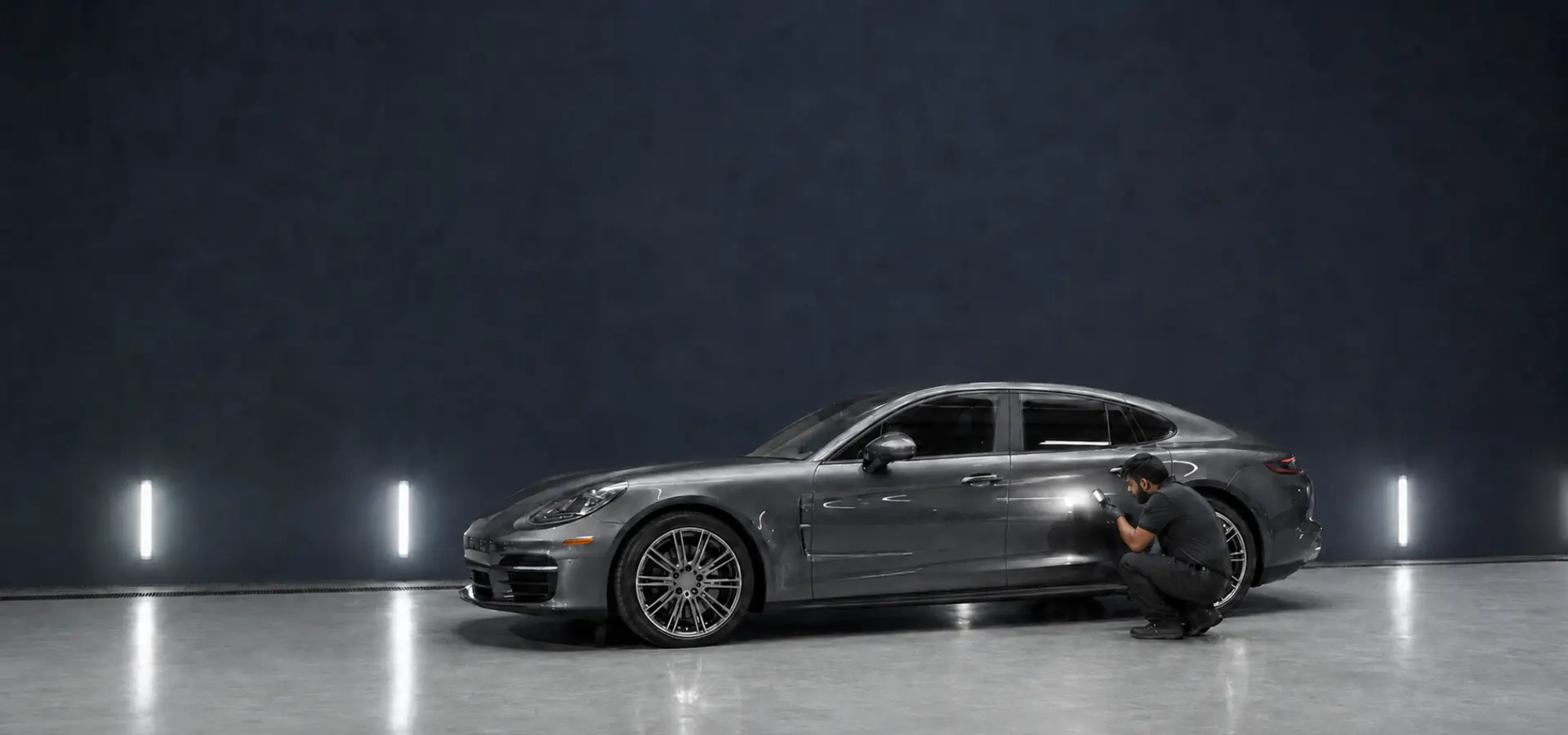
The first inspection uses a full-profile reflection
Close photographs lose the Panamera’s long reference line. Intake includes the complete side from front wing to rear quarter, then a shallow reflection along the damaged zone. This reveals crowns and gap changes outside the visible scrape.
Material, access, edge loading and previous repair determine the method. A dent is not promised as PDR from diameter alone. The completed profile must read continuously at several heights.
Panamera longitudinal ledger
Track one impact across length, opening and movement
The ledger connects a visible mark with the long references that make Panamera fit and finish easy to judge.
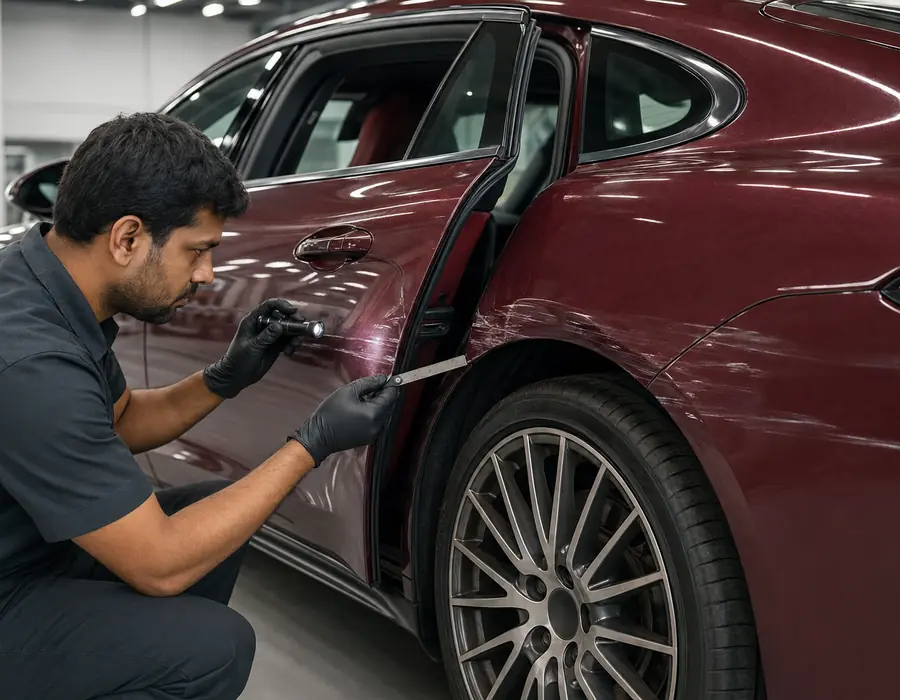
Executive wheelbase changes the side-panel context
Porsche offers Executive models with a longer wheelbase. Door size, rear passenger opening and trim relationships can therefore differ. VIN and physical dimensions settle the body before parts or measurements are selected.
A standard-model component is not assumed suitable because the silhouette looks familiar. Trial fit and aperture evidence precede paint. Part identity remains in the file.
Liftback alignment begins before powered operation
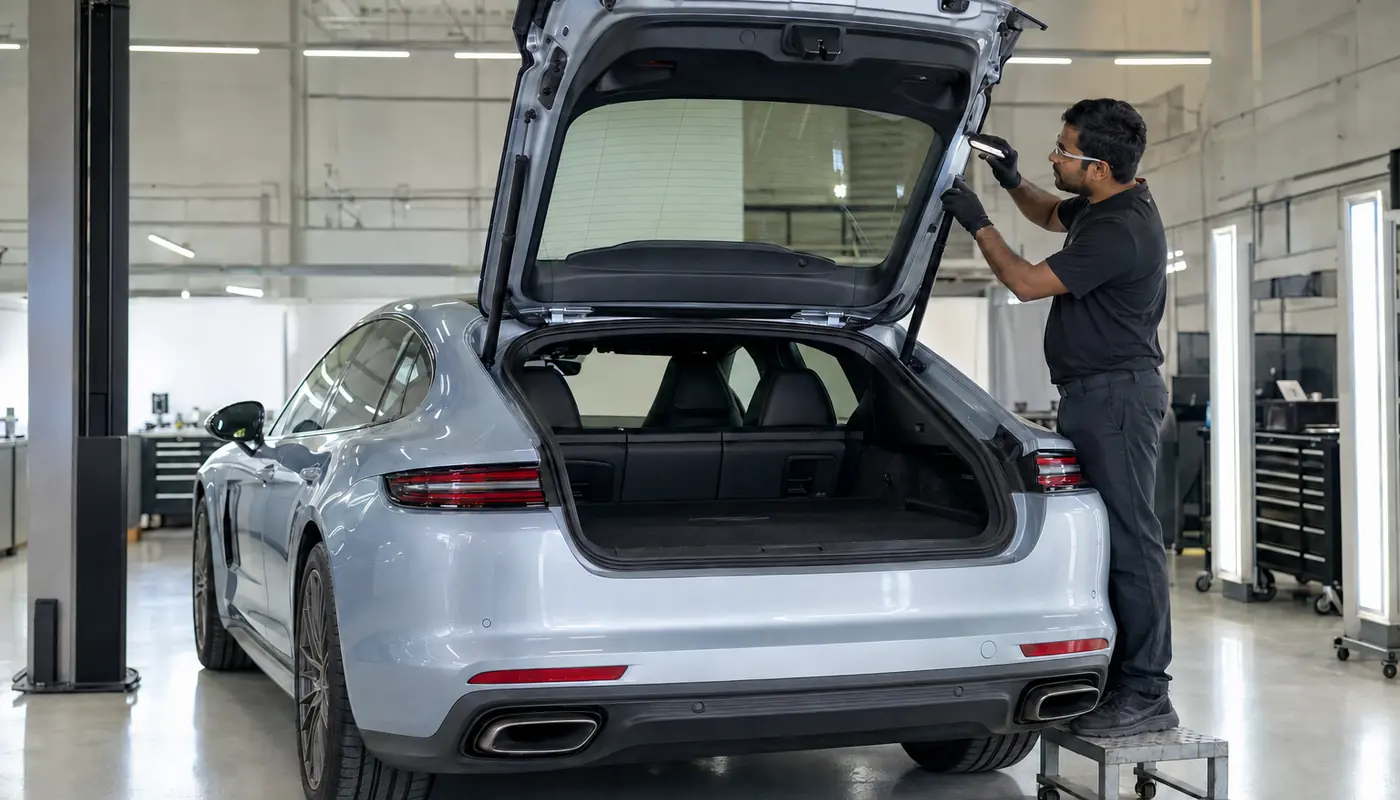
Rear contact is recorded with the liftback at rest. Lamp seating, glass border, bumper transitions, latch and gaps are compared before repeated cycling. Resistance or scraping creates a controlled stop.
The opening is measured before adjustment. Seals, vents, drain paths and luggage-floor evidence remain visible until their checks pass. Water testing targets an identified route.
Rear spoiler hardware needs a stable deck reference
Where deployable aerodynamic equipment is fitted, technicians document its resting position and damage without unnecessary cycling. A moved liftback surface or rear carrier can affect clearance while the actuator still responds.
Body geometry, mounts and wiring are corrected first. Applicable functional confirmation follows current instructions. Paint build and edge masking are checked where they influence movement.
Hybrid charging-area contact is isolated as a decision
A plug-in hybrid Panamera can place charging hardware beside body work. Distortion, water, unusual heat or warnings mean charging stops and specialist evidence is requested. The owner is not asked to test the port.
Quarter-panel repair and charging verification remain separate scope lines. A smooth flap cannot certify electrical integrity. Body production waits at the relevant safety boundary.
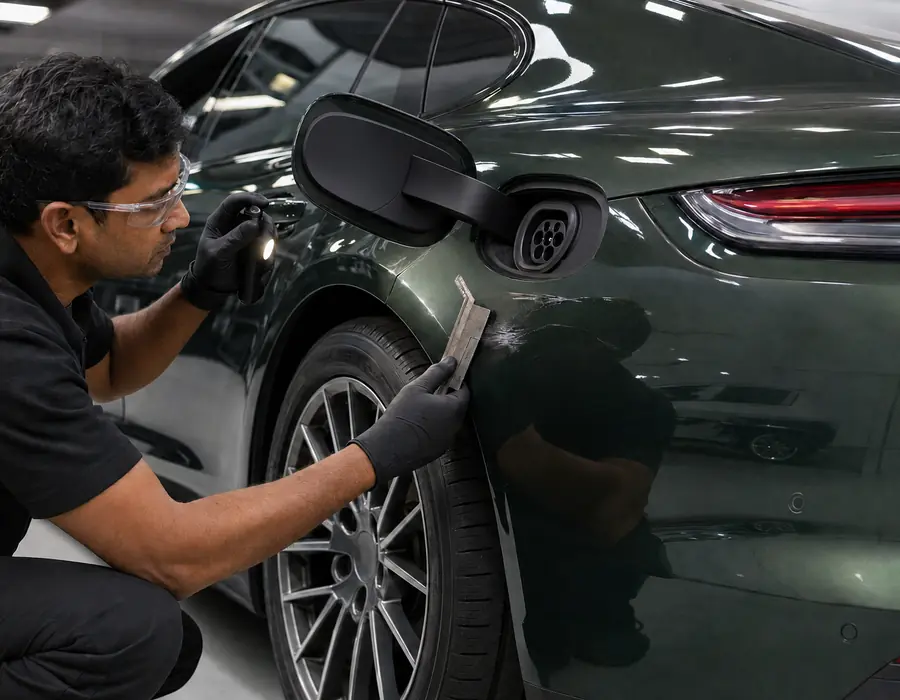
Front impacts can reach cooling and wheel references
A low apron mark may continue through air guides, lower covers and a wheel corner. Safe low images and lift inspection follow the transferred contact. Leaks or temperature warnings prevent an improvised road test.
Tyre, rim, liner and steering evidence are reviewed before wing or bumper refinishing. Alignment answers the impact question when justified; it does not certify every mount.
If the impact reaches a fitted camera, radar or parking-sensor zone, bracket position, cover geometry, wiring and the surrounding aperture are checked before any applicable aiming or calibration. A clear fault-code scan does not prove that moved hardware is physically aligned.
Door quietness depends on unchanged apertures
Long doors can show a small gap error through closing effort, seal compression or wind noise. Arrival adjustment is preserved until hinge, latch and aperture evidence are understood. Glass and handle behaviour join the scope where contact reaches them.
One hinge is not moved to make a photograph look even. Final movement is checked through its normal range, with trims and seals correctly seated.
Read the Panamera clue across the full body
A close-up cannot show whether the long Panamera profile remains coherent.
Complete side or rear three-quarter profile
Liftback, lamp and door gaps at rest
Nearest wheel, roof edge and active-aero area
Executive wheelbase or hybrid charging equipment
Close views after the overall relationship is clear
Different models place the same visible mark beside different systems. Compare Macan body repair when the decision concerns petrol or electric generation checks; choose Cayenne body repair for SUV, Coupé and powertrain configuration.
The car body repair service covers the broader inspection and quotation scope after the Panamera boundary is identified.
Roof and glass borders require coordinated work
Panoramic-roof and fixed-glass surroundings vary by configuration. Upper-side contact is photographed along the complete border before removal. Drain and bonding questions are planned with the affected opening.
Glass is not used to pull body geometry into place. Preparation, cure and water checks follow the applicable system. Exterior completion does not imply roof mechanism certification.
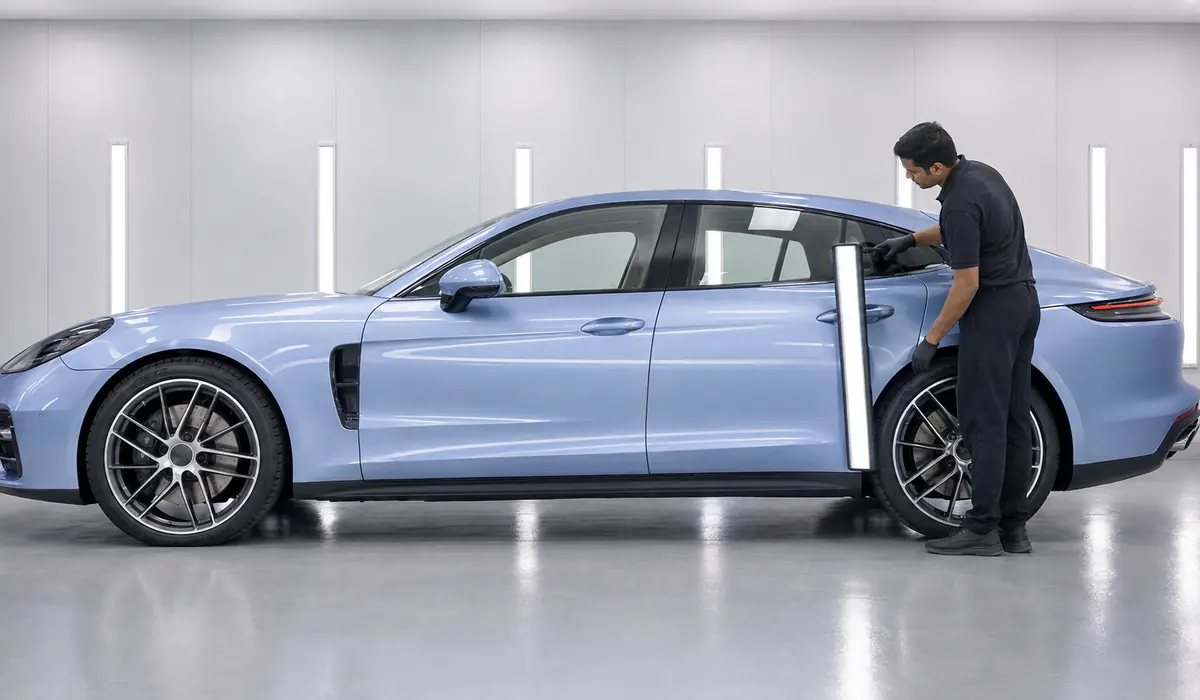
Paint is approved across a long visual runway
Interior protection matters during liftback work
Rear trim, luggage surfaces, screens and seating are photographed and protected. Removed items are labelled by zone, and connectors remain traceable. Dust control is part of body quality.
Reassembly cleanliness is reviewed in neutral light. Existing marks remain documented so later concerns can be evaluated fairly.
Parts selection follows body length and equipment
Bumpers, lamps, doors, glass, spoiler pieces and charging components can vary by derivative. VIN, connectors and the removed part settle the order. Supplier images do not.
New items are checked for transport damage and dry-fitted where they control openings. One-use hardware and transfers are recorded before production.
A quotation separates surface from systems
Panel and paint work, parts, trim, electronic operations and outside services remain distinguishable. Hidden opening, charging or aero findings are marked inspection-dependent.
No Panamera price is invented. Supplements need photographs and authorisation. This structure explains scope movement without disguising uncertainty.
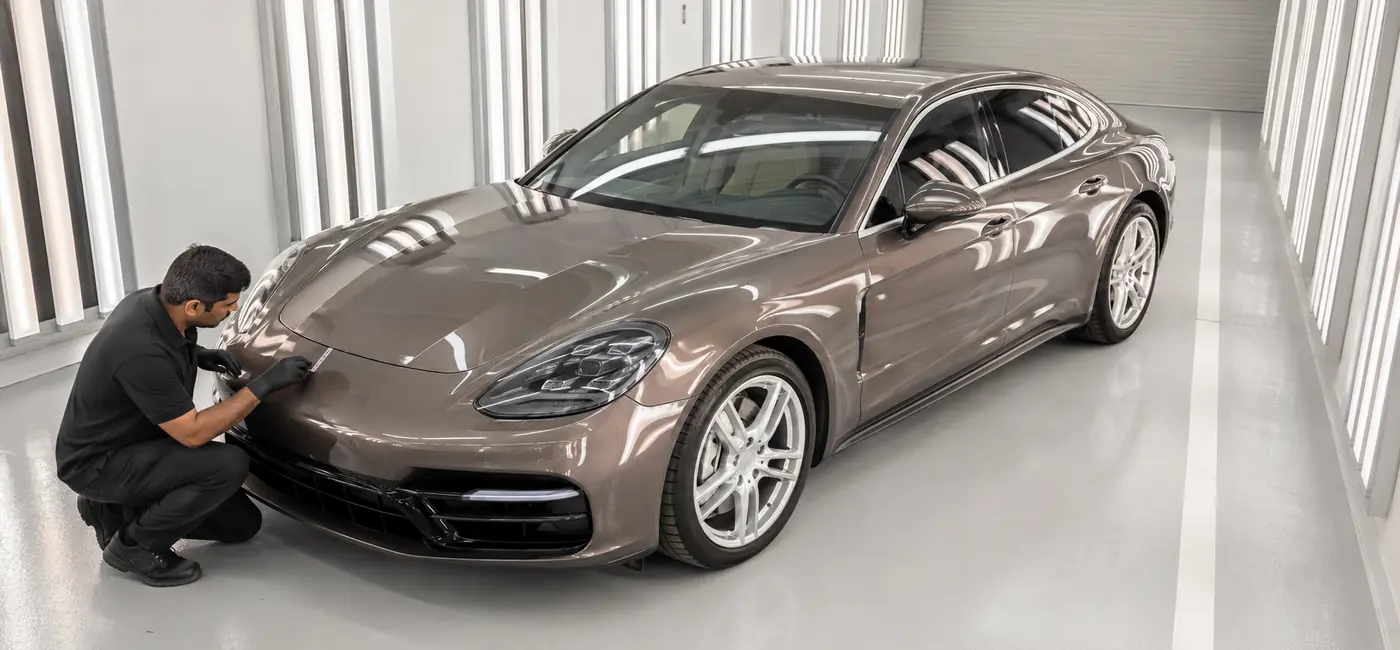
Quality control reads the car from front to rear
The reviewer retraces length, openings, movement, energy boundary and finish. Each quality uses its own evidence. A scan does not approve a reflection, and a colour reading does not approve the liftback.
Handover documents affected systems only. Deferred conditions and previous repairs stay separate. Aftercare follows the coating and fitted parts.
Official Porsche evidence supports body variation
The Porsche Panamera range describes standard and Executive bodies and hybrid variants. That supports exact configuration identification.
It is not a collision manual. Current repair information and vehicle evidence control operations. No authorised-repairer claim is made.
Photo assessment should preserve length and height
Send the entire side or rear, an oblique reflection, all nearby gaps, the charging flap where fitted and dashboard warnings. A detail image comes last.
Those images help choose access and recovery. They do not replace measurement or dismantling.
Aftercare includes movement and coating
The owner receives product-specific washing and cure guidance plus any liftback or spoiler observation relevant to the work. Universal timing is avoided.
Changed movement, water entry, a fresh warning or finish concern should be reported promptly with photographs and conditions.
Front lamps reveal small opening errors
A Panamera headlamp can illuminate while a support or surrounding pocket is displaced. Bonnet, wing and bumper references are checked before the lamp becomes an adjustment target. The long front surfaces make a small height error visible.
Mount integrity, exterior seating, electrical function and applicable aiming are recorded separately. Replacement is identified by VIN and connector arrangement. Paint begins after the opening accepts the correct unit without force.
Wheel-corner evidence can interrupt a side repair
A scrape near the front or rear wheel adds tyre, rim, liner and suspension questions. Steering change, vibration or rubbing is recorded with the contact. Cosmetic production waits until the corner is understood.
Alignment data is interpreted with tyre condition, ride state and body stage. A green printout does not approve the arch reflection, and a scan cannot reveal every distorted bracket.
Trim continuity matters across a long saloon
Window-line, sill and gloss or bright trim can reveal handling marks and incorrect seating. Intake photographs protect existing condition. Removed pieces are stored away from abrasive hardware and checked for distortion.
Final review uses diffuse and directional light. Trim sits on established body geometry rather than being pulled into place. A new decorative strip cannot hide an aperture problem.
A second repair may need a different method
Previous repair evidence changes how the current damage is assessed and which correction methods remain appropriate.
- Paint-depth readings can reveal filler or earlier refinishing.
- Underside evidence can show previous panel replacement or non-standard fasteners.
- Existing findings are photographed before the current repair changes them.
- Repeated heat or correction may be unsuitable on an altered substrate.
- The estimate separates the reported collision from prior defects.
- When a durable local repair is no longer viable, the reason and alternatives are explained.
A photo estimate preserves uncertainty
The whole profile, reflection, gaps and warning display can guide intake. Images cannot reveal every liftback bracket, charging connection or internal carrier. The response names the visible scope and the access needed for confirmation.
New findings are documented after dismantling and authorised before work expands. Remote review helps plan the bay; it does not become final technical permission.
Insurance approval cannot set repair limits
Administrative agreement covers cost, while material, structural, electrical and calibration decisions remain technical. An insurer cannot authorise heat or omit a procedure simply by approving a line item.
Supplements connect the new finding with its method and cost. The affected production gate stays closed until authority is resolved. Completion dates remain evidence-based.
Aftercare follows each repaired layer
Paint, glass adhesive, protective film and powered hardware can require different guidance. The handover identifies which systems were involved and avoids one universal waiting period.
The owner reports water entry, changed liftback movement, a new warning or finish concern with photographs. New parking damage remains separately recorded so investigation stays fair.
Low front contact needs a ground-level photograph
A ramp edge can mark the lower apron while the upper face looks undisturbed. The photo set includes both wheels and a safe low view. On the lift, fasteners, ducts and covers are traced in the direction of travel.
Loose material, leakage or changed steering prevents casual testing. Internal air paths stay visible at sign-off. The polished front is not treated as proof of lower completion.
A chauffeur-used car still keeps every repair gate
- Business travel may make downtime important.
- Use pattern cannot authorise skipped measurement, curing or calibration.
- Updates state the completed milestone, next dependency and any decision awaiting approval.
- Planning information is provided without an unsupported finish date.
- Convenience affects communication, not the physical repair limit or final evidence.
Repair quality survives several lighting conditions
Daylight reveals colour travel, line lighting reveals shape and lower illumination exposes edge work. The Panamera is not approved beneath one flattering source. Each condition is used for the quality it can show.
The final photographs include the full repaired elevation and important openings. Detail images support rather than replace context. This makes later comparison more reliable.
The handover separates comfort from collision work
Seat, climate or infotainment concerns that were not affected by the repair remain outside the body scope. Any removed interior piece is checked for correct refit and cleanliness.
This boundary prevents a polished body repair from implying complete vehicle renewal. It also gives the owner a precise route if an unrelated comfort feature later needs diagnosis.
Show the Panamera as one continuous body
Send the full profile, the damaged opening, nearby lamps or wheels, charging status and all warnings. We will map the repair along length, movement and finish.