
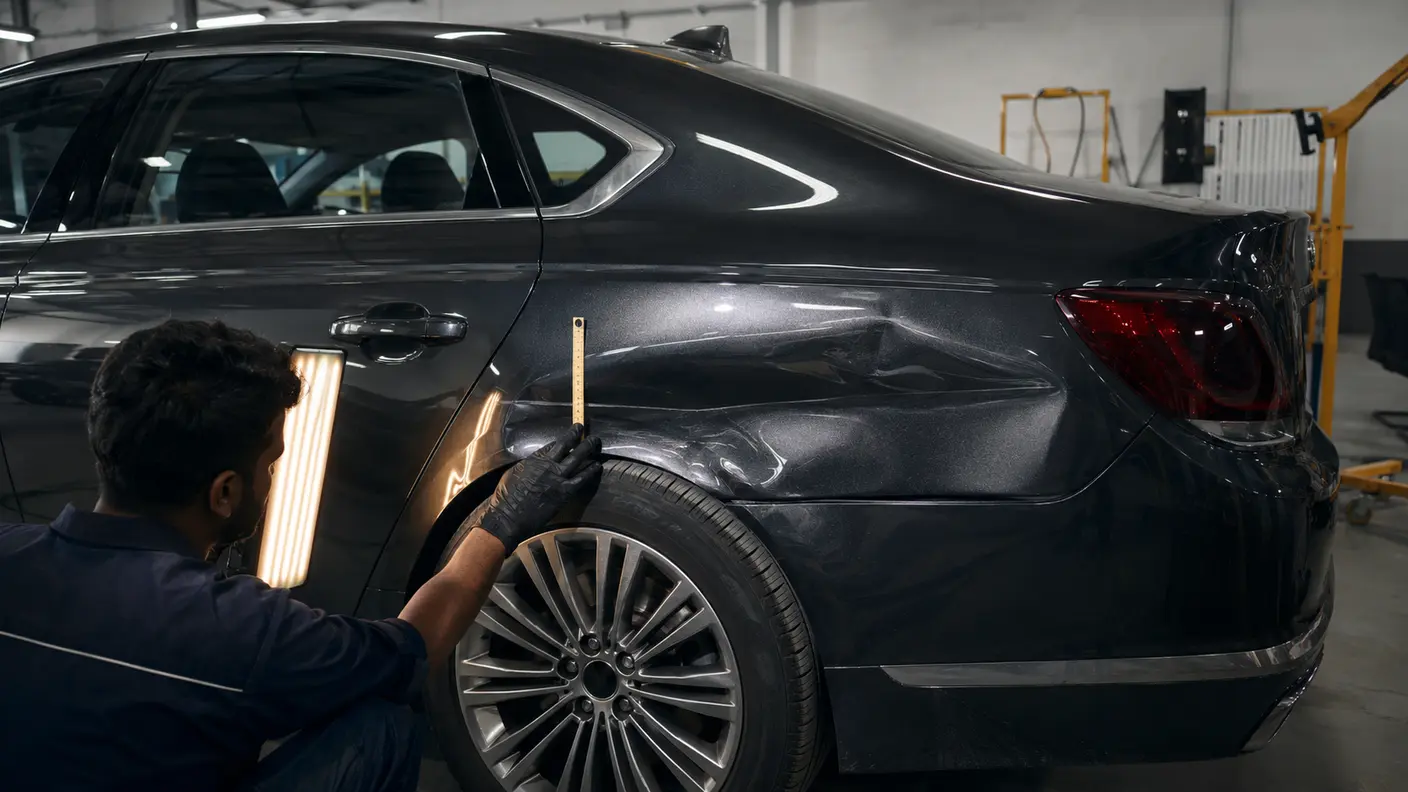
Long reflections, wheel arch shape and rear corner fit
Quarter Panel Repair Dubai
A rear quarter panel carries more relationships than the visible dent. We inspect the metal surface, wheel arch, rear door gap, bumper corner, lamp area and closure opening before choosing paintless correction, conventional repair or a wider collision scope.
Read the complete rear side
A quarter panel is not a detachable fender
The rear quarter panel is usually integrated into the vehicle body rather than attached like a front fender. Its visible surface can connect the rear door opening, wheel arch, lamp area, boot or tailgate opening, roof side and lower sill zone. That continuity is why a dent that looks local deserves a wider reading of shape, gaps and impact direction.
We inspect the full side and rear corner before choosing a method. Directional light reveals whether the damage is a shallow dent, a sharp crease, a stretched area, a folded wheel arch lip or a collision path that reaches adjoining zones. The rear door gap, bumper corner, lamp seating and closure opening help show whether the panel alone moved or whether the impact travelled further.
The estimate should distinguish visible quarter panel repair from separate work on the door, bumper, lamp, wheel arch liner or inner area. A damaged outer skin does not automatically prove structural movement, but a side or rear impact should not be reduced to paint until the relationships have been checked.
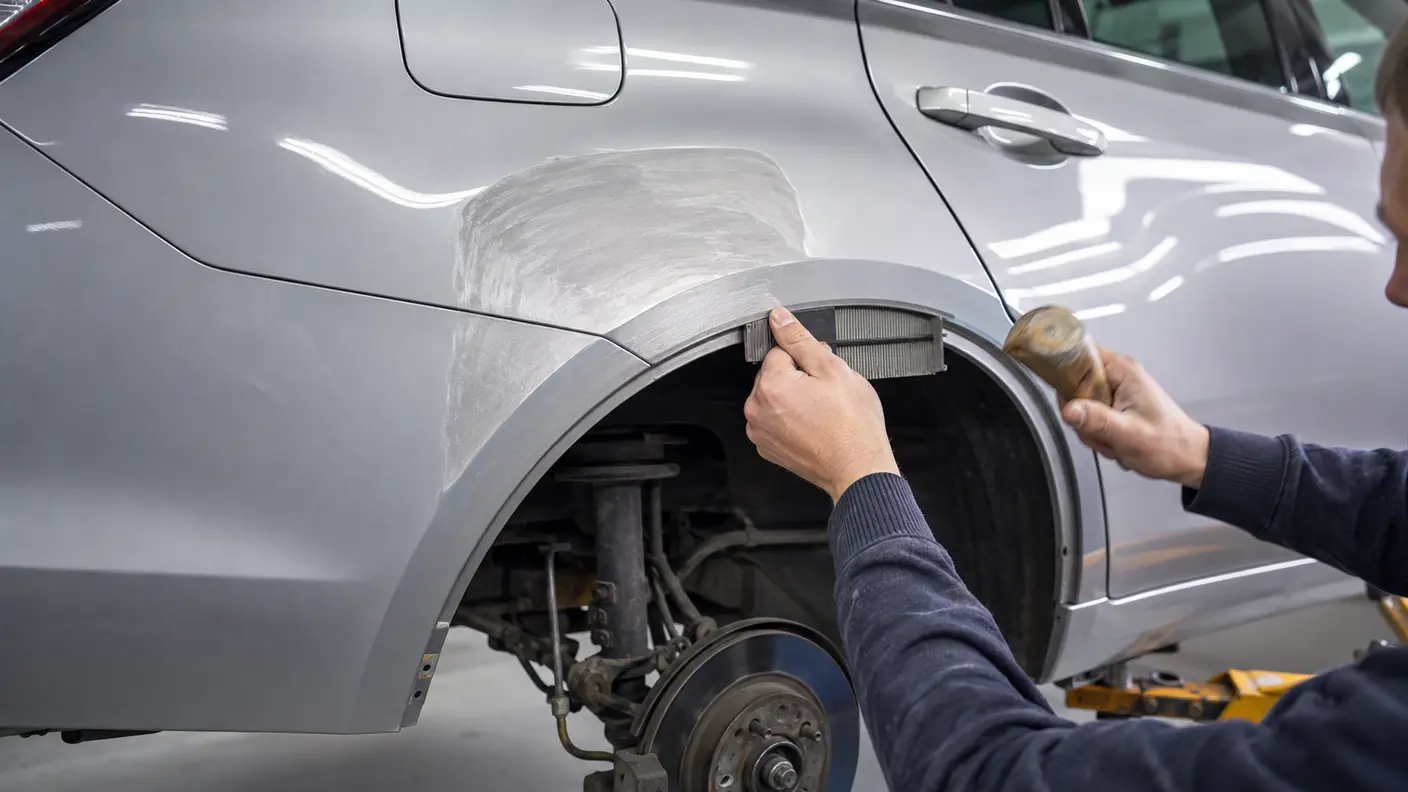
Method follows access and damage
Repair access changes the method
Quarter panels offer less direct rear access than many doors or front fenders. Interior trim, wheel arch liners, lamps or other adjacent items may limit the back of the damage. Access affects whether controlled metal correction, a paintless dent approach, a conventional repair or a replacement section is technically reasonable.
Small suitable dents may be candidates for paintless dent repair when the coating is intact, the metal is not badly stretched and tool access is safe. A sharp crease through a body line, cracked paint or a distorted arch often requires conventional repair and refinishing. Extensive tearing, severe stretching, corrosion or damage involving a prescribed sectioning area can move the decision towards replacement after a more detailed plan.
No method should be chosen from dent diameter alone. Metal condition, material, previous filler, access, edge involvement and the quality expected across a long reflective surface all matter.
Four linked repair zones
Do not isolate the deepest point
Wheel arch and door opening checks
The wheel arch is a styled edge and a functional opening. A dent above the arch can flatten its crown. A kerb or side impact can fold the lip, disturb liner fasteners or alter the visual distance around the tyre. We inspect the arch from several angles and compare the curve with undamaged reference areas where useful.
At the front of the quarter, the rear door gap should read consistently for that vehicle. We do not impose a universal number because designs and adjustment ranges differ. We look for abrupt taper, contact marks, paint chipping at the edge, latch changes and evidence that the door or opening moved.
At the rear, bumper corner seating, lamp fit and the boot or tailgate opening provide additional evidence. A cosmetic quarter repair should not hide a loose bumper retainer or a changed closure relationship.
Restoring a long reflected surface
Quarter panel repairs are judged through moving reflections. The technician works from the outer perimeter of the damage towards a stable contour, controlling crowns and tension rather than merely pushing the deepest point outward. Overworking can stretch metal and make the panel harder to stabilise.
Where paint is already damaged, coating is removed only as required to expose sound substrate and support the repair system. Suitable metal finishing reduces dependence on thick filler. Any finishing material is applied in controlled layers and shaped across the full reflection path, including the body line and arch transition.
Primer and guide coat help reveal low spots, sanding waves and edge problems before colour. This stage matters because a quarter can look acceptable under flat light but show distortion outdoors. The panel should be evaluated from the rear, side and low angle before refinishing.
Paint planning across the rear side
Metallic and pearl finishes are sensitive to application orientation. Colour formula is one part of the match; spray technique, ground coat, film build and clear coat texture also affect the visible result. The practical paint area depends on the repair location, adjacent edges, existing coating and the vehicle finish.
A local repair near the middle of a broad quarter requires enough room for sound preparation and colour control. Damage near a door edge, lamp pocket or roof side transition introduces different masking and blend decisions. We explain the proposed refinishing area rather than promising a tiny invisible spot based only on the dent size.
Previous paintwork can affect colour and coating stability. Thickness readings and inspection may reveal an earlier repair. Unstable old filler, peeling clear coat or contamination must be addressed before fresh paint is applied.
For impacts extending beyond one cosmetic surface, our car body repair service provides the relevant parent scope without forcing unrelated service links.
Preserve or replace
Repair or replace the quarter panel
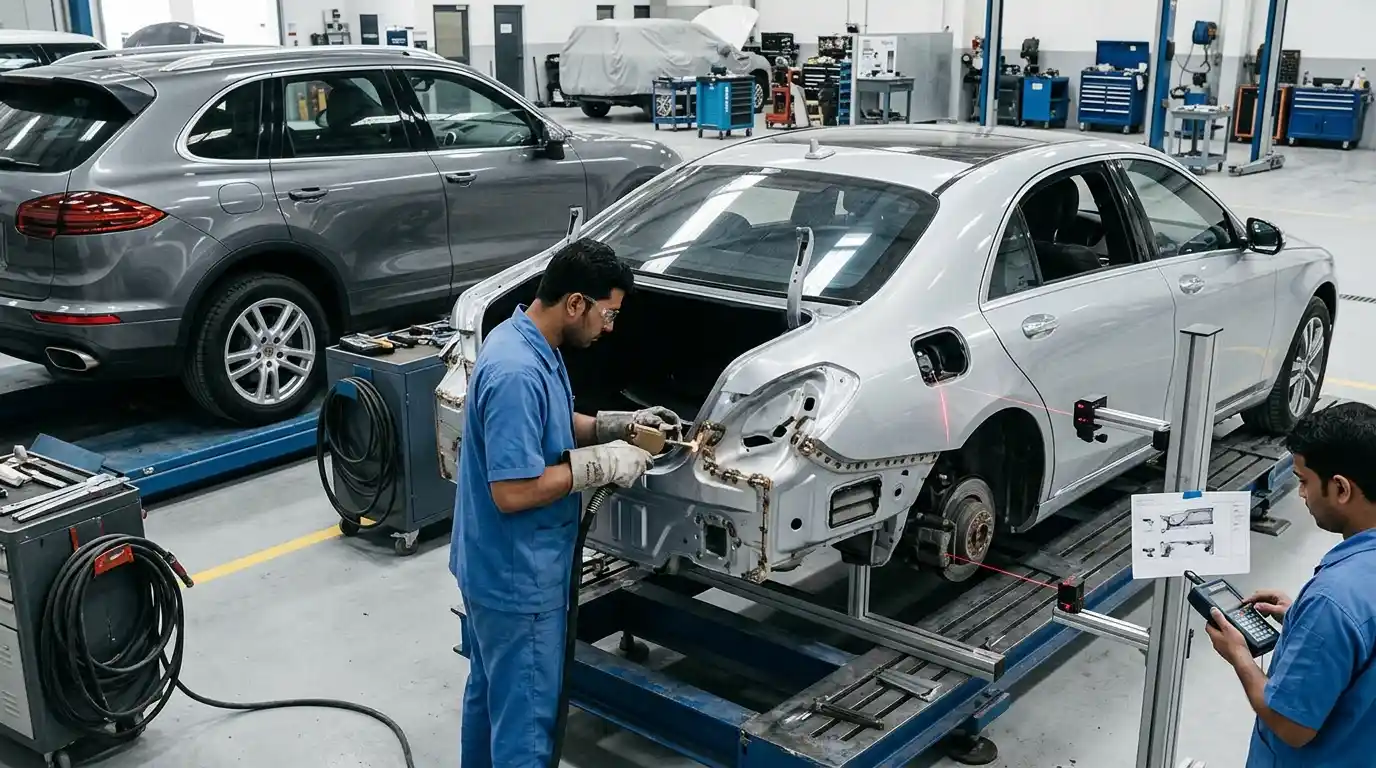
Repair preserves more original assembly when the panel can be returned to a stable shape with a defensible finish. Replacement can be appropriate for severe tears, extensive stretch, inaccessible compound damage, corrosion or a condition where repair would require excessive heat or filler.
Replacement is not simply removing one bolt-on piece. The exact vehicle construction, material, joints, corrosion protection and manufacturer repair information matter. Sectioning and joining decisions require a vehicle-specific procedure and a scope beyond cosmetic dent work. Nearby glass, trim, wiring, fuel-area components and interior surfaces may also affect the plan.
We do not use replacement language to inflate a local repair, and we do not promise repair when the panel condition argues against it. The decision should be documented after access and evidence.
Indicative Dubai planning bands
Dubai cost guidance for quarter panel repair
Indicative planning can begin around AED 450 to AED 1,000 for a suitable local dent correction where paint and access support that method. Conventional quarter panel repair and refinishing commonly plans around AED 1,200 to AED 3,500. More extensive collision repair with arch, closure, inner-area or replacement work can move from AED 3,500 to AED 10,000 or more.
These are not fixed quotations. Material, dent depth, metal stretch, body-line involvement, wheel arch damage, access, previous repair, paint finish, trim removal, glass or lamp work, corrosion protection, parts and hidden findings all affect the amount.
A useful estimate separates outer panel correction, paint, adjoining bumper or door work, parts, authorised access and conditional findings. Broader collision pricing can be compared with our published Dubai accident repair cost guide.
Suitable local correction
AED 450 to AED 1,000For appropriate limited damage with suitable paint, access and metal condition.
Repair and refinishing
AED 1,200 to AED 3,500For conventional contour restoration and paint, depending on complexity and finish.
Extensive or replacement scope
AED 3,500 to AED 10,000+For wider collision, inner-area, arch, closure or replacement work after inspection.
Schedule, claim file and final review
Timing, insurance and handover
Timing depends on inspection, dismantling, metal correction, curing, paint, reassembly and any parts or approval wait. A suitable local repair can be much quicker than a replacement scope. Insurance review and supplementary findings can add calendar time even when active workshop work is controlled.
For claim work, we document the visible quarter, adjoining gaps, bumper and lamp relationships, wheel arch and any incident-related finding revealed after authorised access. Coverage, excess, liability and approval remain decisions for the insurer and policy.
At handover, the quarter is reviewed clean and dry. The long reflection, body line, arch curve, rear door gap, bumper corner, lamp edge and closure opening are checked. Disturbed liners, trim and fasteners should be secure. The owner should receive a clear record of what was repaired, painted or replaced and any separate recommendation.
Hidden relationships after a side or rear impact
Visible quarter damage can sit beside separate concerns
The outer quarter panel is the first surface an owner sees, but the repair plan should consider what sits around it. The wheel arch liner, bumper retainer, lamp pocket, fuel door area, boot side trim and closure seals can all be close to the damage route. Their presence does not mean they are damaged. It means the technician should record the accessible condition and avoid making a surface-only assumption after meaningful contact.
Wheel contact is treated separately from body shape. A scrape above the arch does not prove suspension damage, while a direct impact into the wheel, a changed stance, steering symptoms or abnormal tyre clearance can justify a mechanical inspection. Cosmetic body work should not be presented as a substitute for alignment, suspension or roadworthiness checks where evidence indicates them.
The fuel filler area deserves controlled handling on vehicles where it sits in the quarter. The flap, pocket, neck area and nearby trim should not be forced or heated casually. Vehicle construction and safe repair information guide any work close to sensitive components.
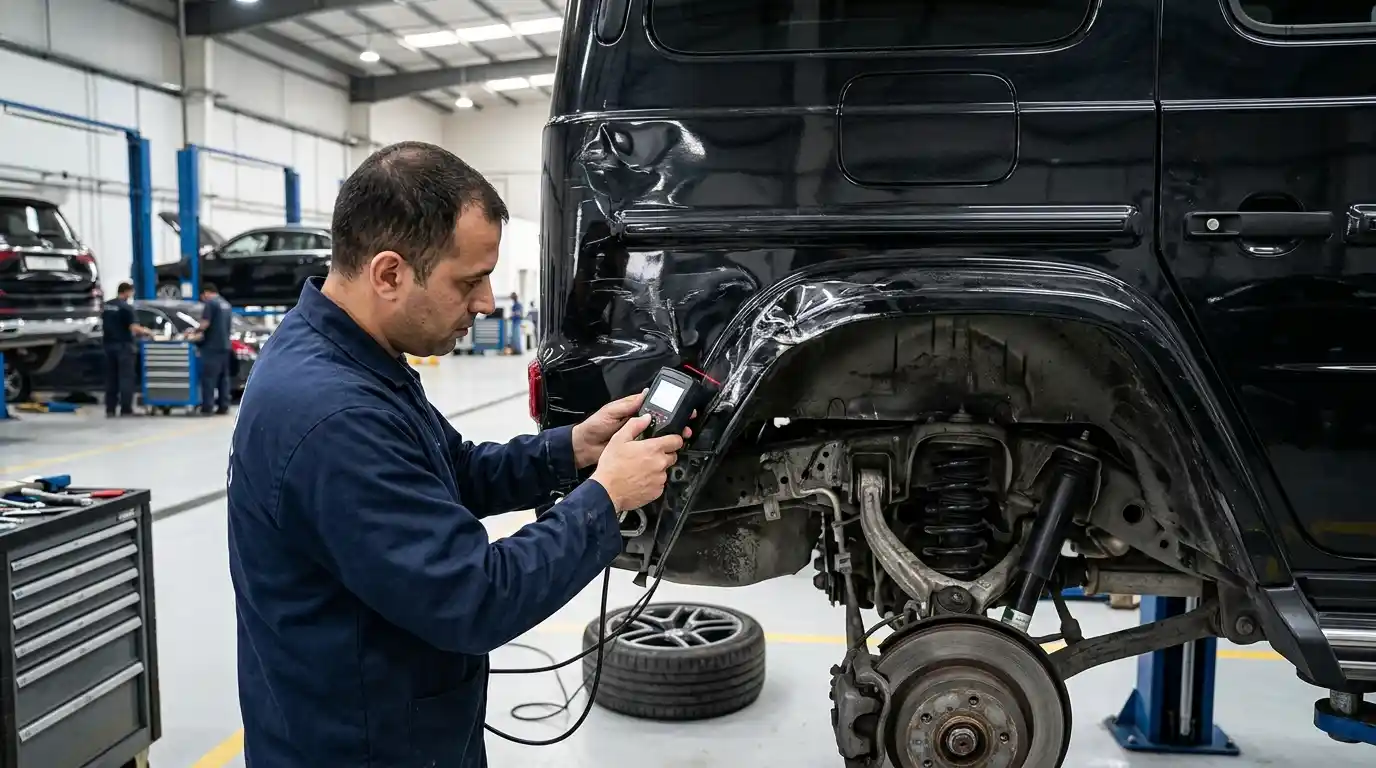
Material and construction
Steel and aluminium quarter panels need different planning
Quarter panels are not all made from the same material. Steel and aluminium behave differently during correction, heat input, contamination control and finishing. The vehicle and panel material should be identified before a repair method is promised. A technique suitable for one substrate should not be transferred automatically to another.
Aluminium work needs attention to dedicated tooling and cross-contamination control. Steel repairs need equal discipline around stretch, corrosion protection and any welded area. Mixed-material vehicles can place several substrates close together, making vehicle-specific information important when the scope moves beyond an outer cosmetic correction.
The estimate should identify when the material materially changes labour, access or replacement planning. It should not use material terminology merely as decoration.
Previous repairs
Old filler and paint can change the new repair
A quarter panel may have been repaired before without the current owner knowing. Paint thickness, reflection, sanding marks and coating behaviour can indicate previous work. A new impact across old filler can crack or release material beyond the fresh dent.
When unstable previous material is found, the sound repair area may be larger than the visible new crease. Painting over loose filler or failing clear coat would conceal a weak base. The owner should be shown the finding and the estimate should separate it from the new incident where practical.
Previous repair does not automatically require replacement. It does require an honest assessment of substrate condition, remaining metal shape and the finish that can be supported.
Owner inspection guide
Photographs that make remote triage more useful
Photographs help us decide what must be inspected first and whether the vehicle should be viewed before any pricing discussion. They cannot confirm metal stretch, inner construction, previous filler, attachment damage or a final paint method. A physical inspection remains the basis of the quotation.
Quality risks worth avoiding
A quick cosmetic result can fail across a large rear surface
One common failure is concentrating only on the deepest dent while leaving a broad crown around it. The centre may rise, but the long reflection remains distorted. Another is using thick filler to replace metal correction. Excessive material can shrink, crack or reveal an edge later, especially when the panel flexes or experiences Dubai heat.
Poor paint planning can leave a visible colour boundary, metallic orientation change, dry clear coat or texture mismatch. Masking too close to the repair can create hard edges. Removing trim carelessly can add broken clips or scratched mouldings to the job. Reassembling before the coating has cured can mark fresh paint at the bumper, lamp or door edge.
A controlled process records the starting condition, protects adjacent parts, verifies shape before colour, allows curing and checks the complete rear side at handover. The owner should be able to see how the method addressed the panel rather than only how the final polish catches light.

Before authorising work
Questions that make a quarter panel estimate clearer
Ask whether the proposed method is paintless correction, conventional metal repair or replacement, and what evidence supports that choice. Confirm which adjoining items are included: rear bumper corner, lamp, door edge, wheel arch liner, trim, fuel flap and closure-area work should not be assumed merely because they are nearby.
Ask how previous paint or filler will be handled if it is found after preparation. The estimate should explain whether supplementary approval is needed and whether the finding changes the repair area. For replacement work, confirm the exact part, source, joining scope, corrosion protection and any vehicle-specific procedure that affects timing.
Clarify the paint area, colour strategy and which trim must be removed rather than masked around. Ask what final checks will be recorded at handover. A useful answer should include long reflections, body line, wheel arch curve, rear door gap, bumper and lamp seating, disturbed fasteners and aftercare.
Finally, separate active repair time from parts and insurance waiting. Confirm whether the quoted schedule begins at vehicle intake, repair approval or parts arrival, because those dates can differ materially during insurance claim work. This prevents an optimistic workshop estimate from being mistaken for a guaranteed calendar date when approvals or special-order items remain outside the repair sequence.
Common owner questions
Quarter panel repair FAQs
Can a rear quarter panel dent be repaired?
Often, yes. Repairability depends on dent depth, metal stretch, body-line and wheel-arch involvement, paint condition, access, material and previous repairs.
Is a quarter panel the same as a fender?
No. A front fender is commonly bolt-on, while a rear quarter panel is generally integrated into the body and connects several openings and exterior relationships.
How much does quarter panel repair cost in Dubai?
Suitable local dent work may plan around AED 450 to AED 1,000. Conventional repair and refinishing commonly ranges from AED 1,200 to AED 3,500. Extensive collision or replacement work can exceed AED 3,500 and requires inspection.
Can paintless dent repair be used on a quarter panel?
It may suit a shallow accessible dent when paint is intact and the metal is not badly stretched. Sharp creases, cracked paint, edge damage or limited access can require another method.
Does the rear bumper need to be removed?
Removal may be needed when the damage reaches the bumper joint, retainer, lamp area or lower quarter, or when access and refinishing quality require it.
Can a creased wheel arch be repaired?
Often, but the arch lip, metal stretch, liner attachments, paint damage and relationship around the tyre must be inspected. A sharply folded or torn edge is more complex.
When should a quarter panel be replaced?
Replacement can be considered for severe tearing, extensive stretch, corrosion, inaccessible compound damage or when a safe stable repair is not defensible.
Will the paint match the rear door?
The process aims for a coherent colour, metallic or pearl orientation, gloss and texture. Existing paint condition and previous repairs influence the final paint plan.
Can photographs provide a final quote?
Photographs help triage but do not confirm metal stretch, reverse access, previous filler, inner-area findings or exact coating condition. Physical inspection is required.
Does quarter panel damage affect wheel alignment?
A visible dent does not prove alignment change. A significant side impact, wheel contact, altered stance or driving symptom can justify a separate mechanical or geometric inspection.
Can quarter panel repair be included in insurance work?
We can document visible damage and prepare an estimate. Coverage, liability, excess and approval depend on the insurer and policy.
What should be checked at handover?
Review long reflections, body line, arch shape, door gap, bumper corner, lamp edge, colour, texture, disturbed trim and liner fasteners.
Start with the complete side view
Arrange a quarter panel repair assessment in Dubai
Send a full side image, close damage view, wheel arch angle and photographs of the rear door and bumper joints. We will inspect the panel and connected relationships, then explain the proposed repair and current quotation.