
TESLA MODEL 3 COLLISION, PANEL AND PAINT ASSESSMENT
Tesla Model 3 Body Repair Dubai
Tesla Model 3 body repair in Dubai begins by identifying the exact impact path, not by pricing the most visible dent. A bumper corner can move a lamp mount or sensor bracket; a side strike can involve the door, sill, wheel alignment and battery-adjacent floor; a rear impact can affect the boot opening, quarter-panel edges and sealing surfaces. The correct scope depends on model year, damaged zone, warning state and what becomes visible after authorised access.
BodyShop.AE assesses cosmetic marks, parking dents, bumper distortion, door and quarter-panel damage, paint mismatch, glass-edge concerns and collision-related alignment complaints. This draft makes no unsupported claim that every Tesla repair can be completed in-house. Where the required procedure, tooling, battery assessment or system calibration exceeds the verified scope, the written outcome is escalation rather than an improvised repair.
Outer damage
Photograph the whole damaged side, the affected panel in reflection, every broken edge and the dashboard warning state.
Impact connections
Check gaps, lamps, closures, wheel position, lower covers and nearby camera or sensor mounts as one related area.
Safe next step
Separate a drivable cosmetic job from a vehicle that needs recovery, isolation or specialist assessment before movement.
A Model 3 estimate starts with four evidence zones
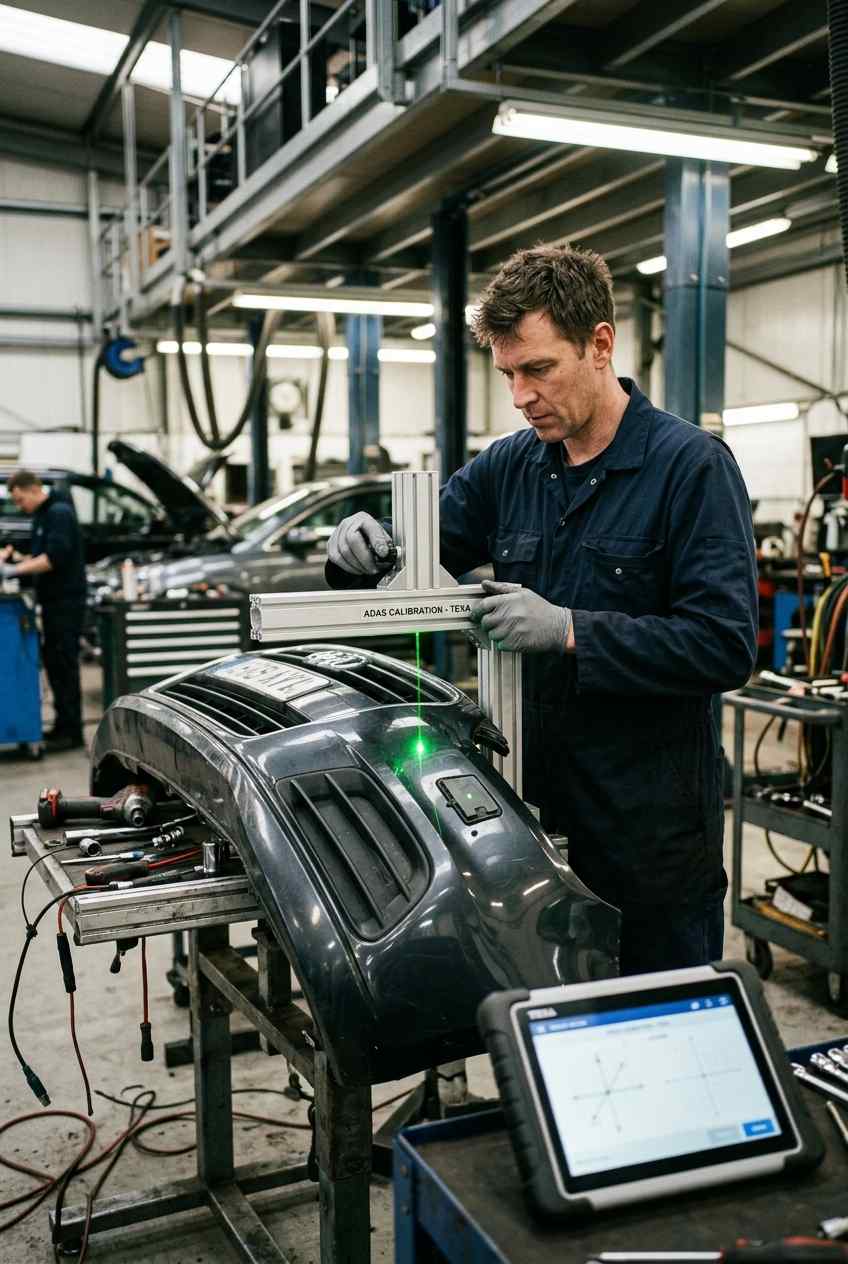
The first zone is the painted exterior: bumper fascia, bonnet, wings, doors, quarter panels, boot lid and rocker covers. The second is the attachment layer behind it: retainers, brackets, absorbers, hinges, latches and lamp mounts. The third is geometry: panel gaps, closure effort, wheel position, glass relationships and the shape of openings. The fourth is the vehicle-system layer: warnings, cameras, parking functions, restraint components and the high-voltage area near the floor. An estimate that covers only the first zone is not yet a collision-repair plan.
Intake records the vehicle identification number, model year, wheel and trim specification, pre-existing marks, the direction of impact and any change in steering, noise, charging or warning messages. We compare both sides of the car where useful. A single narrow gap may be a panel adjustment; several changed relationships around one corner can show that the load travelled farther than the paint damage suggests.
| Damage evidence | What it can affect | Quotation treatment |
|---|---|---|
| Bumper corner pushed inward | Retainer, absorber, lamp edge, sensor mount | Visible scope plus conditional dismantling |
| Door crease near sill | Door shell, hinge/latch, rocker, lower floor zone | Geometry and safe-lift review before method |
| Rear impact at boot edge | Boot fit, rear panel, seal, lamp and quarter edges | Opening measurements and leak-risk checks |
| Wheel or tyre displaced | Suspension, steering and underbody attachment | Stop cosmetic approval; inspect mechanically |
Model year determines the permitted repair route
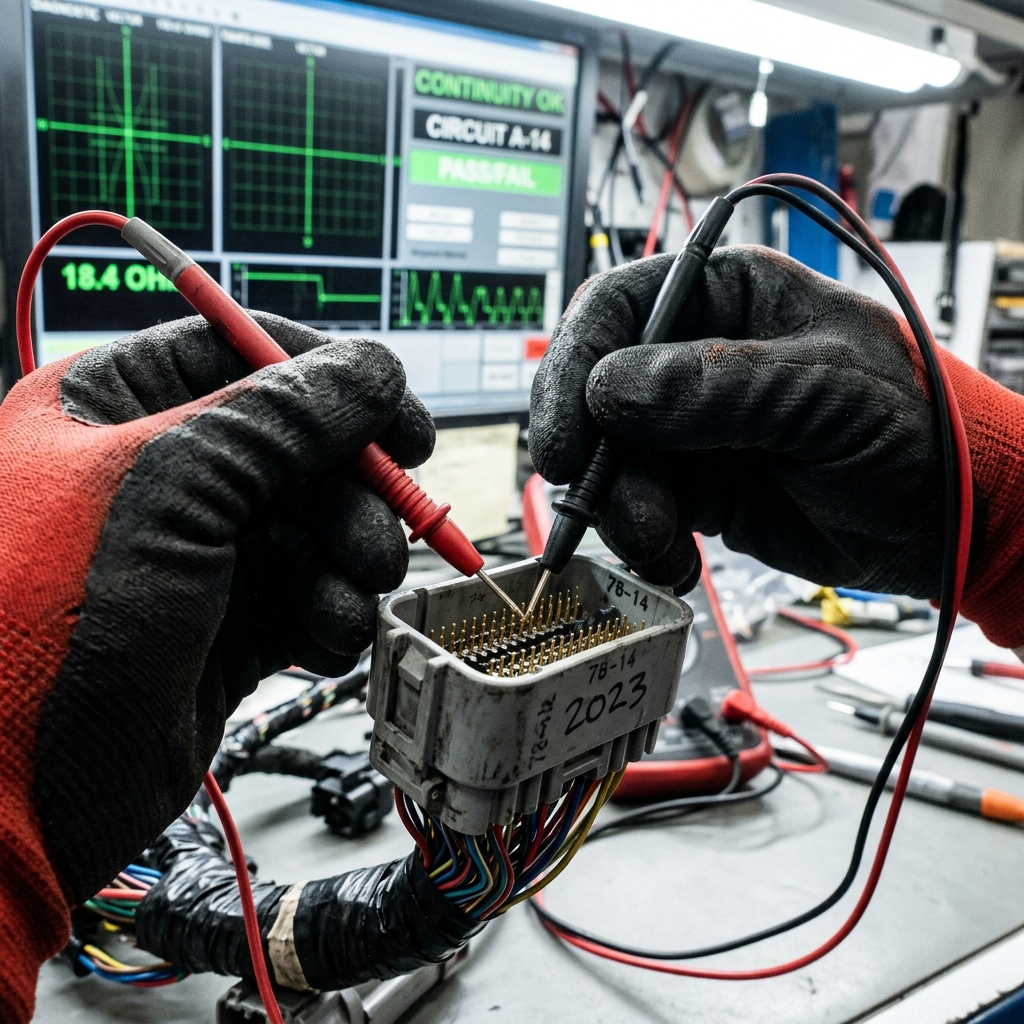
A Tesla Model 3 is not one unchanging body specification. Early cars and 2024-onward vehicles have separate collision information, and individual procedures can change. The technician must select the correct current procedure for the car being repaired rather than rely on memory or a method used on another Model 3. Tesla publishes separate collision-repair manuals for model generations; the current 2024+ Model 3 collision procedures illustrate why identification comes before cutting, heating, joining or sectioning.
Material type and allowed operations are confirmed for the exact component. A shallow dent in a serviceable outer panel, a sharp fold through an edge and deformation near a structural attachment do not receive the same method. Repairing original metal is useful only when the permitted process can restore shape, strength, corrosion protection and fit. Replacement is justified when damage falls outside that repair boundary, but replacement also brings joining, sealing, corrosion-protection, glass, trim and refinishing operations that must be included.
Do not approve paint first when
- The sill or floor is crushed, scraped deeply or pushed upward.
- A wheel has moved, the tyre rubs or steering behaviour changed.
- There is a high-voltage, restraint, braking or stability warning.
- The charge port area, rear power components or underbody was struck.
- A door, bonnet or boot opening no longer closes normally.
- Heat, odour, smoke, fluid leakage or unusual noise followed the incident.
Battery-floor screening is evidence-led, not alarm-led
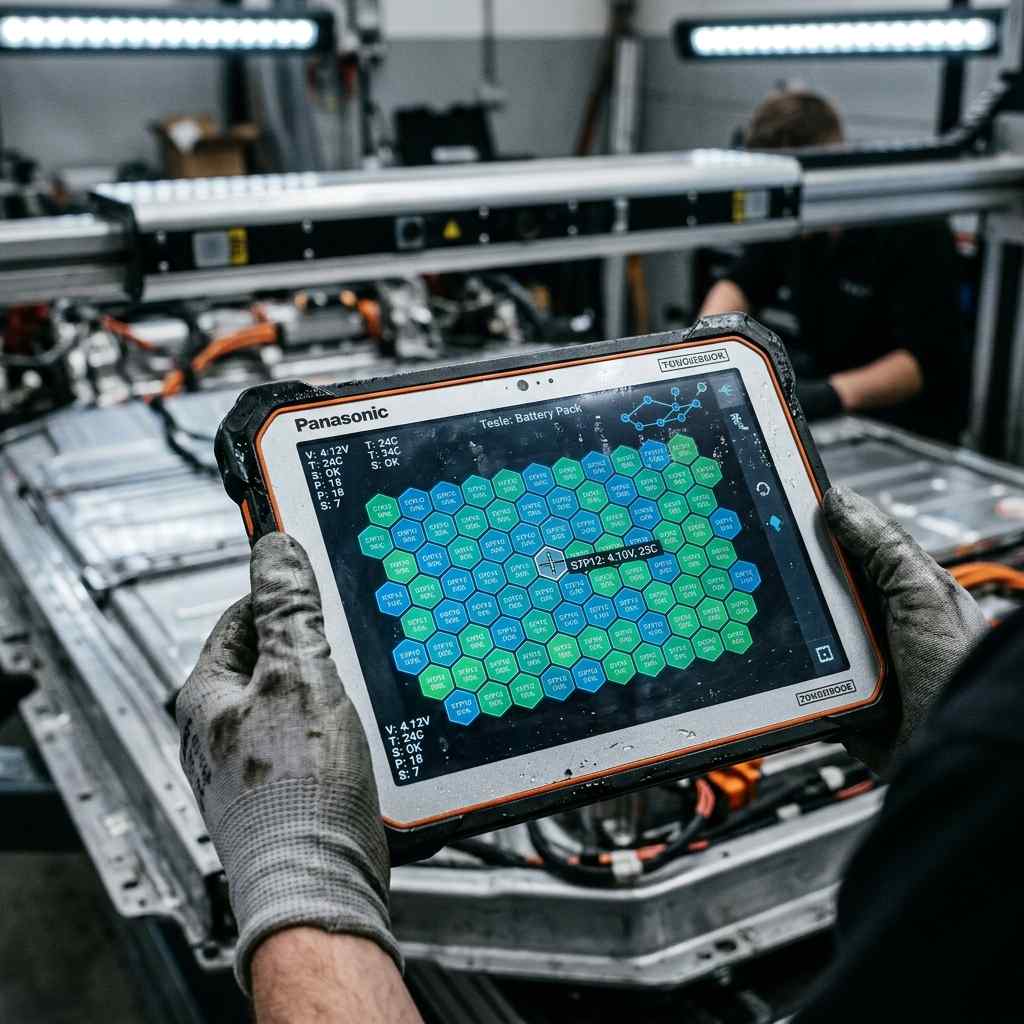
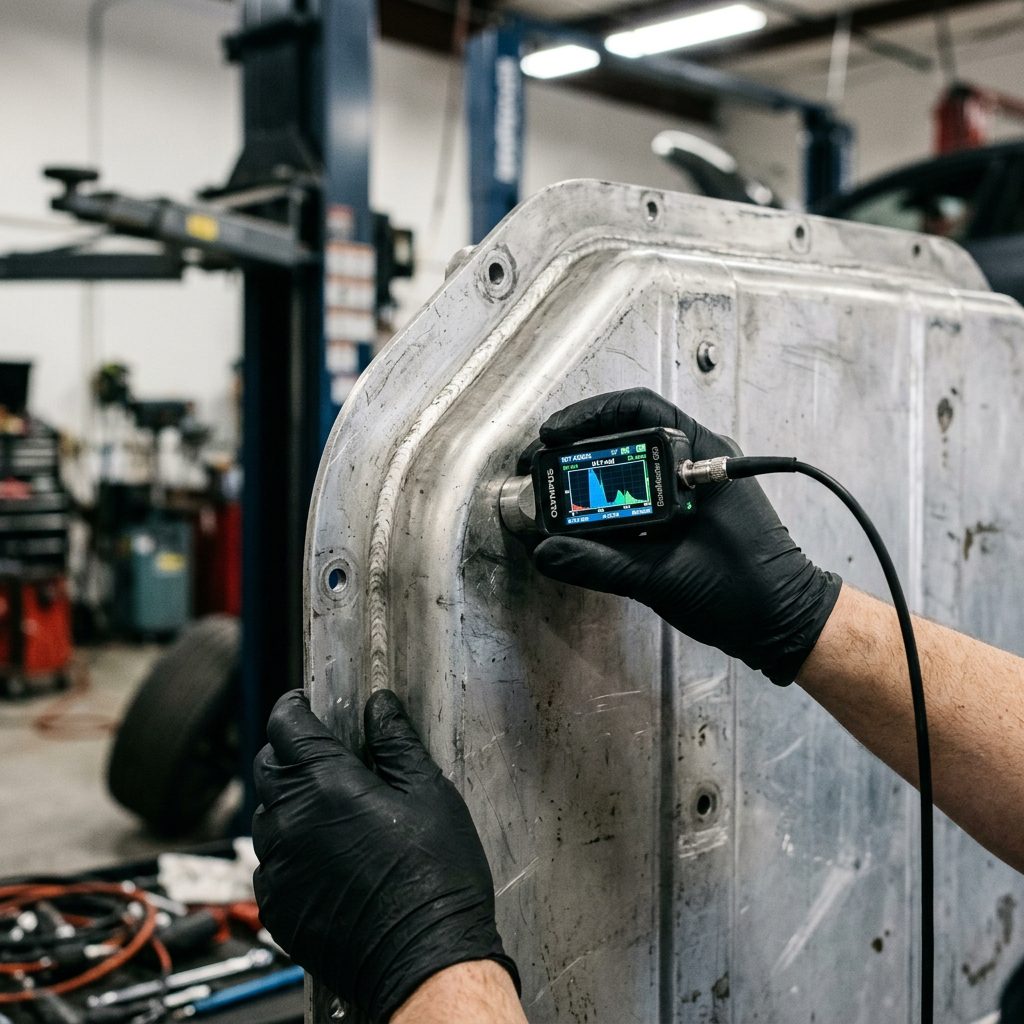
The battery pack occupies the lower vehicle area, so sill and underbody evidence deserves a deliberate screen. That does not mean every rocker-cover scuff is battery damage. Location, depth, deformation, contact direction, ground clearance, warning state and the applicable inspection information determine the next action. The estimator should distinguish an outer cover or trim mark from deformation that approaches a structural or high-voltage boundary.
The car is not lifted casually after a lower-body impact. Correct lift points must be identified and the underside viewed safely. If damage, warnings, heat, odour, leakage or isolation requirements raise a high-voltage concern, ordinary body work pauses. A specialist assessment can then define safe storage, movement, dismantling and repair limits. Cosmetic refinishing should never conceal unresolved underbody evidence.
Bumper fit and driver-assistance checks follow the repaired geometry
A Model 3 bumper fascia can show a scuff, split, deformation or torn fixing. Repairability depends on the plastic condition, attachment points, edge stability and the finished contour. A surface repair may be appropriate when the fascia can retain shape and fit. Missing tabs, a distorted sensor aperture or a weakened mounting edge can make replacement or a permitted component repair more predictable.
Cameras and other driver-assistance equipment are checked after the physical foundation is restored. Correct gaps, brackets and mounting planes come first; diagnostics and functional tests follow. Calibration or aiming is performed only where the equipment and current repair information require it. Clearing a warning or confirming that a camera displays an image does not prove that its geometric relationship is correct.
Door, pillar and glass relationships need a closure test
Frameless-looking clean surfaces and large glass areas make alignment errors noticeable. Before trim removal, we record door closing effort, glass travel, wind noise, water leakage and seal contact. A dent may be confined to the outer skin, while a stronger side impact can move a hinge, latch, intrusion structure, sill or opening. The repair restores the door and opening geometry before attempting to tune glass or seals around a moved foundation.
After repair, each disturbed closure is cycled repeatedly. Glass rises and drops correctly, seals remain continuous, handles and latches function, and gaps are compared from top to bottom. If fixed glass was removed, preparation, adhesive, setting position and cure time are recorded. Water testing is targeted to the repaired opening rather than used as a substitute for visible fit inspection.
Paint matching must work across simple-looking surfaces
Model 3 panels can expose colour and texture differences because their broad surfaces reflect uninterrupted light. The painter identifies the finish, checks prior repairs and sun exposure, then prepares a spray-out using the selected variant and application method. Metallic orientation, pearl layers and clear-coat texture are reviewed next to the car. Blending is used only where it is needed to create a visually continuous result.
Masking protects glass edges, black trims, cameras, lamps, charge-port components, handles and seals. The finish is inspected under booth lighting and daylight for hue, brightness, metallic flop, texture, dust, sanding marks and blend visibility. Our published car painting service explains the general refinishing process; this page keeps Model 3 body, floor and electronic decisions separate.
Indicative Tesla Model 3 body repair costs in Dubai
The figures below are planning ranges drawn from the site’s published Dubai accident-repair cost methodology. They are not fixed Tesla prices. Model year, part availability, hidden attachment damage, structural findings, glass work, diagnostics and calibration can move a quotation outside them.
Minor cosmetic repair
AED 299 to 1,000
Small dent, isolated scratch or local paint correction where access and material condition allow.
Bumper-area work
AED 500 to 2,500
Depends on splits, retainers, apertures, sensors, finish and replacement requirements.
Door or wing repair
AED 1,000 to 3,000
Varies with crease position, edge damage, strip-down and blending.
A combined corner repair involving bumper, lamp, wing, brackets and diagnostics may fall around AED 2,000 to 6,000+. Sill, floor, restraint, high-voltage or structural work is inspection-led and should not be forced into a menu price. See the published accident repair cost guide for the scope behind these ranges.
The written repair plan should expose approval points
- Initial classification: cosmetic, body-and-paint, structural, mechanical or high-voltage-related concern.
- Documented access: identify which liner, trim, bumper or interior parts must be removed to confirm hidden scope.
- Method selection: tie repair or replacement to the exact component, material and current procedure.
- Parts verification: confirm part identity, finish, fasteners, adhesives, seals and one-time-use items.
- Geometry restoration: correct openings, attachments and mounting planes before refinishing or calibration.
- Paint operation: record preparation, spray-out, blending boundaries and corrosion-protection restoration.
- System closure: complete relevant diagnostics, functions and calibration with supporting records.
- Handover: provide invoice detail, warranty terms, care advice and any unresolved or escalated item.
Supplements are sometimes legitimate because hidden damage cannot be seen before dismantling. They should not be vague. The customer receives photographs, the newly discovered condition, the proposed operation, cost and time effect before additional work proceeds. A provisional item becomes authorised work only after that evidence and approval.
Collection checks for a Model 3
View the car from both sides before standing close to the repaired panel. Compare bumper height, lamp position, door and boot gaps, wheel stance and the reflection across the repaired surface. Open every closure involved in the work. Inspect seal contact, glass operation, the charge-port door where relevant and the lower edge of the repaired zone.
Test lamps, cameras, parking functions and warnings that were affected or disconnected. Ask for any calibration, alignment, high-voltage or specialist report included in the estimate. The invoice should identify repaired and replaced parts, paint operations, approved supplements and warranty terms. Collection occurs after body, finish and system checks pass, not simply when the paint is dry.
Model 3 body repair FAQs
Can a small Model 3 dent use paintless dent repair?
Possibly. Paint condition, access, material, reinforcement position and the sharpness of the dent decide. A crease at an edge, prior filler or damage near a structural attachment can require another method.
Does every bumper repair require calibration?
No blanket rule applies. The equipment fitted, the mounts disturbed and the current procedure determine the requirement. Physical fit, diagnostics and functional checks still form part of closure.
Can the car be charged after sill or underbody impact?
Do not assume it can. The impact location, deformation, warning state and applicable safety information must be assessed before charging when the sill, floor, charge area or battery boundary may be involved.
Is BodyShop.AE claiming Tesla-authorised status?
No unsupported authorisation claim is made. The quotation should state the verified services, methods and equipment available for the job, and document escalation where the required scope is outside them.
Classify the Model 3 damage before approving repairs
Send the complete damaged side, close views, panel gaps, wheels, lower-body evidence and dashboard state. We will identify the inspection route and the information needed for a written scope.
For the wider Tesla body repair in Dubai pathway, use the brand hub for shared collision planning, repair records and escalation boundaries. This Model 3 page stays focused on the evidence that changes its repair decision: model year, battery-floor proximity, bumper mounting geometry, door and glass relationship, and paint behaviour across broad panels. Before authorising work, confirm whether the impact affected a closure, wheel area, sill or lower body. Clear photographs and the vehicle warning state help keep the written scope specific to this car instead of borrowing a generic Tesla repair checklist.