

XPeng Body Shop Dubai
An XPeng bumper repair can become a perception-system repair if the impact moves a camera, radar bracket or ultrasonic sensor. It can become a high-voltage repair question if the contact reaches the floor, sill or battery protection. We map those dependencies first, then decide what can be corrected, replaced, painted and calibrated on the exact G6, G9 or other UAE-spec vehicle.
A warning after impact is evidence, not a reset request
Record the message before clearing codes or disconnecting components. Note whether the parking view, lane support, collision warning, camera image or assisted-driving availability changed. The symptom can connect a visible bumper or mirror mark with a bracket or alignment problem that is not obvious from outside.
Wheel displacement, steering or brake change, restraint activation, coolant loss, high-voltage warning, unusual heat, smoke or underbody damage requires inspection or recovery. Photographs cannot establish safe road use.
XPeng sensing is distributed around the whole vehicle
Official UAE specifications for the G6 list cameras, high-definition millimetre-wave radar and ultrasonic sensors as part of XPILOT hardware. Exact counts and features vary by model, market and trim, so the VIN and fitted parts lead the repair. The implication is consistent: body geometry and perception geometry must agree.
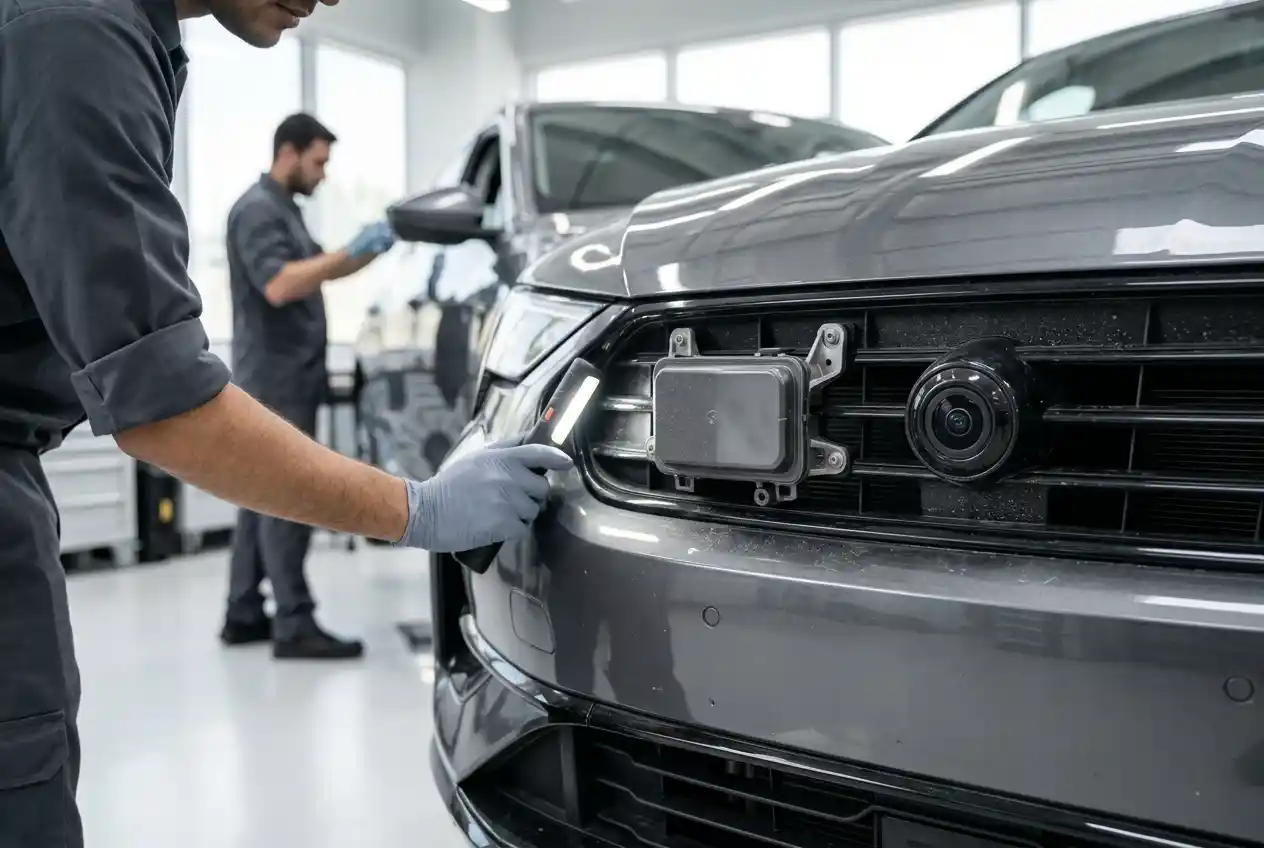
Upper front
Windscreen camera area and related body position.
Front mask
Bumper, lamps, grille, radar and camera relationships.
Side field
Mirrors, cameras, doors, sills and wheel openings.
Rear field
Tailgate, bumper, camera, lamps and parking sensors.
Underbody
Battery protection, aero covers, cooling and lifting zones.
Multi-sensor fusion still begins with physical mounts
Record warnings, camera display, panel gaps and the exact point of impact.
Inspect brackets, apertures, connectors, guides and reinforcement relationships.
Confirm repair material and coating build do not conflict with a sensing zone.
Complete the scans, aiming, calibration or road verification specified for the repair.
G6 and G9 body structures create different repair boundaries
XPeng’s official safety material describes high-strength body structures, and model information for the G9 refers to a steel-aluminium hybrid frame. The G6 has also been described with extensive aluminium use and integrated casting technology in official safety communications. The exact generation and component must be identified before any material statement becomes a repair instruction.
Outer panel
Assess alloy or steel condition, access, stretched area, edges and the finish target.
Structural component
Confirm measurement, casting or high-strength restrictions, joint design and approved replacement boundary.
Attachment
Verify clips, brackets, adhesive, fasteners, sealing and corrosion protection as a complete system.
Integrated castings and structural battery areas are not casually heated, pulled or sectioned. Where the applicable repair procedure or capability sets a limit, replacement or specialist referral is safer than an improvised correction.
High-voltage control precedes ordinary body operations
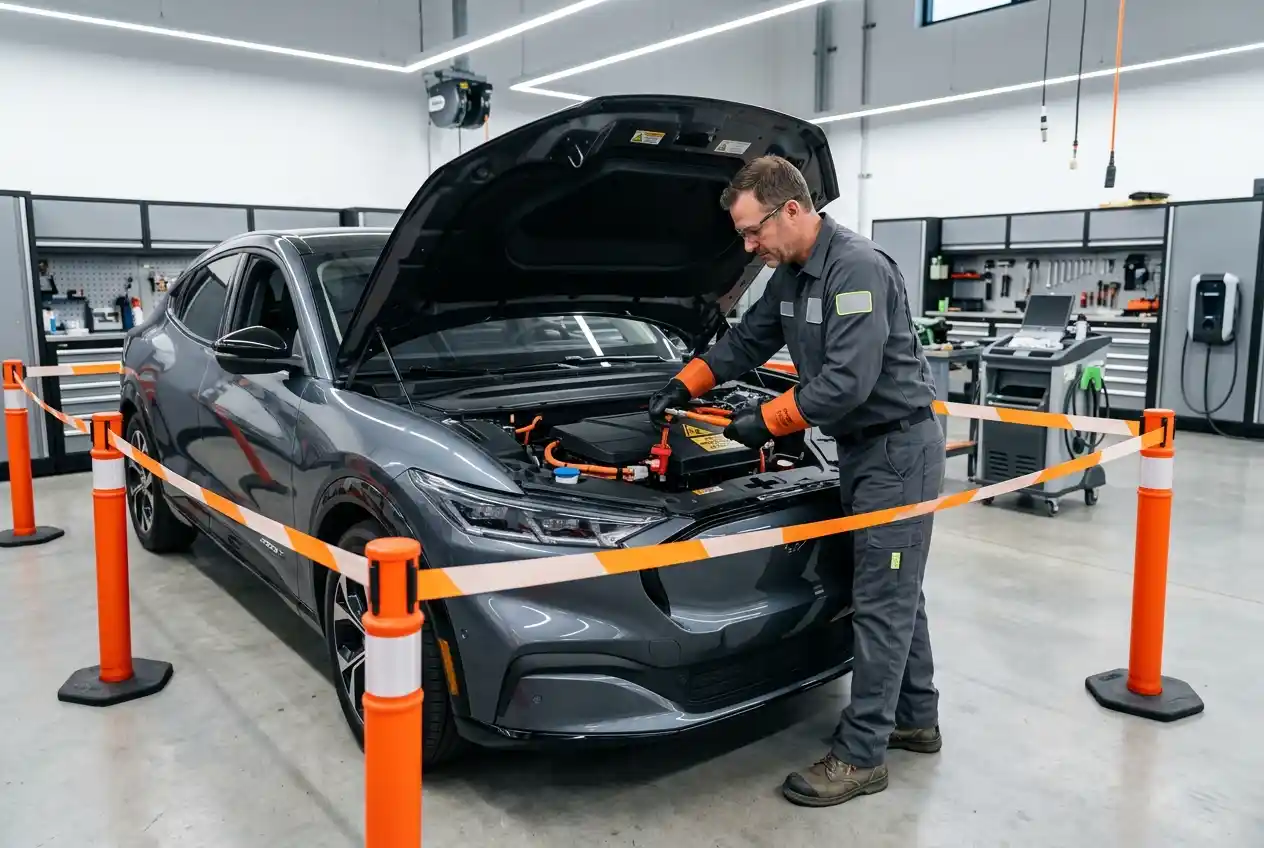
Side-sill, floor, charging-area, wheel and underbody contacts are screened for battery-enclosure and cooling involvement. Electrical warnings, coolant loss, unusual temperature, restraint deployment or direct enclosure marks can justify recovery and isolation. The outer surface returning to shape does not clear the battery system.
The plan identifies safe lifting, isolation, underbody inspection and restrictions around pulling, welding, cutting and curing heat. If an enclosure or battery concern exceeds the body shop’s approved scope, the repair pauses for the appropriate specialist assessment. This boundary is documented for the owner.
Bumper repair is approved only when the sensor field remains stable
Repair may remain suitable
The cover material is identified, cracks or deformation are outside critical mounts, apertures remain recoverable, and guides and reinforcement support designed position.
Replacement becomes sensible
Multiple fractures, torn sensing openings, missing load-bearing tabs, severe thinning or distorted supports prevent a controlled and durable result.
Plastic welding can be useful on selected compatible damage, but it is not a blanket answer. Paint build, filler and primer are controlled around any component with material restrictions. At final fit, the bumper should sit correctly without being pulled into place by fasteners.
Calibration is tied to the work performed
The relevant procedure determines whether a component needs static targets, dynamic driving, steering-angle work, wheel alignment or another verification. Prerequisites may include tyre pressure, ride height, vehicle load and a level target environment. We do not describe every calibration as identical.
An OTA software update may improve features or change diagnostics, but it does not replace the physical verification of a disturbed camera or radar-related unit. The repair record separates software version, fault status, aiming and calibration so each claim is clear.
Paint matching protects the clean XPeng surface language
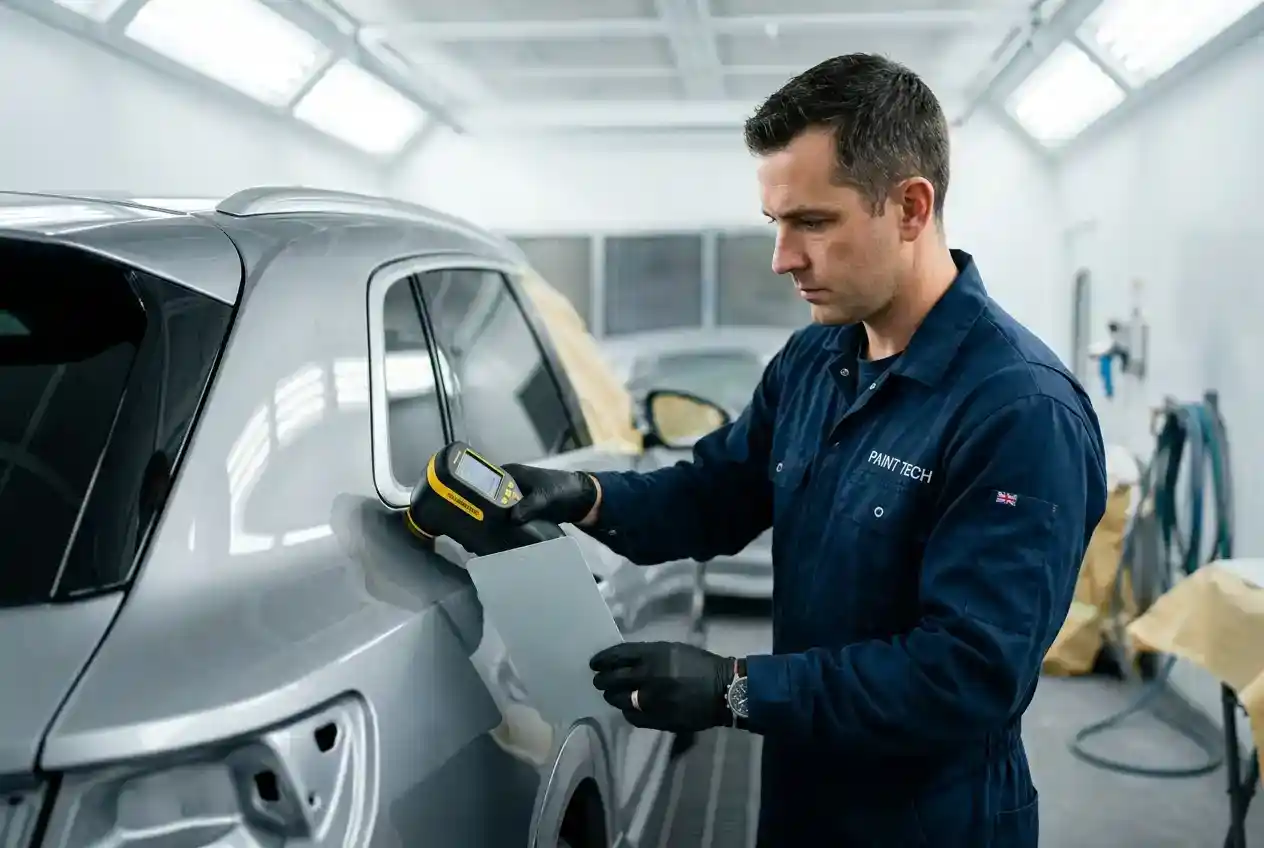
Large smooth panels and tightly resolved lamp or trim openings can reveal texture and colour differences. The painter starts with code and variant, uses a colour reading, prepares a spray-out and compares face, side tone and metallic orientation beside the vehicle. Previous repair and Dubai exposure are included in the judgment.
Shape is restored before primer. The blocked surface is checked with linear light, then basecoat and clear coat are applied under controlled conditions. Final review covers hue, effect, gloss, orange peel, edge coverage and any transition around a camera, sensor aperture or contrasting trim.
The owner evidence pack explains every scope change
- Opening recordFull-zone images, close damage, warning messages, camera display and pre-existing marks.
- Access recordHidden brackets, absorbers, wiring, supports, underbody findings and part identity.
- Repair recordMaterial decision, body correction, protection, paint stages and reassembly.
- Verification recordFit measurements, diagnostic status, alignment and calibration evidence included in the approved job.
Additional damage discovered after dismantling is photographed and explained before approval. This keeps the estimate transparent and avoids using a polished finish to hide why the cost changed.
Price and timing follow the dependency chain
Model, material, severity, safe isolation, parts availability, paint system, electronics and calibration all affect the quotation. A replacement bumper may arrive quickly yet wait for a bracket; a repairable panel may still require sensor removal and verification. We therefore confirm completion time after the scope and parts position are known.
The approved route may use our accident repair assessment, body repair service or controlled car painting process.
Handover closes the physical and digital findings
The team compares repaired gaps, flushness, reflections, closures, lamps, trim and underbody covers with the opening record. Warnings and included assistance functions are reviewed, and required scans, alignment or calibration results remain with the job file.
Fresh-paint aftercare is explained for the applied system. Unrelated software messages, pre-existing damage and deferred parts stay separately listed. The owner should be able to tell exactly what body work was restored and which specialist limitations, if any, remain.
G6 and G9 impacts create different access and alignment priorities
The G6 coupe-SUV profile concentrates attention on its front perception zone, sweeping rear quarter, powered liftgate and low high-voltage floor. The G9 adds flagship width, larger bumper architecture, substantial closures and a steel-aluminium hybrid structure described in XPeng technical material. A front or side impact on either model must be tied to the specific generation and hardware package.
G6 front or side
Check camera and radar presentation, bumper guides, wheel opening, sill, door flushness and underbody proximity.
G9 front or rear
Check broad bumper supports, lamps, sensor brackets, tailgate opening, quarter geometry and lower shields.
Any XPeng build
Confirm VIN, hardware revision, wheel and tyre specification, software status and the actual part before ordering.
Integrated castings or large structural nodes are not treated like ordinary pressings. If impact reaches one, measurement and approved repair data determine whether the component can remain or the work requires a defined replacement or specialist path.
Parts logistics must account for hardware and configuration
A bumper cover can arrive without its cameras, sensors, harness, foam or lower pieces. A lamp or mirror may contain electronics that vary by market. The estimate therefore distinguishes the painted shell from transferred and renewed equipment. Part number, connector, bracket and aperture are checked against the damaged vehicle before painting locks in the decision.
Electronic replacement can add programming or configuration, but that does not automatically complete aiming or calibration. The scope names each task. If a component is delayed, the vehicle is not declared finished with a sensing opening empty or a loose trim piece. Any staged delivery must be safe and agreed.
Compare part label, side, finish, hardware provision, connector locations, sensor openings, mounting tabs and shipping damage. Test-fit critical body parts before colour when the process permits.
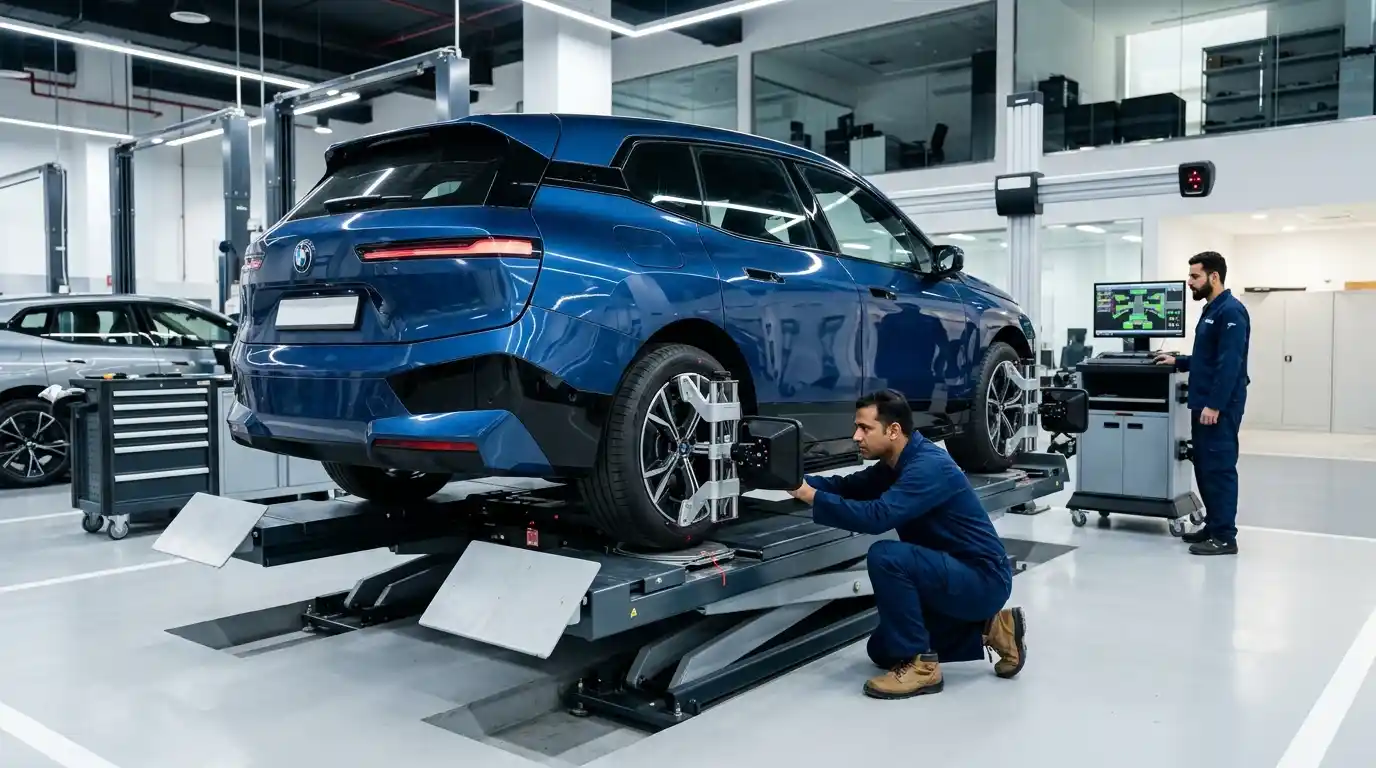
Body measurement comes before perception calibration
A target can only validate a sensor mounted to the correct vehicle geometry. Bumper support, wheel alignment, ride height, tyre pressure and steering position are resolved first. The technician then prepares the static or dynamic conditions specified for the fitted XPILOT hardware. Codes are retained where useful rather than repeatedly erased before the cause is found.
Camera images and driver-assistance status are compared with the opening record. Some routines may need suitable road markings, speed, light or weather. A procedure that cannot complete is documented with the reason; it is not converted into a vague assurance that the car “will learn later.”
Panel, bracket, wheel and ride relationships are stable.
The component and control modules report usable diagnostic status.
The exact procedure reaches its defined completion condition.
Relevant views, warnings and functions are reviewed at handover.
Estimate revisions should follow a visible evidence chain
The opening quotation may flag a hidden absorber, reinforcement, casting, harness or underbody area as conditional. Once exposed, the technician photographs the finding in context, identifies the part or structure, explains the repair consequence and requests approval. A close image without location can be misleading, so a wider dismantled view accompanies the detail.
The same chain applies to parts changes. If the originally identified cover does not match the VIN or installed hardware, the revised order and time effect are explained. If a calibration uncovers wheel or bracket alignment outside the body scope, that dependency is recorded instead of buried under general labour.
This process gives the owner a defensible answer to why cost or timing moved. It also protects the workshop from treating every hidden finding as automatically accident-related when previous damage or repair is present.
Booth heat and repair energy need an EV-specific plan
Paint curing is selected around the coating and the components that remain on the XPeng. High-voltage batteries, adhesives, sealers, plastics, cameras and electronic modules can carry temperature or duration limits. The workshop does not assume that the maximum booth setting is the fastest safe option.
Before welding, pulling or heat-assisted reshaping, isolation and restricted zones are confirmed for the exact vehicle. Temperature-sensitive parts are removed or protected according to the procedure. The repair record notes the controlled method so a rapid paint cycle does not undermine structural adhesive, battery safety or sensor hardware.
Connected-vehicle history should be preserved during diagnosis

Before modules are reset or software is changed, the workshop records warnings, dates and the customer’s description of when the symptom began. Diagnostic data may help separate collision-related changes from an older intermittent issue. Personal account access is not requested or handled casually; only the vehicle information needed for the approved repair is used.
At handover, any software operation is described by purpose and result. An unresolved network, subscription or account feature remains separate from the body repair unless the incident and evidence connect it directly.
XPeng keys, charging items and removable boot equipment are checked against the intake list before the customer receives the vehicle.
Workshop custody remains documented.
Send the warning and the wider body context
Photograph the complete side or corner, the damaged surface, adjacent gaps, the underbody if safely visible, and every warning screen. Add model, year, location and whether the incident affected steering, braking, cooling, charging or closures. We will use the record to prepare the correct inspection or recovery route.