
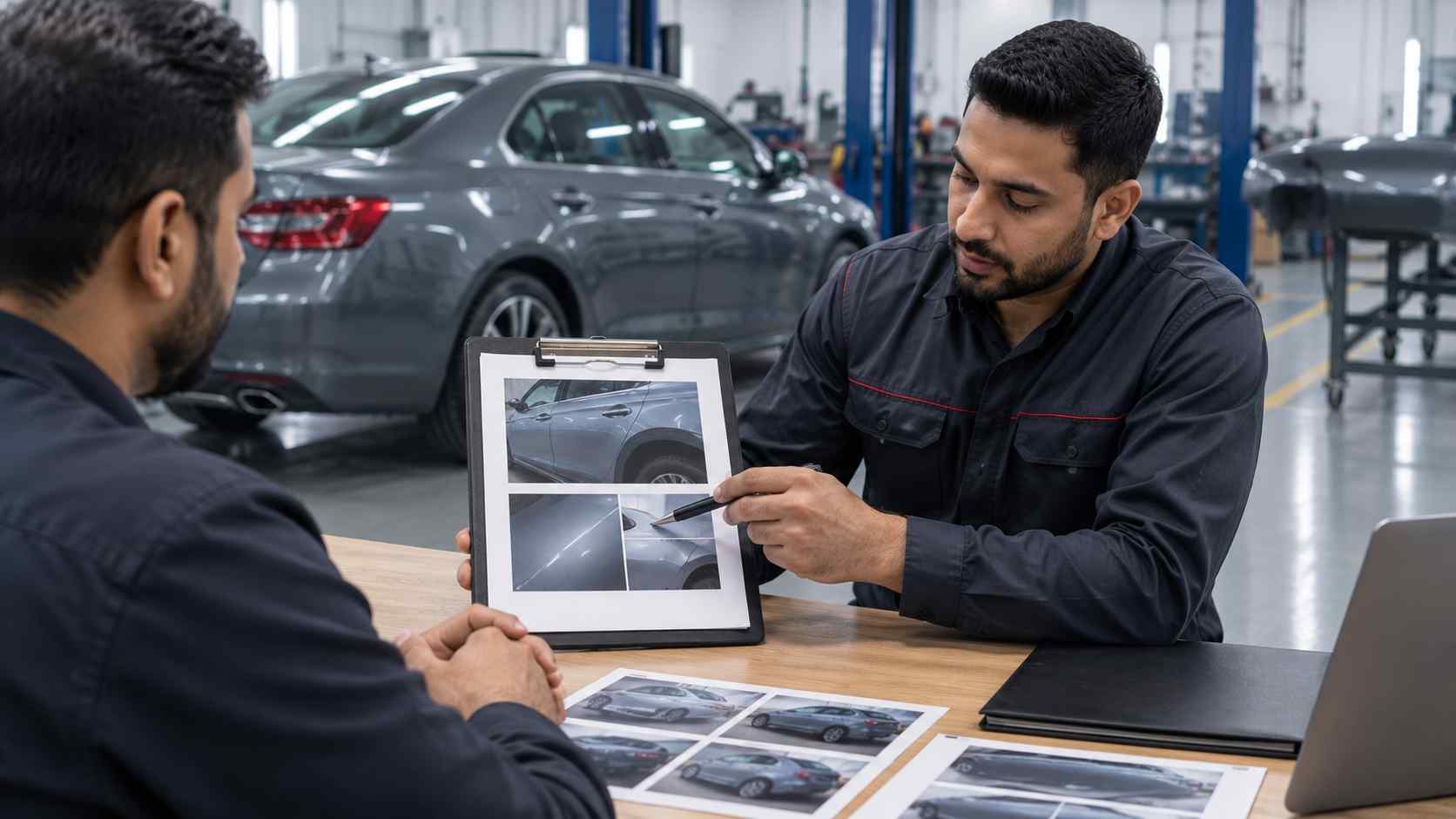
Coverage begins with the written repair scope
Car Paint Warranty Dubai
A car paint warranty should state which repaired panels and paint operations are covered, what eligible workmanship concerns mean, how long the written terms apply, which conditions are excluded and what evidence is needed for review.
BodyShop.AE does not replace job-specific terms with a vague lifetime promise. Your quotation, invoice, repair record and written warranty conditions control the support available for the vehicle.
Read the document in this order
Five details make a paint warranty usable
First, identify the exact vehicle and repaired area. A bonnet repaint does not create coverage for an unrelated door, roof or previous repair. Second, check the operations listed, such as substrate repair, primer, basecoat, clear coat, blending or polishing.
Third, read the duration and start date in the issued terms. Fourth, separate eligible workmanship from impact, environmental damage, neglect, corrosion outside the repair and third-party modification. Fifth, understand the inspection and claim route before a concern appears.
The main car painting service in Dubai explains the repair stages. Warranty review asks whether a later concern is connected to one of those documented operations.
Coverage matrix
Different symptoms need different evidence
| Concern | Possible repair-related cause | Possible excluded or unrelated cause | Evidence needed |
|---|---|---|---|
| Peeling or delamination | Adhesion failure between prepared layers within the repaired area | New impact, stone chips, pressure washing at a damaged edge, incompatible later coating | Panel location, wide and close photos, repair record and physical edge inspection |
| Blistering or bubbles | Moisture, contamination, trapped material or substrate problem connected to the repair | Corrosion spreading from an untreated area, body seam or old repair outside the scope | Cross-section inspection, substrate history, location and progression |
| Loss of gloss | Coating or curing issue in the refinished area | Abrasive washing, chemical exposure, poor polishing, environmental fallout or widespread ageing | Comparison with adjacent panels, care history and surface assessment |
| Colour concern | Formula, application or blend issue that was present at handover | Later panel repaint, different lighting, ageing or unrelated adjacent colour | Handover record, repair boundary and multi-light comparison |
| Solvent pop or pinholes | Film build, flash, substrate or curing issue connected to application | Fresh chips, contamination from later work or defects in another panel | Magnified inspection, repair timing and layer assessment |
| Cracking | Coating incompatibility, excessive film build or substrate movement tied to the job | New dent, panel flex, collision, failed old coating or body filler outside the repair | Damage pattern, paint thickness, impact evidence and underlying repair review |
This matrix is diagnostic, not an automatic acceptance or rejection. The same visible symptom can arise from several layers. The vehicle must be inspected before responsibility and correction are decided.
The fair boundary
A paint warranty covers workmanship, not every future mark
Road and impact damage
Stone chips, parking impacts, scratches, dents, flying debris and damaged edges are new events. A coating cannot prevent the substrate from moving or being cut.
Environmental exposure
Bird residue, chemical fallout, hard-water deposits, tree sap and neglected contamination can etch or stain clear coat. Prompt safe cleaning remains an owner responsibility.
Later modification
Polishing, sanding, wrapping, ceramic products, protective film, decals, adhesive removal or repainting by another party can change the surface and evidence.
Other common limitations can include corrosion not included in the original scope, failure of an old underlying coating, customer-supplied materials, used parts, normal wear, deliberate misuse and repairs outside the identified panels. Only the issued terms determine which exclusions apply to a specific job.
Claim pathway
Report the symptom before changing it
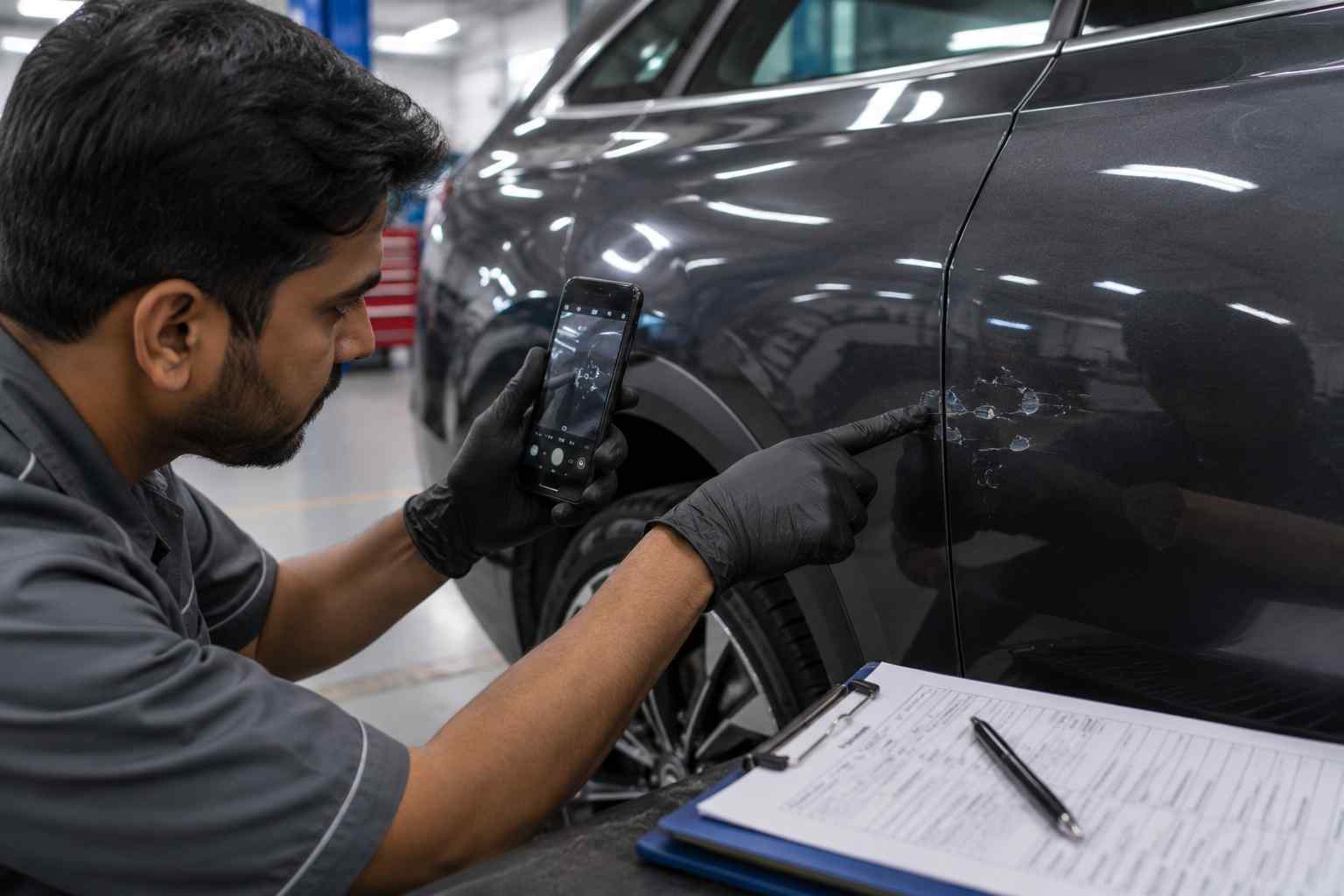
Stop polishing or picking the area
Do not sand, compound, scrape, puncture a blister or pressure-wash a lifted edge before inspection.
Photograph context first
Capture the whole panel, neighbouring panels and close detail in neutral light. Include where the concern sits relative to the repair boundary.
Find the documents
Provide the invoice number, repair date, vehicle details, repaired panels and any handover or aftercare record.
Describe when it appeared
State the first observation, how it changed, recent impacts, washes, chemicals, detailing or other work.
Book physical inspection
The workshop checks the surface, layer behaviour, paint thickness, edges, substrate and evidence of new damage.
Record the decision
The outcome should explain whether the concern is eligible, excluded, unrelated, uncertain or requires further diagnosis.
Aftercare protects the evidence
Follow the handover instructions for the coating used
Fresh paint may continue to stabilise after the vehicle leaves the booth. The correct washing, polishing, waxing, ceramic-coating or protective-film timing depends on the product system, curing process and repair. Follow the job-specific instructions rather than a universal internet waiting period.
Use gentle early cleaning
Remove harmful residue promptly with an approved method, but avoid aggressive rubbing, harsh chemicals and very close high-pressure washing around edges, chips and trim.
Do not hide a developing concern
Report unusual loss of gloss, lifting, blisters, cracks or persistent texture before machine polishing, film installation or another workshop changes the surface.
Protect repaired edges
Door edges, bumper corners, wheel-arch lips and stone-chip zones face mechanical exposure. New impact damage should be repaired before moisture reaches exposed substrate.
Keep later work documented
If detailing, body work, wrapping or paint protection is added, retain its invoice and product record. This helps separate later treatment from the original repair.
Related but not identical
Paint coverage sits inside the wider repair warranty
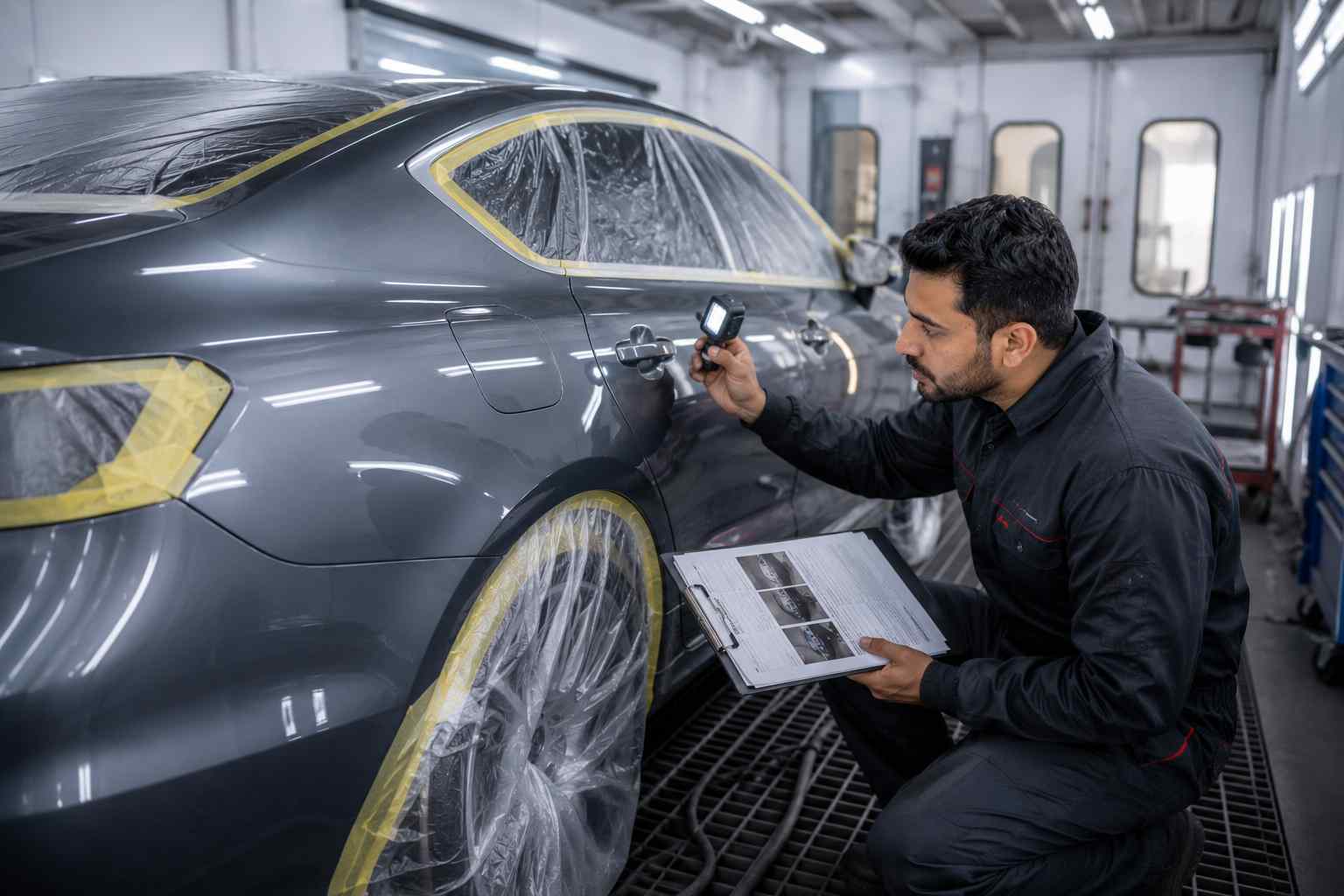
A collision job can involve metal repair, plastic repair, replacement parts, lamps, mouldings, adhesives, seam sealer, corrosion protection, electronics, calibration and paint. Those categories do not necessarily share one duration, supplier or claim test.
The planned auto body repair warranty Dubai page owns the complete cross-category framework. This page owns paint-specific eligibility, coating symptoms, evidence and aftercare. Keeping those intents separate prevents a paint question from being buried inside a general warranty promise.
Replacement parts may carry supplier or manufacturer terms that differ from workshop workmanship. Insurance approval can also define the original repair scope without creating unlimited future coverage. Read each document for the job it controls.
Diagnosis before correction
Do not repaint an eligible concern before it is recorded
If another workshop sands or repaints the area first, the original layer evidence may disappear. When practical, return the vehicle for inspection in the condition in which the concern was discovered. If urgent work is required because exposed metal or unsafe damage is progressing, photograph and document it before intervention.
A valid review can result in eligible correction, a paid repair for excluded new damage, referral to a parts supplier, a request for more evidence or confirmation that the symptom belongs to another panel or older repair. The written explanation matters because it connects the decision to the original scope.
The useful promise
Written scope makes support fair and traceable
A car paint warranty in Dubai should let the customer identify the repaired panel, eligible workmanship, time period, exclusions and inspection route without guessing. It should also protect the workshop from unrelated impact, environmental damage and later modification being treated as the original repair.
Keep the documents, follow coating-specific aftercare and report concerns before altering the evidence. If you are comparing quotations, ask to see the warranty terms before approving the job. The quality of that explanation is part of the repair decision.
Before repair approval
Compare warranty wording beside the quotation
Ask for the written car paint warranty Dubai terms before the vehicle is painted. The document should identify the party providing coverage, the start date, duration, vehicle, repaired panels, eligible paint operations, exclusions and contact route. If any of those fields will appear only after payment, request a sample of the wording.
Check whether the quotation includes correction of old paint, rust, previous filler, stone chips, panel edges and neighbouring blend areas. An exclusion for existing substrate failure is understandable only when the starting condition is documented. A broad exclusion that contradicts the approved work needs clarification.
Where a replacement panel, repaired bumper or customer-supplied part is involved, ask whether paint workmanship and the part itself have separate terms. If an insurer pays, confirm who issues the paint support after collection.
Adhesion and substrate evidence
The failure line often identifies the layer to investigate
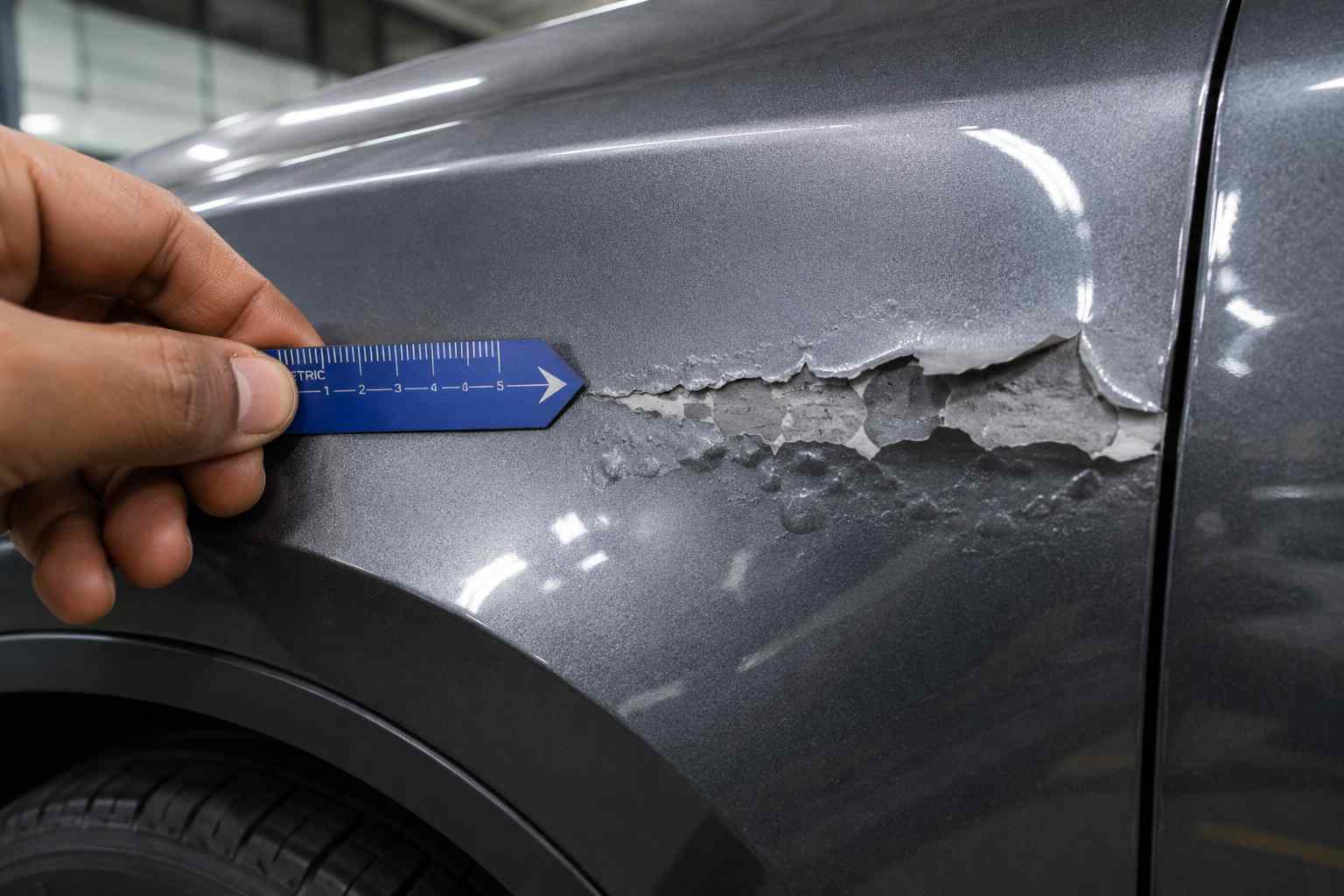
Paint can separate at metal, old coating, filler, primer, basecoat or clear-coat interfaces. The visible top surface does not reveal which boundary failed. Edge shape, exposed colour, film thickness and a controlled cross-section may be needed.
Peeling that begins at a fresh stone chip is different from spontaneous delamination across an undamaged repaired area. Bubbles rising from a seam with underlying corrosion are different from solvent pop that appeared soon after refinishing. A technician should record these distinctions before deciding coverage.
Where the original quotation excluded corrosion or unstable old coatings, the workshop should show where that condition was recorded. Where the repair included removal and treatment of the substrate, the resulting layer evidence becomes central to the claim.
Aftercare timeline without invented dates
Use the product and handover instructions
Initial period
Follow the issued washing and exposure restrictions while the coating stabilises. Avoid aggressive chemicals, abrasive tools and unnecessary pressure around repaired edges.
Protection products
Ask when wax, sealant, ceramic coating, wrap or paint protection film may be applied. The right interval depends on the coating and cure, not one universal number.
Ongoing care
Remove bird residue, tree sap, fuel and mineral deposits safely. Repair new chips before corrosion or water spreads beneath a damaged edge.
If a third party details the vehicle, provide the repair date and aftercare instruction. Keep the detailing invoice and product name. That record helps if a later concern needs to distinguish the original coating from machine polishing, chemical decontamination or installed film.
Dispute prevention
Use a joint inspection record at handover
View the vehicle in suitable light and record colour, texture, dust correction, edges, overspray, trim and panel fit. If an accepted limitation remains, write it on the handover record rather than relying on a verbal conversation.
When a concern is reported, both sides should use the same panel names and repair boundary. A diagram or marked photograph is often clearer than phrases such as left side or near the door. The inspection outcome should state what was observed, what evidence was reviewed and the next action.
For durability context, the guide on how long a car respray can last explains the roles of preparation, coating, washing and exposure. This warranty page remains focused on written eligibility and claim handling.
A car paint warranty Dubai claim is strongest when the original scope, handover condition, aftercare and first symptom are all traceable. That protects a genuine workmanship concern from being confused with later damage.
Transfer and resale
Confirm whether coverage follows the owner or the vehicle
Warranty terms may require the original customer, invoice, vehicle registration or prompt notification. Do not assume paint coverage transfers automatically when the car is sold. If transfer matters, ask for the rule before repair approval and keep any required ownership evidence.
A buyer evaluating a repaired vehicle should review the invoice and repaired panels without treating the warranty as proof that no accident occurred. Coverage supports eligible workmanship under stated conditions. It does not certify structural history, resale value or every unrelated surface.
Clear transfer wording, panel identity and claim contact make the document useful beyond the first owner and reduce disputes when records change hands.