
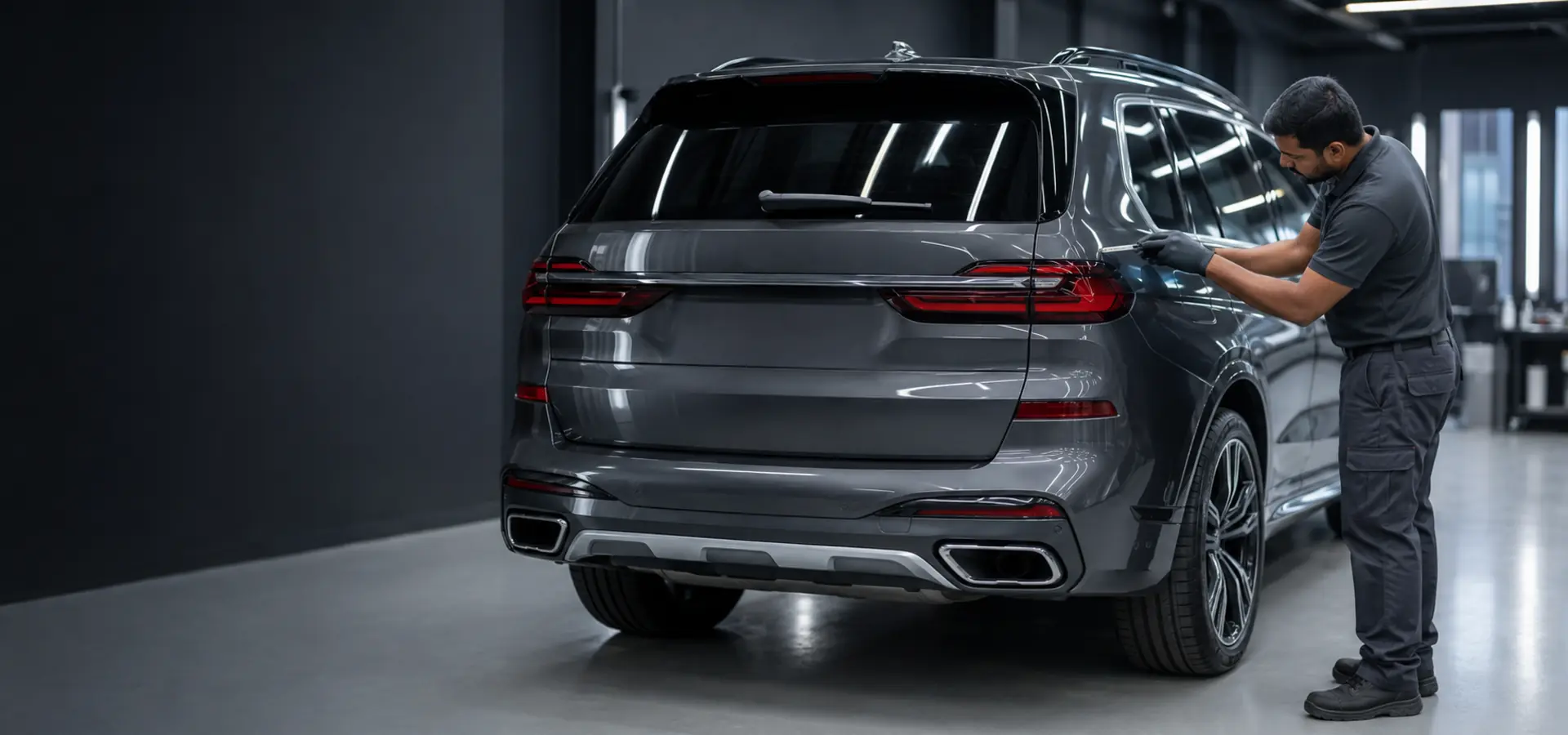
Independent BMW X7 body and paint assessment in Dubai
BMW X7 Body Repair Dubai
BMW X7 body repair Dubai should resolve the component, geometry, electronics and finish that belong to this exact three-row flagship SUV. This page uses three-row rear impact map to keep those decisions separate and make the repair scope easier to follow.
For BMW X7, three-row flagship SUV
BMW X7 Body Repair Dubai Starts With the Rear Impact Map
three-row rear impact map is the dominant device for this page. It separates Bumper layer, Rear panel, Cargo floor and Third-row boundary so one glossy surface does not hide four different repair claims. Each lane receives its own finding, operation and closure evidence. That creates a useful explanation for the owner and a practical production control for the workshop.
Map at reception the lane closest to the impact, then pin down how force or dismantling reaches the other lanes. On the X7, rear-floor movement can sit beneath intact luggage trim and affect sealing or third-row surroundings. The ledger therefore follows the complete zone instead of pricing only the first painted component seen in a phone picture.
For BMW X7, three-row flagship SUV
Model identity controls the first workshop decision
The X7 generation, derivative, build date and installed equipment must agree with the physical vehicle before dismantling, parts ordering or repair planning begins.
VIN and build details
Confirm the exact generation, derivative, production date and regional specification instead of relying on the model badge alone.
Exterior and assistance package
Record bumper apertures, lamp version, cameras, sensors, powered closures and powertrain-related precautions fitted to this X7.
Condition before work
Photograph previous repairs, warning messages, wheel position, closure behaviour and owner-reported changes before dismantling.
Vehicle, part and procedure agree
Use current repair information and trial fitting to prevent a visually similar component from entering paint before its compatibility is proven.
A photo estimate can suggest the likely route, but access behind trim may still change the final scope. Send the VIN with wide and close damage views for a better first assessment.
For BMW X7, three-row flagship SUV
A useful photo set shows context before detail
Start with the full rear and both tailgate sections, then add the luggage floor, third-row trim edge, lamps, broken material and any complete warning message.
Use daylight where practical and keep at least one image wide enough to show the entire elevation. Photographs help decide whether the X7 should travel and which inspection bay or information is needed.
- Do not remove trim for the photograph.
- Do not touch exposed electrical parts.
- Do not force a jammed powered closure.
- Keep warning messages fully visible.
Full rear relationship
Show both sides, lamps, tailgate sections, bumper gaps and the vehicle’s complete rear stance.
Luggage floor and third row
Photograph trim movement, floor distortion, seal paths and any change around third-row surroundings.
Reflection and broken material
Add a shallow-angle reflection plus close views of cracks, torn mounts, paint damage or displaced edges.
Hidden rear-floor risk
Rear-floor movement can sit beneath intact luggage trim and still affect sealing, alignment or third-row boundaries.
Images cannot reveal every reinforcement, mount, previous filler layer or enclosure boundary. Final pricing follows physical inspection and any authorised access needed to expose the true repair zone.
For BMW X7, three-row flagship SUV
Dubai conditions change inspection, not engineering limits
Heat, intense light, sand and repeated parking contact affect how the X7 is inspected and handled, but they do not replace material limits or manufacturer repair information.
Heat and handling
Hot exterior trim can change dismantling conditions, adhesive behaviour and storage needs. The workshop controls temperature rather than improvising the method.
Light and finish evidence
Strong daylight can expose effect-colour drift, texture differences and broad-panel distortion that may be less visible under one indoor light.
Sand, dust and water paths
Dust can reveal disturbed seals or water routes, but the cause must still be traced through geometry, trim and closure condition.
Administration is not repair permission
A police or insurer file must correspond with the documented impact and supplements. The X7 repair method remains driven by physical evidence and applicable technical information; approval does not authorise unsupported heating, straightening or omitted system checks.
For BMW X7, three-row flagship SUV
Fresh work needs product-specific care
Aftercare depends on the actual paint, adhesive, replacement parts and cure process used on this X7. Universal waiting periods are avoided.
Follow the written handover
Use the stated initial-wash timing and avoid aggressive contact while the repaired finish and transferred trim settle.
Protect edges and seals
Keep pressure jets at the instructed distance from fresh paint edges, repaired seals, cameras and newly assembled trim.
Confirm coating compatibility
Ask before applying protection film, ceramic coating or adhesive accessories because cure cycles and products differ.
Preserve useful evidence
Promptly record a changed gap, water path, trim movement, warning or paint defect before polishing or another repair alters the condition.
New parking damage, stone impact and unrelated faults should remain separate from the repaired scope. Keep the invoice and aftercare record with the vehicle file.
For BMW X7, three-row flagship SUV
Independent service claims stay precise
BodyShop.AE is an independent body and paint business. This page does not claim BMW manufacturer authorisation, dealer status or brand certification.
Before approval, separate the workshop’s workmanship promise from new-vehicle warranty, insurer conditions, parts warranty and any finance or manufacturer requirement.
Independent assessment
The repair route is explained through vehicle evidence, applicable procedures and the written scope rather than a broad badge-based claim.
Name what is proposed
The estimate should identify new, alternative, used or repaired components and state what remains inspection-dependent.
State what is included
Clarify which measurements, scans, calibrations, function checks, paint operations and handover records belong to the job.
Resolve restrictions first
Finance, insurer or manufacturer terms should be checked before authorisation when they may affect parts, process or warranty.
Honest limits protect the customer more effectively than an unsupported authorisation claim. Ask for the final scope, conditional items and verification in writing.
For BMW X7, three-row flagship SUV
The visible mark is only one point on the impact route
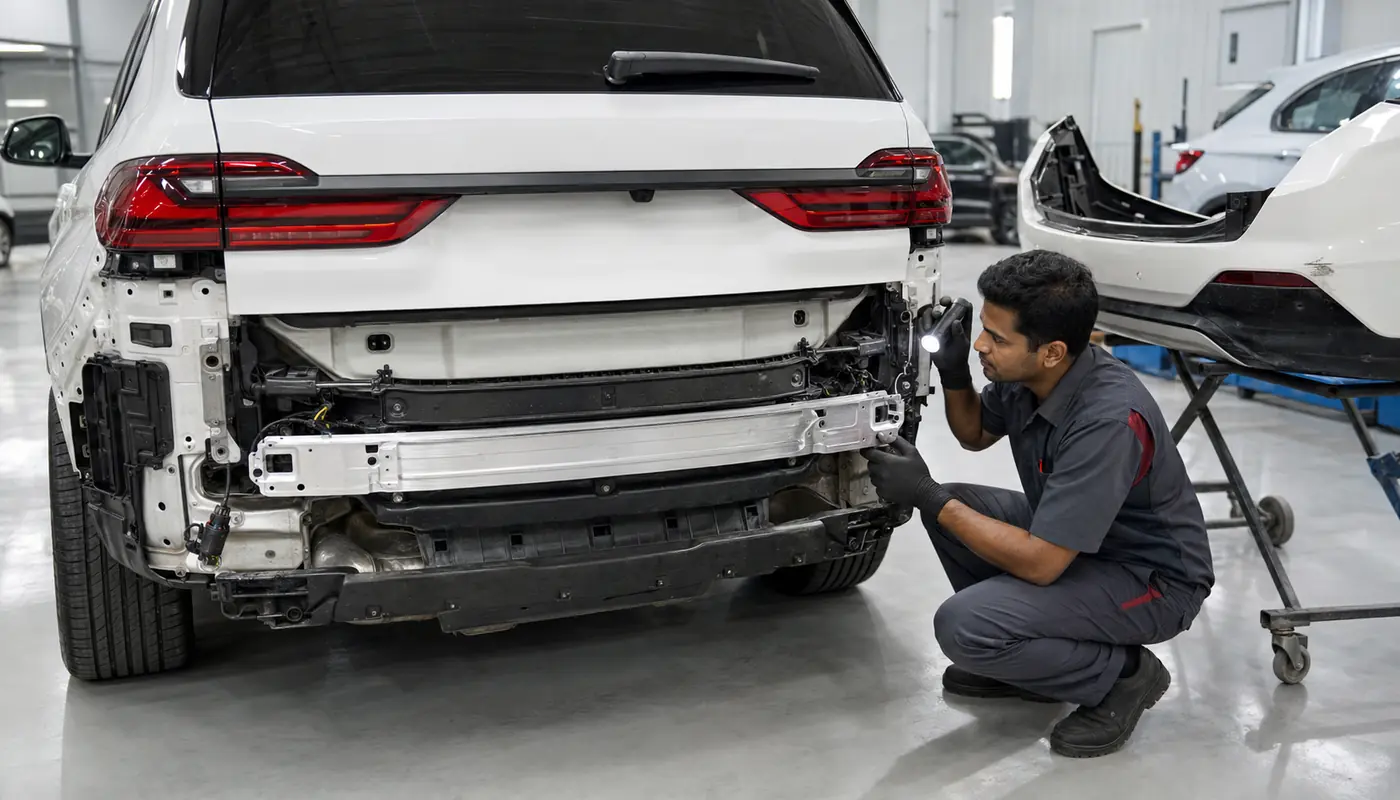
Record before estimating the visible point of contact, then screen neighbouring attachments, openings and mechanical references. For the X7, the relevant landscape includes a tall rear body, split tailgate, long side openings and three-row cabin packaging. A shallow scuff may remain cosmetic, but a torn guide, moved lamp pocket, disturbed wheelhouse or changed gap turns the event into a wider system decision.
The workshop should use wide photographs before close photographs. Wide views show proportion and transfer direction; shallow reflections reveal panel tension; close images identify cracks or paint layers. If steering, braking, tyre clearance, fluid containment or a warning changes, the X7 should not be road-tested simply to reproduce the symptom. Recovery is safer until the affected systems are screened.
For BMW X7, three-row flagship SUV
Material rules begin before metal correction
Component identity and applicable repair data set the limits for heat, pulling, cutting, joining and corrosion protection.
Identify the component
Confirm the exact panel, rear-floor zone and generation-specific material instead of relying on magnet response, appearance or familiar position.
Confirm the permitted method
Applicable repair information decides whether controlled correction, replacement, sectioning, bonding, riveting or welding is supported.
Control the process
Use dedicated tools, clean preparation and correct consumables to reduce cross-contamination, weak joints and avoidable corrosion paths.
Record hidden quality
Document flange condition, adhesive, fasteners, weld location, cavity treatment and corrosion protection before trim conceals the work.
A successful outer surface does not confirm that the material, joint and corrosion-protection process underneath was correct.
For BMW X7, three-row flagship SUV
Repair and replacement compete on the complete operation
Compare recoverable shape, material condition, access, joint location, finish risk and the total installed outcome.
Preserve controlled original fit
Repair can remain the stronger route when deformation is stable, access is suitable and the approved method can restore shape without creating a restricted-material risk.
- Recoverable geometry
- Sound critical mounts
- Permitted correction method
Renew unstable or restricted damage
Replacement becomes stronger when material is torn, severely stretched, cracked at a critical mount or positioned inside a prohibited repair zone.
- Transfer equipment and trim
- Single-use hardware
- Programming or calibration
Lamps, tailgate pieces, bumper equipment, cameras, sensors, grilles and lower protection must be included—not only the shell price.
Name what is reused, renewed, inspection-dependent and awaiting supplier confirmation.
Rear-floor movement can remain beneath intact luggage trim and affect sealing or third-row surroundings.
For BMW X7, three-row flagship SUV
Sensor closure needs geometry as well as diagnostics
Electrical communication cannot prove that a sensor, camera or powered closure remains correctly positioned after impact.
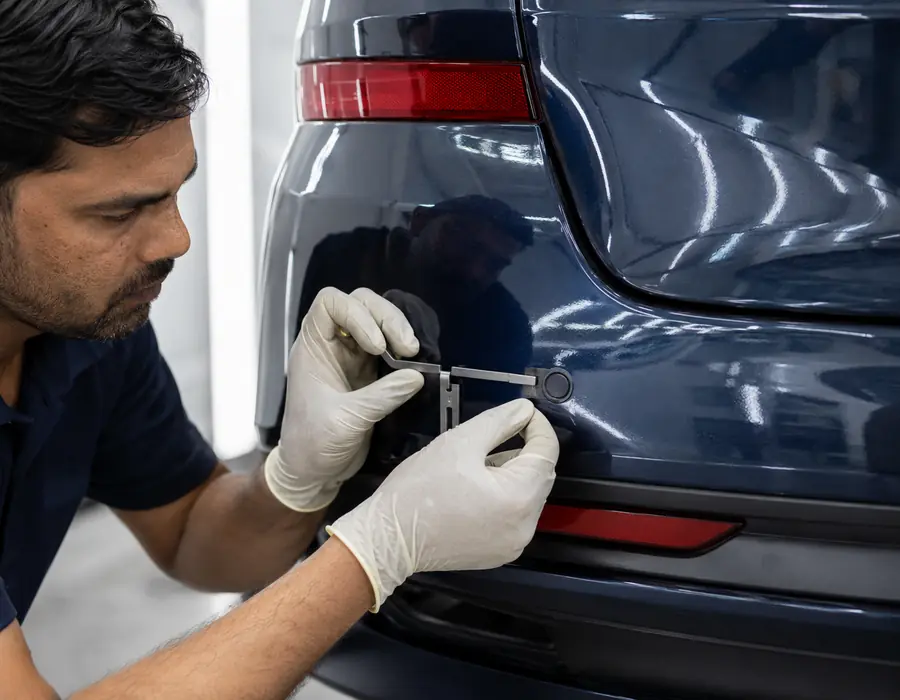
Build the intake around the equipment actually fitted to the X7. A connected unit can still sit on a moved bracket, look through a damaged aperture or reference wheel alignment changed by the impact.
01 · Record before work. Preserve warnings, communication status, camera views and the affected equipment list before dismantling begins.
02 · Restore geometry. Check brackets, apertures, wiring, cover compatibility, surrounding body position and wheel conditions before relying on diagnostic results.
03 · Verify the fitted system. Complete the applicable scan, aiming, static or dynamic calibration, then state exactly what was performed and which fitted feature was checked.
For BMW X7, three-row flagship SUV
Colour matching is only one layer of the finish
Large luxury surfaces require substrate control, viewing-angle comparison and texture verification as well as an acceptable colour formula.
Formula and variant
Use paint code, electronic measurement and spray-out comparison beside the actual X7.
Existing finish
Account for previous refinishing, exposure, ground shade and panel orientation.
Shape under linear light
Inspect contour before primer and reflection continuity after clear coat.
Final finish control
Review face colour, side tone, metallic or pearl travel, gloss, texture, edges and masking boundaries.
A colour match does not approve a finish when a broad reflection breaks, orange peel differs sharply or textured trim carries overspray.
For BMW X7, three-row flagship SUV
Openings and seals must agree without forced adjustment
The two-piece tailgate, doors, bonnet, glass, powered movement and seals are checked as one connected geometry system.
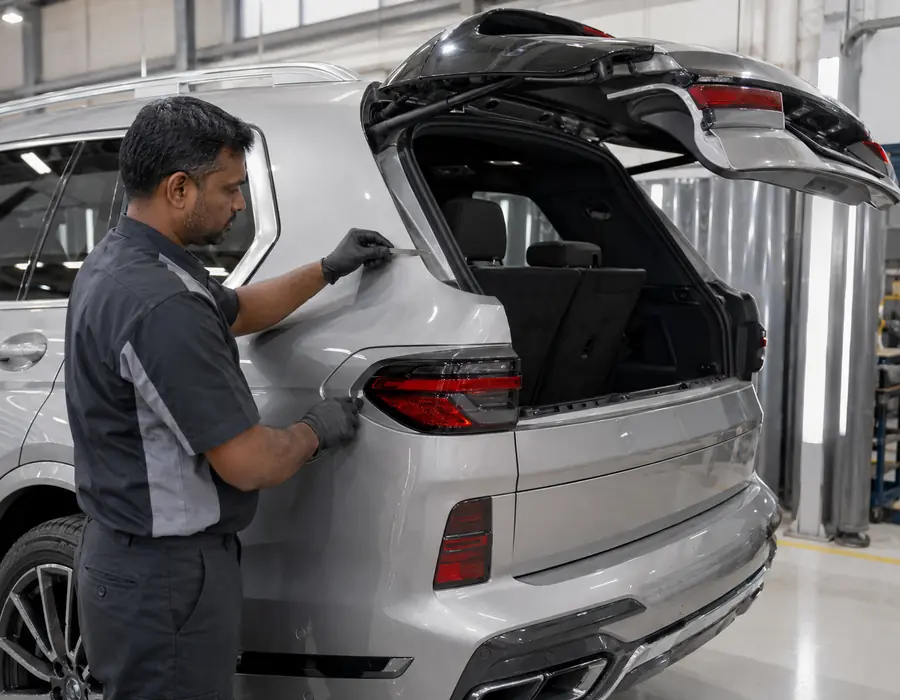
Adjustment follows measurement. Moving a striker to conceal distortion can create wind noise, water entry, closing effort or repeated alignment drift.
Compare widths, edge levels and adjacent-panel relationships.
Check hinges, latches, powered movement and consistent operation.
Confirm even compression without stretching a seal to hide geometry.
Repeat the intake observations and perform leak testing where justified.
For BMW X7, three-row flagship SUV
Parts accuracy is decided before the spray booth
VIN, connector, aperture, mounting geometry and supersession history establish compatibility before refinishing begins.
Identify the exact version
Confirm year, body package, lighting, cameras, radar equipment and regional specification.
Inspect incoming parts
Check transport damage, moulding quality, apertures, connectors and attachment points.
Trial-fit before paint
Prove lamp, tailgate, bumper, grille, sensor and lower-protection relationships where the operation permits.
Catalogue transfer items
Record seals, harnesses, modules, clips, badges and single-use hardware before assembly.
When supply changes the production sequence, the owner receives a revised milestone instead of a collection promise based on an unconfirmed component.
For BMW X7, three-row flagship SUV
A transparent scope keeps hidden risk visible
Each estimate line should explain the outcome it purchases and which findings remain conditional on authorised access.
Record confirmed exterior work and pre-existing condition.
Name dismantling or measurement needed to expose the true zone.
State the selected component route and any conditional alternative.
Define preparation, blend, colour and clear-coat boundaries.
Include transferred equipment, seals, trim and attachment hardware.
List alignment, scans, calibration, function checks and handover evidence.
Approval, dismantling, parts delivery, curing, calibration and quality correction may follow different timelines. Newly exposed damage is photographed and approved before becoming additional work.
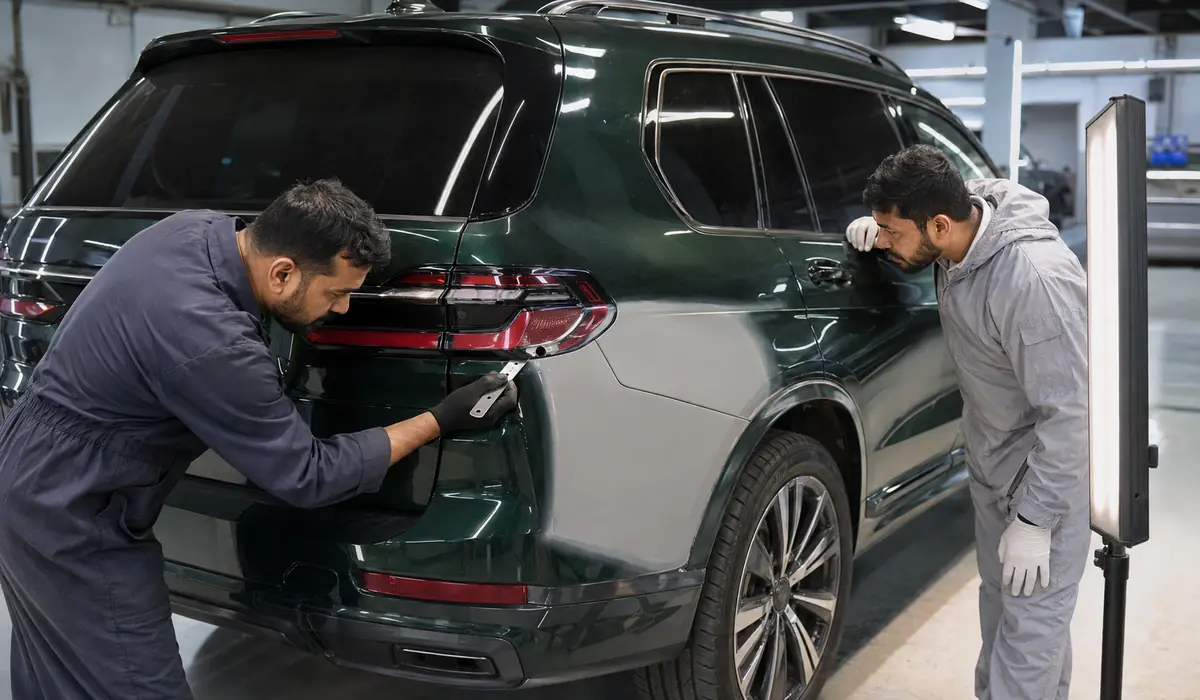
For BMW X7, three-row flagship SUV
Production gates stop one trade hiding another
For BMW X7, resolve before pricing a reception record, then inspect damage under controlled access. Material and geometry decisions are approved before irreversible work. Production restores structure and corrosion protection before cosmetics; paint begins only when test-fit and substrate checks pass. Reassembly then returns wiring, trim, seals and equipment in a recorded sequence.
The order can change for the X7 when high-voltage safety, alignment, glass, calibration or parts availability creates a dependency. Stage gates prevent one department from masking another department’s unfinished work. A scan cannot rescue a crooked mount, polish cannot repair a wavy panel, and final adjustment should not hide an unresolved aperture.
For BMW X7, three-row flagship SUV
Handover repeats the evidence captured at intake
Quality control compares intake evidence with the finished the X7. The inspector reviews full-panel reflections, edge shape, gaps, closures, lamp seating, trim, fasteners and cleanliness. Wheels and tyres are included when the impact approached a corner. Relevant functions are operated normally, without unsafe demonstrations of automatic braking or assistance.
For BMW X7, documentation should survive after the vehicle leaves. Useful records include hidden findings, material or joint decisions, paint spray-out approval, parts identity, alignment, scan and calibration evidence where included. Pre-existing marks and deferred work remain separate, preventing the repair invoice from becoming an unsupported claim about the whole vehicle.
For BMW X7, three-row flagship SUV
Use each service page for the decision it owns
For BMW X7, the published BMW body shop provides the broader brand route. Material, panel and joining decisions belong with our car body repair service. Substrate, colour and clear-coat control connect to the car painting process. Each destination answers a different next question.
These links are contextual, not a repeated directory. BMW X7 owners should use the model page for model-specific boundaries, then move to the service responsible for the actual operation. Collision administration and hidden supplements may also be handled through the workshop assessment when relevant.
For BMW X7, three-row flagship SUV
Collection is an inspection, not only a key exchange

At collection, walk around the X7 in daylight and shade. View the repaired panel straight on and obliquely, operate affected closures, compare lamp and trim seating, and review every warning that existed at intake. The invoice should match approved parts, paint scope and verification.
Keep photographs, calibration or alignment records, parts information and aftercare together. If the repair involved three-row rear impact map, retain the four-lane evidence for future reference. A useful handover gives the owner enough detail to distinguish a workmanship concern from a new impact or an unrelated electronic event.
For BMW X7, three-row flagship SUV
Official model evidence supports the repair boundary
BMW lists Driving Assistant Professional for the X7, reinforcing the need to document the fitted sensor package before dismantling. The BMW X7 official overview supports that specific statement. It is not used as a substitute for the VIN, current repair manual or physical inspection of the X7.
Dubai budget guidance
Indicative BMW X7 body repair costs
These ranges are planning figures, not a final online quotation. Panel material, access, paint finish, parts source, fitted equipment and hidden findings can change the amount. Newly exposed damage is photographed and approved before it becomes additional work.
| Typical scope | Indicative range |
|---|---|
| Paintless dent where suitable | AED 450 to 1,200 |
| Bumper repair and refinish | AED 1,000 to 2,400 |
| Door or quarter repair and paint | AED 1,400 to 3,800 |
| Tailgate or panel replacement | AED 4,000 to 12,000+ |
| Rear-floor or wheel-corner damage | Measured after dismantling |
A written estimate separates confirmed work from inspection-dependent items and states which alignment, scan, calibration or function checks are included. Parts availability and dependencies are confirmed before a collection date is promised.
Send the evidence that defines this X7 repair
Include the full rear, both tailgate sections, luggage floor, third-row trim edge, lamps and sensor warnings. Mention any change in steering, closure, camera view, parking response, charging or warning status. We will identify the safest next inspection step.